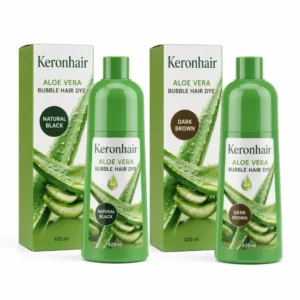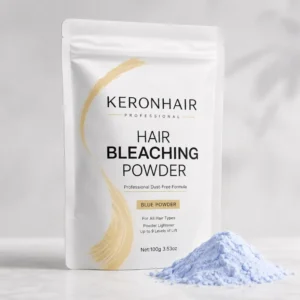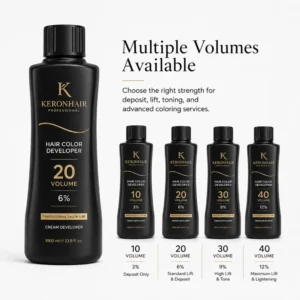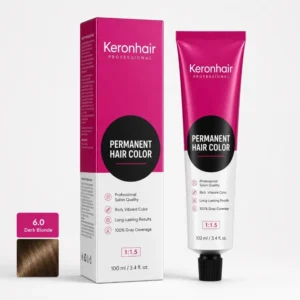
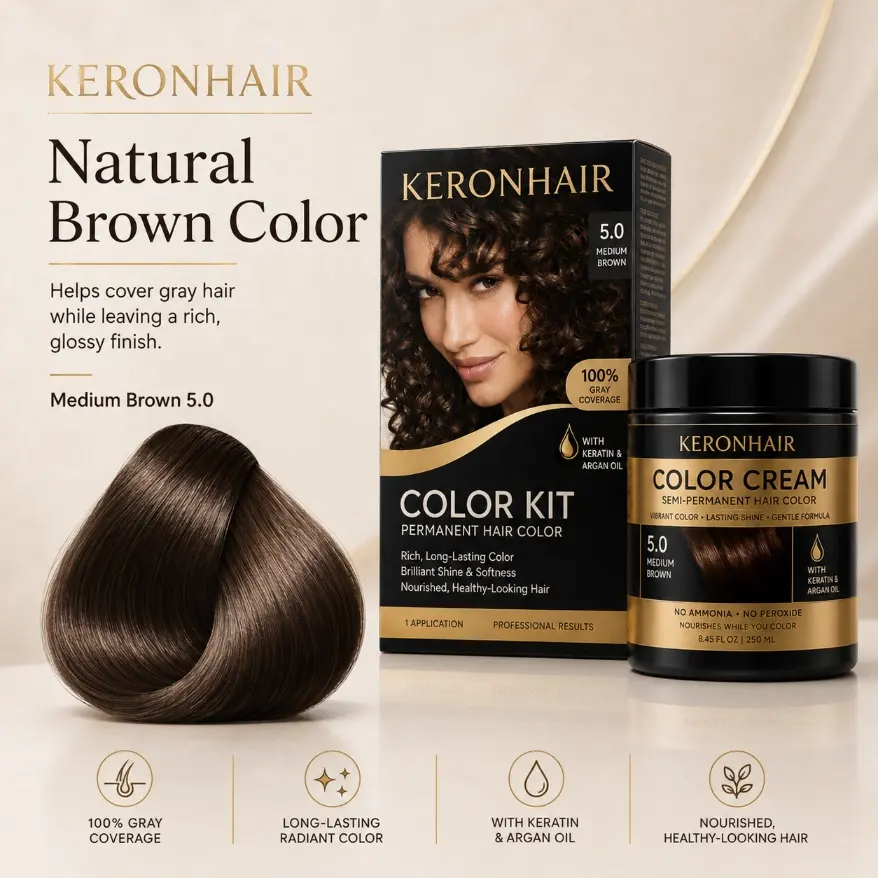
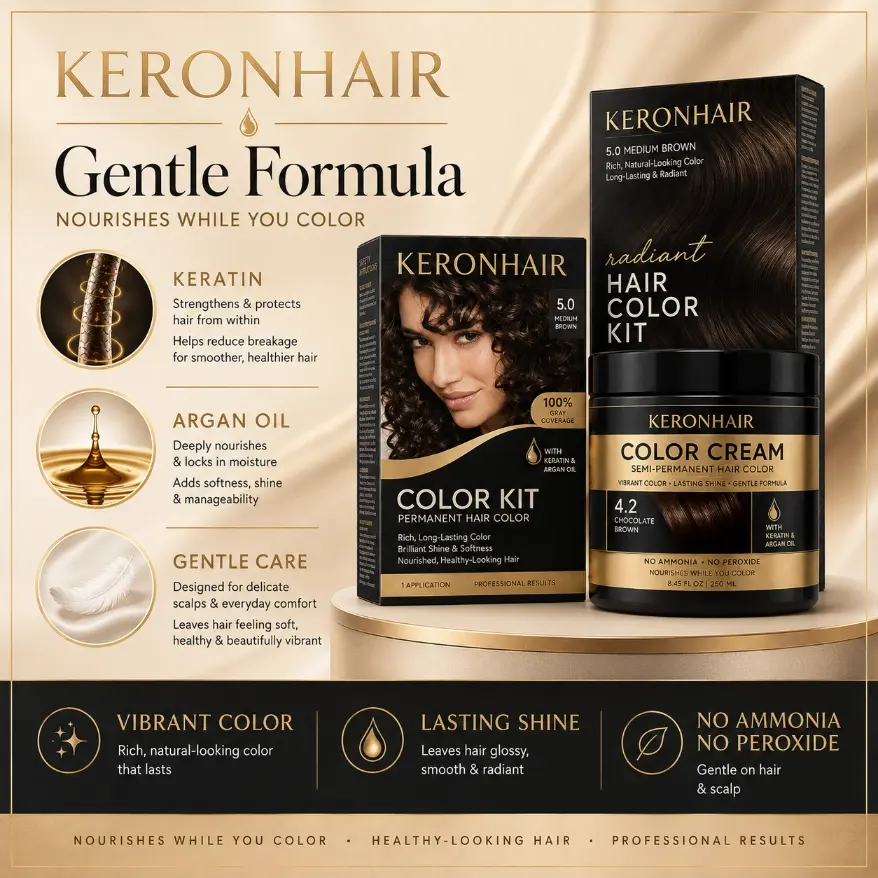
Create an ammonia-free hair color range without separating the claim from real-world performance. Keronhair helps brands balance shade direction, alkalizing system, developer pairing, texture, odor profile, packaging and target-market requirements.
Proven base, semi-custom or custom development aligned with your brief.
Natural, fashion and gray-coverage shades developed for your target market.
Color cream, developer, retail packaging and project documentation.
Ammonia-free oxidative color uses another alkalizing approach in place of ammonia. This can support a different odor and sensorial profile, but the final result still depends on the complete color system, developer, starting hair and application conditions. It does not mean the product is chemical-free, allergen-free, irritation-free or automatically gentler for every user.
Keronhair works with buyers to turn the claim into a coherent product brief: Who is the range for? Is the priority gray coverage, tone deposit, lift, odor profile or premium sensorial positioning? Which shades are commercially essential? Which claims can the final evidence support? These decisions guide formula selection and testing.
Any “free-from,” performance or comparative claim must be checked against the final ingredient list, test design and local requirements before artwork is approved.
Start from an available ammonia-free base, select feasible shades and customize packaging. This route is designed for buyers who accept an existing performance profile and want a simpler development path.
Adapt selected sensorial, texture or positioning features while retaining an established technical foundation. The scope is confirmed after feasibility review.
Develop toward a detailed benchmark or brand brief covering shade behavior, odor, texture, ingredient preferences, target cost, package and destination market. Custom development may require several iterations and expanded testing.
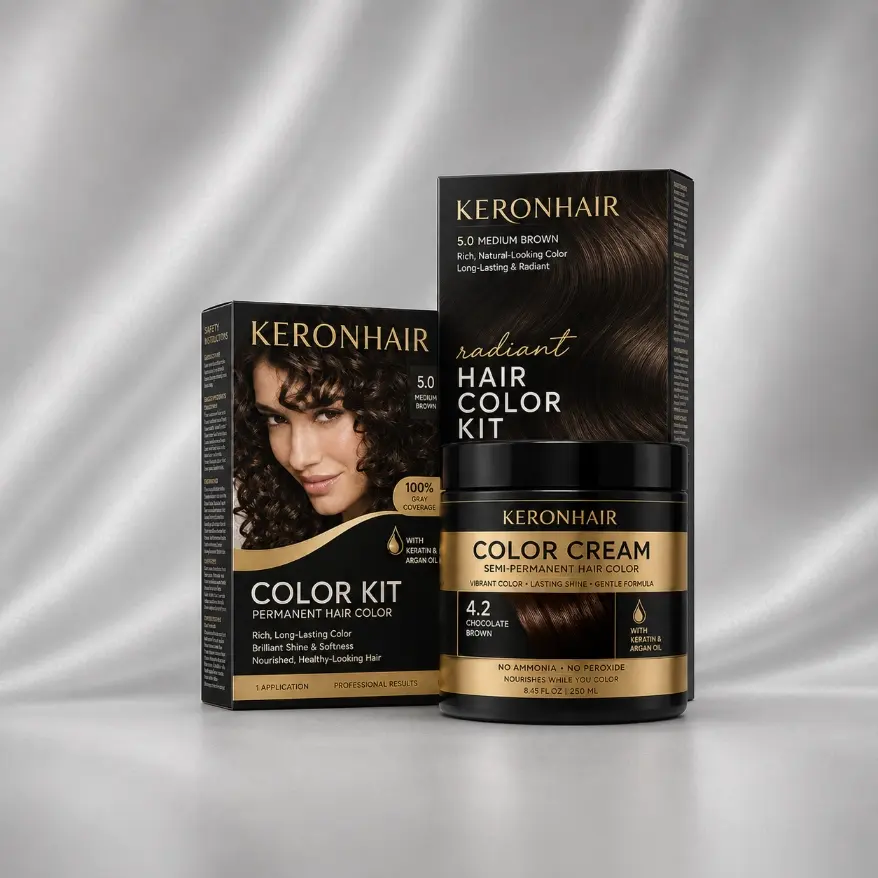
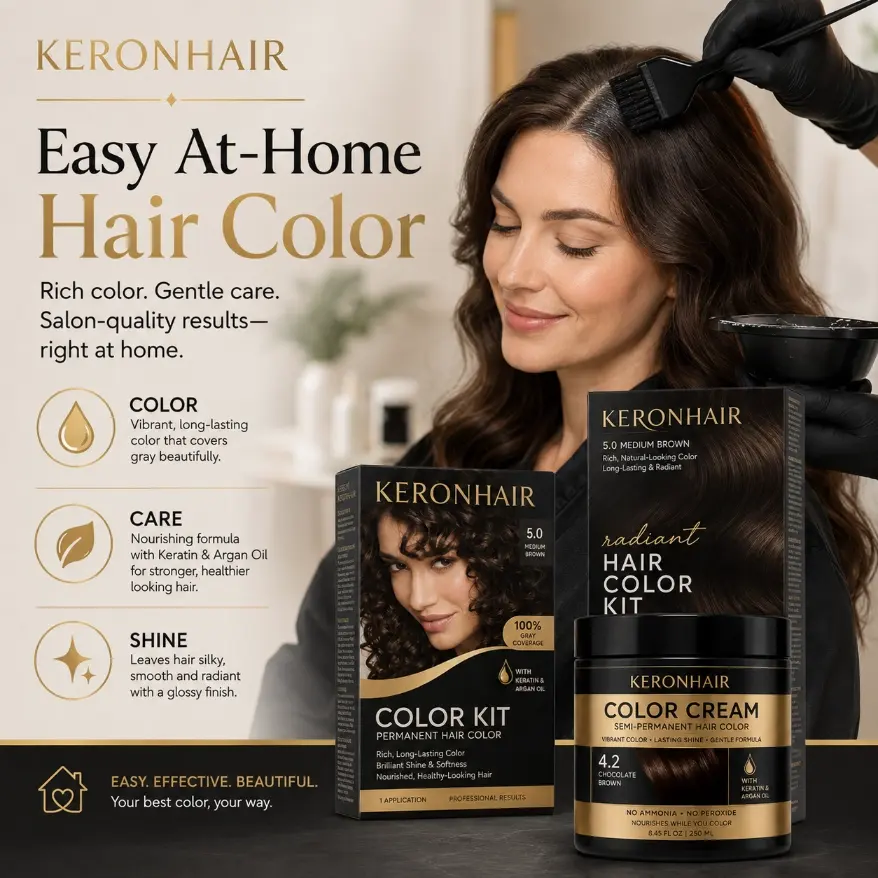
Ammonia-free color can be positioned for professional salon use or assembled as a retail kit. Packaging directions may include color tubes, developer bottles, cartons, leaflets, gloves and application accessories. The formula and developer should be tested with the selected components and intended mixing instructions.
Brands can begin with a concentrated range of natural commercial shades or create a broader shade architecture with defined levels and reflects. Keronhair can coordinate variable artwork and shade identification; physical standards remain important because printed and on-screen colors cannot reliably predict results on hair.
The project workflow may cover formulation, shade sampling, agreed hair-tress evaluation, compatibility and stability, specifications, bulk production and batch release. Quality controls are defined for the final product rather than copied from a generic checklist.
Hair color ingredient restrictions and warning requirements vary by market. Keronhair can organize applicable manufacturing and product information for buyer review, while the brand or its responsible market operator retains responsibility for final safety assessment, notification or listing, claims and compliant labeling.
Send your target shades, product benchmark, desired sensorial profile, sales country, packaging and estimated quantity. We will recommend a suitable route for formula and sample development.
No. Ammonia-free only describes the absence of ammonia in the formula. Other ingredients may still cause sensitivity or irritation, so appropriate warnings, directions and allergy-alert or patch-test instructions must follow the formula and market.
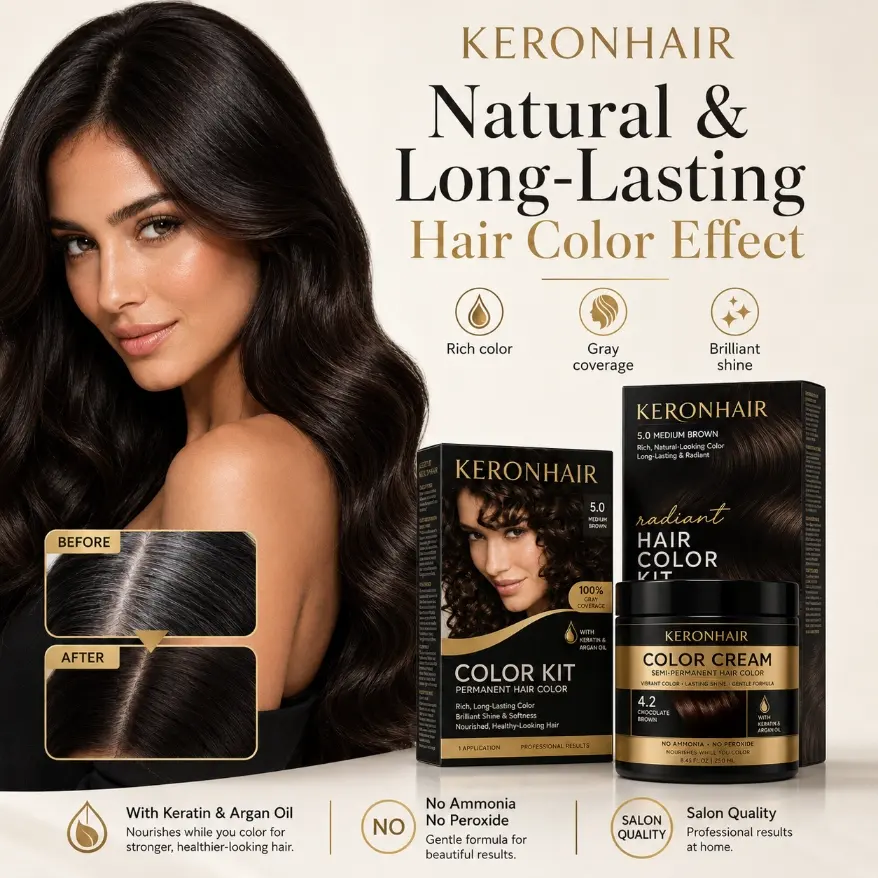
Gray-coverage-oriented formulas can be developed, but the result is shade- and substrate-dependent. Coverage claims should be based on defined testing across the shades and hair types included in the commercial claim.
Not necessarily. Replacing ammonia changes one aspect of odor, but other formula components and fragrances contribute to the overall profile. Any “odorless” or “low odor” claim needs suitable substantiation.
Yes. Color cream, developer, component sizes, instructions, gloves and carton can be coordinated as one project, subject to formula and packaging approval.
Not necessarily. “Ammonia-free” means the formula uses another alkalizing approach instead of ammonia; it does not automatically mean the finished product is chemical-free, allergen-free or irritation-free. The final user experience depends on the complete formula, developer, ingredients, application conditions and individual sensitivity. Product claims should therefore be based on the final formulation and relevant testing.
—— Private label manufacturing process
One coordinated Keronhair team manages formulation, sampling, packaging, quality control, and shipment preparation—giving your brand a clearer path from concept to production.
01
Share your target market, product category, performance direction, reference products, packaging expectations, budget, and planned launch timeline with Keronhair.
02
Our R&D team recommends a proven formula route or plans custom development around your ingredients, texture, fragrance, and positioning requirements.
03
Keronhair prepares samples for your review, then coordinates feedback on fragrance, texture, viscosity, color, application, and product performance.
04
Our team coordinates bottles, jars, tubes, closures, labels, decoration, and cartons while reviewing suitability for the selected formula and filling process.
05
After written approval, Keronhair organizes materials, filling, packing, in-process quality checks, batch records, and retained production references.
06
Keronhair completes finished-product checks, packing verification, required export-document coordination, and shipment preparation for your agreed destination.
Tell us what you want to launch and where you plan to sell it. From hair care and hair color to styling products, we can help you move from product development and sampling to packaging and production.