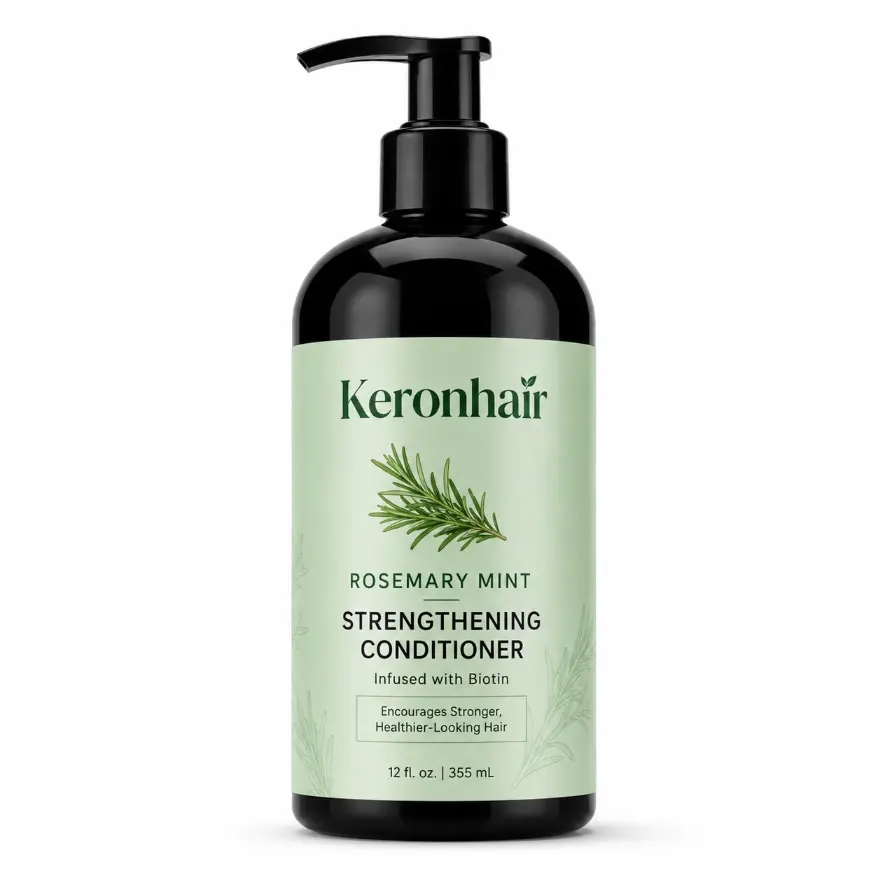
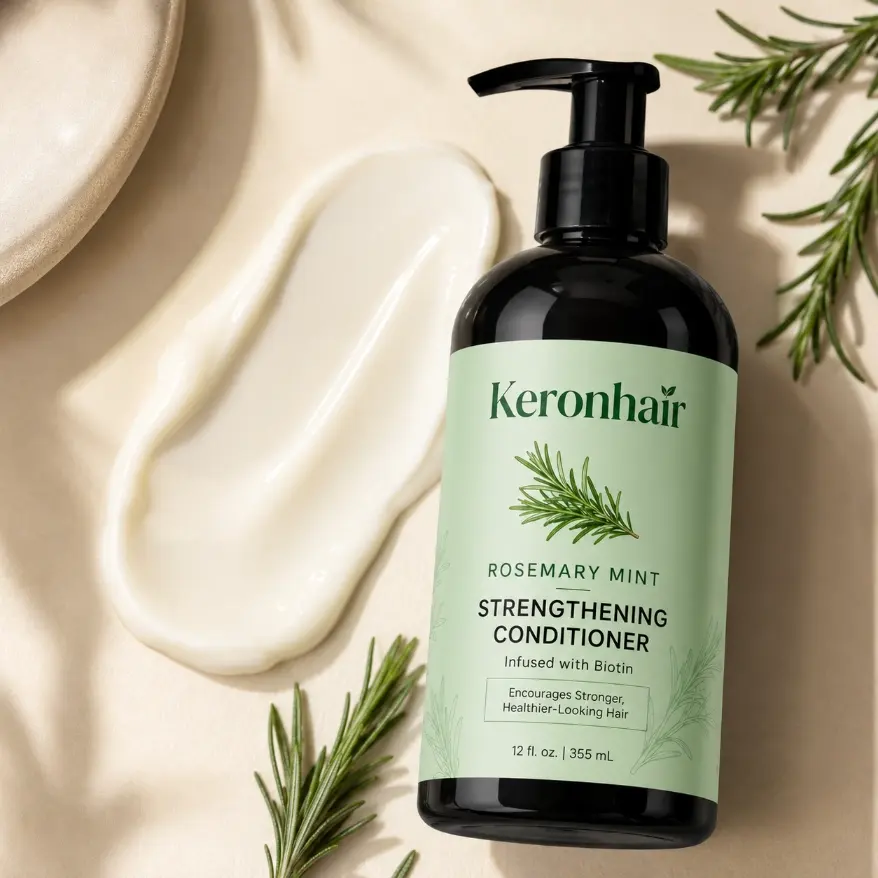
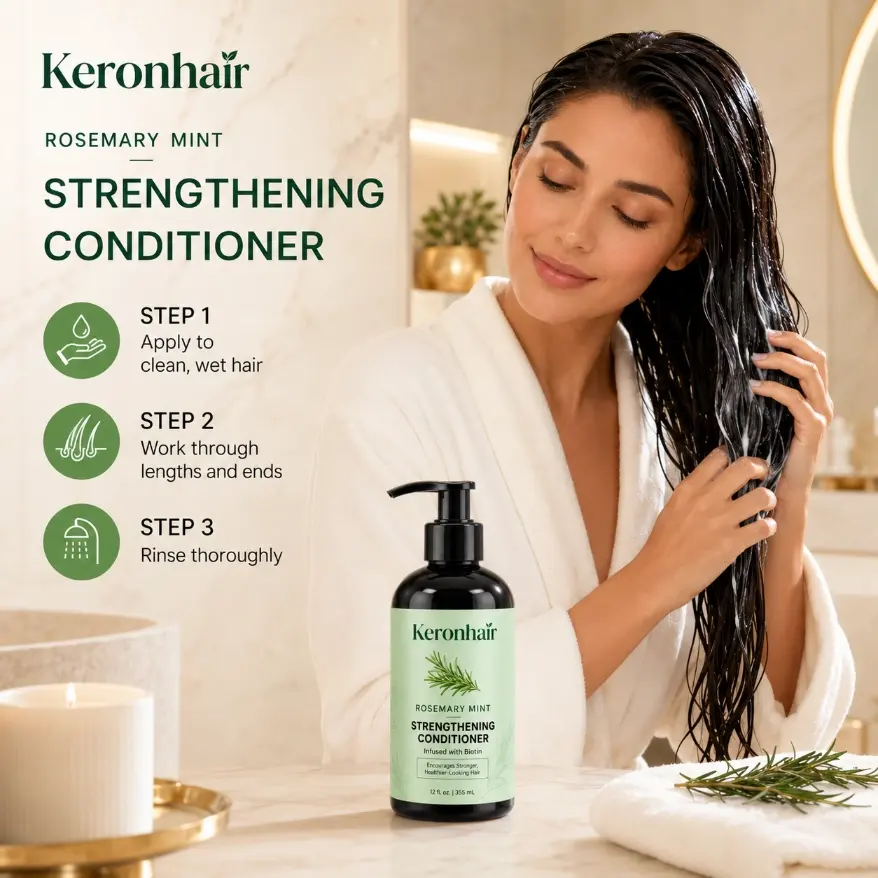
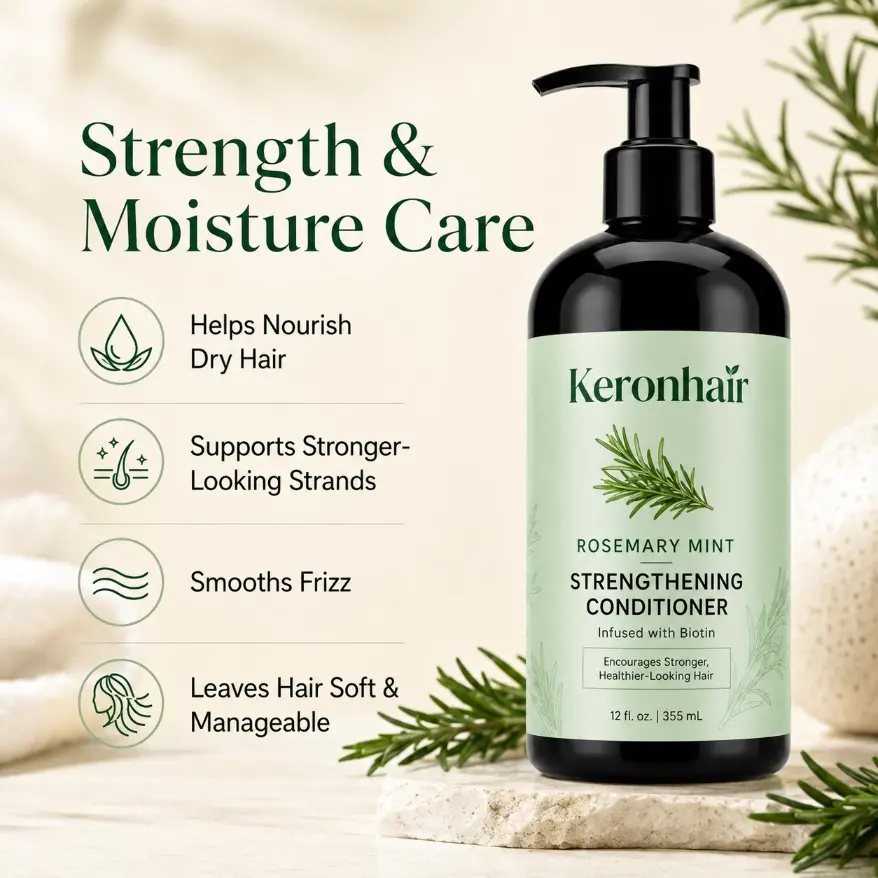
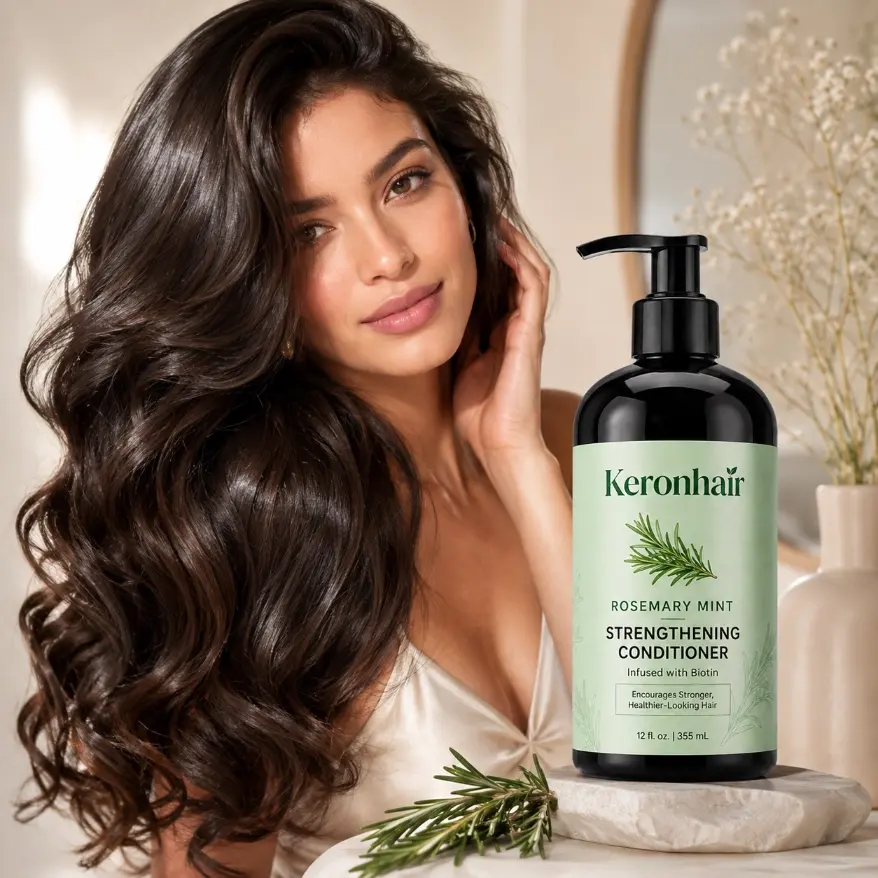
Create a conditioner that delivers the wet-combing, softness, rinse profile and after-feel your target customer expects. Keronhair coordinates formula direction, sensorial samples, packaging and scalable OEM/ODM production.
Proven base, semi-custom or custom development aligned with your brief.
Natural, fashion and gray-coverage shades developed for your target market.
Color cream, developer, retail packaging and project documentation.
A conditioner is not judged only after the hair dries. Buyers should define the complete use experience: how the product spreads on wet hair, whether it provides slip during distribution, how quickly it rinses, whether the hair feels coated, how easily it combs and what remains after drying.
Keronhair evaluates these stages against the intended hair type, dose and routine. A daily conditioner for fine hair should not be briefed like a rich conditioner for highly textured or chemically treated hair. Water quality, climate, shampoo pairing and consumer expectations can also influence the preferred finish.
The sample brief can specify wet slip, detangling, rinse speed, residue, softness, shine, manageability and dry combing. Where a brand wants quantified claims—such as breakage reduction, combing-force reduction or color-protection performance—a suitable finished-product test is required.
Ingredient stories may include plant oils, butters, proteins, amino acids, cationic conditioners, silicones or alternatives. Keronhair reviews how the complete system performs; the presence of a fashionable ingredient alone does not substantiate a finished-product benefit.
Designed for distribution after shampooing, followed by rinsing. Development focuses on wet slip, deposit, rinse profile, softness and compatibility with the paired cleanser.
Designed to remain on the hair. Dose, weight, tack, sprayability or pumpability, styling compatibility and buildup perception become more important. Preservation and package function are evaluated for the final water-containing formula.
For a multi-SKU line, the conditioner can be developed alongside shampoo, mask, leave-in or serum. This helps establish a clear product ladder rather than making every SKU claim the same “deep repair” benefit.
Conditioners may use squeeze bottles, pumps, tubes, jars, sachets or larger professional packs. Component choice depends on viscosity, dose, shower handling, closure cleanliness, e-commerce leakage risk and decoration. Packaging and formula compatibility should be reviewed before bulk material and printed components are committed.
Keronhair can support Ready-to-Brand, Semi-Custom and Fully Custom routes. The project moves through brief confirmation, sample review, packaging selection, compatibility and stability work, specification approval, production and final inspection.
Relevant controls may include appearance, odor, pH, viscosity, fill and agreed sensory comparison. Claims, ingredient declarations and documentation are finalized for the approved formula and destination market rather than assumed from a base concept.
Send us the target hair type, shampoo pairing, desired slip and finish, benchmark, ingredient direction, packaging, market and estimated quantity. We will recommend a suitable development route and sample plan.
Yes. They are treated as different formulation and use projects. Share the intended dose, application, hair type, finish and packaging so the correct route can be selected.
This direction can be reviewed for feasibility and target performance. The final “silicone-free” claim must match the full formula and relevant destination-market expectations.
Evaluation can include spread, wet slip, detangling, rinse profile, residue, softness, shine and dry combing on agreed hair types. Instrumental or consumer claims require an appropriate test plan.
Yes. Provide the shampoo, ingredient list or sample where possible. Keronhair can assess the routine, fragrance, after-feel, pack sizing and commercial positioning of the paired products.
Yes. These sensory attributes can be developed around the target hair type, channel, climate, benchmark and cost position. Because fragrance, viscosity, packaging and after-feel can affect one another, the final profile is confirmed through sampling and evaluation rather than treated as separate specifications.
—— Private label manufacturing process
One coordinated Keronhair team manages formulation, sampling, packaging, quality control, and shipment preparation—giving your brand a clearer path from concept to production.
01
Share your target market, product category, performance direction, reference products, packaging expectations, budget, and planned launch timeline with Keronhair.
02
Our R&D team recommends a proven formula route or plans custom development around your ingredients, texture, fragrance, and positioning requirements.
03
Keronhair prepares samples for your review, then coordinates feedback on fragrance, texture, viscosity, color, application, and product performance.
04
Our team coordinates bottles, jars, tubes, closures, labels, decoration, and cartons while reviewing suitability for the selected formula and filling process.
05
After written approval, Keronhair organizes materials, filling, packing, in-process quality checks, batch records, and retained production references.
06
Keronhair completes finished-product checks, packing verification, required export-document coordination, and shipment preparation for your agreed destination.
Tell us what you want to launch and where you plan to sell it. From hair care and hair color to styling products, we can help you move from product development and sampling to packaging and production.