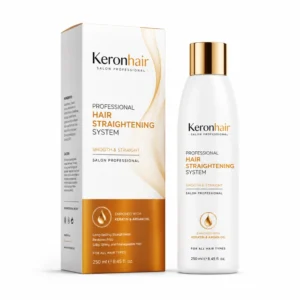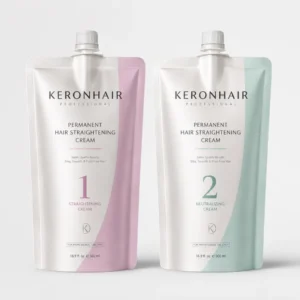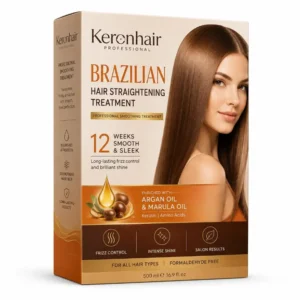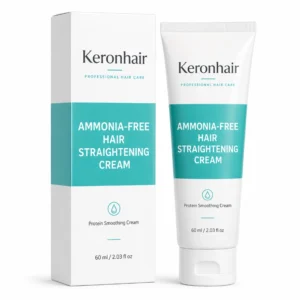
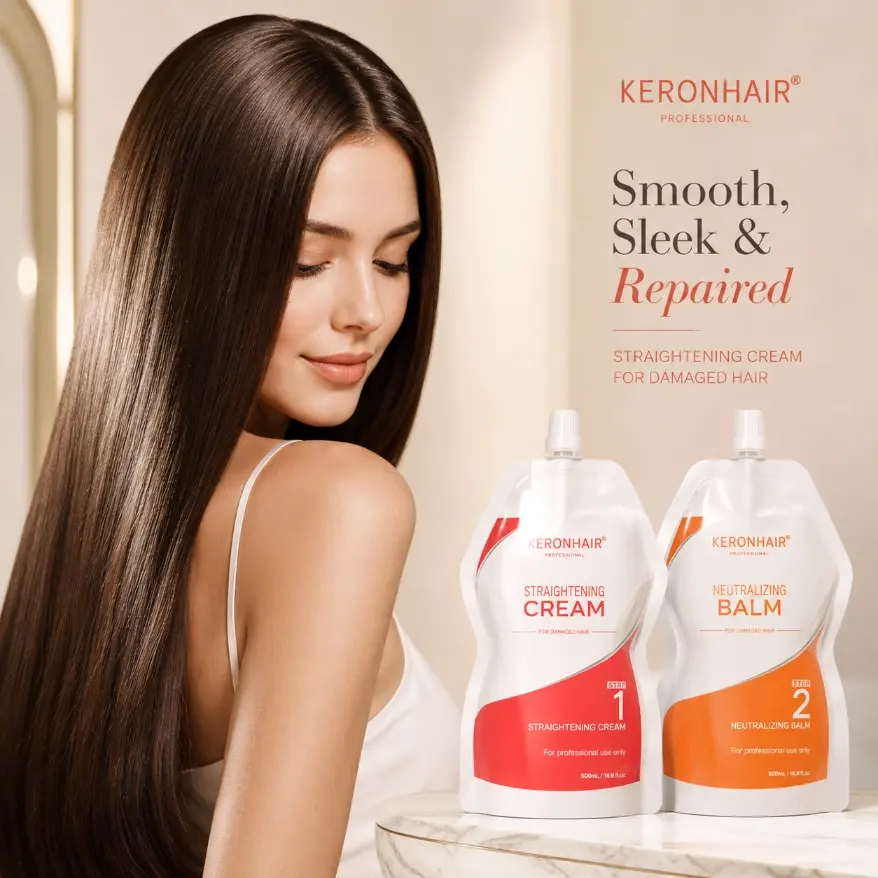
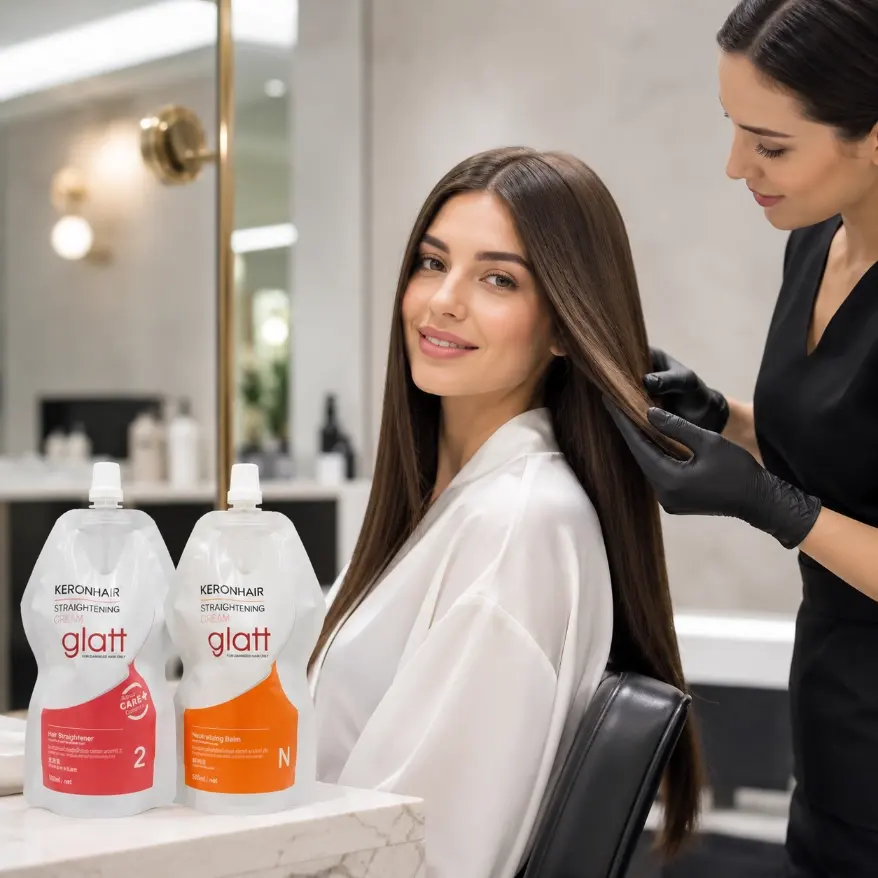
Develop a straightening or smoothing concept for defined compromised-hair profiles without claiming that every damaged strand is suitable for chemical processing. Keronhair combines formula selection, compatibility screening, protocol design, packaging and evidence-conscious B2B copy.
Proven base, semi-custom or custom development aligned with your brief.
Natural, fashion and gray-coverage shades developed for your target market.
Color cream, developer, retail packaging and project documentation.
Damage can result from bleach, color, previous straightening, relaxers, heat, weathering or mechanical stress, and these conditions do not create one technical hair type. Some compromised hair may tolerate a carefully selected service; severely weakened or incompatible hair may not be suitable for straightening at all.
Keronhair therefore treats “for damaged hair” as a development brief requiring clear boundaries—not as a promise of zero breakage or guaranteed safety. The final positioning should state the intended hair profile and professional assessment requirements, with contraindications and strand-testing guidance where appropriate.
Proteins, amino acids, oils, silicones, polymers and conditioning agents may improve slip, combability, softness or surface feel depending on the formula. They do not automatically reverse bleach damage, restore virgin hair or prevent all breakage during a chemical service.
Claims such as bond repair, strengthening, reduced breakage or heat protection require a defined mechanism and finished-product evidence. Keronhair can help buyers establish a realistic claim ladder based on the approved sample rather than relying on ingredient storytelling alone.
The brief should describe damage source, previous chemistry, porosity, elasticity, target result and professional workflow. Sample assessment can compare spreadability, processing control, rinse behavior, combability and post-service appearance on agreed hair tresses, but laboratory or tress observations do not eliminate the need for individual salon assessment.
Directions should explain strand testing, timing checkpoints, overlap avoidance, incompatible service history and when not to proceed. If heat is used, tool conditions must match the formula and hair profile; they should not be generalized from a standard healthy-hair protocol.
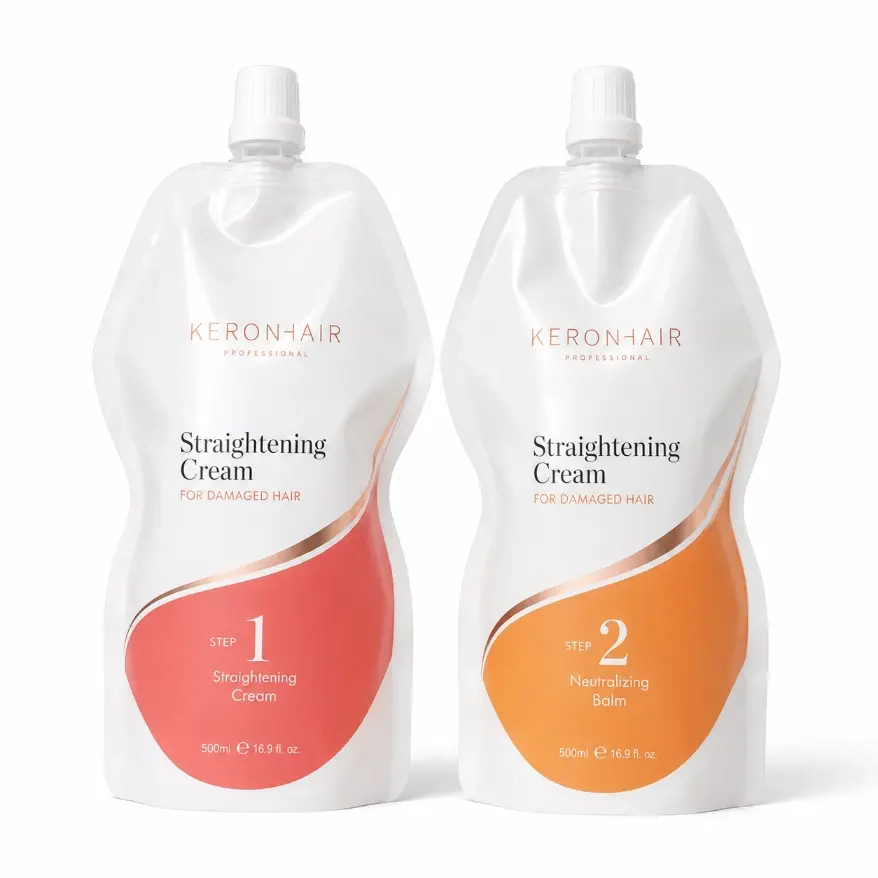
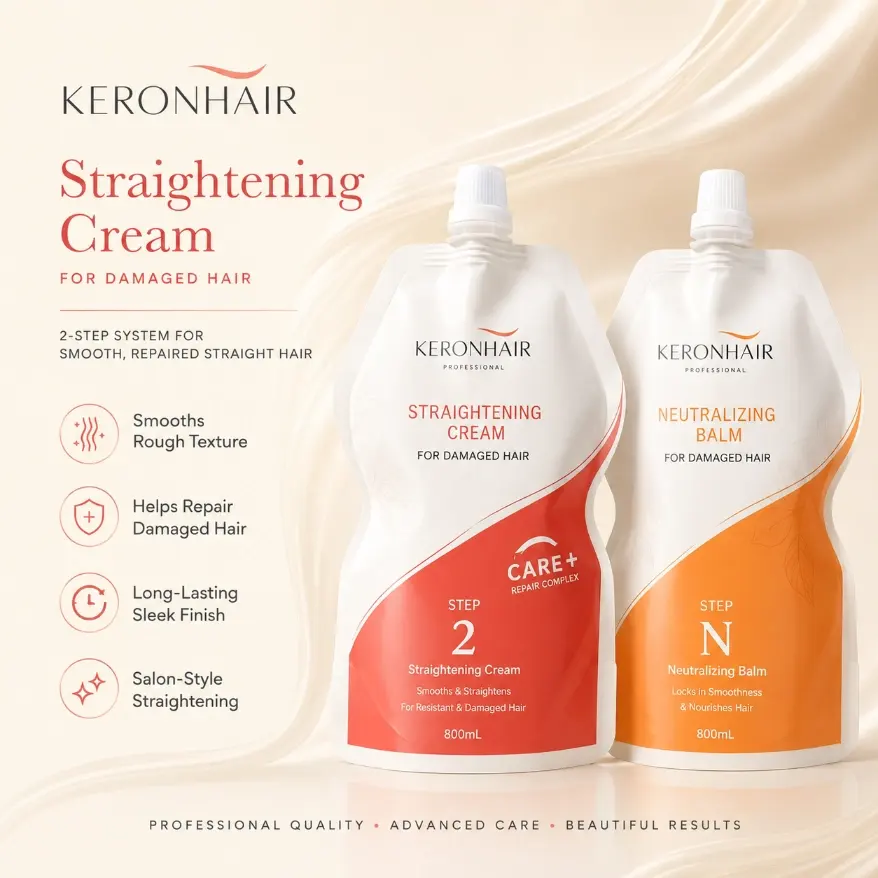
The product may be offered as a clearly differentiated strength, a smoothing service, or part of a professional system with neutralizer and repair-focused aftercare. Packaging should make the intended user and step obvious and reserve sufficient space for warnings and professional directions.
Keronhair can coordinate a salon-size treatment with retail conditioner, mask or serum to create a credible service-to-maintenance story. Each SKU remains separately sampled, specified and claim-reviewed. MOQ and timing depend on the complete range and pack plan.
Send the exact damage profile, previous services, desired result, benchmark, chemistry or ingredient restrictions, protocol, packaging, market and forecast. Keronhair will determine whether straightening, smoothing or a non-straightening care route is the more responsible development direction.
No. Damage severity and previous chemistry vary, and some hair should not undergo another straightening service. The professional must review history, condition and strand-test response and follow the formula-specific exclusions.
A lower-intensity or alternative smoothing direction can be evaluated for a tightly defined profile, but bleach compatibility is not guaranteed. Severely weakened hair may remain unsuitable regardless of conditioning ingredients or reduced processing.
They may support conditioning or specific tested benefits, but they do not automatically prevent damage. Any protection, repair or breakage claim must be connected to the complete formula, protocol and relevant finished-product evidence.
They should cover hair history, strand testing, contraindications, overlap avoidance, timing checkpoints, scalp-contact limits, heat conditions where applicable, neutralization, aftercare and when to stop or refuse the service.
Possibly. If the commercial goal is frizz control and easier styling rather than maximum straightness, a qualified smoothing route may offer a more appropriate positioning. The choice still requires formula, heat-use and safety review.
—— Private label manufacturing process
One coordinated Keronhair team manages formulation, sampling, packaging, quality control, and shipment preparation—giving your brand a clearer path from concept to production.
01
Share your target market, product category, performance direction, reference products, packaging expectations, budget, and planned launch timeline with Keronhair.
02
Our R&D team recommends a proven formula route or plans custom development around your ingredients, texture, fragrance, and positioning requirements.
03
Keronhair prepares samples for your review, then coordinates feedback on fragrance, texture, viscosity, color, application, and product performance.
04
Our team coordinates bottles, jars, tubes, closures, labels, decoration, and cartons while reviewing suitability for the selected formula and filling process.
05
After written approval, Keronhair organizes materials, filling, packing, in-process quality checks, batch records, and retained production references.
06
Keronhair completes finished-product checks, packing verification, required export-document coordination, and shipment preparation for your agreed destination.
Tell us what you want to launch and where you plan to sell it. From hair care and hair color to styling products, we can help you move from product development and sampling to packaging and production.