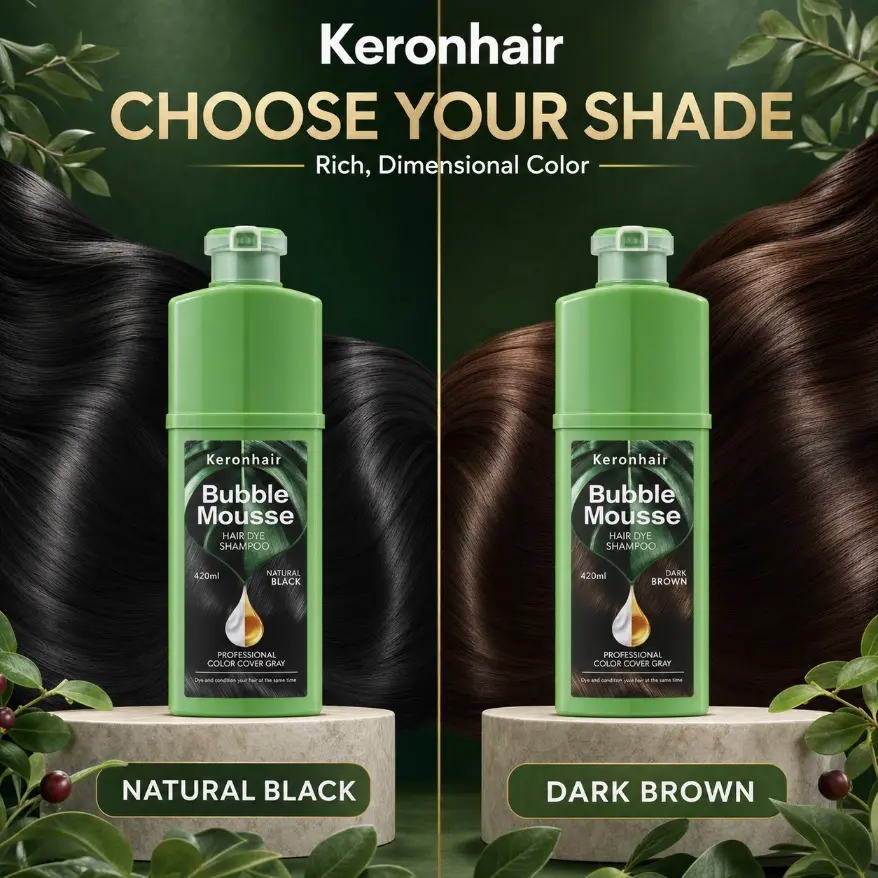
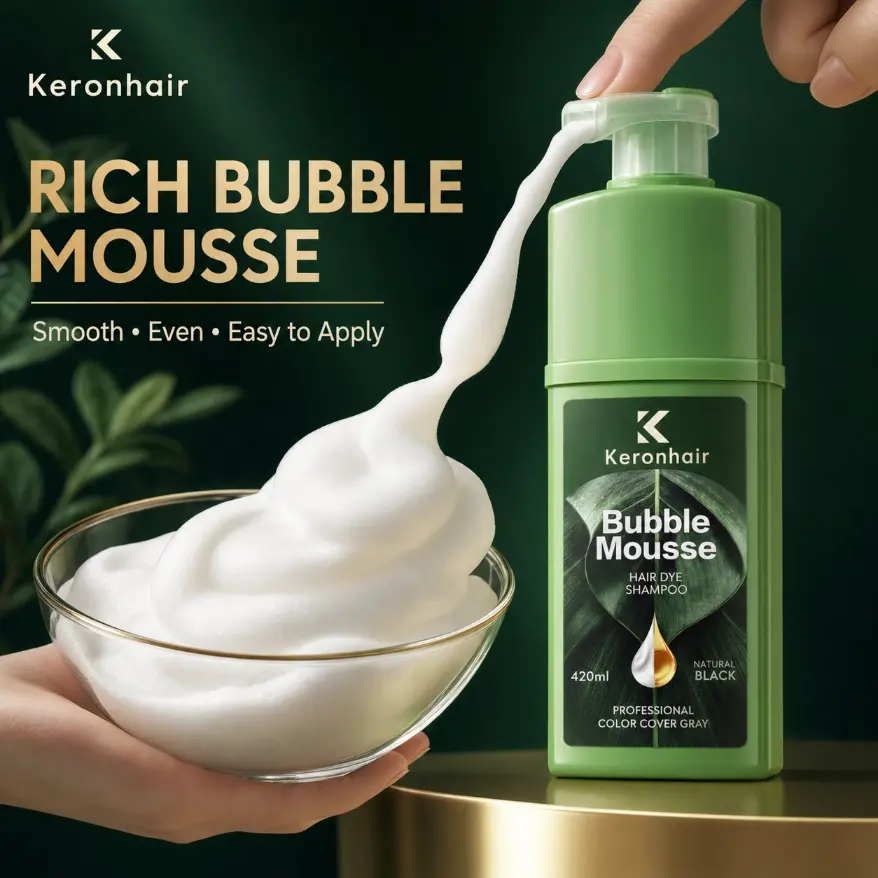
Develop a plant-positioned bubble mousse hair color with a clearly defined ingredient story, reliable foam performance and wholesale-ready kit. Keronhair coordinates formula components, shades, dispenser, accessories, private label artwork, case packing and repeat-order specifications.
Proven base, semi-custom or custom development aligned with your brief.
Natural, fashion and gray-coverage shades developed for your target market.
Color cream, developer, retail packaging and project documentation.
The supplied name uses “Plant Formulo.” For standard English, “Plant Formula Bubble Mousse Hair Dye” is likely the intended form. Keronhair should confirm whether “Formulo” is a registered product name, an artwork term or a spelling error before the page URL, carton and labels are finalized.
Until that decision is made, the product name should be treated as a controlled artwork variable. Wholesale buyers need the same spelling across quotation, sample label, barcode record, carton, packing list and commercial invoice.
“Plant formula” can mean very different things. It may refer to selected plant-derived ingredients, a botanical fragrance and visual theme, or a broader formulation standard defined by the brand. The page should identify the actual basis rather than suggesting that the product is made only from plants.
Plant-positioned hair dye is not automatically chemical-free, non-allergenic, non-irritating, organic, vegan, ammonia-free or PPD-free. Each claim requires its own formula, supplier and market review. Accurate claim boundaries help wholesalers avoid downstream listing disputes and inconsistent retailer descriptions.
Foam volume, density, stability and spreadability are affected by formula viscosity, component ratio, mixing method and dispenser construction. Keronhair reviews these factors together and evaluates the approved commercial pack during sampling.
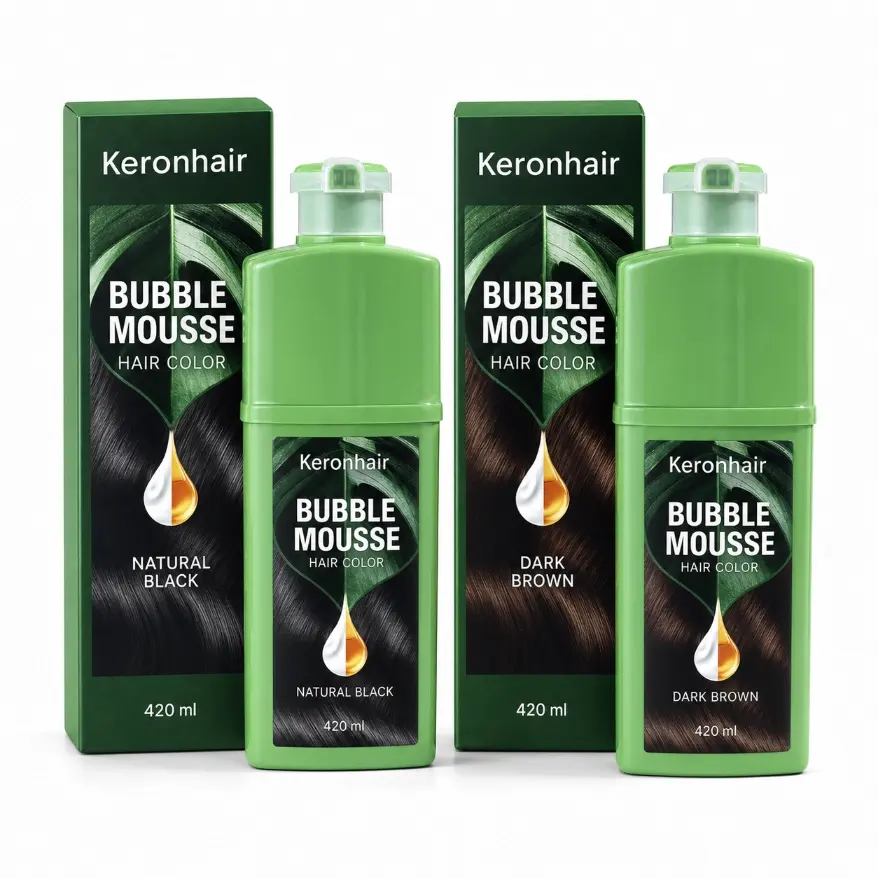
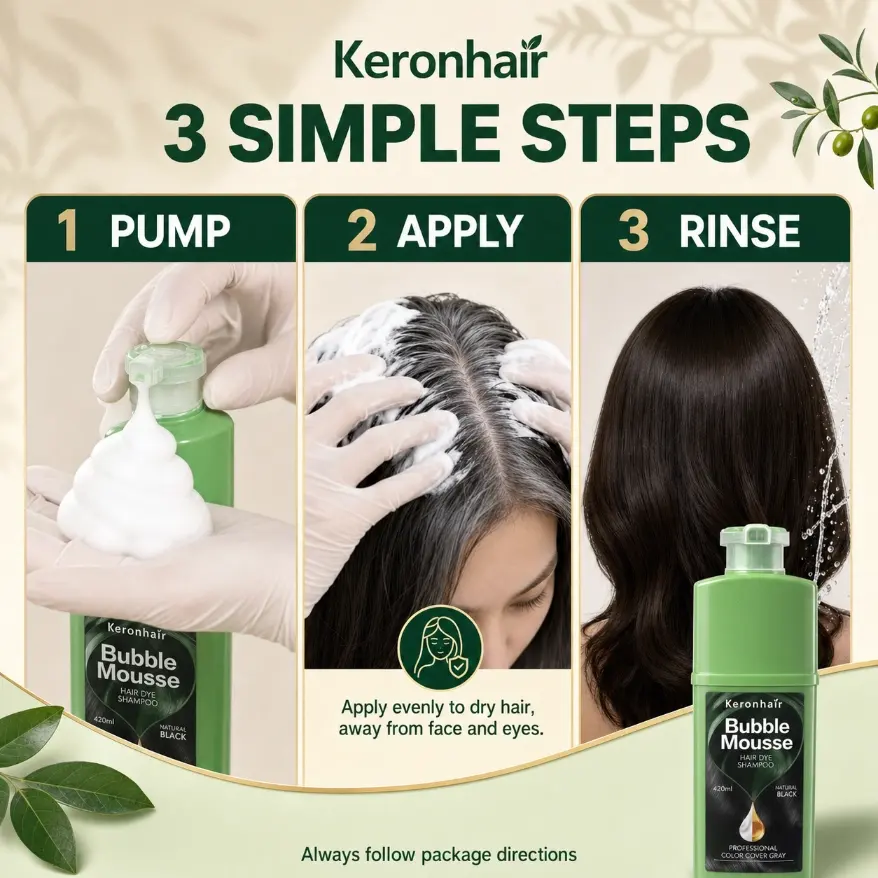
If the product uses oxidative color components, their separation, fills, ratio and activation directions must be controlled. Kit assembly can include the formula components, dispenser, gloves, leaflet, carton and other approved accessories. Every item is recorded in the bill of materials.
Importers can start with a compact shade assortment and expand after sell-through data is available. Each shade remains a separate SKU for formula approval, artwork, coding and production planning. Shared packaging can improve efficiency when technically and commercially feasible.
Bulk price and MOQ are calculated from the formula route, shade count, dispenser, printed components, accessories, cartons and order volume. Export packing should define unit quantity, inner quantity, master-carton quantity, gross/net weight, dimensions and marks after the pack is finalized.
The development path may include formula sampling, foam and dispensing evaluation, shade review, packaging compatibility, stability work, specifications, manufacture and final inspection. Controls can cover component appearance, odor, pH, viscosity, fill, foam function, shade result and pack condition as agreed.
Keronhair connects the approved sample, formula, pack, artwork and specification before production. This supports repeat ordering and makes future changes visible. MOQ, testing, documentation and timing remain project-specific.
Send the confirmed product name, botanical or plant-derived ingredient standard, target shades, dispenser reference, kit components, market, labeling languages, quantity by SKU and target timing. Keronhair will prepare samples and a wholesale quotation route.
“Plant Formula” is standard English, but Keronhair should confirm whether “Plant Formulo” is an intentional brand term before changing it. The approved spelling must be consistent across all commercial and packaging files.
No. The phrase should be defined by the actual formula and ingredient standard. A product may contain selected plant-derived ingredients while also using other cosmetic ingredients necessary for its color system.
Those directions can be reviewed, but the exact claims depend on the approved formula, performance target, ingredient documentation and destination-market requirements. They are not guaranteed by plant positioning.
Yes, subject to formula and packaging minimums per shade. Keronhair can coordinate shared components where feasible, while controlling shade-specific formula, artwork, codes and carton quantities.
They are confirmed after reviewing the formula route, shades, unit pack, dispenser, accessories, decoration, cartons, testing, quantity per SKU and material availability. The quotation should also state the agreed trade and shipping terms.
—— Private label manufacturing process
One coordinated Keronhair team manages formulation, sampling, packaging, quality control, and shipment preparation—giving your brand a clearer path from concept to production.
01
Share your target market, product category, performance direction, reference products, packaging expectations, budget, and planned launch timeline with Keronhair.
02
Our R&D team recommends a proven formula route or plans custom development around your ingredients, texture, fragrance, and positioning requirements.
03
Keronhair prepares samples for your review, then coordinates feedback on fragrance, texture, viscosity, color, application, and product performance.
04
Our team coordinates bottles, jars, tubes, closures, labels, decoration, and cartons while reviewing suitability for the selected formula and filling process.
05
After written approval, Keronhair organizes materials, filling, packing, in-process quality checks, batch records, and retained production references.
06
Keronhair completes finished-product checks, packing verification, required export-document coordination, and shipment preparation for your agreed destination.
Tell us what you want to launch and where you plan to sell it. From hair care and hair color to styling products, we can help you move from product development and sampling to packaging and production.