If you’re comparing shampoo suppliers in China, start with what you want to sell: an existing product under its current brand, or shampoo carrying your own name. That decision changes the samples you request, the packaging you approve, and the questions behind a useful quotation.
In this guide, ready-stock wholesale means buying finished products, usually with existing branding and packaging. Private label means buying shampoo to sell under your brand through an agreed supply arrangement. The terms overlap: private-label products are also sold wholesale, and one supplier may offer both routes.
Wholesale vs. Private Label Shampoo: Which Should You Choose?
Choose ready-stock wholesale if an existing shampoo suits your customers and you want to avoid developing your own product presentation. Choose private label if your brand needs to appear on the bottle and you can manage product approvals, packaging decisions, and launch preparation. Neither route automatically offers the lowest total cost.
| What you’re deciding | Ready-stock wholesale | Private label |
|---|---|---|
| Brand on the bottle | Usually the existing product brand | Your brand, under the agreed arrangement |
| Formula | Select from available finished products | Use an offered formula or negotiate adjustments or development |
| Packaging | Usually the existing bottle and label | Choose within the supplier’s confirmed options |
| Order minimums | Confirm case quantities, SKU minimums, and actual stock | Confirm finished-product, formula, and packaging minimums |
| Sample approval | Evaluate the product you intend to buy | Approve the agreed formula and packaging configuration |
| Replenishment | Confirm continued availability and batch details | Confirm specification retention, component availability, and change procedures |
Keronhair offers shampoo manufacturing services. This guide compares purchasing decisions; it isn’t an independent supplier ranking, factory audit, or price survey.
I’d make the branding decision before asking for samples. If you need your own retail line, a low price for another company’s branded shampoo won’t answer your brief. If you distribute established products, paying for custom packaging may add work your business doesn’t need.
When discussing timing, ask whether “available” means packed inventory or a catalogue formula awaiting production. Your schedule needs to account for outstanding approvals and shipping, too.
What Changes When You Choose Private Label Shampoo?
With private label, you help define the product that reaches your customer. Even when you start with an existing formula, someone still needs to approve its presentation, check the label, and decide what can change on later orders.
Branding and Formula Choices
Your name on the bottle doesn’t automatically give you ownership of the shampoo formula. Treat branding permission, formula adjustments, exclusivity, and ownership as separate questions when comparing private label shampoo suppliers in China.
An existing base may already meet your brief. Request its sample reference, ingredient information, available packaging, and the testing documentation relevant to your proposed product. If you want a different fragrance or texture, ask what further evaluation the supplier proposes and how that affects the quotation.
Full custom development deserves consideration when you have a specific requirement the available bases don’t meet. Describe that requirement in practical terms: for example, the rinse feel you’re seeking or a packaging format the product must dispense through. A benchmark helps explain your preference; it doesn’t establish a right to copy another brand’s formula.
Put any exclusivity promise in writing, including its scope, duration, territory, and conditions. Labels such as OEM and ODM aren’t a substitute for those terms. When comparing shampoo manufacturers for your brand, separate the offered product-development service from the rights included in the agreement.
Packaging and Launch Preparation
Choosing a bottle involves more than approving its appearance. You need to know what will be filled, how it will dispense, which artwork will be printed, and who will check the final label for the market where you plan to sell.
For example, the FDA’s summary of US cosmetics labeling requirements covers product identification, net contents, business information, and retail ingredient declarations. This is a US-specific reference, not a worldwide checklist. Arrange an appropriate review for your destination market before approving artwork.
Ready-stock buyers also need this check. An existing English label doesn’t establish suitability for every country or sales channel. Request readable artwork and product information before committing to inventory.
For a private-label order, approve the formula sample and packaging sample separately, then confirm the finished combination. A pleasant shampoo sample says nothing about whether your selected pump dispenses it acceptably or whether the printed label matches your approved file.
Reorders and Product Changes
Before placing your first order, agree on how you’ll identify and reorder the same product. Record the formula reference, fill size, packaging specifications, and artwork version, along with the changes that require your approval.
For ready-stock products, ask about discontinuations, packaging updates, available batch information, and remaining shelf life when goods ship. For private label, ask what happens if a fragrance, bottle, or closure becomes unavailable. Who proposes the replacement, who evaluates it, and when do you see it?
Agree on how both sides retain approval records and handle complaints. Neither supply model guarantees consistency by itself. You need a named contact and a written process that still works after the first salesperson hands over the order.
Factory or Trading Company: Which Supplier Fits Your Order?
A factory and a trading company can both sell wholesale shampoo or coordinate private label. Find out who does the work and who handles problems with your order.
Buying directly can give you access to the production team, if the factory provides that access. A trading company may coordinate products from several manufacturers. Assess the actual arrangement rather than assuming one company type must be cheaper or easier to manage.
Before comparing commercial offers, establish:
- Which legal entity signs the agreement and receives payment.
- Which facility manufactures and fills the shampoo, including any subcontracted work.
- Who supplies the agreed test records and batch documentation.
- Who handles defects, replacements, complaints, and reorder changes.
If the names differ across documents, ask the supplier to explain the relationship. A clear explanation still needs supporting evidence. Our guide to verifying a hair care manufacturer covers the checks in more detail.
Where Can You Find Shampoo Suppliers in China?
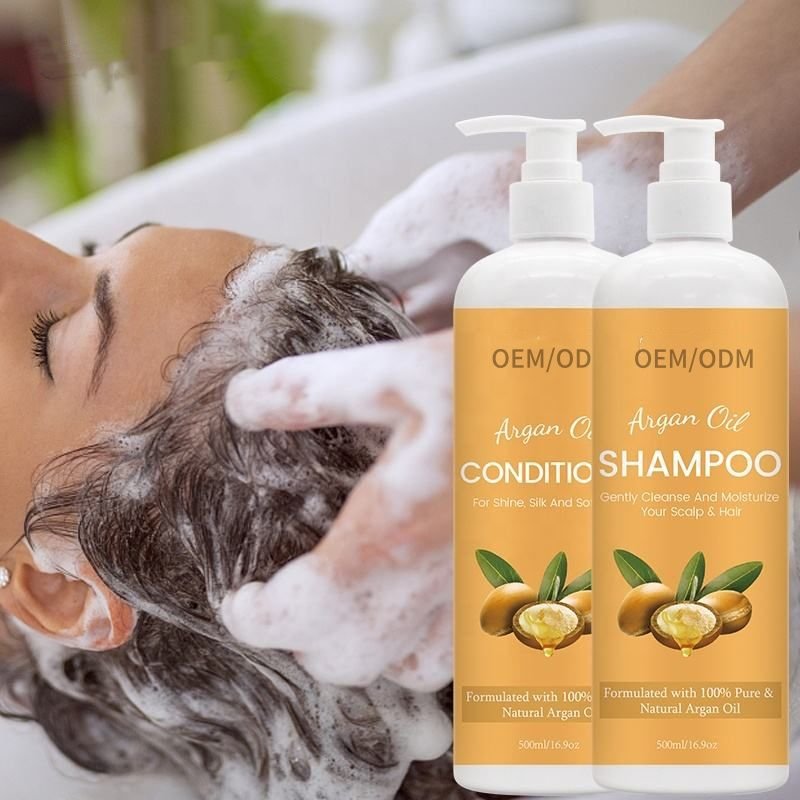
Use supplier listings to discover candidates, then visit their official pages and request a product-specific response. A search result can show that a company markets shampoo; it cannot confirm current inventory, suitability for your market, or acceptance of your order.
- Product directories and B2B marketplaces help you find wholesale shampoo suppliers in China and compare advertised formats. Confirm whether each listing means existing stock, bulk liquid, or production under your label.
- Supplier websites help you identify the stated product range and service model. Look for shampoo-specific information rather than relying on a general cosmetics homepage.
- Exhibition directories can identify companies to contact. Check the edition and date, then confirm that the company still offers the service you need.
For a concrete example, Kaijoe’s private-label shampoo product page presents private-label shampoo options. It is a starting point for an inquiry about formulas and packaging, not proof of current stock, project minimums, or independently verified quality.
Keronhair also presents shampoo manufacturing options involving existing formulas, selected adjustments, and custom development. If you approach us, send the same brief you send other candidates so you can compare the responses fairly.
These examples aren’t a vetted shortlist or a ranking. For the broader discovery process, see our guide to finding a shampoo manufacturer in China.
An exhibition contact should lead to the same written shampoo brief as an online inquiry. Our Beautyworld Dubai 2026 project brief shows the manufacturing and packaging topics prepared for a face-to-face discussion; use the contact team for current inquiries.
How Do You Compare Quotes from Shampoo Suppliers in China?
Compare the same product, quantity, and delivery scope before comparing bottle prices. A quotation is incomplete for your decision if you cannot tell which formula, packaging, services, and shipment costs it covers.
Consider this hypothetical example: two suppliers advertise the same headline price for shampoo at your requested fill size. Quote A includes the bottle and label. Quote B prices the contents without those components. The price figures look equal, but the offers aren’t yet comparable.
| Quotation field | Illustrative Quote A | Illustrative Quote B | What to request |
|---|---|---|---|
| Formula and fill size | Included | Included | Exact formula reference and declared fill |
| Bottle and closure | Included | Not included | Component specifications and itemized cost |
| Label and application | Included | Not included | Printing, application, and artwork scope |
| Retail carton | To confirm | To confirm | Whether required and separately priced |
| Testing and documents | To confirm | To confirm | Named tests, reports, and responsible party |
| Development or setup fees | To confirm | To confirm | One-time charges and repeat-order charges |
| Order minimums | To confirm | To confirm | Finished units, each SKU, and components |
| Freight and delivery scope | To confirm | To confirm | Named destination, trade term, and exclusions |
The table illustrates a comparison method, not typical supplier pricing. Once the missing items are filled in, either offer could be the better fit.
Ask for the minimum order quantity, or MOQ, at each relevant level. A total order minimum doesn’t tell you how many units of each fragrance or bottle design you must buy. Our private label shampoo MOQ guide explains these separate commitments.
Packaging deserves its own line in the budget. If you must purchase more printed components than the first production run uses, agree on ownership, storage charges, storage duration, and what happens if you change the design. Unused packaging is still part of your purchasing commitment.
For delivery, specify the agreed Incoterms rule, named place or port, and version. As an ICC Academy explanation of Incoterms and sales contracts notes, Incoterms do not replace contractual terms for payment and quality. Those details need their own agreement.
Finally, separate the first-order cash requirement from the expected reorder cost. Setup fees may not recur, while components, tests, freight, and duties depend on the next order’s scope. Ask the supplier to show the assumptions behind both figures.
What Should You Send Before Requesting a Quote?
A short, specific brief helps suppliers quote the same job. If you’re undecided between ready-stock wholesale and private label, request separate offers so you can see what each route includes.
You can adapt this inquiry:
- Target country and sales channel: [market; distributor, salon, retail, or online].
- Requested supply model: [ready-stock wholesale, private label, or separate quotes for both].
- Shampoo concept: [intended customer, product preferences, and optional benchmark].
- Product format and fill size: [liquid, bar, or other format; quantity per pack].
- Product variants and first-order quantity: [each SKU and requested units].
- Packaging: [existing packaging or proposed bottle, closure, label, and carton].
- Budget basis and delivery destination: [target cost scope and delivery location].
- Target date: [required arrival date, with any flexibility].
- Samples and documents: [evaluation samples, proposed test scope, and destination-market documentation needs].
- Please identify the manufacturer, approval process, quote validity, payment schedule, included costs, exclusions, and any unresolved assumptions.
This inquiry doesn’t replace a purchase contract. Before you pay, agree on the quotation, product specifications, approval records, and commercial terms. Also confirm what starts the production schedule: deposit, artwork approval, component arrival, or another stated milestone.
How Can Keronhair Help You Launch a Private Label Shampoo Brand?
If you’ve decided to put your own brand on the bottle, Keronhair can help with formula development, packaging, and shampoo production. You can start with an existing formula, discuss adjustments, or request custom development when your product brief calls for something different.
Our services cover the main decisions behind a private-label launch:
- Formula selection and development: work with our team on a shampoo direction, then evaluate samples against your product requirements.
- Packaging support: explore bottle and pump options, label design, and cartons that suit your brand presentation.
- Production and quality checks: coordinate manufacturing and packaging preparation, with the testing scope and documentation agreed for your project.
- Reorder support: discuss repeat production, formula adjustments, and feedback as your product line develops.
You don’t need to settle every detail before the first conversation. Share your target market, intended customer, expected quantity, and packaging preferences. If you’re unsure whether an existing formula will work, make that part of the discussion.
For a customized or own-label order, verify the development service as well as the shampoo catalogue. The Chinese OEM/ODM manufacturer guide explains how to match factory capability with the depth of work your brand requires.
Explore our private label shampoo manufacturing services to plan the next step. MOQ, lead time, testing, and packaging availability need confirmation for your specific order.
Frequently Asked Questions
These questions address arrangements that can fall between ready-stock purchasing and a private-label project. Confirm the details with the supplier before treating either route as suitable for your order.
Can I Put My Brand on Ready-Stock Shampoo?
Only if the supplier confirms an appropriate branding arrangement. Don’t assume existing branded inventory can be relabeled. Check permission, packaging, product documentation, and destination-market requirements before ordering.
Does Private Label Mean an Exclusive Formula?
No. Private label describes your branding arrangement, not automatic formula exclusivity. Any exclusive rights should have a written scope, duration, territory, and conditions.
Can I Start with Wholesale and Add Private Label Later?
Yes, if the supplier supports both routes. Treat private label as a separate project with its own samples, packaging approvals, minimums, and terms. Existing inventory may not be eligible for relabeling.
Can I Buy Bulk Shampoo Without Retail Packaging?
Some bulk shampoo suppliers offer this arrangement. Confirm transport containers, storage requirements, filling responsibilities, testing, and traceability. Buying bulk liquid leaves retail packaging and filling work to be arranged separately.
Choose the Supply Model That Matches Your Business
Choose according to the product you need to sell and the work your team can manage. Neither a wholesale order nor a private-label project needs to be more complicated than your business requires.
Imagine a distributor adding an existing shampoo to its catalogue. Its next checks would include resale arrangements, available stock, remaining shelf life, market suitability, and replenishment. Developing a new formula wouldn’t help answer those immediate questions.
Now imagine a salon launching shampoo under its own name. An existing private-label formula may meet the brief. The next step is to evaluate the sample, settle the packaging, and confirm the launch requirements. Custom development becomes relevant if the available formulas don’t meet a defined need.
If your project calls for your own brand, explore Keronhair’s custom shampoo manufacturing options and send your product brief. Include your market, product direction, packaging preferences, and expected quantity so the discussion starts with a specific supply proposal.
References & Sources
The sources below support the labeling example, supplier-discovery example, and trade-term discussion. The quotation comparison and business scenarios are illustrative, not reported customer cases or actual supplier offers.