HAIR CARE SOURCING GUIDE
Saudi Arabia Hair Color Guide: Popular Brands, Shades & Prices
This independent guide compares popular hair colors available in Saudi Arabia by brand, shade, format, price, and coloring goal. It covers Garnier, L’Oréal Paris, Wella/Koleston, Bigen, Palette, and henna-based options, using example Saudi retailer prices. You’ll learn which shades are more realistic for dark or gray hair, how permanent and lower-commitment products differ, when home coloring may be suitable, when salon help is safer, and which product and allergy checks matter before application.
Budget Choice
Compare complete Color Naturals, Palette, and Koleston retail kits.
Gray Coverage
Choose a product that expressly states its gray-coverage use.
Ammonia-Free Preference
Compare exact Olia or Bigen products and still check allergy warnings.
Major Lightening
Use a professional plan for dark, dyed, or uneven hair.
What Is the Best Hair Color in Saudi Arabia?

The best choice depends on your current color, gray coverage goal, preferred commitment, budget, and whether the desired change is realistic without professional lightening.
For an accessible permanent kit, Garnier Color Naturals, Palette, and selected Wella Koleston products are useful starting points to compare. L’Oréal Paris offers several mid-range formats, including permanent or gloss-style color and temporary root concealers. Bigen has powder, cream, and quick gray-coverage options, while Garnier Olia is one of the better-known choices marketed without ammonia. Henna-based color may suit people who want a different coloring format, but “natural” does not mean allergy-free or predictable on every head of hair.
Choose by goal rather than brand name alone:
- For a modest budget: compare complete Garnier Color Naturals, Palette, and Koleston retail kits.
- For gray coverage: look for a permanent product that expressly states its gray-coverage use and follow its timing instructions.
- For an ammonia-free preference: compare Garnier Olia and relevant Bigen products, then read the complete ingredient list and allergy warning.
- For naturally dark hair: black, dark brown, chocolate, and red-brown shades usually involve less dramatic change than blonde or vivid colors.
- For low commitment: consider a temporary root spray, color mascara, or semi-permanent color rather than permanent dye.
How We Chose the Brands in This Guide
This guide prioritizes brands with visible Saudi availability, multiple useful formats or shades, and prices that could be checked in Saudi Riyals; it is not a laboratory ranking.
“Best” can become meaningless when a list has no method behind it. The brands below were selected because their products appeared through established Saudi supermarkets, pharmacies, beauty retailers, or marketplaces; several shades or formats were available; and prices could be checked in Saudi Riyals.
That method measures local availability and shopping usefulness. It does not prove that one formula is chemically superior to another. We did not independently laboratory-test these products, and a retailer’s rating or “best seller” badge is not universal evidence of quality. Your result will also depend on your starting color, previous chemical services, hair porosity, application, processing time, and aftercare.
The comparison therefore focuses on six practical questions:
- What product formats can you find?
- Which shade families are commonly stocked?
- Is the product a complete kit or only one component?
- What do comparable Saudi listings cost?
- What type of buyer may find the range useful?
- What limitation should you understand before choosing it?
Quick Comparison of Hair Color Brands in Saudi Arabia
Garnier, L’Oréal Paris, Wella/Koleston, Bigen, Palette, and henna-based options serve different budgets and coloring jobs, so compare the exact product line rather than the logo alone.
| Brand | Common Formats | Useful Starting Point For | Common Shade Families Seen | Price Position | Important Check |
|---|---|---|---|---|---|
| Garnier | Permanent kits, oil-powered permanent color, men’s shampoo color | Broad at-home choice | Black, brown, ash, blonde, red | Budget to mid-range | Confirm the product line, not only the shade name |
| L’Oréal Paris | Permanent color, gloss-style color, root concealer | More format and finish choices | Black, brunette, mocha, ash, blonde | Mid-range to premium at-home | Check whether the result is permanent or temporary |
| Wella/Koleston | Permanent cream, retail kits, root products | Natural, ash, brown, and blonde shade selection | Black, chestnut, brown, ash, blonde, red | Budget to mid-range | Check whether developer is included |
| Bigen | Powder, cream, conditioning color, men’s quick color | Dark shades and gray-coverage comparisons | Black, brown-black, dark brown, light brown | Budget to mid-range | Mixing and timing differ by product |
| Palette | Permanent color cream | Lower-priced permanent color | Black, brown, blonde, red | Budget | Shade availability varies by retailer |
| Vatika and henna-based options | Powder or henna-based color | A different color-deposit format | Black, brown, dark brown, red-brown | Budget | Read the full ingredient list; results can be less predictable |
01. Garnier: Broad At-Home Choice
Garnier is easy to compare because Saudi retailers commonly list both entry-level and higher-priced lines. Color Naturals is a permanent home-color range, while Olia is a permanent range marketed without ammonia and powered by an oil blend. Garnier’s regional site currently presents more than 35 Color Naturals shades and 23 Olia shades, although the range stocked by an individual Saudi retailer may be much smaller. These shade-count and performance statements are the brand’s own claims, not our independent test results. You can review the current product descriptions on the official Garnier Color Naturals and Garnier Olia pages.
Color Naturals can be a sensible comparison point when price matters and you want a conventional complete kit. Olia may be more relevant if avoiding ammonia is a personal preference. Neither choice removes the need to read the ingredients, perform the manufacturer-directed allergy alert test, or assess whether your desired shade is realistic.
Best comparison use: accessible at-home kits across several price levels.
Watch for: a light shade name does not guarantee meaningful lift on very dark or previously colored hair.
Best for
Accessible complete kits
Price position
Budget to mid-range
Watch for
Light shades may not lift dark or dyed hair
02. L'Oréal Paris: Multiple Formats and Finishes
L’Oréal Paris listings in Saudi Arabia span more than one job. Casting Crème Gloss products are commonly presented as glossy at-home color, Excellence and Prodigy listings target permanent color needs, and Magic Retouch sprays provide temporary root concealment. That variety is useful, but it also makes it easy to compare products that do different things.
Before choosing by shade name, check whether you are looking at a full color kit, a gloss-style color, or a temporary spray. A root concealer can hide visible regrowth until the next wash or color service, but it is not a substitute for permanent gray coverage. A permanent kit involves a different commitment and application process.
Best comparison use: shoppers who want a choice between full color and short-term root coverage.
Watch for: similar names such as brown, mocha, or ash can look different across product lines and starting hair colors.
Best for
Full color or temporary root coverage
Price position
Mid-range to premium
Watch for
Confirm permanent, gloss, or temporary format
03. Wella and Koleston: Extensive Natural and Ash Shade Families
Wella’s current Koleston consumer portfolio includes black, blue-black, chestnut, several browns, ash shades, blondes, reds, and root products. The official Wella Koleston range shows how broad the shade system is.
The main shopping issue is pack format. Some listings are complete consumer kits, while professional color tubes may need a separately selected developer. That distinction affects both cost and safe use. If the product page does not clearly show the box contents and mixing directions, do not assume everything required is included.
Best comparison use: shoppers looking for natural, brown, ash, or blonde shade-number choices.
Watch for: “Wella,” “Koleston,” and “Koleston Perfect” do not always refer to the same retail format or intended user. Professional systems should be used according to their specific instructions.
Best for
Natural, brown, ash, and blonde codes
Price position
Budget to mid-range
Watch for
Check whether developer is included
4. Bigen: Dark Shades and Gray-Coverage Formats
Bigen’s Middle East range includes powder color, conditioning color, hair color conditioner, and several men’s products. Its official regional site also links Saudi buying options such as pharmacies and marketplaces. Certain products are marketed without ammonia, but you should verify the exact package rather than applying that description to the entire brand. See the current formats on the official Bigen Middle East product page.
Bigen can be particularly useful to compare when your goal is natural black, brown-black, dark brown, or targeted gray coverage. Powder, cream, and quick-use products do not share one mixing method, so the format matters as much as the shade.
Best comparison use: dark shades, gray coverage, and format-specific options for women or men.
Watch for: Bigen advises against treating color mixing like paint; follow only the combinations and directions authorized for the exact product.
Best for
Dark shades and gray coverage
Price position
Budget to mid-range
Watch for
Mixing and timing vary by product
5. Palette: Budget Permanent Color
Palette permanent color creams appear in Saudi supermarket and marketplace listings in shades such as black, dark brown, light brown, blonde, and red. Promotional prices can place them alongside entry-level Garnier and Koleston products.
Palette is most useful as a budget comparison rather than an automatic recommendation. Check local stock, package contents, instructions, and the difference between the photograph on the box and the shade chart for your starting color.
Best comparison use: lower-priced permanent color in familiar natural or red shade families.
Watch for: the shade selection may be narrower or less consistent across retailers.
Best for
Lower-priced permanent color
Price position
Budget
Watch for
Stock and shade range vary
6. Vatika and Henna-Based Hair Color: A Different Coloring Format
Saudi retailers commonly list Vatika and other henna-based products in black, brown, dark brown, or reddish-brown options. These products belong in the comparison because some shoppers specifically want a henna-based format, but they should not be treated as a risk-free version of conventional dye.
Read the complete ingredients and directions. Product composition can vary, and previous henna or color deposits may affect later chemical services. The FDA and NHS also warn that temporary products marketed as “black henna” can contain PPD and may increase the risk of later allergy to hair dyes. This warning does not mean every reputable packaged henna product is the same; it means the label and source matter.
Best comparison use: shoppers considering a powder or henna-based color-deposit option.
Watch for: unpredictable results, difficult future color correction, and assumptions based only on the word “natural.”
Best for
Powder or henna-based deposit
Price position
Budget
Watch for
Ingredients and later correction need care
Best Hair Color Shades for Different Goals
Choose a shade from your real starting color and hair history; the model photograph cannot predict the result on dark, gray, porous, or previously colored hair.
A color should be chosen from your starting point, not from a model photograph. Natural hair level, previous dye, gray percentage, undertone, porosity, and willingness to lighten all affect the result. Skin tone can guide personal preference, but there is no single shade that suits every Saudi or Middle Eastern consumer.
Black and Soft Black
Black, natural black, soft black, and blue-black are widely stocked because they work with common dark-hair and gray-coverage goals. Soft black may look less severe than a blue-black shade, while blue-black adds a cool, inky reflection.
The trade-off is commitment. Very dark permanent color can be difficult to remove or lighten later. If you think you may want caramel, ash blonde, or fashion color in the near future, discuss that plan with a colorist before repeatedly applying black dye.
Dark Brown and Chocolate Brown
Dark brown and chocolate are practical choices when you want a visible but not extreme change. They can add warmth and depth without aiming for several levels of lift. Mocha, chestnut, chocolate, and golden brown are not interchangeable, however. Each carries a different balance of warm, neutral, or cool tones.
Porous or previously lightened ends can absorb more pigment and look darker than the roots. A strand test gives you more useful information than the front-of-box photograph.
Ash Brown and Dark Ash Blonde
Ash shades are chosen when the desired finish is cooler or less visibly warm. They can help counter the appearance of some yellow, orange, or red tones, but they are not a universal correction tool. Strong warmth in very dark hair may require controlled lifting and toning rather than simply applying a box labeled “ash.”
If your hair has bands of old color, dark permanent dye, or bleach damage, a professional assessment is safer than trying to neutralize each area with the same formula.
Caramel, Honey, and Golden Brown
Warm caramel, honey, and golden-brown shades can add dimension, especially when used as highlights or a soft transition from a darker base. On naturally black or dark-brown hair, a clearly visible caramel result often requires some lift.
That is where expectations matter. A golden-brown box may create only a warm reflection on very dark hair. It may not reproduce the bright, multi-tonal salon photograph printed on the package.
Burgundy, Red Brown, and Copper
Red-brown and burgundy can show as a subtle tint on dark hair or a more vivid result on lighter hair. Copper usually needs a lighter starting point for a bright, clear finish. Red pigments can also appear to fade quickly, so maintenance products and washing habits affect how long the color looks fresh.
Before choosing a red, decide whether you want a discreet reflection, a warm brunette, or a clearly fashion-led result. Those goals need different starting levels and maintenance.
Blonde and Fashion Colors
Light blonde, silver, pastel, blue, pink, and other vivid shades usually need pre-lightening to show clearly on dark hair. Applying a pale box dye does not automatically turn previously dyed black or dark-brown hair blonde. Existing artificial color is especially resistant to simple lightening with another permanent dye.
Bleaching, large level changes, color correction, and multi-tone techniques are the points where professional help becomes most valuable. The risk is not only dryness. Uneven lift can leave orange bands, fragile sections, or a result that needs several appointments to correct.
| Starting Point | Desired Result | Likely Process | At-Home Suitability | Main Risk |
|---|---|---|---|---|
| Natural black | Dark-brown reflection | Deposit or limited lift | Possible with realistic expectations | Warm or subtle result |
| Dark brown | Chocolate brown | Mainly deposit | Often manageable | Porous ends may go darker |
| Dark brown | Ash blonde | Significant lift and tone | Professional help preferred | Brassiness and damage |
| Gray hair | Natural brown | Purpose-designed gray-coverage color | Possible when instructions fit | Resistant gray areas |
| Previously dyed dark hair | Lighter brown | Color correction may be required | Poor beginner project | Permanent color does not reliably lift old permanent color |
| Bleached hair | Fashion shade | Semi-permanent deposit and careful maintenance | Possible after a strand test | Fast fading and staining |
Hair Color Prices in Saudi Arabia
Example listings range from small henna-based packs and discounted basic kits to premium at-home color, but pack contents and current promotions can change the true cost per application.
The table below shows example retailer listings, not a promise that every shade or store will have the same price. Promotions are common, so both the offer price and displayed regular price are shown where available.
| Brand and Example Product | Price Seen | Retailer | What the Price Tells You |
|---|---|---|---|
| Vatika Naturals Henna Natural Brown, 60 g | SAR 8.00 promotional; SAR 10.95 displayed regular price | LuLu KSA | Small henna-based packs can sit at the lowest end of the category |
| Garnier Color Naturals 1 Black | SAR 11.95 promotional; SAR 23.95 displayed regular price | LuLu KSA | Entry-level permanent kits are often heavily discounted |
| Palette Intensive Color Crème 3-0 Dark Brown | SAR 11.95 promotional; SAR 23.90 displayed regular price | LuLu KSA | A low offer price should still be checked against pack contents |
| Koleston Intense Dark Brown 303/0 | SAR 12.50 promotional; SAR 24.95 displayed regular price | LuLu KSA | Shade and pack format can change the comparison |
| Garnier Olia 5.3 Golden Brown | SAR 32.50 | Carrefour Saudi Arabia | Ammonia-free-positioned permanent kits often sit above entry-level lines |
| L’Oréal Paris Casting Crème Gloss 400 Brown | SAR 33.95 promotional; SAR 54.95 displayed regular price | LuLu KSA | Mid-range pricing can shift sharply during promotions |
| Bigen Speedy Brownish Black Conditioner No. 882 | SAR 36.50 | LuLu KSA | Quick or conditioning formats should be compared with similar products |
| L’Oréal Paris Prodigy Oil Permanent Color | SAR 59.70 promotional; SAR 72.50 displayed regular price | Carrefour Saudi Arabia | Premium at-home lines can cost several times more than sale-priced basic kits |
Sources: example hair-color listings from LuLu Saudi Arabia and Carrefour Saudi Arabia. Confirm current prices, stock, pack sizes, and sellers before buying.
Price alone does not tell you the total cost of one application. Check whether the package includes developer, gloves, conditioner, an applicator, and enough product for your hair length and density. A professional color tube can look inexpensive until you add the required developer and tools. A longer or denser head of hair may also need more than one pack, depending on the manufacturer’s coverage guidance.
Permanent, Demi-Permanent, Semi-Permanent, or Temporary?
Select the product type by the amount of commitment and lift you need, not by vague front-of-box words such as “gentle” or “intense.”
Product type determines commitment more reliably than the words “gentle” or “intense” on the front of the package. If these categories are new to you, our guide to the different types of hair color explains the chemistry and use cases in more depth.
| Type | General Longevity | Can It Lighten? | Common Use | Main Trade-Off |
|---|---|---|---|---|
| Permanent | Grows out and gradually fades | Some systems can lift natural pigment | Gray coverage and lasting changes | More chemical processing and visible regrowth |
| Demi-permanent | Gradually fades over repeated washes | Generally no meaningful lift | Toning, refreshing, and gray blending | Less coverage and no major lightening |
| Semi-permanent | Fades over several washes | No | Low-commitment color and fashion shades | Faster fading, especially on porous hair |
| Temporary | Usually one or a few washes | No | Events, root camouflage, testing a look | Transfer and very short wear |
| Henna-based | Product-dependent | No | Warm or darker color deposit | Results and future color correction can be harder to predict |
How to Choose the Right Hair Dye

Define the job, document your hair history, check the shade number and starting-color chart, and confirm that the pack contains every required component before buying.
Start with Your Current Hair, Not Your Target Shade
Write down whether your hair is natural, permanently dyed, highlighted, bleached, relaxed, permed, or treated with henna. Then compare the starting-color chart on the package with your hair. A target that sits close to your current depth is more realistic for home use than a dramatic jump from black to light blonde.
Define the Job
“I want brown hair” is not yet a complete goal. Are you covering gray roots, cooling unwanted warmth, going darker, creating shine, hiding regrowth for one day, or lightening the whole head? Different jobs call for different product types.
Check Whether It Is a Complete Kit
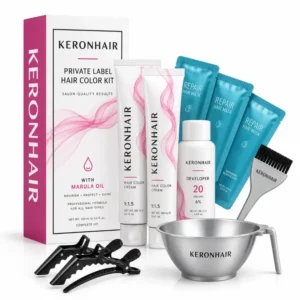
Look for color cream, developer, gloves, after-color conditioner, applicator, and mixing instructions. If developer is separate, do not guess the strength or mixing ratio. Use only the components specified by the product manufacturer or a qualified professional.
Read the Number as Well as the Name
Names such as mocha, chocolate, caramel, and ash are helpful descriptions, but the number usually communicates depth and tone more precisely. Number systems vary between brands, so do not assume two 6.1 shades are identical without checking each chart.
Account for Length and Density
One box may not saturate long, thick, or very dense hair. Uneven saturation creates patchy results. Follow the manufacturer’s coverage guidance and plan enough product before you begin; do not mix a second unrelated brand halfway through the application.
Treat “Ammonia-Free” as a Preference, Not a Safety Guarantee
An ammonia-free formula excludes ammonia, but it may still use other alkalizing agents and color precursors. It can still irritate skin or trigger an allergic reaction. The complete ingredient list, your history, the allergy alert test, and the exact instructions all matter.
At-Home Hair Color or a Professional Salon?
Home color is most realistic for a modest, clearly instructed change; major lightening, bleach, correction, or several old colors are better handled professionally.
At-home color is most realistic when the change is modest, the hair is in reasonable condition, the product is a complete kit, and the goal is simple root coverage or a move close to the current depth. You still need enough product, even sectioning, accurate timing, and a strand test.
Professional help is the better option when you need several levels of lift, bleach, highlights, balayage, color correction, or an even result over several old colors. It is also sensible when the scalp is irritated, the hair is breaking, or the product and developer system are unclear.
Salon professionals and buyers comparing professional systems can use our separate guide to professional hair color brands. That page covers a different decision from this Saudi retail price guide.
How to Use Hair Dye More Safely
Read the exact instructions, complete the required allergy alert test, protect the scalp and eyes, and never improvise by mixing unrelated dyes or developers.
Hair color can cause irritation or allergic reactions, even if you have colored your hair before. Saudi Arabia’s Food and Drug Authority advises consumers to read and follow the package instructions, perform a skin allergy test on a small area two days before use, wear gloves, avoid leaving dye on longer than directed, and avoid mixing different dyes or other chemicals. It also warns against applying hair dye to eyebrows or eyelashes. See the current SFDA hair-dye guidance.
The FDA hair-dye safety checklist similarly advises a patch test every time, keeping dye away from the eyes, avoiding application to an irritated or damaged scalp, following the timing directions, and rinsing thoroughly. Both the FDA and the NHS hair-dye reaction guidance identify PPD as an ingredient associated with allergic reactions in some people.
Before coloring:
- Read the complete instructions and warnings for the exact product.
- Perform the required allergy alert test at the stated time before every application.
- Perform a strand test to preview color and hair response.
- Do not color an irritated, scratched, sunburned, or damaged scalp.
- Wear the supplied gloves and protect clothing and nearby surfaces.
- Do not mix unrelated brands, shades, developers, bleach, or other chemicals.
- Do not exceed the stated processing time.
- Keep colorants away from the eyes, eyebrows, and eyelashes.
- Rinse thoroughly and stop use if a reaction occurs.
Swelling of the lips, mouth, throat, or tongue, or difficulty breathing, can indicate a medical emergency. Seek emergency help rather than trying another home remedy. This article provides general shopping and safety information, not individual medical advice. If you have reacted to hair dye before, consult an appropriate healthcare professional before considering another product.
Where to Buy Hair Color in Saudi Arabia

Established supermarkets, pharmacies, beauty retailers, and verified marketplace sellers are practical options, but the seller, seal, shade code, pack size, and batch details still need checking.
Supermarkets and Hypermarkets
Carrefour, LuLu, Tamimi Markets, and similar retailers make it easy to compare familiar mass-market brands and promotional prices. Their selections are usually strongest in common shades such as black, brown, ash, blonde, red, and gray-coverage colors rather than specialist fashion shades.
Pharmacies and Beauty Retailers
Pharmacies and beauty-focused retailers such as myAster, Al-Dawaa, and Watsons may offer more options by brand, formula, or specific hair needs. Stock can vary by city, branch, and delivery address, so a product shown online may not always be available for immediate local pickup.
Online Marketplaces
Noon, Amazon Saudi Arabia, and Trendyol can provide a wider selection of shades, brands, and sellers. However, buyers should carefully review the seller identity, exact pack size, sealed packaging, shade code, expiry or batch information, delivery conditions, and return policy.
A marketplace listing or high rating alone does not guarantee authenticity. Avoid products with broken seals, unclear labels, unidentified variants, or prices that are significantly lower than established retailers without a reasonable explanation.
How to Maintain Your Hair Color
Gentler washing, suitable conditioning, controlled heat, sun protection, and avoiding repeated overlap can help reduce avoidable fading and dryness.
Aftercare cannot reverse chemical damage or guarantee a fixed number of weeks, but it can reduce avoidable fading and dryness.
- Use shampoo and conditioner intended for color-treated hair when they suit your scalp and hair.
- Avoid unnecessarily hot wash water.
- Limit repeated high-heat styling and use heat protection as directed.
- Condition regularly, especially after permanent color or lightening.
- Protect hair during long periods of strong sun exposure.
- Use purple or blue toning products only for the tones they are designed to counter.
- Refresh roots rather than repeatedly overlapping permanent dye through already colored lengths, unless the product directions specify otherwise.
- Store unopened and opened products exactly as directed.
Do not keep mixed oxidative color for later use. For storage, expiry, and signs of deterioration, read our guide to whether hair dye can go bad.
Quick Recommendations by Need
Match the product format to the job first, then compare shade, package contents, current cost, and safety instructions.
| Your Main Need | What to Compare First | What to Avoid Assuming |
|---|---|---|
| Natural-looking dark color | Soft black, dark brown, or chocolate permanent kits | That the darkest shade will be easiest to change later |
| Gray coverage | Permanent products expressly designed for gray coverage | That every “dark brown” covers resistant gray equally |
| Lower commitment | Semi-permanent, temporary, gloss, or root products | That all color washes out at the same rate |
| Ammonia-free preference | Garnier Olia and exact Bigen products marketed without ammonia | That ammonia-free means allergy-free or damage-free |
| Lightening dark hair | Professional consultation, strand testing, and a staged plan | That a blonde box can lift old dark dye evenly |
| Limited budget | Complete cost per application, including developer and quantity | That the cheapest tube is a complete kit |
Final Thoughts
The best hair color in Saudi Arabia is the one that matches your real starting point and the job you need it to do. Compare product type, shade code, package contents, current price, and safety instructions before comparing brand promises.
For a modest home change, staying close to your current depth is usually the most manageable route. For major lightening, bleach, correction, or several existing colors, professional help can save both your hair and the cost of repairing an uneven result. Whichever route you choose, treat the allergy alert test, strand test, processing time, and product directions as part of the color service, not optional extras.
Frequently Asked Questions
What is the best hair color brand in Saudi Arabia?
There is no universal winner. Garnier, L’Oréal Paris, Wella/Koleston, Bigen, Palette, and henna-based options cover different price points and jobs. Choose according to your starting hair, desired change, gray coverage, product format, ingredients, and whether the kit includes everything needed.
How much does hair dye cost in Saudi Arabia?
In the example Saudi retailer listings used for this guide, small henna-based products and heavily discounted permanent colors started near SAR 8–13, while mid-range and premium at-home kits appeared around SAR 30–60 or more. Promotions, pack size, shade, seller, and included components can change the cost substantially.
Which hair color is best for covering gray hair?
Look for a permanent product that specifically states gray-coverage use and provides instructions for your percentage of gray hair. Natural or neutral shades are often used in gray-coverage systems, but the correct formula and timing depend on the product. Resistant areas may need professional assessment.
Which hair color works on naturally dark hair without bleach?
Black, soft black, dark brown, chocolate, and some burgundy or red-brown shades can create a visible deposit or reflection without major lightening. A pale blonde, silver, pastel, or bright fashion color generally will not appear clearly on naturally dark hair without pre-lightening.
Can I dye black hair blonde without bleach?
A major change from black to blonde usually requires controlled lightening. A lighter permanent color may lift some natural pigment under the right conditions, but it will not reliably remove old dark permanent dye. Professional help is advisable because uneven lift and breakage are real risks.
Is ammonia-free hair dye safer?
Ammonia-free means the formula does not use ammonia. It does not mean the product is free of other alkalizing agents, oxidative ingredients, irritants, or allergens. Follow the complete instructions and required allergy alert test for every application.
Do I need a patch test every time I color my hair?
Follow the exact product instructions. SFDA and FDA consumer guidance advise testing before use, and the FDA recommends a patch test every time because sensitivity can develop even after previous uneventful applications.
Can I mix two different hair dye brands?
Do not mix unrelated products unless the manufacturer explicitly states that the exact products are compatible and provides the ratio. Different formulas, developers, and color systems can react unpredictably and increase the risk of an uneven result or injury.
How long does permanent hair color last?
Permanent color remains until the colored hair grows out, but its visible intensity can fade. Shade, porosity, sun exposure, washing, heat, product choice, and water all affect appearance. Root regrowth often becomes noticeable before the lengths lose all their color.
Where can I buy genuine hair dye in Saudi Arabia?
Start with established supermarkets, licensed pharmacies, beauty retailers, or authorized online sellers. Check the seller, sealed packaging, shade code, batch or expiry details, instructions, and return policy. Avoid assuming that a low marketplace price or high review score proves authenticity.