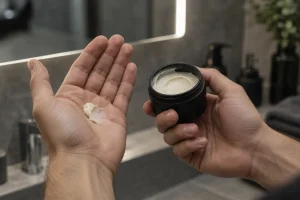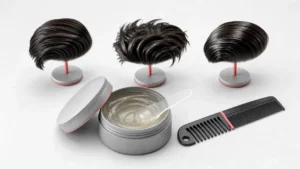
You’re comparing pomade vs clay, and both jars promise a matte finish. One sounds right for a neat side part; the other promises texture. Which will actually give you the hair you want?
I’d look beyond the shine rating. You’ll also want to know how easily it spreads and how your hair feels afterward. And if you like tidying your hair during the day, will it let you?
Pomade vs Clay: Which Should You Choose?
I’d start with a smooth, easy-to-spread pomade for a neat, combed style. For more separation and a drier grip, consider clay. But matte pomades can also create texture, and some clays feel quite smooth. Choose by the finish, feel, and control you want, then check the individual product.
To narrow it down:
- For an orderly side part, look for smooth application and the shine level you like.
- For a textured crop, look for separation and grip without an overly heavy feel.
- If both say matte, compare how they spread and whether they stay workable.
Pomade vs Clay at a Glance
Pomade covers a broad range of styling products. Hair clay usually aims for texture and a low-shine finish, often with clay ingredients in the formula. Here, we’re comparing everyday jar-style products, not cleansing clay masks.
| What matters to you | Pomade | Clay | What to check |
|---|---|---|---|
| Shine | Matte to glossy | Usually matte or low shine | The stated finish |
| Texture and smoothness | Smooth and combable to dry and grippy | Often emphasizes separation and grip | Combed or finger-styled looks |
| Hold and feel | Light to strong; soft to firm | Often medium or strong; feel varies | Hold and flexibility separately |
| Application | Creamy, waxy, or gel-like | Smooth to dense and resistant | How easily it spreads |
| Fullness and weight | Can look sleek or full | Can add texture but still feel heavy | Your result with a small amount |
| Washing | Oil-rich types may take more cleansing | Waxes and oils can affect removal | Washing instructions |
For the basics, our guide to what hair pomade is and how it works explains the main types.
This comparison draws on product descriptions and public user feedback, not Keronhair’s own side-by-side testing.
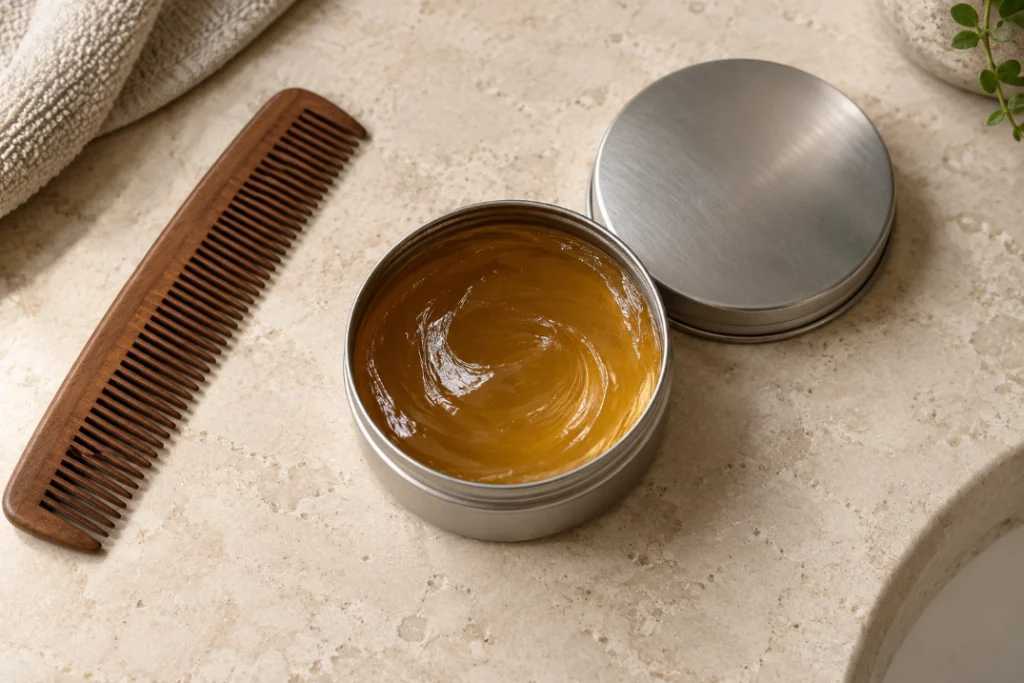
Why “Matte Pomade” Makes the Choice Less Obvious
Matte tells you about shine. It doesn’t tell you whether your fingers will glide through your hair, whether the product dries firm, or how much texture you’ll get. That’s why a matte pomade and a clay can look similar on paper.
If Both Say Matte, Look Beyond Shine
Think about how you want the hairs to sit together. A tidy side part calls for close, smooth lines. With a textured crop, you’re looking for small sections that stay visibly separate.
A product can leave little shine while still making hair feel waxy, soft, or quite dry. You won’t necessarily enjoy all three.
Think about your styling tool, too. If you like running a comb through your hair, easy combing matters. If you finish with your fingers, a little more grip may help you shape individual pieces.
Either product name might lead you to the right result. Read the finish and application details alongside the word “matte.”
What Does “Clay Pomade” Actually Mean?
It means the categories can overlap. A manufacturer may sell a clay-containing styling product as a pomade rather than treating the two as opposites.
For example, Reuzel describes its Clay Matte Pomade as a medium-hold product with a matte finish. It lists kaolin clay among its ingredients. That’s a specific product description, not a definition of every clay pomade.
When a jar says “clay pomade,” you can use the same checks: how it feels, how it holds, and how you’ll wash it out. The name doesn’t settle those questions.
What Do You Want Your Hair to Look Like?
Your hair type alone won’t tell you which jar to buy. Even with the same fine hair, a close side part and a loose quiff can call for different products.
You Want a Neat Side Part or Slick Back
A pomade that spreads smoothly is a sensible place to start. You want enough control to keep the shape, with enough working time to arrange it.
Shine is a separate decision. A glossy finish can suit a traditional slick back; a matte or natural finish can keep the shape looking less polished.
Some clays can create a combed style, too. They’re worth considering if you can spread them evenly and comb comfortably without repeatedly pulling the shape apart.
With thick hair, remember the sections underneath. You can have a neat-looking surface while the hair below it has barely any product. As you move, that difference may show.

You Want a Textured Crop or Loose Quiff
Clay is worth considering when you want distinct pieces and a little grip. A suitable matte pomade may do the job as well.
On a short crop, try separating small sections with your fingers before reaching for another scoop. A quiff needs a little more preparation: give the front its height and direction before adding the finishing product.
If the front already lies flat, repeatedly adding clay to the ends may leave you with heavier hair instead of the lift you wanted.
With waves, decide whether you want to preserve their shape or comb them smoother. That choice is more useful than assuming every wavy-haired person needs the same product.
Will Clay Make Fine Hair Look Fuller?
It can help some fine hair look more textured, but it isn’t a guaranteed route to volume. A clay can still feel heavy, join strands into larger sections, or provide less control than your hairstyle needs.
If you have fine, straight hair, you might recognize this frustrating trade-off: one clay feels too heavy and your hair falls flat. You try a lighter option, but it doesn’t keep your style in place.
You want enough hold without that heavy feeling. A clay label alone can’t tell you whether a product will strike that balance for your hair.
Before trying another jar, I’d check:
- Did you use more because the first layer seemed weak, only to lose the height?
- Did most of the product land on the surface or ends, leaving other sections untouched?
- Did your hair have the shape you wanted before you added the finishing product?
Fine refers to the thickness of individual hairs; it doesn’t automatically mean you have little hair. Someone with many fine strands may need a different amount from someone with sparse hair.
Look at the overall shape in the mirror. More separate pieces may give you texture without the fullness you wanted. If hold is the problem, remember that a bigger scoop can also add weight.
How Do Hold and Restyling Compare?
Hold describes how well the product helps maintain a shape. Stiffness describes how your hair feels, while restyling is about whether you can change that shape later. Don’t assume one rating answers all three questions.
Strong Hold Doesn’t Have to Feel Stiff
Look for the combination you want: firm control with some flexibility, or a shape that sets more firmly. Both pomades and clays vary.
Hair that feels stiff can still fall forward. Before adding more, look at where you put the product and whether the front had any lift to begin with. The formula may also be a poor match for that shape.
A strong-hold label also doesn’t promise the same result on every length or hair type.
Will You Want to Restyle It Later?
If you expect to tidy your hair after wearing a hat, prioritize a product described as reworkable. Try gentle finger adjustments before dragging a comb through resistant sections.
Don’t assume water will reactivate it. Follow the product’s directions, especially if it has already dried firm.
If you’re considering a more fixed finish, our pomade vs gel comparison looks more closely at how styling products feel as they dry.
How Can You Get Texture Without the Tugging?
A little grip can help you create texture. If the product catches before you can spread it, though, stop adding more. Look at how you’re applying it and whether the instructions call for damp or dry hair.
Make the Product Easier to Spread First
Give the product a chance to spread across your hands before it reaches your hair. A thick blob is harder to work through evenly. Follow the suggested method, adjusting the amount for how much hair you’re styling.
- Take a small amount rather than filling your fingertips.
- Work it across your hands as directed until there are no obvious lumps.
- Apply a thin layer through the sections you want to shape.
- Check the result before adding a little more where it’s needed.
You don’t have to load your scalp with product to style the hair. And if your fingers or comb keep catching, stop pulling. Next time, try less product or a formula that spreads more easily.
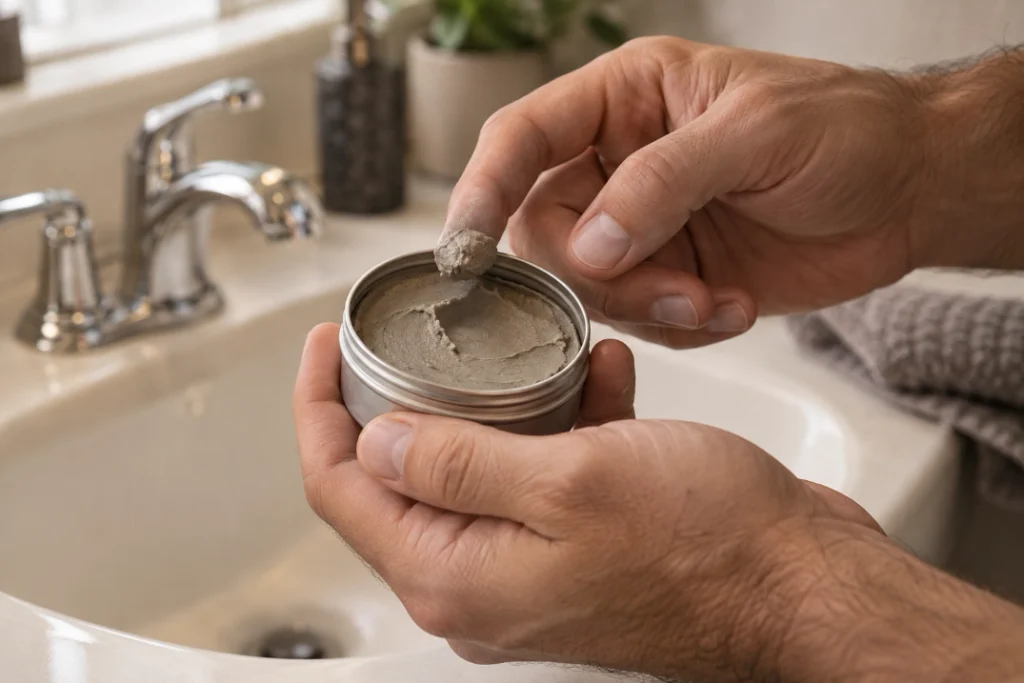
Should You Apply It to Damp or Dry Hair?
Check the specific jar. For example, Uppercut Deluxe’s Clay instructions call for dry hair and a small amount spread across dry palms before application.
That instruction belongs to this particular product. Other clays and pomades may give you different directions.
If your product allows either method, change only the starting dampness on your next attempt. Keep the amount modest and assess it once your hair is dry. Otherwise, you may mistake a temporary wet look for the final finish.
Which Fits Your Washing Routine?
Neither category is automatically easier to wash out. Oil-rich pomades may need more cleansing, but clays can contain waxes and oils too. A water-based label doesn’t always mean a quick rinse will remove everything.
Read the removal instructions before buying. If you regularly struggle with residue, an easier-to-wash formula may suit you better. Scrubbing harder isn’t a good routine to build around a styling product.
The amount you apply and anything layered underneath also affect cleanup. Base your washing routine on what’s left in your hair and how your scalp feels, rather than assuming everyone needs to wash daily.
Our guide to pomade buildup and hair-health concerns covers those questions separately. Here, the practical goal is hair you can restyle after washing without an unwanted coating from the previous application.
How Would I Choose Between Two Jars?
I’d start with the finish I want and a method I’m willing to use each morning. Then I’d see how it feels in my hair. A strong-hold promise doesn’t help much if I find the product awkward to spread.
Read the Label for the Result You Want
Translate your preferred hairstyle into details you can check. “Natural-looking” might mean low shine to you, but it might also mean soft movement or barely noticeable product.
Before buying, check:
- The promised shine and whether it emphasizes smoothness or texture.
- The hold level and whether you can reshape it.
- Whether the directions call for dry or damp hair.
- How the manufacturer tells you to wash it out.
Knowing that a formula contains clay won’t answer all of those questions. It tells you something about the ingredients, but it doesn’t establish how well the finished product will suit you.
Try One Change Before Switching Products
If your hair looks good but feels too coated, try a smaller amount next time. If the finish suits you but the front collapses, check how you establish and support that shape.
Keep the hairstyle reasonably similar and follow each product’s own directions. This is a personal trial, so pay attention to the result and the work it takes to get there.
For brand owners, these observations can also guide a private label hair clay brief. Keronhair’s styling range options provide a starting point for discussing different textures, finishes, and usage directions.
Frequently Asked Questions
Still choosing? These short answers cover a few remaining questions. The directions on the product you buy should guide how you use it.
Is Clay Better Than Pomade for Short Hair?
Not automatically. Clay can suit short, textured styles, while a smooth pomade may suit a neat side part. Your preferred finish matters more than short hair alone.
Can You Use Clay for a Slick Back?
Yes, some clays can create a slick back, especially with a low-shine finish. Choose one you can spread and comb comfortably rather than forcing a very dry product through your hair.
Does Clay Always Have a Stronger Hold?
No. Clays and pomades come in different hold levels. Compare the specific products and consider how much flexibility you want, rather than assuming clay will hold longer or feel firmer.
Is Hair Clay Always Water-Based?
No. Some formulas combine water and wax, and others may be oil-rich. Check the product description and washing instructions; “clay” alone doesn’t explain the full formula.
Can You Use Pomade and Clay Together?
Some combinations may work, but try each separately first. Layering can change the finish and feel. Follow manufacturer guidance, and don’t mix a batch to store for later.
Can Pomade and Clay Work on Longer Hair?
Yes, depending on the product and style. Use manageable amounts and focus on the sections needing control. A dense product may be harder to distribute comfortably through longer hair.