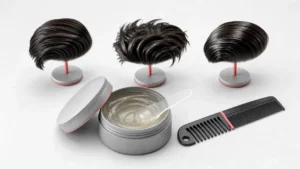
If you’re weighing up pomade vs gel, I’d start with one question: do you want to fix your hair in place, or be able to change it later?
Both can give you a neat side part or slick back. What you’ll notice during the day is how your hair feels, whether you can tidy it up, and how much work it takes to wash the product out.
Pomade vs Gel: Which Should You Choose?
I’d try a flexible pomade if you want to reshape your hair later. If you’d rather style it and leave it alone, a gel that dries firm may suit you. Check the label for shine and washing instructions before you choose.
Think about the way you like to wear your hair:
- You want to tidy your side part after lunch: look for a pomade that says you can reshape it.
- You want your hair to stay in the shape you gave it: consider a gel with enough hold for that style.
- You want little shine and easy washing: check those details on either product, rather than choosing by its name.
You can get strong hold without a shiny look. And buying pomade doesn’t automatically mean your hair will stay soft.
What Is the Difference Between Pomade and Gel?
Pomades can feel quite different from one another. Gel usually holds your hair more firmly as it dries, but some water-based pomades do that too. The differences aren’t always clear-cut.
| What matters to you | Pomade | Gel | Check the label for |
|---|---|---|---|
| Hold | Light to strong | Light to strong | Hold level |
| Feel | Soft and movable to firm | Soft to firm once dry | Whether it dries hard |
| Shine | Matte to high shine | Natural-looking to high shine | Matte, natural, or shiny |
| Touch-ups | Often easier with flexible types | Harder after it dries firm | Advice on reshaping |
| Washing | Oil-rich types can take more washing | Often easy, but products differ | Shampoo instructions |
| Styles | Combed looks, texture, smoothing | Shaped or slick looks, defined curls | Your intended use |
The examples here come from brand descriptions and hair-care advice, not our own side-by-side testing.
Pomade: What Should You Expect?
With a traditional oil-based pomade, you can often expect some shine and hair that you can still move around. Water-based pomades vary more: some feel creamy or waxy, while others dry firmer, like gel.
“Matte” means little shine. “Water-based” refers to how the product is made. Your pomade can be both.
Our guide to what hair pomade is and how it works explains the main types.
Gel: What Happens as It Dries?
Gel leaves a thin coating that helps your hair stay in shape as it dries. Depending on the product, your hair may feel soft or firm.
If you dislike a stiff layer when you touch your hair, look for a softer-feeling gel. Judge it once your hair is dry.
Pomade vs Gel: Hold, Feel, and Restyling
Your hair can feel stiff and still fall out of the shape you wanted. I’d separate three questions: will it stay in place, does it feel comfortable, and can you comb it back into shape later?
When You Want Your Hair to Stay Put
If you want to comb your hair into place and leave it there, a gel that dries firm is worth considering. Some strong-hold water-based pomades can do the same job.
For example, American Crew describes its Firm Hold Styling Gel as high hold, high shine, and alcohol-free. So you shouldn’t assume every gel contains alcohol just because it gives you a firm hold.
Your hair length and how evenly you spread the product matter too. If only the front stays put, check whether you missed the sides before buying something stronger.
When You Want to Tidy It Up Later
If you like to comb your hair again during the day, I’d start with a pomade that stays flexible. Look for wording such as “reworkable,” which means it’s intended to let you reshape your hair.
Suppose you want a neat side part for work and something looser afterward. Choose something you can still move around.
Some products let you use slightly wet hands to help reshape your hair. Check the instructions first; water won’t work the same way with every pomade or gel.
Which Gives You the Finish You Want?
Want shine, or a less obvious look? Choose “high shine” for a polished look, “matte” for little shine, or a natural finish somewhere in between.
Reuzel describes its Extreme Hold Matte Pomade as water-based, with strong hold and little shine. The brand also says it washes out with shampoo. Pomade doesn’t always mean a glossy, oily look.
You might love a shiny slick back but dislike hair that feels heavy or coated. Shine and greasiness are different; if it feels too heavy, rethink the product or amount.
If you’re more interested in separate, textured pieces of hair, take a look at what hair wax is used for. It gives you another option to consider.
Which Works for Your Hair Type and Hairstyle?

Consider how thick each hair is, how much hair you have, and its length. Your style matters too: a sleek side part and a loose, lifted look need different choices, even on the same fine hair.
If Your Fine Hair Goes Flat
I’d start with less and check your hair once dry. Too much, or a heavy-feeling product, can leave fine hair looking flat or stuck together.
If you want lift, try a lighter-feeling pomade or gel. If you’re aiming for a close, smooth side part, having the hairs sit together may be exactly the look you’re after.
Fine hair doesn’t always need the weakest hold. A small amount of something firmer may suit you better than a big scoop of a heavier product.
If You Have Thick Hair to Keep in Place
You might have thick individual hairs, lots of hair, or both. Make sure you reach underneath as well as the top, so you don’t leave some sections with very little product.
Try a firm gel or pomade if you want to keep a combed shape in place. If you want to adjust it later, look for a pomade that stays flexible.
Before another scoop, find the bit that isn’t behaving. Working on that section may be enough, without making the rest of your hair heavier.
If You Want to Keep Your Curls or Waves
If you want to shape curls across your whole head, I’d look at a gel made for curls. If you only want to smooth a few flyaways or tidy a small section, a suitable pomade may be enough.
Some gels leave a firm layer around your curls as they dry. That feeling alone doesn’t mean damage. Follow the drying and finishing instructions rather than assuming you need to brush it out.
Be gentle with your curl pattern. You don’t need to pull curls apart just to spread a heavy product farther; focus on the areas you want to shape.
Is Pomade or Gel Easier to Wash Out?
Gel and water-based pomades are often easier to wash out than traditional oil-rich pomades. How much you use matters too. Even a water-based product may need shampoo.
Start with the washing instructions. Wet your hair well, work shampoo through the areas with leftover product, and rinse before deciding whether you need another wash.
If washing it out is always a chore, I’d choose something easier to remove. Don’t try to solve it by scrubbing harder or using household detergents.
Wash according to your scalp’s needs and what’s left on your hair, including other products you’ve used. There’s no schedule that suits everyone.
If you’ve colored your hair, extra-strong washing may also fade some semi-permanent colors faster. Our guide to how washing affects semi-permanent hair color explains that balance. Don’t leave your scalp uncomfortable just to avoid losing color.
How Should You Apply Pomade and Gel?
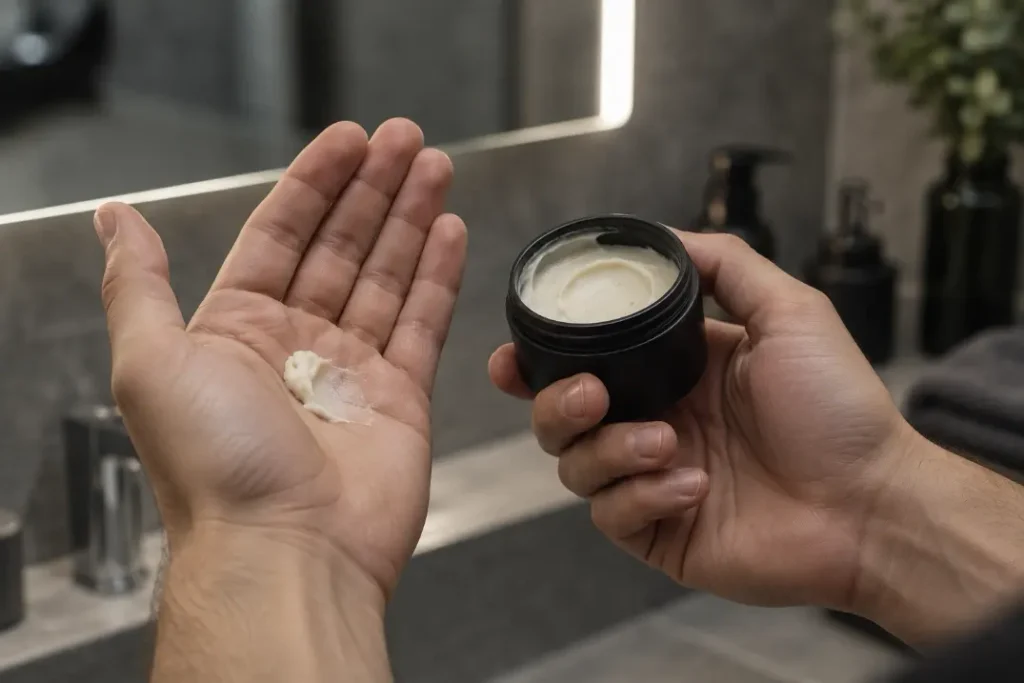
Check whether your hair should be damp or dry, then give yourself time to spread the product and shape your hair before it sets.
Should Your Hair Be Damp or Dry?
The American Crew gel mentioned earlier tells you to use it on towel-dried hair, shape your style, and leave it alone. Reuzel’s matte pomade lets you start with towel-dried or dry hair.
Damp hair can make some products easier to spread. Dry hair lets you see the texture more immediately. Use the method recommended for your product.
If your first attempt doesn’t look right, check the instructions before changing everything. Adjust one thing at a time so you can see what helps.
How Much Should You Start With?
I’d begin with a small amount that fits the product’s directions and your hair length. A short crop and a head of long, thick hair won’t need the same scoop.
- Check how damp or dry your hair should be and the suggested amount.
- Spread the product over your hands as directed so it doesn’t land in one big blob.
- Work it through the parts you want to style, then shape your hair before it dries firm.
- See how it looks and feels once dry. Only make the adjustments the product allows.
If your gel is meant to be left alone, save adjustments for next time. Adding more over dried gel can change the result you’d get from an even first layer.
Why Do Pomade and Gel Leave Flakes or Buildup?
White bits in your hair might be leftover product or a dried layer breaking apart. They can also come from your scalp. You can’t reliably tell the cause just by looking.
Is It Leftover Product or Your Scalp?
Before assuming your gel or pomade has caused dandruff, think through what you’ve used and how your scalp feels. I’d check:
- Did you use more product than usual?
- Did you put it over another gel, cream, or oil?
- Does your hair still feel coated after washing?
- Do you also have itching, redness, or discomfort that keeps coming back?
These checks aren’t a diagnosis. Our guide to pomade buildup and hair-health concerns explains when you may need more than a change in styling habits.
Don’t Force a Comb Through Stiff Hair
If your comb catches in hair that’s dried firm, don’t keep pulling. The American Academy of Dermatology’s styling advice recommends cutting back on long-lasting-hold products and warns that combing after you’ve applied them can cause breakage.
That doesn’t make every gel harmful or every pomade safer. How you handle your hair matters.
Stop using a product if it keeps irritating your skin. If the symptoms continue, or you’re losing hair without knowing why, speak with a dermatologist.
How to Choose a Product You Will Keep Using
I’d choose something you enjoy using and can wash out without a struggle. A look you love is only part of the decision.
Before you buy, ask yourself:
- Will it hold my style without making my hair feel too stiff?
- Will I like the shine and the way my hair sits together or separates?
- Can I tidy it up later if I need to?
- Will it wash out in a way that works for me?
If there’s a smaller size, you can try it before committing to a bigger jar or bottle.
If you’re developing products for your own brand or salon, explore Keronhair’s private-label hair styling options. Tell us how you want the hair to look and feel, who will use it, and how easily it should reshape and wash out.
Frequently Asked Questions
Still deciding? These answers cover a few common questions. Check your own product’s instructions for the details on using and washing it out.
Is Pomade the Same as Gel?
Not quite. Some water-based pomades feel and act like gel, while others stay softer. Check how the product holds, feels, and washes out, rather than relying on the name.
Does Pomade Make Hair Hard?
It can. Some gel-like pomades dry firm, while others let you move your hair around. If you dislike stiffness, look for one described as flexible and check how it feels once dry.
Can You Use Pomade and Gel Together?
Sometimes, but the mix may change the hold, feel, or amount of leftover product. Follow any manufacturer guidance. Don’t guess a mixing ratio or mix a batch to store for later.
Can Gel Give a Natural-Looking Finish?
Yes, with the right product and amount. Check the promised look and judge it once dry. Using gel doesn’t mean you have to end up with shiny, wet-looking hair.
Can You Use Pomade or Gel Every Day?
You may be able to if your scalp stays comfortable and you wash away buildup. Adjust your routine if product collects on your hair, and stop if it keeps irritating your skin.
Which Is Better for a Slick Back?
I’d consider gel if you want your hair to stay fixed, or a flexible pomade if you want to reshape it. Match the product to your hair and the shine you like.