Pomade is not inherently good or bad for your hair. A suitable formula can provide hold, shine, definition, and frizz control without damaging the hair shaft. Problems are more likely when a product builds up, touches acne-prone skin, triggers irritation, or requires forceful combing and washing. The outcome depends on the formula, the amount used, scalp and skin sensitivity, styling technique, and cleansing routine.
Quick Answer
- Pomade styles hair; it is not a growth or repair treatment.
- Main risks involve buildup, skin contact, irritation, or mechanical stress.
- Stop use for persistent itching, rash, sores, or unusual shedding, and seek advice.
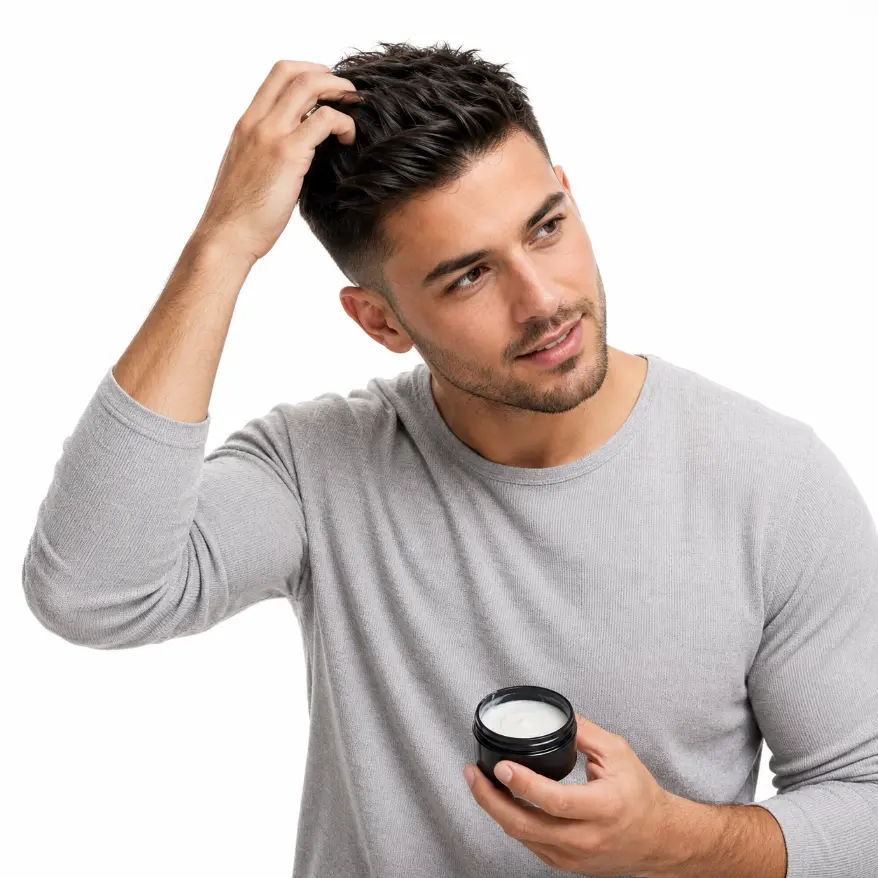
Is Pomade Good or Bad for Your Hair?
Pomade is primarily a styling product. It changes how hair looks, feels, and behaves for a limited time. It may make hair easier to shape, smooth flyaways, add shine, or maintain definition. Those are useful cosmetic benefits, but they do not prove that pomade repairs damaged hair or stimulates growth.
Most problems attributed to pomade involve residue, skin contact, individual sensitivity, and styling habits. A lightweight water-based product used sparingly may suit one person, while an oil-rich formula transferred onto acne-prone skin may cause small bumps along the hairline. A firm pomade can hold a style well, but forcing a comb through stiff hair can increase breakage.
| Situation | Likely outcome | What matters |
|---|---|---|
| Suitable formula used in a small amount | Useful styling control | Hair type, hold, and finish |
| Heavy oily product touching acne-prone skin | Possible hairline breakouts | Skin contact, residue, and cleansing |
| Fragranced or sensitizing formula | Possible itching or rash in a susceptible user | Individual sensitivity and exposure |
| Strong hold followed by forceful combing | Greater breakage risk | Stiffness, friction, and technique |
| Repeated use without adequate cleansing | Buildup and a heavy feel | Formula washability and routine |
| Persistent pain, rash, sores, or shedding | Not a normal styling result | Stop use and seek professional advice |
The useful question is therefore not whether all pomade is good or bad. It is whether a specific formula and routine suit your hair, scalp, and skin.
What Does Pomade Actually Do to Your Hair?
Pomade coats or structures the hair to create a styling effect. Depending on the formula, it can provide light to strong hold, reduce flyaways, add gloss, create a matte texture, or allow restyling during the day.
Hair above the scalp is a non-living fiber. Oils, waxes, conditioning agents, and film-forming ingredients may reduce friction or make the surface feel smoother, but this effect is not the same as permanently repairing every form of damage. A pomade can make dry-looking hair appear shinier without treating the underlying reason it feels dry.
Exposure also changes according to where the product is applied. Pomade worked through the hair lengths creates a different situation from a heavy layer rubbed into the scalp and hairline. An oil-rich product can transfer from the hair to the forehead, neck, hats, headbands, and pillowcases. For some users, the skin response is more important than the way the hair feels.
Be cautious with products that claim to “heal” hair, stop hair loss, or stimulate growth. Those statements require evidence and may move beyond the normal role of a cosmetic styling product.
See what hair pomade is and how to use it for types, application, and washout.
When Can Pomade Be Helpful?
Pomade is useful when its performance matches the hairstyle and hair type.
Flexible hold and restyling
Some pomades create control without the hard shell associated with certain gels. This can be useful for side parts, slick backs, short textured styles, curls, edges, or flyaway control. Oil-based and hybrid products may remain restylable, while some water-based formulas create a firmer set.
Smoothing and visual shine
Oils, waxes, and conditioning materials can reduce a rough-looking surface and add shine. This may make hair look smoother and more polished. Matte and clay-pomade formats can instead create separation, texture, and volume with less gloss.
Less repeated manipulation
A suitable product may help a style remain in place, reducing the urge to touch or reset it repeatedly. This potential benefit depends on technique. If the product becomes very stiff and the user keeps forcing a fine comb through the hair, the same styling routine may increase mechanical stress.
These are styling benefits, not treatments for dandruff, scalp disease, follicle damage, or genetic hair loss.
When Can Pomade Be Bad for Your Hair or Scalp?
Pomade may create problems when the formula or routine does not suit the user.
Buildup and a greasy or heavy feel
Oil-based pomades can be more difficult to remove than many water-based products. Reapplying them without adequate cleansing may leave residue on the hair and scalp. Hair may look dull, limp, sticky, or dirty even when the product itself has not “damaged” the fiber.
Buildup should be described as residue, not as hair follicles being “suffocated.” If the product no longer performs well or the scalp feels coated, review the amount used and cleansing method.
Hairline and forehead breakouts
The American Academy of Dermatology explains that oils in hair products can contribute to acne cosmetica. Whiteheads or small bumps may develop along the hairline, forehead, or back of the neck.
Pomade can also transfer to pillowcases, hats, and headbands, continuing skin exposure after styling. People prone to breakouts may benefit from using less product near the hairline, choosing a lighter formula, and cleaning surfaces that collect residue. A “non-comedogenic” claim can be helpful information, but it cannot guarantee that every user will remain breakout-free.
Irritation or allergic contact dermatitis
Itching, burning, redness, flaking, swelling, or rash can indicate irritation or an allergic response. Reviews of scalp contact dermatitis identify hair products, fragrances, preservatives, botanicals, and other cosmetic ingredients as possible triggers in susceptible people. Reactions are individual; the presence of an ingredient does not mean it harms everyone.
“Natural” does not mean non-allergenic. “Unscented” may also differ from “fragrance-free,” because some products use fragrance materials to mask another odor.
Stop using a suspected product if symptoms develop. Severe, spreading, or persistent reactions require professional assessment rather than repeated experimentation.
Breakage from stiffness, friction, and removal
Using a comb after applying a long-lasting-hold product can cause breakage. The problem is mechanical stress: stiff hair is pulled, bent, or snapped during styling.
Aggressive scrubbing during removal can create similar stress. Bleached, chemically relaxed, heat-damaged, or otherwise fragile hair may require especially gentle handling.
Does Pomade Cause Hair Loss?
The cited evidence does not establish ordinary pomade use itself as a direct cause of hair loss. Indirect styling-related problems can, however, be mistaken for “pomade hair loss.”
The American Academy of Dermatology’s styling guidance says combing after a long-lasting-hold product can break hair. Repeated tight styles may also cause hair loss.
- Hair-shaft breakage: Stiff hair can snap when forcefully combed, brushed, or washed.
- Scalp symptoms: Irritant or allergic contact dermatitis can cause itching, burning, or eczema-like lesions. These symptoms do not by themselves prove that pomade caused hair loss.
- Tight styling: Pomade often supports slick, tightly pulled hairstyles. Repeated tension can contribute to traction-related hair loss, but the pulling hairstyle is the central mechanism.
- An unrelated condition: Genetic hair loss, illness, medication, stress, nutrition, and other scalp disorders can occur while someone is using pomade.
| What you notice | Possible explanation | Sensible next step |
|---|---|---|
| Short snapped hairs | Breakage or mechanical stress | Reduce stiffness and combing force |
| Receding areas under tight styles | Repeated tension | Loosen the style and seek advice early |
| Itching, rash, or flaking | Irritation, allergy, or another scalp condition | Stop the suspected product if appropriate and seek assessment if persistent |
| Increased shedding from the root | Many possible causes | Do not assume pomade is the only cause |
Seek professional advice for persistent or patchy loss, scalp pain, sores, crusting, swelling, a severe rash, or symptoms that continue after the product is stopped.
Is Water-Based Pomade Better for Hair Than Oil-Based Pomade?
Neither category is universally better. Choose according to hold, finish, washability, hair type, skin response, and routine.
| Formula type | Common advantages | Possible drawbacks | Often considered by |
|---|---|---|---|
| Water-based | Usually easier to rinse, often lighter, broad hold options | May feel stiff, tacky, or dry depending on the formula | Users prioritizing washability |
| Oil-based | Shine, endurance, and classic restylability | More residue, harder removal, and greater transfer to skin or fabric | Users seeking traditional slick styles |
| Hybrid or unorthodox water-based | Attempts to balance washout, hold, and restylability | Performance varies widely by formula | Users wanting a middle ground |
| Matte or clay pomade | Texture, volume, and lower shine | May create dryness or drag on some hair | Users seeking matte definition |
Water-based does not automatically mean non-comedogenic, and oil-based does not mean a product will cause acne in everyone. Similarly, the presence of an alcohol, oil, wax, silicone, botanical, or preservative cannot be judged without considering its type, concentration, role, and the complete formula.
See what hair wax is used for to compare hold, texture, and finish.
Which Ingredients Should You Pay Attention To?
Start with function rather than a “good ingredient versus bad ingredient” list.
Waxes, oils, and structuring materials
These materials influence hold, texture, shine, scoop, and restylability. A rich formula may suit coarse hair or a classic slick style but feel too heavy on fine hair. A stiff matte formula may create useful volume for one person and unwanted drag for another.
Fragrance and botanicals
Fragrance shapes the product experience but may not suit fragrance-sensitive users. Botanical extracts and essential oils can also cause reactions in susceptible people. A fragrance-free variant may broaden suitability, but no cosmetic formula is reaction-proof.
A systematic review of scalp allergic contact dermatitis identified fragrance mix and some preservatives among allergens reported in patients tested for scalp reactions. This does not mean every pomade or fragranced product causes a reaction.
Preservatives
Water-containing pomades need a suitable strategy to control microbial growth. Preservatives serve a safety function in susceptible formulas. “Preservative-free” should not automatically be marketed as safer, and an individual allergy to one preservative is different from the purpose of preservation in the wider population.
Label claims
Claims such as non-comedogenic, dermatologist tested, fragrance-free, vegan, cruelty-free, natural, or organic answer different questions. None alone proves that the product will suit every user. Brands should define each claim and retain suitable evidence rather than relying on a long “free-from” list.
How Can You Use Pomade With Less Risk of Buildup or Breakage?
Use enough pomade for control without unnecessary residue, skin contact, or pulling. These are lower-risk handling tips, not a universal routine.
- Start with a small amount. Add more only if the style needs it.
- Warm and distribute the product according to its texture.
- Focus on the hair rather than rubbing a heavy layer into the scalp, especially if you are prone to hairline breakouts.
- Use fingers or a suitable wide-tooth tool before forcing a fine comb through stiff hair.
- Avoid combining very strong hold with tightly pulled styles every day.
- Cleanse according to residue, formula type, scalp comfort, and hair needs.
- Remove the product gently instead of repeatedly scrubbing or pulling.
- Clean pillowcases, hats, headbands, and tools that collect oily residue.
- Stop using the product if it causes persistent itching, burning, rash, swelling, sores, or unusual shedding.
There is no ideal universal wash frequency. Water-based formulas may rinse more easily, while oil-based products may need a more deliberate routine. Washing too little can leave residue, but repeated harsh shampooing can make some hair feel dry and fragile. Aim for adequate removal with the least unnecessary friction.
Who Should Be More Cautious With Pomade?
Choose carefully if you:
- develop acne around the forehead, temples, or neck;
- have a known fragrance or cosmetic allergy;
- have eczema, psoriasis, seborrheic dermatitis, or another active scalp condition;
- have bleached, relaxed, heat-damaged, or fragile hair;
- are experiencing unexplained loss or scalp pain;
- regularly wear tight, high-tension styles.
This does not mean every person in these groups must avoid pomade. A lighter or fragrance-free product, less scalp contact, gentler styling, or advice from a qualified professional may change the result. Stop any product that produces symptoms rather than trying to “push through” a reaction.
If pomade feels too heavy, compare hair spray versus hair wax.
What Should Brands Consider When Developing a Hair-Friendly Pomade?
What Should Brands Consider When Developing a Hair-Friendly Pomade?
“Hair-friendly” must be translated into a specific brief. Define the intended hair type, styling habit, climate, wash routine, hold, finish, restylability, fragrance, and washout target.
The full formula-package system should then be evaluated for:
- stability and temperature behavior;
- microbiological quality and preservation where applicable;
- packaging compatibility;
- hold, residue, flaking, and washout;
- performance on the intended hair types;
- claim and label suitability for the target market.
Avoid implying that a cosmetic pomade treats hair loss, dandruff, eczema, or another scalp condition. Claims such as non-comedogenic, sensitive-skin suitable, dermatologist tested, long-lasting, or conditioning should be defined and supported.
Post-launch feedback is also part of product quality. Track complaints involving breakouts, itching, fragrance sensitivity, leakage, texture change, and difficult washout. Batch traceability helps determine whether the issue relates to one user, one formula, one package, or one production lot.
For a factory-level view, read how private label hair pomade is manufactured.
If you are comparing production partners, our guide to the Top 10 hair pomade manufacturers for private label brands examines formula options, MOQ, packaging, testing, and commercial fit.
Conclusion
Pomade is neither universally good nor universally bad for hair. A well-matched formula used in a sensible amount can provide useful hold, shine, definition, and control. Problems are more likely when residue accumulates, oily product transfers to acne-prone skin, an ingredient triggers a reaction, or stiff hair is combed and washed aggressively.
Pay attention to your own hair, scalp, and skin rather than relying on category claims alone. Stop using a product that causes persistent symptoms and seek professional advice when necessary.
For a private label project, send Keronhair your pomade brief to discuss hold, finish, washability, fragrance, packaging, testing, and a 1,000-unit production order.
Frequently Asked Questions
Is it bad to use pomade every day?
Daily use is not automatically harmful. The outcome depends on residue, scalp contact, styling tension, individual sensitivity, and cleansing. Reduce use or change the routine if you notice buildup, breakouts, irritation, or breakage.
Should pomade touch your scalp?
Pomade is generally used to style the hair. People prone to scalp irritation or hairline acne may prefer to limit direct skin contact unless the product directions state otherwise.
Should you wash pomade out before sleeping?
Consider the formula, amount, skin sensitivity, and product instructions. Oil-rich pomade can transfer to the face and pillowcase. If you do not wash it out, keep bedding clean and watch for breakouts or irritation.
Can pomade clog hair follicles?
Oil-rich hair products may contribute to clogged pores and acne on skin. Avoid claims that pomade “suffocates” follicles or universally causes hair loss; those descriptions oversimplify different skin and hair processes.
Can pomade cause dandruff?
Pomade is not a universal cause of dandruff. Buildup or irritation may worsen flaking or resemble another scalp problem, while dandruff itself has multiple causes. Persistent flaking or itching may require proper diagnosis.
Does pomade make hair grow?
An ordinary cosmetic styling pomade should not be assumed to stimulate hair growth. Conditioning ingredients may improve feel or reduce friction without changing follicle growth.
Is water-based pomade healthier than oil-based pomade?
Water-based pomade is often easier to remove, but the complete formula and individual response matter more than the category name. Either type can work well or poorly depending on the user.
What should you do if pomade makes your scalp itch?
Stop using the suspected product and cleanse gently. Seek qualified medical advice if the reaction is severe, persistent, spreading, or accompanied by swelling, sores, or hair loss.