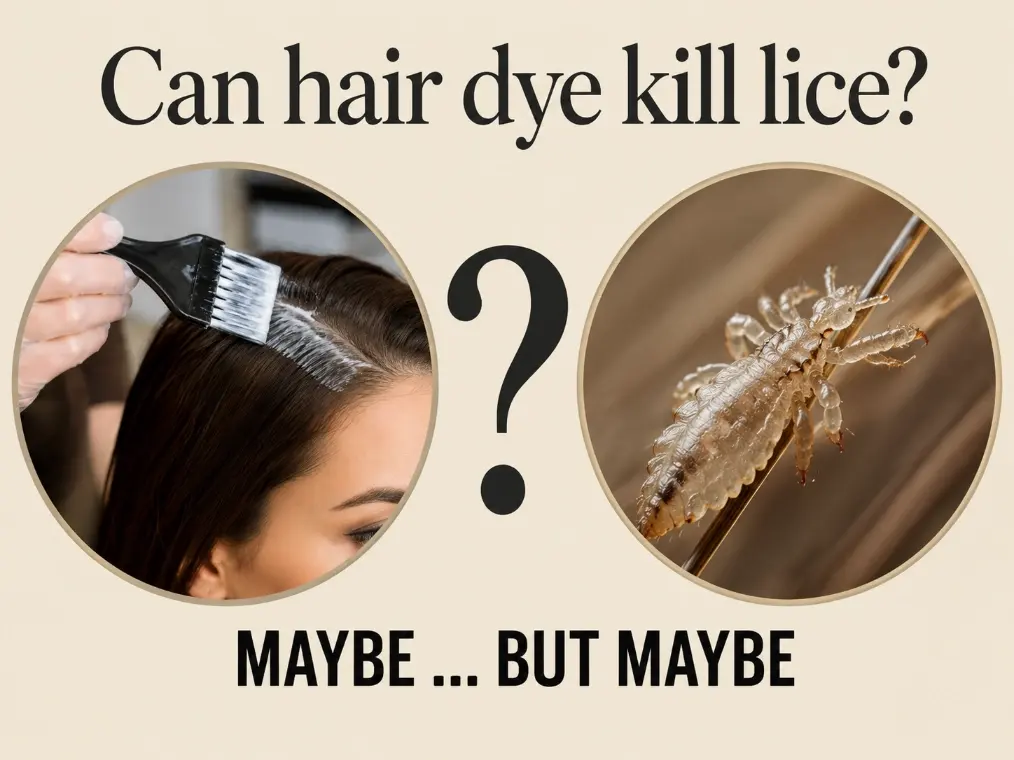
No. Hair dye is not a reliable or recommended treatment for head lice or nits. A permanent dye may expose individual lice to strong chemicals, but it has not been shown to eliminate an active infestation, and it is especially unreliable against eggs attached near the scalp.
Using dye or bleach for this purpose can also irritate scratched skin and delay effective treatment. Confirm that live lice are present, then use a treatment or combing method recommended for the person’s age and location.
What Is in Hair Dye, and Why Does It Not Treat Lice?
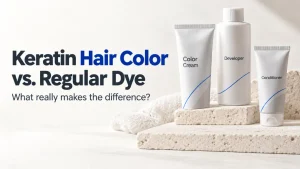
Many permanent oxidative hair colors combine a color formula with a developer containing hydrogen peroxide. The color formula may use ammonia, another alkalizing agent, and oxidative dye ingredients such as PPD, PTD, or alternatives. The exact formula varies, and not every permanent dye contains the same ingredients.
These chemicals are designed to change hair color. They are not formulated, tested, labeled, or dosed as head-lice medicines. Semi-permanent direct dyes and temporary colors work differently and are no more appropriate as lice treatments. Our guide to the types of hair color explains the chemistry categories, but none should be repurposed as a pediculicide.
Even if chemical exposure happened to immobilize or kill an individual louse, that would not prove that the application reached every live louse or prevented eggs from hatching. A treatment must address the full infestation and be used according to instructions that account for whether it kills eggs.
Why Coloring Hair Is Not a Head Lice Treatment
- No validated treatment protocol: hair dye instructions do not provide a lice-treatment dose, contact time, retreatment plan, age range, or evidence of cure.
- Eggs may remain: nits are firmly attached to hair close to the scalp, and hair dye has not been established as a reliable ovicidal treatment.
- Exposure is inconsistent: a cosmetic application is designed for color placement, not complete parasite treatment.
- Scalp irritation is possible: lice-related scratching can leave the scalp sore or broken, increasing the concern about applying oxidative dye or bleach.
- It can delay appropriate care: waiting to see whether dye worked gives surviving lice time to remain active and spread through close head-to-head contact.
The CDC head lice treatment guidance recommends appropriately selected over-the-counter or prescription medicines and careful adherence to product directions. Hair dye is not listed as a treatment.
How to Confirm It Is Head Lice Before Treating
Misdiagnosis is common. Dandruff, hair-product residue, dirt, and empty egg casings can be mistaken for an active infestation. Itching alone is not proof of lice.
According to the CDC’s head lice overview, the best way to diagnose an active infestation is to find a live crawling nymph or adult louse. Use bright light and a fine-toothed lice comb, checking carefully behind the ears and near the back of the neck.
- Live lice: small crawling insects that move quickly through the hair
- Nits: eggs or egg casings attached firmly to one side of a hair shaft
- Dandruff or debris: usually moves or flakes away more easily
Nits located close to the scalp are more relevant than old casings farther down the hair. CDC notes that nits more than one-quarter inch from the scalp are almost always hatched or dead. If you cannot find crawling lice and are unsure what you are seeing, ask a pharmacist, clinician, school nurse, or other qualified professional before applying a treatment.
Box Dye vs. Professional Hair Color: Neither Is a Lice Medicine
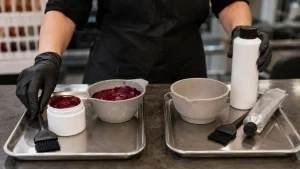
Retail and professional color systems may differ in shade range, developer options, mixing, and required expertise. Those differences do not turn either product into a head lice treatment.
A salon should not perform a color service on someone with a known active infestation. That could expose staff and other clients through close hair-to-hair contact and shared working spaces. Contact the salon, postpone the appointment, complete an appropriate lice plan, and follow the salon’s return policy.
Do not increase developer strength, extend processing time, combine dye with a lice product, or apply multiple chemical products in an attempt to make hair color “stronger.” Misusing either a cosmetic or medicine can increase irritation and other adverse effects.
Can a Blow Dryer Kill Lice?
A normal handheld blow dryer is not a recommended do-it-yourself head lice treatment. Research on controlled hot-air devices does not mean that an ordinary dryer can reproduce the same airflow, temperature, coverage, or safety conditions.
Trying to heat the scalp long enough to kill lice or eggs can burn the skin or damage hair. Heat can also be dangerous around certain lice medicines; for example, some products have flammability warnings. Follow the treatment label and do not use a hair dryer, heated styling tool, or open flame unless the instructions specifically permit it.
If a clinic offers a specialized hot-air treatment, ask who operates the device, what evidence supports it, what age restrictions apply, how success is checked, and what follow-up is required. Do not substitute improvised home heat.
Will Hair Dye or Bleach Kill Lice Eggs?
Do not rely on dye, developer, or bleach to kill nits. Nits are attached firmly to hair shafts near the scalp. Some approved or recommended lice medicines kill eggs, while others mainly kill live lice and require retreatment after eggs hatch. The correct follow-up therefore depends on the exact product.
Bleach is a hair lightener, not a stronger lice medicine. Applying it to an itchy, scratched, or inflamed scalp adds chemical exposure without providing a validated infestation-control plan. It can also compromise the hair and make later combing more difficult if breakage or tangling increases.
A fine-toothed lice comb can remove live lice and nits and helps with monitoring. It is incorrect to say that every single nit must always be removed for all medicines to work, because treatment mechanisms differ. Follow the medicine instructions and local public-health advice.
What Actually Works for Head Lice?
The appropriate method depends on the country, the person’s age and health, the product available, previous treatment, and whether live lice remain. Do not use a product simply because it worked for someone else.
| Approach | Role | What to confirm |
|---|---|---|
| Nonprescription lice medicine | Treats live lice; effect on eggs varies by active ingredient | Age limits, contraindications, instructions, and whether or when retreatment is required |
| Prescription lice medicine | May be considered when an appropriate nonprescription treatment fails or is unsuitable | Clinician instructions, age and health factors, application, and follow-up |
| Wet combing | Mechanical removal and detection of lice and nits | Correct comb, thorough sectioning, and a repeated schedule |
| Hair dye or bleach | No recommended treatment role | Do not use for head lice |
| Fumigant spray or fog | No routine home-treatment role | CDC advises against these products because they can be toxic |
Use a Lice Medicine Exactly as Directed
Some medicines kill lice and eggs; others do not reliably kill eggs and may require another application. CDC advises retreating according to the specific medication instructions rather than automatically repeating every product on the same schedule.
Do not apply extra product, leave it on longer, or combine two lice medicines unless a healthcare professional specifically directs you. If lice remain as active as before after the expected treatment period, contact a clinician or pharmacist before applying more.
Use a Fine-Toothed Lice Comb
Combing can help detect and remove lice and nits. It may be used alongside medication when the instructions recommend it or as a structured non-drug method. The NHS head lice guidance provides a wet-combing schedule using ordinary shampoo, conditioner, and a detection comb.
Do not apply conditioner immediately before a medicated product unless its label allows it. CDC warns that conditioner can interfere with some lice medicines.
Check Close Contacts and Limit Reinfestation
Check household members and other close contacts. Treat people with an active infestation at the same time, following local guidance. Head lice mainly spread through direct hair-to-hair contact; they do not jump or fly, and having lice is not a sign of poor hygiene.
Environmental advice differs somewhat by country. CDC advises cleaning recently used clothing, bedding, brushes, and combs in specified ways, while emphasizing that the risk from carpets and furniture is small. NHS states that hot-washing all laundry is unnecessary. Follow the guidance for your location, avoid excessive cleaning, and do not use insecticide fogs or fumigant sprays in the home.
When to Ask a Pharmacist or Healthcare Professional
Ask for individualized guidance when:
- The person is a baby or young child
- The person is pregnant, breastfeeding, has asthma, allergies, a scalp disorder, or another relevant health condition
- The scalp has open sores, swelling, drainage, worsening pain, or signs of infection
- You cannot confirm whether the particles are lice or nits
- A correctly used treatment has not worked
- You are considering changing active ingredients or combining products
- Lice return repeatedly and reinfestation or resistance is suspected
CDC specifically advises consulting a healthcare provider before treating young children. Product age limits vary, so never reduce an adult dose or improvise a treatment for a child.
Hair and Scalp Care During and After Lice Treatment
Itching can continue for a short time after successful treatment, and some lice medicines can cause mild burning or irritation. Persistent or worsening symptoms need professional advice rather than repeated chemical applications.
- Avoid hair dye and bleach while the scalp is scratched, inflamed, or reacting to treatment.
- Do not layer hair color directly over residual lice medicine unless both product instructions and a qualified professional confirm that it is appropriate.
- Handle tangled or fragile hair gently during combing to reduce breakage.
- Clean and disinfect the lice comb as directed before using it again.
- Wait until the infestation has been appropriately managed and the scalp is comfortable before resuming chemical color.
There is no universal number of days that suits every lice medicine and hair dye. Follow the medicine’s wash restrictions, the hair color instructions, and advice from a pharmacist, clinician, or stylist. If you later return to coloring, our guide on how often to dye your hair can help you consider chemical history and scalp condition.
If you notice increased shedding or broken strands after scratching, combing, medication, or color use, the guide to hair dye, breakage, and hair loss explains why these problems should not be treated as the same condition.
Frequently Asked Questions
Will dying your hair kill lice completely?
No. While some live lice may be killed by the chemicals in permanent hair dye, the treatment is unreliable and will not eliminate nits. A full infestation requires a dedicated treatment protocol.
Does hair color kill lice and eggs together?
It may affect some live lice but is not effective against eggs. Nit casings are chemically resistant and require manual removal or specific pediculicide treatments.
Can a blow dryer kill lice on its own?
Hot air can kill lice and some nits when applied systematically, but a standard blow dryer is unlikely to deliver the sustained, controlled heat needed for reliable results. Specialized devices work better, but should be part of a broader treatment plan.
Is hair dye safer than chemical lice treatments?
Not necessarily. Hair dye is not formulated for this purpose, offers incomplete results, and carries scalp irritation risks—especially when applied to skin already aggravated by scratching.
When can I color my hair after treating lice?
There is no single waiting period. Finish the lice plan, follow any post-treatment washing restrictions, and wait until the scalp is no longer sore or irritated. Check both labels and ask a pharmacist, clinician, or stylist if you are unsure about product interaction or timing.
What should I do if lice treatment fails?
Do not immediately repeat or combine products. Confirm that live lice remain, review whether the directions were followed, and contact a pharmacist or healthcare provider. Misdiagnosis, incorrect application, reinfestation, or resistance may be involved.
The Bottom Line
The appeal of using hair dye to kill lice is understandable—it’s something many people already have at home, and the chemistry sounds plausible. But the evidence simply doesn’t support it as a treatment strategy. It may incidentally kill some live lice. It will not reliably eliminate an infestation. And it will almost certainly leave nits untouched and ready to hatch.
For anyone navigating a lice situation, the most effective path is a clinically validated pediculicide, combined with diligent combing and environmental hygiene—not a box of hair color. Save the dye for when your infestation is behind you and your scalp has had time to recover.
For more expert guidance on hair care and color, explore the full range of resources available at Keron Hair.