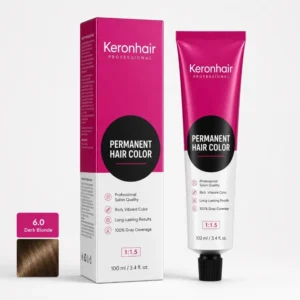
Hair Color Manufacturer Shortlist
10 Private Label Hair Dye Manufacturers to Compare in 2026
Choosing a private label hair dye manufacturer is not only a price comparison. Brands need a partner that can align formula route, shade performance, developer system, packaging, testing, documentation and repeat-order controls. This guide gives beauty founders, salon brands and distributors a practical shortlist and a consistent way to evaluate every candidate.
Formula route
Ready-to-brand, adapted platform or custom development
Shade system
Substrate, developer, gray coverage and approval criteria
Commercial fit
MOQ by shade, component minimums and reorder exposure
Market readiness
Testing, label inputs, technical files and destination rules
The 10 Manufacturers in This Guide
What Is a Private Label Hair Dye Manufacturer?
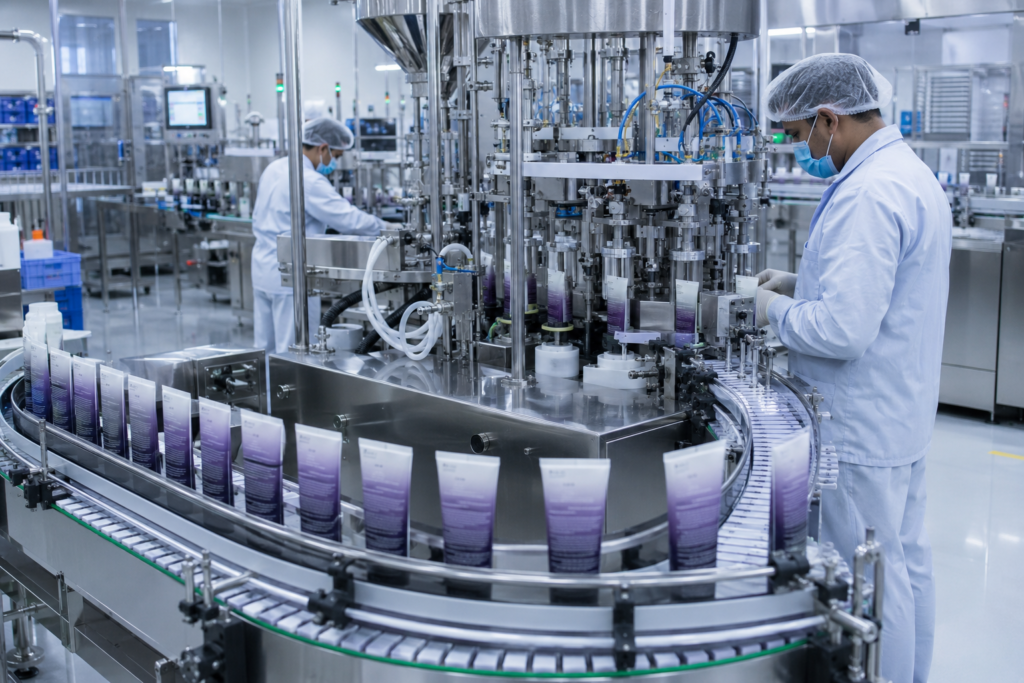
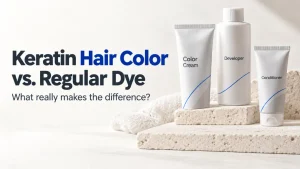
A private label hair dye manufacturer develops or supplies hair color products that another company sells under its own brand. The scope may include permanent color, demi-permanent and semi-permanent products, color shampoos, toners, developers, bleach systems and post-color care. The manufacturer may also coordinate tubes, bottles, cartons, instructions, gloves and retail kits.
The most important distinction is not the supplier’s use of “private label,” “OEM” or “ODM.” It is the written project scope: who controls the formula, shade standard, test plan, packaging specification, technical documents and future changes.
Ready-to-Brand Private Label
The brand selects an existing formula and focuses on shade range, fragrance, fill size, decoration and outer packaging. This route may reduce development work, but the approved sample and formula status still need to be documented.
Adapted Formula Platform
An existing base is adjusted for texture, fragrance, color direction, ingredients or claims. It can provide more differentiation than a stock product without creating every element from zero.
Custom Hair Color Development
The manufacturer works from a technical brief, reference product or performance target. More sampling, testing, documentation and contract detail are normally required.
Brand-Side Responsibility
Private label does not remove the brand’s responsibility for market-specific safety, labeling and product claims. Confirm the responsible party, importer and notification or registration duties before production.
Private Label Hair Dye Manufacturer Comparison
This table is designed for shortlisting, not for declaring one universal winner. Public website information can change, and it does not replace a current quotation, certificate check, factory audit or product-specific technical review.
| Manufacturer | Base | Useful Starting Fit | Publicly Visible Scope | Priority Verification |
|---|---|---|---|---|
| HSA Cosmetics | Italy | Premium, Italy-made color ranges | Permanent, ammonia-free, semi-permanent and bleach products | MOQ, customization tier, tests and market documentation |
| Keronhair | China | Coordinated formula, shade and packaging projects | Private label, adapted and custom hair color routes | MOQ by shade and component, formula terms and test plan |
| Saehan Cosmetics | South Korea | K-beauty and professional hair color development | Hair color and care OEM/ODM with ISO 22716 and ISO 9001 presented | Project capacity, MOQ, timing and export-market scope |
| Jiangsu Meiaisi | China | Established full-chain hair color and care programs | R&D, OEM/ODM, packaging coordination, QC and production | Exact facility, category scope, MOQ and ownership terms |
| Bright Innovation Labs | United States | Brands prioritizing domestic CMO coordination | Hair coloring within a broader beauty and home-care CMO portfolio | Hair color chemistry scope, pilot quantity and facility allocation |
| Guangzhou Zhongyi | China | Hair dye cream, shampoo formats and adjacent care | OEM/ODM, formula development, matching, packaging and inspection | Certificate validity, line scope and product-specific documents |
| Colornow | China | Hair and scalp portfolios with private label support | R&D, formula and package design, production and quality control | Manufacturing site versus overseas R&D or sales locations |
| Zelin Group | China | Agile herbal, vegan and ammonia-free concepts | Private label hair color and supplier-published fast development | Timeline assumptions, capacity, tests and formula exclusivity |
| Shihuanuo | China | Hair color-focused OEM, ODM and OBM research | Color cream, color shampoo, developer and bleach categories | Legal entity, licensed factory, active certificates and MOQ |
| Famo Kemei Innovation | China | Multi-format salon and home hair color projects | Hair dye cream, home-use kits, color shampoo and bubble mousse | Formula route, format-specific MOQ and packaging minimums |
How We Built This List
This reflects my manufacturing perspective plus a review of each company’s publicly available information. It is not an independent audit, and inclusion here does not replace your own due diligence.
Companies that develop and own their formulas, rather than reselling third-party bases. Your product’s integrity starts at the chemistry level.
In hair dye, regulatory compliance is the baseline, not a differentiator. Every entry publishes verifiable credentials worth checking.
Whether a manufacturer supports smaller first runs matters more to an emerging brand than headline capacity does.
Shade development, developer concentration options, and packaging flexibility — so the product reflects your positioning rather than a catalogue.
How a supplier answers a hard question before the contract is signed predicts how they will handle a deviation after it.
1. HSA Cosmetics
Best for premium Italian-made hair colour innovation
HSA has spent four decades building one of the more technically developed private label colour operations in Europe. The company publishes five dedicated R&D laboratories and distribution to brands in 90+ countries, and states that its library runs to more than 1,000 ready-to-go formulas.
What sets it apart in practice is less the longevity than the internal regulatory affairs division, which manages compliance documentation for international markets. For a brand planning to sell across several jurisdictions from launch, having that capability inside the factory rather than outsourced is a real operational advantage.
Main products: permanent colour (ammonia and ammonia-free), demi-permanent, semi-permanent formats including gel and creamy varnish, bleach systems, and colour maintenance lines.
Strengths
- Four decades of in-house colour R&D
- Made-in-Italy positioning for premium brands
- Internal regulatory team covering EU, US, and export markets
- Eco-friendly and recyclable packaging options published
Trade-offs
- MOQ and pricing can be out of reach for very early-stage brands
- Deep customisation extends development timelines
- Premium Italian manufacturing carries a premium unit cost
2. Keronhair
Best for brands wanting formula, shade, and packaging handled as one project
I include Keronhair openly because this article sits on our website. We built the company around one thing I saw missing in this category: treating formulation accountability as part of the standard service rather than an upsell.
Our model is formulation-based. We develop our formulas in-house, coordinate shade plans against your reference, and run the colour cream, developer pairing, tube or bottle, carton, instructions, gloves, and retail kit as a single project rather than separate workstreams. In my experience the largest sourcing risks appear between workstreams, not inside a formula — a pump that dispenses badly, artwork that misses a required warning, a component minimum nobody costed.
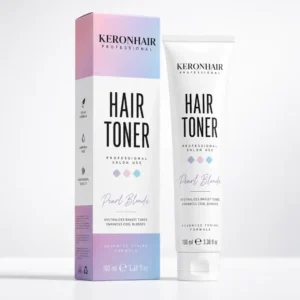
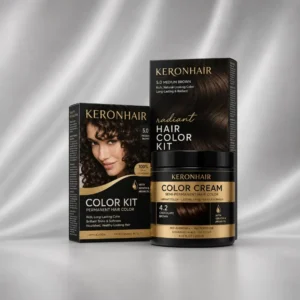
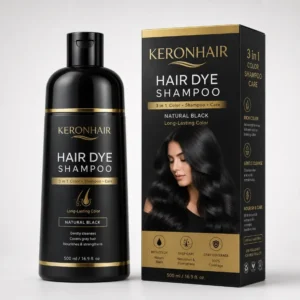
Main products: permanent oxidative colour in cream, gel, and liquid formats, demi-permanent and deposit-only systems, semi-permanent colour and toners, ammonia-free and low-irritant formulations, developer systems, and bleach powders.
Strengths
- Formula, shade, developer, and packaging coordinated by one project team
- In-house testing reduces dependence on third-party lab queues
- Documentation organised for the destination market as part of the process
- Iterative sampling with structured feedback on texture, lift, and coverage
Trade-offs
- Not the fastest route if you need finished stock in weeks
- Our intake asks for more upfront detail than a fill-and-label operation
- Technical service is reflected in unit pricing

3. Saehan Cosmetics
Best for K-beauty hair colour with a long technical heritage
Founded as Korea’s first permanent wave solution manufacturer, Saehan brings something genuinely uncommon: close to seventy years of hair-specific formulation inside a single organisation. Its Incheon facility publishes ISO 22716 (cosmetics GMP) and ISO 9001 certification alongside a CGMP designation from the Korean Cosmetic Association.
Its R&D institute develops new trend shades and functional formulations annually, with current emphasis on clean beauty, vegan formulations, and scalp-health-oriented colour systems.
Main products: permanent dye in cream and shampoo-type formats, semi-permanent colour, professional and OTC formulations, perm and straightening treatments, shampoos and essences.
Strengths
- Close to seventy years of hair-specific formulation experience
- ISO 22716 and CGMP credentials published
- Clean-beauty and vegan formulation capability
- Active annual trend-shade development
Trade-offs
- 3,000-unit threshold is above most early-stage budgets
- Korean production adds shipping time and cost for Western markets
- Communication runs through an international sales team rather than the lab

4. Jiangsu Meiaisi Cosmetics
Best for high-volume OEM under European group ownership
Meiaisi became part of Germany’s CREMER OLEO Group in 2022, and the company states that European EHS (environment, health, and safety) standards have since been applied across its Chinese operations. For a buyer, the interesting part is not the scale but the governance: group ownership by a European parent generally brings audit trails and compliance rigour that are harder to obtain from an independent factory at the same price point.
Main products: hair colouring and dye products as the core specialty, plus hair care, body care, and laundry care.
Strengths
- European group governance applied to Chinese production costs
- Large stated annual capacity for scaling programmes
- Genuine formulation development capability, not fill-and-label
- Parent-group network adds supply chain depth
Trade-offs
- Not structured for startup volumes
- Little public pricing information; requires direct engagement
- Narrower category breadth than full-range beauty manufacturers
5. Bright Innovation Labs
Best for US brands needing a domestic CMO with full colour capability
Bright occupies a genuinely rare position in US manufacturing: a domestic factory with the technical capability to handle peroxide chemistry, bleach powder production, and complex oxidative colour alongside a broader personal care portfolio. Most US contract manufacturers will make you a shampoo but decline hair colour, because the chemistry and the equipment requirements are different.
If you need Made-in-USA positioning, or your channel requires domestic production for compliance or lead-time reasons, this is one of the few fully domestic options in the category that can actually make oxidative colour.
Main products: permanent colour, semi-permanent and temporary colour, bleach and lightening powders, developer formulations, and conditioning treatments.
Strengths
- US-based with genuine bleach and oxidative colour capability
- Three R&D facilities and in-house analytical testing
- Clean and vegan formulation experience
- Scales from pilot batch to retail volume within one relationship
Trade-offs
- Higher unit cost than Asian production at equivalent volume
- MOQ and pricing require direct engagement
- Best value only if domestic production is a real requirement

6. Guangzhou Zhongyi Cosmetics
Best for plant-based and herbal hair dye positioning
Zhongyi’s distinguishing strength is depth in plant-based and herbal colour. Ingredients like Polygonum multiflorum and ginger root appear in its R&D capability rather than only in its marketing copy — which matters, because “herbal hair colour” is one of the most commonly claimed and least commonly substantiated positions in this category.
For a brand building natural or herbal positioning, finding a factory with both the formulation experience and the certification set to support the claim is harder than it sounds. Zhongyi is one of the more credible options.
Main products: permanent dye (plant-based and conventional), semi-permanent and temporary colour, herbal formulations, developer systems, and hair care.
Strengths
- Genuine herbal and botanical formulation experience
- Certification set covering most major market entry requirements
- Flexible entry through in-stock products before custom work
- Factory-direct pricing
Trade-offs
- Colour-specialised; limited breadth for a full portfolio from one supplier
- Lead-time planning must account for shipping to Western markets
7. Colornow Cosmetic
Best for a colour specialist with a China and Canada footprint
HSA has spent four decades building one of the more technically developed private label colour operations in Europe. The company publishes five dedicated R&D laboratories and distribution to brands in 90+ countries, and states that its library runs to more than 1,000 ready-to-go formulas.
What sets it apart in practice is less the longevity than the internal regulatory affairs division, which manages compliance documentation for international markets. For a brand planning to sell across several jurisdictions from launch, having that capability inside the factory rather than outsourced is a real operational advantage.
Main products: permanent colour (ammonia and ammonia-free), demi-permanent, semi-permanent formats including gel and creamy varnish, bleach systems, and colour maintenance lines.
Strengths
- Long-standing colour specialisation with published GMPC history
- Canadian facility enables North American origin labelling
- Regulatory groundwork already in place for several markets
- Onboarding support aimed at private label newcomers
Trade-offs
- Sparse public information; evaluation requires direct contact
- Cost and lead time vary substantially between the two facilities
- Strength is colour specifically, not a broad portfolio

8. Zelin Biotech
Best for startups needing fast herbal colour development
Zelin has built its operation around speed. The company publishes a three-working-day custom formulation turnaround with one-to-two-week production — an unusual claim in a category where a first sample commonly takes two to three weeks. Its R&D team is described as averaging 10+ years of industry experience.
Its deepest expertise sits in plant-extract and herbal formulations with a cruelty-free, clean-beauty orientation. Speed at this level is a real advantage when you are iterating toward a shade target, but it is worth confirming what testing sits inside that three-day window and what has to happen afterwards.
Main products: herbal and plant-extract dyes as the primary specialty, permanent colour, semi-permanent and temporary colour, shampoo-type colour, and specialised treatments.
Strengths
- Among the fastest published development timelines in the category
- Deep specialisation in herbal and plant-extract colour
- GMPC-certified production and cruelty-free testing published
- Genuine flexibility for early-stage volumes
Trade-offs
- Founded 2015 — a shorter track record than most on this list
- Narrower fit for conventional full-chemistry permanent colour
- A small R&D team can hit capacity limits in peak periods

9. Guangzhou Shoubang Cosmetics (Shihuanuo)
Best for colour-focused OEM, ODM, and OBM projects
Shoubang trades internationally as Shihuanuo and focuses almost entirely on colour systems rather than a broad cosmetics catalogue. Its range covers colour cream, colour shampoo, comb-application dye, bleach powder, and hair fibres — several distinct ways to structure a colour-led assortment.
The company publishes OEM, ODM, and OBM support, and states a research partnership with the Guangdong Provincial Institute of Traditional Chinese Medicine along with its own retail brands. That last point cuts both ways: a supplier with its own competing brands has manufacturing depth, but you should establish early whether your formula and shade work stays exclusive to you.
Main products: hair colour cream, colour shampoo, comb-application dye, bleach powder, developer, hair fibres and hairline powder, and related treatments.
Strengths
- Colour-focused rather than a general cosmetics catalogue
- Several coloured delivery systems for different application needs
- OEM, ODM, and OBM routes described publicly
- Brand-launch support presented for newcomers
Trade-offs
- Operates its own retail brands, so exclusivity needs explicit terms
- No published MOQ; requires direct engagement to evaluate
- Multiple company names in use across sites — the contracting entity needs pinning down

10. Famo Kemei Innovation (Guangdong) Cosmetics
Best for premium Italian-made hair colour innovation
Famo Kemei covers an unusually wide set of colour delivery formats in one place: conventional dye cream, home-use kits, colour shampoo, and bubble or mousse dye, alongside perm cream, bleach powder, and keratin treatments. For a brand comparing salon and at-home concepts, that breadth lets you evaluate several product architectures without adding suppliers.
Its published MOQ structure is worth studying as an example of how this category actually prices. Dye cream OEM packaging starts at 20,000 pieces, but bubble mousse starts at 1,000 pieces per shade and developer at 100 kg of bulk. The headline minimum tells you almost nothing until you know which format you are building.
Main products: hair dye cream, home colour kits, colour shampoo, bubble and mousse dye, developer, bleaching powder and cream, perm cream, keratin treatments, and post-colour care.
Strengths
- Wide range of colour delivery formats under one supplier
- Component-level MOQ published openly, which is rare
- Some formats accessible at low volume for testing
- Free sampling with a stated 3–5 day turnaround on stock formulas
Trade-offs
- 20,000-piece minimum on dye cream OEM packaging is a serious commitment
- Company registered in 2020; the 18-year figure refers to team experience, not the entity
- Published employee and line counts differ between pages on its own site
What to Look for in a Private Label Hair Dye Manufacturer
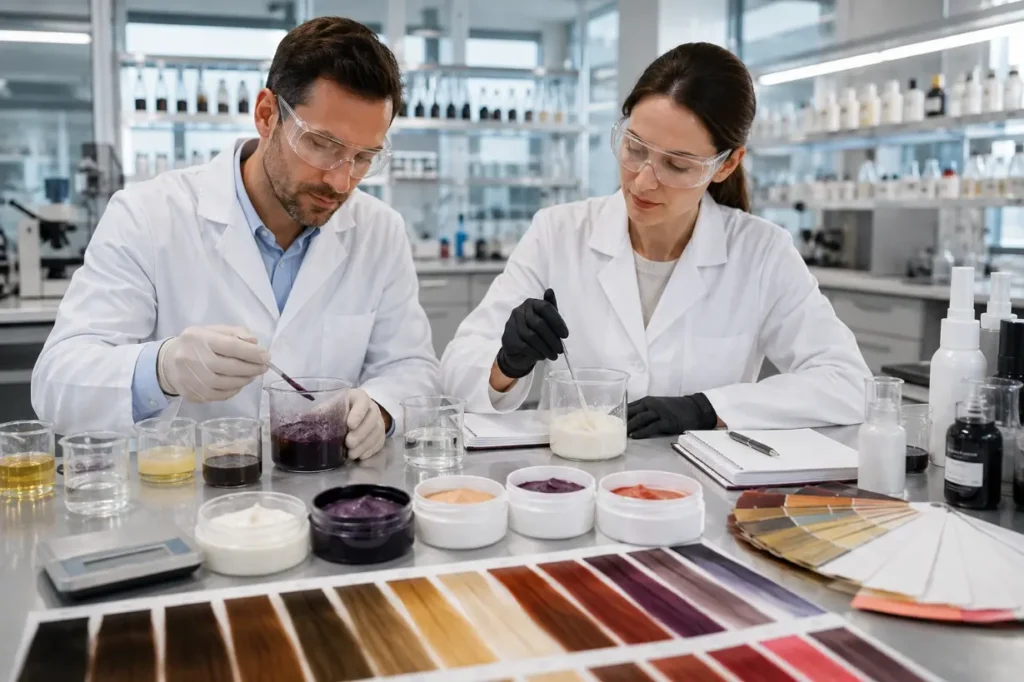
The list above is useful for creating a shortlist, but the final decision should be based on project fit. Hair color is more technically sensitive than many basic rinse-off hair-care products, so buyers should verify how the supplier controls both chemistry and production.
Strong R&D and Shade-Matching Capability
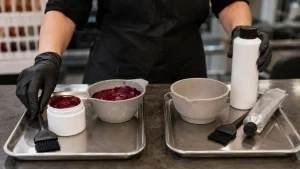
Ask the manufacturer how it develops and approves shades—not only how many colors appear on a chart. A credible team should be able to discuss starting hair level, gray percentage, previous chemical history, developer strength, mixing ratio, processing time and the conditions used to evaluate the result.
For custom projects, send the same reference to every shortlisted supplier and ask each one to explain its proposed formula route. This makes it much easier to distinguish a technical response from a generic sales answer.
Flexible MOQ for New and Growing Brands
Hair-dye MOQ is rarely one simple number. The bulk formula, each shade, printed tube, developer bottle, carton, leaflet, gloves and assembled kit may all have separate minimums. A quotation that says “MOQ 1,000” without explaining the component structure can hide significant leftover-material or cash exposure.
Ask for MOQ by shade and by packaging component. Then compare the minimum not only with your budget, but also with your realistic sell-through and reorder plan.
Packaging, Labeling, and Brand Design Support
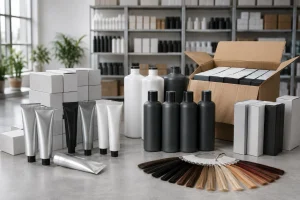
Packaging must work with the formula and with the sales channel. Tubes, pumps, developer bottles, cartons and instructions should be reviewed together with fill size, product viscosity, oxidation risk, leakage, decoration, shipping durability and target-market label requirements.
A strong supplier should be able to distinguish between packaging it manufactures, packaging it sources, and packaging that requires a separate tooling or printing minimum. This matters when you compare two quotations that appear similar at first glance.
Testing, Documentation, and Regulatory Support
Do not treat “FDA registered,” “EU compliant,” or a certificate logo as proof that a finished product is approved for every market. In the United States, FDA states that cosmetic facility registration and product listing under MoCRA are not cosmetic approval programs, and FDA does not issue certificates for those registrations or listings.
For US projects, review current FDA/MoCRA requirements here: FDA — Registration & Listing of Cosmetic Product Facilities and Products
For EU projects, clarify the Responsible Person, Product Information File, Cosmetic Product Safety Report, labeling and CPNP notification responsibilities before launch. The manufacturer may support the documentation, but responsibility should be defined in writing.
EU reference: European Commission — Cosmetic Product Notification Portal (CPNP)
Where a supplier presents ISO 22716 as part of its quality system, verify the certificate scope, legal entity and manufacturing address. ISO 22716 provides cosmetics GMP guidelines for production, control, storage and shipment.
ISO reference: ISO 22716:2007 — Cosmetics GMP
Choosing the Right Partner for Your Brand
The manufacturer with the largest factory is not automatically the best choice for a startup, just as the lowest-MOQ supplier is not automatically the best choice for a brand planning national retail distribution.
A startup may prioritize manageable minimums, clear sampling and practical packaging. A salon brand may care more about shade consistency, developer systems, technical instructions and professional application performance. A distributor may place greater weight on documentation, multilingual packaging, repeat-order control and production scale.
Before choosing, send the same written brief to several shortlisted suppliers. Compare the same categories: formula route, number of shades, developer, fill size, packaging, testing, documentation, MOQ, tooling, lead time, Incoterms and payment terms. The closer the quotations are to the same scope, the more meaningful your comparison becomes.
Everything above is specific to colour. The work underneath it — scoring every candidate on one sheet, sending all of them an identical question set, matching documents to the destination market — applies to any hair product, and it is worth doing before you contact anyone. We have set that framework out in full, including the seven-criterion scorecard, in our guide to choosing a reliable hair product manufacturer.
A Practical Hair Color Sourcing Process
Build the Product Brief
Define product type, selling channel, target market, number of shades, formula route, fill size, packaging, claims, target quantity and launch date. Brands planning a salon-facing range can also review our comparison of professional hair color brands to benchmark product categories, developer systems and market positioning.
Shortlist With One Scorecard
Compare technical fit, evidence, MOQ, development model, communication and landed cost using the same questions for every manufacturer.
Approve Samples Scientifically
Test against recorded hair substrates and application conditions. Do not approve a shade from one photograph or one uncontrolled swatch.
Lock the Commercial Package
Confirm formula, shade, packaging, artwork, instructions, tests, documents, tolerances, price, lead time and ownership before the deposit.
Inspect Production Evidence
Agree on in-process checks, final inspection, batch release, COA, retained sample and shipment approval. Use a third-party inspection when risk warrants it.
Plan the Reorder Before Launch
Document shade demand, component balance, formula changes, lead time and complaint handling so the second order does not become a new development project.
Keronhair’s OEM/ODM manufacturing overview explains how a coordinated project can move from consultation and formula work through production, quality control and delivery.
Why Private Label Hair Color Brands Choose Keronhair

Keronhair brings hair color R&D, shade development, developer matching, packaging coordination, controlled production and export support into one OEM/ODM program. Instead of supplying only a generic filled tube, the team develops each product as a complete commercial system—from formula performance and shade standards to the retail kit, quality records and repeat production.
Keronhair’s core advantage is full-chain coordination. One project team connects your brand brief, formula route, shade standards, developer, samples, packaging, quality requirements and bulk production. This gives founders, salon brands and distributors a clearer, faster path from product concept to finished private label hair color.
1. Flexible Formula Routes for Different Brand Stages
Keronhair supports private label, semi-custom and custom development. A new brand can launch efficiently from a proven formula platform, while an established brand can refine texture, fragrance, performance claims, ingredient direction and color positioning around a more specific brief. This flexibility helps buyers balance differentiation, development time and budget.
2. Formula, Shade and Developer Developed as One System
Hair color performance depends on the interaction between the color cream, starting hair base, developer strength, mixing ratio and processing method. Keronhair plans these variables together and builds written shade-approval criteria around the intended result, including tone direction, lift, deposit and gray coverage. The result is a reproducible product standard rather than a color selected from an uncontrolled photograph.
3. Broad Hair Color Product Capability
Keronhair can build coordinated ranges across hair color cream, ammonia-free color, bubble hair color, color shampoo, developer and bleach powder. Brands can therefore develop a single hero SKU or a broader color system with compatible supporting products through one manufacturer.
4. Packaging and Complete Retail Kit Coordination
Keronhair coordinates color tubes, developer bottles, shampoo bottles, sachets, cartons, instructions, gloves and other kit components alongside the formula. Reviewing compatibility, filling requirements, artwork and component minimums within one workflow produces a more coherent product and reduces costly changes late in development.
5. Controlled Sampling, Production and Quality Records
The approved formula, shade standard, packaging specification and sample criteria become the reference for bulk production. Keronhair connects in-process checks and finished-product inspection with batch records, retained samples and available product documentation, helping brands maintain consistency from the approved sample to future orders.
6. Practical Launch Scale and Long-Term Expansion
For eligible standard-formula projects, current MOQ guidance starts from 1,000 units per shade or SKU. This creates a practical entry point for focused launches, while the same approved project records support repeat production, packaging updates and the expansion of a successful shade range.
What Keronhair Coordinates for Your Brand
- Formula selection, adaptation or custom development
- Shade planning, developer matching and sample approval
- Primary packaging, cartons, instructions and retail-kit components
- Production specifications, quality records and shipment preparation
What Your Brand Gains
- One accountable team across formula, color performance and packaging
- Clearer decisions on cost, MOQ, samples and launch requirements
- Better continuity between the approved sample and bulk production
- A scalable foundation for reorders, new shades and product-line growth
Private Label Hair Dye FAQ
What is the typical MOQ for private label hair dye?
There is no reliable industry-wide figure. The minimum is usually set separately for bulk formula, each shade, printed tube, bottle, carton, leaflet, gloves, and retail kit. Published examples in this article range from 1,000 pieces per shade on a mousse format to 20,000 pieces on dye cream OEM packaging. Ask for a component-level MOQ table and calculate your total cash and leftover-material exposure.
How long does private label hair dye development take?
It depends on whether you select an existing formula or develop a custom system, how many shades need approval, the number of revisions, testing, packaging production, documentation, and shipping. Request a milestone schedule with stated assumptions rather than one unsupported completion date.
Should a startup choose private label or custom formulation?
Private label suits speed, lower development complexity, and market validation. Custom formulation suits a brand with a clear technical brief, adequate budget and time, and a genuine need for differentiation. An adapted formula — an existing base modified to your requirements — often provides a workable middle route.
Which documents should a hair dye manufacturer provide?
Documents vary by product and destination market. Ask for the manufacturing entity and licence, the formula or ingredient information your responsible party needs, product and packaging specifications, relevant test evidence, batch Certificate of Analysis, traceability records, label information, and agreed regulatory support. Confirm every document belongs to the quoted facility and the exact SKU.
Does the brand automatically own a custom hair colour formula?
No. Paying a development fee does not by itself establish ownership or exclusivity. The contract should state who owns the formula, modifications, shade data, testing results, packaging tooling, and technical files, and what the manufacturer may reuse for other clients.
Can a hair dye manufacturer be FDA certified?
No. The FDA does not operate an approval or certification programme for cosmetics, and it does not issue certificates for cosmetic facility registration or product listing. A supplier advertising an “FDA certificate” for hair colour is either misunderstanding the requirement or overstating it — either way, ask what the claim actually refers to before proceeding.
How should a brand evaluate hair colour samples?
Use defined hair substrates and record the starting level, grey percentage, previous processing, application amount, developer, ratio, temperature, time, rinse method, lighting, and evaluation date. Approve both performance and packaging compatibility before the sample becomes your production reference.