Choosing a professional hair color supplier is not simply a purchasing decision. The color system affects shade results, stylist confidence, color-bar workflow, inventory, and service consistency.
A large catalog or attractive quotation does not prove supplier fit. This guide shows independent salons, multi-location groups, and salon-led brands how to choose a sourcing model, define and test a color system, verify supplier evidence, assess a China hair dye factory, and prepare an order.
What Type of Professional Hair Color Supplier Does Your Salon Need?
The word “supplier” can describe several very different businesses. One company may resell an established professional brand, while another may develop and manufacture products under your name. Comparing them without identifying their roles can lead to the wrong shortlist.
| Supplier model | What you usually buy | Best suited to | Main point to verify |
|---|---|---|---|
| Authorized distributor | Finished products from a recognized professional brand | Salons that value brand recognition, local education, and regular replenishment | Authorization, authenticity, storage, and traceability |
| Multi-brand wholesaler | Finished products from several brands | Salons consolidating purchases or comparing multiple systems | Product origin, stock condition, expiry management, and reorder availability |
| Ready-made private-label supplier | Existing products carrying the buyer’s branding | Salon groups or new brands seeking a simpler own-label launch | Which elements are genuinely customizable |
| OEM/ODM manufacturer | Ready-to-brand, adapted, or custom products | Buyers seeking control over formula, shades, developer, packaging, or range design | Who develops, manufactures, approves, documents, and releases the product |
Because “private label,” “OEM,” and “ODM” are not used consistently, compare the work included rather than the label. Keronhair’s guide to wholesale hair dye supplier models provides more detail.
Choose a Distributor or Wholesaler When You Are Restocking an Established Brand
An authorized distributor is often practical for an independent salon using a recognized professional line. It provides an existing shade system, instructions, education materials, and local stock without product-development responsibility.
Ask the seller to document authorization where relevant. Check batch or lot identification, storage practices, remaining shelf life, return terms, and how discontinued or unavailable shades are handled. If several locations rely on the same color system, confirm whether the supplier can support consistent replenishment across all sites.
A multi-brand wholesaler can consolidate orders, but it should still document product origin for every brand you use.
Consider a Manufacturer When You Want an Exclusive or Private-Label Range
A manufacturer is more relevant when a salon group wants an exclusive range or plans to sell products beyond salon services. This route creates more control and more decisions: formula route, launch shades, developer, packaging, instructions, documentation, and reorder planning. Clarify ownership, exclusivity, testing, labeling, and destination-market responsibilities in writing.
Private label is a different operating model, best suited to buyers with sufficient demand, a clear position, technical ownership, and launch resources.
Define the Professional Color System Your Salon Actually Needs
Do not begin with the question, “How many shades does the supplier offer?” Begin with, “Which services must our color system support?”
Review appointment records and color-bar usage. Identify your most common work—gray coverage, root retouch, tonal change, glossing, blonding, corrective color, or vivid color—then turn it into a product brief.
Map the Product Categories to Your Service Menu
Your required system may include permanent color, demi-permanent color, semi-permanent or direct dye, toner, lightener, developer, and post-color care. These are not interchangeable categories. They can differ in intended use, application method, processing, packaging, and regulatory treatment.
The European Commission distinguishes temporary, semi-permanent, and permanent products within the EU cosmetics framework. Its overview of hair dye products is a useful starting point; market-specific review is still necessary.
For every required product, define:
- the intended service and user;
- the starting hair condition or substrate;
- the desired deposit, lift, coverage, or tonal result;
- the application and processing system;
- the required developer or activator;
- the intended sales channel and destination market.
Plan a Practical Shade and Developer Architecture
A salon rarely needs the largest possible range on day one. Start with proven service demand and separate essential launch shades from lower-frequency additions.
Think in families rather than isolated tubes. Your technical lead should examine natural bases, cool and warm reflects, gray-coverage options, blonding and toning needs, correctors, and any fashion shades relevant to the salon.
Developer must be treated as part of the system. Confirm the intended strength, mixing ratio, processing conditions, and which shades or services each developer supports. A supplier offering color cream and developer in the same catalog has not necessarily validated the exact products as one system. This guide to developing hair dye and developer together explains the project questions in more detail.
Check Whether the System Fits Your Color-Bar Workflow
Ask your team to review shade codes, pack size, dispensing, mixing texture, instructions, color-chart logic, storage, and how quickly a stylist can find the correct product.
Multi-location groups need consistent coding and written instructions; informal knowledge is difficult to train and reproduce across teams.
Create a one-page system brief before requesting samples. It should name the product categories, priority services, initial shade families, developer requirements, package sizes, target market, and intended launch scope.
How Should You Test Professional Hair Color Before Switching?
Supplier samples are screening tools, not proof that a complete range will perform as expected. Results can change with the substrate, developer, mixing ratio, application, processing, rinse method, and aftercare.
The purpose of salon-floor testing is to compare products under controlled, documented conditions.
Build a Repeatable Sample-Test Protocol
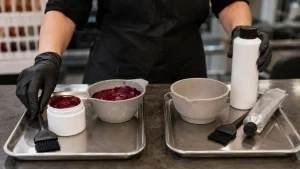
Give shortlisted suppliers the same brief and request samples relevant to the same service. Do not compare a permanent oxidative color from one supplier with a semi-permanent direct dye from another as if they solve the same problem.
Record:
- supplier and sample code;
- formula or shade version;
- date received;
- batch or lot information when available;
- starting hair level and color history;
- gray percentage or porosity where relevant;
- developer, mixing ratio, and application quantity;
- processing time and temperature;
- rinse and aftercare method.
Use standardized swatches or mannequins first. Controlled model work may follow with suitable professional oversight. Performance screening does not replace safety assessment, regulatory review, or required testing.
Score Results That Matter to Colorists and Clients
Define acceptance criteria in advance so packaging, sales presentation, or one stylist’s preference does not control the decision.
| Evaluation area | What to record | Why it matters |
|---|---|---|
| Mixing and application | Uniformity, texture, spreadability, application control | Influences workflow and product handling |
| Color result | Depth, tone, coverage, lift or deposit, uniformity | Shows whether the result matches the agreed reference |
| Processing and rinse | Behavior during processing, ease of rinse, visible residue | Helps assess service practicality |
| Fade observation | Change in intensity and tone under a defined wash plan | Helps the salon understand ongoing shade behavior |
| Stylist usability | Instruction clarity, coding, confidence, repeatability | Indicates training and rollout difficulty |
| Packaging | Dispensing, closure, leakage, legibility, component condition | Tests whether the pack supports real use |
Avoid universal claims about wash count or gray coverage. Performance statements need defined test conditions and acceptance criteria.
The FDA does not prescribe one universal cosmetic test list. Its cosmetic product testing guidance is a useful starting point.
Run a Limited Pilot Before a Full-Salon Switch
After controlled sample testing, run a limited pilot with selected services and trained team members. Freeze the approved reference: sample code, formula and shade version, developer, processing conditions, packaging, artwork version, and any agreed limitations.
Collect structured feedback on instructions, shade logic, and repeatability. Record deviations and resolve them before a full rollout.
If you are working with a professional hair color manufacturer, confirm how the approved sample becomes a production specification and how later revisions will be controlled.
Verify Quality Controls, Documentation, and Product Traceability
A certificate logo does not identify the certified site, scope, validity, or relevance to your product. Connect important claims to documents, records, and named responsibilities.
Request Product-Level Documents and Batch Identification
Ask what information is available for the specific product and destination market. Depending on the project and jurisdiction, this discussion may include:
- ingredient or INCI information;
- technical and use instructions;
- product specifications;
- safety data or other applicable safety information;
- batch or lot identification;
- certificate of analysis where applicable;
- shelf-life or period-after-opening information where relevant;
- testing summaries and traceability records;
- labeling inputs and warnings.
Check the product names, codes, versions, dates, and legal company associated with every file.
Check the Supplier’s Quality and Change-Control Process
Ask how raw materials, in-process production, filling, packaging, and finished products are controlled. Confirm how the approved reference links to the formula, shade, component, artwork, and batch record.
ISO 22716 provides guidelines for the production, control, storage, and shipment of cosmetic products. If a supplier presents an ISO 22716 certificate, verify the legal holder, site address, scope, issuing body, and validity. A relevant certificate can support due diligence, but it does not prove that every product is suitable for every market.
When a material or component changes, the supplier should notify the buyer, document the proposal, and define whether review, testing, or fresh approval is required.
Assign Regulatory Responsibilities in Writing
Identify the target market early. Formula review, safety substantiation, labeling, notification or listing, importation, and responsible-party duties can differ by jurisdiction and may be shared among several parties.
Be cautious with claims such as “FDA approved.” The FDA explains that cosmetics generally do not undergo the same premarket approval process as drugs, although color additives and hair dyes have specific rules. Buyers targeting the United States should review the FDA’s current hair dye information and obtain qualified advice for the exact product.
Before approval, assign who prepares, reviews, pays for, and approves each document and market task.
Why Choose a China Hair Dye Factory?
A China hair dye factory may suit a salon group or brand seeking private label, custom formulas, coordinated color and developer, tailored packaging, or a multi-SKU range. It is not right for every salon.
Some manufacturers coordinate formulation, shade development, components, filling, packaging, and export preparation in one relationship. This may reduce vendor management, but capability must be verified factory by factory.
Before choosing a factory in China, examine:
- whether it is the legal manufacturer, a trading company, or a project coordinator;
- whether it specializes in the exact hair color formats you need;
- how it develops, records, and approves shades;
- whether hair color and developer can be evaluated as one defined system;
- how formula, packaging, artwork, and document versions are controlled;
- which product and quality documents can be supplied;
- how communication, sample feedback, complaints, and changes are handled;
- what experience it has with your destination market;
- how freight, import requirements, duties, and delivery risk affect the project.
Compare the operating model, not country alone. Overseas customization requires more planning for samples, components, shipping, and replenishment. A local distributor may be better when immediate access to an established brand matters most.
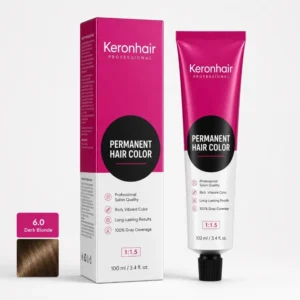
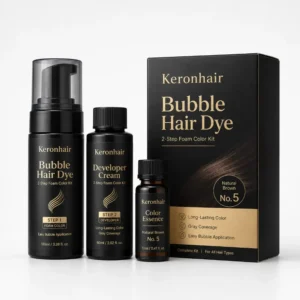
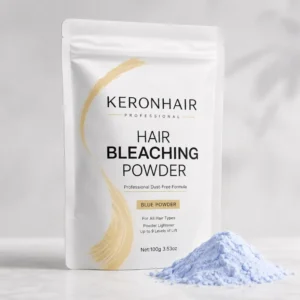
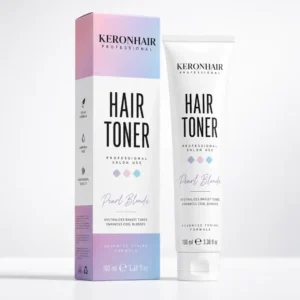
Keronhair is a Guangzhou manufacturer presenting several hair color formats. Buyers considering its China hair dye manufacturing capabilities should request project-specific scope, samples, documents, responsibilities, and pricing.
Why Choose Keronhair?
At Keronhair, we approach a professional hair color project as a complete system rather than a single tube of color. We begin by reviewing your target market, sales channel, priority services, initial shades, developer requirements, packaging direction, and launch plan. This helps us identify the questions that must be resolved before sampling or quotation.
We support several types of B2B customers, each with different starting priorities:
- Salon groups and salon brands that want a professional color system, an exclusive range, or retail products carrying their own brand.
- Established beauty and hair care brands that want to add hair color, developer, bleaching products, or related formats to an existing portfolio.
- Startup and emerging brands that need to turn an initial concept into a focused, manageable launch range.
- Distributors, importers, and wholesalers that need a commercially practical assortment, market documents, packaging coordination, and repeat-order planning.
- Ecommerce sellers that need a clear product concept, durable packaging, understandable instructions, and a range suited to online merchandising.
We can discuss different development routes according to the project: starting from an existing private-label direction, adapting a product platform, or developing against a more specific brief. When hair color and developer are part of the same range, we connect the product discussion to the intended pairing, instructions, packaging, and approval conditions instead of treating each component as an unrelated item.
During sample development, we use references and recorded feedback to clarify formula and shade revisions. Before production, we work to align the approved product version with its packaging, artwork, technical information, and agreed quality requirements. We also clarify which project documents we can provide and which market responsibilities require review by the brand owner, importer, distributor, or qualified local professional.
We are best suited to buyers that want to build a private-label or OEM/ODM hair color range—not simply restock an established salon brand. If that matches your plan, send us your target market, product formats, first shade list, developer needs, packaging preference, estimated quantity per shade, and desired launch timing. We can then review the project scope and respond with fewer assumptions.
How to Score Suppliers and Choose Between Wholesale and Private Label
Combine technical fit, evidence, commercial practicality, and operating capability. A professional hair color supplier should not pass while failing a critical requirement.
Decide Which Sourcing Model Fits Your Business
Choose wholesale for established brands, recognized education, lower development responsibility, and convenient replenishment. Explore private label when you have a clear position, reliable demand, technical decision-making, and launch resources.
Private label may create an exclusive retail or professional range, but formula, shades, packaging, instructions, claims, documents, education, and replenishment all need owners.
Keronhair’s overview of OEM and ODM hair product manufacturing can help you prepare the scope of that discussion.
Weight the Criteria That Matter Most to Your Salon
This scorecard is a planning template, not an industry standard. Adjust it to your business.
| Evaluation category | Suggested weight | Evidence to review |
|---|---|---|
| Service-menu and system fit | 20% | Product brief response, formats, shade plan, developer pairing |
| Controlled technical performance | 25% | Coded samples, test sheets, approved references, stylist feedback |
| Documentation and traceability | 15% | Product files, batch information, certificate records, responsibility matrix |
| Total commercial value | 15% | Written quotation, MOQ structure, packaging costs, freight assumptions |
| Training and technical support | 10% | Technical manual, color chart, contact process, launch support scope |
| Reorder reliability and change control | 15% | Reorder conditions, component planning, version control, change process |
Use the same definitions for every supplier and record “not provided” instead of guessing.
Verify High Scores With Evidence
Document the evidence behind every high score: certificates or audit records, coded sample versions, approval methods, written reorder conditions, and change procedures.
Watch for red flags:
- unclear business identity or brand authorization;
- samples without codes or version records;
- inconsistent answers about formula, shade, or developer;
- certificates that do not match the manufacturing site;
- pressure to approve without controlled testing;
- unexplained minimum order quantities;
- verbal promises that do not appear in the quotation or agreement;
- unclear responsibility for labeling or market access.
Keronhair’s professional hair color range project illustrates range and packaging decisions but does not replace due diligence.
Approve a Pilot Before a Full Rollout
Use a pilot to validate the relationship and product, including communication, documents, packaging, shipment preparation, and deviation handling.
Before expansion, require approved shades, acceptable packaging, complete documents, staff readiness, and a workable reorder plan.
If a critical requirement fails, do not let the total score hide it. Mark non-negotiable criteria as pass/fail before comparing weighted totals.
How to Start Your Hair Dye Order?
After choosing a sourcing route, begin with a complete brief, not a generic price request.
- Define the project. State the market, channel, user, color type, initial shades, developer, fill size, packaging, quantity per shade, positioning, and launch timing.
- Confirm supplier fit. Ask for the formula route, development scope, responsibilities, information gaps, and quotation assumptions.
- Request and evaluate samples. Use coded samples and the controlled test protocol described earlier. Record all requested revisions, and do not approve a formula or shade from photographs alone.
- Freeze the approved specification. Confirm the formula and shade versions, developer pairing, processing instructions, packaging components, artwork, label content, quality criteria, product documents, and retained references.
- Review the commercial agreement. Check how minimums apply to formulas, shades, filling, and packaging. Confirm payment, ownership or exclusivity, unused components, change control, inspection, shipping, and reorder terms.
- Approve the production reference. Where the agreed process supports it, approve a final or pre-production reference and make sure both parties use the same version-controlled files.
- Confirm production and delivery responsibilities. Agree on production handoff, quality release, shipping documents, freight coordination, delivery communication, complaint handling, and the process for repeat orders.
Send enough information for the supplier to respond without guessing:
- target market and sales channel;
- product type and formula direction;
- initial number of shades and quantity per shade;
- developer or activator requirements;
- fill size and packaging format;
- reference product, swatch, shade chart, or written performance target;
- required documents or market support;
- desired launch date.
If you are developing an exclusive range, review the custom hair color formulation process before finalizing your brief. Do not rely on a general MOQ or lead time from a website; request written terms for your exact formula, shade count, packaging, testing, and market requirements.
Choose a Supplier You Can Verify and Work With
The right professional hair color supplier fits your sourcing model, service menu, testing standards, evidence requirements, and launch plan. Start by defining the system, test products under controlled conditions, verify documents and responsibilities, then use a weighted scorecard and pilot before committing.
If your salon group or beauty brand is planning a private-label range, send Keronhair your target market, product categories, initial shades, developer requirements, packaging direction, estimated volume, and launch timing for a project-fit review.
Frequently Asked Questions
Where do professional salons buy their hair color?
Salons usually buy from authorized distributors, professional wholesalers, or manufacturers. The right route depends on whether the salon wants an established brand, consolidated purchasing, or a private-label range.
What is the difference between a hair color wholesaler and a manufacturer?
A wholesaler generally resells finished products. A manufacturer develops or produces products and may support formula, shade, developer, packaging, documentation, and production decisions.
Should a salon buy hair color and developer from the same supplier?
Not always. What matters is that the exact color and developer pairing has clear instructions, defined use conditions, suitable documentation, and controlled performance testing.
How should a salon test a new professional hair color line?
Use standardized swatches or mannequins first. Record the substrate, developer, mixing ratio, application, processing, result, fade observations, packaging, and stylist feedback before running a limited pilot.
What documents should a professional hair color supplier provide?
Requirements vary by product and market. Buyers may need ingredient information, specifications, batch identification, technical instructions, applicable safety data, test information, traceability records, and verifiable certificates.
How many shades should a salon stock when launching a new color line?
There is no universal number. Build the opening range around actual service demand, shade families, mixing capability, expected usage, inventory budget, and replenishment speed.
Can a salon create its own private-label hair color line?
Yes, if it has a clear position, suitable demand, technical decision-making, and resources for sampling, packaging, documentation, market responsibilities, inventory, and launch support.
Can a China hair dye factory produce both hair color and developer?
Some can, but capability varies. Verify formula development, intended pairing, system testing, packaging, instructions, documentation, quality controls, and destination-market responsibilities for the exact project.