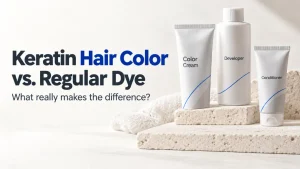
Yes, some private label manufacturers can make hair dye and developer together.** But a brand should verify more than whether both products appear in the supplier’s catalog. The manufacturer should be able to define the formula pairing, test the intended combination, coordinate both packs, review the instructions, and transfer the approved system into bulk production with clear records.
That distinction matters for beauty brands, salon brands, distributors, and ecommerce sellers. Ordering two compatible-looking containers is not the same as approving one controlled hair color system.
This guide explains the available supply models, the development and approval process, the questions to ask before sampling, and the information to include in a useful request for quotation (RFQ).
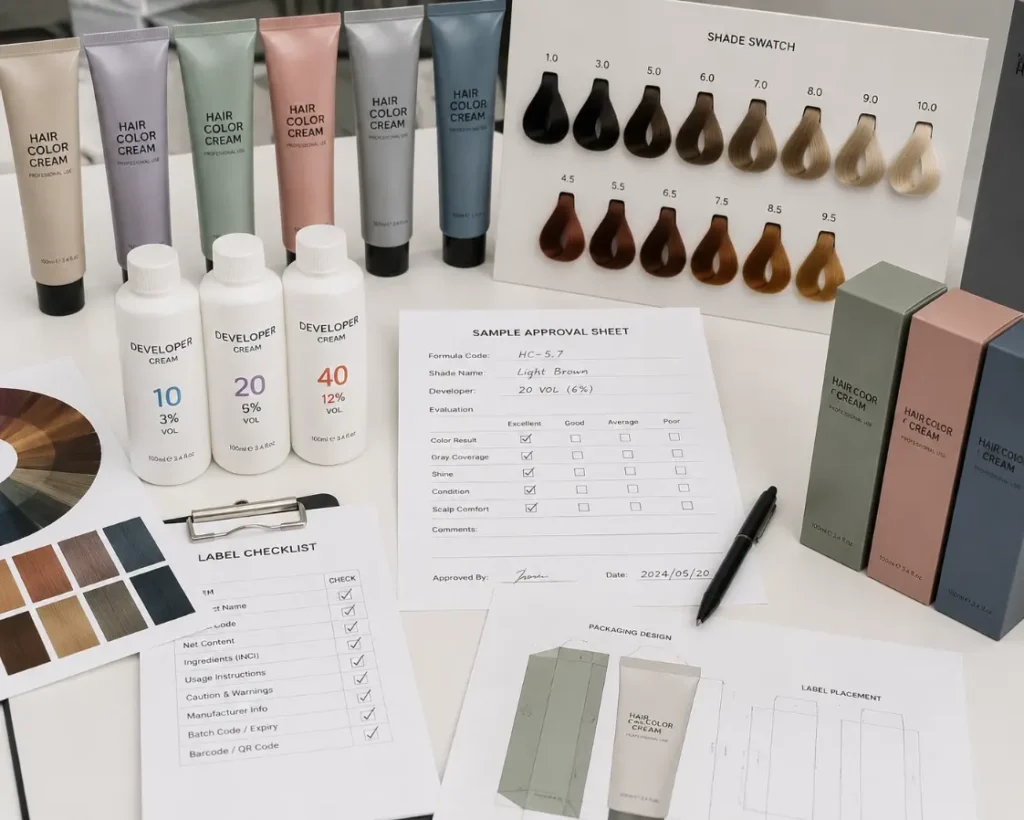
Can One Private Label Manufacturer Produce Both Hair Dye and Developer?
The Short Answer: Yes, If the Supplier Has System-Level Capability
A capable private label hair dye and developer manufacturer should connect four areas:
- Formula capability: access to an appropriate hair color formula and a defined developer specification.
- Pairing validation: a documented plan for evaluating the two products together under the intended conditions.
- Packaging coordination: suitable primary containers, labels, instructions, cartons, and any kit components.
- Production control: approved specifications and records that identify what moves from sampling into bulk production.
Permanent oxidative hair color is a system by nature. The European Commission explains that it forms through a reaction involving color precursors and hydrogen peroxide as an oxidizing agent. This does not establish a universal strength, ratio, or processing time. The exact combination must be defined for the formula and intended use. European Commission: Hair Dye Products
Keronhair’s private label hair dye and developer manufacturing page currently lists both Hair Color Cream and Hair Color Developer. It also describes project inputs such as reference products, hair swatches, shade charts, developer pairing, coverage targets, sample approval, and packaging coordination. Brands should still confirm the precise developer options and manufacturing scope in the project quotation.
Supplying two products is not the same as approving one color system. A supplier may quote a color cream and developer without testing the exact combination your brand plans to sell. That gap can affect shade expectations, instructions, pack sizing, and approval.
Before accepting a combined proposal, ask the supplier to identify:
- the hair dye formula or sample version;
- the developer specification paired with it;
- the shade and hair substrate used for evaluation;
- the written acceptance criteria;
- the packaging and artwork versions included in the approval.
The goal is to ensure the commercial product matches the system the brand reviewed.
What “Made Together” Can Mean in an OEM/ODM Project
The phrase can describe several arrangements. One manufacturer may formulate and fill both products, or a lead manufacturer may make one component and coordinate another supplier. The project may also involve third-party packaging, printing, testing, or kit assembly.
For that reason, ask a more precise question: Who manufactures each formula, who approves the pairing, and who releases the finished system? A clear answer is more useful than a simple promise of one-stop service.
Why Brands Consider Developing Hair Dye and Developer with One Manufacturer
One Brief, Fewer Handoffs, and Clear Version Control
When one project team manages both products, the brand can organize the range around a single brief. The document can connect the target market, sales channel, shade architecture, reference standard, developer model, pack format, instructions, and approval criteria.
This makes dependencies visible early. A developer bottle change may affect kit sizing; a larger shade range may affect sampling and inventory; a new market may require another label review. These links are easier to manage before artwork and purchasing commitments are locked.
A coordinating manufacturer may reduce handoffs across sampling, swatch review, packaging, filling, and kit assembly. This can be valuable for a first launch or a multi-component retail set.
Keronhair’s OEM and ODM hair product development information describes a workflow that connects formula selection or development with packaging, samples, production, quality control, and delivery. The exact tasks included in a hair color project should be itemized in the quotation rather than assumed from a general service description.
Hair color sampling creates many similar versions: shade revisions, developers, tubes, inserts, and artwork. A shared approval record helps prevent an obsolete version from moving forward.
At minimum, the final handoff should identify the approved:
- color formula and shade code;
- developer specification;
- reference hair substrate and evaluation conditions;
- primary packaging components;
- instructions and artwork files;
- finished-product acceptance criteria.
What I pay attention to: When I assess this kind of project, I care less about the phrase “one-stop service” than about whether one approval record connects the formula, developer, swatch result, instructions, and final pack. In my view, that documented connection is the strongest reason to source both products together.
The Limits of a Single-Supplier Model
One manufacturer does not guarantee lower cost, faster delivery, better performance, or simpler compliance. The brand must still review evidence, quoted scope, and responsibility for market-specific decisions.
The U.S. FDA states that a cosmetic manufacturer or distributor is legally responsible for ensuring that a marketed cosmetic is safe when used according to labeling or customary expectations. It also notes that there is no single FDA list of tests required for every cosmetic product or ingredient. Testing decisions therefore need to be appropriate to the formula, packaging, use, and available safety information. FDA: Product Testing of Cosmetics
Which Product Configuration Should Your Brand Choose?
The right configuration depends on the user, channel, replenishment model, and instruction needs.
| Supply Model | Best-Fit Channel | Packaging Structure | Inventory Implication | Main Approval Risk |
|---|---|---|---|---|
| Separate hair dye and developer SKUs | Salons, distributors, professional ranges | Individual dye tubes or bottles plus separate developer bottles | More flexible replenishment, but more SKU and pairing control | Users may select an unapproved combination if guidance is unclear |
| Retail hair color kit | Ecommerce and retail consumer channels | Dye, developer, instructions, gloves, outer carton, and optional accessories | Each kit contains multiple components that must arrive together | Fill quantities, instructions, or artwork may not match the tested system |
| Professional salon color system | Salon brands and professional distributors | Shade range supported by one or more clearly defined developers | Larger portfolio and more complex training or ordering logic | Pairing rules may become unclear across shades or services |
Separate Hair Dye and Developer SKUs
Separate SKUs give professional buyers flexibility across approved shades and allow components to be replenished at different rates.
The tradeoff is control. Labels, shade charts, technical materials, and order forms should state the approved pairing logic. Do not assume one developer suits every formula unless that scope is validated.
A Retail Hair Color Kit
A retail kit defines the components for the buyer but increases manufacturing coordination.
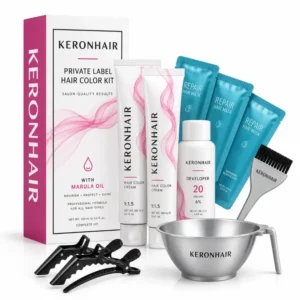
Single-application box kit. The brand must align dye and developer quantities, container sizes, closures, instructions, gloves, internal fit, and the outer carton.
Because the commercial unit is the complete kit, one delayed component can hold the finished product.
Multi-component premium kit. A premium kit may add tools, aftercare, inserts, or internal packaging. Each addition creates another specification, purchasing minimum, assembly step, and inspection point.
Add components only when they improve the system or help users follow the approved instructions.
A Professional Salon Color System
Professional systems prioritize range logic and repeat ordering. Pairing rules must be clear to trained users and distributors.
Core developer range across multiple shades. A compact developer range may support several approved shades or services, but permitted pairings and limits must be documented. A shared developer is a technical decision, not an inventory shortcut.
Formula-specific or service-specific pairing. Formula-specific pairing adds SKU complexity but can make the intended use more explicit.
When discussing private label product and packaging options, give the manufacturer your sales channel and replenishment model. That context is more useful than asking for a generic “complete kit.”
How Joint Hair Dye and Developer Development Works
Stage 1: Define the Commercial System and Formula Route
Identify the target market, channel, intended user, color type, shade count, and pack model.
Before deciding whether to bundle the products, establish what role the finished developer plays in the color system. Our hair dye developer guide for brands covers pairing, format and instruction questions that should be settled during development.
Brand decision: What exactly will the buyer receive and how will the range be sold?
Manufacturer evidence: A written project interpretation listing the formulas, components, sample scope, and open decisions.
Choose the formula route. A manufacturer may offer a ready-to-brand formula, an adapted platform, or custom development. These routes differ in work, ownership, sampling, documentation, and commercial variables.
Ask what “custom” will change and what defines the approved version. Keronhair presents existing formula directions and a custom hair color formulation process, but the applicable route should appear in the proposal.
Stage 2: Define the Pairing and Approve Samples
The developer needs its own specification and a defined relationship to the color formula, whether supplied in a kit, retail bottle, or professional size.
The technical team should propose the relevant developer choice, ratio, and use conditions for evaluation. Brands should not invent these parameters from generic online advice. The approved instructions must come from the project-specific formula and validation work.
Review hair swatches and record sample feedback. A useful swatch review records the starting substrate, shade target, formula and developer versions, evaluation conditions, and acceptance criteria.
Keronhair’s hair dye page invites brands to provide a reference product, hair swatch, shade chart, or written brief. That is a practical starting point, but the brand and manufacturer should still agree on how the reference will be interpreted and recorded.
Stage 3: Lock Packaging and Transfer the System to Production
Once the formula direction is stable, confirm the container, fill size, closure, decoration, label area, carton, insert, gloves, and assembly components.
Instructions are part of the approved system. FDA consumer guidance for hair dyes stresses following label directions, using gloves, observing stated timing, avoiding eye-area use, and performing the directed skin test. The exact wording must be reviewed for the destination market, but the broader lesson is clear: do not approve the formula and postpone the instructions until the end. FDA: Hair Dyes
Transfer the approved system to bulk production. The production handoff should reference the final formula, developer, shade standard, packaging BOM, artwork, instructions, coding rules, and acceptance criteria. Later changes should be assessed against the approved system.
A practical sequence is:
Brief -> formula route -> developer pairing -> swatch review -> packaging and artwork -> documented approval -> bulk production handoff
This chain gives purchasing, quality, and manufacturing teams the same reference point.
What Should Be Tested and Approved as One Color System?
There is no universal test package for every hair color project. Scope should reflect the formulas, packaging, intended use, target market, available safety data, and risk.
The table is a planning framework, not a substitute for technical or regulatory review.
| Approval Field | Hair Dye Record | Developer Record | Combined-System Record | Approval Owner |
|---|---|---|---|---|
| Product identity | Formula and shade code | Developer formula or specification code | Approved pairing reference | Manufacturer technical team and brand |
| Performance context | Shade target and color observations | Strength or specification used in the sample | Hair substrate and evaluation conditions | Brand product team with technical review |
| Physical specification | Appearance, odor, viscosity, fill target as applicable | Appearance, odor, viscosity, fill target as applicable | Mixing or application observations defined for the project | Manufacturer quality team |
| Packaging | Tube or bottle version | Bottle and closure version | Carton, insert, gloves, internal fit, and BOM | Brand and manufacturer packaging teams |
| Labeling | Ingredient and product-specific copy | Ingredient and product-specific copy | Directions, warnings, claims, and outer-pack copy | Brand regulatory owner with supplier input |
| Final release reference | Approved sample and specification | Approved sample and specification | Approval date, artwork version, and acceptance criteria | Named project approvers |
Build a Combined Performance and Stability Matrix
Hair substrate and starting level. Color observations require an identified starting substrate. The matrix may distinguish natural level, prior treatment, gray percentage, or other relevant characteristics.
Shade target and gray-coverage objective. Define the intended result using a physical reference, agreed swatch, or documented visual criteria. If gray coverage is relevant, state how it will be evaluated.
Approved processing conditions. Record the developer, proportion, application method, observation time, and other technical conditions. These are project records, not universal instructions. Public directions should match the reviewed system.
Formula stability and physical specifications. Each product needs relevant physical specifications and a stability plan appropriate to its formula and pack.
Ask what is included, what requires an external laboratory, and what evidence will be available. Do not accept “fully tested” without a defined scope.
Approve Packaging Compatibility and Product Information Together
Primary pack contact and closure performance. Assess each formula with its tube or bottle, closure, seal, decoration, fill process, and relevant leakage or interaction risks.
Carton, insert, and kit assembly checks. Review the assembled kit for fit, component identity, count, orientation, and the correct readable insert.
Instructions, warnings, and claims review. Review the dye label, developer label, carton, insert, and claims together. For the U.S., FDA guidance covers product identity, business information, net contents, warnings, ingredient labeling, and placement. Other markets have their own requirements. FDA: Cosmetics Labeling Guide
The supplier may provide inputs, but the brand should identify who owns final target-market review. Responsibilities can vary among the manufacturer, brand owner, importer, distributor, and responsible person.
Batch Records, Retained Samples, and Reorder Controls
Ask how the approved system connects to batch records, finished checks, retained samples, and reorders, and how later changes are managed.
The key control is traceable agreement: which version was approved, what was produced, and whether a change requires review.
How Packaging, Labeling, and Logistics Change When Products Are Paired
Two Primary Packs and One Shared Packaging System
A paired product creates two primary-pack specifications plus a shared presentation, affecting sourcing, artwork, filling, assembly, and inspection.
Hair color tube or bottle. Select the dye container for the formula, filling process, fill size, intended use, and decoration plan. Confirm its production and kit identification.
Developer bottle and closure. Confirm the developer pack material, closure, fill size, decoration, coding location, and evidence needed for storage or transport planning.
Outer carton, insert, gloves, and internal fit. Build a BOM for every carton, divider, tray, insert, glove, accessory, or aftercare item, including supplier status, artwork version, quantity, and inspection requirement.
Plan Labels, Component MOQs, and Assembly Together
Two formulas mean separate product information. Do not casually merge or shorten it on the carton or insert.
For U.S. retail packs, FDA guidance distinguishes outer and immediate containers. A target-market reviewer should determine final placement; other countries require their own official review.
Component MOQs and kit assembly. MOQ is rarely one simple number in a multi-component project. The commercial minimum may be influenced by the dye shade count, developer format, tube or bottle sourcing, printed carton, insert, gloves, and assembly quantity.
Ask for a component-level explanation:
- quantity per dye shade;
- quantity per developer SKU;
- printed packaging minimums;
- excess-component handling;
- kit assembly minimums;
- reorder rules for individual components.
Do not publish or budget around a generic MOQ until the manufacturer has reviewed the actual configuration.
Shipping, Storage, and Reorder Considerations
The developer’s formula and concentration, pack size, shipment mode, destination, and carrier rules may affect documentation or handling. Do not assume a transport classification from the product name alone. Request the project-specific safety data and confirm requirements with the manufacturer, logistics provider, and qualified market professional.
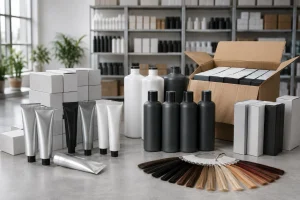
Keronhair’s site states that it coordinates color cream tubes, developer bottles, cartons, instructions, gloves, and assembled kits. Brands exploring private label packaging coordination should confirm which components are manufactured, sourced, printed, assembled, or documented within their specific order.
What Should You Ask a Manufacturer Before Requesting Samples?
General assurances are not enough. Ask for answers that name the formula, component, document, process, or commercial variable involved.
How I would review the RFQ: I would not approve a vague quote that only lists “hair dye + developer.” I would ask the supplier to identify the exact dye formula, developer specification, test pairing, pack components, and approval record included in the price. That level of detail usually reveals whether the supplier is thinking in products or in systems.
Confirm Manufacturing Scope and Pairing Responsibility
Ask:
- Who manufactures the hair dye formula?
- Who manufactures the developer?
- Are any formulas, packs, or kit components supplied by third parties?
Request a clear scope statement. Third-party coordination is not automatically a problem, but responsibilities and change controls should be visible.
Pairing validation. Ask:
- Which developer specification will be evaluated with each formula family?
- What hair substrates, shades, and acceptance criteria will be used?
- How will the approved pairing appear in the instructions and project records?
Avoid asking whether the products are simply “compatible.” Ask how that conclusion will be established for your intended product.
Define Evidence, Documents, and Ownership
Ask:
- What samples will we receive, and what does each sample represent?
- Which stability, compatibility, performance, safety, or quality activities are included?
- Which specifications, batch documents, ingredient information, or third-party reports can be provided?
The answer should separate standard project work from optional or externally quoted services.
Formula, artwork, and record ownership. Ask:
- Is the formula stock, adapted, exclusive, or custom, and what rights apply?
- Who owns editable artwork and packaging files?
- Will the brand receive a final approval summary identifying the exact system?
These points should be resolved before substantial packaging investment, not after the first production order.
Clarify Commercial Variables and Change Control
Ask for quantities at the dye shade, developer, printed component, and assembled-kit levels. Also ask how surplus cartons, bottles, or inserts are stored, charged, reused, or disposed of.
This prevents a common planning error: calculating inventory from the finished-kit quantity while ignoring a higher minimum for one printed or molded component.
Changes that may trigger reapproval or a new quote. Ask the manufacturer to identify changes that may affect price, timing, testing, or approval. Examples may include a new shade, formula adjustment, developer change, pack material change, revised claim, different destination market, or alternate component supplier.
A supplier’s written change process is a useful indicator of how the relationship may work after launch. When you are ready to discuss an OEM hair color project, send these questions with the initial brief.
Is One Manufacturer Always Better Than Separate Suppliers?
When a Single Manufacturer Is the Simpler Model
One coordinating manufacturer may be a practical choice when the brand is launching its first hair color range, needs a complete retail kit, wants one approval path, or lacks an internal team to manage several component suppliers.
The value comes from coordinated responsibility. It is strongest when the manufacturer can show how the dye, developer, packaging, instructions, and production records connect.
When Separate Suppliers May Be Justified and How to Control the Handoffs
Separate suppliers may make sense when the brand already owns an approved developer, must use a regional source, has a specialized packaging partner, or has an established quality system for integrating components.
This model can preserve existing assets or sourcing flexibility. It also creates more interfaces. The brand may need to provide one supplier’s product to another for evaluation and manage confidential specifications, shipment timing, changes, and final assembly.
Before splitting the work, answer three questions:
- Who validates the final dye and developer pairing?
- Who controls the final kit specification and release?
- Can every formula and component change be traced and communicated?
If those answers are unclear, adding suppliers may add risk rather than resilience. The better model is the one that gives the brand verifiable system control, whether that involves one manufacturer or several.
My decision rule: I would rather see one clearly accountable system owner across several qualified suppliers than one physical factory with blurred responsibilities. The number of vendors matters less than who owns final pairing approval, change communication, and release of the finished kit.
How to Prepare a Hair Dye and Developer Brief for Keronhair
The Minimum Information to Include in Your RFQ
A focused brief reduces assumptions. Use these fields as a starting point.
| Brief Field | Example of Useful Input | Why the Manufacturer Needs It |
|---|---|---|
| Target market | United States, EU member state, or another named market | Guides label, document, ingredient, and claims review questions |
| Sales channel | Salon, distributor, retail, or ecommerce | Shapes pack size, kit structure, instructions, and replenishment logic |
| Color system | Permanent oxidative color, another defined format, or request for guidance | Establishes the initial formula route |
| Shade plan | Launch shade count and priority shades | Affects sampling, packaging, SKU planning, and quantities |
| Reference | Physical product, swatch, shade chart, or written target | Gives the technical team a concrete starting point |
| Developer model | Separate SKU, retail kit component, or professional system | Defines pairing, pack, and inventory requirements |
| Fill and pack | Desired fill size, tube or bottle direction, carton, insert, gloves | Supports compatibility, sourcing, artwork, and assembly planning |
| Quantity | Estimated quantity per shade, developer SKU, and finished kit | Helps identify commercial and component minimums |
| Claim direction | Intended positioning and claims for review | Flags evidence and target-market questions early |
| Artwork status | New design, existing artwork, or support required | Clarifies responsibilities and schedule dependencies |
| Required documents | Named market or customer documents | Allows scope and third-party needs to be confirmed |
| Target launch window | Preferred date with known retail deadlines | Supports a realistic project sequence without assuming a fixed lead time |
You may leave developer strength, ratio, or test design open and ask the technical team to propose a route based on product and market goals.
The Evidence and Decisions to Request in Keronhair’s Reply
Keronhair’s hair dye page presents Hair Color Cream, Hair Color Developer, reference-based sampling, developer pairing, packaging coordination, and kit components. A complete system brief is therefore a sensible starting point.
In the reply, ask Keronhair to confirm:
- the proposed formula route and developer model;
- what is manufactured directly and what is coordinated externally;
- the sample and approval plan;
- packaging and assembly scope;
- included and optional documentation;
- commercial variables by shade, developer, and component;
- decisions that still require brand or market-specialist review.
You can submit your hair dye and developer brief for a project-specific review. Treat the written proposal, rather than general website language, as the working scope.
Final Answer: Can a Private Label Manufacturer Make Both Products?
Approve a System, Not Just Two Separate Products
Yes, a private label manufacturer may be able to make hair dye and developer together. The stronger question is whether that supplier can manage the two products as one controlled commercial system.
Before moving forward, confirm five points:
- Both-formula capability: the scope for the dye and developer is clear.
- Defined pairing: the intended combination and conditions are documented.
- Joint approval record: the shade, substrate, packaging, instructions, and criteria are traceable.
- Coordinated packaging: every primary and secondary component is specified.
- Clear production responsibility: the team knows who manufactures, approves, assembles, and releases each part.
The Next Step for a Private Label Hair Color Project
Send Keronhair your target market, shade plan, reference sample, proposed developer model, packaging format, and quantity per SKU. The team can review the requested system and confirm the proposed sample route, packaging scope, documentation needs, and quotation variables.
The best outcome is not merely a matched-looking tube and bottle. It is a documented hair color system that your brand understands before approving production.
Frequently Asked Questions
Can one private label manufacturer make both hair dye and developer?
Yes. Some manufacturers can produce or coordinate both formulas, validate the intended pairing, manage packaging, and document approval. Confirm the exact project scope in writing before sampling.
Does hair dye and developer need to come from the same manufacturer?
No. Separate suppliers can work if the pairing is validated, responsibilities are assigned, changes are traceable, and one party controls the final system specification and release.
Can a manufacturer put hair dye and developer in one retail box?
Some manufacturers can coordinate dye, developer, instructions, gloves, and cartons. Brands must still confirm component compatibility, label requirements, assembly scope, minimums, and transport documentation.
What should be approved before mass-producing a hair color system?
Approve the dye and developer versions, shade, hair substrate, evaluation conditions, packaging, instructions, artwork, specifications, acceptance criteria, and the final dated approval record.
Can the same developer be used across every hair dye shade?
Not automatically. Suitability depends on the specific formulas, intended result, directions, and manufacturer validation. Use the approved technical documentation rather than a general assumption.
What information should I send for a hair dye and developer quote?
Send the target market, channel, color type, shade count, reference, developer model, fill size, packaging, quantity per SKU, claims direction, document needs, and launch window.