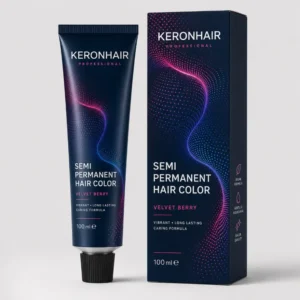
No. Do not mix separate finished semi-permanent and permanent hair dye products in the same bowl. Their coloring systems and directions usually differ, so combining them takes both products outside their intended use and can produce an uneven or unpredictable result.
Using the two products at different stages is another matter. A semi-permanent color may sometimes follow permanent color, but only after the first product is fully processed and rinsed and both instructions support the sequence.
Manufacturers may also add selected direct dyes to a professionally formulated permanent product. That is one balanced formula, not evidence that two finished dyes can be safely combined at home.

Three situations that require different answers
Keep separate semi-permanent and permanent dyes out of the same bowl. A manufacturer-designed kit with specified components is one complete system, not permission to combine two independent dyes.
The FDA’s hair dye safety guidance tells consumers not to mix different hair dye products. It also advises following label directions, wearing gloves, observing the processing time, and performing the product’s label-directed skin allergy test before each use.
These common scenarios require different answers:
| Scenario | Recommended? | Reason |
|---|---|---|
| Permanent and semi-permanent dye in one bowl | No | The finished formulas may use different coloring systems and directions |
| Permanent color followed by a rinsed semi-permanent overlay | Sometimes | Each product must permit the sequence, and the hair must be suitable for another service |
| Two shades from one intermixable semi-permanent line | Possibly | Follow that product line’s instructions |
| A manufactured formula containing more than one dye class | Use as labeled | Its ingredients were designed as one product |
Why semi-permanent and permanent hair dye work differently
Permanent and semi-permanent describe more than wear time. They usually indicate different ways of delivering color, although category names and product designs vary across brands.

Permanent color is usually an oxidative system
Most permanent colors use dye precursors and couplers that form larger colored molecules during processing. An oxidizing developer, usually based on hydrogen peroxide, helps that reaction occur.
The colorant and developer are designed as a system. An unrelated finished product changes the overall composition and consistency covered by those directions, even when the original dye-to-developer measurement was correct.
Semi-permanent color usually deposits direct dyes
Conventional semi-permanent color usually contains ready-made dye molecules that deposit on and within the outer regions of the hair. Most products in this category are used without a separate developer.
Because the color is deposited rather than used as a controlled lifting system, semi-permanent dye cannot reliably lighten a dark natural base or remove permanent artificial pigment.
Product names do not define the entire formula
Marketing terms are not perfectly consistent. A product called a gloss, toner, demi-permanent color, or semi-permanent color may have different activation requirements from another product carrying a similar name.
Check the package for three details:
- Whether the product requires an activator
- Which components the instructions allow you to combine
- Whether the shades are intermixable within that specific line
Keronhair’s guide to the differences between semi-permanent, demi-permanent, and permanent color covers the wider category choices.
A peer-reviewed review of oxidative hair dye chemistry describes permanent color formation and explains how selected direct dyes may also be incorporated into formulated oxidative products.
| Feature | Conventional semi-permanent color | Permanent oxidative color |
|---|---|---|
| Typical coloring method | Deposits direct dyes | Forms color through an oxidative process |
| Separate developer | Usually not required | Usually required |
| Reliable lightening | No | May provide lift when designed for it |
| Mixing rule | Only with products the line identifies as compatible | Use the specified colorant, developer, and ratio |
What can happen if you mix them together?
An unapproved mixture may still look smooth in the bowl. That appearance says nothing about whether the color chemistry, application properties, or final shade will work as intended.
The mixture no longer follows the specified system
A permanent color formula is normally paired with a stated amount and type of developer. Adding ready-to-use semi-permanent dye introduces another base and another dye system that the directions do not cover.
No universal rule can predict the outcome. The permanent product is no longer being used only with its specified components, so the instructions cannot describe how the combined mixture will perform.
The color can develop unevenly
Different sections may take up or display the combined color differently because their porosity, starting color, and previous treatments vary.
The result could look darker, duller, warmer, cooler, or patchier than planned. Fading may also expose the unevenness later, even if the first result seems acceptable.
The directions no longer describe the mixture
A product’s directions apply to that formula and its specified companion components. Once two unrelated formulas are combined, those directions no longer describe the material in the bowl.
Unpredictable does not mean that every mixture will cause a dramatic reaction. It means there is no sound basis for promising the color result, processing behavior, or scalp experience.
Does using the same brand make mixing safe?
No. Large brands often sell several permanent, demi-permanent, and direct-dye ranges. Products made by the same company may still use different bases, activators, ratios, and application methods.
Look for permission at the product-line level. Wording such as “intermixable shades” usually applies within a named range. It does not automatically extend to another range from the same brand.
Professional formulators may intentionally include selected direct dyes in a permanent oxidative product. They choose the raw materials and evaluate the complete formula rather than mixing two finished products after manufacture.
Can you use semi-permanent dye over permanent color?
Sometimes, yes. A semi-permanent color can be used as a separate overlay to adjust tone or refresh faded lengths after permanent color has been fully processed and rinsed.
This is still a second color service. The instructions for both products, the condition of the scalp, and the hair’s chemical history should guide the decision.

Refreshing faded lengths and ends
Recently retouched roots may hold their tone while older lengths fade through washing, heat, and environmental exposure. A compatible direct dye may add pigment where the color looks faded.
Choose the shade against the color currently visible, not the shade originally applied. Porous ends can grab pigment quickly and may turn darker or more intense than healthier sections.
A guide to how long semi-permanent hair dye lasts can help set realistic expectations for the overlay. Its longevity depends on the formula, starting base, porosity, washing routine, and chosen shade.
If the color you want to refresh is black, first identify how the shade has faded rather than changing the product mixture. Our guide to black hair dye fading covers the maintenance questions behind that decision.
Timing must follow the product instructions
There is no reliable waiting period that applies to every permanent and semi-permanent product. Some directions may permit a planned sequence, while others provide no method for using the products together.
Postpone another color service when:
- The scalp is irritated, sore, or damaged
- The hair feels unusually weak, rough, or elastic
- Neither product explains how to use the colors in sequence
When the instructions are silent, ask the manufacturer or a qualified colorist.
Can you apply permanent dye over semi-permanent color?
It can be possible, but the permanent dye will be working over whatever direct pigment remains. That residue may alter the predicted tone, especially on lightened or porous hair.
A permanent shade does not simply erase semi-permanent color. For example, residual blue, red, or violet pigment can interact visually with the new shade and affect the result.
Test the planned permanent formula on a hidden strand and judge the result only after completing the full processing, rinsing, and drying steps.
Service frequency also matters when hair has been repeatedly colored. Review how often you should dye your hair before adding another full-length application, and seek professional help for major lightening or color correction.
Can you mix two shades of the same hair dye type?
Sometimes, but “same type” is too broad a test. Check whether the manufacturer states that the specific range and shades are designed for intermixing.
Mixing two semi-permanent shades
Many direct-dye lines let users blend shades from that same range. This can create an intermediate tone or soften an intense color when the line provides a compatible clear or pastel mixer.
Use conditioner or a product from another range only when the instructions approve it. A different base can change spreadability, pigment distribution, and the way the mixture adheres to hair.
Mixing two permanent shades
Some permanent ranges allow shade mixing within the line. Use only the designated developer and calculate the developer amount from the product’s stated ratio for the total colorant.
Permanent shades that require different developers or processing methods should remain separate. If the technical guide does not cover the combination, treat the result as untested.
Can you mix semi-permanent hair dye with developer?
Usually not. A conventional semi-permanent direct dye is normally ready to use. Adding peroxide developer does not convert it into permanent color or give it a predictable amount of lift.
Adding developer changes the formula environment and may alter its pH, consistency, and pigment behavior. Since the product was not designed for that mixture, its lift and color result cannot be predicted from the original instructions.
The word “semi” alone is not enough. Some products marketed as glosses or demi-permanent colors use a dedicated activator. That activator belongs to its own system and should not be replaced with an arbitrary developer.
Before coloring:
- Identify every colorant, developer, and activator
- Confirm which components belong to the same product system
- Follow the stated sequence and processing time
Keronhair’s at-home hair coloring guide explains the broader preparation, sectioning, testing, application, and rinsing process.
What should you do if you already mixed or applied them?
What to do next depends on whether the mixture is still in the bowl, already on the hair, or causing physical symptoms. Do not try to rescue it by adding more chemicals.
If the mixture is still in the bowl
Do not apply an unapproved mixture or save it for another day. Read the disposal directions on both packages and contact the manufacturer if those instructions do not cover the situation.
Avoid testing the mixture on another person. A hidden-strand test is useful for a manufacturer-approved color process, but it does not make an incompatible formula safe for skin or scalp contact.
If it is already on your hair
An unapproved mixture should not remain on the hair for continued processing. Take these steps:
- Rinse the mixture out thoroughly
- Stop immediately if you notice burning, itching, pain, swelling, or unusual heat
- Do not follow it with bleach, remover, or another oxidative dye
If the concern is an unwanted shade rather than a physical reaction, first assess the hair’s condition and review safer ways to remove semi-permanent hair dye.
If you develop a reaction
Wash the hair and scalp thoroughly if a reaction begins. Stop using the product and obtain medical advice for symptoms that continue or worsen after rinsing.
Reactions are not always immediate and can appear up to 72 hours after exposure. Continue monitoring the skin and scalp after rinsing, even if there was no discomfort during application.
A semi-permanent label does not mean allergy-free. Some products may contain PPD or other potential sensitizers, so check each ingredient list and complete each product’s label-directed allergy test. If the test area reacts, do not continue with the full application.
The NHS guidance on hair dye reactions advises emergency help for signs such as difficulty breathing or swelling of the lips, mouth, throat, or tongue. Those symptoms should not be managed as a routine color correction.
Frequently asked questions
Will semi-permanent dye lighten permanent hair color?
No. Semi-permanent dye deposits pigment. It may look brighter on faded sections, but it cannot reliably lift dark hair or remove permanent artificial color.
An unwanted color result is not a reason to improvise another chemical mixture. If you are comparing a lightening service with another permanent-color application, read the bleach-versus-permanent-dye guide before discussing correction options with a colorist.
Does developer make semi-permanent dye permanent?
No. Developer cannot turn a direct-dye product into permanent color because it does not add the dye precursors, couplers, or formulation required for a controlled oxidative process.
Can I save the mixed hair dye for later?
No. Do not store oxidative color after adding developer. The mixture begins reacting immediately and will not perform like fresh color later. See does hair dye go bad for storage guidance.
Is a strand test the same as an allergy test?
No. A hidden-strand test previews the shade and hair condition; it does not assess skin sensitivity. An allergy-alert test must follow the product’s method, but a negative result cannot guarantee that no reaction will occur during full application.