A hair mask is a conditioning treatment used to improve how hair feels and handles. Depending on the formula, it may make lengths softer, easier to detangle, and smoother-looking. Most masks rinse out, although pre-shampoo and leave-in treatments follow different instructions.
Do you need one if you already use conditioner? Not necessarily. This guide explains what a hair mask does, how to use it, and how to decide whether it adds something useful to your routine.
What Is a Hair Mask, Exactly?
"Hair mask," "hair masque," and "deep conditioner" are overlapping product descriptions, not standardized measures of strength or concentration. A mask may be a creamy rinse-out treatment, a pre-shampoo product, or a formula specifically designed to stay on the hair.
The label matters more than the name: check its intended benefit, where to apply it, and whether to rinse. A thicker cream or longer contact time does not automatically mean better conditioning.
What Does a Hair Mask Actually Do?
Most noticeable hair mask benefits come from conditioning the hair fiber. A mask can make existing strands easier to comb and more manageable, but that is different from biological healing or growing new hair.
Softer Hair and Easier Detangling
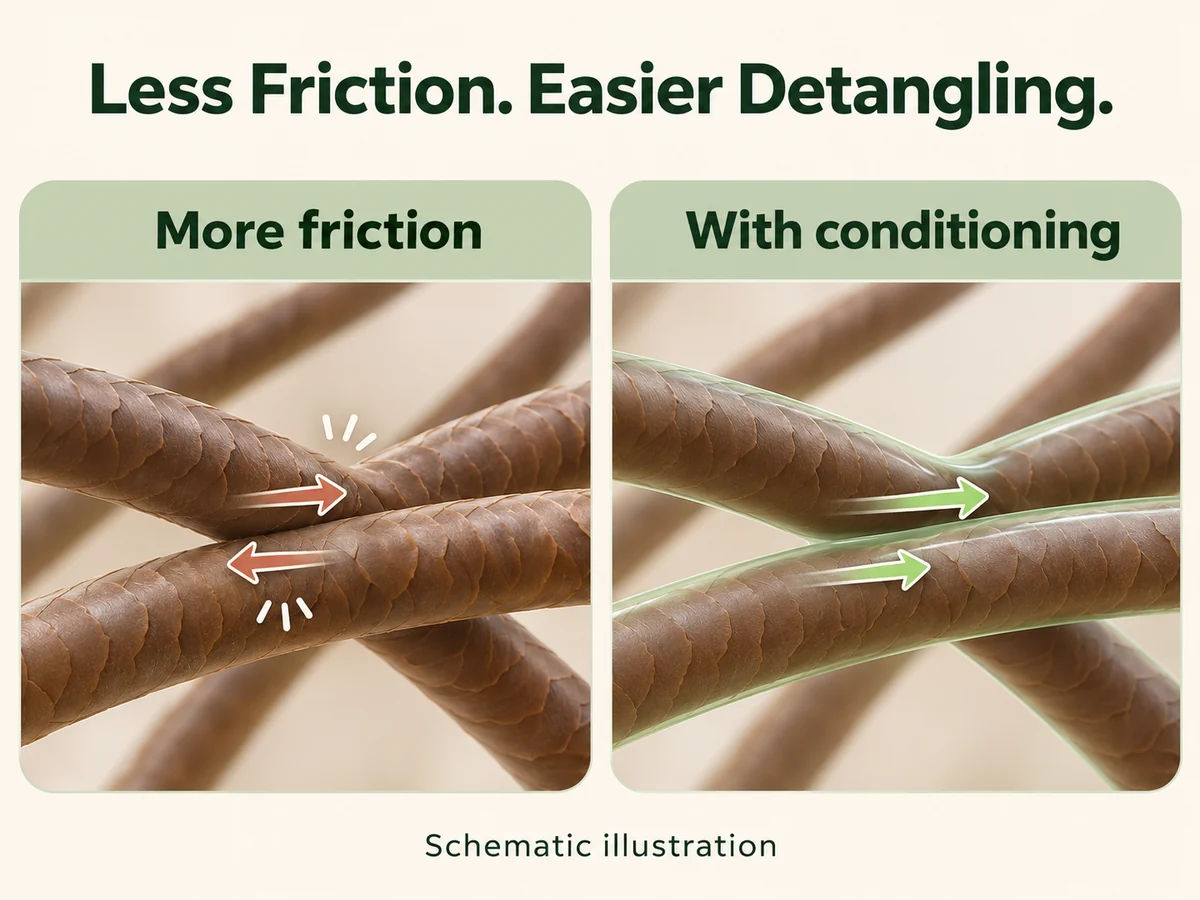
Conditioning agents can deposit on the hair surface and provide lubrication, allowing strands to move against one another with less friction. A 2025 scientific review of hair friction explains that bleaching, heat, and repeated mechanical wear can accelerate loss of the hair surface’s protective lipid layer. Conditioning materials can temporarily reduce the resulting friction, but that is not the same as restoring the strand to its original condition.
There is measurable evidence for the role of conditioning. In a 2026 laboratory study of Walker Type 4 textured hair, the tested conditioning products reduced wet-combing friction by 50%–60%, while specific conditioning and lubricating treatments reduced breakage by 38%–64% during repeated wet-combing tests. These figures apply to the tested hair tresses, products, and methods; they are not typical results guaranteed by hair masks, nor results from a Keronhair product.
The practical takeaway is to judge a mask by whether detangling becomes easier and whether hair feels comfortable after rinsing and drying, without unwanted coating. Our guide to adding moisture without weighing hair down explores that balance.
Smoother Appearance, with Limits to Repair Claims
A smoother finish can make hair look more polished, but softness does not prove that a formula has rebuilt chemical bonds. Claims about reduced breakage or structural repair require evidence appropriate to the finished product. A protein or acid listed on the label is not sufficient proof.
A mask may temporarily smooth the appearance of split ends, but it cannot permanently reunite a split strand. It also cannot be assumed to stimulate growth at the follicle or treat a scalp condition. For curly hair, easier detangling can be the goal without changing the natural texture.
What Is a Hair Mask Made Of?
Many creamy hair masks combine water, conditioning agents, and fatty alcohols that help create the product’s texture. The formula may also contain oils, silicones, humectants, or hydrolyzed proteins. Each plays a different role: glycerin attracts moisture, cetearyl alcohol helps build a creamy base, and conditioning agents contribute to slip and manageability. Fatty alcohols are not the same as ethanol in hand sanitizer.
From a formulation standpoint, the full conditioning system matters more than a featured oil or protein. The more useful starting point is the intended hair type and the result after drying, not how rich the cream looks in the jar. Fine hair may need enough slip to detangle without losing movement, while hair that tangles readily may call for a different balance of conditioning and rinse feel. That trade-off cannot be predicted from a front-label claim such as "coconut oil," "natural," or "silicone-free."
Read ingredient lists to check known sensitivities, but judge the finished product by its intended use, how cleanly it rinses, and whether the dry result suits you. Two masks can highlight the same ingredient and still feel completely different because the rest of the formula matters.
Hair Mask vs. Conditioner: Do You Need Both?
Hair masks and regular conditioners can do similar work. A conditioner often covers everyday detangling and softness; a mask is useful when it has a more specific purpose or delivers a finish your routine is missing. You do not automatically need both in one wash.
| What to compare | Regular rinse-out conditioner | Hair mask |
|---|---|---|
| Typical role | Routine softness and detangling after shampooing | A treatment selected for a particular conditioning need |
| Texture and feel | Often easy to spread and rinse; richness varies | Often creamy or rich, but not always heavier |
| Place in your routine | Usually follows shampoo | May replace conditioner or occupy a separate step, as directed |
| Is another product necessary? | May provide all the conditioning you need | Useful only if it adds a benefit your routine is missing |
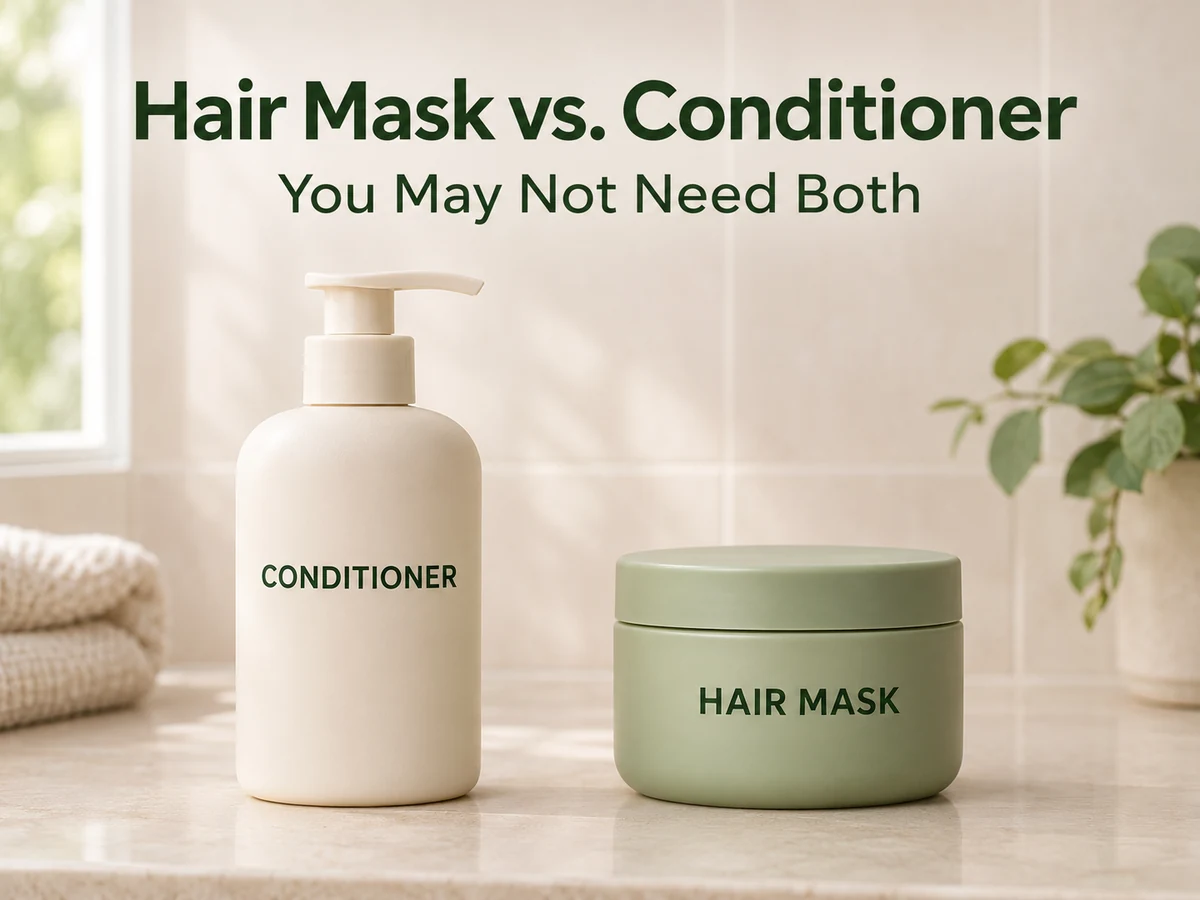
Follow the specific product’s directions: some rinse-out masks replace conditioner, while specialized treatments may have their own sequence. Leave-in conditioner is designed to remain on the hair; an ordinary rinse-out mask should not be used that way unless its label permits it. Heat protection is also a separate claim that requires product-specific support.
When Might You Benefit from a Hair Mask?
A mask is most worth considering when your regular conditioning routine leaves a specific problem unresolved. Match the product to that need instead of choosing solely by a broad label such as "curly" or "damaged."
Your Lengths Still Feel Rough After Conditioning
First check whether your regular conditioner reaches the areas that need it and stays on for the recommended time. If lengths still feel rough or tangle easily, a mask with a suitable conditioning finish may help.
Keep application targeted. Oily roots do not necessarily need the same richness as dry ends. The American Academy of Dermatology’s healthy-hair guidance recommends adjusting conditioner placement according to hair type; always follow the mask’s own directions as well.
Bleaching or Heat Styling Has Changed How Your Hair Handles
Bleaching, coloring, heat, and rough handling can change the hair surface and make strands harder to comb. Conditioning may improve manageability, but reducing further wear also matters: review heat settings, detangling technique, and repeated chemical treatments.
If your hair is colored, separate softness from color retention or pigment deposition. A conditioning mask does not necessarily perform all three jobs. Pair it with an appropriate shampoo for color-treated hair and assess any color-preservation claim on its own evidence.
Your Curls Need More Slip, Not Necessarily More Weight
Curl pattern and strand thickness are not the same thing. Fine curls may need slip without a heavy coating, while denser or coarser hair may benefit from a different conditioning feel. Judge the result after drying: can you detangle comfortably while keeping the shape and movement you want?
Gentle handling matters as much as product choice. If you use styling products, fit the mask into your curly hair routine rather than automatically adding another rich layer.
When Can You Skip a Hair Mask?
You can skip a mask if your conditioner already makes detangling comfortable and leaves the finish you prefer. Extra conditioning may offer little value when it only adds weight, buildup, or time to your routine.
A mask for the lengths is also not a solution for persistent scalp itching, pain, or unusual shedding. Those symptoms merit appropriate professional assessment rather than more intensive conditioning.
How Do You Choose Your First Hair Mask?
Start with one practical goal—less pulling when detangling, a softer dry finish, or more comfortable conditioning for processed lengths. Then check:
- Purpose: Does the product address the result you want, rather than promising everything?
- Format: Is it rinse-out, pre-shampoo, or leave-in, and does that fit your routine?
- Feel: Is the intended finish light enough, or do you prefer a richer treatment?
- Use and tolerance: Do the instructions and full ingredient list suit your needs and known sensitivities?
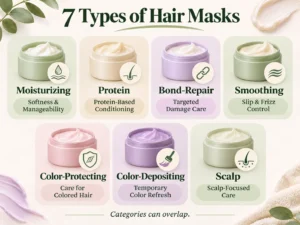
Moisturizing, protein, and bond-repair products describe different approaches, and some overlap. For a fuller comparison, see our guide to the seven types of hair masks. This article focuses on whether you need a mask at all, not ranking every category.
If available, try a smaller size before committing to a large jar. The final result after drying tells you more than an appealing label or a thick-looking cream.
How Do You Use a Hair Mask Correctly?
The right way to use a hair mask depends on its format. Use the product’s directions—not another brand’s video—as your starting point:
- Check the product’s format, suggested amount, and place in the routine.
- Prepare your hair as instructed, including washing or removing excess water when specified.
- Distribute it over the intended areas rather than adding more only to the easiest-to-reach section.
- Follow the stated contact time, then rinse or leave it in as directed.
Should You Apply a Hair Mask to Wet or Dry Hair?
Many rinse-out masks are applied to clean, damp hair, while pre-shampoo and leave-in treatments may call for different preparation. Garnier’s guide to using a hair mask illustrates why the product format matters; the instructions on your own mask take priority.
Apply it where directed. A lengths-only mask is not automatically suitable for the scalp, and working through dense hair in sections can help distribute product more evenly.
How Long Should You Leave a Hair Mask On?
Follow the contact time on the label; there is no universal five-, ten-, or twenty-minute rule. Only leave a mask on overnight or add heat when its manufacturer explicitly permits that use. More time does not automatically mean better results.
How Often Should You Use a Hair Mask?
Begin with the labeled frequency and adjust based on the finished result and your hair’s needs. There is no single schedule for every hair type or formula.
While evaluating a new mask, keep the rest of your routine relatively consistent. Adding a mask, oil, and leave-in together makes it difficult to tell which product helped—or caused an unwanted heavy finish.
Why Does Your Hair Feel Greasy or Heavy After a Mask?
A greasy or coated finish often calls for reviewing the routine before adding another product. Check the amount used, where you applied the mask, and whether you rinsed as directed. Conditioner, oils, leave-ins, and styling creams may all contribute to a heavy result when layered.
If simplifying the routine does not help, choose a lighter mask or use it less often within the label’s guidance. Stiffness or stickiness alone cannot diagnose "protein overload" or identify one ingredient as the cause.
Skin irritation is different from unwanted weight. Stop using a product that causes burning, swelling, or a persistent reaction, and seek medical advice for significant symptoms.
How Can You Tell If the Extra Step Is Worth It?
Compare a mask with your usual conditioned-hair routine, not with completely untreated hair. A practical assessment has three stages: how easily it spreads and helps you detangle during application, how cleanly it rinses, and how soft, manageable, or heavy the hair feels after drying.
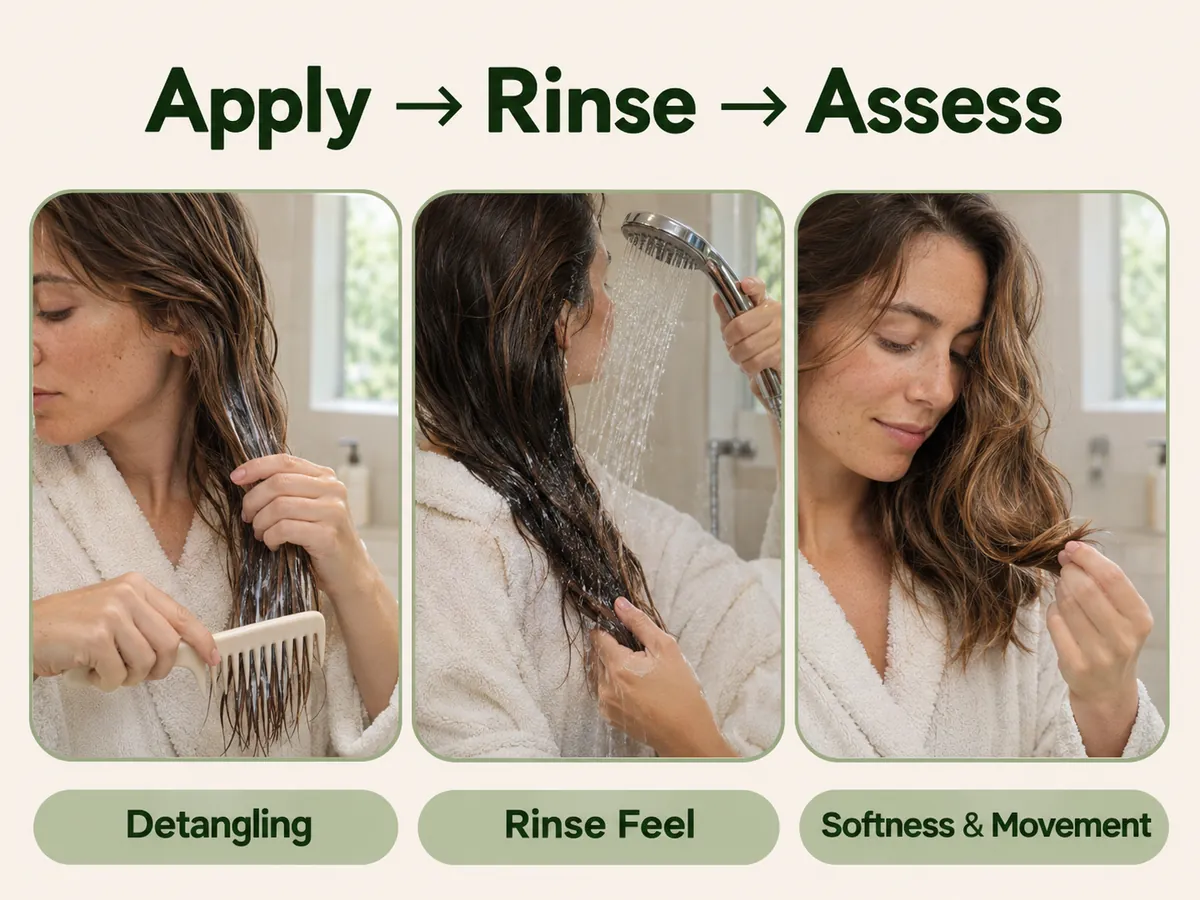
From a product-development perspective, that last stage deserves as much attention as the first. A mask can feel luxurious while wet yet leave fine hair flat after drying; another may feel less rich during application but provide the finish a person actually wants. That is a reason to compare use conditions and end results, not to assume the thickest formula is the most effective. These observations can guide product choice, but they are not clinical evidence of bond repair or reduced breakage. If the mask adds no useful benefit, a simpler routine is a reasonable decision.
For hair-care brands, the same assessment gives a more useful brief: define the target hair type, desired application feel, rinse behavior, and after-drying result before selecting a texture or package. Keronhair offers private label and custom hair mask development for brands that want to discuss those specifications alongside formula and packaging options.
Frequently Asked Questions
These answers address common beginner questions about choosing and using a hair mask. For timing and application, your specific product’s label comes first.
Is a Hair Mask the Same as a Deep Conditioner?
The names often overlap. Neither guarantees a particular concentration or performance level. Compare the product’s purpose, directions, and results rather than assuming one label means stronger conditioning.
Are Homemade Hair Masks the Same as Store-Bought Masks?
No. Similar ingredients don’t establish equivalent performance. A homemade mixture can differ in formulation, preservation, rinsing behavior, and testing, so you can’t assume it works like a finished cosmetic product.
Do You Need Conditioner After a Hair Mask?
Not always. Some masks replace conditioner for that wash; other treatments have a different sequence. Follow the product’s directions rather than automatically using both.
Can You Put a Hair Mask on Your Scalp?
Only if the product is intended for scalp application. A mask designed for the lengths isn’t automatically a scalp treatment. Avoid applying products to irritated skin unless a clinician advises otherwise.
Can You Leave a Hair Mask On Overnight?
Only when the product explicitly permits overnight use. Leaving a rinse-out mask on longer than directed doesn’t guarantee better conditioning or repair.
Can a Hair Mask Help Hair Grow Faster?
A conditioning mask doesn’t establish faster follicle growth. Helping reduce breakage may support length retention, but keeping existing strands intact is different from making new hair grow faster.
How Soon Can You Notice a Difference from a Hair Mask?
Softness or easier detangling may be noticeable after use, but results vary. Those sensations don’t verify structural repair. Judge any specific performance claim against the product’s supporting evidence.
References & Sources
The scientific sources support the discussion of hair-surface friction and controlled combing tests; the other references provide general care and application guidance. None establishes performance for a specific finished Keronhair formula, and the laboratory percentages should not be used as blanket hair-mask claims.