Choosing among private label hair mask manufacturers means comparing more than a product catalog. Some suppliers offer existing treatments that can be evaluated before branding, while others focus on formula development, packaging coordination, or bulk supply. The right fit depends on the product brief, order structure, and level of customization your brand needs.
Whether you’re launching one mask or a private label hair care line, define the target hair and intended use first. A rich salon treatment and a lightweight mask for fine hair require different formula and sample-evaluation criteria.
Private Label Hair Mask Manufacturers: Quick Comparison
Match the supplier’s published offering to your project. Suggested fit is an editorial assessment; confirm the production location, product availability, and terms before ordering.
| Manufacturer | Country | Published hair mask offering | MOQ information | Project to discuss |
|---|---|---|---|---|
| Keronhair | China | Ready-to-brand, semi-custom, and custom masks | In-stock: 120 units; custom: 1,000 units/SKU, subject to configuration | Coordinated formula, packaging, and hair care range development |
| HSA Cosmetics | Italy | Private label mask formulation and packaging | Mask-specific minimum not confirmed on the reviewed page | Treatment-focused hair care development |
| CarasaLab | Spain | Catalog and custom hair care, including masks | Confirm bulk and finished-unit minimums by formula and pack | European sourcing with product customization |
| Private Label Dynamics | Australia | Existing Repair Mask in multiple sizes | Product sizes are listed; branded-order minimum needs confirmation | A salon or retail line built around an available product |
| RainShadow Labs | United States | Hair Rehab mask in sample and bulk formats | Sample and bulk sizes are listed; private-label filling minimum needs confirmation | Evaluating a stock formula and bulk supply |
| Dynamic Blending | United States | Hair masks within its contract manufacturing range | Project-specific; request a quote | A custom formulation project |
| TY Cosmetic | China | Hair mask OEM/ODM and packaging services | Mask-specific minimum needs confirmation | Hair care within a broader beauty assortment |
| Bo International | India | Private label masks and custom formulation | Mask-specific minimum needs confirmation | Comparing different mask concepts |
| Poleview | China | Existing, semi-custom, and custom mask development | Confirm the minimum for the complete formula and packaging configuration | Formula and packaging development together |
| Cosmiko | United Kingdom | Private Label Conditioning Hair Mask | Mask-specific minimum needs confirmation | A UK private label sourcing option |
How we selected these manufacturers: Each company has official information identifying hair masks and private label or manufacturing services. We compared published product scope, development routes, and the level of purchasing information available. MOQ details are included only where the reviewed source supports them; otherwise, the table identifies them as requiring a project quote. We have not independently audited facilities, certificates, or product performance. Retail brand recognition alone wasn’t a reason for inclusion, and list position isn’t a quality score.
10 Best Hair Mask Manufacturers for Private Label Brands
These ten companies offer different approaches to private label hair masks. Use their published capabilities to build a shortlist, then compare samples and written proposals against the same brief. The profiles distinguish available services from questions you still need to settle before choosing a manufacturing partner.
1. Keronhair — Private Label and Custom Hair Masks
Keronhair is a Guangzhou-based hair product manufacturer supporting brands, salons, distributors, and e-commerce businesses. Its private label hair mask service covers ready-to-brand formulas, selected adjustments to existing bases, and custom development.
Options include lightweight or richer textures and moisturizing, smoothing, color-care, or repair-focused concepts. Packaging discussions can cover jars, tubes, compatible pumps, and professional sizes, with scope to coordinate shampoo and conditioner within a wider range.
A key part of the development brief is connecting the formula’s texture and viscosity with how the product will be applied, rinsed, and dispensed. A rich mask intended for a jar may need a different packaging assessment from a lighter formula proposed for a tube or pump. Keronhair’s published process also considers application feel, rinse performance, and the feel of the hair after drying, so sample feedback can be tied to the intended product experience.
The current hair mask product page lists an in-stock MOQ of 120 units and a custom MOQ of 1,000 units per SKU. It also gives a sampling estimate of 3–5 days and a production estimate of 15–25 days. These are published starting points; the confirmed terms depend on the selected formula, packaging, and project configuration.
Suitable for: Brands that want formula, packaging, and related hair care products discussed as one coordinated project.
Project details to confirm: Permitted formula changes, testing scope, packaging minimums, and evidence for the proposed claims.
2. HSA Cosmetics — Italian Hair Care Development
HSA Cosmetics offers private label hair mask development in Italy. Its hair mask manufacturing overview describes hydration, repair, and color-protection concepts, with customization covering formulation and packaging.
For a post-color treatment, specify the intended use, rinse feel, and product benefit rather than relying on a broad request for a premium mask.
Development and quality: HSA describes hair care R&D and quality control. Request the evaluation plan for your formula; a catalog concept doesn’t establish sample performance.
Suitable for: Brands considering Italian development for a treatment-focused hair care line.
Confirm for your project: The mask’s batch requirement, development fees, revision scope, and evidence for proposed claims. Minimums for other HSA categories may not apply.
3. CarasaLab — Hair Care Manufacturing in Spain
CarasaLab develops and manufactures cosmetics in Spain, including shampoos, conditioners, and masks. Its private label services describe both branding products from its catalog and developing products around a brand’s requirements.
A catalog mask is worth sampling before commissioning a new formula, especially if your main changes concern fragrance or presentation.
Development and quality: Ingredients, fragrance, and packaging are listed customization areas. Ask which changes the selected mask allows and what evaluation they require.
Suitable for: Brands considering Spanish supply for a mask or coordinated professional hair care range.
Confirm for your project: The formula, fill size, container, bulk or finished-unit minimum, and technical documents included in the quote.
4. Private Label Dynamics — Ready-Made Repair Masks
Private Label Dynamics is an Australian supplier with a concrete product you can assess before discussing a wider assortment. Its Repair Mask listing shows 250 mL and 1,000 mL sizes, plus several container color options.
The page lists hydrolyzed quinoa and argan oil and positions the mask toward dehydrated or damaged-feeling hair. Assess that positioning on your intended customers’ hair.
Development and quality: Directions and formats are available to review, but the complete ingredient list requires account access. Obtain it before approving your label or claims.
Suitable for: Salons and brands looking to evaluate an existing treatment in retail and larger sizes.
Confirm for your project: Branding permissions, order quantities, and whether formula changes are available; packaging choices alone do not establish customization rights.
5. RainShadow Labs — Stock Hair Mask Formulas and Bulk Supply
RainShadow Labs offers a U.S. sourcing option through its Hair Rehab Deep Repair Hair Mask. The reviewed listing includes unscented and English Garden options, with a 2 oz sample, 32 oz, and 5-gallon formats.
The listing also provides ingredients, so you can review the formula before investing in packaging design.
Development and quality: Establish whether you’re buying the listed formula or commissioning a separate development service. A sample purchase doesn’t include customization.
Suitable for: Brands comparing stock formulas and bulk supply, particularly when they already have a plan for packaging or filling.
Confirm for your project: Availability, bulk-order terms, and responsibility for containers, filling, and labels. Bulk supply is not the same as finished private label goods.
6. Dynamic Blending — Custom Formulation and Contract Manufacturing
Dynamic Blending lists hair masks among the products it can manufacture and describes services spanning formulation, manufacturing, and related launch support. Its manufacturing FAQ provides a starting point for a custom project rather than a single mask catalog listing.
Bring a benchmark and target hair type, with a clear description of the changes you want.
Development and quality: The FAQ makes full formula rights conditional on manufacturing parameters in its terms. Discuss those conditions before paying for development.
Suitable for: Brands prepared to commission a defined formulation project and agree on development deliverables.
Confirm for your project: Relevant mask examples, testing scope, minimums, formula ownership, and any production-transfer conditions in the agreement.
7. TY Cosmetic — Hair Mask OEM/ODM Services
TY Cosmetic’s private label hair mask page describes formula, ingredient, and packaging options. Published concepts include shea butter masks for curly hair and keratin-and-collagen treatments, alongside other hair care products.
Its wider beauty range is relevant if you’re sourcing several categories, but assess the mask separately rather than judging by catalog size.
Development and quality: Ask what TY’s development, testing, and packaging support includes for your formula, including the documents you’ll receive.
Suitable for: Brands comparing hair mask OEM/ODM within a broader beauty assortment.
Confirm for your project: Which bases are available, which concepts require development, the production site, and the evidence supporting product claims.
8. Bo International — Private Label Hair Mask Development
Bo International offers private label hair mask manufacturing in India. Its hair mask range includes protein, keratin, deep-nourishing, and anti-frizz concepts, supported by custom formulation and packaging services.
If you’re undecided between concepts, ask how two proposed formulas differ in use. Featured ingredients alone won’t answer that question.
Development and quality: Request identifiable formula samples and evaluation criteria. Any supporting report should describe what was measured and apply to the version you’ll sell.
Suitable for: Brands considering Indian supply while comparing different conditioning or repair-positioned products.
Confirm for your project: Customization limits, packaging minimums, market documentation, and whether each fragrance or formula has a separate minimum.
9. Poleview — Hair Mask Formula and Packaging Development
Poleview’s hair mask manufacturing service describes existing formulas, semi-custom adjustments, and custom development. Its product directions include lightweight, moisturizing, curl-care, and color-care masks.
Listed packaging includes jars, tubes, compatible pumps, pouches, and sachets, making it relevant when the pack is central to your concept.
Development and quality: Poleview describes reviewing formula feel and packaging together. Clarify what sample assessment includes and what requires a separate production trial.
Suitable for: Brands comparing formula development alongside different dispensing and packaging options.
Confirm for your project: MOQ for the complete formula-and-pack configuration and the process for any formula adjustment required by the selected package.
10. Cosmiko — UK Private Label Hair Care
Cosmiko’s private label hair care range includes a Conditioning Hair Mask described with shea butter, coconut, olive, and jojoba oils. The listing recommends a 100 to 200 mL jar.
For an existing conditioning product, review the sample and complete ingredients before deciding whether its richness suits your customer.
Development and quality: Establish whether you’re buying the listed formula or a modified version, and obtain the corresponding specifications and documents.
Suitable for: Brands considering a UK supplier and an existing private label hair care range.
Confirm for your project: Mask-specific minimums, pack sizes, labeling, and development limits in a written quote; general company minimums aren’t enough.
How to Choose a Hair Mask Manufacturer for Your Brand
Narrow the list by the project you can fund and manage. A supplier may have the formula you want but require more packaging inventory than you can use. Another may suit your first launch while offering less freedom to change the product later.
For Startups Launching Their First Hair Mask
Start with one clearly defined product and ask for both a standard-pack option and your preferred branded pack. Compare the total commitment, including development, packaging inventory, and the next reorder.
Private Label Dynamics and RainShadow Labs have identifiable products to evaluate. Keronhair also offers a ready-to-brand route. These are starting points for comparison, not a claim that any one has the lowest launch cost.
For Salon and Professional Hair Care Brands
Consider how the mask fits an actual salon service and the customer’s routine afterward. Ask about working time, dispensing, and whether professional and take-home sizes can use the same approved formula.
HSA, CarasaLab, and Keronhair are candidates for development discussions. Compare their proposed product and supporting evidence rather than assuming European or Asian production guarantees a particular quality level.
For Brands Developing a Custom Hair Mask
Decide what would make a stock formula unacceptable. You might need a specific after-feel, an unusual package, or evidence for a defined performance claim. Write those requirements before comparing development proposals.
Shortlist two or three suppliers that can explain the work involved. Ask each to separate existing capabilities from new development, then compare costs, sample plans, and ownership terms on the same basis.
What Types of Hair Masks Can You Private Label?
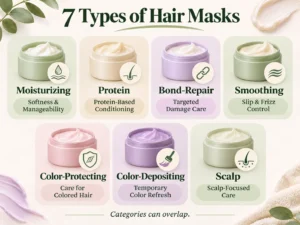
Common development directions include moisturizing, smoothing, repair-positioned, curl-care, and color-care masks. Specify the intended use as well as the marketing category. A rinse-out treatment and a leave-in product need separate consideration; changing the label doesn’t establish that one formula is suitable for both.
| Product direction | Put this in your brief |
|---|---|
| Moisturizing or smoothing mask | Target hair type, desired softness, ease of rinsing, and acceptable weight after drying |
| Protein or repair-positioned mask | The exact benefit you intend to claim and the evidence needed to support it |
| Curl-care or color-care mask | Intended routine, target hair condition, and how the product will be evaluated |
| Rinse-out or leave-in format | Application area, dose, contact time, and the assessment needed for that use |
An ingredient name isn’t a performance specification. A request for an argan oil mask still needs to define the intended texture, rinse behavior, target hair type, and after-feel.
What Makes a Hair Mask Perform Well?
A hair mask should be evaluated as a complete formula, not by its featured ingredient alone. The conditioning system, target hair type, application method, rinse behavior, and after-feel all contribute to the finished experience.
Why the Complete Conditioning Formula Matters
A 2020 review in Cosmetics explains that many hair-conditioning products work through the deposition of complex formulations, including macromolecules and surfactants, onto the hair-fiber surface. These deposits can partially cover damaged outer regions and reduce friction between fibers, supporting manageability and hydration. The review also identifies deposit thickness, water content, surface topography, and friction as relevant physicochemical factors.
This is why an ingredient-led brief is not enough. A request for keratin, argan oil, shea butter, or protein does not define the finished mask’s conditioning performance. The complete formula and the way it interacts with the hair fiber matter. Read the review, Physicochemical Aspects of the Performance of Hair-Conditioning Formulations, for the underlying mechanisms.
Professional perspective: When assessing a hair mask concept, I would start with the intended hair type and the result the user should notice after rinsing and drying. Only then would I decide which conditioning ingredients and texture direction are appropriate. This avoids designing a formula around a popular ingredient while leaving the actual use experience undefined.
What Research Shows About Combing Friction and Breakage
A 2026 paper in the International Journal of Cosmetic Science examined methods for evaluating combing force and breakage in textured hair. Using Walker Type 4 hair tresses, the researchers reported that the tested conditioning and lubricating treatments reduced wet-hair friction by 50%–60%. In a repeated wet-combing assessment, the treatments reduced breakage by 38%–64%; a silicone-oil treatment produced a 72% reduction in that study.
These figures describe the specific products, hair samples, and laboratory methods used in the research. They are not a guaranteed result for every hair mask, and they should not be presented as a universal performance claim. The value of the study is that it demonstrates why wet-combing force and repeated-combing breakage can be useful measures when evaluating conditioning performance, especially for textured hair.
For the full methodology and limitations, see Methods adapted to evaluate products for textured hair: Combing force and breakage.
Professional perspective: I would not approve a mask based only on how slippery it feels immediately after application. For a more useful assessment, compare application and detangling, rinse behavior, and the condition of the hair after drying. Where a brand wants to make a measurable breakage claim, a structured test on the finished product is needed; a sensory review alone is not enough.
Ready-Made vs. Custom Hair Masks: Which Route Fits Your Brand?
Choose an existing formula when it already meets your product brief. Consider customization when there’s a defined gap worth paying to resolve. Suppliers use private label, white label, OEM, and ODM differently, so ask what work the proposal includes rather than relying on the label.
| Route | What you’re buying | What to settle before approval |
|---|---|---|
| Ready-made | An existing product with agreed branding or packaging options | Formula availability, permitted changes, and nonexclusive or exclusive use |
| Semi-custom | An existing base with selected changes | What changes, what must be reassessed, and who pays |
| Custom | Development against your product brief | Sample rounds, testing, production minimums, formula rights, and transfer terms |
A fragrance or texture change may look small in a sales discussion. Ask the formulator whether it changes the evaluation needed for the finished product.
Keronhair’s private label hair care options provide a starting point for discussing an existing base versus custom development. Request the scope for your mask rather than assuming all options share one price or timeline.
What Are the MOQ, Cost, and Lead Time for Private Label Hair Masks?
There isn’t one figure that applies across this shortlist. A stock mask sold in bulk, a standard jar with your label, and a newly developed formula are different purchases. Compare the cost of the complete order you can sell, including the work and components required to get it ready.
Ask suppliers to itemize:
- The minimum bulk batch and finished-unit quantity for each formula and size.
- Containers, closures, labels, cartons, and any unused packaging you must purchase.
- Sample development, revisions, testing, and documentation fees.
- Filling, packing, freight, and other charges included or excluded from the quote.
Packaging suppliers may set a purchase minimum that exceeds the number of finished masks in the first production order. Confirm who pays for and stores unused components, how long they can be held, and whether a later artwork or container change would make them unusable. These commitments should appear in the total project-cost comparison.
Ask for separate milestones for sample approval, packaging approval, production, and shipping. A quoted production window may begin only after the formula, artwork, components, and payment are ready. The guide to hair care MOQ, sampling, packaging, and lead times explains how those commitments interact.
How to Evaluate Hair Mask Samples Before Approval
Use a written sample review rather than a general response such as “feels good.” You need to establish whether the product suits the intended hair, works in the final package, and can become a repeatable production specification. Keep subjective preferences separate from test-backed performance claims.
How the Mask Feels During Use and After Drying
Evaluate the sample under consistent conditions: comparable hair, the same cleanser, a defined dose, contact time, rinse method, and drying routine. Record how easily the mask spreads through the lengths, whether it supports detangling during application, how readily it rinses, and whether the dried hair feels soft, coated, heavy, or manageable. Keep the formula code and sample version with the review.
Include a suitable benchmark that reflects the target hair type and condition. A mask’s performance on coarse hair does not establish that the same texture or after-feel will suit fine or chemically treated hair. A structured use review can guide development, but it doesn’t by itself substantiate a quantified reduction in breakage.
Professional perspective: I would separate the review into three stages: application, rinsing, and after-drying. A mask can feel rich and slippery during application yet leave too much residue, take too long to rinse, or feel heavy once the hair is dry. Recording all three stages gives the formulator more useful feedback than a general comment such as “the sample feels good.”
How the Formula Works with Your Packaging
Assess the selected formula in the intended container before final approval. Texture and viscosity affect how a mask moves through a tube or pump and how easily it can be removed from a jar. Review the closure, dispensing method, product left in the container, and the suitability of the pack for filling and transport. Ask what compatibility checks are appropriate for the final formula-and-package combination.
A laboratory jar can’t show whether your chosen pump works. Likewise, an attractive package mockup doesn’t demonstrate that the closure seals or the decoration withstands the intended use conditions.
Professional perspective: I would settle the texture direction before locking the package. A high-viscosity mask, a lighter cream, and a leave-in treatment do not necessarily suit the same dispensing format. Changing the container late in development can affect filling, user experience, and the checks required before production.
What to Confirm for Production and Repeat Orders
Approve a documented formula and packaging version, with an agreed reference sample and acceptance criteria. Discuss appearance, odor, pH, viscosity, fill quantity, and the test methods used where relevant.
Ask who keeps retained samples and how changes to ingredients, fragrance, viscosity, or packaging will be communicated. For a coordinated shampoo, conditioner, and mask range, keep each product’s approved formula and packaging specification identifiable rather than treating the range as one interchangeable set. Agree on the process for investigating an out-of-specification batch. Repeat orders should refer to the approved specification rather than depend on someone’s memory of the first sample.
What Should You Verify Before Ordering Hair Masks in Bulk?
Establish who will manufacture, fill, and release your product, then review the documentation relevant to its formula and destination market. A certificate image doesn’t tell you whether it covers the actual facility or whether the finished product supports your intended claims.
Your pre-order review should include:
- The contracting company, production address, and any outsourced operations.
- The complete ingredient list, finished-product specification, and batch traceability arrangements.
- The scope and results of stability, packaging compatibility, microbiological quality, and preservation assessments appropriate to the product.
- Evidence for the claims you’ll print, plus responsibility for market-specific safety, labeling, and other required work.
Keep testing questions specific. A routine batch test and an assessment of preservation over use address different questions. Ask what each document demonstrates and which product version it covers.
For water-based hair masks, preservation should be considered as part of the finished formula’s microbiological risk assessment. ISO 11930:2019 describes how preservation-efficacy test data and microbiological risk assessment are used to evaluate a cosmetic product’s overall antimicrobial protection. The standard also recognizes that products assessed as low microbiological risk under ISO 29621 may not require the same preservation-efficacy test. The appropriate approach therefore depends on the product’s formulation, packaging, and risk assessment—not on a blanket assumption that every mask must undergo an identical test. See the official ISO 11930:2019 summary.
For repair-positioned masks, define the proposed outcome. Easier combing, reduced breakage, and bond-repair language shouldn’t be treated as interchangeable. Request evidence for the claim you actually intend to make.
Pause approval if the supplier can’t identify the manufacturing site, explain missing test information, or agree on the approved specification. Clarify those gaps before paying for production rather than treating a reassuring email as the missing evidence.
What Should You Include in a Hair Mask Manufacturing RFQ?
A request for quotation, or RFQ, gives suppliers the same project information so you can compare their proposals fairly. You don’t need a finished formula. You do need a clear product purpose, a realistic order plan, and an explanation of what you expect the supplier to deliver.
| Brief field | Information to provide |
|---|---|
| Customer and market | Target hair type, country of sale, and sales channel |
| Product use | Rinse-out or leave-in, application area, expected dose, and frequency |
| Desired performance | Benchmark product, preferred texture, rinse feel, and dry-hair finish |
| Formula requirements | Existing or custom route, ingredient restrictions, fragrance, and proposed claims |
| Packaging | Fill size, container type, decoration, label, and outer box |
| Commercial plan | First-order quantity, number of versions, budget, and intended launch date |
| Deliverables | Samples, specifications, testing, documents, and packaging approval requirements |
Ask suppliers to state their assumptions and exclusions alongside the price. That makes a higher quote easier to evaluate: it may include work a cheaper proposal leaves for you to arrange.
Keronhair can review a hair mask brief alongside the formula and packaging route. Send your hair mask project brief with the target customer, benchmark product, desired texture and after-feel, pack size, and planned quantity. This gives the team a clearer basis for discussing sample evaluation and a project-specific quote.
Research and Technical References
The following sources support the discussion of hair conditioning, combing performance, and cosmetic preservation. Their findings should be applied within the scope of each study or standard.
- Fernández-Peña, L. and Guzmán, E. (2020). Physicochemical Aspects of the Performance of Hair-Conditioning Formulations. Cosmetics, 7(2), 26.
- Malinauskyte, E. et al. (2026). Methods adapted to evaluate products for textured hair: Combing force and breakage. International Journal of Cosmetic Science, 48(Suppl. 1), S70–S83.
- International Organization for Standardization. ISO 11930:2019 — Cosmetics: Evaluation of the antimicrobial protection of a cosmetic product.
FAQs About Private Label Hair Mask Manufacturing
These answers cover practical questions to settle before you approve a supplier, particularly when comparing stock products, bulk purchases, and custom development.
Can I Order Private Label Hair Masks in Small Quantities?
Some suppliers offer smaller orders through existing formulas or standard packaging. Confirm the minimum for your finished configuration; sample availability doesn’t establish the minimum for a branded production order.
Can I Customize the Formula, Fragrance, and Packaging?
Often, but the available changes depend on the supplier and development route. Ask which changes are included, which cost extra, and whether they require additional testing or higher minimum quantities.
Can I Buy Bulk Hair Mask and Arrange My Own Filling?
Some suppliers offer bulk product. Confirm storage, transport, handling, packaging compatibility, and filling responsibilities. Buying a finished bulk formula doesn’t remove the need to control the subsequent filling and packing stages.
Who Owns a Custom Hair Mask Formula?
Ownership depends on the agreement. Clarify whether you receive manufacturing access, exclusive use, or full formula rights, including any conditions for transferring production. Paying development fees alone doesn’t settle those terms.
Can I Request Vegan, Silicone-Free, or Organic Hair Masks?
Yes, but these are separate requirements. Ask for the ingredient and finished-product evidence relevant to each claim, and specify any certification you need. One claim doesn’t establish the others.
Can One Manufacturer Supply Salon and Retail Sizes?
Many can discuss both, but confirm filling capability, packaging availability, and minimums for each size. Even with one formula, the two packages may require separate compatibility checks and artwork approvals.
Should I Choose a Local or Overseas Hair Mask Manufacturer?
Compare product capability, total delivered cost, communication, documentation, and reorder logistics. Local supply may simplify some coordination, but location alone doesn’t establish product quality or suitability for your brand.