Could Hair Dye Cause Hair Loss? Seeing extra strands in the shower or on your brush after coloring can make that question feel urgent. The dye may seem like the obvious explanation, but hair breakage, scalp irritation, and an unrelated shedding cycle can look very similar at first.
Before you reach for another treatment or decide to stop coloring altogether, it helps to examine what actually happened: where the strands broke, how your scalp felt, which coloring process you used, and when the shedding began. This guide will help you read those clues, understand the habits that increase risk, recognize symptoms that deserve medical attention, and protect your hair during future coloring.
Understanding the Link Between Hair Dye and Hair Loss
The visible hair above the scalp is the hair shaft. Hair growth begins inside follicles in the scalp. Most hair color products are designed to alter or deposit color on the shaft, so their most common form of damage is structural: the hair may become rougher, drier, less elastic, and more prone to breaking.
That distinction matters because broken hair and hair shed from the root can both collect in a brush or shower drain. They do not necessarily have the same cause or require the same response. Hair dye may be involved, but it should not automatically be blamed for every change in density after coloring.
Hair Breakage vs. True Hair Loss
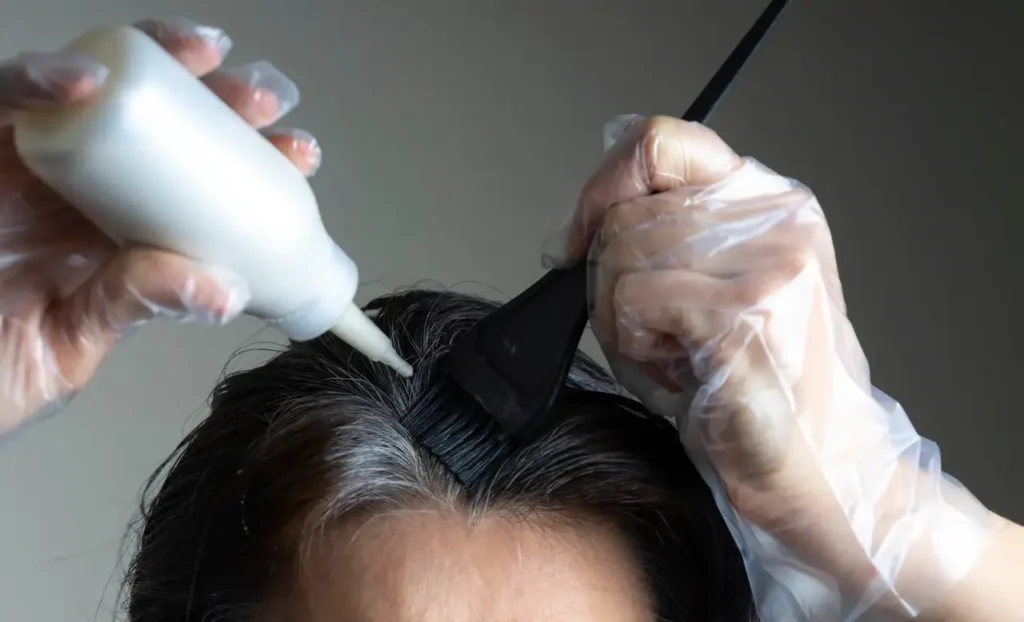
Breakage happens when a weakened strand snaps somewhere along its length. Bleaching, repeated oxidative coloring, heat styling, rough detangling, and tight hairstyles can combine to increase this risk. The American Academy of Dermatology’s coloring guidance notes that coloring can damage hair and recommends careful shade changes, product testing, and sun protection for chemically treated hair.
Hair shedding occurs when a full strand releases from the follicle as part of the growth cycle. The American Academy of Dermatology’s explanation of hair shedding notes that excessive shedding, also called telogen effluvium, can follow stress, illness, surgery, major weight loss, or childbirth. It may begin months after the triggering event, which is one reason the most recent hair product is not always the true cause.
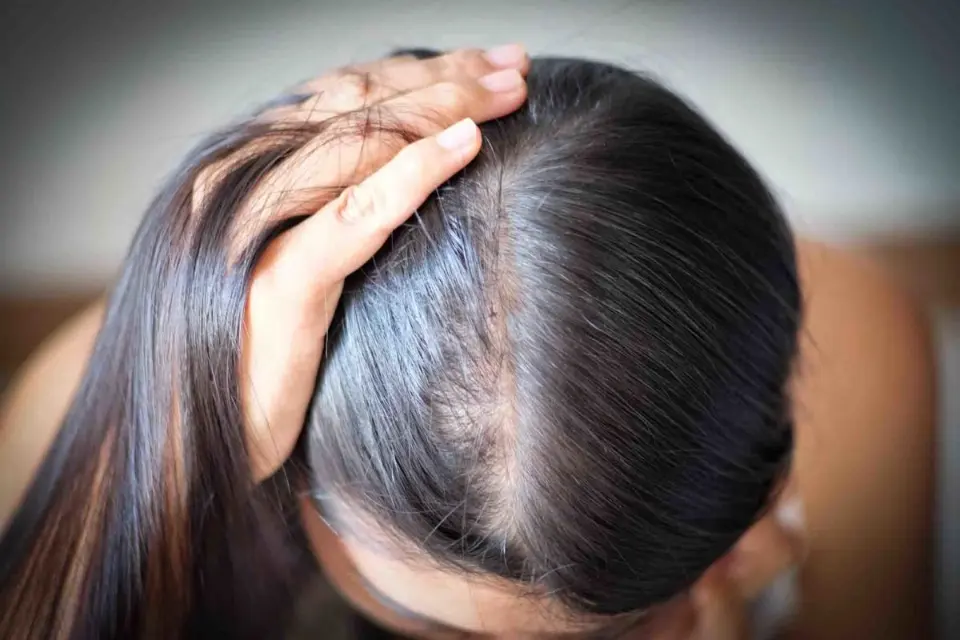
Hair loss is a broader term for conditions in which growth slows or stops, or hair density progressively decreases. A widening part, receding hairline, distinct bald patches, or loss that continues despite gentler hair care deserves professional assessment.
What Dermatologists and Safety Authorities Say
There is no sound basis for saying that ordinary hair dye use always causes permanent hair loss. There is also no basis for promising that every formula is risk-free. The practical concern is how the product affects the shaft and scalp in a particular person, especially when the hair is already processed or the skin barrier is irritated.
Allergic Contact Dermatitis
Permanent and some semi-permanent dyes can contain p-phenylenediamine, commonly called PPD. The U.S. Food and Drug Administration’s hair dye guidance identifies PPD as an ingredient often associated with allergic reactions and advises consumers to follow product directions and perform the instructed skin test before every use. Sensitivity can develop after previous uneventful applications.
Possible reaction signs include burning, itching, rash, redness, blistering, or swelling around the scalp, face, eyelids, ears, or neck. Significant inflammation can be accompanied by shedding, but only a clinician can determine whether the dye, scratching, another scalp condition, or a separate hair-loss disorder is responsible.
Flat discoloration without discomfort may be a surface stain rather than an allergic reaction. This guide explains how to distinguish a hair dye stain from a skin reaction and how to clean intact skin gently. Burning, itching, swelling, pain, or blisters require a different response.
Chemical Burns and Aggressive Lightening
Bleach and oxidative color can weaken the shaft, particularly when a strong lightening process is repeated or applied over previously processed lengths. The risk rises when instructions are ignored, products are combined without professional guidance, or the scalp is already scratched, sunburned, inflamed, or damaged.
Severe scalp pain, blistering, weeping, or rapidly increasing swelling is not a normal part of coloring. Rinse the product out as directed, stop using it, and seek medical advice. Trouble breathing or swelling of the lips, mouth, tongue, or throat can indicate a serious allergic reaction and requires emergency help.
How Different Types of Hair Dye Affect the Hair
Permanent and Demi-Permanent Color
Permanent color usually combines dye precursors, an alkalizing agent, and an oxidizing developer. The alkalizing step helps the formula enter the hair, while peroxide contributes to lightening natural pigment and developing the new color. This process can change the cuticle and cortex, especially when the same lengths are treated repeatedly.
Demi-permanent color generally uses a developer but is designed for less lift than many permanent systems. Exact chemistry varies, so category names alone do not reveal how a specific product will affect a person’s hair or scalp.
Semi-Permanent and Temporary Color
Many semi-permanent colors use preformed dyes and no separate oxidizing developer. They generally deposit color with less structural alteration than permanent color, although they can still dry the hair or cause irritation or allergy depending on the ingredients and the user.
Temporary colors mainly coat the outside of the shaft and wash out quickly. They usually involve less chemical processing, but “temporary,” “plant-based,” “natural,” “ammonia-free,” and “PPD-free” should not be treated as guarantees of safety. Alternative dyes, alkalizers, fragrances, preservatives, and botanical ingredients can also cause reactions.
The Role of Developer and Alkalizing Agents
A higher-strength developer is not automatically better. Use only the product and mixing ratio specified by the manufacturer. Ammonia-free color may use another alkalizing agent to perform a similar function, so the label does not by itself prove that a formula will be gentler for every user.
The Most Damaging Hair Dye Habits—and Who May Be More Vulnerable
Overlapping Color and Repeated Bleaching
Applying permanent color or bleach repeatedly to already processed lengths can increase porosity and reduce strength. Root retouches should stay on new growth unless the product instructions or a qualified colorist specify a different application. Dramatic lightening, color correction, and multiple chemical services are safer to plan in stages rather than stack into one session.
There is no universal interval that suits every formula and head of hair. Timing depends on the product, whether bleach or developer is involved, the condition of the hair and scalp, and whether only regrowth or the full length will be treated. The practical framework in this guide to spacing hair color applications can help you assess those variables without relying on one fixed number.
Scalp Sensitivity and Previous Reactions
People with an irritated or damaged scalp, an active skin condition, or a previous reaction to dye should not assume that changing brands will solve the problem. A dermatologist may recommend formal patch testing to identify an allergen. A history of a black henna temporary tattoo is also important because these products may contain high levels of PPD and can increase the risk of later sensitivity.
Warning Signs to Take Seriously
- Burning, marked stinging, increasing pain, blistering, or weeping during or after coloring
- Swelling around the eyes, face, lips, mouth, tongue, or throat
- Shortness of breath, wheezing, dizziness, or difficulty swallowing
- Sudden bald patches, a rapidly widening part, or clumps of full-length hair coming out
- Persistent scalp redness, itching, scaling, tenderness, or shedding
Stop using the product if a reaction develops. The NHS guidance on hair dye reactions explains common symptoms and when urgent or emergency care is needed.
How to Tell Hair Breakage from Hair Shedding
A home check cannot diagnose hair loss, but it can help you describe the problem accurately to a stylist or dermatologist.
| What you notice | More consistent with breakage | More consistent with shedding or hair loss |
|---|---|---|
| Length of fallen hairs | Many short pieces of different lengths | Mostly full-length strands |
| Appearance of the hair | Split ends, fraying, roughness, white stress points, or snapping | A small club-shaped bulb may be visible at one end, although this is not a reliable diagnosis by itself |
| Pattern on the head | Uneven lengths and reduced fullness through the mid-lengths or ends | Widening part, receding hairline, distinct patches, or diffuse loss from the scalp |
| Scalp symptoms | Often absent unless there was irritation from the service | May include itching, pain, burning, scaling, or inflammation, depending on the cause |
Take clear photos of the part, hairline, and affected areas under the same lighting once a week rather than checking repeatedly each day. Note the coloring date, products used, processing time, symptoms, illnesses, medicines, major stressors, and other chemical services. This timeline can help a dermatologist distinguish coincidental shedding from a dye-related reaction.
What Should You Do If Your Hair Is Falling Out After Dyeing?
Finding extra hair in the sink after coloring can make you want to try another treatment immediately. Resist that impulse. The safest next step depends on whether you are seeing shaft breakage, full-length shedding, or an active scalp reaction.
1. Check for an urgent scalp reaction
If the dye is still on your hair and you develop marked burning, itching, pain, or swelling, stop the application and rinse as directed on the product label. Do not try to neutralize the reaction with vinegar, baking soda, essential oils, alcohol, or another chemical mixture. These can further irritate already-inflamed skin.
Get prompt medical advice for blisters, weeping skin, increasing swelling, severe scalp pain, or a reaction that continues to worsen. Difficulty breathing, throat tightness, dizziness, or swelling of the lips, mouth, tongue, or face may indicate a serious allergic reaction and requires emergency help. The NHS guidance on hair dye reactions explains the symptoms that require urgent attention.
2. Pause additional chemical services
Do not immediately bleach, recolor, strip, perm, relax, or chemically straighten the hair to correct the result. Even a different formula can add stress to fragile strands or irritate a scalp that has not recovered. Wait until the condition of the hair and scalp is clear; if the damage is substantial, ask an experienced colorist or dermatologist to assess it before another service.
3. Look closely at what is coming out
Use the breakage-versus-shedding comparison above rather than judging by the amount of hair in the drain alone.
- Short pieces of different lengths are more consistent with breakage.
- Full-length strands may be shedding from the root, although the appearance of one strand cannot diagnose the cause.
- Uneven, fragile, or gummy-feeling processed lengths suggest significant fiber damage.
- A widening part, distinct bald patches, or loss concentrated at the scalp deserves professional assessment.
Avoid repeatedly pulling or stretching the hair to “test” it. That can create additional breakage and make the situation look worse.
4. Keep hair care simple and gentle
While you monitor the hair and scalp:
- Use a gentle shampoo and apply conditioner after washing.
- Detangle slowly, beginning at the ends rather than pulling from the roots.
- Blot or wrap wet hair with a soft microfiber towel instead of rubbing it.
- Reduce blow-drying, flat ironing, curling, and other high-heat styling.
- Avoid tight ponytails, braids, extensions, or styles that place tension on the hairline.
- Do not assume that a bond treatment, oil, mask, or protein product can permanently rebuild a severely damaged strand. These products may improve feel and manageability, but they cannot return a fractured fiber to its original condition.
These measures are consistent with the American Academy of Dermatology’s guidance for managing fragile or thinning hair.
5. Record the timeline before seeking help
Keep the product packaging if possible. Note the color product, developer, mixing ratio, application areas, processing time, symptoms, and the date the shedding or breakage began. Take weekly photos of the hairline, part, and affected areas in the same lighting rather than checking several times a day.
Contact a dermatologist if the loss is sudden, patchy, painful, persistent, rapidly worsening, or accompanied by scalp inflammation. Bring your notes and product ingredient list. This information can help a clinician distinguish chemical breakage or a contact reaction from a separate hair-loss condition.
Will Hair Grow Back After Hair Dye Damage?
In many cases, hair can regain fullness after dye-related damage, but the answer depends on where the damage occurred. A broken hair shaft, temporary shedding, and an injured follicle are different problems and do not recover in the same way.
If the hair is breaking along the shaft
Breakage affects the visible fiber rather than the living follicle beneath the scalp. If the follicle remains healthy, new hair can continue to grow. However, the broken section cannot biologically repair itself or reconnect. Conditioners and treatments may reduce friction and improve appearance, but the damaged length must eventually grow out or be trimmed.
Recovery therefore depends on length retention as well as growth. Reducing heat, tension, rough detangling, repeated bleaching, and overlapping permanent color gives new growth a better chance of remaining intact.
If full-length hairs are shedding from the root
Regrowth depends on what triggered the shedding. Scalp inflammation or a significant reaction may be followed by temporary shedding, but illness, surgery, major stress, childbirth, rapid weight loss, nutritional deficiency, medication changes, hereditary thinning, and other conditions can begin around the same time as a coloring appointment.
Timing alone does not prove that the dye caused the problem. The American Academy of Dermatology’s overview of hair-loss causes notes that excessive shedding can appear months after a stressful event or illness. For this reason, a dermatologist may ask about the months before the coloring session—not only the day the hair was dyed.
When the follicle is not scarred and the underlying trigger is resolved, new growth is often possible, but visible recovery can take months. Avoid starting hair-growth supplements without professional guidance. A clinician may recommend tests when symptoms or medical history suggest a nutritional, hormonal, inflammatory, or other underlying cause.
If there was a severe chemical burn or scarring
The outlook is less predictable when a burn or prolonged inflammation injures the scalp deeply enough to scar a follicle. Scarring can interfere with future growth, which is why severe pain, blistering, open sores, crusting, or smooth areas with missing follicle openings should not be managed as ordinary dry hair.
Prompt assessment matters more than trying another cosmetic treatment. A dermatologist can examine the scalp, identify signs of inflammation or scarring, and recommend appropriate care.
Signs that recovery may be moving in the right direction
Look for gradual trends rather than day-to-day changes:
- Fewer short pieces breaking during washing or detangling
- Less tangling, snapping, and roughness through the processed lengths
- No new areas of visible thinning or scalp irritation
- Short new hairs appearing over time, interpreted together with the overall pattern
- Stable comparison photos taken under consistent lighting
Seek medical assessment if the part continues to widen, bald patches appear, shedding remains heavy, or scalp pain, itching, scaling, or redness persists. A clear diagnosis is more useful than repeatedly changing products or assuming every form of hair loss has the same cause.
How to Dye Your Hair with Less Risk of Breakage or Scalp Injury
Before Coloring
- Read the complete instructions and warnings before mixing the product.
- Perform the manufacturer-directed allergy alert or skin test before every application, even if you have used the product before.
- Do a strand test to check the result and observe how the hair tolerates the process.
- Do not dye an irritated, scratched, sunburned, or damaged scalp.
- Check the package condition and discard mixed leftovers. If storage is uncertain, review how to tell whether hair dye may be expired or compromised.
The FDA advises waiting at least 14 days after bleaching, relaxing, or perming before using hair dye. Product directions may require additional precautions, and a professional should assess severely damaged hair before another chemical service.
During Coloring
- Wear gloves and use the exact product ratio and processing time stated in the instructions.
- Do not mix different color systems unless their manufacturer specifically instructs you to do so.
- Keep dye away from the eyes and do not use scalp hair dye on eyebrows or eyelashes.
- Rinse promptly as directed if marked burning, itching, pain, or swelling develops.
For a fuller preparation and application checklist, use this step-by-step guide to dyeing hair at home together with the instructions for your specific product.
After Coloring
- Use conditioner and detangle gently, starting at the ends.
- Reduce high heat, aggressive brushing, and tight hairstyles while the hair feels fragile.
- Do not immediately correct an unwanted result with another bleach or permanent-color session.
- Pause chemical services if the scalp remains irritated or the hair stretches, feels gummy, or snaps easily.
Conditioners and treatments can improve lubrication, manageability, and resistance to everyday breakage, but they cannot make severely overprocessed hair biologically new again. Prevention and careful application are more reliable than trying to reverse extensive shaft damage afterward.
What Responsible Hair Color Development Should Prioritize
The way a hair color product is developed matters long before it reaches someone’s bathroom or salon chair. A responsible formula is not defined by one fashionable ingredient or a label such as “natural,” “ammonia-free,” or “gentle.” Those terms do not guarantee that a product will suit every person or eliminate the possibility of irritation, allergy, or hair damage.
From our manufacturing perspective at Keronhair, responsible hair color development means controlling the variables that can be evaluated and communicating the limitations that cannot be removed completely. Important checkpoints include:
- A clear product brief: The shade goal, color system, intended user, application method, target market, and expected performance should be defined before formulation begins.
- Formula and developer compatibility: Hair color cream and developer need to be assessed as a complete system rather than treated as unrelated products.
- Sample review and refinement: Color result, application feel, washout behavior, hair feel, and other agreed performance criteria should be evaluated before bulk production.
- Stability and packaging compatibility: The formula, tube or bottle, closure, and storage conditions need to work together throughout the intended product life.
- Clear directions and warnings: Mixing ratios, processing time, allergy-alert instructions, application limits, and rinse directions should be easy for the end user to understand.
- Batch controls and documentation: Approved specifications and production records help brands monitor consistency between the confirmed sample and future production batches.
- Market-specific review: Ingredient, labeling, testing, and documentation requirements can vary by destination, so brands should confirm them for every market in which the product will be sold.
At Keronhair, we support brand customers through formula and shade planning, sample approval, packaging coordination, quality control, and production preparation. Just as importantly, we do not believe responsible manufacturing should be presented as a promise that no consumer will ever react. Even a well-developed product must be used according to its directions, and individual sensitivities can vary.
For beauty brands planning a professional color range, our private label hair dye manufacturing service explains how Keronhair coordinates development from the initial brief through sampling and production. The goal is not to make exaggerated safety claims, but to build a more controlled, clearly documented product that brands can evaluate for their intended market.
Frequently Asked Questions About Hair Dye and Hair Loss
Can permanent hair dye cause permanent hair loss?
Permanent dye more commonly causes shaft damage and breakage than permanent follicle loss. Persistent loss is possible after a severe scalp injury or significant inflammatory reaction, but this is not the expected outcome of routine use. A painful reaction, bald patch, or continuing loss requires medical assessment.
Is semi-permanent dye less likely to cause breakage?
Many semi-permanent dyes avoid a separate oxidizing developer, so they generally alter the shaft less than bleaching or permanent oxidative color. They can still cause dryness, staining, irritation, or allergy. Follow the label and test as directed.
Should I color my hair while it is shedding?
If shedding is new, heavy, unexplained, or accompanied by scalp symptoms, postpone coloring until the cause is clearer. A dermatologist can distinguish excessive shedding from breakage and other forms of hair loss. Coloring may add avoidable irritation or make fragile hair harder to manage.
Does a negative skin test guarantee that I will not react?
No. A negative test reduces uncertainty but does not guarantee that a reaction will not occur. Follow the product instructions every time, monitor symptoms during and after use, and stop if a reaction develops.
How Soon Can Hair Loss Start After Dyeing Hair?
Breakage may appear during rinsing or within days as weakened strands snap. Allergic symptoms can be delayed for up to 72 hours, while shedding from illness, stress, childbirth, or another trigger may begin later. Timing alone cannot prove that hair dye caused the loss.
Can Hair Dye Cause Bald Spots?
Hair dye can make hair look patchy when severely weakened strands break near the scalp. True bald spots are less typical and may indicate a burn, inflammation, alopecia areata, traction, infection, or another condition. Stop chemical treatments and see a dermatologist for distinct, painful, or expanding patches.
Does Ammonia-Free or PPD-Free Hair Dye Prevent Hair Loss?
No. Ammonia-free dye may use another alkalizer, and PPD-free dye can still contain other irritants or allergens. Breakage risk also depends on the developer, lightening level, processing time, and previous damage. Follow the instructions and avoid coloring an irritated scalp or severely damaged hair.
Conclusion
Hair dye can contribute to apparent thinning, but the most common pathway is breakage of a chemically weakened shaft, not direct destruction of healthy follicles. Allergic reactions, chemical burns, and significant scalp inflammation are less common but more serious pathways that can be associated with shedding or hair loss.
The safest response is specific rather than fearful: identify whether the strands are breaking or shedding, stop if the scalp reacts, avoid overlapping aggressive chemical services, and seek a dermatologist’s assessment for sudden, patchy, painful, or persistent loss. That approach protects both the hair you can see and the scalp health that supports future growth.