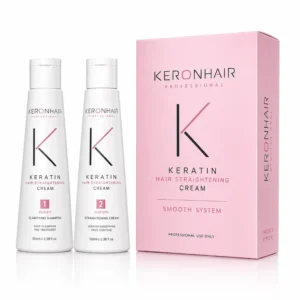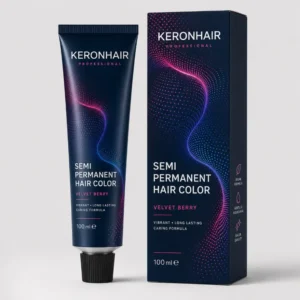
Hair products are manufactured worldwide, with China serving as a major hub for private label and mass-market production. The U.S., Europe, South Korea, Japan, India, and Brazil also have established manufacturing strengths. Because no single public database measures all global production, it is more useful to compare these regions than to claim one country makes a verified majority.
From my work with Keronhair’s manufacturing team in Guangzhou, I have seen how one product can combine formula development, ingredients, packaging, and production from different countries. This guide compares the leading manufacturing regions and explains how to choose and verify the right location for your product.
Where Are Most Hair Products Made? The Top Manufacturing Countries
The answer isn’t a single country. It’s a short, geography-defined list, shaped by cost structures, ingredient access, regulatory environments, and decades of accumulated formulation expertise. Here’s what I’ve seen on the ground.
China: The World’s Largest Volume Producer
China is the undisputed leader in hair care manufacturing by sheer output. Walk through the cosmetics districts of Guangzhou or Yiwu, and you’ll find filling lines running around the clock, turning out shampoos and conditioners destined for shelves across five continents. I’ve personally been handed unlabeled bulk jugs in those facilities that would go on to carry dozens of different brand names — the scale is genuinely staggering.
It’s a common mistake, though, to equate volume with low quality. What I’ve actually witnessed on Chinese factory floors tells a more nuanced story:
- Scale and speed: Leading facilities produce over a million units per day for mass-market private-label clients while still maintaining clean-room protocols on select lines. Chinese OEMs routinely beat Western competitors to market by months.
- Quality spectrum: Yes, cut-rate bulk formulas exist. But I’ve also toured plants with air-filtration systems and microbial-testing standards that rival Switzerland.
- Shampoo private label manufacturing: For indie brands that need to move quickly without heavy capital outlay, China’s contract manufacturing ecosystem is often the most practical starting point.
If your shampoo or styling gel is priced like a drugstore impulse buy, a Chinese supply chain likely made it happen — whether the label says so or not.
The United States: Targeted R&D and Formula Ownership
American manufacturing is less about volume and more about precision — specifically, the kind of formula ownership that’s hard to replicate elsewhere. When Keronhair needed a surfactant system that performed beautifully on highly porous hair, I went straight to a New Jersey lab that had been refining exactly that chemistry for three decades.
U.S. plants in California and Texas particularly excel at:
- Textured and multicultural hair formulations developed with a cultural nuance that mass-market overseas production often misses
- Bond-building complexes and reparative treatments, where the chemistry is tightly guarded IP
- “Made in the USA” labeling, which still carries genuine shelf appeal and allows brands to command a premium price
The cost per unit is higher — sometimes painfully so. But for brands staking their identity on clean claims, short supply chains, or salon-only credibility, domestic manufacturing is often the right move.
South Korea and Japan: Technology-Driven Formulation
Some of the most elegant hair care I’ve encountered came from Seoul and Osaka — products that feel more like precision skincare for the scalp than traditional hair formulas. South Korean OEM/ODM capabilities are arguably world-leading in texture engineering. I recall standing in an Incheon lab as a technician demonstrated a rinse-off hair mask that shifted viscosity on contact with water — patented, flawless, and unlike anything I’d seen produced in the West.
Korean hair styling products manufacturers regularly produce cushiony foam tints, leave-in hair ampoules that mimic high-end facial serums, and heat-protectant mists so fine they barely register as wet. Japan, meanwhile, brings near-militant precision to scalp-aging and anti-hair-loss technologies. If a claim on a bottle sounds futuristic, there’s a reasonable chance a Korean or Japanese lab wrote the technical dossier behind it.
France, Italy, and European Formulation Heritage
Drop “Made in Italy” or “Made in France” on a hair product, and shoppers instantly expect luxury, fragrance, and heritage. That reputation isn’t unearned — and as someone who has paid for European production directly, I can confirm it’s never just about the formula. When sourcing from Northern Italy, I was paying for a master compounder’s ability to weave a scent into a conditioner so artfully that it unfolds in layers over hours. French labs, meanwhile, apply an almost pharmaceutical rigor to botanical extraction.
EU regulatory compliance also forces a cleaner ingredient deck by default — many problematic preservatives and surfactants common elsewhere are simply off the table. For high-end natural lines and luxury launches, European manufacturing still delivers intangibles that show up on the bathroom counter, not just on a spec sheet.
Brazil and India: Ingredient-Led Innovation
These two markets often get underestimated, but among the hair product manufacturing companies shaping the next decade, Brazilian and Indian producers deserve serious attention — not just for filling capacity, but for genuine raw-material innovation.
Brazil has become a global force in keratin treatments and low-porosity conditioners. I’ve toured facilities outside São Paulo that process raw murumuru and cupuaçu butters in a direct farm-to-factory loop that you simply can’t replicate by shipping oils overseas. The freshness of feedstock genuinely improves product performance.
India is quietly the titan behind the global Ayurvedic hair care boom. Amla, brahmi, and henna are increasingly processed using modern cold-press extraction rather than outdated powder blends, and there’s growing clinical backing turning folk remedies into tested cosmeceuticals. For any brand claiming authentic herbal heritage, a well-audited Indian manufacturer consistently outperforms a copycat formula churned out by a non-specialist facility.
What Types of Hair Products Are Made in Each Region?
Most established cosmetic manufacturing countries can make common hair care products. Regional specialization is useful as a starting hypothesis, not a guarantee. The individual factory’s experience with your format is more important than the flag on its address.
| Product category | Common manufacturing hubs to research | What to verify |
|---|---|---|
| Shampoo and conditioner | China, U.S., Europe, South Korea, India, Brazil | Surfactant and conditioning system, hair-type testing, viscosity, fragrance stability, packaging compatibility, and fill accuracy |
| Hair masks and leave-in treatments | China, Italy, France, South Korea, Japan, Brazil | Texture, deposition, rinse feel, heat stability, microbial controls, pump or jar compatibility, and claim support |
| Permanent and demi-permanent hair color | Italy, Germany, China, U.S., South Korea, Japan | Shade system, developer pairing, color consistency, instructions, ingredient restrictions, safety assessment, and target-market rules |
| Semi-permanent and temporary color | U.S., China, South Korea, Italy, Germany | Base-hair assumptions, wash-fade profile, staining, transfer, shade reproducibility, and permitted colorants |
| Hair oils and botanical products | India, Brazil, Morocco, China, Europe | Ingredient identity, extraction method, oxidation control, contaminant testing, fragrance, and substantiation of origin claims |
| Gels, waxes, sprays, and mousses | China, U.S., Europe, South Korea, Brazil | Hold, finish, humidity performance, flammability or aerosol requirements where relevant, residue, and package function |
Shampoos and Conditioners
Shampoos and conditioners are made in nearly every major cosmetics market because their production processes are widely established. China is attractive for broad private label selections, packaging access, and scalable production. U.S. and European partners may appeal to brands that prioritize local supply, domestic-origin positioning, or close collaboration with their sales market. South Korean and Japanese developers are often considered for scalp-focused and lightweight sensory concepts, while India and Brazil offer strong botanical and hair-type narratives.
A sourcing decision should not rest on a “sulfate-free,” “silicone-free,” or “natural” claim alone. Define cleansing strength, foam, wet and dry combing, fragrance, viscosity, target hair type, use instructions, prohibited ingredients, and acceptance tests in the brief.
Hair Dye and Color Products
Hair color requires more specialized evaluation because the formula works as a system with the hair substrate, processing time, developer or activator, and application method. Italy, Germany, China, the U.S., South Korea, and Japan all have manufacturers in this field. India is also relevant for some plant-based color concepts.
Do not compare hair color manufacturers only by a shade card or one sample on one hair swatch. Confirm permitted colorants and restrictions for the destination market, the shade-development method, grey-coverage criteria, developer compatibility, application instructions, color consistency, scale-up controls, stability, packaging compatibility, and complaint traceability. Our guide to hair dye manufacturers in China provides a more focused supplier-research framework for this category.
Hair Oils, Serums, and Leave-In Treatments
Ingredient provenance can influence where these products are developed, but the origin of a hero ingredient does not necessarily determine the finished product’s country of manufacture. Argan oil may be sourced from Morocco and filled elsewhere; an Indian botanical may be extracted in India and blended in another country; a Brazilian butter may enter a formula manufactured in Europe or China.
Ask for the finished-product manufacturing address and separate it from the claimed origin of individual ingredients. For oils and serums, oxidation, odor, color drift, low-temperature behavior, dropper or pump compatibility, and transfer onto fabric may be as important as the ingredient story.
Styling Products: Gels, Sprays, Mousses, and Waxes
China, the U.S., Europe, South Korea, and Brazil all support styling-product manufacturing. The appropriate partner depends on the format and intended performance. A water-based gel, an anhydrous wax, a high-hold aerosol spray, and a curl cream require different equipment, expertise, safety controls, and test methods.
For styling products, create measurable approval criteria for hold, flaking, residue, washability, shine, humidity response, application feel, and package delivery. If the formula is an aerosol or contains a high level of volatile material, verify that the manufacturer and logistics provider can manage the relevant production, storage, and transport requirements.
Why Are So Many Hair Products Made Overseas?
Brands manufacture outside their headquarters country for several practical reasons. The decision is not always a simple labor-cost comparison, and “overseas” can mean a very different supply chain for a U.S., European, Middle Eastern, or Asian brand.
Dense Manufacturing and Packaging Networks
Established cosmetics clusters concentrate raw-material distributors, packaging makers, printers, mold suppliers, laboratories, factories, freight forwarders, and ports. This can reduce the number of separate vendors a brand must coordinate and can make standard components easier to source.
The benefit depends on the actual project. Custom bottles may still require tooling, large component minimums, and long approval cycles. A short bulk-manufacturing lead time does not guarantee a short total launch timeline if the packaging, artwork, testing, or market documentation is incomplete.
OEM, ODM, and Private Label Support
Many export-oriented factories offer several routes to market:
- Private label: the brand selects an existing formula and applies its own branding, with changes limited by the supplier’s program.
- ODM or adapted development: the manufacturer provides a starting platform and develops selected formula, fragrance, color, claim, or packaging features.
- OEM or formula transfer: the manufacturer produces to a buyer-controlled formula or specification, subject to transfer and scale-up validation.
- Custom formulation: the brand and laboratory develop a product against a detailed performance and commercial brief.
These terms are used differently by different suppliers. Record the formula status, ownership, permitted substitutions, testing responsibilities, confidentiality, exclusivity, approval sample, and change-control process in writing.
Cost, Minimum Order Quantity, and Scale
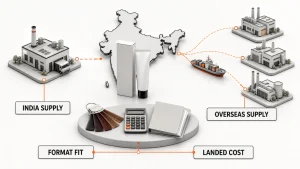
Overseas production can be economical when a factory already has the right equipment, formula platform, components, and purchasing volume. However, the unit price is only one part of landed cost. Tooling, samples, testing, inspection, freight, duties, warehousing, payment terms, rejects, delays, and obsolete stock can change the comparison.
Request quotations on the same basis. Each supplier should quote the same fill size, formula route, packaging specification, decoration, carton, testing scope, documentation, delivery term, and annual volume. Otherwise, the lowest number may simply represent the narrowest scope.
How to Identify Where a Hair Product Is Really Made
As someone on the manufacturing side of this industry for nearly two decades, I understand why consumers and brand founders are asking this question more urgently than ever. Origin matters — for quality assurance, ethical sourcing, and informed purchasing decisions. Here’s what to look for.
- Check the country-of-origin statement. Flip the bottle over. The country-of-origin line usually sits near the ingredient list or along the bottom edge in small print. “Made in [Country]” is the most direct. “Distributed by” only tells you where the brand’s office is — not where the product was filled.
- Understand “Manufactured For” vs. “Manufactured By.” “Manufactured for” almost always means the brand contracted a separate factory. The real facility’s name rarely appears. Even “manufactured by” doesn’t guarantee in-house production — treat both phrases as signals to investigate further.
- Look for batch codes. That inkjet code stamped near the base ties back to a specific production run, date, and factory line. Serious brands can pinpoint exactly where a product was filled from that code alone. It’s the truest geographic fingerprint your bottle carries.
- Consider formula complexity. Sophisticated products — oxidative color, bond builders, patented texture systems — require deep chemistry that clusters in specific regions. An intricately balanced salon-grade treatment almost always traces back to a lab-heavy manufacturing country. Complex formulas leave stronger geographic fingerprints than basic shampoos ever will.
- Read the regulatory signals. Products with multi-language labels, the EU’s open-jar PAO symbol, or highly detailed INCI lists signal compliance with multiple regulatory markets — a hallmark of manufacturers comfortable exporting globally. Many European-made products can be identified this way, even when the brand presents itself as purely American.
How Brands Should Choose a Hair Product Manufacturing Region
Start with the product and market requirements, then choose the country and supplier that can demonstrate a suitable process. Choosing a region first and forcing the brief to fit it often creates unnecessary reformulation, packaging, or compliance work.
- Define the product system. Specify format, target user, performance, fragrance, color, texture, fill size, packaging, intended claims, price target, launch quantity, and forecast.
- Map destination-market duties. Determine who will act as the responsible person, importer, or other accountable party and which safety, labeling, notification, listing, and post-market tasks apply.
- Shortlist factories by relevant experience. A general skincare factory is not automatically qualified for oxidative color, aerosol styling, or high-viscosity masks. Ask for evidence of comparable formats and equipment.
- Compare total landed cost. Include development, testing, components, tooling, inspection, freight, duties, warehousing, lead-time inventory, and potential rework.
- Audit the exact facility. Review manufacturing scope, quality responsibilities, material controls, equipment, hygiene, testing, release, deviations, complaints, recalls, and traceability.
- Approve a controlled specification. Link the formula, process, packaging, artwork, tests, tolerances, and approved sample to the purchase contract. Require written approval before substitutions or process changes.
- Run a pilot or controlled first order. Evaluate scale-up, filled-package stability, shipping performance, batch records, and inspection results before expanding volume.
When brands ask us at Keronhair whether China is the right manufacturing location, I do not think the answer should be based on country alone. We first need to understand the formula route, target market, packaging, quantity, budget, timeline, and documentation needs. Our hair product OEM/ODM service can coordinate formula development, packaging, sampling, production, and quality checks, but every project still needs a written, product-specific scope. Brands comparing several partners can also use our guide on how to choose a reliable hair product manufacturer.
Final Thoughts
The global hair care manufacturing map isn’t a mystery — it’s a set of specializations shaped by raw material access, regulatory infrastructure, accumulated expertise, and cost structures that have evolved over decades. China offers scale and speed. The U.S. provides formula ownership and domestic credibility. Korea and Japan push the technology frontier. Europe delivers heritage and regulatory rigor. Brazil and India are defining entirely new ingredient-led categories from the ground up.
Once you know what each region genuinely does well, the supply chain stops being opaque and starts telling you exactly where to look — and exactly what questions to ask before you sign a contract.
Frequently Asked Questions
Is China the country where most hair products are made?
China is one of the world’s largest hair product manufacturing and export hubs, especially for private label, OEM/ODM, packaging-intensive, and mass-market programs. However, no single public dataset proves that China manufactures a majority of all hair products worldwide. Domestic production in the U.S., Europe, Brazil, India, Japan, South Korea, and other markets is also significant.
Does “formulated in” mean “made in” the same country?
No. “Formulated in” normally describes where a formula was developed or where a development claim is being made. The product may be compounded, filled, or packed elsewhere. Ask for the finished-product manufacturing address and a clear explanation of each production step.
Are hair products made overseas lower quality?
Not necessarily. Quality depends on the formula, raw materials, packaging, facility controls, staff, specifications, testing, release process, and buyer oversight. The same country can contain excellent, average, and unsuitable suppliers. Qualify the exact legal entity and facility rather than relying on country stereotypes.
Which country is best for private label hair products?
There is no universal best country. China may suit brands seeking a broad supplier network and coordinated packaging; the U.S. may suit domestic-supply priorities; European manufacturers may fit premium or professional positioning; South Korea and Japan may suit specific sensory or scalp-care concepts; and India or Brazil may fit certain botanical or hair-type briefs. The best choice is the supplier that can meet the written product, compliance, quality, cost, and delivery requirements.
What documents should I request from an overseas manufacturer?
Request documents relevant to the product and target market, such as the legal business and factory details, manufacturing licence where applicable, quality-system evidence, formula and INCI information, raw-material and finished-product specifications, test methods and results, stability and packaging-compatibility plans, batch records, certificate of analysis, artwork and label review inputs, safety documentation, and traceability procedures. Verify validity, issuing body, facility address, product scope, and expiry date rather than collecting certificates as decoration.