Most experts consider occasional hair coloring during pregnancy unlikely to harm the developing baby when the product is used as directed. Only a small amount of hair dye is expected to be absorbed through healthy scalp skin, and the available evidence has not shown a meaningful increase in birth defects from correctly used hair treatments.
That answer still needs context. Research is not unlimited, pregnancy can change how your skin and hair respond, and different services create different kinds of exposure. An all-over permanent color, off-scalp highlights, bleach, and a heat-activated smoothing treatment should not be treated as the same procedure.
This guide explains what current health sources say, how the decision may differ by trimester, how to reduce unnecessary exposure, and when it is sensible to ask your midwife, obstetrician, or other healthcare professional before coloring.
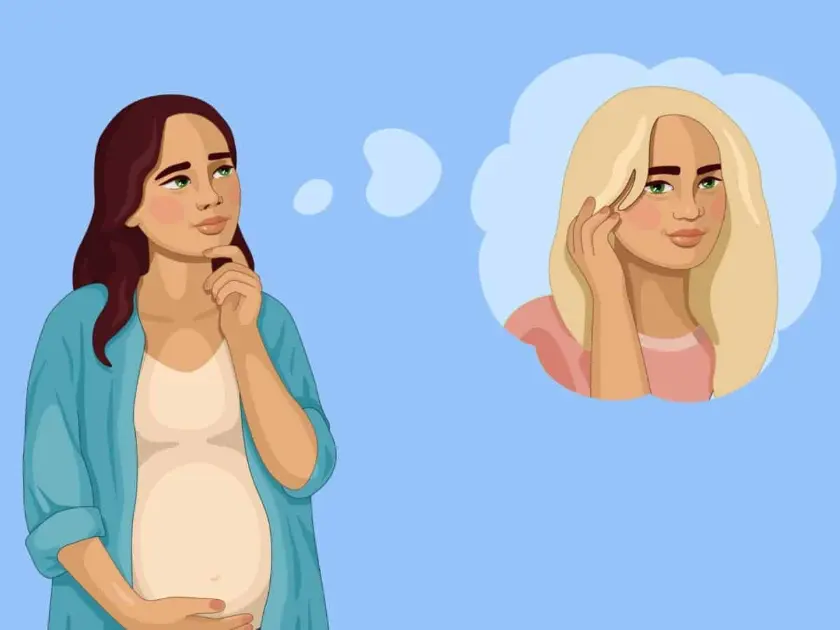
Can You Dye Your Hair When You’re Pregnant?
The American College of Obstetricians and Gynecologists says most experts do not consider hair dye toxic to a fetus and notes that only a small amount is absorbed through the scalp. MotherToBaby’s review similarly states that hair treatments used correctly are not expected to significantly increase the chance of birth defects.
| Question | Evidence-Aware Answer |
|---|---|
| Is ordinary personal hair dye use proven completely risk-free? | No. Available research is reassuring, but no cosmetic exposure can be described as zero risk for every pregnancy. |
| Does current evidence show that correctly used hair dye causes birth defects? | Current reviews do not suggest a significant increase in birth defects from normal use. |
| Must everyone wait until the second trimester? | No universal rule requires this. Some people choose to wait until after the first 12 weeks as an extra precaution. |
| Can highlights reduce scalp exposure? | Yes. Techniques that keep the product on the hair shaft rather than the scalp reduce direct skin contact. |
| Does “ammonia-free,” “natural,” or “vegan” guarantee pregnancy safety? | No. These labels do not assess the complete formula, allergy potential, application method, or individual health circumstances. |
If your pregnancy is medically complicated, your scalp is damaged, you have had a previous dye reaction, or you are worried about a specific product, ask your healthcare professional for advice based on your circumstances.
Understanding Hair Dye Safety During Pregnancy
From my years in hair color manufacturing, the central issue is exposure level — not blanket fear. During normal personal use, only a small amount of dye passes through healthy, intact skin. Still, product selection, scalp condition, and how you apply color all play a meaningful role.
How Scalp Absorption Actually Works
Your scalp is not a sponge. Under normal conditions, healthy skin absorbs only a small fraction of any applied hair dye. That’s why most experts do not classify standard hair coloring as high risk during pregnancy.
That said, absorption can increase in specific circumstances — broken or irritated skin, prolonged contact time, unusually large application areas, or very frequent use. Techniques like highlights and balayage naturally reduce this variable because the product never contacts the scalp directly.
Ingredients Worth Paying Closer Attention To
Not every dye ingredient demands concern, but a handful deserve extra scrutiny during pregnancy:
- Ammonia can irritate the nose, throat, and skin, particularly in poorly ventilated spaces.
- PPD (p-phenylenediamine) is a common dye chemical that can trigger skin reactions or allergic responses in some users.
- Poorly labeled or unregulated products may contain harmful contaminants, including heavy metals, especially those manufactured outside regulated markets.
- Formaldehyde-releasing straighteners carry a different and more significant risk profile than standard hair color — more on that below.
The practical takeaway: choose a trusted, clearly labeled brand, do a patch test, wear gloves, and always color in a well-ventilated room. If your scalp is irritated or broken, wait and consult your doctor before proceeding.
First Trimester: How to Approach the Early Weeks
A cautious approach during the first trimester is completely reasonable. This is the most active phase of early fetal development, and while the risks linked to standard hair dye use appear low, many medical professionals recommend waiting until after the first 12 weeks as a sensible precaution.
Why Most Doctors Suggest Waiting
The American College of Obstetricians and Gynecologists (ACOG) states that most experts do not consider hair dyes toxic to a developing fetus. The MotherToBaby organization similarly notes that under normal use, only minimal amounts of hair color ingredients are absorbed through healthy skin.
So why do clinicians still recommend holding off? The first trimester is simply a critical developmental window, and caution costs very little. The UK’s National Health Service (NHS) notes that many women choose to delay coloring hair during pregnancy until after this period — not because the risk is proven high, but because peace of mind matters.
There’s also a practical consideration: your scalp often becomes significantly more sensitive during early pregnancy. If the skin is irritated or reactive, absorption increases — along with physical discomfort.
Temporary Solutions for Root Regrowth
If your roots are showing, there are simple, low-fuss options to bridge the gap without reaching for a dye box:
- Root concealer sprays for quick, washable coverage
- Touch-up powders for targeted hairline concealment
- Adjusting your part to make regrowth less visible
- Soft waves or added texture to blend old and new growth
- Headbands, scarves, or hats on low-energy days
If you’re still eager for color, consider waiting until the second trimester and opting for highlights or lowlights — techniques that, as MotherToBaby notes, typically involve no direct contact between the formula and your scalp.
Second Trimester: The Most Common Window for Coloring Hair While Pregnant
By the second trimester, most women feel considerably more like themselves. Nausea typically eases, energy returns, and leading medical guidelines continue to classify normal, properly used hair dye as low risk. For these reasons, this is widely seen as the most comfortable, practical window for hair coloring treatments during pregnancy.
Why This Trimester Works Well
Many of my clients describe an exponential shift in how they feel once they move past those early weeks. The NHS also notes that some women specifically choose to wait until after the 12-week mark before considering hair color — and when they do, the second trimester often hits that balance of safety-minded timing and physical readiness.
One important note: pregnancy hormones can affect how your hair responds to color, even a formula you’ve used for years. The NHS recommends doing a strand test before any application to avoid unexpected results. Even with optimal timing, the standard precautions still apply.
Best Hair Coloring Services for the Second Trimester
If you want the most cautious approach, prioritize services that minimize direct scalp contact. According to MotherToBaby, techniques like highlights, balayage, lowlights, and frosting keep the dye formula away from the scalp, meaningfully reducing absorption.
Good options to discuss with your stylist include:
- Highlights or lowlights: Minimal scalp contact, maximum versatility
- Balayage: A soft, natural grow-out that reduces the need for frequent touch-ups
- Mid-length gloss or toner: Applied to lengths and ends only, with the scalp fully avoided
- Root blending instead of full coverage: A lower-maintenance solution that works with natural regrowth
If you prefer an all-over color, keep the process tightly controlled. Use a professional salon or a well-ventilated room at home, limit processing time to the manufacturer’s minimum recommendation, and rinse thoroughly afterward.
Questions to Ask Before Your Appointment
A good stylist will welcome these questions — and if they don’t, that’s useful information too. Before your appointment, let the salon know you’re pregnant. The NHS specifically recommends requesting a patch test even with products you’ve used before.
During your consultation, ask:
- Can we choose a service that keeps dye off my scalp?
- Can you do a patch test before the full service?
- Is the space well-ventilated, and can we keep processing time short?
- Are there any strong-fume treatments happening nearby that I should avoid?
Stay attuned to how you feel throughout the service. If fumes feel overwhelming, speak up. MotherToBaby notes that simply smelling fumes is not the same as high-level chemical exposure — but your physical comfort throughout pregnancy still matters and should never be dismissed.

Third Trimester: What Changes in the Final Weeks
Coloring hair in pregnancy’s third trimester remains generally considered safe, but your physical comfort becomes the dominant factor. Long salon appointments are harder to manage as your due date approaches, and your body simply has different needs than it did in month four.
Comfort, Timing, and Ventilation
Sitting for extended periods becomes genuinely uncomfortable in late pregnancy. Your center of gravity shifts, backaches intensify, and breathing can feel heavier. Before booking any appointment, honestly evaluate the environment and the service length.
Practical adjustments to consider:
- Shorter services: Partial highlights or a gloss treatment rather than a full-head color
- Chair support: Ask whether the salon has supportive cushions available
- Fresh air: Prioritize well-ventilated spaces — late-pregnancy breathing makes good airflow more important, not less
Why Patch Testing Still Matters Late in Pregnancy
Even if previous color applications went smoothly, don’t skip this step. Pregnancy hormones continue fluctuating right up until delivery, and the skin can develop new sensitivities at any stage. In our manufacturing testing labs, late-onset reactions are not uncommon. A 48-hour patch test before any application takes minutes and can prevent a serious allergic response.
Making the Appointment Easier
A little preparation genuinely helps. Don’t hesitate to ask for what you need — professional stylists want you comfortable.
- Bring water and a light snack to keep blood sugar stable during processing
- Take stretch breaks and stand up periodically during longer appointments
- Wear loose, breathable clothing to avoid overheating
- Schedule a morning slot when salons tend to be quieter and better ventilated
Choosing the Right Hair Dye Formula During Pregnancy
Formula choice has always mattered in my work — and during pregnancy, it matters more. ACOG confirms that scalp absorption under normal use is small, but that doesn’t mean all products are equal. The real differences come down to comfort, ingredient quality, and manufacturing standards.
Zero-Ammonia Formulas
Ammonia-free products can make the coloring process noticeably more tolerable. Ammonia has a sharp odor and, at higher exposure levels, can irritate the eyes, throat, and respiratory tract. Lower-odor formulas are often easier to tolerate, especially for those with heightened pregnancy sensitivity to smell.
That said, ammonia-free does not mean risk-free. Other color chemicals, fragrances, and allergens may still be present. The FDA specifically flags PPD as a potential trigger for reactions. Patch testing remains essential regardless of which formula you choose.
Vegan and Plant-Derived Options
These sound appealing, and they can be a reasonable choice — but the label alone isn’t a safety guarantee. The FDA is clear that an ingredient’s origin does not automatically determine its safety. Natural does not always mean gentler.
Pure henna can be one option worth exploring, but read the ingredient list carefully. The FDA notes that henna is approved only as a hair dye in the US, and warns that “black henna” products frequently contain PPD, which can cause serious skin reactions. Transparency in ingredients matters far more than front-label marketing.
Manufacturing Quality and What to Look For
This is where real product quality reveals itself. In the US, most cosmetics are not FDA-approved before they reach shelves — the safety burden falls on the manufacturer. When evaluating any hair dye during pregnancy, these are the markers worth checking:
- GMP compliance, ideally aligned with ISO 22716, which covers production, control, storage, and shipment
- Full ingredient disclosure in plain, verifiable language
- Clear patch-test instructions on the label
- Appropriate warning statements about safe use
- Batch traceability for quality tracking
When in doubt, choose the product with more transparent labeling and stronger documented manufacturing practices.

A Practical Pregnancy Hair-Color Checklist
This new checklist turns the evidence into a simple routine for occasional personal use.
Before Coloring
- Ask your healthcare professional if your pregnancy or health history makes the decision less straightforward.
- Read the complete product directions, cautions, and ingredient list.
- Follow the product’s allergy alert or skin-test instructions and perform a separate strand test.
- Do not color over cuts, scratches, sunburn, eczema, psoriasis flare-ups, infection, or a painful scalp.
- Choose a well-ventilated room or salon.
- Prepare gloves, a timer, clean water, and a towel before mixing anything.
- Do not mix different hair dye products unless the instructions specifically identify them as one system.
During Coloring
- Wear gloves throughout mixing, application, and rinsing.
- Keep the product away from the eyes, eyebrows, and eyelashes.
- Use the instructed amount and do not exceed the maximum processing time.
- Avoid eating or drinking while applying the product.
- Stop immediately if you develop burning, a rash, swelling, breathing difficulty, dizziness, or feel unwell.
After Coloring
- Rinse the scalp and hair thoroughly as directed.
- Wash dye from the skin gently; do not use harsh solvents or abrasive scrubs.
- If color remains on the hairline, use the gentle methods in the guide to removing hair dye from skin.
- Monitor for delayed itching, rash, swelling, or blistering.
- Seek medical care for a significant reaction; breathing or throat symptoms require emergency help.
Salon vs. At-Home Coloring: Which Is the Better Choice?
Both can be done safely — the right answer depends on your circumstances.
When a Salon Makes More Sense
Professional salons offer a controlled, monitored environment. Stylists are trained in precise off-scalp application, can custom-mix gentler formulas on the spot, and handle proper rinsing without water running down your face. If you want balayage or a service that requires technical precision, a salon visit is usually the better option.
When At-Home Coloring Works
For simple touch-ups, at-home application offers flexibility — you can work around morning sickness, control ventilation yourself, and take breaks as needed. High-quality home kits have improved significantly, and for a straightforward root application, they can be a practical choice.
If you do color at home during pregnancy, avoid these common mistakes:
- Skipping the patch test — always check for reactions first
- Working in a closed bathroom — ventilation is non-negotiable
- Leaving dye on beyond the recommended time — hormones can affect processing speed
- Skipping gloves — wear them every time, without exception
Hair Treatments to Avoid Entirely During Pregnancy
Standard hair dye is one conversation. Certain other chemical services are a different one entirely.
Keratin Treatments and Chemical Relaxers
These deserve the most caution. OSHA has warned that some smoothing products can release formaldehyde when heat is applied, creating significant airborne exposure. Compared to basic coloring, these treatments produce more fume-related irritation to the eyes, nose, throat, and scalp. The professional consensus is consistent: postpone keratin treatments and chemical relaxers until after delivery.
Is Bleaching Hair Safe During Pregnancy?
Bleaching hair while pregnant is not categorized alongside keratin treatments in terms of risk, but it still calls for caution. MotherToBaby notes that bleach products can irritate the skin, nose, and throat, while ACOG confirms that only a small amount of chemical is absorbed through the scalp under normal use.
In practical terms, bleaching hair in pregnancy — particularly on a sensitive or already-irritated scalp — is something I’d approach conservatively. If you’re considering it, discuss it with your doctor first, ensure the space is well-ventilated, and do a thorough patch test.
When to Ask Your Midwife or Doctor Before Coloring
Seek personalized advice before coloring if any of the following applies:
- Your obstetrician or midwife has advised you to limit a particular exposure.
- You have a high-risk or medically complicated pregnancy.
- You have asthma, severe fragrance sensitivity, or a condition affected by fumes.
- Your scalp has eczema, psoriasis, infection, cuts, burns, or significant irritation.
- You previously reacted to hair dye, PPD, or a black henna tattoo.
- You are using prescription treatment on the scalp.
- You work with hair chemicals frequently rather than using them occasionally.
- You are considering a product with unclear ingredients or a heat-activated smoothing service.
If a reaction develops, stop the product and follow its first-aid instructions. Seek urgent help for swelling of the mouth or throat, difficulty breathing or swallowing, severe dizziness, or fainting.
Final Thoughts
Current evidence is generally reassuring about occasional hair dye use during pregnancy when a product is used correctly on a healthy scalp. Some people choose to wait until after the first 12 weeks, but the second trimester is not officially designated as the only safe time to color.
The most useful precautions are straightforward: use a clearly labeled product, follow the allergy and strand-test instructions, wear gloves, work in good ventilation, avoid damaged skin, respect the processing time, rinse thoroughly, and stop if you feel unwell. When personal health factors make the decision uncertain, ask the clinician who knows your pregnancy.
FAQ
Is it safe to dye hair for pregnant women?
Yes, it is generally safe to dye hair for pregnant women. A healthy scalp absorbs only a microscopic amount of hair dye, which medical experts (including ACOG) state is highly unlikely to harm a developing baby. Always ensure proper ventilation and consult your doctor first.
What is the safest trimester to dye hair for pregnant clients?
The safest time to dye hair for pregnant individuals is during the second trimester (after week 13). Delaying color until this stage protects the critical first 12 weeks of fetal development and allows early pregnancy symptoms, like scent sensitivity, to pass.
Which techniques are safest to dye hair for pregnant women?
When you dye hair for pregnant clients, the safest choices are off-the-scalp techniques like foil highlights, lowlights, or balayage. These methods apply color directly to the hair shaft without touching the skin, entirely eliminating the risk of chemical absorption through the scalp.
What ingredients should be avoided when you dye hair for pregnant women?
If you dye hair for pregnant women, use zero-ammonia formulas to avoid harsh fumes that irritate the respiratory system. Additionally, avoid known allergens like PPD. Always perform a 48-hour patch test first, as pregnancy hormones can easily trigger brand-new skin sensitivities.
Can you use bleach or chemical straighteners instead of standard hair dye during pregnancy?
Bleach requires extreme caution and should only be used for off-the-scalp highlights. However, you must completely avoid chemical straightening and keratin treatments. Unlike standard products used to dye hair for pregnant women, these smoothing treatments can release hazardous formaldehyde gas when heated.