One of the more striking things I’ve observed across my years at Keronhair is how little guidance most consumers receive about hair coloring frequency — despite it being one of the most consequential decisions they make for their hair’s long-term health. Products are marketed on vibrancy, on coverage, on how fast they work. Rarely on how often they should actually be used.
How often should you dye your hair is a question that deserves a real, considered answer — one grounded in hair science rather than marketing. This guide is exactly that: a practical, honest breakdown of what appropriate dyeing frequency looks like across different hair types, color goals, and life stages, from someone who has spent a career formulating the products behind the process.
How Often Should You Dye Your Hair?
As a general rule, you should wait four to six weeks between dye sessions. The exact timeline depends on the formula. Gentle semi-permanent colors can be refreshed every two to four weeks. Standard permanent root touch-ups require a four-to-six-week wait, while aggressive bleaching demands at least six to eight weeks to prevent structural breakage. Always prioritize coloring new root growth to avoid re-processing previously treated lengths.
Why There’s No Single Universal Answer
This is the part where I have to resist the temptation to give you a clean, simple number — because the honest answer is that no such number exists. Your ideal hair coloring frequency depends on a combination of factors that are entirely personal to you: your hair type and porosity, the condition of your strands, your color goals, and the specific formula you’re using.
A person covering stubborn gray hair with permanent color every three to four weeks is operating on a completely different schedule than someone refreshing a semi-permanent fashion shade every six to eight weeks — and both can be perfectly appropriate. What’s not appropriate is applying either formula more often than your hair can reasonably handle.
The General Rule of Thumb by Hair Dye Type
Across the different color categories, recommended intervals vary considerably. As a practical starting point:
- Permanent hair dye — every four to six weeks for root touch-ups; full-head applications should be spaced at least eight weeks apart to limit cumulative chemical exposure
- Demi-permanent color — every four to six weeks, given the lower developer volume and gentler processing
- Semi-permanent color — every two to four weeks is generally safe, since the formula contains no developer and doesn’t structurally alter the hair
- Highlights and balayage — every eight to twelve weeks, depending on how defined the grow-out line is and how naturally the technique blends at the root
These are guidelines, not rules — and your hair’s individual response to processing should always take precedence over any general schedule.
What Happens When You Dye Your Hair Too Frequently
From a manufacturing standpoint, this is something I feel strongly about communicating clearly: repeated chemical processing without adequate recovery time compounds damage in a way that’s genuinely difficult to reverse. When color is applied too frequently, the cuticle — the hair’s outermost protective layer — doesn’t have sufficient time to reseal and stabilize between sessions.
The most common consequences are chronic dryness and brittleness, significant loss of elasticity, increased breakage particularly around the mid-shaft and ends, and increasingly uneven color results as the compromised cuticle absorbs and releases pigment unpredictably. Scalp sensitivity is also worth noting — repeated chemical exposure can cause irritation and inflammation that lingers well beyond the application itself.
The underlying point is this: how often it’s safe to dye your hair is determined by how much time you give the hair and scalp to recover between sessions. Respecting that interval isn’t just a cautious recommendation — it’s the foundation of any color routine designed to last.
How Often Should You Dye Your Hair Based on Color Type
One of the first things I explain to anyone asking about dyeing frequency is that the formula in the bottle matters just as much as how often you use it. At Keronhair, we formulate across multiple color categories — and the structural demands each one places on the hair are genuinely different.
Permanent Hair Dye: Recommended Timing Between Sessions
Dying hair permanently is the most chemically intensive option in any lineup, and its application frequency should reflect that. Because permanent color uses both ammonia and a developer to lift the cuticle and deposit pigment into the cortex, the hair needs adequate recovery time between sessions to restabilize.
For root touch-ups — which only target new growth — every four to six weeks is a reasonable and widely accepted interval. Color should only be worked through the lengths and ends when they genuinely need refreshing, not as a routine part of every root service. Full-head permanent applications should be spaced at least eight to ten weeks apart. Anything more frequent than that compounds cuticle stress faster than the hair can realistically recover from. And yes — permanent hair dye is damaging when overused, which is precisely why application precision matters so much.
Semi-Permanent Color: How Frequently Can You Reapply?
This is where the conversation changes considerably. Semi-permanent formulas contain no ammonia and no developer, which means they don’t lift the cuticle or alter the hair’s internal structure. From a manufacturing standpoint, this makes them significantly safer to reapply on a shorter cycle than permanent alternatives.
A two-to-four-week reapplication window is generally appropriate for most hair types, with highly porous or bleached hair sitting closer to the four-week end of that range — not because of damage risk, but because overly porous strands can absorb pigment unevenly when color is layered before the previous application has adequately faded. For those using semi-permanent as a toning tool between permanent services, a weekly color-depositing treatment is often a gentler and more effective alternative to full reapplication.
Highlights and Balayage: Why the Timeline Is Different
Highlights and balayage occupy a category of their own, and their maintenance timeline is driven by aesthetics as much as hair health. Because both techniques are applied selectively rather than root-to-tip, the grow-out is naturally softer and less defined than a full-color application — which buys considerably more time between appointments.
For most people, every eight to twelve weeks strikes the right balance between maintaining the look and avoiding over-processing previously lightened sections. Balayage, with its intentionally blended, graduated finish, often stretches to sixteen weeks without looking noticeably grown out. Highlights with a more structured, high-contrast placement typically need refreshing closer to the eight-week mark. Either way, bleach doesn’t leave the hair the same way it found it — reapplying to already-lifted strands too soon is one of the more reliable routes to breakage I see from a formulation and hair health perspective.
How Hair Type and Condition Affect Your Dyeing Schedule
One of the most revealing parts of working in hair care manufacturing is seeing how identically formulated dyes react completely differently depending on the canvas. Your hair’s physical diameter and current health are major factors in dictating your personal coloring timeline.
Fine and Damaged Hair: Why Less Is More
Fine hair has a narrower diameter per strand, which means a smaller, more vulnerable cuticle with less natural resilience to repeated chemical exposure. When existing damage enters the equation — from previous coloring, heat styling, or environmental stress — that vulnerability compounds quickly. The cuticle is already partially lifted and uneven, which creates a predictable chain of problems:
- Color penetrates faster and processes less predictably, making consistent results harder to achieve
- Pigment exits the strand sooner, creating the illusion that more frequent reapplication is the solution — when it’s often the cause
- Repeated exposure accelerates breakage, particularly at the mid-shaft and ends
If your hair is significantly compromised, a period of color abstinence paired with a bond-repair or keratin treatment will do more for your long-term results than any reapplication schedule.
Thick, Coarse, or Virgin Hair: More Resilient but Not Invincible
Thicker, coarser strands have a genuine structural advantage — a denser cuticle and greater mass per strand means higher natural tolerance for processing. Virgin hair adds further resilience, with a compact, undisturbed cuticle that absorbs color gradually and fades evenly.
That said, resilience isn’t immunity. The slower onset of damage in thick hair can create a false sense of security, encouraging a more aggressive schedule than the hair actually warrants. Treat that natural resilience as an opportunity to build a sustainable routine — not as an invitation to push limits.
The Role of Professional Formulations in Minimizing Hair Damage
There’s a conversation I find myself returning to often — both internally at Keronhair and with the broader industry — about what separates a formula that colors hair from one that genuinely respects it. The difference isn’t always visible on the packaging, but it shows up clearly over time. How often to dye hair safely is inseparable from what you’re dyeing with.
Why High-Quality, Natural Ingredients Matter for Color Longevity
Professional-grade formulations earn their place not just through performance on application day, but through what they leave behind afterward. At Keronhair, the shift toward naturally derived ingredients wasn’t a marketing decision — it was a direct response to what we kept observing in compromised hair: synthetic fillers, harsh surfactants, and unstable chemical compounds were shortening the functional lifespan of both the hair and the color deposited in it.
Hair colored with a well-formulated, ingredient-conscious product holds its tone longer, requires less frequent reapplication, and maintains structural integrity across more color cycles than hair processed with lower-grade alternatives. How long hair colouring lasts is directly tied to formula quality — not just aftercare habits.
What to Look for on a Hair Color Ingredient Label
Most people scan a color box for shade and processing time — the ingredient list rarely gets a second glance. For anyone serious about minimizing damage between sessions, it’s worth knowing what to look for and, equally, what to avoid:
- Seek out keratin derivatives, amino acids, natural oils such as argan or jojoba, and plant-based antioxidants — these signal a formula built with hair integrity in mind
- Approach with caution any product leading with sodium lauryl sulfate, high-concentration ammonia, or a long chain of unidentified synthetic stabilizers
The ingredient list tells you more about how your hair will feel six weeks from now than the shade swatch ever will.
At-Home vs. Salon Dyeing: Does It Change How Often You Should Color?
It does — and more significantly than most people realize. Where your color is applied and what formula is used have a direct bearing on how much recovery time your hair needs between sessions.
Why Salon Formulas Allow for Different Timing Than Box Dye
Professional formulas are developed with controlled, precise application in mind. At Keronhair, the developer volumes, ingredient concentrations, and conditioning agents we build into professional-grade products are calibrated to deliver results with the least possible structural disruption. Box dye, by contrast, is engineered for one-size-fits-all convenience — which typically means higher ammonia concentrations and stronger developer volumes than many hair types actually need. Over repeated applications, that excess chemical load accumulates. A client using a professional formula applied by a trained colorist can often maintain a tighter schedule than someone self-applying a box dye at home — not because salon color is inherently gentler, but because precision of application reduces unnecessary exposure.
The Risks of Frequent At-Home Dyeing Without Professional Guidance
The most common issue I see with frequent at-home coloring isn’t the product itself — it’s the application pattern. Without professional guidance, most people fall into habits that compound damage faster than the hair can recover:
- Applying color root-to-tip every session, re-processing already-colored lengths unnecessarily
- Overlapping applications without accounting for existing porosity differences between roots and ends
- Switching between box dye brands or tones without understanding how formulas interact with residual pigment
Any one of these done occasionally is unlikely to cause lasting harm. Done consistently over months, the cumulative effect shows up as uneven color, chronic dryness, and structural weakness that’s genuinely difficult to reverse.
How to Build a Safe Hybrid Color Routine at Home and In-Salon
A hybrid approach — professional services for full-color applications and targeted at-home maintenance in between — is what I recommend most often. It balances cost, convenience, and hair health more effectively than either extreme alone. In practice, this looks like:
- Scheduling full professional color services every eight to twelve weeks, depending on formula type
- Using salon-recommended, professional-grade products for any at-home touch-ups rather than defaulting to box dye
- Reserving at-home applications strictly for root maintenance, never re-processing the lengths unless absolutely necessary
The goal is to keep the hair in a condition where professional color — whenever it’s applied — can do its best work.
How to Touch Up Roots Without Reprocessing the Lengths
This new section addresses one of the most important ways to reduce unnecessary repeat exposure.
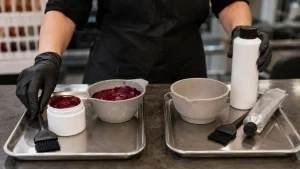
- Identify the true regrowth. Separate the uncolored root from the previously processed band before mixing the product.
- Use clean sections. Work in small, controlled sections so the application stops at the line of demarcation.
- Choose enough product and the correct tools. Poor saturation at the root can tempt you to drag color through the lengths.
- Follow the root-touch-up directions. Do not copy timing from another brand or an earlier formula.
- Refresh lengths only when directed and needed. A separate gloss or deposit-only product may sometimes be more appropriate than permanent color.
- Stop if the scalp burns intensely or swelling develops. Rinse according to the safety directions and seek appropriate care.
Proven Tips to Extend the Life of Your Hair Color
The application itself is only half the story. What happens in the weeks that follow determines whether your color stays vibrant or fades faster than it should. Most of the factors driving premature fade are entirely within your control:
- Wash less frequently — every shampoo is a minor fade event; stretching wash days with dry shampoo makes a measurable difference over time
- Use cooler water — hot water aggressively lifts the hair cuticle and accelerates color loss; rinsing with lukewarm or cool water keeps the cuticle sealed
- Switch to sulfate-free, color-safe shampoo — traditional sulfates strip artificial pigment efficiently; gentler surfactants with natural conditioning agents preserve both color and moisture
- Never skip heat protection — thermal damage from blow dryers and flat irons doesn’t just cause breakage; it degrades color molecules directly; always apply a heat protectant before hot tools
Conclusion
Permanent root color is commonly maintained every 4–6 weeks, while highlights and balayage often allow 8–12 weeks or longer—but these are planning ranges, not universal safety rules. Semi-permanent and demi-permanent color should be refreshed according to the label, fading, pigment buildup, and hair condition.
Before every session, check the scalp, assess breakage and elasticity, identify the previous chemical service, and determine whether the new application will overlap old color. When the hair or scalp is showing warning signs, postponing is more useful than following a calendar.
Frequently Asked Questions
How long should you wait in between coloring your hair?
You should generally wait four to six weeks between coloring sessions. This recovery window allows the hair cuticle to restore its natural moisture balance and lipid barrier, preventing structural damage and chemical breakage.
Can I dye my hair if I’m using minoxidil?
Yes, but don’t apply them on the same day. Wash the minoxidil out completely before your coloring session to avoid unexpected chemical reactions and scalp irritation, and wait at least 24 hours after dyeing before resuming your minoxidil routine.
What is the healthiest way to color your hair?
The healthiest approach is to use ammonia-free, semi-permanent or demi-permanent glosses, which deposit color without structurally altering the hair shaft. If permanent color is required, prioritize professional-grade formulations with low-volume developers and natural conditioning agents.
Can I dye my hair if I have scalp dermatitis?
No — wait until your scalp is completely healed. Applying oxidative dyes or developers during an active dermatitis flare-up can cause severe burning, exacerbate inflammation, and potentially lead to chemical burns or infection.
Is it okay to dye my hair twice in 2 days?
No. Applying permanent dye or bleach twice within 48 hours will cause irreversible structural damage and extreme breakage. For urgent color corrections, use a gentle, deposit-only semi-permanent color or consult a professional colorist for a safe, targeted fix.