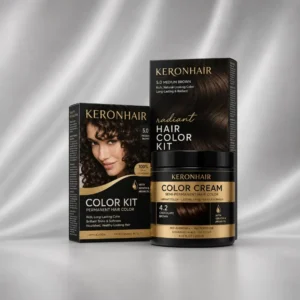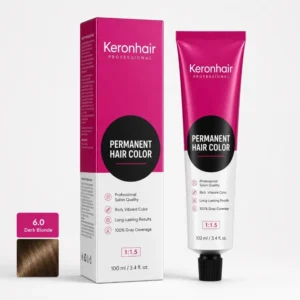
The best place to buy hair dye depends on what you need. Choose the brand’s official website or an authorized retailer when authenticity is the priority; a beauty-supply store when you need a broader shade range and compatible accessories; a drugstore, grocery store, or mass retailer for a standard box kit today; a direct-to-consumer service for guided shade selection; and a professional distributor only if you meet its purchasing requirements.
This guide compares ten practical U.S. shopping options, explains who each one suits, and shows you how to check the seller, package, shade, developer, and return policy before paying. Retail inventory, delivery services, promotions, and professional-access rules can change, so verify the current terms for your location.
Why Where You Buy Hair Dye Matters More Than You Think
An authentic, unopened product does not become better or worse simply because it sits on a different retailer’s shelf. The buying channel matters because it can affect seller authorization, product traceability, storage history, packaging condition, shade availability, access to compatible components, and your options if something arrives damaged.
From our manufacturing perspective at Keronhair, the label “professional” describes a product system and its intended use—not a guarantee that a tube purchased from a restricted distributor will be safer or easier for an untrained user. A professional color may require a separate developer, a precise mixing ratio, technical shade knowledge, and application training. A complete retail kit may be the more appropriate choice for a straightforward home touch-up.
Before choosing a store, identify whether you need temporary, semi-permanent, demi-permanent, permanent color, or lightener. Our guide to the different types of hair color explains the distinctions. A deposit-only color cannot perform the same job as a lightener, and a product intended for one developer should not be paired with a random alternative because it is sold nearby.
Top Online Destinations for Hair Dye
If you’ve ever stood in a drugstore aisle squinting at two near-identical boxes trying to tell “medium golden brown” from “medium warm brown,” you already understand why so many people now choose to buy hair dye online. The selection is exponentially wider, real customer photos replace the idealized models on packaging, and competitive pricing makes the switch an easy one.
E-Commerce Giants and Marketplaces
Platforms like Amazon, Ulta, and Sally Beauty are among the best online hair dye stores for anyone who values convenience, variety, and speed. Here’s what makes them worth bookmarking:
- Shipping speed: Expedited delivery puts your chosen shade at your door within 24 hours — a genuine advantage for last-minute color decisions.
- Verified customer reviews: User-submitted before-and-after photos are often more informative than any brand description. They show how a color actually lifts on real hair, not model hair.
- Comparison shopping: In a single session, you can evaluate classic household brands alongside newer indie labels, compare developer strengths, and read side-by-side reviews — something no physical shelf can replicate.
Direct-to-Consumer Custom Color Brands
For anyone who has ever grabbed a box off a shelf and ended up with a shade three tones off from what the model was wearing, direct-to-consumer (DTC) brands are a revelation. Services like Madison Reed and eSalon function more like a digital colorist than a traditional retailer — and they’re widely considered among the best places to buy hair dye for people with specific, nuanced color goals.
What sets them apart:
- Personalized shade matching: A short quiz accounts for your current hair color, texture, gray percentage, and prior treatments before any formula is mixed.
- Custom-blended color: Rather than selecting from a fixed range, your exact formula is prepared specifically for you.
- Subscription delivery: Auto-ship options send your kit on a schedule synced to your regrowth cycle, so you’re never scrambling at the last minute.
The 10 Best Websites to Buy Hair Dye Online
This is a channel comparison, not a permanent ranking. Product ranges, local inventory, delivery speeds, rewards, and access policies change. Always confirm the current product page and store terms before purchasing.
1. The Brand’s Official Website — Best Starting Point for Authenticity
Begin with the official website of the hair color brand you want. Many brands sell directly, link to authorized retailers, or provide a store locator. This route is especially useful when professional products are commonly diverted into unauthorized channels or when similar packaging is used across regional formulas.
- Best for: confirming the current product, shade chart, instructions, authorized sellers, and customer-support contact.
- Check before buying: whether the brand sells directly in your country, whether the linked seller is authorized for that specific product line, and whether the formula or shade name differs by region.
- Limitation: the brand site may not offer same-day pickup, and some professional lines may direct consumers to a salon instead of selling the product.
2. Sally Beauty — Best for Consumer-Accessible Color and Accessories
Sally Beauty carries box kits, semi-permanent colors, lighteners, toners, developers, bowls, brushes, gloves, and aftercare. Its online store also lets shoppers check selected local inventory and pickup options.
- Best for: comparing more color formats and accessories than a typical drugstore carries.
- Check before buying: whether the color is ready to use, supplied as a complete kit, or requires a brand-specific developer and mixing ratio.
- Limitation: access to a product does not mean it is suitable for every at-home technique; staff knowledge and local inventory can vary.
3. Ulta Beauty — Best for Combining Color, Aftercare, and Pickup
Ulta Beauty is useful when you want hair color, color-safe care, treatment products, and beauty purchases in one order. It carries a mix of consumer hair color and color-depositing products, with product availability varying by store and region.
- Best for: shoppers who value online filters, store pickup, and consolidated beauty purchases.
- Check before buying: whether the selected store has the exact shade and whether a product is actual hair dye, a temporary cover-up, a gloss, or an aftercare product.
- Limitation: it does not provide every professional color line or every shade within a line.
4. Target — Best for Widely Available At-Home Kits
Target’s hair color category combines common permanent kits, root touch-ups, semi-permanent colors, glosses, and temporary products. Many locations support order pickup or local delivery, subject to stock.
- Best for: straightforward consumer kits and convenient local fulfillment.
- Check before buying: the exact shade number, package contents, quantity needed for your hair length and density, and pickup substitutions.
- Limitation: shelf space may favor popular natural shades over specialist tones or full professional systems.
5. Walmart — Best for Broad Local Availability
Walmart offers familiar consumer color brands online and across many physical stores. It can be practical for routine root maintenance or replacing a standard kit, but marketplace listings require an extra seller check.
- Best for: common shades, broad geographic coverage, and pickup where available.
- Check before buying: whether the listing is sold by Walmart or by a marketplace seller, and whether substitutions are allowed.
- Limitation: online assortment and seller responsibility can differ from the stock held by a local Walmart store.
6. CVS or Walgreens — Best for Last-Minute Drugstore Color
Large pharmacy chains such as CVS and Walgreens commonly stock popular permanent box colors, root touch-ups, gray-coverage products, and temporary options. Local inventory is smaller than a specialty beauty retailer but can be convenient when you need an unchanged, familiar shade.
- Best for: same-day purchases of mainstream consumer products.
- Check before buying: package seals, box damage, the shade code rather than just the color name, and the store’s current pickup stock.
- Limitation: the range may not include specialized toners, vivid colors, or all complementary products.
7. Amazon — Best for Convenience When the Seller Is Verified
Amazon has a large selection, but the marketplace structure means the product page, fulfillment provider, and actual seller can be different entities. A familiar listing title is not enough to establish authorization or storage history.
- Best for: convenient reorders when the brand identifies Amazon or the specific storefront as an authorized route.
- Check before buying: the “sold by” field, official brand storefront, recent seller feedback, return eligibility, shade and size, seal condition, and lot information on arrival.
- Limitation: third-party listings may change sellers, merge reviews across variants, or use inaccurate product images.
8. eSalon — Best for Guided, Made-for-You Home Color
eSalon uses a questionnaire and colorist-supported process to recommend and prepare home hair color. It can help people who want more guidance than a fixed retail shade provides, especially for ongoing root maintenance.
- Best for: a guided shade process, personalized instructions, and optional scheduled delivery.
- Check before buying: how the service evaluates previous color, what photos or history it needs, how formula adjustments work, and how to pause or cancel repeat shipments.
- Limitation: remote guidance cannot physically assess scalp condition, breakage, porosity, or a complex color correction.
9. CosmoProf — Best for Eligible Licensed Professionals and Students
CosmoProf carries professional salon products, education, and color systems. Its official information states that professionals and students shop using license identification; it should not be presented as a general consumer retailer.
- Best for: eligible professionals building or replenishing a color bar.
- Check before buying: current license or student requirements, account eligibility, regional product access, resale terms, and system training.
- Limitation: many products are intended for trained professional use and may not be available to an unlicensed consumer.
10. SalonCentric — Best for Licensed Salon Professionals
SalonCentric is a wholesale beauty supplier for salon professionals, including hairstylists, barbers, and cosmetologists. Its account information requires eligible shoppers to register and provide professional credentials.
- Best for: licensed professionals seeking full salon color ranges, compatible developers, technical education, and business purchasing options.
- Check before buying: license eligibility, service area, account requirements, shipping restrictions, local line availability, and manufacturer education.
- Limitation: it is not a reliable recommendation for ordinary consumers searching for an unrestricted home-color store.
If you are comparing salon systems rather than consumer kits, our overview of professional hair color brands explains why the formula type, compatible developer, education, and authorized supply channel matter more than a “pro” label alone.
How to Check That a Hair Dye Seller and Product Are Trustworthy
Finding a listing is not the same as verifying that the product is appropriate, authentic, complete, and in usable condition. Use the following checks before ordering or opening a product.
- Start with the brand’s authorized-seller information. Use the official brand site, store locator, or customer service to confirm the retailer for the exact product line. Authorization can differ between a brand’s consumer and professional ranges.
- Identify the actual seller. On a marketplace, “fulfilled by” is not the same as “sold by.” Record the seller name before ordering and check it again at checkout.
- Match the complete product identity. Compare the product line, shade number, shade name, size, regional version, package image, and required developer. Color names can be similar while codes or formulas differ.
- Confirm what the package includes. A box kit may contain colorant, developer, gloves, and conditioner. A professional tube may contain color only. Never assume the listing includes the activator, tools, or aftercare.
- Inspect the product on arrival. Do not use a box with a broken seal, leakage, swelling, missing instructions, damaged components, mismatched lot information, or contents that differ from the listing.
- Check freshness and storage guidance. Follow printed dates, period-after-opening information, lot details, and brand guidance. If you are unsure whether an older product is usable, review the signs that hair dye may have gone bad.
- Read the return policy before opening. Hair dye and other personal-care products may have different return rules after the seal is broken. Save the order confirmation and photograph shipping damage promptly.
A very low price is not proof of a counterfeit, and a high price is not proof of authenticity. Seller authorization, traceability, intact packaging, accurate product information, and a workable return route are more useful checks.
Online vs. In-Store: Which Is Actually Better?
Neither channel wins in every situation. Choose based on product certainty, urgency, seller transparency, and the complexity of the color service—not a blanket claim that online is always cheaper or stores always provide expert advice.
| Decision factor | In-store purchase | Online purchase |
|---|---|---|
| Speed | Immediate if the exact item is in stock | Depends on stock, seller, location, and delivery service |
| Selection | Limited by local shelf space | Often broader, but some professional products are restricted |
| Package inspection | You can check seals and box condition before paying | You inspect only after delivery and may need to arrange a return |
| Shade comparison | Boxes can be compared together, but printed swatches remain approximate | Digital tools and photos are convenient but screen color is unreliable |
| Guidance | Staff support varies and is not the same as a colorist consultation | Brand instructions, chat, quizzes, and reviews vary in quality |
| Seller verification | Usually straightforward at a known retail chain | Requires extra care on multi-seller marketplaces |
| Returns | May be easier locally, subject to personal-care return rules | Depends on the seller, product condition, and shipping process |
Choose In-Store When
- You need an exact, familiar product today and have confirmed local stock.
- You want to inspect the seal, box, shade code, and package contents before buying.
- You need basic accessories and want to see whether they are compatible with the selected kit.
- You are eligible for a professional distributor and need salon quantities or system-specific products.
Choose Online When
- You are reordering a known shade from an official or authorized seller.
- You need a product or shade not consistently stocked in local stores.
- You want a direct-to-consumer color consultation or recurring delivery service.
- You need time to compare instructions, package contents, seller terms, and authorized channels without making an aisle decision.
What to Buy with Hair Dye—and When to Choose a Salon Instead
Check the Kit Before Adding Extra Products
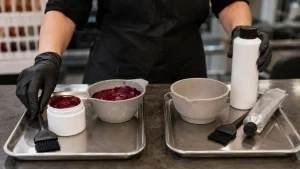
Read the full package contents first. A consumer kit may already include the required colorant, developer, gloves, applicator, and post-color treatment. A tube from a beauty-supply store may require separate products. Only buy the developer, ratio, and accessories specified by that exact manufacturer and line.
Depending on the instructions, you may also need sectioning clips, a timer, an old towel, a nonmetallic bowl and brush, protective covering for nearby surfaces, and enough product to saturate the intended area. Long or dense hair may require more than one identical kit; check the brand’s coverage guidance before application rather than diluting a mixture halfway through.
Before opening anything, follow the preparation and allergy-alert instructions in this at-home hair dye guide. Do not mix brands, replace the developer with a stronger one, save mixed oxidative color, or add shampoo, conditioner, oil, water, or heat unless the product explicitly directs it.
Consider a Professional Colorist When
- You want to lighten several levels, bleach previously colored hair, create highlights, or make a major dark-to-light change.
- Your hair has overlapping permanent color, bands, bleach damage, significant breakage, henna, metallic-salt color, relaxer, perm, or an uncertain chemical history.
- You need color correction, complex placement, a major tonal shift, or a result that depends on precise formula adjustment.
- Your scalp is irritated, broken, sunburned, or affected by an active skin condition.
- You have experienced a previous hair dye reaction or have medical concerns that require advice from a dermatologist or other qualified clinician.
A retail employee, product quiz, or online review cannot replace a physical assessment when hair or scalp condition makes the service complex. Postponing a purchase can be the most practical choice.
A Note on Hair Health Before You Color
Regardless of where to buy hair dye, the condition of your hair going into the process matters enormously. Color — particularly lightening treatments — places real stress on the hair shaft. According to the American Academy of Dermatology, performing a patch test 48 hours before full application is a non-negotiable step, especially for anyone with a sensitive scalp or a history of allergic reactions.
It’s also worth understanding what quality formulations look like at the manufacturing level. Keron Hair’s overview of professional hair dye production offers useful context on the ingredient standards and quality controls that separate reliable professional formulas from lower-grade alternatives — knowledge that’s genuinely helpful when evaluating products across different retail channels.
For deeper context on ingredient quality and what distinguishes a well-formulated professional color product from a standard box dye, Keron Hair is a consistently reliable reference.
Frequently Asked Questions
Can I buy hair dye at a regular grocery store?
Yes. Large chains like Kroger, Safeway, Walmart Supercenter, and Target stock a solid selection of drugstore brands — Clairol, Garnier, and L’Oréal — in their health and beauty aisles. Selection is more limited than a dedicated beauty retailer, but for a reliable, everyday shade in a well-known formula, your local grocery store is a perfectly practical option.
What is the best hair dye brand for beginners?
Clairol Nice ‘n Easy is widely considered the most beginner-friendly option — affordable, straightforward to apply, and consistently delivering natural-looking results. Garnier Nutrisse is another strong choice for its nourishing formula, while L’Oréal Excellence Créme offers dependable gray coverage with clear, easy-to-follow instructions.
Is box hair dye as good as salon hair dye?
They can produce similar results, but they work differently. Salon color is professionally mixed using separate developer and pigment, allowing for precise customization based on your hair type, starting shade, and target result. Box dye uses a standardized, pre-mixed formula. For simple all-over color in natural shades, box dye performs well. For color corrections, significant shade changes, or complex techniques, salon-grade formulas — or professional DTC services — are the more reliable choice.
Where can I buy hair dye for sensitive scalps?
Ulta Beauty, Amazon, and brand-direct websites are the best starting points. Look specifically for ammonia-free, fragrance-free, and hypoallergenic formulas. Brands like Manic Panic, Arctic Fox, and Overtone are widely used by people with sensitive skin or younger users. Regardless of how gentle a formula claims to be, always perform a patch test 48 hours before full application — it’s a step that’s easy to skip and occasionally costly not to take.
How do I know which developer strength to use with professional hair dye?
Developer volume determines how much the color lightens or deposits. A 10-volume developer deposits color with minimal lift; 20-volume covers gray and lifts one to two levels; 30 and 40-volume are for more significant lightening. Retailers like Sally Beauty and SalonCentric include detailed shade and developer charts that make this decision significantly less intimidating for home colorists.