Finding a hair dye manufacturer is the easy part. You can have a shortlist by the end of the afternoon.
Knowing how to buy hair dye in bulk from a manufacturer — properly, without expensive surprises — is a different skill. It’s about what happens after the shortlist: how a quote is actually built, who carries the legal responsibility once the goods land, what you’re really agreeing to when you sign off a sample, and why adding one developer to your range can double a freight quote.
This guide covers the order itself, start to finish: what to specify before you ask for pricing, how minimums and cost actually work, where the compliance obligation sits, and what to get in writing before production starts. It’s written for buyers placing a first bulk order, though the same checks hold at any volume.
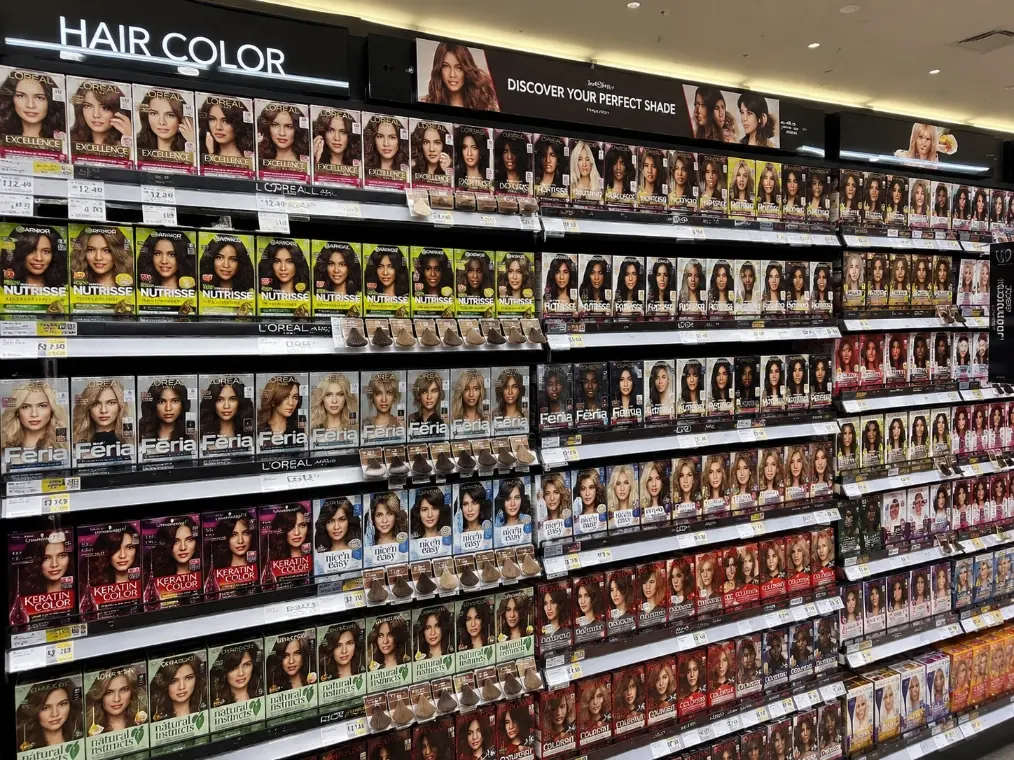
What “Buying Hair Dye in Bulk” Actually Means
The phrase covers three different transactions. They carry different costs, different timelines, and — this is the part buyers miss — different legal exposure. Get it wrong at the enquiry stage and you’ll waste weeks comparing quotes that were never comparable in the first place.
Wholesale distribution: buying finished, branded stock
You buy an existing product that already carries someone else’s brand, then resell it. The formula, packaging, labeling, and regulatory filings all belong to the brand owner. Your job is stock and margin.
It’s the fastest route and the least capital-intensive. It’s also the one with the least control: you can’t change the shade range, you’re competing on price with everyone else carrying the line, and you’ve got no claim on the customer relationship if the brand switches distributors.
Direct manufacturing is not the only route for a bulk purchase. If you are still choosing between branded restocking and an own-label project, our bulk hair dye sourcing-channel guide compares the alternatives before a factory inquiry.
Private label: an existing formula under your brand
You pick a manufacturer’s proven base formula and apply your own branding, labeling, and packaging. The factory handles production; you handle positioning and distribution.
The trade-off is speed against differentiation. You get to market quickly without funding formula development, but the underlying product may be available to other brands too. For most first-time hair color launches it’s the sensible entry point — our comparison of private label hair color versus custom formulation goes into the trade-offs properly.
OEM and custom development: your formula, built from a brief
The manufacturer develops a formula to your specification — target performance, sensory profile, claim set, price point. Development takes months rather than weeks and asks for a bigger commitment, but the resulting formula is yours in a way a stock base never is.
| Wholesale | Private label | OEM / custom | |
|---|---|---|---|
| Who owns the formula | Brand owner | Manufacturer | You (by agreement) |
| Who is the responsible person | Brand owner | You | You |
| MOQ basis | Case or value minimum | Units per shade | Units or batch weight |
| Typical timeline | Days to weeks | Weeks to months | Several months |
| Best for | Distributors, salon chains | New and scaling brands | Established brands seeking differentiation |
Look at the second row for a moment. The instant your name goes on the label, the regulatory obligation moves to you. That one shift drives most of what follows in this guide.
Decide What You’re Ordering Before You Contact a Factory
Vague enquiries produce vague quotes. “Please send pricing for hair dye” can’t really be answered, and what comes back will be a shade chart and a request for more information — which has just cost you a week.
A quotable brief needs five things settled.
Choose your color chemistry
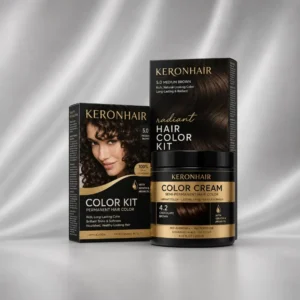
Hair color isn’t one product category. The chemistry drives the manufacturing process, the packaging, the shelf life, and the regulatory profile. Our guide to the different types of hair color covers this in more depth if you’re still weighing formats.
Permanent oxidative color
The workhorse of professional and retail color. Dye precursors penetrate the hair shaft and develop through an oxidative reaction with peroxide developer. This chemistry delivers grey coverage and genuine lift, and it’s the category most tightly bound to regulation because of the dye intermediates involved.
Demi-permanent and semi-permanent color
Lower or no ammonia, weaker or no developer, deposit-only or minimal lift. These formulas fade gradually instead of growing out with a hard line, which suits gloss and toning services. Simpler to manufacture, and development cycles are usually shorter.
If the bulk order is for semi-permanent color, qualify the supplier against the specific direct-dye format before discussing volume. Our semi-permanent manufacturing guide gives the product and service-model questions to put into that first inquiry.
Direct dyes, bubble color, and temporary formats
Pre-formed pigments that coat rather than penetrate. No developer, no oxidation. Fashion shades, color-depositing conditioners, and consumer-friendly bubble formats all sit here. Manufacturing is more straightforward, but color-fastness expectations are completely different and your marketing claims need to match.
If you want to see how these formats differ on the production floor, we’ve written about how hair dye is actually manufactured.
Decide whether developer is in scope
You can buy color cream on its own, or color plus matching developer. Looks like a small commercial decision. It isn’t — it changes your freight profile, which we’ll come back to.
Lock your shade range before requesting quotes
This is the most expensive mistake in hair color sourcing, and it catches almost everyone once. Shade count, not total volume, is what drives your minimum commitment. A 6,000-unit order across eight shades is a completely different manufacturing job from the same 6,000 units across thirty.
Decide your launch range before you ask for pricing, and be ruthless about it. You can always extend later.
Define fill size, tube spec, and secondary packaging
Tube size, material, closure type, decoration method, and carton format all sit inside the unit price. Change them after quoting and you’ll be requoting. Bring them to the first conversation even as rough preferences.
Set your claim strategy early
Ammonia-free, PPD-free, vegan, and clean-label positioning are formulation decisions, not label decisions. They limit which raw materials the formulator can work with, and sometimes what performance is achievable at all. A brand that decides on “PPD-free” after approving samples starts the sampling cycle over.
A quotable brief — send these six things and you’ll get a real quote
- Chemistry and product type (permanent, demi, semi, direct dye)
- Shade list, or shade count plus reference chart
- Whether developer is included, and at which volumes
- Fill size and pack format
- Target market or markets
- Indicative annual volume and target launch date
How MOQ Actually Works in Hair Color
Minimum order quantity is the number that stops most first orders, and it’s almost always misunderstood.
Why MOQ is quoted per shade
A manufacturer’s minimum reflects the smallest batch they can produce consistently on their equipment. In hair color, every shade is a separate formulation with its own pigment loading, its own mixing run, and its own cleaning cycle between batches.
So a minimum quoted as “3,000 units” usually means 3,000 units per shade. Twenty shades at that minimum is a 60,000-unit commitment, not a 3,000-unit one. Buyers who miss this build an entire launch plan on a number that was never the number.
Unit MOQ versus batch and weight MOQ
Manufacturers quote minimums on two different bases, and they aren’t directly comparable.
Some quote finished units — a count of filled, labeled tubes. Others quote batch weight, commonly starting from around 100 kg per formula in European private-label programs. Weight-based minimums make sense from the production side, but you’ll need to convert before you can compare them to a unit quote.
The arithmetic is simple and worth doing every time. A 100 kg minimum at a 60 ml fill is roughly 1,600 units per shade. The same 100 kg at a 100 ml fill is about 1,000 units. Same minimum, very different commitment — and it turns on a spec decision that’s entirely yours.
Published minimums across the market run from a few hundred units per SKU in low-MOQ hair care programs to several thousand in established hair color operations. That spread reflects different business models rather than different degrees of flexibility, so ask what the number is based on instead of assuming a low headline figure is automatically better.
How to reduce first-order exposure without losing the range
Three approaches work in practice.
Launch narrow and reorder deep. A tight range of eight to twelve shades covering the highest-demand levels will outperform a thirty-shade launch where most SKUs sit in the warehouse. Hair color demand concentrates heavily in naturals and a handful of popular fashion tones.
Ask whether shades can share a base. Some shade families are built from a common base with pigment adjustments at the end of the run. Where that’s possible, the effective minimum per shade can drop.
A bulk quotation is easier to evaluate after the sales channel and first assortment are defined. Our hair dye wholesale buying framework connects those decisions with shade minimums, sample approval and a workable reorder plan.
Negotiate a stepped commitment. A smaller first production run against a written commitment to a larger second order is a reasonable ask, and a manufacturer who wants the relationship will usually consider it.
Our guide to MOQ, sampling, packaging and lead times goes deeper on how these levers interact.
What Bulk Hair Dye Costs, and What Sits Outside the Unit Price
Two quotes for the same brief can differ by thirty percent and both be completely honest. The difference is usually in what each one includes.
What sits inside a per-unit quote
Formula and raw material cost
Pigment loading, active ingredients, and any premium or certified raw materials. Clean-label and organic-certified inputs cost measurably more, and that’s where a lot of quote variance comes from.
Packaging, tube, and decoration cost
Tube or bottle, closure, carton, insert, and the decoration method. Printing directly onto a tube costs differently from applying a label, and both cost differently from a fully printed laminate.
Filling, quality control, and labor
Line time, in-process testing, and finished-goods inspection. A factory running instrument-based shade verification carries more cost here than one checking by eye — and that’s a cost worth paying.
One-off costs quoted separately
Tooling, printing plates or cylinders, artwork setup, and sample development are usually invoiced outside the unit price. They’re one-time charges, but they land on your first order and can be substantial against a small first run. Ask for them explicitly — they’re frequently left off an initial quote simply because they aren’t per-unit costs.
Costs that never appear on the factory invoice
Here’s where first-time importers get caught. International freight, insurance, customs duty, port and handling charges, any dangerous-goods surcharges, and — often the biggest single line — regulatory compliance work. A safety assessment, responsible person service, and product notification are real costs that sit entirely outside the manufacturing relationship.
Budget for them when you budget for production, not after the goods ship.
How to force quotes into a like-for-like comparison
Send every supplier the same RFQ line items and insist the reply follows them:
- Unit price per shade, at the specific fill size and pack format
- Stated minimum, with the basis (units or weight) made explicit
- All tooling, plate, artwork, and setup charges itemized
- Sampling cost, and whether it’s credited against production
- The Incoterm the price is quoted on
- Production lead time after sample approval, stated separately from development time
- Payment terms
- Which compliance documents are included
Any quote that answers all eight came from a supplier who’s done this before. When you’re ready to compare real numbers, our hair dye manufacturing team can respond in this format directly.
Compliance: Who Is Legally Responsible for What You Import
This section matters more than any other in the guide, because the answer catches people off guard.
Regulatory responsibility for a cosmetic product placed on a market sits with the importer, brand owner, or designated responsible person — whoever’s name appears on the label. It doesn’t sit with the contract manufacturer. A good factory supports you with documentation, formulation data, and facility registration. It doesn’t take on your obligation.
If your brand is on the tube, the obligation is yours. Plan and budget accordingly.
United States: MoCRA registration, listing, and safety substantiation
The Modernization of Cosmetics Regulation Act changed the US landscape substantially, and plenty of published sourcing advice still describes the pre-2023 position.
What the facility must do
Facilities that manufacture or process cosmetic products for US distribution have to register with the FDA — and that includes foreign manufacturers, who must also designate a US agent. Registrations need updating within 60 days of any change and renewing every two years.
Ask a prospective manufacturer straight out whether their facility is registered and what their FEI number is. It’s a fair question, and a registered factory will answer it without hesitating.
What the responsible person must do
The responsible person is the manufacturer, packer, or distributor whose name appears on the product label. That party has to submit a product listing for each cosmetic marketed in the US, including ingredient declarations and product category, and update those listings annually. They also have to maintain adequate substantiation of safety — a documented evidence base showing the formulation is safe under intended conditions of use — and report serious adverse events to the FDA within 15 business days.
Full detail is on the FDA’s cosmetics facility registration and product listing pages. This area has kept moving, so check the current position rather than relying on any summary — including this one.
The coal-tar exemption and the mandatory caution statement
Hair dye sits in an unusual position in US cosmetics law, and every buyer in this category should understand it.
Color additives generally need FDA approval before they can be used in cosmetics. Coal-tar hair dyes are treated differently. A coal-tar hair dye carrying the caution statement prescribed by law, together with patch-test instructions, is exempt from the adulteration provision — even where the product may irritate skin. That exemption depends entirely on the label bearing the statutory caution conspicuously, alongside adequate directions for preliminary patch testing.
Three limits are worth writing down.
The exemption is narrow. It doesn’t extend to eyelash and eyebrow dyes, where every dye used must be FDA-approved for that specific purpose. It doesn’t exempt the product from misbranding provisions either. And it only applies where the caution statement and patch-test directions are genuinely present — the FDA can act where a product lacks them, where an ingredient other than the coal-tar dye itself is harmful, or where the product contains an unapproved color additive that isn’t a coal-tar dye.
One consequence worth stating plainly: no cosmetic manufacturer is “FDA certified” or “FDA approved.” The FDA registers facilities and approves certain color additives. It doesn’t certify factories or approve finished hair dye products. If you see that phrasing in a supplier’s marketing, treat it as a prompt to look harder at their regulatory understanding.
European Union: Responsible Person, CPSR, and CPNP notification
The EU framework under Regulation (EC) No 1223/2009 is stricter on documentation and requires a legal presence inside the EU.
A Responsible Person must be established within an EU member state. Before the product goes on the market, that Responsible Person has to ensure a safety assessment has been carried out and a Cosmetic Product Safety Report prepared. The assessment must be done by a qualified safety assessor holding a recognized degree in pharmacy, toxicology, medicine or a related discipline, and the Product Information File has to stay accessible at the Responsible Person’s address for ten years after the last batch is placed on the market. The Responsible Person also notifies the product through the Cosmetic Products Notification Portal before it goes on sale.
Hair dye ingredients are restricted under Annex III of the Regulation, with concentration limits and mandatory label warnings. The consolidated text is available via EUR-Lex.
Why claims must be re-checked market by market
A formula that’s compliant in one market isn’t automatically compliant in another. Ingredient restrictions, permitted concentrations, mandatory warnings, and labeling language all differ. A single product going into the US, the EU, and a Gulf market might need three label variants and, occasionally, formulation adjustments.
Build this into your timeline. It runs in parallel with manufacturing and can hold up your launch regardless of whether the goods have arrived. Our certification and audit documentation is prepared to support exactly this kind of multi-market due diligence.
This is general commercial guidance, not legal advice. Take qualified regulatory advice for your specific products and markets before contracting.
Shipping Hair Color and Developer: The Freight Problem Nobody Warns You About
Here’s the surprise that catches most first-time importers, and it’s almost entirely missing from published sourcing guides.
Why developer volume changes your freight classification
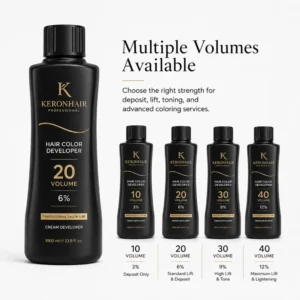
Salon developer is a hydrogen peroxide solution. The volume designation maps to concentration: 10 volume is roughly 3% hydrogen peroxide, 20 volume around 6%, 30 volume around 9%, and 40 volume around 12%.
Under the UN dangerous goods framework, concentration determines whether a peroxide solution is regulated for transport. Hydrogen peroxide is assigned UN2984 between 8% and 20% concentration, UN2014 above that range, and isn’t regulated below 8%. It falls within Class 5.1, oxidizing substances.
Run that against the developer table and the implication is hard to miss. A 20 volume developer sits below the threshold. A 30 or 40 volume developer sits above it. Adding one higher-volume developer to your range can change the classification of an entire consignment.
One important caveat. Classifying a finished cosmetic preparation isn’t the same as classifying pure aqueous hydrogen peroxide. Stabilizers, thickeners, and the final formulation all affect the outcome, and the binding determination rests with your shipper and freight forwarder based on the product’s safety data sheet. Treat the thresholds above as the reason to ask the question — not as a classification you can apply yourself.
The practical instruction is short: request the developer SDS from your manufacturer and give it to your freight forwarder before you book.
What changes once a shipment is classified as dangerous goods
Expect a dangerous goods declaration, specific packing and marking requirements, restricted carrier acceptance, higher freight cost, and in many cases no air freight option at all. None of it is insurmountable. All of it is expensive to discover at the port.
Color cream on its own is typically unregulated for transport. It’s the developer that drives the classification, which is why some brands deliberately source developer in their destination market and import color cream only. That costs you control over formula-to-developer matching, so weigh it properly — but weigh it before you commit, not after.
Sampling and Approval: What to Test Before You Release a Bulk Order
Sampling is where bulk color orders are won or lost. Approving a sample because the cream looks right in the tube is the single most common way buyers give up their recourse.
Lab samples versus production samples
A lab sample is mixed in small quantities under ideal conditions. A production sample comes off the actual line, in the actual packaging, at the actual batch size. They aren’t the same object, and they don’t always behave the same way.
Approving a lab sample tells you the formula direction is right. It doesn’t confirm the formula scales, that it’s compatible with your packaging, or that the line can hold the shade. Where budget and timeline allow, approve a pre-production sample too.
How to run a strand test that actually predicts performance
Color has to be judged on hair, not in the tube. A meaningful strand test covers a range of starting levels — at minimum a light base, a mid-brown, and a dark base — and includes both virgin and previously colored hair. Resistant grey deserves its own test.
Process each swatch at the developer volume and timing you plan to publish in your instructions, not at whatever produces the prettiest result. You’re testing what your customer will actually do.
Verifying grey coverage and lift separately from tone
These are three distinct performance questions, and a formula can pass one while failing another. A shade can produce a beautiful tone on pre-lightened hair and still leave visible grey at the hairline. Test them separately and record each result.
Stability, compatibility, and shelf-life testing
Accelerated stability testing checks the formula holds over time and at temperature. Packaging compatibility checks that formula and container don’t interact badly — a real risk with oxidative color and certain tube liners.
These tests take time. Buyers routinely fail to budget for them, then either delay the launch or skip the testing, which is the worse of the two options.
What a signed golden sample should record
The golden sample is a contractual reference, not a formality. Both parties should retain one, dated, with a written record of the formula reference, the shade tolerance you’ve agreed, packaging specification, and the batch it came from.
Without a written tolerance, “the color is wrong” is an argument. With one, it’s a claim.
Our custom formulation process sets out how these approval stages sequence in practice, and our professional hair color range developed for an Indian brand shows what shade matching and color system development look like on a real project.
Quality Control and Batch Consistency in Bulk Color Production
The defining quality risk in hair color isn’t whether the first batch is good. It’s whether the fourth batch still matches it.
Where color drift actually comes from
Four causes account for most of it: raw material lot variation, particularly in pigments; mixing time and temperature deviation between runs; pH drift; and filling sequence, where residue from a previous shade contaminates the start of the next run.
None of these are exotic. All of them are controllable by a factory with systems for it, and none of them are controllable by one without.
In-process checks a capable factory should be running
Ask what gets measured, when, and against what reference. A serious operation runs pH, viscosity, and peroxide strength assays on developer, and verifies shade against a retained reference standard — ideally with instrument-based color measurement rather than a visual check under whatever lighting happens to be available.
Ask to see a completed batch record, too. A factory with real process control will have one ready, and how they respond to that request tells you a great deal.
Specifying pre-shipment inspection and AQL
Agree inspection terms in writing before production starts, not after. Specify the AQL standard, the sample size, who conducts the inspection, and — this is the important one — that you have the right to inspect before the balance payment is released.
| Stage | What should be checked | Who owns it |
|---|---|---|
| Raw material intake | Supplier certificates, pigment lot verification | Factory |
| In-process | pH, viscosity, peroxide strength, shade against reference | Factory |
| Filling | Fill weight, seal integrity, batch coding | Factory |
| Finished goods | Shade tolerance, packaging, labeling accuracy | Factory |
| Pre-shipment | AQL inspection against golden sample | Buyer or third party |
For the full set of vetting questions to put to a prospective supplier, work through our hair dye manufacturer checklist.
Payment Terms, Incoterms, and Contract Protections
Commercial structure is where buyers tend to have the least experience and the most to lose.
Payment structures and what each one risks
The common arrangement is a deposit on order confirmation with the balance against shipping documents. It works, but it means your balance falls due before you’ve seen the goods.
A stronger structure ties that balance to a passed pre-shipment inspection rather than to documents alone. For larger orders, a letter of credit shifts risk onto the banks, though it adds cost and paperwork. For a first order with an unproven supplier, paying the balance against inspection is usually the most useful protection you can get.
Choosing an Incoterm you can actually operate
The Incoterm determines where cost and risk pass from seller to buyer. The mistake is agreeing to a term that assumes capabilities you don’t have — taking on an export leg you can’t manage, or an import process you’ve never run.
This matters more than usual in hair color. If your developer is classified as dangerous goods, whoever holds that leg needs the documentation and carrier relationships to move it. Check the current ICC Incoterms rules and pick a term matched to your actual logistics capability rather than your ambition.
Clauses worth putting in writing before production starts
Five, at minimum:
- The approved golden sample is the contractual quality reference
- A defined, numeric shade tolerance
- Right of pre-shipment inspection, with balance payment conditional on it passing
- A stated remedy for non-conforming batches — rework, replacement, or credit
- Clear ownership of tooling, printing plates, and artwork files
That last one is quietly important. Brands that switch manufacturer and then discover their tooling belongs to the old factory lose months.
A Realistic Timeline for a Bulk Hair Dye Order
Buyers consistently conflate two very different durations, then plan a launch around the shorter one.
First order: brief to delivered stock
Development is the long phase. For a fully custom formulation, established private-label houses publish brief-to-market timelines of six to nine months. Choosing a proven stock base compresses that considerably, sometimes down to weeks.
Production is much shorter. Published production windows across the industry commonly run four to eight weeks after sample approval, depending on order size and packaging availability. Packaging is frequently the constraint, not the formula.
Compliance runs in parallel on its own clock. Safety assessment, notification, and labeling review can hold up your market entry whether or not the goods have landed.
Freight adds several more weeks by sea, and longer if dangerous goods handling is involved.
Plan a first order as a multi-month project. Budget three months for what’s realistically a six-month process and you’ll spend the difference on air freight and stress.
Reorders: why the second order is a different project
Once a golden sample exists, packaging tooling is paid for, artwork is approved, and compliance filings are in place, a reorder is just production time plus freight. Development drops out entirely.
Which is the real argument for launching narrow. Your second order is fast and cheap in a way the first one simply can’t be, so get to it sooner with fewer SKUs rather than later with more.
Buying Hair Dye in Bulk: What Separates a Good First Order
Buying hair dye in bulk from a manufacturer is a procurement project, not a purchase. The buyers who do it well settle their specification before requesting quotes, compare offers on identical line items, understand that regulatory responsibility follows their brand name rather than the factory’s, check developer classification before booking freight, and approve samples on hair rather than on appearance.
None of that takes deep technical expertise. It takes asking the right questions in the right order.
If you have a brief ready, send us the six specifications listed earlier and our hair color manufacturing team will come back with a quotable proposal — including the MOQ basis, itemized setup costs, and the compliance documentation available for your target markets. Still comparing options? Get in touch and we can talk through the route that fits where you are.
Frequently Asked Questions
What is the minimum order quantity for bulk hair dye?
Minimums are usually set per shade, not per order, and may be quoted in finished units or batch weight. Ask which basis applies, then convert to units at your fill size before comparing suppliers.
Can I buy hair dye in bulk without creating my own brand?
Yes. Wholesale distribution lets you buy finished, branded stock for resale. The brand owner keeps the formula and the regulatory obligations, so you carry less risk but no control over the range.
Do I need FDA approval to import hair dye into the United States?
No pre-approval exists for coal-tar hair dyes. But facility registration, product listing, safety substantiation, and the statutory caution statement with patch-test directions all apply. No manufacturer is “FDA certified.”
Who is legally responsible for hair dye compliance, me or the manufacturer?
The importer, brand owner, or designated responsible person — whoever appears on the label. A manufacturer supports you with documentation and facility registration, but doesn’t take on your regulatory obligation.
Is hair developer classed as a dangerous good for shipping?
It depends on peroxide concentration. Higher-volume developers can fall under Class 5.1 oxidizing substances. Request the safety data sheet from your manufacturer and confirm classification with your freight forwarder before booking.
How long does a first bulk hair dye order take?
Separate development from production. Custom formulation can run six to nine months brief-to-market, while production alone typically takes four to eight weeks after sample approval, plus freight and compliance time.
How do I make sure my second batch matches my first?
Retain a signed golden sample, agree a written numeric shade tolerance, confirm the factory runs instrument-based shade verification, and specify pre-shipment inspection against that reference for every batch.
Can I order hair color without developer?
Yes, and some brands do it deliberately to avoid dangerous goods freight, sourcing developer locally instead. The trade-off is losing formula-to-developer matching control, so test the combination before committing.