Choosing between private label hair color and custom formulation is not simply a choice between a cheaper product and a premium one. The right route depends on your launch schedule, budget, shade strategy, differentiation goals and ability to manage testing and inventory.
In this guide, I compare established, semi-custom and fully custom hair color from a brand owner’s perspective—what can be changed, how MOQ works across multiple shades, where project costs arise, and which formula rights and responsibilities should be written into the manufacturing agreement.
Understanding the Three Models: What Each One Actually Means
Before comparing timelines or price points, it helps to define the three routes. Manufacturers do not always use private label, white label, OEM and ODM in the same way, so the written scope of work matters more than the service name.
Our guide to OEM and ODM hair product manufacturing explains why these acronyms should be treated as starting points rather than fixed promises.
What Is Private Label Hair Color?
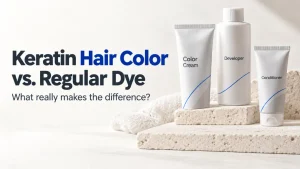
Private label hair color usually starts with a manufacturer’s established formula platform, which is then sold under your brand identity. Depending on the program, you may select permanent colors, demi-permanent colors, direct dyes, toners, developers or lighteners and combine them with approved branding and packaging.
The practical boundaries are usually:
- The manufacturer controls the core formula.
- The brand selects from confirmed shade, packaging and artwork options.
- The laboratory reviews any requested fragrance, ingredient or developer change before it is promised.
This route can suit brands that want to test demand before committing to a more complex program. It reduces development work but does not remove the need to approve samples, packaging, labels, claims and target-market documentation. For more context, see how quality hair dye is manufactured.
What Is Semi-Custom Hair Color Development?
Semi-custom development begins with an existing formula or shade platform and adjusts selected characteristics to better fit the brand. Depending on technical feasibility, this may involve fragrance, viscosity, sensory feel, selected ingredients, shade direction, package format or claims positioning.
This option sits between a catalog product and a fully custom formula. It can create a more distinctive product without rebuilding the whole system. However, each change must be assessed for its effect on performance, testing and documentation.
Semi-custom development is often suitable when a brand has a clear identity but does not need proprietary chemistry. It may also be a practical step for a business that has already validated demand and wants more differentiation on its next production run.
What Is Custom Hair Color Formulation?
Custom formulation starts with a detailed product brief rather than a finished catalog formula. The brief may define the product type, starting hair base, shade targets, lift or deposit behavior, gray coverage, developer pairing, texture, fragrance, ingredients, prohibited materials, packaging and target-market claims.
The tradeoff is greater project involvement. Custom development can require several sample rounds, defined tress testing, packaging compatibility work, stability evaluation, label and claim review, documentation planning and production-transfer controls. The schedule depends on the complexity of the brief and the evidence needed for the finished product.
Full custom development can create stronger differentiation, but paying a formulation fee does not automatically transfer formula ownership. The contract should state whether the brand receives ownership, exclusivity, access rights, test data or the ability to move production to another facility.
- Further reading: Keronhair’s custom hair care formulation capabilities
Side-by-Side Comparison: Private Label vs. Semi-Custom vs. Custom Formulation
Choosing a route is a business decision as much as a product decision. It affects cash flow, launch timing, formula control, inventory exposure and the amount of technical work your team must manage.
| Decision Factor | Established Private Label Formula | Semi-Custom Development | Full Custom Formulation |
|---|---|---|---|
| Starting point | Existing manufacturer platform | Existing platform with selected changes | Detailed technical and commercial brief |
| Best suited for | Market testing and focused launches | Brands needing moderate differentiation | Brands with a measurable unmet product requirement |
| Formula control | Limited | Moderate | Higher, subject to feasibility and regulation |
| Shade development | Select from an available system | Adapt selected shades or performance targets | Develop against defined shade and application criteria |
| MOQ pressure | Usually lower | Often moderate | Usually higher because of development and production setup |
| Timeline | Generally shorter | Longer than a stock-formula route | Depends on sample rounds, testing and component readiness |
| Testing impact | Confirm existing evidence applies to the final configuration | Additional testing may be required | Product-specific evidence and validation plan required |
| Formula rights | Defined by contract | Defined by contract | Defined by contract; not automatically transferred |
| Main risk | Limited differentiation | Underestimating how one change affects the system | Cost, validation time and inventory exposure |
Cost and Minimum Order Quantities
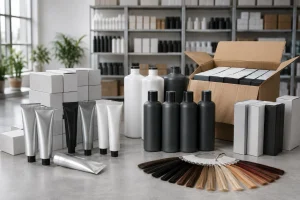
Private label hair color usually reduces development cost because the starting formula already exists. However, the finished project still includes samples, shade selection, packaging, artwork, labels, testing or documentation where applicable, production and freight.
For hair color, MOQ requires more detail than a single unit number. Ask whether the minimum applies to:
- The bulk formula batch
- Each shade or finished SKU
- The developer or activator
- The tube, bottle, cap or carton
- Printed components and decoration
- Special raw materials or fragrances
- Reorders as well as the first order
Keronhair project note: Current public guidance states that eligible established-formula hair color projects start from 1,000 units per shade or SKU. The final MOQ depends on the formula route, shade count, fill size, developer pairing and packaging configuration. Review the latest private label hair color manufacturing options before planning a range.
Custom development can increase the initial commitment through formulation work, sample rounds, product-specific testing, special ingredients and component minimums. Request a quotation that separates one-time development costs from recurring production prices.
- Further reading: MOQ, sampling, packaging and lead time
Time-to-Market
An established formula with available packaging normally offers the shortest route because fewer variables must be developed. Even then, a realistic schedule should distinguish between sample selection, artwork approval, packaging availability, production, inspection, shipping and target-market release.
Semi-custom and full-custom projects take longer because each change can create new dependencies. Development may include:
- Technical and commercial brief approval
- Formula or shade samples
- Structured feedback and revisions
- Formula and packaging compatibility review
- Stability, safety or performance work appropriate to the product and market
- Label, warnings and claims review
- Pre-production approval and bulk manufacturing
There is no universal development time that applies to every project. A single direct-dye shade in stock packaging and a twelve-shade oxidative color range with matched developers are fundamentally different programs. The manufacturer should provide a milestone schedule after reviewing the actual brief.
Ingredient Control and Regulatory Responsibilities
An established formula limits ingredient changes, but it may offer a useful evidence base if the formula, package, instructions and claims remain within the reviewed scope. Semi-custom or full-custom development offers more control, but each change may affect safety substantiation, stability, compatibility, labeling or claims.
Regulatory responsibility depends on the destination market:
- United States: The FDA’s MoCRA guidance covers facility registration, product listing, adverse-event reporting and safety substantiation. The FDA hair dye overview explains additional category considerations.
- European Union: The EU Cosmetics Regulation requires an EU Responsible Person and product-level compliance work, including a safety report, Product Information File and notification obligations.
ISO 22716 provides cosmetic GMP guidelines covering production, control, storage and shipment. Buyers should verify the certificate holder, facility address, scope, issuing body and validity, but should not treat ISO 22716 as a guarantee that every formula, label or market claim is compliant.
Formula Ownership, Exclusivity and Change Control
Formula ownership is often misunderstood. Private label commonly leaves the underlying formula with the manufacturer, but a brand may negotiate exclusivity for a particular finished configuration, territory or channel. In a custom project, ownership still depends on the signed agreement.
Before paying development fees, confirm:
- Who owns the formula and manufacturing process
- Whether the brand receives the complete formula or only the INCI list
- Whether exclusivity applies to a formula, shade, territory or sales channel
- Who owns sample, test and claim-support data
- Whether the supplier can change ingredients or raw-material sources
- What happens if an ingredient or package is discontinued
- Whether production can be transferred to another facility
- Which confidential information each party may retain or disclose
Manufacturing labels are not contracts. Put the rights that matter to your business in writing.
Which Model Fits Your Brand Strategy?
The right route depends on your current business stage, product requirement and capacity to manage development. Neither model is automatically superior, and the most complex option is not always the most commercially sensible.
When Private Label Is the Right Move
Private label may be the right choice when your main advantage is audience, channel access, salon expertise, shade curation, education or brand positioning rather than proprietary chemistry.
It can work well when you need to:
- Validate demand before carrying a large shade range
- Launch a focused hero product or small color assortment
- Control development complexity and cash exposure
- Use established formula and packaging options
- Reach the market without funding a ground-up development program
The formula may not be exclusive, but the finished offer can still be distinctive through shade selection, packaging, instructions, service, content and customer experience.
When Semi-Custom Development Makes Sense
Semi-custom development is useful when an existing platform is close to the target but needs specific adjustments. For example, a brand may want a different fragrance profile, application texture, shade direction or ingredient story while preserving the underlying system.
This route is most effective when the brand can name the required changes and explain why they matter. “Make it more premium” is not a technical brief.
A useful request identifies the target user, benchmark, desired result, acceptance criteria and any materials or claims that must be included or avoided.
When Custom Formulation Is Justified
Custom formulation is justified when a clearly defined requirement cannot be met by available platforms. Examples may include a specific gray-coverage target, lift or deposit profile, developer ratio, shade architecture, texture, package-delivery system, ingredient constraint or evidence-backed performance claim.
Before investing, make the differentiation measurable. Define:
- Target user and starting hair condition
- Comparator or benchmark product
- Application method and processing conditions
- Desired shade result, coverage or fade behavior
- Evaluation method and acceptance criteria
- Required and prohibited ingredients
- Target markets and claims
- Expected sales volume and reorder plan
The forecast must be able to absorb development, testing, packaging, inventory and launch costs—not only the formula fee.
Five Questions That Clarify the Choice
- What customer problem must this product solve? Describe the hair type, starting condition, application context and desired result.
- Which part must be different? Separate formula performance from packaging, shade curation, education and brand positioning.
- How will the difference be approved? Set tress, salon-panel, instrumental, compatibility or other relevant acceptance criteria.
- What cash and calendar exposure can the business support? Include all shades, components, tests, freight and inventory.
- Which rights are commercially essential? Decide whether supply continuity, territory exclusivity, formula access or ownership is needed, then negotiate it explicitly.
The Hybrid Approach: Start Focused and Add Custom Development Later
You do not have to commit permanently to one route. A phased strategy can help a brand validate demand before investing in a proprietary product system.
Phase 1: Market Entry
Launch a focused range using suitable established formulas and practical packaging. Keep the shade count aligned with realistic demand rather than trying to imitate a large professional portfolio on the first order.
Phase 2: Build Evidence
Use sales, returns, salon feedback, customer questions and reorder data to identify what the market actually values. This evidence can reveal whether the brand needs a new formula or simply clearer shade architecture, packaging or education.
Phase 3: Develop a Custom Hero Product
Invest in semi-custom or full-custom development when the evidence points to a measurable opportunity. This might be a specific toning system, a gray-coverage direction, a direct-color texture or another product that cannot be created through branding alone.
This approach does not guarantee lower total cost, but it can reduce the risk of funding complex development before product-market fit is established.
Build a Total Project Budget and Decision Scorecard
A useful comparison looks beyond the unit price. Build a total-project view so that a lower quotation does not hide higher inventory, component or compliance exposure.
Calculate Cash Exposure, Not Just Unit Cost
Include formula samples and revisions, shade work, testing, packaging samples, tooling or plates, artwork changes, translations, regulatory support, third-party inspection, freight, duties, warehousing, launch inventory and components left over when their MOQ exceeds the filling quantity.
Also model slow-moving shades. A hair color range can look attractive at an average unit cost while tying up cash unevenly across the assortment. A smaller, evidence-led launch may have a higher unit price but a healthier inventory position.
| Scorecard Criterion | Established Formula May Score Higher When… | Custom May Score Higher When… | Evidence to Request |
|---|---|---|---|
| Speed and simplicity | A suitable platform and compatible components are available | The custom requirement is narrow and technically proven | Milestone schedule, dependencies and material availability |
| Product differentiation | Brand, shade curation, package, education or channel creates the distinction | A measurable formula or application difference is central | Approved brief, comparison protocol and claim-support plan |
| Inventory risk | Lower shade and component commitments match the forecast | Demand supports the development and assortment | MOQ breakdown, component balance and reorder rules |
| Control and rights | Reliable supply and documented change control are sufficient | Negotiated formula access, exclusivity or ownership creates business value | Draft agreement, IP clauses and change-control procedure |
| Compliance readiness | Existing evidence applies to the final product configuration | The budget supports product-specific evidence and regulatory work | Market document matrix, test summaries and responsible-party plan |
Use a Staged Approval Gate
Do not release the whole budget after receiving one attractive sample. A practical sequence is:
- Commercial scope and target-market agreement
- Technical brief approval
- Coded formula and shade samples
- Formula, shade and developer approval
- Packaging compatibility and artwork review
- Required testing and document review
- Pre-production reference approval
- Bulk inspection and shipment release
Assign an owner to every gate and record the approved sample code, formula version, shade standard and packaging specification. This reduces the risk of production being approved against an outdated sample or incomplete brief.
For a repeatable approval method, follow this seven-step guide to testing hair dye samples before bulk production.
Hair Color-Specific Factors That Can Change the Decision
Hair color is not a single-formula category. A brand may be developing a permanent oxidative cream, demi-permanent system, direct dye, toner, color mask, root touch-up product, bleach or developer. The product system affects the development route, evidence and inventory plan.
Shade Range and Gray-Coverage Targets
A single hero shade is easier to forecast than a full professional range. Every additional shade may create another SKU, package, label, inventory commitment and approval standard.
Define the target result on specified starting hair. For gray coverage, identify the percentage and type of gray used in testing. For fashion shades or toners, define the starting level, undertone and expected fade direction. “Rich brown” or “cool blonde” is not enough for reliable approval.
Developer Pairing and Instructions
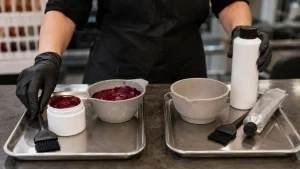
Oxidative color performance depends on the relationship between color cream, developer strength, mixing ratio, application amount, starting hair and processing conditions. The formula cannot be evaluated in isolation from the system in which it will be used.
The approved sample and specification should therefore record:
- Color-to-developer ratio
- Developer strength
- Starting hair base
- Application amount and method
- Processing time
- Target lift, deposit or coverage
- Evaluation conditions and acceptance criteria
Formula and Package Compatibility
Hair color packaging may need to protect reactive ingredients, tolerate transport and dispense the correct amount. Tube lining, bottle material, cap, seal, developer package, label and carton should be reviewed as part of the same project.
A packaging change after testing can create new compatibility, leakage, labeling or user-instruction questions. Approve the commercial package before bulk filling whenever possible.
Choosing the Right Hair Color Manufacturer
Whether you choose an established formula or custom development, the manufacturing partner determines how clearly the brief is translated into samples, specifications, records and repeat production. Hair color requires control of the complete system—not only an attractive first sample.
What to Look for in a Manufacturing Partner
Focus on evidence that is relevant to your exact project:
- Clear development routes: The supplier can explain what private label, semi-custom and full custom mean in its own program.
- Hair color experience: The team understands shade work, developer pairing, gray coverage, starting hair and application conditions.
- Documented quality controls: Formula versions, approved standards, material lots, in-process checks and batch-release criteria are recorded.
- Relevant GMP evidence: Certification details identify the actual facility, address, scope, issuing body and validity.
- Testing and packaging plan: The supplier can explain which stability, compatibility, safety or performance evidence applies to the final configuration.
- Target-market support: Responsibilities for documents, labels, notification and the Responsible Person are defined rather than assumed.
For a hair-color-specific supplier review, read our guide to choosing a hair dye manufacturer for your brand.
Key Questions to Ask Before Signing
- What is the MOQ by formula batch, shade, developer and finished SKU? Ask about printed tubes, cartons and excess components as well.
- Which existing tests and documents apply to my exact formula, package, instructions and claims? Request version-specific evidence rather than a generic certificate folder.
- Who owns the formula, finished configuration and test data? Put ownership, exclusivity and transfer rights in writing.
- How is batch-to-batch shade consistency approved? Ask for the documented method, hair substrate, developer, conditions and tolerance used—not only a visual promise.
- How are formula, raw-material and packaging changes controlled? The agreement should define notice, approval and revalidation requirements.
A reliable manufacturer should explain what evidence exists, what still needs to be completed and which responsibilities remain with the brand or market Responsible Person. Use this 25-question hair dye manufacturer checklist to structure the discussion before paying a deposit.
How We Help Brands Choose a Development Route at Keronhair
At Keronhair, we do not treat every inquiry as a full-custom project. I prefer to begin with the decisions that determine whether additional development will create real commercial value. Our project discussion normally covers:
- Product type and target market
- Target customer and starting hair condition
- Shade count, gray coverage and performance direction
- Developer pairing and application method
- Ingredients, exclusions and claims direction
- Packaging and retail-kit requirements
- Expected quantity per shade or SKU
- Launch timing and document expectations
We then compare the brief with an established Keronhair platform, a feasible semi-custom route or a more specific full-custom program. The quotation should state what is included: sample work, formula status, shade scope, packaging, testing or document support, production MOQ and any ownership or exclusivity terms.
This approach helps a startup avoid unnecessary development while giving an established brand room to build a more differentiated system when the business case supports it.
Final Thoughts
Private label hair color is often the practical choice when speed, manageable inventory and market validation matter most. Semi-custom development can create stronger brand fit without rebuilding the full formula. Custom formulation is appropriate when a measurable technical or commercial requirement cannot be met by an existing platform.
Before choosing, define the target product, shade range, developer system, market, package, claims, quantity and approval criteria. Then compare suppliers using the same brief and confirm formula rights, testing, responsibilities and change control in writing.
If you are evaluating these three routes, Keronhair can review your hair color brief and help identify a realistic starting point for sampling and production.
Frequently Asked Questions
The following answers summarize the main commercial differences. Actual terms should still be confirmed with the manufacturer for the specific product, package and target market.
What is the main difference between private label hair color and custom formulation?
Private label normally starts with a manufacturer’s established formula platform, while custom formulation starts with a detailed product brief and requires more development. Semi-custom development adjusts selected parts of an existing platform and sits between the two.
Is private label or custom formulation better for a new brand?
An established formula is often more practical for a new brand that needs to validate demand and control inventory. Custom formulation becomes more reasonable when the brand has a measurable product requirement, sufficient forecast and capacity to manage testing and development.
What is a realistic MOQ for private label hair color?
MOQ depends on the formula, shade count, developer, fill size and packaging. Keronhair’s current guidance starts from 1,000 units per shade or SKU for eligible established-formula projects, but the exact requirement must be confirmed against the complete brief.
How long does it take to launch a private label hair color line?
There is no universal timeline. Established formulas and available packaging usually move faster, while shade development, custom components, testing, artwork, documentation and shipping extend the schedule. Ask for a milestone plan covering the whole route from samples to delivery.
Can I own a custom hair color formula?
Possibly, but ownership is contractual. Development fees do not automatically transfer the formula, process or test data. Confirm ownership, exclusivity, access rights, change control and transfer rights before paying the deposit.
Can a brand start with private label and move to custom formulation later?
Yes. A brand can use an established formula to validate its offer, collect sales and performance feedback, and then invest in semi-custom or full-custom development when the opportunity is clearly defined.