To choose a hair dye manufacturer, check its experience with your product type, target-market compliance, shade and batch controls, sample quality, packaging compatibility, MOQ, total landed cost, formula ownership and change-control process. Before approving bulk production, verify the factory and its documents, define an approved production standard, and complete a controlled pilot order.
The manufacturer behind your hair color line will affect far more than the product in the tube. Its decisions can shape shade accuracy, gray coverage, packaging stability, documentation, delivery timing and the consistency of every reorder.
Hair dye also demands more from a factory than a basic rinse-off product. Permanent color, developer, direct dyes, toners and lighteners use different chemistries and production controls. A supplier that makes shampoo well may still be the wrong partner for an oxidative color system.
This guide gives you a practical way to shortlist, verify and compare hair dye manufacturers before you commit to development or bulk production.
Use the process in this order:
- Define the product and target market.
- Choose the right manufacturing model.
- Match the factory to the hair color system and sales channel.
- Confirm real hair color experience.
- Review market-specific compliance readiness.
- Test shade reproducibility, packaging and samples.
- Compare total landed cost and commercial terms.
- Protect the formula, approved standard and supply continuity.
- Score the finalists against the same criteria.
- Verify the factory and complete a pilot order before scaling.
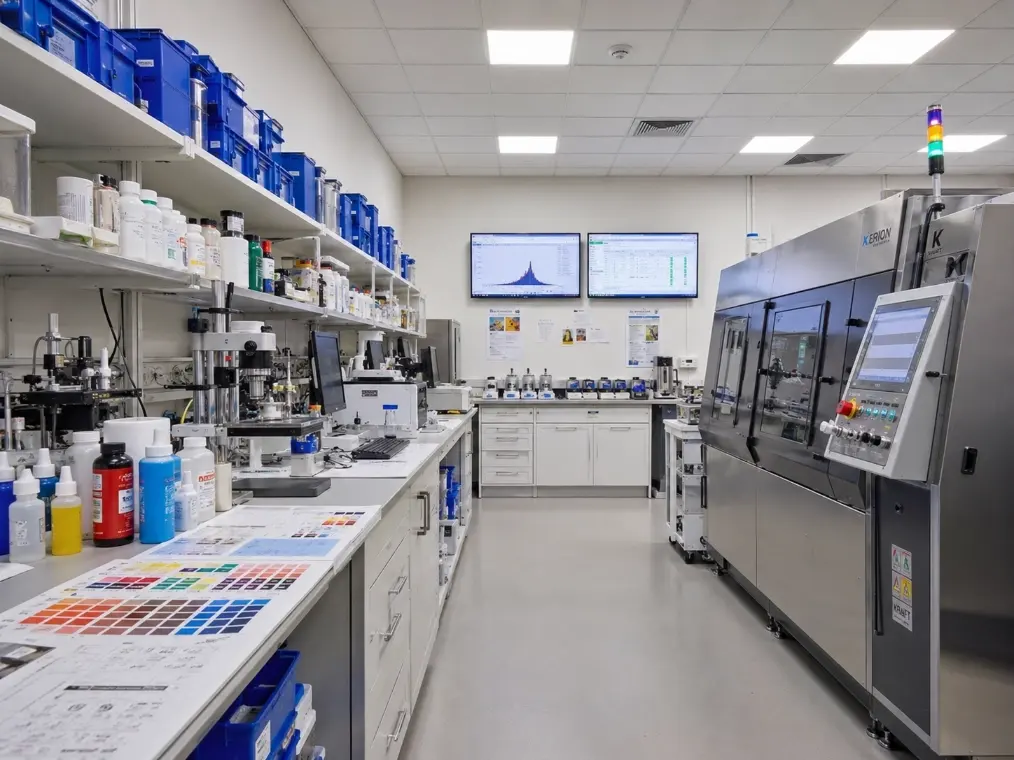
How to Choose a Hair Dye Manufacturer: Start With a Product Brief
Many preventable sourcing problems begin before the first supplier email. A buyer searches for “a hair dye factory” without first defining what the product must do. The quotations that come back cannot be compared because each factory is pricing a different interpretation of the project.
Write a short product brief before contacting suppliers. At minimum, define:
- Product type: permanent, demi-permanent, semi-permanent, direct dye, toner, bleach, color mask or hair dye shampoo.
- Target result: gray coverage, lift, tone-on-tone color, fashion shades, color correction or maintenance.
- Texture and application: cream, gel, liquid, foam, shampoo or mask.
- System components: colorant, developer, bleach, toner, gloves, applicator, instructions and after-color care.
- Target market: every country or region where the finished product will be sold.
- Sales channel: salon, professional wholesale, retail, ecommerce or distribution.
- Formula positioning: stock formula, adapted platform or fully custom development.
- Claims and exclusions: only the claims you intend to support, such as ammonia-free, PPD-free, vegan or gray coverage.
- Commercial scope: launch shades, quantity per shade, packaging format, target cost and intended launch date.
When we review a new project brief at Keronhair, the most useful enquiries tell us the target market, product format, first shade range, developer requirements, packaging direction and expected quantity per shade. Those details do not lock the buyer into a final solution. They allow the technical and commercial teams to identify conflicts before sampling begins.
Stock, Semi-Custom or Fully Custom Formula?
Decide how much differentiation you need and what you are prepared to fund, test and manage.
| Development route | Formula control | Typical development work | Relative speed | Ownership position | Best fit |
|---|---|---|---|---|---|
| Stock or white label | Low | Branding and compatible packaging | Fastest | Formula normally remains the manufacturer’s | Testing a category or launching a focused first range |
| Adapted platform | Moderate | Changes to shade, texture, fragrance, care ingredients or positioning | Moderate | Depends on the written agreement | Brands that need differentiation without starting from zero |
| Fully custom | High | New formula, shade work, testing, packaging validation and documentation | Longest | Must be negotiated in writing | Brands building a proprietary long-term product system |
A stock formula can shorten development, but another brand may use the same base. A custom route gives you more control, yet it also creates more decisions, validation work and contractual questions. If a proprietary formula or shade system is central to the brand, plan for custom hair color formulation from the beginning.
Should You Choose Private Label, OEM or ODM Hair Dye Manufacturing?
Private label, OEM, ODM and white label are used differently across markets and suppliers. Treat the label as the beginning of a discussion, not as a complete statement of who develops, owns or controls the product.
| Term | Common interpretation | Questions the contract must answer |
|---|---|---|
| White label | An existing formula is sold with the buyer’s branding | Can other brands use the same formula? Which packaging changes are allowed? |
| Private label | An existing or adapted product is sold under the buyer’s brand | What is actually customized? Is any part exclusive? |
| OEM | The manufacturer produces to a buyer-controlled specification or technical package | Who owns the formula and validation data? How is technology transfer handled? |
| ODM | The manufacturer develops or adapts the product from the buyer’s brief | Is the resulting formula shared, restricted or exclusive? Who controls future changes? |
In practice, one factory may call an adapted stock formula ODM while another calls the same arrangement private label. The written scope matters more than the acronym. It should state the formula status, customization limits, sample rounds, testing, packaging responsibility, confidentiality, exclusivity and ownership.
Review the differences between OEM and ODM hair product manufacturing before comparing quotations that use these terms differently.
Which Hair Color Manufacturer Fits Your Product System and Sales Channel?
The right manufacturer is not simply the factory with the longest catalog. It is the one whose routine production, testing and project support match the system you plan to sell.
Match the Factory to the Product Chemistry
Different hair color formats create different sourcing questions.
| Product system | Capability to verify | What often goes wrong |
|---|---|---|
| Permanent oxidative color | Color cream and developer compatibility, shade development, gray-coverage testing, oxidation-resistant packaging | The buyer approves a color cream without fixing the developer, mixing ratio or test conditions |
| Demi-permanent color | Low-volume developer pairing, deposit and fade behavior, tone-on-tone performance | The formula is described as “demi” without a clear application system |
| Semi-permanent or direct dye | Pigment dispersion, staining, fade path, packaging compatibility | A vivid first result hides uneven fading, separation or pack staining |
| Bleach and lightener | Lift control, dust management, activator compatibility, swelling and pack integrity | The lightener is tested alone rather than with the intended developer and process |
| Color mask or shampoo | Deposit consistency, wash-off, staining and repeated-use performance | A care-product base is assumed to behave like a dedicated color-depositing system |
If you are still deciding what belongs in the range, this guide to the main types of hair color can help you separate the product categories before requesting samples.
A permanent-color factory shortlist may not suit a ready-to-use direct-dye project. Compare the service models in our semi-permanent hair dye manufacturer guide, then ask which formula formats and shade-development work each candidate actually supports.
Treat Color, Developer and Aftercare as One System
A professional range is rarely a single tube. Color cream, developer, toner, bleach and after-color treatment must be specified together when they are intended to work together.
Ask the supplier which developer strength, mixing ratio, processing time and starting hair substrate were used to create each sample result. A catalog that contains both color and developer does not prove that the exact products have been validated as one system.
Match Support to the Sales Channel
The same formula may need a different project structure depending on how it reaches the user.
- Salon brands need a coherent shade architecture, developer system, technical instructions, color chart and education plan.
- Retail box kits need compatible components, consumer-facing instructions, warnings and a packaging configuration that survives distribution.
- Ecommerce brands need durable packs, clear application guidance and a focused opening range that does not create excessive per-shade inventory.
- Distributors and wholesalers need documentation, repeat-order control, practical assortment planning and predictable availability.
Ask what the manufacturer has actually supported for your channel. Request redacted examples of packaging structures, project workflows or technical documents rather than accepting a general claim that it serves “all markets.”
How Do You Verify a Hair Dye Manufacturer’s Technical Expertise?
A factory that produces shampoo, lotion and serum is not automatically equipped to manufacture every type of hair color. Oxidative products, direct dyes and lighteners require category-specific formulation knowledge, handling controls and testing.
Review In-House R&D and Shade Work
Ask who develops shades, which work is done in-house and how the technical team converts a reference into an approved standard. A useful explanation should cover the test substrate, starting color, developer, mixing ratio, processing conditions and acceptance criteria.
Digital photographs are useful for communication, but they are a weak production standard on their own. Screens, lighting and camera processing can alter the apparent shade. Physical references, controlled swatches and recorded test conditions give both parties a clearer approval basis.
Check Equipment and Realistic Capacity
Ask which product formats run on the factory’s own equipment, which stages are outsourced and what capacity is realistic for your planned order. Filling equipment can improve repeatability when it is properly selected, validated and maintained, but equipment photos do not prove process control.
A manufacturer focused on hair dye production should be able to explain its workflow from raw-material release and weighing through mixing, filling, inspection, batch release and retained samples.
Verify Traceability and Change Control
The supplier should be able to connect finished units to the relevant raw-material lots, batch records, packaging components and quality results. Ask how it records a change to a pigment, raw material, packaging component or process. A substitution that appears minor on a purchase order may still change shade, viscosity, stability or label information.
Can the Hair Dye Manufacturer Meet Your Target-Market Requirements?
No single “international” formula, certificate or label automatically covers every market. The brand, importer, responsible person and manufacturer may hold different obligations depending on where the product is sold.
Use the factory’s regulatory support, but do not outsource the final legal decision. Confirm current requirements with the relevant authority and qualified regulatory advisers for the finished product, claims, packaging and route to market.
United States
The US Food and Drug Administration explains that many permanent, semi-permanent and temporary products fall within the legal category of “coal-tar” hair dyes. The relevant exception has specific limits, including cautionary labeling and adequate directions for a preliminary skin test. The FDA may still act where a product is otherwise adulterated or misbranded. Review the agency’s current hair dye guidance and color additive information when preparing a US-market product.
Avoid claims such as “FDA approved hair dye” or “FDA certified formula.” Ask instead which US requirements the supplier has considered and which responsibilities remain with the brand or other responsible business.
European Union
Cosmetics placed on the EU market are governed by Regulation (EC) No 1223/2009. The finished product requires an EU Responsible Person, a Cosmetic Product Safety Report, a Product Information File and notification through the Cosmetic Products Notification Portal before placement on the market. Ingredient restrictions, warnings and labeling must be assessed for the actual formula and intended use.
Great Britain
Great Britain uses its own notification system and requires a UK-established Responsible Person. The UK government’s cosmetics guidance explains the Product Information File, safety assessment, labeling, good manufacturing practice and notification responsibilities. Northern Ireland follows a different route, so do not treat “UK compliance” as one undivided process.
What ISO 22716 Does and Does Not Prove
ISO 22716 gives guidelines for the production, control, storage and shipment of cosmetic products. It is useful evidence of a quality-system framework. It does not approve your individual formula, claims, warnings or market access.
Request the certificate, validity period, certified address, issuing body and scope. Compare them with the legal entity and manufacturing site in the quotation and contract. Keronhair publishes its certification information, but buyers should still review the scope and project-specific documents for themselves.
How Do You Check Shade Accuracy and Batch Consistency?
The sample you approve is not automatically the standard the factory will use for bulk production or future reorders. Define that standard in writing.
Build an Approved Production Reference
For each important shade, record:
- Formula or sample version;
- Starting hair substrate and condition;
- Developer strength and brand or specification;
- Mixing ratio and application quantity;
- Processing time and temperature;
- Target shade or physical reference;
- Texture, viscosity and odor requirements;
- Fill weight and packaging components;
- Agreed acceptance and rejection criteria.
Ask whether the manufacturer keeps retained samples and how long they are stored. The goal is to give both parties the same reference when a later batch is questioned.
Ask How Color Is Assessed
Do not assume there is one mandatory instrument or tolerance for every product. Ask whether the supplier uses controlled visual assessment, instrumental color measurement or both. More important, establish which method, substrate, lighting conditions and acceptance range will be used for your product.
Test Formula and Packaging Together
Packaging is part of product performance. Oxidative color may require a tube or barrier structure that limits unwanted air exposure. Direct dyes can stain components. Developers need compatible bottles, closures and seals.
Confirm that stability and compatibility work uses the intended formula, fill weight and packaging rather than a generic substitute. Review tube lacquer or barrier compatibility where relevant, closure and seal integrity, leakage, print durability and the condition of packs after transport simulation or agreed shipping checks.
How Should You Evaluate Samples From a Hair Dye Supplier?
Do not approve a sample because it “looks good.” Use the same written test plan for every finalist and record the result.
Score samples against criteria relevant to the intended product:
- Shade result: Does it match the approved target on the defined substrate?
- Gray coverage: Is the coverage acceptable on the hair type and percentage of gray used in the test?
- Mixing and application: Is the ratio clear, and is the texture practical to mix, spread and rinse?
- Processing: Does the product behave as expected within the specified time and conditions?
- Fade or maintenance: Does the color change in an acceptable way under the agreed wash protocol?
- Hair feel: Does the post-color result fit the brand’s performance brief?
- Pack performance: Are there leaks, staining, seal failures, oxidation or dispensing problems?
- Repeatability: Do several sample units and a later sample round produce comparable results?
Follow the product instructions and applicable safety precautions during testing. Sample approval by a brand is not a substitute for a safety assessment, market-specific compliance work or appropriately designed product testing.
For a more detailed method, use this seven-step hair dye sample testing guide. It separates shade approval from packaging, repeatability and documentation checks.
Qualify the Supplier Before Requesting Multiple Rounds
Before spending time on shade revisions, ask:
- Which hair color formats does the factory manufacture routinely?
- Which parts of this project will be produced or tested by third parties?
- What is the MOQ per formula, shade and packaging component?
- Which documents can be reviewed before a deposit and before shipment?
- Who owns the formula, shade work and resulting specifications?
- How are raw-material or process changes proposed and approved?
The full hair dye manufacturer checklist provides 25 questions, evidence requests and red flags for a formal supplier review.
What Do Hair Dye Manufacturing Costs and MOQs Really Include?
The lowest quoted unit price is not always the lowest real cost. Compare the cost of one compliant, sellable unit delivered to your chosen destination.
Include:
- Colorant and developer;
- Tube, bottle, closure and seal;
- Carton, insert, gloves and applicator where required;
- Formula, shade or sample-development fees;
- Tooling, printing plates and setup charges;
- Testing, safety assessment and regulatory support;
- Inspection, freight and insurance;
- Duties, taxes, storage and fulfillment;
- Defect, rework and replacement exposure.
Ask for MOQ at every level. The bulk formula MOQ, per-shade filling MOQ, printed tube MOQ, carton MOQ and kit-assembly MOQ may be different. One high component minimum can determine the actual opening inventory even when the factory advertises a lower production MOQ.
Model the cost per sellable unit, not only the cost per unit produced. A price reduction tied to an oversized first order can become expensive when slow-moving shades occupy cash and storage for months.
How Can You Protect Your Hair Dye Formula and Supply Continuity?
Put Ownership and Exclusivity in Writing
For a stock or white-label formula, the manufacturer normally retains the formula and may supply the same base to other customers. An adapted or custom project can involve different ownership, exclusivity and confidentiality terms.
Do not assume that paying a development fee transfers ownership. The agreement should address:
- Ownership of the base formula and later modifications;
- Exclusivity by formula, shade, market, channel or time period;
- Access to specifications and testing data;
- Use of reference samples and confidential materials;
- Rights and responsibilities if the relationship ends.
Define Change Control
Require written notice and approval rules for changes that may affect the product. This can include pigments, fragrance, raw-material sources, developer specifications, processing conditions, packaging structures and artwork.
Plan for Reorders and Complaints
Ask how the supplier forecasts critical raw materials and packaging, handles discontinued components and protects approved specifications during reorders. The agreement should also define how a complaint is logged, how affected batches are investigated and how corrective actions, replacement or rework decisions are communicated.
What Are the Red Flags When Choosing a Hair Dye Manufacturer?
Red Flags to Watch For
- The business claims to manufacture hair color but will not identify the production site.
- The legal entity, bank account, quotation and certificate names do not align.
- Certifications are expired, cover another address or do not match the claimed activity.
- The supplier calls a product “FDA approved” or uses another inaccurate approval claim.
- Sample results are shown without the substrate, developer, ratio or processing conditions.
- The supplier refuses to define an approved reference or retain batch samples.
- MOQ changes repeatedly because packaging, shade and formula minimums were not separated.
- A custom formula is called exclusive, but exclusivity is absent from the contract.
- The supplier pressures you to skip verification, sampling or pilot production.
- Communication is vague during qualification, when the project is still relatively simple.
Hair Dye Manufacturer Qualification Scorecard
Score each candidate from 1 to 5, multiply the score by the weighting, and compare the totals. A strong total should not override a critical safety, compliance or integrity failure.
| Criterion | Suggested weight | Evidence to review |
|---|---|---|
| Product-system and channel fit | 15% | Relevant formats, developer system, packaging and channel experience |
| Hair color R&D and shade control | 15% | Shade workflow, test conditions, approved standards and technical team |
| Target-market compliance readiness | 20% | Current certificates, ingredient and product documents, responsibility map |
| Sample quality and repeatability | 15% | Recorded sample results, repeat round and packaging checks |
| Batch control and traceability | 10% | Batch records, retained samples, release process and change control |
| MOQ and total landed cost | 10% | Itemized quotation and minimums by formula, shade and component |
| Formula, IP and exclusivity terms | 5% | Written ownership and confidentiality provisions |
| Capacity and supply continuity | 5% | Production plan, critical material plan and reorder controls |
| Communication and issue handling | 5% | Named contacts, response quality and complaint process |
A Practical Selection Timeline
The duration depends on customization, testing, packaging and market requirements. Plan the work as stages rather than relying on one headline lead time:
- Product brief and initial capability check;
- Confidentiality agreement where appropriate;
- Written development scope and itemized quotation;
- Document and factory verification;
- Sample production, testing and revision;
- Packaging selection and compatibility work;
- Pilot or pre-production approval;
- Market documentation and artwork approval;
- Bulk production, inspection and batch release;
- Shipment, complaint handling and reorder review.
If you need companies to compare, use the same framework when reviewing this shortlist of private label hair color manufacturers. A shortlist is only a starting point; each supplier still needs project-specific verification.
Should You Audit the Hair Dye Factory and Run a Pilot Order?
A polished website, a certificate file and an attractive sample are not enough to approve a large order. Before paying a substantial production deposit, connect the company, factory, documents and product standard into one verifiable project record.
Confirm the Legal and Manufacturing Entities
Check the company name and address on the business registration, quotation, contract, bank details and certificates. Ask whether the contracting company owns the factory, belongs to the same group or coordinates production through another business.
If an agent or trading company is involved, that is not automatically a reason to reject the supplier. You need to understand who controls formulation, production, quality release, documentation and corrective action. Record those responsibilities in the agreement.
Verify the Factory Remotely or On Site
Use an on-site audit, qualified third-party inspection or structured live video review appropriate to the order risk. The review should follow the product flow rather than showing only a reception area and a few machines.
Look for:
- Raw-material receipt, identification and quarantine;
- Weighing and batch-document control;
- Mixing and processing areas relevant to hair color;
- Filling, sealing and coding equipment for the intended package;
- Quality-control and sample-retention arrangements;
- Nonconforming material and finished-product controls;
- Warehousing and shipment preparation.
Request Product-Specific Documents
The exact file set depends on the formula and destination market. A useful pre-production package may include:
- Full ingredient or INCI information;
- Product and packaging specifications;
- Safety Data Sheet where applicable;
- Stability and compatibility summaries;
- Approved artwork and label information;
- Test methods and acceptance criteria;
- Batch coding and traceability procedure;
- Certificate of Analysis format;
- Written allocation of regulatory responsibilities.
Do not accept a generic certificate bundle as proof that the finished product is ready for your market.
Lock the Pilot Standard
The pilot should use the approved or intended formula, process, fill weight and packaging as closely as the agreed production plan allows. Before it begins, define which references and specifications will decide whether it passes.
After the pilot, compare the result with the approved sample, review packaging and fill consistency, examine the available batch documentation and record any deviations. If a change is needed, identify the new version clearly before bulk approval.
Learn From the First Order Before Expanding the Range
A pilot or focused first order can test more than product performance. It shows whether the supplier follows version control, communicates delays, assembles the correct components, prepares documents on time and responds clearly when something needs investigation.
For a first launch, it may be more useful to validate a focused group of commercially important shades than to spread the same budget across a large, shallow range. Expansion is easier after the formula, packaging, documentation and reorder process have been proven together.
Factory qualification should support a realistic first launch rather than an open-ended shade list. Our salon-grade private label hair color launch guide connects manufacturer selection with product positioning, initial assortment, packaging and sales-channel planning.
How Do You Make the Final Hair Dye Manufacturer Selection?
Choosing a hair dye manufacturer is a sequence of controlled decisions. Define the product first. Match the factory to the chemistry and sales channel. Verify its legal identity, production role and certificates. Test the formula and packaging under recorded conditions. Compare landed cost, ownership and supply risk. Then use a pilot order to confirm that the supplier can reproduce what it promised.
The scorecard helps you compare finalists, but it does not replace judgment. A supplier can recover from a slightly higher price or a longer realistic timeline. Missing documents, unclear manufacturing responsibility or an unwillingness to define the approved product standard should carry far more weight.
If you want Keronhair to review a hair color project, send us your target market, product format, initial shade list, developer requirements, packaging preference, estimated quantity per shade and desired launch timing. We can use that brief to identify a suitable private label, adapted-platform or custom development route before sampling begins.
FAQs About How to Choose a Hair Dye Manufacturer
What should I ask a hair dye manufacturer before placing an order?
Ask which hair color formats the factory produces routinely, what it makes in-house, which target markets it supports, how it develops and approves shades, which documents it supplies, how it controls bulk and reorders, and what the MOQ is per formula, shade and packaging component. Request evidence for every answer that affects safety, compliance, quality, ownership or cost.
What is the typical MOQ for private label hair dye?
There is no reliable universal MOQ. It depends on batch size, product type, number of shades, fill volume, packaging, printing method and kit components. Ask for separate minimums for bulk formula, filling per shade, printed primary packaging, cartons and assembly. A packaging MOQ may determine the real order size even when the formula MOQ is lower.
Can I own the formula for my private label hair color?
Not automatically. A stock or white-label formula normally remains the manufacturer’s property. Ownership, exclusivity and access to technical information for adapted or custom formulas depend on the written agreement. Define what is exclusive, where it applies, how long it lasts and what happens if the manufacturing relationship ends.
How long does hair dye product development take?
The schedule depends on formula status, number of shades, revision rounds, testing, packaging and destination-market work. Ask for a stage-by-stage plan covering the brief, samples, revisions, packaging, pilot, documentation, production and shipment. Build decision time and revision time into the launch plan rather than relying on one production lead-time figure.
What certifications should a hair dye manufacturer have?
Cosmetics Good Manufacturing Practice aligned with ISO 22716 is a useful quality-system reference, but a certificate alone does not approve the finished product. Verify the issuing body, site address, validity and scope. Then review formula- and market-specific documents, testing, labeling and responsible-party requirements.
What is the difference between OEM, ODM and private label hair dye?
The terms are not used consistently. Private label often starts from an existing or adapted product, OEM often refers to production against a buyer-controlled specification, and ODM often includes manufacturer-led development. The contract should define formula status, customization, testing, ownership, exclusivity and change control instead of relying on the acronym.