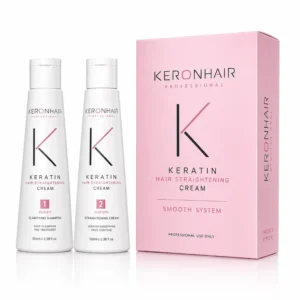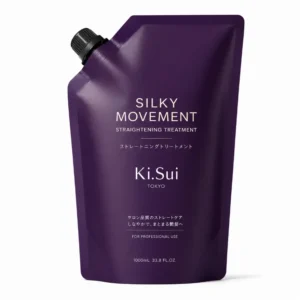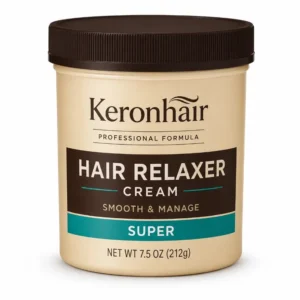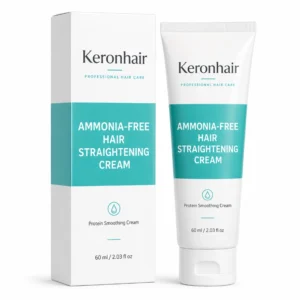
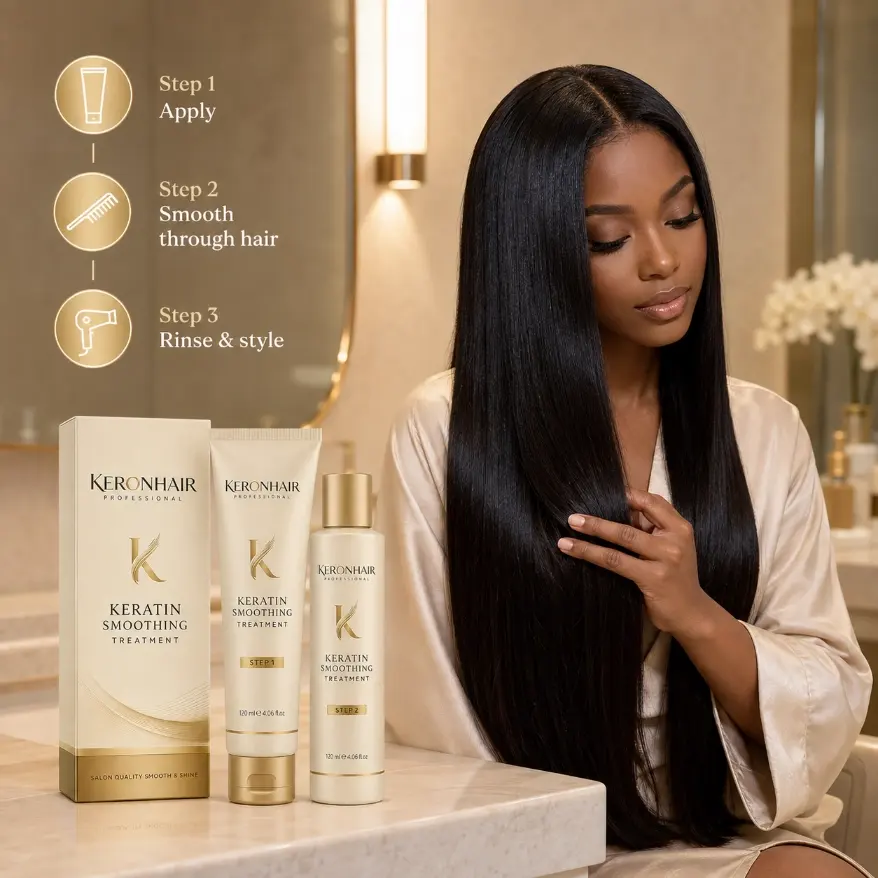
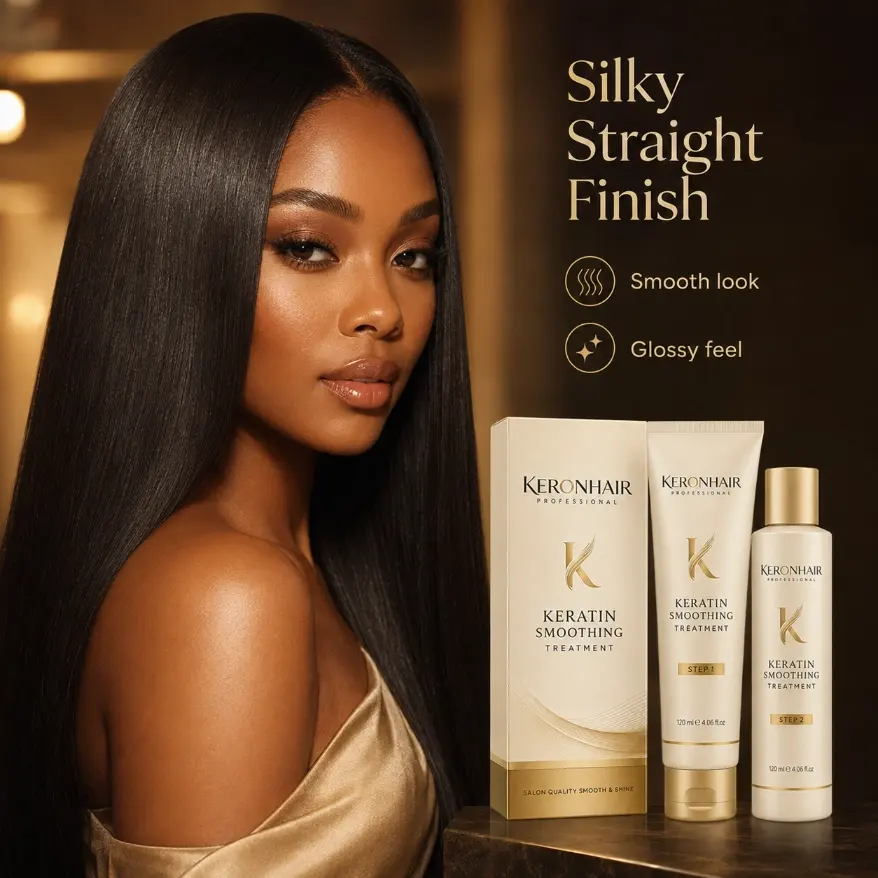
Build a professional smoothing service around controlled frizz, easier styling and a polished finish while keeping straightening, repair and duration claims within the product’s evidence. Keronhair supports formula, protocol, packaging and aftercare development for B2B buyers.
Proven base, semi-custom or custom development aligned with your brief.
Natural, fashion and gray-coverage shades developed for your target market.
Color cream, developer, retail packaging and project documentation.
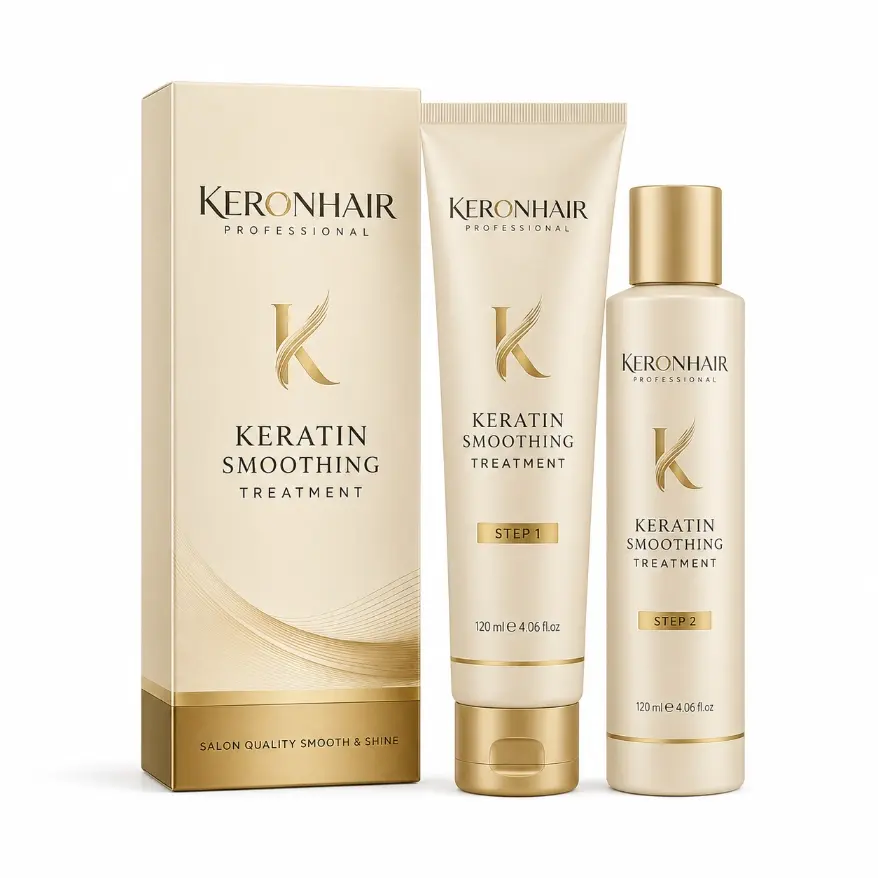
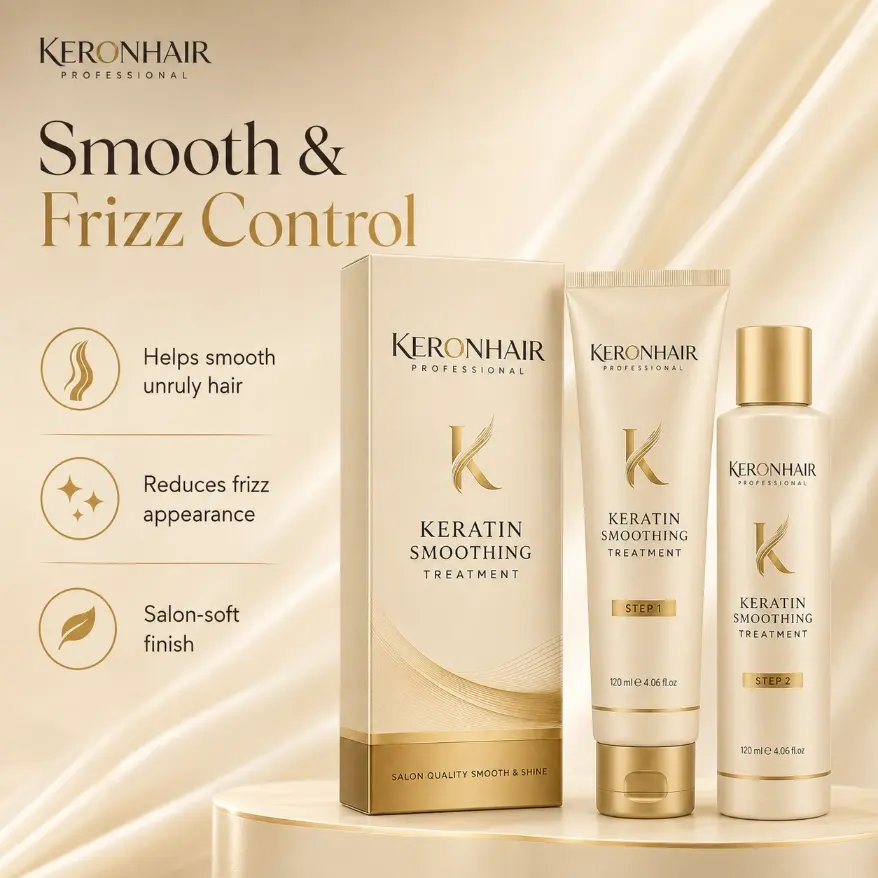
A smoothing treatment can target a more controlled surface, reduced visible frizz, improved manageability, shine and faster styling without claiming permanent straightness. This distinction is valuable for brands serving clients who want movement and easier maintenance rather than a rebonded finish.
Keronhair translates the consumer result into measurable development targets and an appropriate salon method. The brief can define climate, curl retention, volume retention, wash schedule, service time and desired after-feel, creating a more credible point of difference than a generic “keratin treatment” label.
Where blow-drying or ironing is part of use, the heat protocol and potential workplace exposure must be reviewed with the formula. “Formaldehyde-free,” “non-toxic,” “clean” and similar terms cannot be assumed from the absence of one listed ingredient. They require a defined claim standard, complete formula and supplier data, intended-use review and market-specific confirmation.
Salon materials should clearly cover application, scalp avoidance, timing, rinsing, drying, tool conditions, ventilation, protective measures and contraindications as applicable. These controls are part of the product proposition, not fine print added after artwork.
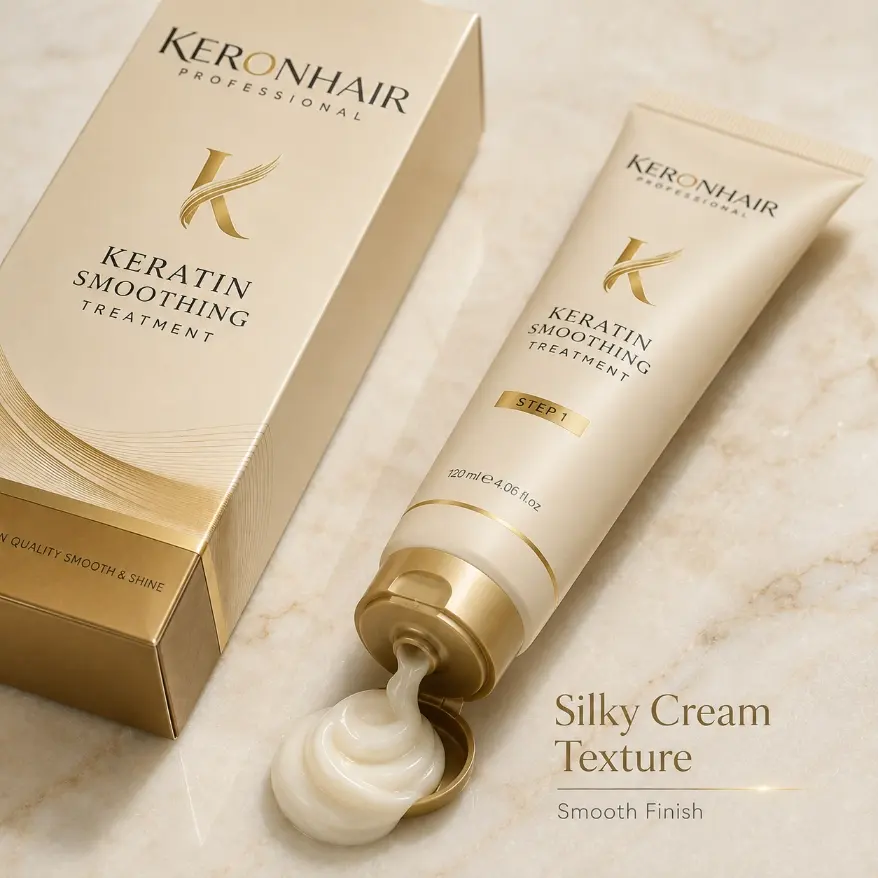
Keronhair can adjust viscosity, spread, fragrance, rinse feel and conditioning profile within technical limits. Hair-tress work can compare smoother appearance, combability, curl or volume retention and post-service feel on agreed substrates.
The maintenance range can extend the brand experience with suitable cleansing and conditioning products. Claims should remain SKU-specific: a shampoo can support gentle cleansing, while a mask can support softness and manageability; neither should automatically promise to lock in a treatment for a fixed period.
Ready-to-Brand may suit a faster market test, Semi-Custom can support controlled sensory or positioning changes, and Fully Custom can address a detailed benchmark and professional protocol. Sample rounds, testing, formula ownership, exclusivity, MOQ and timing are recorded project by project.
Packaging can include salon bottles, tubes, jars, pouches and take-home formats. Keronhair aligns component compatibility, artwork, instruction space, batch coding and the final product specification before manufacturing.
Share the target finish, curl and volume goals, climate, benchmark, heat method, hair profiles, ingredient restrictions, aftercare plan, market and forecast. Keronhair will recommend the most practical development scope.
Smoothing can focus on frizz control, manageability and a polished finish while retaining some movement or curl. Straightening aims for a greater change in hair configuration. The label and page copy should follow the approved product’s demonstrated result.
An express concept can be evaluated, but service time, steps and performance must be confirmed through the actual formula and protocol. “Express” should not be published before those conditions are validated.
Compatibility depends on the color history, damage, formula and service conditions. The professional should assess hair history and conduct strand testing. Separate directions or exclusions may be needed for bleached or compromised hair.
Depending on the claim, the evidence plan may assess frizz appearance, combability, shine, styling time, wash durability or consumer perception under defined conditions. The method, substrate, protocol and comparison should match the final claim.
Provide the intended maintenance routine, cleansing preferences, conditioning level, fragrance, pack sizes, price position, market and quantity per SKU. Every aftercare product is approved separately from the salon treatment.
—— Private label manufacturing process
One coordinated Keronhair team manages formulation, sampling, packaging, quality control, and shipment preparation—giving your brand a clearer path from concept to production.
01
Share your target market, product category, performance direction, reference products, packaging expectations, budget, and planned launch timeline with Keronhair.
02
Our R&D team recommends a proven formula route or plans custom development around your ingredients, texture, fragrance, and positioning requirements.
03
Keronhair prepares samples for your review, then coordinates feedback on fragrance, texture, viscosity, color, application, and product performance.
04
Our team coordinates bottles, jars, tubes, closures, labels, decoration, and cartons while reviewing suitability for the selected formula and filling process.
05
After written approval, Keronhair organizes materials, filling, packing, in-process quality checks, batch records, and retained production references.
06
Keronhair completes finished-product checks, packing verification, required export-document coordination, and shipment preparation for your agreed destination.
Tell us what you want to launch and where you plan to sell it. From hair care and hair color to styling products, we can help you move from product development and sampling to packaging and production.