Consumer appetite for salon-grade, custom color is growing fast, and beauty brands are racing to meet it. Whether you’re building a proprietary color line from scratch or expanding an existing retail offering, finding the right private label hair color manufacturer is one of the most consequential decisions you’ll make early in the process. Choose well, and you have a technically capable partner who helps you launch with confidence. Choose poorly, and you’re managing unstable formulas, compliance headaches, and costly reformulations.
This guide covers ten of the strongest hair color manufacturers operating across the US, Europe, and Asia — evaluated on regulatory compliance, formulation range, MOQs, and scalability. Use it to build a realistic shortlist before you make first contact.
What Is Private Label Hair Color Manufacturing?
Before reaching out to a single supplier, it’s worth clarifying what you’re actually asking for. These three terms get used interchangeably in the beauty industry, but they describe meaningfully different manufacturing arrangements.
Private Label
Private label is the most accessible entry point for new beauty brands, distributors, and e-commerce sellers. You’re selecting an existing, ready-made hair color product and applying your own branding, label, and packaging. The manufacturer handles formulation and production; you focus on marketing, distribution, and building the brand identity around it. It’s fast, low-risk, and requires minimal upfront investment in R&D.
Before comparing manufacturers, confirm whether the project needs an own-label range or branded wholesale stock. Our bulk hair dye source comparison separates those buying routes and the responsibilities attached to each.
OEM (Original Equipment Manufacturer)
In an OEM arrangement, you supply the formula, packaging design, and full product specifications — and the manufacturer produces the hair color exactly to your requirements. This gives you the most control over the final product, including proprietary claims and differentiated ingredients, but it requires more groundwork upfront: a formulation chemist or detailed tech pack, and typically higher minimum order quantities since the factory is building something custom from scratch. For a closer look at how this compares to other production models, this breakdown of OEM vs. ODM in hair products is worth reading before you commit to a direction.
ODM (Original Design Manufacturer)
ODM reverses the dynamic. The manufacturer already has hair color formulas, shade libraries, and packaging developed in-house, and you select from their existing catalog to brand as your own. It’s the fastest, lowest-friction path to market — particularly useful if you don’t have a chemist on staff or want to test demand before investing in a fully custom formula.
Which Model Fits Your Brand?
If you have a specific formula or a meaningful point of differentiation you want to own outright, OEM is worth the extra effort. If speed and cost efficiency matter more at this stage, private label or ODM will get you to market far faster. Most manufacturers in this guide offer some combination of all three.
The right supplier still needs a clear launch brief. Use the guide to starting a salon-grade hair color line to organize the color formats, first shades, packaging and channel decisions before requesting comparable quotations.
How We Evaluated These Hair Color Factories and Suppliers
We assessed dozens of cosmetic manufacturers across multiple criteria to identify the most reliable partners for beauty brands at different growth stages.
- Regulatory and Compliance Standards: Adherence to FDA cosmetics regulations, MoCRA, and EU cosmetics directives is non-negotiable. These standards determine whether your products can legally be imported, sold, and marketed in your target regions.
- Formulation and Ingredient Safety: We looked for manufacturers with verified testing protocols — stability, microbiological, and irritation testing — and the capacity to develop ammonia-free, PPD-free, and vegan-compliant formulas where required.
- MOQs and Scalability: The strongest partners on this list offer accessible entry points for startups without sacrificing the production capacity needed as volumes grow.
- Turnkey and R&D Capability: We prioritized full-service manufacturers offering custom development, shade matching, packaging sourcing, and filling under one roof.
- Track Record: Formulation expertise is built over time. Each manufacturer here has a demonstrable history in professional hair color chemistry.
Top 10 Private Label Hair Color Manufacturers for Beauty Brands
1. HSA Cosmetics — Premium European Formulations and Clean Hair Color
HSA Cosmetics, based in Italy, is a well-established name in professional hair color development. The laboratory specializes in both traditional oxidative dyes and ammonia-free, water-based formulations — including “in-water” color systems with watery, gel, and jam textures developed for eco-conscious salons and specialty retailers. Their R&D team works across permanent and semi-permanent formats, with a consistent emphasis on clean chemistry and formulation transparency.
Key Services: Custom formulation, permanent and semi-permanent color, in-water eco-color systems, texture modulation, trend forecasting.
Certifications: ISO 22716, GMP, vegan-friendly, dermatologically tested.
MOQ and Lead Time: Flexible, from boutique batches to larger runs; 6–10 weeks depending on R&D scope.
Best Suited For: Mid-to-large beauty brands seeking European-certified, clean-beauty positioning.
2. Bright Innovation Labs — High-Volume Bleach Powders and Oxidizers
Located in Coolidge, Arizona, Bright Innovation Labs operates a purpose-built powder facility focused on hair lightening chemistry. Their production capabilities center on liquid developers, bleach pastes, and clay lighteners, supported by high-speed sachet and tub filling lines designed for mass-market volume. They’re a solid domestic option for brands that need reliable, scalable lightener production in the US.
Key Services: Custom liquid developers, bleach powders and creams, clay lighteners, high-speed filling.
Certifications: ISO 22716, GMP.
MOQ and Lead Time: High volume (typically 10,000+ units); 8–12 weeks.
Best Suited For: Mass-market brands and distributors requiring large-scale, US-based lightener production.
3. Keronhair — Botanical Formulations and Comprehensive OEM Hair Color Services
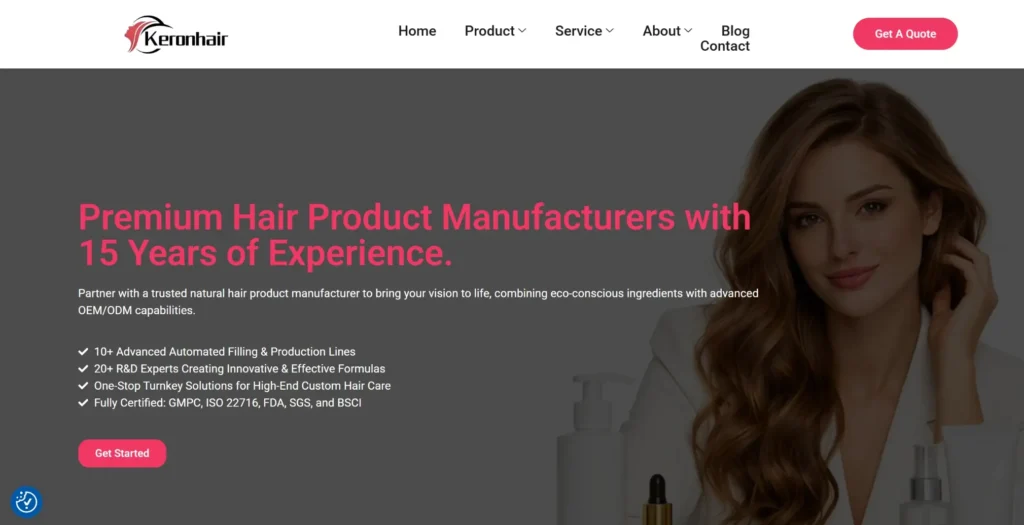
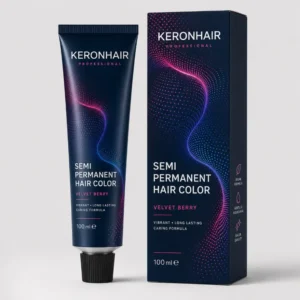
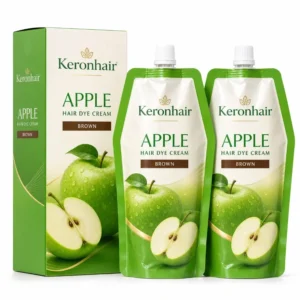
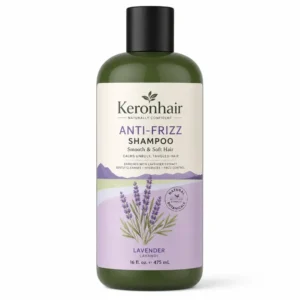
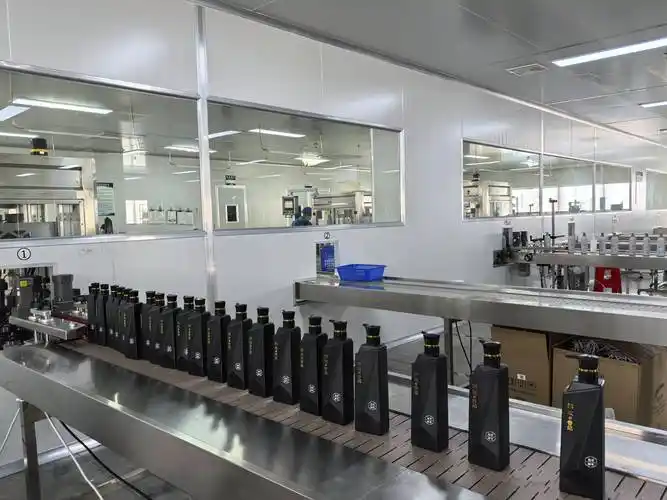
Keronhair operates out of an 8,000-square-meter facility in Guangzhou, China, specializing in high-performance OEM/ODM hair dye systems. Their catalog spans over 500 formulas — ranging from ammonia-free botanical color creams and bubble hair dyes to intensive bleaching powders. Automated tube and jar filling technology supports consistent batch-to-batch output, and their team manages everything from exact shade matching to international compliance documentation. For global distributors and beauty brand aggregators looking for competitive pricing backed by structured quality control, Keronhair offers a well-resourced, full-service operation.
Key Services: Ammonia-free botanical hair color, bubble hair dye, bleaching powder, automated tube filling, full-service packaging design.
Certifications: GMPC, ISO-certified, holder of 9 global design patents.
MOQ and Lead Time: 3,000–5,000+ units; 4–8 weeks.
Best Suited For: Global wholesale distributors and brands seeking competitive pricing without compromising on compliance.
4. CarasaLab — Heritage Manufacturing and Professional Dye Expertise
CarasaLab has been producing professional cosmetics since 1930, making it one of the longest-standing names in European hair color manufacturing. Based in Spain, the company has developed over 1,000 formulas and exports to more than 30 countries. Their formulations prioritize gray coverage, long-lasting color retention, and hair softness, and they source organic raw materials from established global suppliers to support clean-beauty claims. Brands looking for a European partner with a documented manufacturing history and a broad shade portfolio will find CarasaLab well-matched to that brief.
Key Services: Professional private label hair dyes, natural and organic cosmetics formulation, sustainable packaging sourcing.
Certifications: European quality standards, organic raw material supplier network.
MOQ and Lead Time: Mid-to-large scale (5,000+ units); 8–10 weeks.
Best Suited For: European hair care brands and professional salons seeking color formulations with a long track record behind them.
5. Dongbang Cosmetics — Diverse Shade Libraries and K-Beauty Formulations
Dongbang Cosmetics is a South Korean OEM/ODM supplier with a particularly strong catalog of ready-to-label shades — from natural ash blondes and rich coppers to vivid violets and blue-black tones. Their formulations incorporate Asian botanicals with a focus on minimizing oxidative damage, and the company has experience navigating both domestic South Korean regulations and international export requirements. For brands targeting Asian markets or looking to leverage an established shade library without significant upfront R&D investment, Dongbang is worth serious consideration.
Key Services: OEM/ODM manufacturing, pre-developed shade library, botanical hair treatments, leave-in color protectants.
Certifications: ISO certified, MFDS (South Korean Ministry of Food and Drug Safety) compliant.
MOQ and Lead Time: Negotiable (typically 3,000–5,000 units); 6–8 weeks.
Best Suited For: Asian market importers and brands prioritizing K-beauty formulation aesthetics.
6. Mana Products — Prestige Beauty and Hybrid Hair Formulations
Headquartered in the United States, Mana Products is a contract manufacturer with a reputation for producing prestige cosmetics for premium retailers, celebrity founders, and independent luxury brands. Their “High Performance Hybrid” division extends into hair care, producing color-defense and multi-functional treatments that condition and protect simultaneously. Their proprietary Brand Accelerator program reduces lead times and lowers minimum commitments for indie brands, using pre-developed formulas that can be customized to your positioning. If your target retail placement includes Sephora-tier distribution or luxury department stores, Mana offers the formulation quality those channels expect.
Key Services: High-performance hybrid formulations, technology transfers, clean chemistry, advanced color-defense hair care.
Certifications: GMP, EU compliant, vegan-friendly.
MOQ and Lead Time: Lower minimums available via Brand Accelerator; 8–12 weeks for fully custom production.
Best Suited For: Premium, indie, and celebrity brands targeting luxury retail.
7. SBLC Cosmetics — High-End European Quality with Low MOQs
SBLC Cosmetics is built specifically for independent founders and boutique salons who can’t absorb the minimum order requirements of larger manufacturers but aren’t willing to trade down on formulation quality. Based in Europe and producing to German and EU cosmetic standards, SBLC offers customizable pre-formulated bases that can be adapted across both formulation and secondary packaging. For early-stage brands that need to launch with limited capital while maintaining product credibility, their model is practically structured for that constraint.
Key Services: Customizable pre-formulated products, custom packaging design, direct package printing, full brand development support.
Certifications: Manufactured under German and EU cosmetic quality standards.
MOQ and Lead Time: 1,000 units per SKU; 4–10 weeks.
Best Suited For: Startups and boutique salons launching premium European-standard hair color on a limited budget.
8. Max Private Label — End-to-End US Manufacturing for Professional Color Lines
Max Private Label, based in Streamwood, Illinois, operates a cGMP-compliant facility covering the full range of production services — from formulation through filling, warehousing, and logistics. Their core strength is salon-grade professional hair care: color treatments formulated for consistent results across different hair textures, paired with supporting products like shampoos, styling gels, and color-locking serums. For North American brands that want a single domestic partner to manage the entire production chain, Max Private Label offers a transparent, well-organized process.
Key Services: Product development, professional hair care blending, gel and hot filling, warehousing, logistics.
Certifications: cGMP-compliant.
MOQ and Lead Time: Medium to high (5,000+ units); 6–8 weeks.
Best Suited For: North American brands building complete hair styling and color lines with a single domestic partner.
9. Dreamline Beauty — Turnkey Salon Private Labeling with Ultra-Low MOQs
Dreamline Beauty serves independent salons and stylists who want a custom-branded product line without the complexity of full custom development. Their catalog includes color-balancing purple shampoos, color-safe conditioners, and botanical treatments — all paraben-free, cruelty-free, and formulated for chemically treated hair. A free in-house design service covers custom branding, labels, and 3D product renderings, which removes a significant cost barrier at launch. With minimums starting at 72 units per SKU, it’s one of the most accessible entry points available for salon owners who want retail-ready branded products without heavy upfront capital exposure.
Key Services: Ready-to-label color care products, free graphic design, premium label printing, 3D product imaging.
Certifications: Cruelty-free, paraben-free, MIT-free, vegan, color-safe.
MOQ and Lead Time: 72 units per SKU; fast turnaround.
Best Suited For: Independent salons and stylists launching an in-house branded color-care line.
10. GAR Labs — Mid-Size Mass Marketers and Sustainable US Manufacturing
GAR Labs operates a solar-powered, FDA-registered facility in Riverside, California, focused on mid-to-large scale production runs. Their onsite development lab handles everything from reverse-engineering existing products to building new hair color and care formulas from scratch. They’re particularly strong on cost efficiency and regulatory navigation, helping brands identify packaging solutions that meet compliance requirements while keeping per-unit costs controlled. For brands that have moved past the startup phase and need a scalable domestic manufacturer with a sustainability credential, GAR Labs fits the profile.
Key Services: Custom hair care and cosmetics manufacturing, onsite development lab, packaging compliance guidance, palletizing.
Certifications: FDA registered, GMP compliant, solar-powered facility.
MOQ and Lead Time: 5,000 pieces per product; 6–8 weeks depending on raw material sourcing.
Best Suited For: Mid-size brands and Amazon sellers scaling US-based production cost-effectively.
How to Choose the Right Custom Hair Color Manufacturer for Your Brand
Identifying the right manufacturing partner requires more than comparing price per unit. The right match depends on aligning a factory’s technical capabilities with your formulation requirements, growth stage, and compliance obligations. For a broader look at what to evaluate when vetting cosmetic suppliers, this guide to choosing reliable hair product manufacturers covers additional criteria worth factoring in.
For an India-focused launch, add the destination brief before deciding which private label partner to contact. The Indian-market hair dye manufacturer guide compares local and overseas leads across several color formats.
Define Your Formulation Requirements First
Before approaching any manufacturer, finalize your product brief. The chemistry behind a vibrant semi-permanent direct dye is fundamentally different from a high-lift, ammonia-free permanent cream. Know your desired texture — liquid, gel, or heavy cream — your key active or botanical ingredients, and your “free-from” requirements, whether that’s PPD-free, resorcinol-free, cruelty-free, or vegan. Manufacturers who specialize in your specific color category will consistently deliver better formula stability and more predictable color payoff than generalist labs.
For a semi-permanent range, narrow the list by direct-dye capability and third-party manufacturing access. Our semi-permanent manufacturer overview distinguishes suppliers that develop for outside brands from companies primarily selling their own color lines.
Align MOQs with Your Budget and Growth Stage
Minimum order quantities directly affect your cash flow and inventory risk. Large-scale production lowers cost per unit, but committing to 10,000 units upfront can tie up critical capital in slow-moving inventory for a new brand. An established salon chain or growing distributor, on the other hand, needs a manufacturer capable of scaling without creating supply chain bottlenecks. Map the supplier’s MOQ tiers and lead times against your realistic sales projections, warehousing capacity, and current funding position before making any commitments.
Request Samples and Verify Lab Documentation
Never advance to contract based on a paper formulation alone. Request physical samples and test them across a range of hair textures — evaluating shade accuracy, gray coverage, scalp sensitivity, and fragrance. Beyond physical testing, ask for Safety Data Sheets (SDS), microbiological analysis, and stability reports demonstrating the formula will survive shipping conditions and maintain shelf life in your target markets. A trustworthy custom hair color manufacturer should provide this documentation without hesitation; if they can’t or won’t, treat that as a meaningful warning sign.
Watch for Red Flags When Vetting Suppliers
Some warning signs are consistent across the industry. Be cautious of suppliers who can’t produce verifiable GMP or ISO 22716 certifications, who are vague about raw material sourcing, or whose pricing sits well below market rates — that gap usually reflects compromised inputs or unstable chemistry. Slow communication, evasive answers about compliance, and resistance to basic packaging customization are also early indicators of problems that tend to compound once production begins.
The Step-by-Step Guide to Working with a Hair Color Manufacturer
Step 1 — Request Samples and Conduct Proper Wear Testing
Samples reveal far more than a spec sheet. Apply them across hair swatches or volunteer testers covering different textures and starting colors. Check coverage, vibrancy, and processing time against what the manufacturer’s documentation claims — discrepancies here are common and worth flagging immediately. Wash-test over several weeks to assess fade behavior, tonal shift, and resilience against shampoo, sun, and heat exposure. Run a basic patch test with a small group to catch any irritation issues before they become a compliance problem or customer complaint. Document everything — photos, wash counts, timing — so you have clear records if you need to push back on reformulation later.
Don’t compress this step. A formula that performs well in a lab sample can behave differently after three weeks of real-world wear.
Step 2 — Negotiate MOQs and Payment Terms
This phase is more flexible than most first-time brand owners expect. Ask whether MOQs can be distributed across multiple shades or SKUs rather than locked to a single color — this can reduce your upfront commitment substantially. Clarify the deposit structure upfront; most manufacturers require 30–50% upfront with the balance due before or at shipment. If you’re a new account, ask about a trial order below the standard MOQ, even if it carries a slightly higher per-unit cost — some manufacturers accommodate this to build the relationship. Get pricing tiers in writing, and confirm exactly what’s included in the quoted price. Formulation fees, packaging, labeling, and freight are sometimes billed separately, and those line items can significantly affect your final margin.
Step 3 — Secure Packaging, Labeling, and Regulatory Approvals
Hair color is a regulated product category in most markets, and this step protects your brand from costly mistakes down the line. Confirm ingredient labeling requirements for every territory you plan to sell in — the US, EU, and regional markets each carry different mandatory disclosures and restricted substance lists. The EU Cosmetics Regulation is a useful reference if you’re targeting European distribution. Verify that allergy and patch-test warning language is included on packaging, as this is typically a legal requirement for oxidative dye products. Finalize your Safety Data Sheet and Certificate of Analysis before production starts, and review packaging material compatibility with the formula — certain hair color chemistries interact with specific plastics or closure types over time. Get physical pre-production samples approved in writing before bulk printing or filling begins.
Skipping this step to save time almost always costs more time later, particularly if a compliance issue surfaces after a batch is already produced.
Step 4 — Finalize Quality Control Before the First Production Run
The first run sets the tone for the entire partnership. Request a pre-shipment inspection report covering color consistency, fill weight, and packaging integrity across the batch. Ask for a retained sample from the actual production run — not just the original lab sample — so you can compare them directly. Confirm batch coding and expiration dating are correctly applied, as both matter for compliance and inventory tracking. Clarify the defect and reorder policy before production starts so there are no disputes if a portion of the shipment arrives out of spec. Plan your first reorder timeline early; hair color lead times can run several weeks to a few months depending on the manufacturer and raw material availability.
A transparent, responsive manufacturer at this stage is a reliable indicator of what the long-term working relationship will look like.
Conclusion
Choosing the right private label hair color manufacturer is one of the higher-stakes sourcing decisions a beauty brand makes. A strong partner brings formulation depth, compliance knowledge, and the operational capacity to support your product line as it scales. A poor match costs you time, margin, and brand credibility that’s difficult to recover.
The ten manufacturers in this guide represent a range of capabilities — from European clean-beauty formulations and K-beauty shade libraries to scalable domestic production across the US — so your shortlist should reflect your brand’s specific positioning, target market, and growth stage rather than defaulting to the largest or lowest-cost option available.
If you’re still working through the sourcing process and want a clearer picture of what a quality hair dye manufacturer relationship actually involves, start there before approaching production partners. The right manufacturing partnership is built on fit, not just availability.