Shampoo Manufacturer Sourcing Guide
Quick Buyer Snapshot
Choosing the right shampoo manufacturer is less about finding the “biggest” supplier and more about matching your brand’s formula needs, MOQ, target market, compliance requirements, packaging, and growth plans. Use this guide to compare manufacturers based on the factors that matter most before requesting samples or quotations.
Formula & R&D
Compare ready-made, semi-custom, and fully custom shampoo formulas, plus testing, ingredients, and product-development support.
MOQ & Scalability
Check whether the manufacturer fits your current order size and can support larger repeat orders as your beauty brand grows.
Compliance & Quality
Review GMP, ISO, testing, documentation, quality-control systems, and regulatory support for your target market.
Packaging & Brand Fit
Evaluate bottle sourcing, pumps, labels, cartons, decoration options, lead times, and overall private-label customization.
Summary
The global shampoo market was valued at USD 35.6 billion in 2025 and is projected to reach USD 47.03 billion by 2031, growing at a CAGR of 4.77%, according to Mordor Intelligence. More importantly for emerging brands, natural, organic, and medicated shampoos are expanding at an even faster 6.92% annually. This faster-growing segment is attracting many new entrants, but it also brings greater formulation, testing, ingredient, and production challenges—making the choice of shampoo manufacturer increasingly important.
The best shampoo manufacturer depends on your business needs. Startups may prioritize proven formulas and flexible orders, while established brands often need custom formulation, scalable production, and reliable supply. This guide compares ten manufacturers and shows you how to evaluate pricing, testing, compliance, and supplier credibility.
How We Selected These Shampoo Manufacturers

We included companies with an identifiable official website and public evidence of shampoo manufacturing, private label, OEM/ODM, or contract manufacturing. Each manufacturer also needed to show at least one relevant route, such as a ready formula, semi-custom development, full custom formulation, bulk manufacturing, filling, or turnkey production.
The review used the same eight factors for every candidate:
- Shampoo-specific manufacturing evidence: We looked for dedicated shampoo pages, relevant formats, formulation services, manufacturing capabilities, or filling evidence.
- Manufacturing route and customization: We checked whether the company publicly offers ready, semi-custom, fully custom, OEM/ODM, private label, or contract-manufacturing options.
- Testing and quality transparency: We reviewed published information about stability, microbial control, preservative-efficacy testing, packaging compatibility, and batch controls.
- Packaging and turnkey support: We considered component sourcing, filling, labeling, cartons, packaging coordination, and logistics support.
- Compliance and documentation support: We looked for market-document support and clear boundaries between the manufacturer’s responsibilities and the brand’s responsibilities.
- MOQ and buyer-fit transparency: We considered whether order expectations and the most suitable buyer stage were reasonably clear.
- Scale-up and reorder suitability: We reviewed available information about batch consistency, change control, replenishment planning, and capacity confirmation.
- Source quality and limitations: We prioritized official evidence, current and precise statements, and honest disclosure of information gaps.
For a broader supplier-vetting framework, our guide to choosing reliable hair product manufacturers explains how to evaluate factory identity, quality systems, samples, documentation, packaging capability, and production reliability before committing to a partner.
10 Best Shampoo Manufacturers for Beauty Brands
| Manufacturer | Country or region | Publicly presented route | Best-fit buyer | Public MOQ signal | Main point to confirm |
|---|---|---|---|---|---|
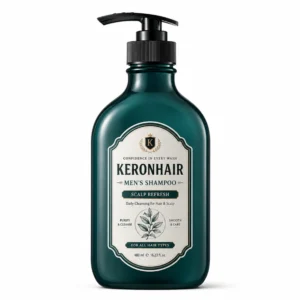
| Keronhair | China | Ready, semi-custom, and custom OEM/ODM | Hair-focused brands coordinating formulas and packaging in China | Public site states a starting production MOQ; confirm by SKU and configuration | Formula route, packaging minimums, test plan, document scope, and schedule |
| HSA Cosmetics | Italy | Full-service private label and custom formulation | Premium and salon-positioned brands seeking Italian development | Request current confirmation | MOQ, formula rights, tests, certificates, and destination-market responsibilities |
| F&P Milano | Italy | OEM and private label hair cosmetics | Professional salon and color-connected product ranges | Request current confirmation | Shampoo-specific MOQ, test scope, packaging, and regulatory division of work |
| Biocrown Biotechnology | Taiwan | OEM/ODM and customized formulation | Brands exploring several shampoo formats | Request current confirmation | MOQ by format, test plan, export support, and certificate scope |
| AG Organica | India | Private label, custom, and contract manufacturing | Botanical or Ayurvedic-inspired hair-care concepts | Described as flexible; request a project figure | Ingredient evidence, claims, MOQ, testing, and export documents |
| Pravada Private Label | United States | Ready-market, semi-custom, and custom | Salons and emerging brands testing lower volumes | Public tiers start at 50, 250, and 2,500 units; reconfirm | What each route includes, packaging costs, tests, and reorder terms |
| The Pure Source | United States | Custom and private label turnkey manufacturing | Established brands prepared for a higher-volume US program | Publicly states 5,000 units per SKU; reconfirm | Current MOQ, test package, component commitment, and production schedule |
| Tropical Products | United States | Private label, bulk, contract manufacturing, and filling | Brands comparing turnkey, bulk, and fill-only arrangements | Request current confirmation | Current capabilities, batch size, formula transfer, and responsibility for tests |
| Nutrix | United States | Ready private label and custom development | US-focused brands comparing ready and custom routes | Request current confirmation | Shampoo MOQ, development scope, tests, packaging, and documentation |
| Laclede | United States | Contract, private label, and custom manufacturing | Buyers with defined specifications and larger production needs | Unit MOQ not public; a batch-size range is shown | Shampoo-specific batch, package format, category, and current line availability |
1. Keronhair: Best for Hair-Focused OEM/ODM and Coordinated China Production
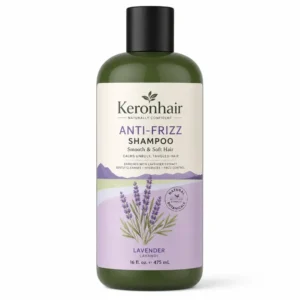
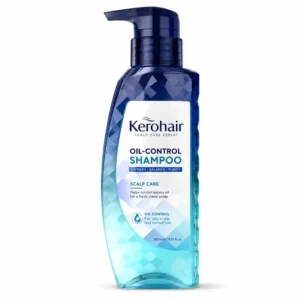
Keronhair specializes in hair products rather than treating shampoo as one small category in a broad general-cosmetics catalogue. Its public product range covers shampoo as well as conditioners, masks, oils, serums, scalp care, styling products, hair color, and professional treatment systems. This range may suit brands planning a coordinated hair-care line instead of one standalone bottle.
Keronhair’s current custom shampoo manufacturing options include established formula routes, selected adjustments to existing bases, and fully custom development. The company presents a coordinated workflow covering the product brief, samples, fragrance and texture feedback, packaging selection, filling, in-process checks, finished-product review, and shipment preparation.
Manufacturing route
Ready-to-brand, semi-custom, private label, and custom OEM/ODM
Best for
Brands that want a hair-category specialist and coordinated formula, packaging, and production support
2. HSA Cosmetics: Best for Premium Made-in-Italy Custom Hair Care
HSA Cosmetics presents a shampoo-specific private label service covering formulation, testing, bulk production, filling, packaging, labeling, and international logistics. Its public range includes products for scalp care, repair, hydration, volume, curls, color maintenance, and other hair needs.
This breadth makes HSA worth investigating when a brand wants more than a generic cleansing base. It may also appeal to buyers who see Italian manufacturing as part of their premium positioning or who want to build shampoo alongside conditioners and treatments.
Manufacturing route
Private label shampoo and custom formulation with full-service production
Best for
Premium, salon, and retail brands that value Italian development and presentation
3. F&P Milano: Best for Professional Salon and Color-Connected Shampoo Lines
F&P Milano is the OEM and private label division of LISAP Laboratori Cosmetici. Its official site says hair color is a core business and lists shampoo, conditioner, masks, creams, mousses, sprays, gels, waxes, bleaching products, and other hair-care categories in its portfolio.
That professional context is the main reason it appears here. A salon brand may not be looking for shampoo in isolation. It may need color-maintenance cleansing, treatment products, finishing products, or a complete after-color routine with a consistent technical and visual identity.
Manufacturing route
OEM and private label professional hair cosmetics
Best for
Salon brands developing shampoo around color, treatment, or styling systems
4. Biocrown Biotechnology: Best for Asian OEM/ODM and Multiple Shampoo Formats
Biocrown Biotechnology presents a Taiwan-based OEM/ODM service and a shampoo category that includes solid shampoo bars, hair-wash powder, shampoo, and shampoo cream. That format range distinguishes it from manufacturers whose public offer focuses only on liquid shampoo in standard bottles.
Alternative formats can support a clear brand concept, but they also introduce different technical questions. A shampoo bar needs suitable processing, moisture control, use instructions, and packaging protection. A powder needs controlled dispensing and protection from humidity. A cream or liquid shampoo must work with the chosen closure and deliver the expected viscosity, lather, rinse feel, and conditioning.
Manufacturing route
Customized OEM/ODM manufacturing
Best for
Brands exploring solid, powder, cream, and conventional shampoo directions
5. AG Organica: Best for Botanical or Ayurvedic-Inspired Hair-Care Directions
AG Organica publicly presents contract manufacturing and private labeling for hair-care products. Its catalogue includes a wide range of ready-to-brand shampoos, conditioners, oils, serums, and masks, with numerous botanical and Ayurvedic-inspired product directions.
The range can be useful for a buyer who wants to start from an existing product concept rather than create a formula from zero. It also gives brands the option to plan related oils, treatments, or conditioners around the shampoo.
Manufacturing route
Ready-to-brand private label, customization, and contract manufacturing
Best for
Brands exploring botanical ingredients, oils, extracts, or an India sourcing route
6. Pravada Private Label: Best for Salons and Emerging Brands Testing Lower Volumes
Pravada Private Label offers a clear route ladder. Its public shampoo page describes ready-for-market products beginning at 50 units, semi-custom projects beginning at 250 units, and custom formulation beginning at 2,500 units. These figures should be reconfirmed because formulas, packages, services, and commercial terms can change.
The route ladder is useful because it shows the tradeoff between speed and differentiation. A ready formula can help a salon put its name on an established product with lower initial inventory. Semi-custom development can add selected ingredients to a base. Fully custom development offers more control but requires more R&D, testing, time, and purchasing commitment.
Manufacturing route
Ready-for-market private label, semi-custom, and custom formulation
Best for
Salons, spas, creators, and emerging brands that want to test demand before a larger custom program
7. The Pure Source: Best for Higher-Volume US Turnkey Shampoo Manufacturing
The Pure Source presents formulation, testing, manufacturing, packaging sourcing, labeling, and compliance checks as part of its shampoo service. Its public page states an MOQ of 5,000 units per SKU and a production timeline of 10 to 12 weeks after sample approval. It also says formulas undergo microbial, compatibility, and stability testing. All of these details should be confirmed in a current project quotation and test plan.
The published MOQ makes this route easier to screen. A buyer that only wants a few hundred units can rule it out early, while an established brand with validated demand may see the higher commitment as compatible with a structured US turnkey program.
Manufacturing route
Custom and private label turnkey shampoo manufacturing
Best for
Established brands prepared for a higher-volume US formulation-to-packaging program
8. Tropical Products: Best for US Bulk, Filling, and Packaging Flexibility
Tropical Products presents several ways to structure a shampoo project. Its public service page covers product development, stock and custom formulas, contract manufacturing, bulk production, filling, and packaging design. It also describes filling consumer bottles and bulk containers.
This flexibility matters when a brand does not need a single turnkey solution. One buyer may own a formula and need a manufacturing transfer. Another may purchase bulk shampoo and use a separate filler. A third may want the manufacturer to manage formula, components, filling, and finished goods.
Manufacturing route
Product development, private label, contract manufacturing, bulk manufacturing, bottling, and filling
Best for
Brands comparing full turnkey production with bulk or fill-only configurations
9. Nutrix: Best for US Private Label Plus Custom Product Development
Nutrix presents a ready private label basic shampoo that can be adjusted, as well as laboratory development for formulas built to a company’s specifications. Its website maps the broader workflow through concept design, R&D, manufacturing, filling, packaging, and logistics.
That combination can suit buyers who are not yet sure how much differentiation they need. An established base may reduce early development work. A custom route may make sense when the brand has a clear benchmark, ingredient direction, performance target, and enough forecast volume to justify the extra work.
Manufacturing route
Ready private label, product modification, custom development, and contract manufacturing
Best for
US-focused brands comparing an established base with a custom laboratory route
10. Laclede: Best for Defined Specifications and Larger Contract-Manufacturing Programs
Laclede lists hair care among its manufacturing categories and specifically identifies cold-process shampoo and conditioner. Its public page describes formulation, manufacturing, filling, packaging, bulk storage, and a published batch range of 50 to 3,000 gallons.
That batch information suggests a contract-manufacturing orientation, but gallons do not translate directly into an order quantity. Finished units depend on formula density, usable yield, process allowance, fill size, package configuration, and how much of the batch is filled. Buyers should request a conversion tied to their approved formula and bottle size.
Manufacturing route
Contract, private label, and custom manufacturing
Best for
Established buyers with defined technical specifications or larger production requirements
How to Choose the Right Shampoo Manufacturer

Choosing the right shampoo manufacturer is about more than comparing prices. A reliable partner should match your formula needs, order volume, quality requirements, packaging plans, and target market.
1. Formula & R&D Capability
Start by confirming whether the manufacturer can support the type of shampoo and level of customization your brand needs.
- Stock, semi-custom, or fully custom formulas
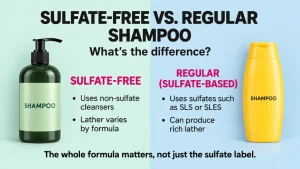
- Sulfate-free, scalp-care, color-safe, moisturizing, or other specialized formulas
- Sample revisions, stability testing, and packaging compatibility
- Ingredient and fragrance customization
Strong R&D support is especially important if you want to build a differentiated product rather than simply add your label to an existing formula.
2. MOQ and Scalability
Make sure the manufacturer’s MOQ fits both your launch budget and future growth plans. Remember that the shampoo formula, bottles, pumps, labels, and cartons may all have different minimum quantities.
The best supplier should be able to support your current order size without creating unnecessary inventory, while still having enough production capacity to handle larger repeat orders as your brand grows.
MOQ should also be evaluated together with sampling, packaging, and production timing rather than as a standalone number. For a more detailed breakdown, see our guide to private label hair care MOQ, sampling, packaging and lead time.
3. Quality & Compliance
Quality systems and documentation are essential, particularly when selling shampoo across different markets. Check whether the manufacturer can provide:
- Relevant GMP, ISO, or manufacturing certifications
- Ingredient lists, COA, SDS/MSDS, and product specifications
- Raw material, bulk production, filling, and finished-product inspections
- Testing and regulatory documentation for your target market
Always verify that certificates and documents apply to the actual factory and products involved in your order.
4. Packaging Capability
Packaging should be considered at the same time as the shampoo formula. Bottle shape, pump or cap design, product viscosity, decoration, labeling, and transportation all affect the finished product.
Choose a manufacturer that can coordinate stock or custom bottles, labels, cartons, printing, and packaging compatibility so you do not have to manage several unrelated suppliers yourself.
5. Communication and Production Support
The sampling stage is often the best way to judge how a manufacturer will manage bulk production. A reliable supplier should provide clear quotations, realistic timelines, written specifications, and fast feedback when technical or packaging issues arise.
The right shampoo manufacturer is ultimately the one whose formula capability, MOQ, quality system, packaging resources, and project support best match your brand’s needs.
White Label vs Custom Shampoo Manufacturing: Which Route Fits Your Brand
This decision comes before choosing a factory, and it shapes your cost structure more than the factory does.
| Factor | White label / stock | Semi-custom | Full custom |
|---|---|---|---|
| Typical MOQ | Single digits–250 pcs | 250–2,500 pcs | 1,000–5,000 pcs+ |
| On this list | Private Label Dynamics · Selfnamed · Pravada white label | Pravada semi-custom · Bo International | Keronhair · HSA · GAR Labs |
| What you get | Stock formula, your label | Adjusted fragrance, colour, some actives | Developed from scratch |
| Formula ownership | Factory keeps it | Usually the factory | Negotiable — can be yours |
| Development fee | None | Low or none | Common (RainShadow from $5,000) |
| Speed to launch | Fastest | Middle | Slowest |
| Differentiation | Minimal | Moderate | High |
The sequence most brands land on eventually is: validate with white label, differentiate with semi-custom, then move to full custom once repeat purchase is proven. Going straight to full custom is where the money goes missing. Five thousand units across four SKUs is twenty thousand units of inventory bought before you know which one sells — the single most common cash-flow accident in this category.
Formula ownership deserves its own conversation before the first production run rather than after. If the contract is silent, assume the factory keeps it. Brands typically discover this at the exact moment they most need to move — during a price dispute or a capacity failure. Our page on custom shampoo manufacturing covers what to settle in writing.
How to Shortlist a Shampoo Manufacturer in 8 Steps
As a shampoo manufacturer, we often see buyers compare suppliers mainly by price. At Keronhair, we recommend looking at the full picture instead—formulation capability, quality control, compliance support, production flexibility, and long-term supply reliability. These are the eight areas we believe matter most when building a serious supplier shortlist.
1. Start With a Clear Product Brief
Before we quote a project, we usually ask about the shampoo type, target market, ingredients, packaging, expected order quantity, and target price. A clear brief helps us quickly determine whether an existing formula can work or whether custom development is needed.
2. Check Whether the Factory Fits Your Product
Not every shampoo factory specializes in the same products. At Keronhair, for example, we evaluate whether the requested formula, ingredients, packaging, and performance requirements match our production and R&D capabilities before moving forward.
3. Verify Certifications and Compliance Support
We encourage buyers to ask for relevant factory certifications and product documentation rather than relying on sales claims alone. For export projects, we also discuss ingredient documents, testing requirements, labeling, and destination-market compliance early in the process.
4. Evaluate the R&D Team
For custom shampoo projects, formulation capability matters a lot. Our R&D team can adjust factors such as fragrance, viscosity, cleansing strength, active ingredients, and product positioning based on the buyer’s requirements.
5. Compare the Full Cost, Not Just Unit Price
When we prepare quotations, unit price is only one part of the calculation. Buyers should also compare MOQ, packaging costs, sample fees, formulation costs, lead times, and payment terms before deciding which supplier offers better overall value.
6. Test Samples Before Bulk Production
We normally recommend approving samples before placing a large order. Buyers can evaluate fragrance, texture, foam, cleansing performance, color, and packaging compatibility, while we make adjustments before the formula enters bulk production.
7. Review Production and Quality Control
For us, consistency between the approved sample and mass production is critical. That is why buyers should understand how a manufacturer controls raw materials, batching, filling, inspection, and finished-product testing—not just how attractive the sample looks.
8. Look at Long-Term Supply Reliability
A good supplier relationship does not end with the first order. At Keronhair, we also consider repeat-order consistency, production scheduling, packaging availability, communication, and scale-up capability. For growing brands, these factors can become more important than saving a small amount on the initial unit price.
From our experience, the best shampoo manufacturer is not necessarily the cheapest one. It is the supplier that can understand your product requirements, produce consistently, support compliance, and grow with your business.
Why Chinese Shampoo Manufacturers Are Often a Strong Choice for Beauty Brands
From our experience at Keronhair, many beauty brands choose Chinese shampoo manufacturers because they offer a practical balance of formulation capability, production scale, customization, and cost efficiency. For brands that need both flexibility and room to grow, China can be a strong sourcing option.
Flexible OEM & ODM Development
Chinese manufacturers can usually support different levels of customization, from ready-made private label formulas to fully customized OEM/ODM projects. At Keronhair, some customers begin with an existing formula to shorten development time, while others need adjustments to fragrance, viscosity, active ingredients, or product positioning.
This flexibility is especially useful for startups, salons, retailers, and established brands testing new shampoo concepts before committing to larger volumes.
Strong Packaging and Supply Chain Support
Another major advantage is China’s mature beauty packaging supply chain. Bottles, pumps, caps, labels, cartons, and secondary packaging can often be sourced within the same manufacturing region.
Common options include:
- Different bottle sizes and shapes
- Custom labels and printing
- Pumps, flip-top caps, and dispensing systems
- Retail cartons and gift packaging
- Premium packaging upgrades
For brands developing several SKUs at once, this can simplify sourcing and reduce coordination between multiple suppliers.
Competitive Cost With More Customization
Cost remains an important reason buyers source from China, but the bigger advantage is often the amount of customization available at a competitive price. Brands can develop differentiated products without immediately moving into extremely large production volumes.
At Keronhair, we often see customers use this flexibility to test a new market first, then increase order quantities once sales become more predictable.
Faster Product Development
When formulation, sampling, packaging, filling, and production can be coordinated within one supply network, development is generally easier to manage. This helps reduce delays caused by working with separate formula developers, packaging suppliers, and filling factories.
For buyers, it also means fewer communication gaps during sample revisions and pre-production approval.
Broad Shampoo and Hair Care Capabilities
Many Chinese manufacturers can support multiple shampoo categories as well as related hair care products, making it easier to build a complete product line with one supplier.
Depending on the factory, product options may include:
- Moisturizing and repair shampoo
- Color-protection shampoo
- Sulfate-free shampoo
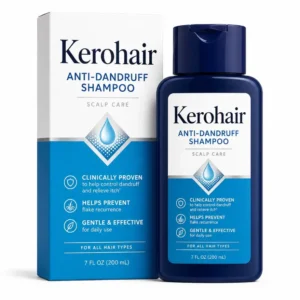
- Anti-dandruff shampoo
- Herbal or botanical formulas
- Professional salon shampoo
- Conditioners, masks, and other complementary products
This can make future SKU expansion much easier.
Supplier Verification Still Matters
China has a large shampoo manufacturing base, but factory capabilities vary considerably. We recommend checking certifications, formulation experience, quality-control procedures, testing support, export experience, production capacity, and compliance documentation before making a final decision.
For us, the real advantage of sourcing shampoo from China is not simply lower cost. It is the combination of customization, supply-chain efficiency, manufacturing flexibility, and the ability to scale with your brand.
If China is already on your sourcing shortlist, our guide to finding a shampoo manufacturer in China explains supplier screening, factory verification, formula development, and other practical sourcing considerations in more detail.
What to Compare Before Choosing a Shampoo Manufacturer
Price and MOQ are the easiest numbers to compare and the least expensive to get wrong. The costs that actually hurt — a formula that separates in month four, a batch stuck at customs — never appear on the quote.
Put these side by side instead:
- Manufacturing model. In-house chemists (OEM), a stock formula library (ODM), or filling only? Ask to speak with a formulator.
- Certifications. ISO 22716 (GMPC) matters most. Verify the number and scope with the issuing body. Treat “FDA certified” as a warning sign — FDA issues no such certificate for cosmetics.
- What the MOQ covers. Bulk batch, per SKU, or per variant? Bottles and caps often carry higher minimums than the liquid.
- What the quote includes. Bulk only, or filled and finished? Incoterm, tooling, plate and artwork fees.
- Testing. pH, viscosity, microbial, preservative challenge, stability, and compatibility in your actual packaging — with a CoA per batch.
- Documentation for your market. US listing data and the facility FEI; PIF and safety report for the EU. Anti-dandruff actives make it an OTC drug in the US.
- Formula ownership. Who owns custom development, and can they sell it on?
Ask What Changes When You Scale
Ask for their minimum and maximum batch size, then ask the question that predicts trouble: what changes between a pilot batch and full production? Scaling a shampoo isn’t linear. Mixing shear, heating and cooling rates, and hold times all shift with vessel size, and viscosity and clarity can shift with them. A factory that has done it will describe how they bridge the two. One that says “no difference” either hasn’t, or isn’t telling you.
Ask about seasonal loading too. Many hair care factories run tight from late summer through Q4. Find out where a new account sits in the queue at peak.
Treat the Sample Round as an Audit
The sample round is the cheapest audit you will run, and it previews how the supplier behaves in production. Track four things:
- Response time — and whether it holds after the quote is signed.
- What they ask before mixing. A supplier who wants your target market, packaging, and claim set is formulating. One who just sends a bottle is pulling from stock.
- What arrives with the sample. A spec sheet with pH, viscosity, and a batch code, or an unlabelled bottle?
- Revision rounds — how many, who pays, how long each takes.
A supplier who flags a problem in your brief at sample stage will flag one in production.
Why Global Brands Choose Keronhair
Most buyers arrive with the same three worries: will the formula work, will the documents pass customs, and will the second order ship on time. Here is how we answer each one.
End-to-End OEM/ODM Service
Come to us with a finished formula or just a reference product. Formulation, sampling, packaging sourcing, filling, labeling, and export documentation happen under one roof, coordinated by one project team.
Capacity You Can Plan Around
An 8,000 m² facility in Guangzhou running 10+ automated filling lines, handling everything from thin serums to thick color creams. Your reorder date is a date, not an estimate.
Keronhair Shampoo R&D & OEM/ODM Capabilities
Keronhair supports beauty brands from formula selection to market-ready shampoo production, backed by an in-house R&D team and 500+ proven hair care formulas.
- Formula options — sulfate-free, hydrating, clarifying, scalp-care, color-safe, and other targeted shampoo formulas
- Flexible development — choose from ready-to-brand formulas, semi-custom adjustments, or fully custom formulation
- Packaging support — bottles, pumps, labels, decoration, cartons, and formula-packaging compatibility coordinated in one project
- Scalable production — selected standard-formula projects can start from 1,000 units per SKU, with custom projects planned around formula and packaging requirements
Existing-formula ODM samples are typically prepared in 7–14 business days, while fully custom OEM formulas require additional development time.
Brands that want to understand how these capabilities connect from formulation and sampling through packaging, quality control, and bulk production can review Keronhair’s OEM/ODM hair product manufacturing services.
MOQ That Matches Your Stage
Standard-formula projects start at 1,000 units per SKU or shade. Launch a narrow range, see what sells through, then scale the winners.
Your Formula Stays Yours
Formula ownership and exclusivity terms are written into your quotation before development starts, not left for later. You will know exactly what you own.
Certification and Market Access
Facility certifications, copies available on request:
- GMPC and ISO 22716
- FDA facility registration
- SGS third-party testing
- BSCI ethical audit
Your importer or brand entity files the market registration. We supply the technical file behind it — MSDS, INCI disclosure, and test reports for CPNP, MoCRA, or SFDA submissions.
Frequently Asked Questions
How do I choose the best shampoo manufacturer for my beauty brand?
Match the manufacturer to your development route, destination market, opening quantity, test plan, packaging, formula rights, documentation needs, and growth forecast. Send the same brief to three to five qualified companies, verify the legal entity and factory, compare coded samples, and normalize quotations. The best fit is the supplier that can support the complete project with clear evidence and workable commercial terms.
What is a typical MOQ for private label shampoo?
There is no universal MOQ. A ready formula in a stock bottle may support a smaller order than a custom formula with printed packaging, but the final commitment can be set by the bulk batch, filling run, bottle, closure, label, carton, fragrance, or SKU. Ask for each minimum separately and include unused components, development, testing, freight, and duties in the budget.
What is the difference between private label and custom shampoo manufacturing?
Private label usually begins with an existing formula that receives the brand’s label and selected packaging. Semi-custom development adjusts an existing base. Fully custom manufacturing creates or transfers a formula against a detailed brief. More customization can improve differentiation but normally adds development work, sample rounds, testing, time, MOQ, and formula-rights questions.
How much does it cost to manufacture shampoo?
The cost depends on the formula, actives, fragrance, pack size, bottle and closure, decoration, testing, development route, production quantity, labor, freight, duties, inspection, and destination requirements. A meaningful estimate requires a product brief. Compare total landed cost and opening cash commitment rather than relying on a generic per-bottle figure.
What tests should a shampoo manufacturer provide?
The plan depends on the formula, packaging, intended use, claims, user group, and destination market. Common areas include written specifications, stability, microbial limits, preservative-efficacy testing where appropriate, packaging compatibility, and batch-release checks. Ask who performs each test, which method and acceptance criteria are used, and whether the report covers the final formula in the intended package.
Can a shampoo manufacturer also source packaging?
Many manufacturers offer packaging sourcing or turnkey production. Confirm who selects and approves suppliers, component MOQ, tooling, samples, compatibility, incoming inspection, substitutions, defects, excess inventory, artwork, and storage. Packaging support is valuable only when responsibility is clear and the complete package has been assessed with the shampoo and filling line.
What documents do beauty brands need before selling shampoo?
Requirements vary by market and claim. The project may involve the final ingredient list, specifications, safety and test records, batch or COA documents where applicable, compliant labeling, claims evidence, facility or product information, and market-specific notification, listing, or registration. The brand or designated responsible party should obtain qualified advice for the destination rather than relying on a manufacturer’s general compliance statement.
How long does custom shampoo manufacturing take?
There is no dependable universal timeline. Separate the brief, formulation, sample revisions, testing, packaging procurement, artwork, production scheduling, filling, inspection, and freight. Ask the manufacturer for a milestone plan that identifies dependencies and states when the quoted production window begins. A timeline that starts after sample and packaging approval is not the same as the full concept-to-delivery schedule.