If your shampoo leaves your scalp comfortable and your hair easy to manage, a sulfate-free label isn’t a reason to replace it. If every wash leaves your ends rough or your roots feeling coated, it’s worth looking more closely at the formula and how you’re using it.
What’s the difference between sulfate-free and regular shampoo, and when does it matter? Here, “regular” means sulfate-based shampoo. Your choice depends on both the formula and your washing routine.
Sulfate-Free vs. Regular Shampoo: Which Should You Choose?
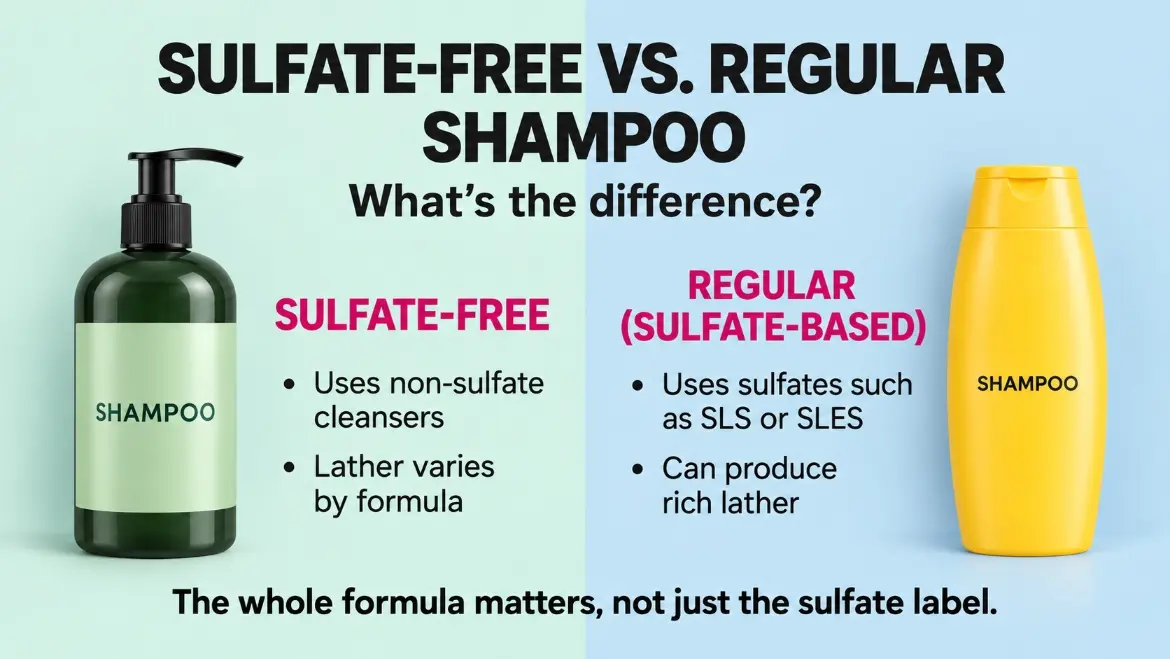
Choose a shampoo that removes the oil and residue you need it to without leaving your scalp uncomfortable or your lengths difficult to manage. A sulfate-free formula is one option when reconsidering a drying wash. A sulfate-based formula can also suit your routine. Neither label alone predicts the result.
| What you’re comparing | Sulfate-based shampoo | Sulfate-free shampoo |
|---|---|---|
| Cleansing ingredients | Includes sulfate surfactants, such as SLS or SLES | Uses other cleansing surfactants |
| Oil and residue removal | Evaluate the specific product’s cleansing performance | Still needs to remove the oil and products in your routine |
| Lather | Sulfate systems can produce abundant foam | Foam varies; sulfate-free doesn’t mean foam-free |
| Feel after washing | Look for comfortable roots and manageable lengths | Check for both unwanted dryness and excessive heaviness |
| Sensitive-scalp suitability | Review the whole formula and your known reactions | Don’t treat the exclusion label as an allergy guarantee |
| Color-treated hair | Check the product’s color-care positioning and instructions | Check those same details; the label doesn’t promise zero fading |
Start with a specific reason to change. “My ends tangle after washing” gives you something to assess. “This bottle sounds cleaner” doesn’t tell you what improvement you’re buying.
What Do “Sulfate-Free” and “Regular Shampoo” Mean?
These terms describe cleansing ingredients, not whether a shampoo is moisturizing, clarifying, or fragrance-free.
What Sulfates Do in Shampoo
Sulfates such as sodium lauryl sulfate (SLS) and sodium laureth sulfate (SLES) are surfactants: cleansing ingredients that help remove oil and dirt during washing. They also contribute to lather. SLS and SLES are different ingredients, although both belong to the sulfate group.
Seeing SLES on a bottle doesn’t tell you how your scalp will respond to the finished shampoo.
What a Sulfate-Free Label Does and Doesn’t Tell You
Sulfate-free shampoos use other surfactants. The label doesn’t mean the product contains no cleansers, no fragrance, or only naturally derived ingredients. Nor does it automatically mean silicone-free.
Sulfate-free labeling does not, by itself, establish that a shampoo is suitable for every cleansing use. If you are considering using it on body skin, our guide to washing your body with shampoo addresses that separate question.
It also doesn’t tell you the finished product’s pH. A sulfate-based formula isn’t necessarily alkaline, and a sulfate-free label doesn’t establish a particular acidity. The review of shampoo surfactant technology explains why formulators must consider surfactant blends, pH, foam, and other performance requirements together.
If the overlapping labels are confusing, our guide to different types of shampoo separates cleansing needs from other product categories. One shampoo can be sulfate-free and clarifying; another can be sulfate-free and heavily conditioning.
How Do Sulfate-Free and Sulfate Shampoos Compare in Use?
Think through a typical wash: does the shampoo clean your roots, rinse out easily, and leave your hair feeling the way you want?
Cleansing Oil and Product Buildup
Both categories can clean hair. The amount and type of residue you’re trying to remove help determine whether a particular product does enough for you.
Suppose you start using pomade more often but keep washing as usual. If your roots now feel coated, consider the extra styling product before blaming the shampoo’s sulfate status.
Check application and rinsing first. If residue persists, look for a shampoo intended for that cleaning task. “Contains sulfates” doesn’t mean “removes every kind of buildup.”
Lather, Rinsing, and the Feel of Clean Hair
Foam volume isn’t a cleansing score. Some sulfate-free formulas lather well, and a large cloud of bubbles doesn’t prove that you’ve removed everything you wanted to wash away.
If you enjoy a generous lather, include that in your choice. Just assess the result after rinsing too.
Follow the new bottle’s application instructions before adding more to recreate your previous shampoo’s foam. Check that you can distribute it and rinse all areas thoroughly.
Softness, Frizz, and Manageability
The cleansing system is only part of the formula. Conditioning ingredients can affect softness and handling, so two sulfate-free shampoos may leave quite different finishes.
A sulfate-free shampoo also needs to fit the products used after it. The U.S. hair repair collection example describes a three-product brief that coordinates shampoo, daily conditioner and an intensive mask.
Keep your conditioner and styling products consistent where practical. Check detangling and the dry finish: a slippery rinse that leaves your hair heavy may not be the softness you wanted.
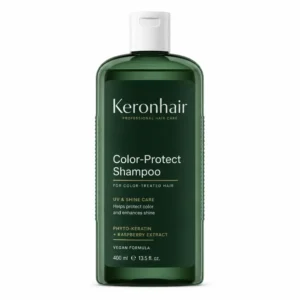
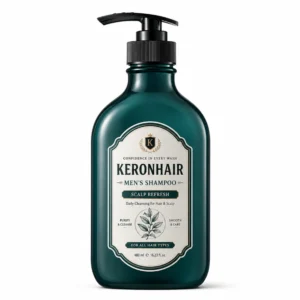
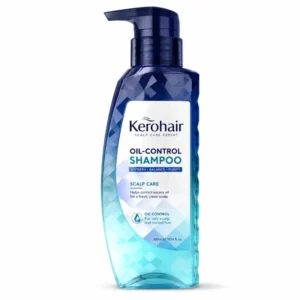
When exploring Keronhair’s sulfate-free shampoo options, ask about cleansing, foam, and rinse feel alongside ingredient exclusions. Those questions matter whether you’re shopping for yourself or developing a product.
For brand teams, a sulfate decision is only one part of the sensory brief. Our Thailand scalp-care range example shows how shampoo, conditioner and treatments can be assessed together for a lightweight routine.
Why Do People Avoid Sulfates in Shampoo?
Dryness, irritation, and concerns about color fading can make a sulfate-free bottle appealing. But a disappointing experience with one shampoo doesn’t establish that every sulfate formula will behave the same way.
DermNet’s shampoo guidance distinguishes irritation from allergic reactions and identifies potential issues involving surfactants, fragrances, and preservatives. It also notes that SLS may be more irritating than SLES. That distinction shouldn’t become a promise that every SLES product will suit you.
If a product causes irritation, stop using it. Seek professional advice for severe or persistent symptoms rather than repeatedly trying stronger cleansers or relying on an exclusion label to identify the cause.
Keep the problem specific: rough ends and an itchy scalp aren’t the same complaint. Switching to sulfate-free doesn’t rule out reactions to other ingredients.
What Are the Potential Benefits and Limitations of Sulfate-Free Shampoo?
A well-chosen sulfate-free formula may give you a less drying wash or leave your lengths easier to manage than your current shampoo. Those are useful improvements to look for, especially if washing regularly leaves your hair feeling rough.
The benefit comes from finding a better match. Removing sulfates doesn’t add moisture or conditioning by itself. You still need a formula that cleans adequately and a conditioner suited to your lengths.
Sulfate-free doesn’t guarantee gentleness or color protection. Some formulas clean more strongly than you expect; others feel too heavy. Nor does the label promise to repair damage. Judge improvement against your original complaint, such as tangling after washing.
Who Should Consider Sulfate-Free Shampoo, and Who May Not Need to Switch?
Consider trying a suitable sulfate-free formula if your current wash leaves your hair dry or difficult to manage. If your sulfate-based shampoo already cleans well and feels comfortable, you may not need to switch. For oily roots with dry ends, assess those needs separately.
The American Academy of Dermatology’s healthy-hair tips recommend washing according to oil and dirt, concentrating shampoo on the scalp, and placing conditioner according to hair type. That gives you more flexibility than choosing by one label.
| Your situation | A useful starting point | What not to assume |
|---|---|---|
| Oily roots or frequent styling-product use | A shampoo that adequately cleans your scalp and removes your usual residue | That every sulfate-free formula is too weak |
| Dry, curly, or damaged lengths | A suitable gentle-cleansing product, with conditioning where needed | That removing sulfates will solve all tangling or damage |
| Fine hair that is also color-treated | Color-care suitability plus a finish that doesn’t flatten your roots | That a richer formula is automatically better |
| Oily roots and dry ends | Evaluate scalp cleansing and care for the lengths separately | That the whole routine needs to become more cleansing or more conditioning |
| A scalp that reacts to products | Review known triggers and seek advice for persistent symptoms | That sulfate-free also means fragrance-free or allergy-proof |
For dyed hair, our guide to choosing shampoo for color-treated hair goes further into that decision. If you’ve had a salon smoothing or other chemical treatment, follow the specific aftercare instructions. An ordinary product containing keratin isn’t the same thing as having undergone a salon treatment.
Hard water is another separate question. If mineral deposits are your concern, investigate products specifically intended for that purpose. A sulfate label alone doesn’t establish mineral-removal performance, and rough-feeling hair by itself doesn’t confirm a water-related cause.
What Should You Check on the Shampoo Label?
Use the label to narrow your choices. Ingredient names tell you what’s included, but they can’t establish how gentle or color-protective the finished shampoo will be.
These are teaching examples of ingredient names, not complete product labels, formulas, or tested recommendations:
- Example A: sodium laureth sulfate and cocamidopropyl betaine. The presence of SLES identifies a sulfate-containing cleansing system; the second ingredient doesn’t make it sulfate-free.
- Example B: sodium lauroyl methyl isethionate and cocamidopropyl betaine. These are non-sulfate surfactant examples. You would still need the complete list to assess an actual bottle’s sulfate-free claim.
Neither example supplies concentrations or proves which finished shampoo would feel gentler. Cocamidopropyl betaine can appear in either category, so finding that name alone won’t distinguish them.
Read “SLS-free” carefully too: it excludes SLS, but doesn’t by itself exclude SLES or every other sulfate surfactant. Similarly, sulfate and sulfonate are different chemical groups; a similar-looking name isn’t enough to classify an ingredient or judge its performance.
Before buying, check four practical details:
- The stated purpose: does it address your cleansing or hair-care need?
- The full ingredient list: does it contain a trigger already identified for you?
- The directions: can you use it as intended within your routine?
- The package size and price: are you comparing similar quantities?
If a retailer’s description conflicts with the bottle, ask the brand for the current information for your market. Don’t build your decision around an ingredient list for an older version.
How Do You Switch from Regular to Sulfate-Free Shampoo?
Start with the result you want to improve. Choose a product for that need, follow its directions, and keep other products reasonably consistent. Compare your hair after rinsing, after drying, and before your next wash.
Note any changes in styling or washing habits so you don’t attribute everything to the new shampoo.
- Less foam, but a satisfactory result: assess comfort and cleanliness before deciding that you need more shampoo.
- A coated or greasy feel immediately after washing: check distribution, rinsing, conditioner placement, and whether the formula suits your routine.
- Rough or tangled lengths: review where you’re cleansing and conditioning. Our guide to caring for dry ends without a greasy finish can help with that separate step.
- Irritation or worsening discomfort: stop using the product rather than treating the reaction as a normal transition.
You don’t owe a shampoo a fixed “detox” period. Don’t assume a disappointing result will resolve after a set number of weeks. If the product isn’t meeting your needs, reassess it.
Don’t add a clarifying wash, double shampooing, and a new conditioner just because you’re switching. Changing everything at once makes it harder to tell what helped or what caused a problem.
Frequently Asked Questions
Daily washing, product buildup, and scalp concerns can raise further questions when you’re choosing a shampoo.
Can I Use Sulfate-Free Shampoo Every Day?
Possibly, if the product suits your needs and its directions allow it. Base washing frequency on oil, dirt, activity, and scalp response. Sulfate-free alone doesn’t establish suitability for daily washing.
Can I Alternate Between Sulfate-Free and Regular Shampoo?
Yes, when the products serve different needs. There’s no requirement to alternate or follow a fixed rotation. Use each as directed rather than mixing and storing them together.
Does Sulfate-Free Also Mean Silicone-Free?
No. The labels refer to different ingredient groups. Check each claim separately; neither label alone tells you how a shampoo will cleanse or how your hair will feel afterward.
Why Does My Hair Feel Greasy After Using Sulfate-Free Shampoo?
Possible reasons include incomplete rinsing, leftover styling products, or a formula that feels too heavy. Check application and conditioner placement before assuming your scalp needs an adjustment period.
Can Sulfate-Free Shampoo Remove Product Buildup?
Yes, if the formula is designed for that residue. Sulfate-free describes excluded ingredients; clarifying describes a cleansing purpose. Choose for the buildup you’re addressing rather than assuming all sulfate-free products clean alike.
Is Sulfate-Free Shampoo Better for Dandruff?
Not automatically. Choose a shampoo formulated to treat dandruff and follow its directions. Sulfate-free status alone doesn’t establish treatment effectiveness. Seek professional advice if flaking persists or your scalp becomes sore.
Is Sulfate-Free Shampoo Worth Paying More For?
Only if the specific product offers something useful to you. Compare package size, how much you use, and the result. A sulfate-free claim alone doesn’t justify a higher price.
Choose the Formula That Works for Your Routine
I wouldn’t replace a comfortable, effective shampoo just to change the wording on the bottle. If you do want a different result, name it first: easier detangling, less heaviness, or a wash that better handles your styling routine.
Keep what works, adjust what doesn’t, and seek advice for persistent scalp symptoms.
For readers developing a hair-care brand, Keronhair offers custom shampoo manufacturing. Begin your brief with the cleansing and after-feel you want customers to experience, alongside any ingredient exclusions. Both belong in the product discussion.
References & Sources
These sources inform the formulation background and general care guidance. The ingredient examples and decision tools above are educational, not reports of Keronhair product testing or individual medical advice.