Walk into any beauty supply store and you’ll find bleach and permanent hair color sitting side by side — similar price tags, similar packaging, almost identical marketing claims. But after more than 16 years of formulating professional hair care products and overseeing factory production lines, I can tell you that the gap between these two products is enormous. Your clients feel that difference with every single wash.
Whether you’re a salon owner building a retail lineup, a brand developer sourcing OEM formulations, or simply someone trying to protect their own hair, understanding exactly how each chemical works — and how much damage it causes — isn’t just nerdy chemistry. It’s the foundation of smarter decisions, stronger product claims, and real client trust.
In this guide, we break down the bleach vs. permanent dye debate in full, from the chemistry happening inside the hair shaft to practical recovery strategies backed by lab data.
How Bleach and Permanent Dye Actually Work
Before we compare bleach vs. permanent dye damage, we need to understand what each formula is actually doing inside the strand. These are fundamentally different chemical processes — and that distinction matters enormously when you’re making formulation or retail decisions.
How Hair Bleach Works
Bleach has one primary job: completely strip your hair of its natural pigment. It uses a strong alkaline agent — typically ammonia — to force the cuticle wide open, then floods the cortex with high-volume hydrogen peroxide. That peroxide aggressively oxidizes and dissolves the melanin molecules responsible for your natural color.
What’s left behind isn’t just lighter hair. It’s a strand that has been structurally hollowed out from the inside. The cuticle is blown apart, the cortex is depleted of proteins, and the melanin — which is gone permanently — can never be replaced by the hair itself.
How Permanent Hair Dye Works
Permanent dye does something completely different. Rather than stripping pigment, it deposits new color. A lower-volume developer gently opens the cuticle just enough for synthetic dye molecules to enter the cortex. Once inside, those molecules swell and become permanently trapped, locking in a lasting shade.
Because the developer used is less aggressive and the goal is deposit rather than destruction, the internal protein structure of the hair remains largely intact. This is the single most important distinction in the entire bleach vs. permanent dye conversation.
To understand how these formulas are responsibly developed from the ground up, our overview of how quality and safe natural hair dye is manufactured walks through the process in detail.
Bleach vs. Permanent Dye Damage: A Direct Comparison
When we evaluate chemically treated strands in the lab, we measure damage by analyzing how the hair’s internal structure holds up post-processing. Both products permanently alter the hair shaft, but they degrade its integrity at drastically different rates. Here’s exactly what the data shows.
Cuticle Damage: Which Treatment Is Harsher?
The cuticle is your hair’s first line of defense — a tightly overlapping layer of protective scales. When we formulate professional-grade developers, controlling how wide this layer opens during treatment is a primary goal.
Bleach aggressively forces the cuticle wide open, often blowing the protective scales apart entirely. Even after rinsing, those scales struggle to lie flat again. The result is chronic friction, tangles, and a dull, rough texture that persists long after the treatment.
Permanent dye, by contrast, uses a gentler alkaline agent that slightly lifts the cuticle just enough to allow color to enter. With proper aftercare, those scales can mostly reseal, keeping the hair smooth and light-reflective.
Protein and Keratin Bond Destruction
This is where the bleach vs. permanent dye damage gap becomes most stark. Hair derives its core strength from complex keratin chains and disulfide bonds located deep inside the cortex. When these are severed, breakage becomes catastrophic.
Permanent color alters your natural pigment but leaves the underlying protein structure largely intact. The hair retains its flexibility, strength, and ability to resist everyday wear and tear.
Bleach is a different story. It doesn’t just dissolve melanin — it aggressively severs disulfide bonds and hollows out the cortex, breaking down keratin proteins and leaving the strand structurally compromised from the inside out. This is why heavily bleached hair snaps under minimal tension.
Porosity and Moisture Retention
Chemical processing directly impacts how well hair holds water. When the cuticle is severely compromised, hair acts like a sponge riddled with holes — absorbing moisture rapidly but losing it almost instantly.
| Treatment | Porosity Level | Moisture Retention | Daily Maintenance Needs |
|---|---|---|---|
| Bleach | Extremely High | Poor (chronic dryness) | Heavy lipid-based masks |
| Permanent Dye | Medium | Moderate (easily managed) | Standard color-safe care |
Permanent dyes only slightly increase porosity. Bleaching drastically elevates it by stripping the hair’s essential natural lipids — which is why rich, salon-grade deep conditioning becomes a non-negotiable part of any bleach aftercare routine.
Elasticity and Tensile Strength: Which Snaps First?
Tensile strength is how much a strand can stretch before breaking. In the lab, we test this with a simple wet stretch test — and the difference between bleached and permanently dyed hair is immediately obvious.
Hair that’s been through a permanent color process maintains healthy elasticity. It stretches when wet and bounces back without snapping. Bleached hair, on the other hand, loses its natural spring entirely. Under minimal tension, it stretches like chewing gum and then snaps off — a direct result of severe internal protein loss.
Scalp and Skin Irritation
Both chemicals carry distinct risks, but the nature of irritation differs significantly.
On-scalp bleach applications are notorious for acute chemical burns. The extremely high pH and aggressive oxidation can blister and severely dry out scalp tissue if left on too long. Permanent dyes are generally much milder on the skin in terms of immediate burn risk — but they carry a higher long-term risk of allergic contact dermatitis due to synthetic pigment ingredients like PPD (paraphenylenediamine).
For clients already experiencing thinning or sensitivity, it’s worth reviewing our research on whether hair dye can cause hair loss before recommending any chemical color service.
Pregnant readers have an additional suitability question beyond the damage comparison. Our pregnancy hair-color guide outlines the points to discuss with a midwife or doctor before choosing another coloring or lightening service.
What Is the Worst Hair Dye for Damage?
Clients ask me this all the time — and the answer is almost always the same: the worst hair dye for damage is a high-volume bleach application, followed closely by drugstore box dyes packed with aggressive ammonia levels and 30- or 40-volume developers.
Here’s why those two are so destructive. The higher the developer volume, the faster and more aggressively it opens the cuticle. Speed — in hair chemistry — kills structural integrity. In more than 16 years of formulating products to meet GMPC and ISO 22716 safety standards, the lab data consistently shows that chasing a quick lift obliterates the cuticle and causes permanent protein loss that no mask can fully repair.
High-lift dyes sit in a middle category. They use a higher ammonia concentration alongside a strong developer to simultaneously lift and deposit tone. They can achieve roughly three to four levels of lightening on virgin, uncolored hair — but they still aggressively open the cuticle. The difference is that they’re formulated with built-in conditioning agents, making them marginally gentler than raw bleach powder.
If you’re asking does permanent dye ruin hair the way bleach does — the honest answer is no, not at the same rate. Permanent dye causes real, measurable changes to the hair shaft, but the cortex remains mostly intact, which is why recovery is significantly faster and more achievable.
How to Minimize Damage During Chemical Color Services
Catastrophic damage is preventable. The key is combining the right professional formulations with a disciplined, science-backed application approach.
Use Bond-Building Technology In-Process
The most impactful upgrade you can make to any bleach or dye service is adding a “plex” bond-building additive directly into your formula. These technologies — like Olaplex or similar bond multiplier systems — actively reconstruct disulfide bonds as they’re being broken during processing. They act as an internal scaffold for the cortex, dramatically reducing the structural damage that would otherwise accumulate during a single session.
Immediately after rinsing, follow with a low-pH, lipid-rich treatment. The acidic pH forces the swollen cuticle to close, halts residual oxidation, and traps moisture inside the strand before it escapes.
Prepare the Hair Before You Process It
You wouldn’t paint over a crumbling surface. The same logic applies to chemical color. Preparing the hair’s structural integrity before application significantly reduces the risk of breakage.
A chelating shampoo is an often-overlooked first step. Hard water mineral deposits build up on the hair shaft and can produce volatile, heat-generating chemical reactions when they come into contact with bleach. A clarifying pre-wash removes those impurities and creates a clean, even surface for the chemical to process uniformly.
Porosity equalizer sprays serve a similar purpose — filling in damaged gaps along the cuticle to prevent the formula from attacking the most fragile sections of the strand with disproportionate intensity.
Choose the Right Developer Volume — Then Go Lower
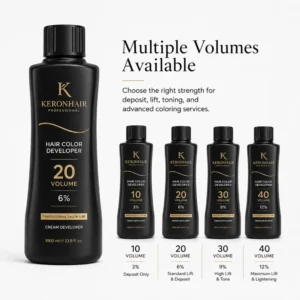
The most common costly mistake I observe on the production floor and in salon settings alike is reaching for too high a developer in the name of saving time. A 40-volume developer does lift faster — but it physically obliterates the cuticle in the process.
A 10- or 20-volume developer paired with a high-quality lightener or permanent dye takes longer, yes. But it preserves the hair’s elasticity and tensile strength far more effectively. Given how long it takes to repair bleach damage, the time saved at the bowl is never worth the structural cost.
Thinking about how often to repeat color services? Our guide on how often you should dye your hair gives a practical framework for spacing treatments responsibly.
Safer Alternatives to Bleach and Permanent Dye
When clients want vibrant color without severe structural compromise, it’s worth understanding which alternative formulas can realistically deliver results — and which ones come with hidden risks of their own.
Semi-Permanent and Demi-Permanent Dyes
Semi-permanent dyes contain no ammonia and no developer. Their large pigment molecules simply stain the outside of the cuticle, depositing color without penetrating the cortex. They fade harmlessly over time and cause minimal structural change — making them the gentlest option in any color lineup.
Demi-permanent dyes use a very low-volume developer to slightly open the cuticle and deposit color just beneath the surface. From a formulation perspective, they deliver exceptional gloss and are excellent for gray blending without permanently altering the hair’s internal protein structure.
Sulfur-Based Color Removers vs. Bleach
When correcting a color mistake, reaching for bleach should be a last resort. Color removers that use sulfur chemistry are specifically engineered to target only synthetic dye molecules — shrinking the artificial pigment trapped inside the cortex so it can be washed out without touching your natural melanin or keratin bonds. The strong sulfur odor is temporary; the hair preservation is permanent.
Natural Dyes: Gentler, But Not Risk-Free
Henna and indigo are genuinely milder options — they coat the hair shaft in a protective plant resin without breaking disulfide bonds. But they come with a significant caveat: many commercial henna products contain hidden metallic salts. If you or your client ever attempts to apply traditional bleach or permanent color over hair treated with metallic salts, the resulting chemical reaction can literally melt the strand. Always patch-test and source your henna from a verified supplier.
For a deeper look at how plant-based and natural colorants are responsibly formulated for professional use, visit our Keron Hair resource hub.
How to Fix Chemically Ruined Hair: Recovery Timeline and Treatments
Once a client’s hair is damaged, the first question is always the same: can this be fixed? Here’s the honest answer from the lab: we cannot bring dead cells back to life. Hair is essentially dead protein — it cannot biologically repair itself the way skin does. But advanced cosmetic chemistry gives us real tools to structurally reinforce damaged strands, stop breakage, and restore a healthy appearance.
The single most important distinction in recovery is understanding how to fix chemically ruined hair from permanent dye versus bleach — because the strategies, timelines, and realistic outcomes are very different.
Damage from Permanent Dye: Largely Reversible
Because the cortex remains mostly intact after permanent dye, the damage is primarily superficial — moisture imbalance and cuticle roughness that responds well to consistent conditioning. With the right routine, most clients see significant improvement within two to four weeks.
Bleach Damage: Manageable, Not Curable
Bleach damage represents permanent structural loss. You can patch severed disulfide bonds and coat the torn cuticle — but the hair will never revert to its virgin state. A minimum of six to eight weeks of intensive bond-building and deep hydration is required just to stabilize the strand and stop daily breakage. That high-maintenance routine must continue until the processed sections are fully grown out and cut off. The only true cure for severely bleached, gummy hair is a pair of scissors — and the sooner clients understand that, the better decisions they make.
Bond Builders vs. Protein Treatments: Know the Difference
These two technologies are often confused, but they do completely different jobs.
Protein treatments work like spackle on a damaged wall — hydrolyzed keratin, wheat, or silk proteins fill in the microscopic chips and holes along the cuticle, temporarily restoring strength and smooth texture. Use them once or twice a month. Overusing protein on high-porosity hair causes “protein overload,” leaving strands stiff, brittle, and prone to snapping.
Bond builders work internally, penetrating the cortex to artificially reconnect broken disulfide bonds and restore core elasticity. Because they don’t coat the hair, they can be used once or twice a week safely on severely bleached strands.
The American Academy of Dermatology’s guidance on hair color safety offers additional evidence-backed context on managing chemically processed hair.
Daily Habits That Extend Your Recovery
Make daily care fit the condition of your hair after the chemical service. Our guide to shampoo selection for colored or bleached hair explains how to weigh scalp cleansing against softness and manageability in the processed lengths. Use conditioner after washing, detangle gently, and limit heat styling; when you do use heat, keep the setting low enough for the style you need.
For a black shade that is losing depth, review the fade-related factors before deciding on another chemical service. Our black hair dye maintenance guide provides that shade-specific discussion alongside the broader damage comparison.
Recovery Timeline at a Glance
| Treatment Type | Recovery Timeframe | Primary Focus | Realistic Outcome |
|---|---|---|---|
| Permanent Dye | 2–4 weeks | Moisture restoration, cuticle sealing | Full cosmetic recovery achievable |
| Bleach | 6–8 weeks (ongoing) | Bond rebuilding, heavy hydration | Stabilization only; grow-and-cut for full recovery |
Final Verdict: Bleach vs. Permanent Dye
The lab data doesn’t leave much room for debate. When it comes to bleach vs. permanent dye, bleach is the significantly more destructive option — full stop. It obliterates internal keratin bonds, destroys cuticle integrity, and causes structural damage that cannot be biologically reversed.
Permanent dye is not without its effects. It does alter the hair shaft, and it does require diligent aftercare. But when properly formulated and applied with the right developer volume and professional-grade conditioning agents, it’s a vastly gentler process that leaves the cortex largely intact and recovery genuinely achievable.
If you’re developing color products, the priorities are clear: invest in bond-building technology, source low-ammonia base formulas, train against high-volume developer overuse, and give your clients the honest recovery timeline they need to make smart decisions. That kind of transparency is what builds long-term trust — and long-term loyalty.
Frequently Asked Questions
Is bleach or permanent dye worse for your hair?
Bleach is significantly worse. While permanent dye gently opens the cuticle to deposit color, bleach forcefully strips away natural pigment and severs the hair’s internal disulfide bonds — leading to severe dryness, loss of elasticity, and rapid breakage that permanent dye simply does not cause.
Does permanent dye ruin hair the same way bleach does?
No. Permanent dye does cause measurable changes to the cuticle and slightly elevates porosity, but the internal protein structure of the cortex remains largely intact. Recovery is faster, the damage is more manageable, and the structural loss is far less severe than bleach-related damage.
Which hair dye damages your hair the most?
Bleach and high-lift box dyes with 30- or 40-volume developers cause the most extreme damage. High ammonia concentrations combined with aggressive developer volumes strip essential moisture and keratin at a rate the hair’s internal structure simply cannot withstand. Opt for professional, low-ammonia or demi-permanent formulas wherever possible.
How do you fix chemically ruined hair?
Start with a bond-building treatment to reconnect broken disulfide bonds internally, followed by a lipid-rich deep conditioning mask to seal the cuticle. Switch to a sulfate-free, low-pH shampoo and minimize heat styling. For bleach damage specifically, plan for a minimum 6–8 weeks of intensive care — and understand that the only true long-term fix is growing out the damaged sections.
Can I bleach my hair if I’m experiencing hair loss?
No. Bleach physically weakens the hair shaft, making strands brittle and prone to snapping near the root. Chemical breakage will make hair visibly thinner and can further inflame a sensitive scalp. If you’re experiencing any form of thinning, avoid bleaching entirely until the underlying cause has been addressed.
Can I dye my hair if I use minoxidil?
Yes, but timing is critical. Wash your hair thoroughly to remove all minoxidil residue before applying any color formula. After the service, wait at least 24 hours before resuming minoxidil treatments to allow the scalp adequate recovery time.