Black is the deepest shade you can put on hair, so it must be the most permanent — right? It’s one of the most persistent myths in color care. The honest answer to does black hair dye fade is yes — and it often happens faster than people expect. Without the right maintenance routine, what starts as a sleek, inky finish can shift to dull, warm, and washed-out within weeks.
The good news is that fading is largely preventable once you understand what’s actually causing it. This guide walks through the science of black hair fading, realistic timelines for every dye type, the five biggest culprits quietly stripping your color, five expert-backed tips to slow it down — and what to do if your black has already gone brassy.
Does Black Hair Dye Fade? The Science Behind It
Because black sits at the deepest end of the color spectrum, it’s easy to assume it simply blankets the hair shaft and stays put. In reality, all artificial hair color is vulnerable to fading — and black dye has a specific structural disadvantage that makes it more susceptible than you might think.
How Black Pigment Bonds to the Hair Shaft
Picture a single strand of hair as a microscopic pinecone. The outer layer — the cuticle — is made up of tiny overlapping scales. During coloring, the formula lifts those scales so pigment can travel into the inner core of the strand, called the cortex.
Here’s what actually happens inside a permanent black formula, and it’s the opposite of what most articles claim. Permanent dye doesn’t contain large black pigment. It contains small, colorless precursors — p-phenylenediamine and couplers like resorcinol — that are small enough to slip into the cortex easily. Once inside, hydrogen peroxide oxidizes them and they link together into large, insoluble colored molecules that are physically too bulky to escape. That trapping mechanism is precisely why permanent color resists washing.
So why does black look like it fades faster than anything else? Three reasons, and none of them is molecule size:
- Contrast makes every loss visible. Black is the maximum-depth target. Lose even a small amount of tonal density and the eye registers it immediately. The same pigment loss on a medium brown would go unnoticed.
- The cool components degrade first. A jet-black or blue-black result relies on blue and violet tones layered over a warm base. Those cool tones are the least photostable, so they break down before the warm ones do — leaving brown and red behind.
- Many “intense black” formulas layer direct dyes on top. To boost initial richness, manufacturers often add direct dyes that genuinely do sit on and just beneath the cuticle. Those wash out within a handful of shampoos, which is why the first two weeks after coloring feel like the fastest drop.
Fading in permanent color comes mainly from oxidative breakdown of the chromophore plus cuticle abrasion and UV exposure — not from pigment simply rinsing down the drain.
Permanent, Semi-Permanent, and Temporary Dye: Does Black Hair Dye Fade in All Formats?
Yes — but on very different timelines. Understanding the different types of hair color is key to setting realistic expectations, because how quickly you lose that deep gloss depends entirely on the formula you used.
- Permanent black dye uses a developer — typically hydrogen peroxide — to open the cuticle and chemically drive pigment into the cortex. It won’t wash completely out, but it will oxidize over time. Rather than disappearing, the color slowly dulls and shifts toward a flat dark brown.
- Semi-permanent and demi-permanent dye (often called a gloss or glaze) works differently. Semi-permanent formulas coat the outside of the hair shaft without harsh developers, which means the color is essentially clinging to the cuticle surface and typically fades after 15 to 24 shampoos. Demi-permanent versions use a small amount of developer to slightly open the cuticle, giving them considerably more staying power — typically 6 to 12 weeks.
- Temporary black dye — color-depositing conditioners, root sprays, hair chalks — is a purely cosmetic coating. It doesn’t penetrate at all and will wash out almost entirely after one or two shampoos.
For a closer look at how long semi-permanent options hold up in practice, see this detailed breakdown: how long does semi-permanent hair dye last.
Why Faded Black Hair Dye Often Turns Brown, Red, or Orange
This is the part of black hair fading that catches most people off guard. You applied a jet-black dye — so why does the sunlight reveal a reddish-brown tint a few weeks later?
It comes down to underlying pigment and oxidation. If you used a permanent formula, the developer in the dye lightened your natural base color by a level or two before depositing the black on top. Every person’s natural underlying pigment is inherently warm, ranging from deep red to bright brassy orange. As that cool, dark outer layer washes away, those warm undertones become visible.
UV exposure accelerates this process considerably. According to research published by the National Institutes of Health on UV-induced hair damage, solar radiation physically breaks down the bonds in artificial dye molecules through oxidation — pulling out the cool, ash tones first and leaving behind that stubborn brassy warmth that nobody actually asked for.
How Long Does Black Hair Dye Last? Realistic Timelines
The answer isn’t the same for every formula or every person. What follows are honest, experience-based timelines — not the exaggerated claims you’ll find on a box.
| Dye type | Peak vibrancy | Fully faded | Best for |
|---|---|---|---|
| Temporary | 1 wash | 1–2 washes | Events, testing a look |
| Semi-permanent | 4–12 shampoos | 4–12 shampoos | First-timers, fragile hair |
| Demi-permanent | 6–12 weeks | ~24 washes | The gentle middle ground |
| Permanent | 4–8 weeks | Tint lingers 3–6 months | Full gray coverage, maximum depth |
Permanent Black Hair Dye: 4–8 Weeks of Peak Vibrancy
Permanent dye will leave a lasting chemical change in your hair structure, but that rich, salon-fresh depth typically holds for 4 to 8 weeks before it begins to dull noticeably and shift toward dark brown. A residual tint can linger in the hair for 3 to 6 months, and on naturally light hair, it may never fully wash out.
Professional salon formulas generally outlast drugstore box dyes by one to two weeks. They use higher-quality, more stable pigments that bond more effectively to the cortex and fade more evenly — without the sudden brassy shift that often plagues at-home color jobs.
Semi-Permanent and Temporary Black Dye: What to Expect
- Temporary dye: Gone after 1 to 2 washes. Ideal for events, testing a look, or touching up between permanent appointments.
- Semi-permanent dye: Vibrant color for roughly 4 to 6 weeks, fading gradually and evenly without harsh roots or brassiness. This is the recommended starting point for first-time black dye users or anyone with already-compromised hair.
- Demi-permanent dye: The smart middle ground. With a small amount of developer, it achieves 6 to 12 weeks of vibrant color while remaining significantly gentler than permanent formulas.
One variable people overlook: the condition of the dye itself. An expired or badly stored formula produces uneven, faster-fading results. Read more on whether hair dye goes bad and how to store it correctly.
Why Does Black Hair Fade? The 5 Biggest Culprits
Black hair dye looks practically indestructible in the bottle. Once it’s on your hair, though, it’s under constant pressure from your environment, your shower routine, and your styling habits. Here are the five main forces quietly stripping away that inky richness.
1. Sun Exposure and UV Radiation
If your black looks flatter and warmer after a sunny holiday, UV radiation is a primary driver.
UVA penetrates deep into the cortex where melanin and dye molecules live, generating reactive oxygen species that degrade both natural and artificial pigment. UVB acts closer to the surface, breaking keratin’s disulphide bonds and damaging the cuticle’s protective structure. The combined effect is oxidative color breakdown.
On black hair this shows up as a softer, muted shade instead of a crisp inky finish, warm brown or reddish tones at the ends, and a dullness no serum seems to fix. The American Academy of Dermatology advises wearing a wide-brimmed hat outdoors, noting that sun exposure makes hair weak, dry, rough, faded and brittle — especially if it’s been dyed, bleached or permed.
2. Frequent Washing with Harsh Products
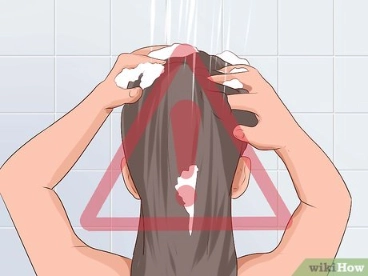
Every shampoo is an opportunity for dye to rinse away — and if you’re using the wrong products or washing too often, black hair fading accelerates fast.
Strong surfactants like sodium lauryl sulfate strip natural oils, raise the cuticle, and leave hair more porous. Porous hair can’t hold pigment as effectively. Hot water compounds the problem by swelling the cuticle open.
Practical adjustments that make a real difference: cut back to 2 to 3 washes per week, switch to a sulfate-free color-safe shampoo, turn the temperature down, and always follow with a color-protective conditioner.
3. Hard Water Mineral Buildup
If your water is hard, your shower is quietly sabotaging your color. Hard water carries dissolved calcium and magnesium, and those minerals don’t simply rinse away.
They form a mineral film along the shaft that interferes with the cuticle, increases porosity, and prevents fresh dye from bonding properly during your next application. On black hair, buildup shows up as dullness that persists despite conditioning, a slightly chalky feel after washing, and warm tones appearing without obvious cause.
A clarifying or dedicated hard-water shampoo once a week dissolves mineral deposits. If your water is very hard, a shower filter is a worthwhile long-term investment.
4. Swimming Without Protection
Chlorinated pools and salt water are two of the fastest ways to destroy color-treated hair, particularly dark shades that show every tonal shift.
Chlorine is a strong oxidizing agent that attacks dye molecules directly. Salt water draws moisture out of the shaft, increasing porosity. Both rough up the cuticle, creating the conditions for rapid, uneven fading.
Before swimming, saturate hair with clean water — already-wet hair absorbs less pool or sea water. Apply a leave-in conditioner or protective oil as a barrier, and rinse immediately afterward with fresh water. Frequent swimmers should add a chlorine-removing shampoo and regular deep conditioning to their routine.
5. Heat Styling Without Protection
Blow dryers, flat irons, and curling wands all generate temperatures capable of degrading dye molecules and weakening the cuticle’s protective structure. Heat styling without a proper protectant is a direct cause of black hair fading — particularly at the ends, which tend to be drier and more porous to begin with.
A quality heat protectant forms a thermal barrier that distributes heat more evenly across the hair shaft and significantly reduces structural damage. For color-treated hair, look for formulas specifically designed for dyed hair that include both heat protection and moisturizing ingredients. Keeping your tool temperatures at or below the minimum needed to achieve your style also extends color life considerably.
5 Expert Tips to Keep Black Hair Dye Looking Fresh
Tip 1: Switch to a Sulfate-Free, Color-Safe Shampoo
If you’re washing color-treated hair with a standard high-suds shampoo, you’re essentially giving your black dye a fast-forward button to faded. Sulfates create satisfying foam but strip natural oils and accelerate color loss — especially on already-porous, chemically processed hair.
Switching to a well-formulated sulfate-free shampoo is one of the simplest and most effective changes you can make. Look for labels that say “color-safe” or “for color-treated hair,” check that they’re free from harsh sulfates, and prioritize formulas with built-in conditioning and UV-filtering ingredients.
When making the switch, ease into it — use the sulfate-free shampoo two to three times per week alongside your current formula before phasing it out entirely. Focus shampoo on the scalp rather than scrubbing the lengths, and always follow with a color-safe conditioner to help smooth the cuticle and seal pigment inside the shaft.
Tip 2: Wash Less Often and Always Rinse with Cool Water
Two of the most effective (and most overlooked) techniques for slowing black hair fading cost nothing at all: wash less frequently, and finish every rinse with cool water.
Reducing wash frequency to two or three times per week limits the number of opportunities for dye to rinse away. Dry shampoo on non-wash days handles oil at the roots without requiring a full lather. Then, for the final 30 to 60 seconds of every rinse, turn the water to the coolest temperature you can tolerate. Cool water encourages the cuticle to lie flat, sealing in pigment and adding noticeable shine in the process.
This combination — fewer washes, cooler rinses — is one of the most reliably effective strategies for keeping black hair looking deeper and more true-to-tone for longer.
Tip 3: Use Heat Protectant and UV Defense Products
Both heat styling and sun exposure physically break down the dye molecules responsible for that rich black finish. Making protection routine — not optional — is essential for anyone serious about color longevity.
Apply a dedicated heat protectant before every blow-dry, straightening, or curling session. Look for products rated to at least the temperature your tools reach, and ideally choose formulas designed for color-treated hair. For sun protection, leave-in treatments with UV filters act like sunscreen for your strands and are particularly valuable during summer months or for anyone who spends significant time outdoors. A wide-brimmed hat offers the most straightforward protection of all when you’re at the beach, hiking, or sitting in direct sun for extended periods.
Tip 4: Refresh Color Between Appointments with Depositing Treatments
Even the best care routine won’t stop gradual fading entirely — but color-depositing treatments are designed to top up pigment between full dye sessions, so your black stays intentional rather than turning muddy or brassy at the edges.
These products — tinted conditioners, color-depositing masks, and glosses — contain small amounts of direct dye that deposit a sheer layer of pigment with each use. They’re not strong enough to change your shade dramatically, but they refresh tone and restore shine to faded mid-lengths and ends. For black hair, look for dark-tinted or “blue-black” formulas to counteract any emerging warmth and keep the shade on the cool, deep side.
Daily or every-other-wash depositing conditioners add pigment incrementally and are ideal for gradual maintenance. Weekly or biweekly glosses and masks are more concentrated and work well for targeted refresh sessions. Start conservatively — it’s easier to build pigment than to remove an over-deposit.
Tip 5: Deep Condition Weekly and Schedule Strategic Root Touch-Ups
Healthy, well-hydrated hair holds color significantly better than dry, brittle strands. Regular deep conditioning and well-timed touch-ups are the final pillars of a complete black hair maintenance routine.
Permanent black dye — particularly repeated applications — can leave hair more porous and prone to moisture loss over time. The American Academy of Dermatology recommends moisturizing treatments as a core part of caring for chemically processed hair. A hydrating or color-protective mask used once a week, focusing from mid-lengths to ends, restores elasticity and smooths the cuticle structure that’s essential for color retention. Rinse with cool water to seal in the treatment’s benefits.
For root touch-ups, most colorists recommend returning every 4 to 6 weeks for permanent black. Waiting beyond 8 weeks creates a more pronounced line of demarcation that’s harder to blend and more costly to correct. When retouching, apply color only to new growth — overlapping previously dyed hair causes unnecessary processing damage without improving the result. If your lengths have faded but you’re not ready for a full reapplication, a toning gloss can refresh shine and neutralize brassiness with far less chemical stress.
Together, consistent deep conditioning and strategic touch-ups keep black hair looking glossy, deep, and intentional — not dull, overgrown, or oxidized. To explore professional-grade formulas that support long-lasting color results, browse the full range at Keronhair.
How to Fix Faded Black Hair Dye
Prevention is the easy part. Here’s what to do when your black has already gone brown, brassy, or patchy — and the order matters, because reaching straight for permanent dye is the most common mistake.
Step 1: Identify what kind of fade you’re dealing with
Look at your hair in natural daylight, not bathroom lighting:
- Dull but still dark — the cuticle is rough or coated with mineral buildup. This is a shine problem, not a pigment problem.
- Warm brown or reddish through the mid-lengths and ends — the cool tones have degraded and your warm underlying pigment is showing.
- Patchy, with darker roots and lighter ends — porosity is uneven, usually from heat damage or previous lightening.
- Faintly green or grey-toned — over-deposited blue-black direct dye, or copper from hard water reacting with the color.
Step 2: Clarify before you re-pigment
If mineral buildup or product residue is part of the problem, adding more pigment on top just locks in the dullness. Use a clarifying or chelating shampoo once, then deep condition. A surprising number of “faded” cases improve noticeably from this step alone.
Step 3: Match the fix to the fade
| What you see | What to reach for | What to avoid |
|---|---|---|
| Dull, still dark | Clarify, then a clear or black gloss | Full permanent reapplication |
| Warm brown / reddish | Blue-black or ash-toned depositing mask | Adding a warmer black |
| Patchy ends | Gloss on ends only, protein treatment | All-over permanent dye |
| Green or grey cast | Clarifying shampoo, warm-toned gloss | More blue-black pigment |
Step 4: Re-pigment with the gentlest option that works
Start with a color-depositing conditioner or gloss. If that isn’t enough after two or three uses, move up to demi-permanent. Reserve permanent dye for genuine root regrowth. Repeatedly reapplying permanent black over the full length is the single fastest way to build the porosity that makes future fading worse — it’s a loop worth breaking.
When to see a professional instead
Book a colorist if you’re trying to go lighter than your current black, if the color is very patchy, if your hair feels gummy or stretchy when wet, or if you’ve used henna or a metallic-salt dye — those can react unpredictably with salon chemicals, and a stylist needs to know before touching your hair.
Does Black Hair Dye Fade Differently on Grey, Bleached, or Natural Hair?
Two people can use the identical box of black dye and get completely different fade timelines. Your starting hair is often a bigger variable than the product.
Grey and white hair
Grey hair is typically coarser, with a tightly packed cuticle that resists pigment entry — and once color is in, it also has no underlying melanin to support the result. Black often grabs unevenly at first, then fades faster at the greys than the rest, producing a salt-and-pepper effect within weeks. Demi-permanent formulas frequently give patchier grey coverage than permanent, so this is one case where permanent is usually the right call. Expect touch-ups closer to every 4 weeks.
Previously bleached or highlighted hair
Bleached hair is highly porous. It absorbs black dye greedily and can go darker than intended — then loses it just as fast, often turning muddy green-grey as the blue-black components fade over a pale yellow base. A protein filler or a red-based filler applied before the black gives it something to hold onto. Never go straight from bleach to a blue-black permanent without filling first.
Fine hair vs. coarse hair
Fine hair has a thinner cuticle and less cortex to hold pigment, so it processes quickly and fades quickly. Coarse hair takes longer to saturate but holds color noticeably longer once it does. If your hair is fine, shorten your expectations by roughly a week and lean on depositing conditioners between applications.
Natural, curly, and textured hair
Textured hair is structurally more fragile at the bends of each curl, and those points are where color loss and breakage concentrate. It’s also generally drier, since scalp oils travel down a coil less easily. Prioritize deep conditioning over frequent re-coloring, and choose ammonia-free or demi-permanent formulas where full grey coverage isn’t the goal.
Virgin dark hair
The easiest case. Undyed medium-to-dark brown hair has a healthy cuticle and a base close to the target shade, so black deposits evenly and fades slowly and gracefully. If this is you, semi-permanent is genuinely worth trying before committing to permanent.
Can Black Hair Dye Damage Hair?
It’s a fair question, and one that deserves a direct answer. Can black hair dye damage hair? Permanent black dye — like all permanent color — does involve a chemical process that alters the hair’s structure. The developer used to open the cuticle and drive pigment into the cortex causes a degree of protein disruption, and repeated applications over the same sections of hair can lead to increased porosity, dryness, and breakage over time.
This doesn’t mean black dye is uniquely damaging compared to other shades, but it does mean that the care practices outlined above — deep conditioning, heat protection, gentle cleansing — aren’t just about color longevity. They’re also about preserving the structural health of your hair between and after color appointments. Semi-permanent and demi-permanent options, which use little or no developer, are considerably gentler and worth considering for anyone whose hair is already in a fragile or compromised state.
Final Thoughts
So, does black hair dye fade? Unquestionably — but understanding why it happens puts you in a much stronger position to slow it down. The five culprits (UV exposure, harsh washing, hard water, swimming, and heat styling) are all manageable with the right adjustments. The five expert tips — sulfate-free shampoo, cooler and less frequent washing, heat and UV protection, color-depositing treatments, and consistent deep conditioning — work together to keep black hair looking rich, glossy, and intentional for considerably longer than most people achieve without a deliberate routine.
Whether you’re maintaining a fresh salon color or working with a semi-permanent formula at home, the fundamentals are the same: protect the cuticle, minimize oxidative stress, and replenish what the coloring process takes out. Black hair at its best is one of the most striking looks in existence — with the right care, it stays that way.
FAQ
Does black hair dye fade completely?
Permanent black dye won’t fade completely — it will leave a lasting change in your hair’s structure that can persist for months. However, the visible richness and depth of the color will diminish significantly over 4 to 8 weeks, shifting toward a flatter dark brown. Temporary and semi-permanent black dye will fade fully over time, with temporary options washing out after just one or two shampoos.
What color does faded black hair dye turn?
Most commonly, faded black hair dye shifts toward warm tones — dark brown, reddish-brown, or even a dull coppery tint at the ends. This happens because the cool, dark outer layer of dye washes away and exposes the warm underlying pigments that exist naturally in everyone’s hair. UV exposure speeds this process by oxidizing the dye molecules and stripping away the ashy, cool tones first.
How long until black hair dye fades noticeably?
With permanent dye, you can typically expect 4 to 6 weeks of peak vibrancy before the shade begins to dull or shift. Professional salon formulas tend to hold slightly longer than drugstore options. Semi-permanent black dye fades noticeably after 15 to 24 washes, while temporary dye begins fading after the very first shampoo.
Can I dye my hair if I’m using minoxidil?
Generally yes, but with caution. Minoxidil can alter the scalp’s sensitivity and barrier function, which may affect how dye processes and how the scalp tolerates chemical exposure. It’s strongly advisable to consult with a dermatologist or licensed colorist before applying any permanent dye while using minoxidil, particularly for full-scalp applications.
What is the hardest color to remove from hair?
Black and very dark shades are consistently the most difficult to remove because they use the largest, most concentrated dye molecules. Lifting black dye — especially after multiple permanent applications — typically requires significant bleaching processes that carry a high risk of damage. This is one reason many colorists recommend using the lightest effective formula when first going dark, to preserve future flexibility.
Why do hairdressers advise against box dye?
Box dyes use a one-size-fits-all formula designed to work across a wide range of hair types, which means they often apply more developer than a specific hair type actually needs. This can lead to uneven color, faster fading, and more structural damage than a professional formula mixed to your hair’s specific needs. Box dyes also make it harder for a colorist to correct or adjust your color later, since the outcome can be unpredictable. If you’re committed to at-home coloring, using a professional brand purchased directly is generally a safer middle ground than a standard boxed kit.