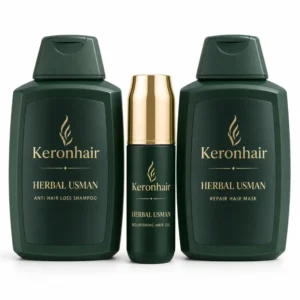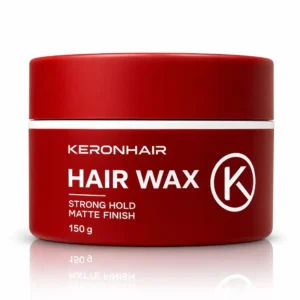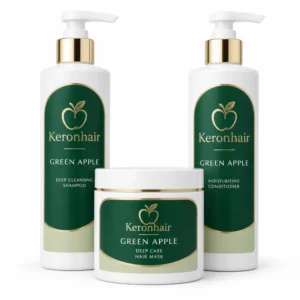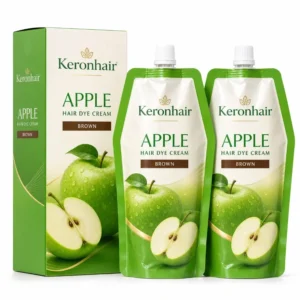
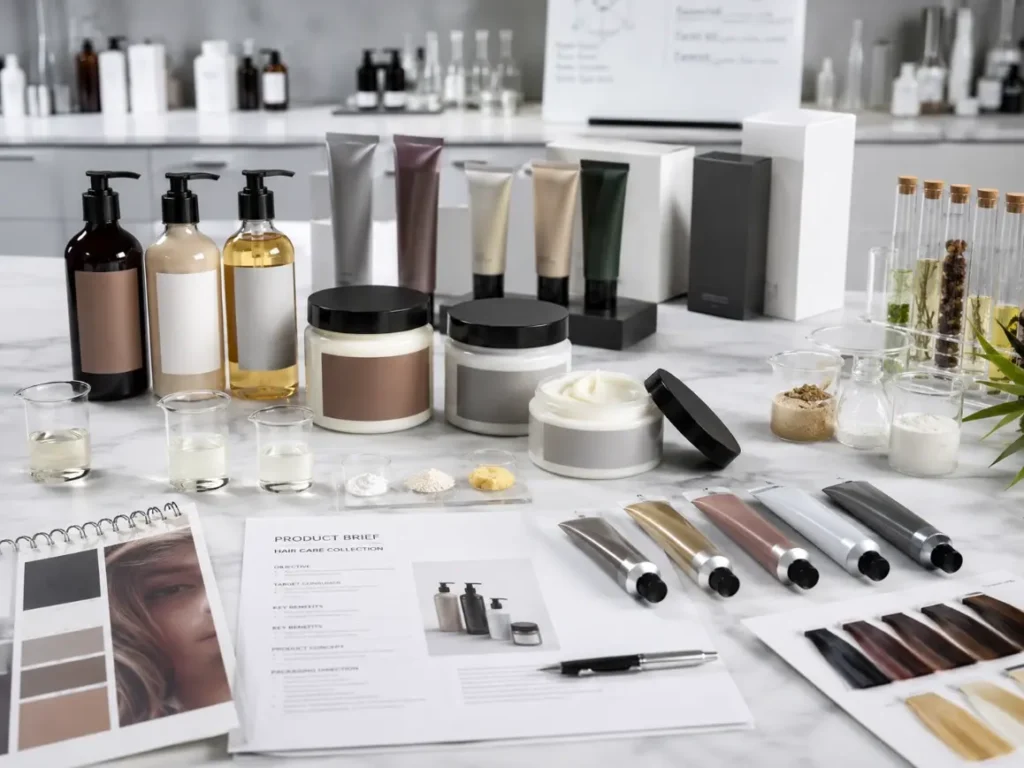
OEM hair products are manufactured by a supplier for another company to sell under its own brand, according to an agreed product scope and specifications. The work may include formulation, bulk manufacturing, filling, packaging and quality checks. Buyers need to establish which services are included before comparing suppliers or approving samples.
For a beauty brand, the useful starting point is a product brief that connects the intended customer, formula direction, packaging, quantity and sales market. Those decisions determine what the manufacturer needs to develop, what the quotation should cover and what must be approved before production.
At Keronhair in Guangzhou, our hair product development work connects formulation, sampling, packaging and production preparation. This guide explains how to organize those decisions, drawing on our salon development work and factory workflow.
What Are OEM Hair Products?
OEM stands for original equipment manufacturer. In hair care, it describes a manufacturing relationship in which a supplier produces products to agreed requirements for a brand. Those requirements can cover the formula, product characteristics, container, decoration, finished pack and release criteria.
The term does not define every commercial detail. Suppliers may use OEM, ODM and private label differently, so the written project scope matters more than the label attached to the service.
Confirm the production scope
Establish whether the manufacturer is developing a formula, adjusting an existing base, producing a brand-owned formula or filling bulk supplied under another arrangement. Also confirm who sources the packaging and who prepares the artwork, specifications and supporting documents.
A usable manufacturing scope identifies:
- The product categories and number of SKUs included.
- The starting formula and permitted customization.
- The packaging components supplied by each party.
- The sampling, testing and approval work included.
- The finished goods and documents to be delivered.
Ask suppliers to record exclusions alongside the included work. A quotation for bulk formula alone cannot be compared directly with one covering decorated containers, filling, cartons and finished-product checks.
Separate customization from formula ownership
Existing-formula private label starts from a manufacturer’s formulation. Semi-custom work modifies an existing base, while custom development works toward a more specific brief. OEM production can also involve manufacturing to technical information supplied by the brand.
The amount of customization does not, by itself, establish ownership or exclusivity. Those terms need a separate agreement. Our guide to stock versus custom hair care formulas explains the development choices in more detail.
Which OEM Hair Care Products Can Be Manufactured?
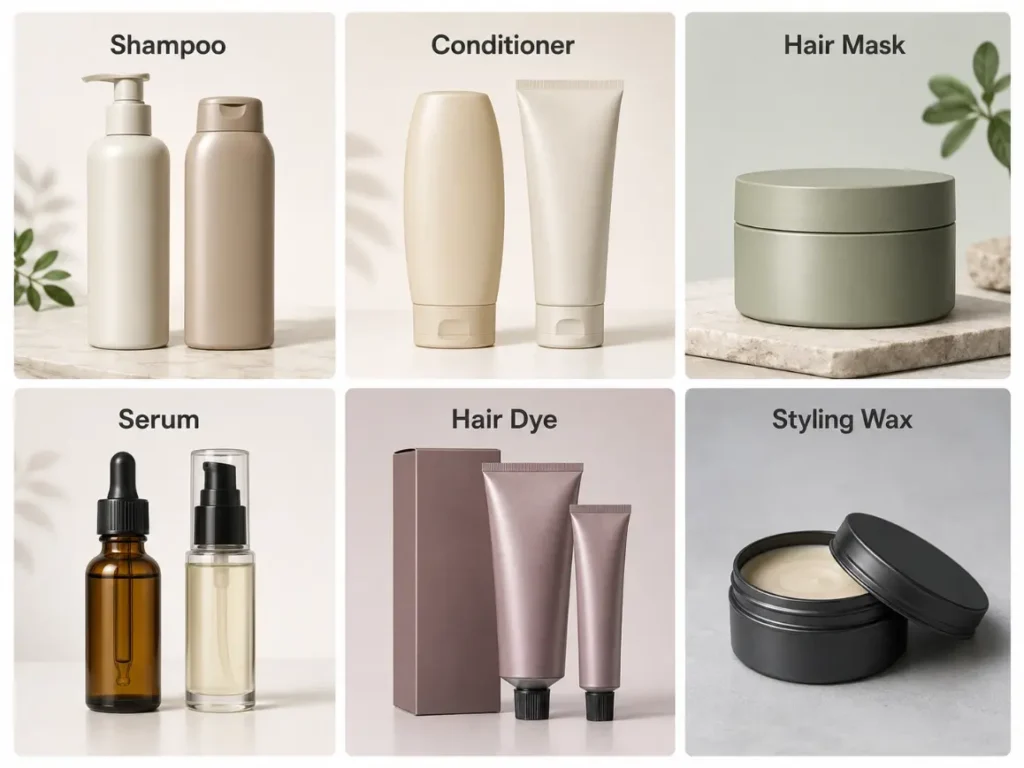
OEM hair care products include cleansing, conditioning, treatment, scalp care and styling formats. Product-category experience matters because the formula, filling method and packaging requirements change across the range. Confirm the exact format with the manufacturer instead of relying on a general statement that it produces hair products.
| Product category | Specifications to discuss | Packaging and production considerations |
|---|---|---|
| Shampoo | Cleansing direction, foam, fragrance, viscosity and rinse feel | Bottle or pump selection, dispensing and fill size |
| Conditioner | Conditioning feel, slip, texture, fragrance and intended use | Suitability of bottles, tubes, jars and closures |
| Hair masks and treatments | Texture, spreadability, rinse performance and after-feel | Container opening, filling method, sealing and pack size |
| Hair oils and serums | Appearance, fragrance, product weight, finish and dispensing behavior | Container material, closure suitability and leakage checks |
| Scalp care | Application method, sensory direction, ingredient preferences and claim scope | Application packaging, contact conditions and market review |
| Styling products | Hold, finish, washability, texture and fragrance | Jar, tube or other suitable format and filling requirements |
Hair color, developers and bleaching products require their own technical discussion. Shade systems, compatibility, instructions and warnings should be assessed separately from routine cleansing and conditioning products. Confirm the supplier’s capability for each product in the proposed range.
How to Choose an OEM Hair Products Manufacturer
Choose an OEM hair products manufacturer by checking whether its production setup, development support and order requirements fit your brief. A broad product catalog is a starting point; it does not establish that the supplier can make your specific formula and packaging combination.
Confirm who will manufacture the product and where the work will take place. Ask which activities are performed at the named facility and which are handled by outside partners. A coordinated supply chain can be workable, provided responsibilities and technical contacts are clear.
| Supplier selection check | What to establish before development |
|---|---|
| Facility identity | The company handling the order, production location and role of any subcontractors |
| Relevant capability | Experience with your product format, intended filling method and chosen packaging |
| Order fit | Whether the quantity per SKU, component minimums and production capacity suit the launch |
| Technical communication | Who reviews specifications, resolves sample feedback and records approved changes |
| Evidence and access | Relevant facility documents and the opportunity for a factory visit, video review or independent assessment |
Use the same requirements to assess each shortlisted supplier. A factory walkthrough can help connect the discussion to actual compounding, filling and packing operations. Check whether documents identify the facility under review and cover the relevant activities.
Resolve gaps in capability or responsibility before paying for development. Where an answer remains open, record the outstanding evidence, the person responsible and the decision needed. This makes supplier selection a documented assessment rather than a comparison of promotional claims.
What to Include in an OEM Hair Product Brief
An OEM hair product brief gives the manufacturer a clear description of what the brand wants to sell and what the project must deliver. It can begin before the final formula is known. Its purpose is to make the unresolved choices visible so the supplier can assess feasibility and recommend a development route.
Define the product and market requirements
Start with the product’s role, intended customer and sales channel. Identify the target market before finalizing ingredients, claims or label layouts. Packaging size, language, product presentation and documentation can all depend on where and how the product will be sold.
| Brief item | Information to provide |
|---|---|
| Product and range | Product category, intended use and number of SKUs |
| Customer and channel | Target user, hair or scalp positioning, and retail, salon or online channel |
| Sales market | Destination countries, required languages and relevant market-entry questions |
| Formula direction | Starting formula, ingredient preferences, sensory targets and reference products |
| Packaging | Container type, fill size, closure, decoration and carton requirements |
| Order configuration | Quantity per SKU, fragrances, sizes and artwork versions |
| Commercial requirements | Target cost, sample needs, desired launch timing and quotation scope |
| Approval responsibilities | Who approves the formula, packaging, artwork, testing scope and production release |
Mark undecided items as open questions. Distinguish mandatory requirements from preferences so the supplier can identify which changes affect feasibility, cost or timing. Keep one current brief rather than sending conflicting requirements through separate messages.
Turn preferences into product specifications
The brief describes the intended product; OEM hair product specifications define the approved production requirements. As development progresses, replace broad descriptions with an identifiable formula version, agreed characteristics and evaluation methods.
Appearance, odor, texture, fragrance strength and application feel need a shared reference. Where measurements apply, agree on the method, conditions and acceptance range. The relevant controls depend on the formula and intended use; a single specification template will not suit every product.
Keep sensory feedback connected to the sample version being assessed. Record which characteristics have been approved and which remain under review. This gives both the brand and the manufacturer a common basis for the next revision.
Align the formula and packaging
Review the container, closure and dispensing method while the formula is being developed. Confirm whether the chosen pack suits the product’s consistency, application method and filling requirements. Include the intended fill size and any labels, cartons or sets in the same discussion.
For brand-supplied packaging, establish who checks component suitability, when components must arrive and how rejected or short quantities will be handled. Packaging approval should include the physical components as well as the visual artwork.
How MOQ and Packaging Affect OEM Manufacturing Quotes
OEM hair care manufacturing costs depend on the complete order configuration. Formula work, ingredients, packaging, decoration, testing, quantity and production setup can change the quotation. A lower unit price is useful only when the included work and purchasing commitments are understood.
Identify the minimums behind the order
Ask whether the quoted MOQ applies to the formula batch, filling run, finished units, fragrance, pack size or individual SKU. Packaging components and printing can have separate purchase minimums. The finished-goods quantity may therefore differ from the quantity of components the brand must purchase.
Record the minimum for each relevant item, how much will be used and who owns any remainder. Confirm storage and reorder arrangements for unused packaging or dedicated materials. This makes the first-order commitment clearer than a finished-unit MOQ alone.
Our guide to private label MOQ, sampling, packaging and lead time covers these dependencies in greater depth.
Compare quotations on the same scope
Send the same brief to each supplier and ask for the assumptions behind the quote. Separate one-time costs from recurring production costs, and identify items that will be quoted later. A preliminary quotation can help assess project fit before committing to development, provided its conditions are clear.
| Quotation item | What to confirm |
|---|---|
| Formula and development | Starting formula, permitted changes, development fees and agreed rights |
| Samples and revisions | Sample quantities, revision scope, courier charges and additional fees |
| Packaging and decoration | Components, artwork versions, printing, cartons and purchasing minimums |
| Testing and documentation | Included checks, external work, report availability and separate charges |
| Manufacturing and filling | Quantity per SKU, fill size, production scope and packing configuration |
| Timing | Lead-time starting conditions, component availability and required approvals |
| Delivery | Shipping terms, destination, included transport services and exclusions |
| Reorders | Repeat-order minimums, remaining packaging and change-notification arrangements |
Ask when the quotation expires and which changes require a revised price. Formula adjustments, different packaging, additional testing or a new sales market can change the agreed scope. Record the commercial approval alongside the technical approval so production is based on the same project version.
Approve Samples Before Bulk Production
Samples connect the brand’s brief to a product that can be assessed. Approval should cover the product characteristics and the packaging arrangement that will move into production. The manufacturer also needs to know who has authority to approve changes on the brand’s behalf.
Use structured sample feedback
Evaluate the sample under agreed application conditions and record the version being tested. Separate observations about appearance, fragrance, texture, dispensing, application and after-feel. Identify the changes that are essential and the characteristics that should remain unchanged.
Consolidate feedback before requesting a revision. Conflicting comments from different reviewers make it harder to establish the next target. Keep a written record of the requested adjustment and compare the revised sample against that request.
What our Saudi salon project required
In our Saudi Arabia salon smoothing system project, the scope included a professional smoothing cream, aftercare shampoo and conditioning treatment. The products needed to work together for salon services and take-home use.
Our team reviewed the client’s benchmarks, treatment procedure, fragrance direction and packaging references. During sampling, we adjusted viscosity, application feel, rinse performance, softness and fragrance strength, while reviewing compatibility between the smoothing product and its aftercare products.
We also coordinated bilingual label structure, ingredient information, directions and carton content for client review. Approved samples, packaging details and written specifications established the production reference for the collection. The project shows why a multi-product brief needs to define how the products are used together, alongside each SKU’s individual requirements.
Approve one production reference
Before bulk manufacturing, bring the approved formula, sample, packaging and artwork into one controlled set of records. The OEM hair product specifications should identify the version that production will follow and the agreed checks used to assess it.
- Approved formula and sample identification.
- Product characteristics and applicable acceptance criteria.
- Container, closure, fill size and packaging components.
- Final labels, cartons, coding and artwork versions.
- Quantity per SKU and agreed packing configuration.
- Testing, document and release responsibilities.
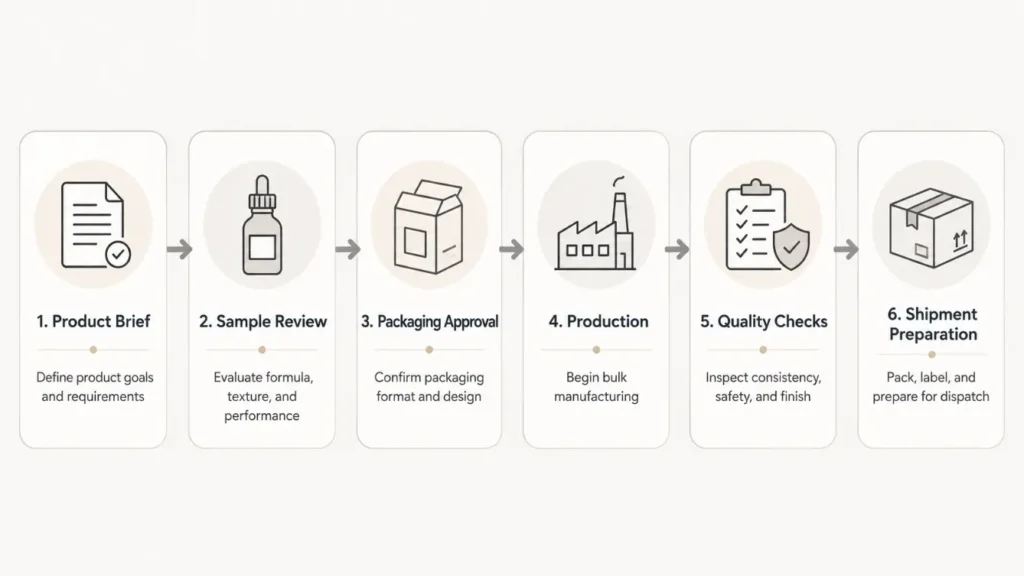
Confirm the production schedule after the necessary approvals and commercial conditions are satisfied. Ask the supplier to distinguish development, packaging procurement, manufacturing and shipment preparation so the launch plan reflects the work still outstanding.
How Long Does OEM Hair Care Manufacturing Take?
The time needed for OEM hair care manufacturing depends on the starting formula, sample revisions, validation work, packaging availability and production schedule. A repeat order using approved materials has a different scope from a first order requiring new development. Ask for a project schedule tied to your brief rather than treating a general delivery estimate as a launch commitment.
Clarify when the quoted lead time starts and what it ends with. It may begin after sample approval, receipt of packaging or completion of commercial conditions. The end point may be finished goods ready for collection rather than arrival at your warehouse.
| Project stage | What the schedule needs to account for |
|---|---|
| Development and sampling | Brief review, formula work, sample delivery, consolidated feedback and revisions |
| Validation and packaging preparation | Applicable testing, physical pack approval, final artwork and component procurement |
| Bulk manufacturing | Material readiness, confirmed production slot, compounding, filling and packing |
| Release and delivery | Agreed inspections, document completion, collection, transit and destination arrangements |
Ask which tasks can proceed together and which depend on an earlier approval. Packaging procurement may proceed alongside some development work, but changes to the formula, pack or artwork can require part of that work to be reviewed again. Assign an owner and approval date to each dependency.
Separate the factory completion date from the market launch date. Build the launch plan around the remaining work after manufacturing, including transport and warehouse intake. Confirm the effect of later changes in writing, and update the schedule when an approval or component delivery moves.
Quality Checks and Market Documentation
Quality review is more useful when it is connected to the approved product and order requirements. Ask what will be checked, how the results will be recorded and what happens if a result falls outside the agreed criteria.
Review the manufacturing checks
Our Guangzhou factory workflow connects material preparation, compounding, filling, packing and finished-goods review. Depending on the project, Keronhair’s checks cover appearance, odor, texture, fill weight, packaging condition, label accuracy, batch records and retained samples.
For a buyer, the important distinction is between development validation and batch release checks. Agree on stability, compatibility, microbiological or claim-related work where applicable, and establish which checks form part of the routine production specification. Confirm whether work is performed by the factory or arranged externally.
Request documents that relate to the actual formula, pack or production batch. Facility certificates can support factory review, but the buyer still needs product-specific information. Check the document’s issuer, date, scope and connection to the order.
Agree on documents and market responsibilities
Set the documentation scope before production. Clarify the product specification, ingredient information, batch documentation, available test reports and shipment documents to be supplied, together with their timing and any separate costs.
For the United States, use the FDA’s MoCRA overview to identify applicable responsibilities and agree which party will provide or maintain the relevant information. For the EU, the European Commission’s cosmetics legislation guidance describes the framework for the responsible person, safety requirements and product notification.
Assign label, ingredient and claim review to the appropriate parties for the target market. Manufacturing support and market-entry responsibilities should be defined in the project agreement. Changes to the formula, claims, packaging or destination market may require further review.
Formula Ownership, Confidentiality and Repeat Orders
Before paying for development, establish what the brand is purchasing: manufacturing services, a formulation license, agreed exclusivity or ownership of defined technical information. Confirm access to the formula and supporting records, the permitted use of that information and any restrictions on transfer. The agreement should reflect the actual development arrangement.
Discuss confidentiality for the product brief, formula information, artwork and commercial details. Identify what may be shared with packaging suppliers, testing providers or other project participants so the confidentiality terms fit the work being commissioned.
Repeat-order planning should address:
- Which approved formula, sample, specification and artwork versions remain current.
- How changes to ingredients, packaging or production requirements are communicated and approved.
- Who owns unused components and how their condition and availability are checked.
- Whether changes require new samples, testing, pricing or lead-time confirmation.
These records give the next order an agreed starting point. Review them when the range expands or a sales market changes, rather than assuming that the original approvals cover every later configuration.
Frequently Asked Questions
Can I supply my own packaging?
Ask the manufacturer to review the components before purchase or shipment. Confirm compatibility with the formula and filling equipment, incoming inspection, delivery timing and responsibility for rejected pieces or shortages. Artwork approval alone does not confirm that the physical packaging is suitable.
Can one order include several formulas or pack sizes?
A combined order still needs a quantity and specification for each SKU. Different formulas, fragrances, sizes or artwork versions can create separate production or component requirements. Ask which items can share materials and which carry their own minimums.
What happens if the approved sample needs to change?
Record the requested change and ask the manufacturer to assess its effect on the formula, packaging, testing, cost and schedule. Confirm which approvals need to be repeated and issue an updated production reference before the changed product is manufactured.
Do I need a finished formula before contacting a manufacturer?
No. An OEM hair product brief can begin with defined product goals, a target market, packaging direction and commercial requirements. Tell the supplier which decisions are already fixed and where development support is needed so it can assess the appropriate scope.
What is the minimum order quantity for OEM hair care products?
There is no single MOQ that applies to every project. Confirm the minimum per formula, fragrance, pack size and SKU. Custom packaging can carry separate purchasing minimums. Send Keronhair your product category, fill size, packaging direction and quantity per SKU so our team can review the proposed order configuration.
Are sampling and formulation fees included in the unit price?
Ask the supplier to itemize development, samples, revisions, testing and courier charges. Do not assume these costs are included in the finished-unit price. Confirm whether any development or sampling payment is credited against a later production order, and record the conditions in the quotation.
Can an OEM manufacturer develop a product from a reference sample?
A reference sample can help communicate texture, fragrance, application and after-feel. Define which characteristics matter most and include them in the OEM hair product brief. The reference alone does not disclose its formula or establish what can be reproduced. Agree on development targets, evaluate the resulting samples and approve written specifications before production.
To discuss OEM/ODM hair product manufacturing with Keronhair, send your product brief, reference materials, packaging direction, quantity per SKU and intended market. These details give our team a clearer basis for reviewing formula options, sampling and production requirements for your OEM hair care products.