Finding a hair dye manufacturer is not difficult. Finding one that fits your color system, shade plan, target market, packaging, order volume, and quality expectations is much harder.
I have seen brands start with a list of famous factories and still struggle to make a decision. The problem is usually not a lack of options. It is that every supplier is being judged by a different standard. One quotation covers only color cream, another includes developer and cartons, and a third uses an attractive unit price that excludes testing, shade development, or custom components.
This guide is designed to make that comparison more useful. I reviewed the manufacturers according to their publicly presented hair color capabilities, manufacturing model, product focus, and buyer fit. I also explain what you should verify directly before placing an order.
How We Curated This List of Hair Dye Manufacturers
Google recommends creating content that is original, substantial, trustworthy, and genuinely useful to the intended audience. For a supplier article, that means doing more than repeating each company’s sales page. A buyer needs to understand why a manufacturer may fit a project and where further verification is still required.
I used the following criteria:
- Hair color relevance: Does the manufacturer publicly present hair dye, hair color, developer, botanical color, or a closely related color system as a core capability?
- Development options: Does it describe private label, OEM, ODM, stock formula, custom formulation, shade development, or packaging support?
- System capability: Can the supplier discuss color cream and developer as a coordinated system rather than two unrelated products?
- Quality evidence: Does it make current facility, quality-system, testing, or documentation information available for buyer review?
- Commercial fit: Is the company positioned for startups, salons, distributors, established brands, large programs, or a specialist category?
- Verification gap: Which claims still need to be confirmed through certificates, samples, test plans, quotations, audits, and contracts?
A certificate logo, trade-show appearance, or attractive factory video is not enough on its own. For example, ISO 22716 provides guidelines for cosmetic production, control, storage, and shipment. Buyers should still check the certificate holder, manufacturing address, scope, issuer, and validity period.
Quick Comparison of 10 Hair Dye Manufacturers
| Manufacturer | Region | Publicly Presented Focus | Potential Buyer Fit |
|---|---|---|---|
| Keronhair | China | Private label and custom hair color systems, shade planning, developer, packaging | Brands seeking one coordinated OEM/ODM project |
| HSA Cosmetics | Italy | Custom professional hair color and hair care manufacturing | Brands prioritizing Italian production and larger formula programs |
| Colornow | China | Hair color and broader professional hair care OEM/ODM | Distributors and brands building a wider salon portfolio |
| PRIIS | India | Hair colour cream, shampoo, gel, private label, and export supply | Buyers comparing several accessible color formats |
| ColorVeda | India | Henna-based, natural-positioned, and conventional hair color | Brands exploring botanical or henna-led positioning |
| Saehan Cosmetics | South Korea | Hair color and hair care OEM/ODM | Brands seeking a Korean specialist partner |
| Qyonz | China | Hair color, developer, color-depositing systems, and turnkey OEM | Brands that want formula and packaging coordination |
| Lemi Biotech | China | Private label hair color and hair care manufacturing | Buyers sourcing from an established Guangzhou manufacturing cluster |
| Guangzhou Zhongyi Cosmetics | China | Hair dye and hair care OEM/ODM | Brands comparing China-based color specialists |
| Kirpal Export Overseas | India | Herbal hair color, private label, OEM, and bulk export | Importers and brands focused on herbal powder or botanical color |
The table summarizes each company’s public positioning; it does not independently certify performance. Ask every shortlisted supplier to answer the same project brief and provide evidence for the same evaluation period.
10 Hair Dye Manufacturers Worth Evaluating
1. Keronhair — For a Coordinated Hair Color System
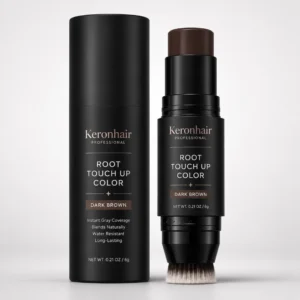
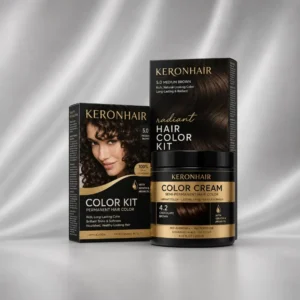
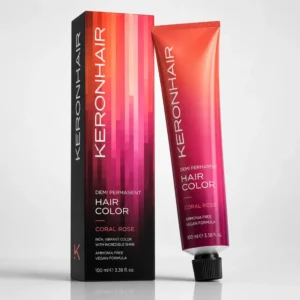
At Keronhair, we support private label and custom hair color projects from our manufacturing operation in Guangzhou, China. Our public hair dye manufacturing page covers hair color cream, hair color shampoo, developer, ammonia-free directions, shade planning, sampling, packaging coordination, quality control, and shipment preparation.
What I consider especially important is the connection between the products. A permanent color cream should not be developed in isolation from its developer, hair substrate, processing conditions, instructions, and intended result. When a brand approaches us, I prefer to discuss the complete commercial system before quoting only a tube or bottle.
- Potential fit: Startup and established beauty brands, salons, distributors, and ecommerce sellers seeking private label, ODM, or custom OEM hair color.
- Useful capability: Formula and shade planning can be coordinated with developer, packaging, artwork, and reorder requirements.
- Verify before ordering: The exact formula route, quantity per shade, sample stages, included tests, packaging scope, target-market documents, current certificates, lead time, and ownership terms.
Brands can review our private label hair dye manufacturing capabilities before sending a brief. I also encourage buyers to apply the same evidence standard to Keronhair that they apply to every other candidate.
2. HSA Cosmetics — For Italian Custom Hair Color
HSA Cosmetics is an Italian contract manufacturer that publicly specializes in professional hair color and hair care. Its hair color materials describe permanent, ammonia-free, semi-permanent, and bleaching product development, making the company relevant for brands that place strong value on Italian manufacturing and salon-oriented positioning.
HSA’s public information currently describes a formula-based starting quantity of 100 kg for custom hair color, while the number of finished units depends on fill size, packaging, and shade program. This is a useful reminder that formula batch minimum and finished-product MOQ are not always the same number.
- Potential fit: Established or well-funded brands planning a professional color collection.
- Useful capability: Publicly documented hair color specialization and custom manufacturing.
- Verify before ordering: Finished units per shade, packaging minimums, development charges, test scope, available certifications, and the lead time for a multi-shade range.
3. Colornow — For a Broader Salon Portfolio
Colornow publicly presents private label, OEM, and ODM services across hair color and professional hair care. This can be useful for a distributor or salon brand that wants to source color alongside shampoo, treatment, styling, or other coordinated categories.
A broad catalog can simplify purchasing, but it also makes category-specific verification more important. Ask which production lines, laboratory team, and quality documents apply specifically to your hair color formula.
- Potential fit: Professional distributors and brands building hair color plus supporting care products.
- Useful capability: A wider salon and hair care product mix under an OEM/ODM model.
- Verify before ordering: Current shade systems, developer options, formula origin, quantity per shade, color evaluation method, certificates for the producing site, and packaging compatibility work.
4. PRIIS — For Multiple Hair Color Formats
India-based PRIIS publicly presents itself as an OEM and private label hair colour manufacturer. Its product range includes hair colour cream, hair colour shampoo, and gel formats, with support for product selection, sampling, packaging coordination, and export discussions.
The format variety may suit buyers serving different price points or usage habits. However, quick-processing or “ammonia-free” positioning should never replace a complete ingredient, performance, warning, and target-market review.
- Potential fit: Importers, distributors, and brands evaluating cream, shampoo, sachet, or gel color formats.
- Useful capability: Hair-color-specific private label positioning and several commercial pack concepts.
- Verify before ordering: Full INCI, colorant compliance, shade evidence, test plan, batch controls, package components, claims support, and market-specific label requirements.
5. ColorVeda — For Henna-Led Hair Color
ColorVeda publicly describes itself as a turnkey private label hair color manufacturer with henna-based, natural-positioned, and conventional hair color options. It may be relevant for brands that want a botanical story or powder-based color rather than a standard oxidative cream alone.
“Natural,” “herbal,” and “chemical-free” are not interchangeable technical or regulatory definitions. Botanical ingredients can still cause reactions, and plant or mineral color additives remain regulated. I would ask for composition, contaminant testing, claims substantiation, and clear directions before approving any natural-positioned product.
- Potential fit: Brands developing henna-led or botanical color ranges.
- Useful capability: Specialist positioning around natural and henna-based hair color.
- Verify before ordering: Ingredient identity, heavy-metal and microbiological specifications where relevant, colorant status, allergen and warning review, third-party certifications, and batch-to-batch shade control.
6. Saehan Cosmetics — For Korean Hair Color OEM/ODM
Saehan Cosmetics publicly positions itself as a Korean specialist in hair color and hair care OEM, ODM, and private label manufacturing. This makes it a relevant option for brands that specifically want to evaluate Korean production or build a range influenced by the country’s beauty manufacturing ecosystem.
Country of origin can support a brand story, but it should not be the deciding factor. Compare the technical fit, formula system, documents, packaging access, order minimums, total landed cost, and communication process with the same standards used for every other region.
- Potential fit: Brands and distributors seeking a Korea-based hair color specialist.
- Useful capability: Public focus on both hair color and supporting hair care categories.
- Verify before ordering: Available color technologies, shade library, developer pairing, export history for your destination, certification scope, MOQ by shade, testing, and packaging options.
7. Qyonz — For Turnkey Hair Color Development
Qyonz publicly presents hair color OEM capabilities covering ammonia-free dyes, color-depositing systems, salon developer, custom formulation, ready-to-brand options, packaging, labeling, and compliance support.
This end-to-end positioning can be convenient, but the buyer should still separate each service in the quotation. “Compliance support” may mean document preparation or coordination; it does not automatically transfer the brand owner’s or Responsible Person’s legal responsibilities to the manufacturer.
- Potential fit: Brands seeking one supplier to coordinate formula, pack, label, and production.
- Useful capability: Publicly described color and developer systems alongside turnkey OEM services.
- Verify before ordering: Current certificate copies, the exact manufacturing entity and address, formula and sample scope, compliance deliverables, component suppliers, quantity per SKU, and written acceptance criteria.
8. Lemi Biotech — For the Guangzhou Hair Color Supply Cluster
Lemi Biotech, associated publicly with Guangzhou Liangxin Refinement Chemical, presents private label hair color and hair care manufacturing services. Its location may give buyers access to the broader Guangzhou ecosystem for formulation, tubes, bottles, cartons, printing, and export coordination.
A strong supplier cluster can improve access to components, but the buyer still needs to identify which legal entity manufactures the formula, which company receives payment, and which site appears on certificates and batch documents.
- Potential fit: Buyers comparing China-based hair color programs and packaging supply chains.
- Useful capability: Public hair dye and hair care OEM positioning.
- Verify before ordering: Legal entity, factory address, formula categories, current certifications, color evaluation, MOQ, test reports, packaging responsibility, and export documentation.
9. Guangzhou Zhongyi Cosmetics — For China-Based OEM/ODM
Guangzhou Zhongyi Cosmetics publicly displays hair dye products and describes OEM and ODM services. This makes it another relevant candidate for brands comparing factories within one of China’s major cosmetics manufacturing regions.
Product listings are useful for discovery, but they do not show whether the factory fits your shade architecture or market. Request a structured response to your brief rather than selecting a formula from photos alone.
- Potential fit: Importers and private label brands seeking a China-based color supplier.
- Useful capability: Visible hair dye product focus with OEM/ODM positioning.
- Verify before ordering: Producing entity, formula status, allowed customization, ingredient and warning review, developer system, sample evaluation, certificates, packaging, and total landed cost.
10. Kirpal Export Overseas — For Herbal Hair Color Supply
Kirpal Export Overseas publicly specializes in herbal and natural-positioned hair color, private label, OEM, bulk supply, and export from India. It may be a relevant shortlist candidate for importers and brands focused on botanical powders or traditional color concepts.
For herbal powders, supplier evaluation should extend beyond appearance and color payoff. Raw-material identity, contaminant controls, traceability, microbiological quality, instructions, and destination-market colorant rules all matter.
- Potential fit: Herbal color brands, wholesalers, and importers buying private label or bulk formats.
- Useful capability: Focused public positioning around herbal hair color and export supply.
- Verify before ordering: Ingredient and origin records, contaminant specifications, test methods, certification validity, shade consistency, pack barrier properties, claims, and import documentation.
Private Label vs. OEM vs. ODM Hair Dye Manufacturing
These terms are not used consistently by every supplier. I treat them as starting points for discussion; the written formula, service, ownership, and approval terms matter more than the acronym.
| Manufacturing Route | Typical Starting Point | Potential Advantage | Important Trade-Off |
|---|---|---|---|
| Ready-to-brand or stock private label | An existing formula and established color direction | Faster sampling and lower development burden | Less differentiation and possible packaging constraints |
| Modified private label or ODM | A manufacturer platform adjusted within an agreed scope | Balances speed with selected formula, shade, fragrance, or packaging changes | Each change may affect testing, minimums, cost, and timeline |
| Custom development | A new brief, benchmark, performance target, or shade architecture | Greater control over product positioning | Requires more sample rounds, evidence, time, and budget |
| OEM or contract manufacturing | The buyer supplies an established formula, specification, or technical package | Useful when the brand already controls a developed product | Technology transfer, raw-material matching, validation, and ownership terms can be complex |
Do not assume that OEM automatically gives the buyer the formula, exclusivity, or the right to transfer production. Confirm who owns the formula, what information is disclosed, whether exclusivity applies, and what happens after the relationship ends.
MOQ depends on much more than formula volume. In hair color, the number of shades, quantity per shade, tube or sachet printing, developer format, carton, gloves, instructions, and kit assembly can each create a different minimum. Ask suppliers to break the quotation into formula, filling, primary packaging, decoration, secondary packaging, testing, and freight.
A 100-Point Scorecard for Comparing Hair Dye Manufacturers
This is the first new section I recommend adding to the original article. It gives the reader a practical tool rather than another collection of supplier claims. Score each manufacturer only after it has answered the same brief.
| Criterion | Weight | Evidence to Request |
|---|---|---|
| Formula and shade-system fit | 20 | Relevant color technology, developer options, hair substrates, shade process, coverage targets |
| Quality system and target-market readiness | 20 | Current certificates, manufacturing address, specifications, records, regulatory document plan |
| Sample and testing plan | 15 | Sample stages, strand testing, stability, compatibility, microbiology where relevant, approval criteria |
| Batch and shade consistency | 15 | Master standard, retained samples, raw-material controls, batch records, deviation and change process |
| Packaging and system coordination | 10 | Tube or bottle compatibility, developer pairing, instructions, carton, kit components, filling capability |
| Commercial fit | 10 | MOQ per shade, complete quotation, tooling, test charges, payment terms, landed-cost inputs |
| Communication and project control | 10 | Named project owner, response quality, decision log, approval records, timeline, escalation route |
I recommend setting a minimum score for quality and regulatory readiness rather than allowing a low price to compensate for missing evidence. A supplier that cannot identify the formula version, developer, shade substrate, packaging, and approved sample should not move to bulk production, regardless of its total score.
What to Look for in a Reliable Hair Dye Manufacturer
Selecting a trusted hair dye manufacturer is about far more than just evaluating the price point. These critical criteria will help you accurately assess whether a factory has the capabilities to support your brand’s long-term growth and success.
Stable Shade Standards, Not a Promise of “Perfect Matching”
Hair color results depend on the starting hair, porosity, gray percentage, formula, developer, ratio, processing conditions, and evaluation method. A Pantone code alone is not enough to develop a reliable shade.
Ask the manufacturer to define the hair substrate, reference shade, application procedure, developer, processing time, lighting, and acceptance criteria. The approved sample or master standard should be traceable into production and reorders.
Hair Dye and Developer Pairing
For oxidative color, evaluate the dye and developer as one system. Confirm the intended pairing, ratio, fill quantities, instructions, and pack model. Our guide to manufacturing hair dye and developer together explains the questions to ask before approving two products as one commercial system.
Ingredient, Warning, and Claims Review
Request the full ingredient list, relevant specifications, safety data where applicable, and the proposed warnings and directions. “Ammonia-free,” “botanical,” “PPD-free,” “vegan,” “non-toxic,” and “safe” are not interchangeable claims, and one exclusion does not prove that a complete formula cannot cause a reaction.
For the United States, the FDA’s hair dye guidance explains that some hair dyes can cause allergic reactions and emphasizes following label directions and carrying out the instructed skin test before every use. It also explains specific US requirements for coal-tar hair dyes. Have a qualified reviewer assess the final formula, color additives, warnings, claims, and label for the destination market.
Packaging Compatibility
The formula should be evaluated in the intended tube, bottle, closure, liner, label, and carton. Ask what compatibility work is planned and who approves the components. A visually attractive package may still leak, discolor, clog, lose seal integrity, or fail during transport.
Current Documents for the Actual Producing Site
Certificates should match the company and facility that will manufacture the order. Check the legal entity, address, scope, issuer, issue date, and expiry date. A distributor’s document or a certificate for a different site does not prove the controls applied to your product.
For the European Union, confirm the Responsible Person, Product Information File, safety assessment, label, and notification plan. The European Commission states that responsible persons—and distributors in certain circumstances—submit product information through the Cosmetic Product Notification Portal. A manufacturer may support the process, but the final responsibilities must be assigned clearly.
Change Control and Reorder Consistency
Ask how the supplier manages raw-material changes, formula revisions, packaging substitutions, deviations, and out-of-specification results. Require approval before a material change is introduced. Repeatable hair color depends on controlled records, not only the skill used to create the first sample.
How We Build a Hair Color Project at Keronhair
This is the second new section I recommend. I want the Keronhair content to be useful and specific, not a sales block that interrupts the article.
When a brand contacts us, I prefer to understand the intended color system before recommending a formula or pack. Our usual working conversation follows these steps:
- Define the commercial brief. We ask about the target market, channel, intended user, color type, shade count, gray-coverage goal, pack format, quantity per shade, budget, and launch window.
- Select the development route. We discuss whether an existing Keronhair platform, a modified formula, or a more specific custom route fits the project. The proposal should identify what is being customized.
- Map the shade system. We review a physical reference, competitor product, shade chart, hair swatch, or written target together with the starting hair, developer, application, and evaluation criteria.
- Approve the dye and developer relationship. Where the system uses developer, we define the intended combination rather than treating the products as unrelated SKUs.
- Coordinate packaging and instructions. We review the formula together with the tube or bottle, closure, fill size, artwork, warnings, directions, cartons, and kit components.
- Confirm documents, quality requirements, and production records. Before bulk production, the project should have identifiable formula and packaging versions, approvals, acceptance criteria, and a destination-market document plan.
- Plan reorders from the first batch. We record the approved references and discuss forecasts, shade-level demand, component lead times, and change control so the next order is not treated like a new project.
At Keronhair, we do not assume that one formula or MOQ fits every buyer. A focused ecommerce launch, a professional salon shade system, and a distributor’s multi-market range require different decisions. If you are still defining the sourcing model, our guide to choosing a wholesale hair dye supplier explains how authorized distribution, private label supply, and OEM manufacturing differ.
If the project fits our capabilities, the next useful step is not a generic “best price” request. Send the target market, product format, shade count, reference, developer model, quantity per shade, packaging direction, document needs, and desired launch date. That gives our team enough information to propose a realistic route.
Conclusion: Choose the Best Manufacturer for Your Project
The best hair dye manufacturer is not necessarily the largest, closest, cheapest, or most frequently mentioned online. It is the company that can show a credible connection between your formula, shade standard, developer, packaging, testing, documents, commercial terms, and repeat production.
Use this list to identify candidates, then send each one the same brief and compare the evidence with the scorecard. Verify public claims, review samples under defined conditions, calculate complete landed cost, and put responsibilities in writing before production.
Keronhair is one option among the manufacturers you may evaluate. If you want us to review your private label or custom hair color idea, start with our hair dye manufacturer service page and send a structured project brief. I would rather give you a clear scope than promise that every project is automatically a fit.
Frequently Asked Questions
Which company is the best hair dye manufacturer?
There is no universal best manufacturer. The right choice depends on the color technology, shade count, target market, packaging, order volume, testing, documents, budget, and launch schedule. Build a shortlist of two or three suppliers that fit the same brief and compare their evidence.
What is a typical MOQ for private label hair dye?
MOQ varies by formula batch, quantity per shade, fill size, tube or bottle decoration, cartons, developer, and kit components. Ask for both the bulk-formula minimum and the finished-unit minimum for each shade. Do not rely on a general website number for a custom project.
How much does it cost to start a private label hair dye line?
The realistic budget should include formulation or samples, testing, color evaluation, dye and developer, primary packaging, artwork and printing, cartons, instructions, accessories, inspection, freight, duty, regulatory work, warehousing, and marketing. A unit price alone does not show the launch cost.
Can a manufacturer create a custom shade from a Pantone code?
A Pantone reference may help communicate a visual direction, but it is not enough on its own. Custom hair color should define the starting hair, hair substrate, formula, developer, application method, processing conditions, and acceptance criteria. Physical swatches or evaluated hair tresses are more useful approval references.
Can a hair dye be described as kid-safe or non-toxic?
A brand should not use “kid-safe,” “non-toxic,” “chemical-free,” or similar absolute claims without qualified safety and regulatory review. Hair dyes can cause allergic reactions, and product suitability depends on the complete formula, intended use, directions, warnings, and destination-market rules. Keep hair dye out of the reach of children and follow the final label directions.
Which certificates should I ask a hair dye manufacturer for?
Ask for current quality-system and facility documents relevant to the actual producing site, then verify the certificate holder, address, scope, issuer, and dates. Also request project-specific specifications, test plans, batch records, ingredient information, and destination-market documents. A certificate alone does not prove product safety, legal market access, shade performance, or batch consistency.