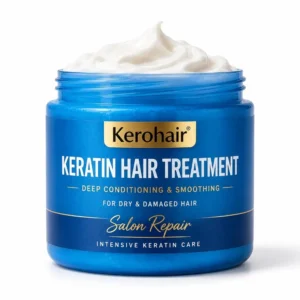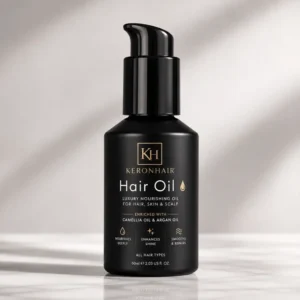
If you are building a hair care line, the search almost always leads to the same place: China, and specifically the factory belt around Guangzhou. That is where most Chinese hair care manufacturers running OEM and ODM programs are concentrated, from shampoo and conditioner to masks, oils, and styling products. The harder question is not whether these factories exist. It is how to find the right one, tell a real producer from a middleman, and avoid the compliance traps that catch first-time buyers.
This guide walks through both models, where to look, how to vet a supplier before you commit, and what certifications actually mean, including why “FDA certified” is a phrase you should treat as a red flag rather than a reassurance.
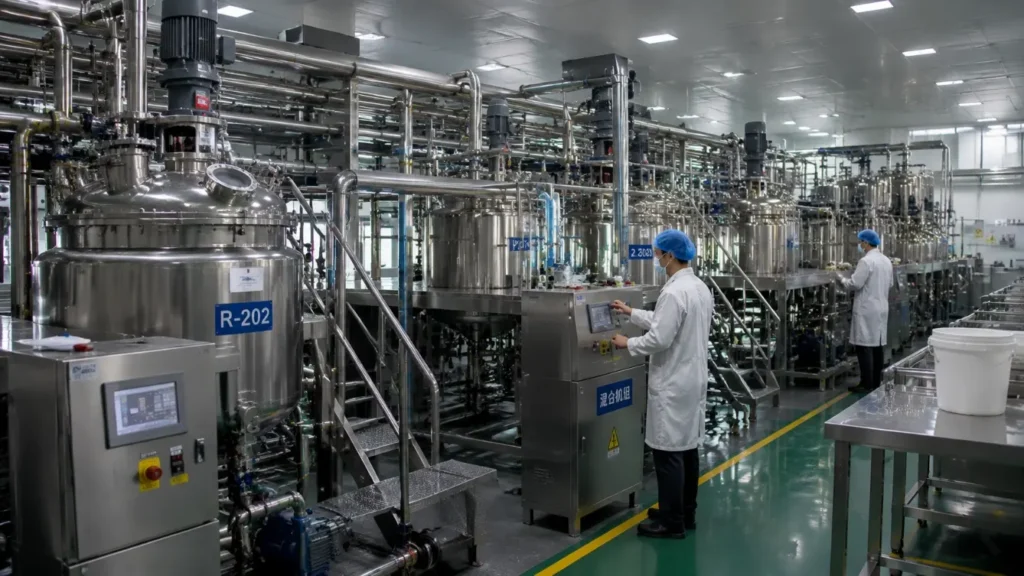
Which Chinese Hair Care Manufacturers Offer OEM and ODM Services?
Keronhair, HODM, Shangpinhui, Leezon, Yikangyuan, Beslocosmetics, KAIJOE, QianCai, Darong and LocRoyal publicly state that they offer OEM and ODM hair care services. Their websites establish public positioning only. Buyers must still verify the legal manufacturer, production license, certificate scope and project-specific development capabilities.
| Manufacturer | Product focus shown publicly | Development route shown publicly | Useful initial investigation | What the buyer must verify |
|---|---|---|---|---|
| Keronhair | Hair care, shampoo, color, straightening and styling | OEM, ODM, ready formula and custom development | Multi-SKU hair lines that may combine development routes | Chinese legal manufacturer, production license, product scope, certificates and current project terms |
| HODM | Shampoo, conditioner, masks, oils, treatments and styling | OEM, ODM, private label, custom formula and packaging | Broad care and treatment portfolios | Legal entity, actual production site, license scope, formula route and packaging responsibilities |
| Shangpinhui | Hair care, scalp care and wider cosmetic development | OEM, ODM and private label positioning | Hair projects that may need access to broader cosmetic R&D | Hair-specific equipment, R&D records, actual factory and SKU-level license scope |
| Leezon | Care, styling, straightening and treatment positioning | OEM and ODM positioning | Styling or treatment projects requiring format-specific review | Current accessible service evidence, legal manufacturer, site relationships and product-specific capability |
| Yikangyuan | Plant-positioned hair and body care | OEM, ODM, formula and packaging support | Ready-formula or selectively customized care products | Shared-formula status, customization limits, test evidence, MOQ drivers and batch controls |
| Beslocosmetics | Hair care, styling, sprays, mousse and dry shampoo | Private label and customization positioning, with OEM/ODM references | Styling and aerosol-format investigation | Which entity and site produces each format, aerosol license scope, pressure testing and transport requirements |
| KAIJOE | Shampoo, conditioner, hair color, perm and treatments | OEM and ODM | Salon color, treatment and care systems | License items, shade and batch controls, testing, warnings and target-market documents |
| QianCai | Color, developer, bleach, perm, straightening and care | OEM and ODM | Technical salon products and coordinated systems | Legal entity, specialist equipment, formula controls, shade consistency and product-specific evidence |
| Darong | Hair care, color, styling and broader cosmetics | OEM, ODM, private label and customization | Multi-category programs that include hair products | Hair-specific R&D depth, manufacturing address, license scope, certificate details and project records |
| LocRoyal | Shampoo, masks, oils and related hair care | Private label, OEM and ODM customization | Ready-formula shampoo and care programs | Formula ownership, permitted modifications, actual manufacturer, MOQ basis and sample-to-batch control |
This matrix is a starting point rather than a shortlist. Buyers who need fuller company profiles can compare ten hair care manufacturers in China, then return to this guide to compare development routes and evidence.
Why Hair Care OEM and ODM Manufacturing Is Concentrated in China
When people ask which Chinese manufacturers make hair care products, part of the real answer is geographic. A large share of the industry sits in one region, and understanding why helps you focus your search.
The Guangdong / Guangzhou Manufacturing Cluster
Southern China, and Guangdong province in particular, is the center of gravity for cosmetics and personal care manufacturing, with Guangzhou as the hub. Decades of investment have built a dense ecosystem of formulators, filling lines, packaging suppliers, and raw-material traders within close reach of one another.
That clustering is why so many hair care OEM and ODM manufacturers you will encounter are based in or around this area. It is not the only region, but it is the one you are most likely to keep landing on.
What This Supply-Chain Density Means for Buyers
Density has practical benefits. Ingredients, bottles, pumps, caps, and cartons are often available locally, which can shorten development timelines and make sampling faster. A factory that can source components down the road rather than across the country tends to respond more quickly when you need a revised sample or a packaging change.
It also means more competition among suppliers, which gives you room to compare capabilities rather than settling for the first quote you receive.
Trade-offs to Keep in Mind
Distance and time zones make communication slower, so clear written specifications matter more than they would with a local supplier. You will also want to think about protecting a proprietary formula, and you cannot inspect quality casually the way you might down the street. None of these are reasons to avoid the region; they are reasons to be deliberate about documentation, sampling, and quality checks, which the rest of this guide covers.
How to Find Chinese Hair Care OEM and ODM Manufacturers
Once you know what you are looking for, the practical question is where to look. The three main channels each trade reach against how much vetting they hand you.
B2B Marketplaces (Alibaba, Made-in-China, Global Sources)
Online marketplaces such as Alibaba, Made-in-China, and Global Sources put thousands of suppliers within reach and let you compare quickly. Use their verification tools, filter for the supplier types that fit your model, and read beyond the storefront design. A polished profile is a marketing asset, not proof of manufacturing capability, so treat the platform as a starting list rather than a shortlist.
Industry Trade Shows (Cosmoprof Asia, Canton Fair, China Beauty Expo)
Trade shows such as Cosmoprof Asia, the Canton Fair, and the China Beauty Expo let you meet suppliers in person, see and feel samples, and read a company’s professionalism directly. Face time compresses months of email into a few conversations and is one of the better ways to judge whether a supplier is a genuine producer. The obvious cost is the time and travel involved.
Sourcing Agents and Referrals
A sourcing agent or a referral from someone who has actually manufactured in China lowers your initial vetting burden, because part of the filtering is done for you. Referrals from other brand owners are especially valuable. If you use an agent, understand how they are paid and whether they are genuinely neutral, since incentives can shape which suppliers you are shown.
The table below compares the three channels at a glance.
| Channel | Reach | Vetting done for you | Time investment | Best suited to |
|---|---|---|---|---|
| B2B marketplaces | Broad | Low | Low | Early research and building a longlist |
| Trade shows | Focused | Medium | High | Comparing capability face to face |
| Agents and referrals | Narrower | Higher | Low to medium | Buyers who want pre-filtered options |
Most brands end up combining channels: building a longlist online, then confirming the serious candidates in person or through a trusted referral.
How Do You Verify Chinese Hair Care OEM and ODM Manufacturers?
Verify a Chinese hair care OEM and ODM manufacturer by matching its Chinese legal entity, cosmetics production license, production address, certificate scope, contracting parties and project records. Then confirm the formula route, sample approval process, testing responsibility, packaging scope and change-control terms for each SKU before paying a deposit or approving production.
Supplier due diligence should distinguish a weak claim from a workable business structure. A sales company, trading company, group affiliate or contract manufacturer is not automatically unsuitable. The risk appears when the parties, factory and responsibilities are unclear or unsupported.
China’s Measures for the Supervision and Administration of Cosmetics Production and Operation state that cosmetics production requires a production license and describe license information such as the enterprise name, production address, production items and validity. The Cosmetics Supervision and Administration Regulation provides the broader regulatory framework. These Chinese requirements do not by themselves establish that a finished product may be sold in the buyer’s target market.
Check Legal Manufacturing Status
Business Registration
Ask for the Chinese business license of every relevant entity. Record the Chinese legal name, unified social credit code, registration status, registered address and legal representative or responsible person as applicable. Search the current record through the National Enterprise Credit Information Publicity System and save the query date.
An English brand name, website domain or email signature cannot replace the Chinese legal identity. If the website owner differs from the entity that signs the contract, request a written explanation of the relationship.
Production License
Request the cosmetics production license for the actual manufacturing entity. Match the enterprise name, production address, license number, licensed production items, validity period and issuing authority. Then compare the licensed scope with the proposed product format and manufacturing site.
Do not treat an ISO 22716 certificate, GMP logo, audit report or export document as a substitute for this check. Certificates can support a quality-system review, but their holder, site, scope, issue date and validity must also match the project.
Map the Contracting Entities
Create a one-page entity map covering:
- Website owner and sales contact
- Quotation issuer
- Contracting and invoicing party
- Bank beneficiary
- Actual factory and production address
- Cosmetics production license holder
- Certificate holder
- Formula developer, testing laboratory and packaging supplier where relevant
If production is entrusted to another licensed company, ask who controls the formula, approves materials, releases batches, manages complaints and provides records. The contract should explain access to the evidence that the brand will need after launch.
Validate the Service Scope
Send the same SKU service-scope form to every candidate. Require a written answer for the development route, formula source, ownership or license, permitted modifications, sample rounds, testing responsibility, packaging responsibility, MOQ drivers and change-control rules.
“One-stop OEM/ODM” is not an adequate answer. A useful response identifies who performs each task, what document proves completion and which cost or decision remains with the buyer. For a wider due-diligence sequence, use this hair product manufacturer verification checklist.
Review Project Evidence
Before approving production, request a traceable sample code and an approved finished-product specification. Depending on the product and project stage, supporting records may include a formula or version reference, packaging specification, test plan, certificate of analysis or release document, batch coding format and change log.
For specialist products, inspect the relevant equipment and controls through a live video review, factory visit or independent audit. A third-party pre-shipment inspection can verify selected order attributes, but it does not replace formula, license or quality-system due diligence. Record unresolved gaps and make critical evidence a condition of deposit, production approval or shipment.
Match a Chinese OEM/ODM Manufacturer to Your Project
Start with the product and market, not the supplier’s slogan. A company that appears suitable for shampoo may not have the right licensed production scope, equipment or technical controls for bleach powder, hair color or aerosols. Likewise, a large catalog does not prove that every item is produced in-house.
Match the Product Category
Group candidate products by physical format and technical risk:
- Conventional cleansing and conditioning: Shampoo, conditioner, masks and many leave-in products may use general liquid or cream and emulsion processes. Confirm viscosity range, heating and cooling controls, filling compatibility, microbiological controls and package testing.
- Oils, serums, waxes and styling products: Confirm the actual base, solvent or wax process, temperature controls, component compatibility and filling method.
- Hair color, bleach, perm and straightening: Request product-specific license and equipment evidence, raw material controls, shade or strength consistency, warnings, stability data and target-market review. See the separate private label hair color manufacturing considerations.
- Aerosols and pressurized formats: Verify the permitted production route, filling line, pressure and leakage tests, package specifications, storage conditions and transportation documentation.
For a conventional shampoo project, the buyer can use private label shampoo manufacturing as a product-level reference, then ask the candidate factory to connect every claim to current project evidence.
Match the Development Depth
A private label hair care manufacturer in China may offer several routes under one service page. Ask the supplier to mark what is fixed and what is adjustable:
- Ready formula: package, fragrance or appearance may be the main choices.
- Semi-custom: selected ingredients, fragrance, color, viscosity or positioning may be adjustable within a validated base.
- ODM: the manufacturer may select, adapt or develop the formula from a brand brief.
- Custom OEM: the project may require a transferred formula, a tightly controlled technical specification or deeper co-development.
Every proposed change should be connected to its effect on samples, testing, specification, price and MOQ. Production should not start until the parties approve the sample code, finished-product specification, packaging components, artwork, bill of materials where applicable and change-control process.
Match the Buyer Stage
A startup may value a controlled number of SKUs, simpler packaging and a route that conserves development cash. A growth brand may prioritize differentiation, reorder consistency and protection against unapproved substitutions. A salon or distributor may need professional sizes, system products, training materials and several market languages. A retail-scale buyer may require formal supplier approval, audits, test protocols, forecasts and contingency planning.
Capacity should be evaluated through the project rather than a marketing number. Ask for the planned line, batch size, production window, reorder process, peak-season constraints, backup arrangements and response to a failed batch or delayed component. The target market and responsible parties should be identified before formula freeze and artwork approval, not added after production.
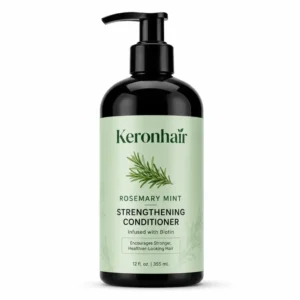
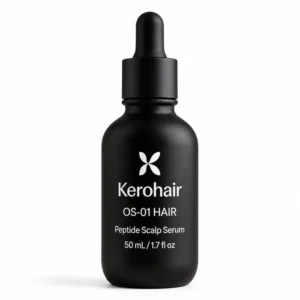
Working With Keronhair as an OEM/ODM Hair Care Partner
If the standards above describe the kind of supplier you are looking for, Keronhair is one manufacturer worth evaluating alongside your other candidates. The details below should be confirmed against current company information before you rely on them.
What We Manufacture
Keronhair manufactures a wide range of hair care and hair color products, including hair dye, hair color shampoo, treatments, masks, and other customized solutions. We support brands, distributors, and salon businesses with private label production, helping them develop products that match their target market and brand positioning.
How We Support OEM and ODM Projects
Whether you have an existing formula or need assistance developing a new product, Keronhair supports the complete OEM/ODM process. Our services include formula customization, sample development, packaging coordination, quality control, and scalable production to help brands move efficiently from concept to market.
How to Start a Project With Us
Starting a project with Keronhair begins with a simple product brief, including your product concept, target market, formula requirements, and packaging preferences. Our team will evaluate your needs, recommend suitable solutions, and guide you through sampling, testing, and production preparation.
Frequently Asked Questions
Is private label hair care the same as ODM?
Not always. Private label commonly describes an existing or lightly adjusted product sold under the buyer’s brand. ODM can include supplier-led design, formulation or adaptation from a product brief. Suppliers use the terms differently, so the formula source, customization scope, rights and responsibilities should be written into the specification and contract.
Can one hair care line combine OEM and ODM products?
Yes. A brand can use ODM for supporting shampoos or conditioners and a custom OEM route for a hero treatment. Record the development route, formula rights, approved specification, test responsibility and change rules for every SKU rather than assigning one label to the entire line.
Who owns an ODM hair care formula?
The contract determines the practical answer. The formula may be a shared manufacturer base, an adapted base, an exclusive development licensed under defined conditions or intellectual property assigned to the brand. Buyers should also clarify access to formula information and what happens if manufacturing moves.
Does a lower MOQ mean a product is ODM?
No. MOQ can be driven by formula batch size, raw materials, bottle or pump quantities, decoration, carton printing, fragrance, shade count and testing. A standard formula may support a lower quantity, but the quotation must identify the actual limiting components.
Can a Chinese manufacturer guarantee compliance in my market?
No supplier statement should replace a market-specific assessment. The required formula review, labeling, notification, testing and responsible-party obligations depend on the product, claims, destination and sales model. Define which support the manufacturer provides and have qualified regulatory personnel review the final SKU.
How many OEM/ODM manufacturers should I shortlist?
Two or three serious candidates are usually enough for a detailed comparison. Send each the same brief and compare formula route, sample, evidence, responsibilities, quotation assumptions and communication. A larger initial research pool can be useful, but deep verification should focus on a manageable shortlist.