China Hair Care Sourcing Guide
Wholesale Hair Care Products from China: Complete Guide
To wholesale hair care products from Chinese manufacturers, start by choosing the right sourcing model: ready-made products, stock-formula private label, semi-custom development, or fully custom OEM/ODM. Send the same product brief and RFQ to several qualified factories, then compare formula scope, packaging, MOQ, testing, payment terms, Incoterms, and total landed cost on a like-for-like basis.
Buying Models
Compare ready-made wholesale, stock-formula private label, and custom OEM/ODM routes.
10-Step Process
Move from SKU brief and comparable quotes to samples, PO controls, inspection, and reorder review.
True Cost
Normalize formula, packaging, testing, freight, duties, tax, and working-capital exposure.
Buyer Safeguards
Verify the legal entity, manufacturing role, compliance evidence, bank details, and shipment release.
How Do You Wholesale Hair Care Products from Chinese Manufacturers?
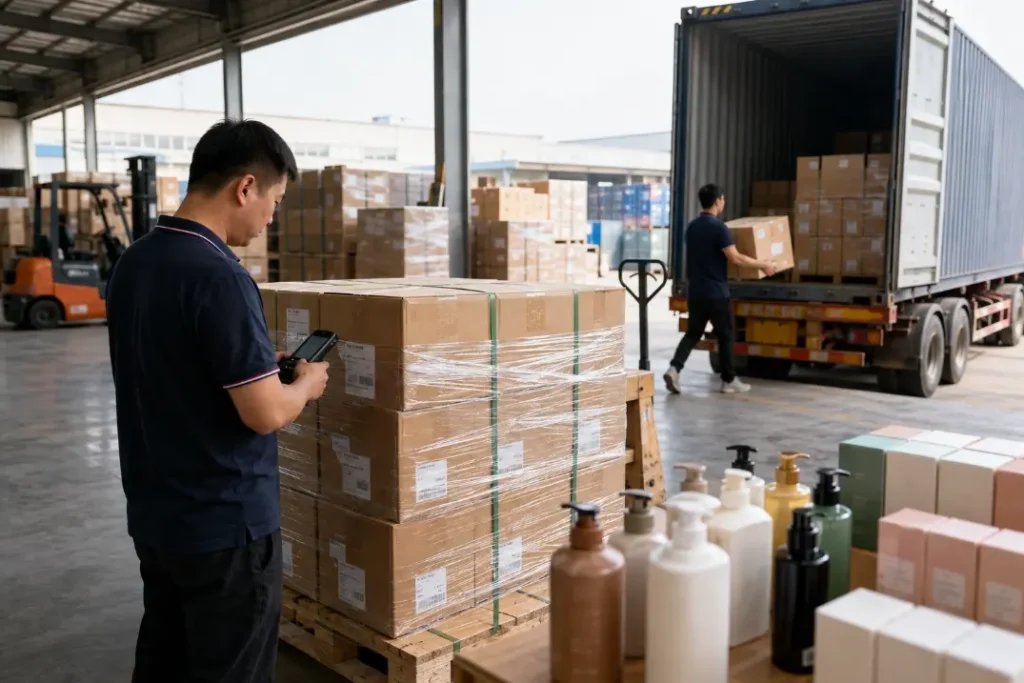
To wholesale hair care products from China, choose the buying model first: ready-made branded goods, stock-formula private label, semi-custom development, or fully custom OEM/ODM. Then give several qualified manufacturers the same product brief and RFQ. Compare formula scope, packaging, MOQ, tests, payment terms, Incoterm, and total landed cost on a like-for-like basis.
Before the factory starts bulk production, approve an identifiable sample, the final packaging, artwork, product specification, and the division of regulatory duties. Put inspection rights and payment gates in writing. After production, review the agreed quality evidence, inspect the goods, confirm the shipping file, and record what arrived before increasing the reorder.
For a first order, keep five rules in view:
- Define exactly what wholesale means for your project.
- Compare suppliers against one controlled specification.
- Budget from landed cost per saleable unit.
- Approve the product and responsibilities in writing before production.
- Treat the first batch as a commercial test, not proof that future orders will run perfectly.
How does hair care wholesale from Chinese manufacturers work?
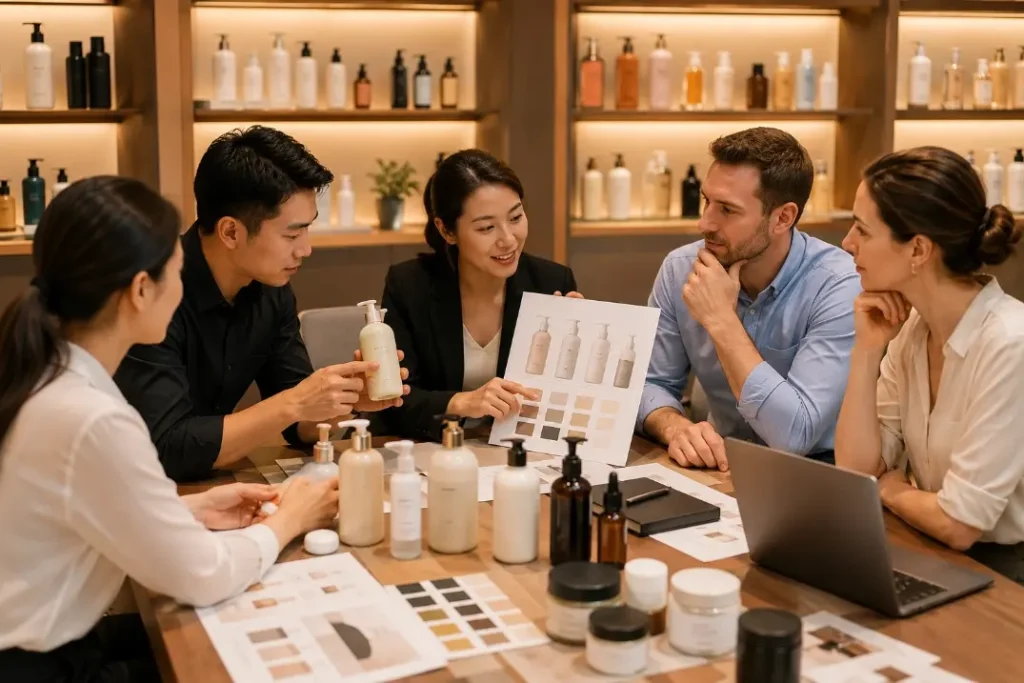
The term “wholesale” covers several arrangements. A distributor buying an existing Chinese brand has different rights and risks from a founder putting a private label on a stock shampoo. A company transferring its own formula has a different project again. Ask the supplier to describe the actual scope instead of relying on the labels OEM, ODM, or private label.
Ready-made product wholesale
In ready-made wholesale, you buy finished products under an existing brand for resale. Development work is limited, but brand authorization matters. Confirm who owns the brand, where you may sell it, whether online marketplaces are allowed, and how shelf life and batch traceability are managed.
Available stock can make this route look fast. Reorders may be less predictable if the brand changes a formula, package, territory policy, or distributor. Ask for the current catalog, remaining shelf life, case quantities, sales authorization, and reorder conditions before treating stock availability as a supply program.
Stock-formula private label
Stock-formula private label uses a manufacturer’s established formula under your brand. You may choose a stock bottle, label, carton, fragrance, or fill size, depending on the program. This route can make a small first range easier to manage because the factory is not starting formula development from zero.
“Stock” does not mean that every product is already sitting in finished packaging. The manufacturer may still need to make the batch, buy components, print labels, fill, code, and pack the order. Formula MOQ and packaging MOQ can remain separate.
Semi-custom or fully custom OEM/ODM
Semi-custom development changes an existing base. A fully custom project starts from a more detailed performance brief, or it transfers a buyer-controlled formula and process. Both routes demand tighter sample control, testing, written specifications, and contract terms.
Formula ownership is not determined by the acronym on the quotation. The agreement should state who owns the formula, whether the brand receives its full composition, whether it is exclusive, what the factory may reuse, and what happens if the relationship ends.
Buying model | Brand control | Development work | Main buyer concern | Often suits |
Ready-made wholesale | Low | Low | Authorization, shelf life, and continuity | Distributors and retailers |
Stock-formula private label | Moderate | Low to moderate | Component MOQ and limited differentiation | First private label launches |
Semi-custom | Moderate to high | Moderate | Changes to cost, tests, and stability | Growing beauty brands |
Fully custom OEM/ODM | High, subject to contract | High | Ownership, scale-up, testing, and timeline | Differentiated product programs |
Most differences between projects come from the product range, formula route, packaging, order structure, destination market, and delivery basis. A buyer who has not settled on China should first compare China and local hair care manufacturing using the same product brief.
How Much Does It Cost to Wholesale Hair Care Products from Chinese Manufacturers?
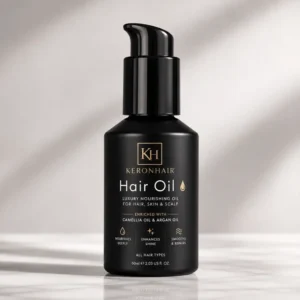
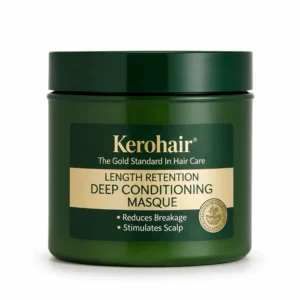
The wholesale cost of hair care products from China typically varies depending on the formula, packaging, order quantity, product size, and level of customization. At Keronhair, many ready-stock hair care products are available at around $3–$6 per unit, making them a practical option for wholesalers, retailers, and brands that want to test the market with existing formulas.
For buyers looking for something more customized, Keronhair also supports OEM and ODM services, including custom formulas, fragrances, packaging, labels, and private-label branding. A standard stock shampoo with a simple label will usually cost less than a custom salon hair mask, specialty treatment, or a complete hair color range with multiple shades. For an accurate quotation, we normally need your product type, formula requirements, packaging, size, quantity, and customization details.
Why hair care wholesale MOQ has multiple layers
A supplier may advertise a finished-product MOQ while the bottle factory, printer, fragrance house, or raw-material vendor uses a different minimum. Ask for each layer:
- Bulk-formula batch quantity
- Finished units per SKU
- Minimum per fragrance, shade, size, or variant
- Bottle, pump, cap, label, carton, and decoration minimums
- Special ingredient or raw-material commitments
- Excess component quantity, ownership, and storage
- Reorder MOQ
A low production MOQ can still create a large cash commitment. Suppose a factory will fill 1,000 units, but a printed pump bottle requires 5,000 pieces. You need to know who buys the remaining 4,000, who owns them, where they are stored, and what happens if the package is discontinued.
For a deeper explanation of these dependencies, see this guide to private label hair care MOQ, sampling, packaging, and lead time.
How Do You Calculate the Landed Cost of Hair Care Products Imported from China?
Add freight, duty, clearance and amortized one-time costs to the unit price, then divide by the units you can actually sell. Landed cost is the only figure worth using to set retail price or judge whether an order makes commercial sense.
Landed cost per unit
( Unit price × Quantity )
+ Freight and insurance
+ Duty and import taxes
+ Customs clearance and broker fees
+ Amortized one-time costs
÷ Sellable units after damage and yield allowance
Why can’t two quotes be compared without checking the Incoterm?
Incoterms® — the international trade rules published by the International Chamber of Commerce (ICC) — define how key costs, risks, and responsibilities are divided between the buyer and seller. This is why two supplier quotations using different Incoterms may not be directly comparable.
- EXW: the goods are yours at the factory gate. Inland transport, export clearance, freight and everything after are on you.
- FOB: the seller delivers to the port and handles export clearance. You take over from there.
- CIF: the seller covers freight and insurance to your destination port. Import duty, clearance and inland delivery remain yours.
- DDP: the seller delivers to your door with duties paid. Simplest to compare, usually the highest headline number, and worth reading closely for what it excludes.
The classic first-order mistake is putting an EXW quote beside a CIF quote, seeing a lower number and concluding the EXW supplier is cheaper. Ask every supplier to quote on the same term before comparing anything.
Which costs are one-time, and how should you amortize them?
Tooling for a custom bottle, printing plates or cylinders, artwork and dieline setup, formula development, stability and compatibility testing, and market registration are all paid once. They belong in landed cost, but they are also an investment that gets cheaper per unit on every reorder.
On a small first order they can add more per unit than the freight does. That is not a reason to avoid them — it is a reason to know the number before committing, and to ask which repeat on reorder and which do not.
What does the calculation look like in practice?
The figures below are illustrative, used to show the shape of the calculation rather than to quote any particular supplier.
Landed cost build-up · 3,000 units · 300 ml sulfate-free shampoo
| LANDED COST BUILD-UP · 3,000 UNITS · 300 ML SULFATE-FREE SHAMPOO | |
|---|---|
| Unit price, FOB Guangzhou — 3,000 × $1.90 | $5,700 |
| Ocean freight and insurance, LCL | $780 |
| Customs clearance and broker fees | $260 |
| Artwork and dieline setup | $150 |
| Label printing plates | $220 |
| Stability and compatibility testing | $900 |
| Safety assessment and market notification | $1,100 |
| Duty and import taxes | See note |
| Sellable units after a 2% allowance | 2,940 |
| Landed cost per sellable unit | $3.10 |
Two details deserve attention. The denominator is not the purchase order quantity: fill weight tolerance, transit damage, retained QC samples and marketing giveaways all reduce what you can sell, so build an allowance in. And duty is left blank deliberately. Hair preparations generally classify under heading 3305 of the Harmonized System maintained by the World Customs Organization, but the applicable rate depends on your destination market and changes over time. Confirm the full code and the current rate with your customs broker before modelling margins.
What is the complete process for wholesaling hair care products from Chinese manufacturers?

Step 1: Define Your Buying Model and SKU Plan
Choose between ready-made wholesale, private label, semi-custom, or full custom manufacturing. Confirm your products, sizes, shades, fragrances, sales channels, quantity per SKU, target price, launch date, and expected reorder volume. For new brands, starting with a focused product range usually makes inventory and testing easier to manage.
Step 2: Create a Clear Product Brief
Define the target customer, hair concern, formula type, texture, fragrance, performance requirements, ingredients, fill size, packaging, target market, quantity, and budget. The more specific your brief is, the easier it will be for manufacturers to provide accurate and comparable quotations.
Step 3: Shortlist Qualified Manufacturers
Find potential suppliers through manufacturer websites, trade shows, B2B platforms, referrals, or sourcing partners. If you are still building your shortlist, our guide to 10 hair care manufacturers in China provides a useful starting point for comparing factory profiles and private-label capabilities. Verify each manufacturer’s legal company name, factory address, production capabilities, export entity, and relevant cosmetics manufacturing licenses before moving forward.
Step 4: Request Comparable Quotations
Send the same RFQ to each shortlisted manufacturer and ask for a clear breakdown of formula, filling, packaging, labels, cartons, samples, development fees, testing, tooling, and shipping terms. Also confirm what is included, excluded, and the estimated timeline for each production stage.
Step 5: Develop and Evaluate Samples
Assign each sample a version number and evaluate its appearance, fragrance, texture, viscosity, application, rinse feel, hold, shine, dispensing, and other relevant characteristics. Provide specific, consolidated feedback so the manufacturer can make accurate adjustments before final approval.
Step 6: Approve the Pre-Production Package
Test the approved formula with the final bottle, jar, tube, pump, cap, label, and carton to confirm compatibility, leakage resistance, dispensing, decoration, and overall appearance. Finalize the formula, packaging specifications, artwork, quality standards, testing requirements, and reference sample before bulk production begins.
Step 7: Confirm Compliance and Import Responsibilities
Identify who is responsible for manufacturing documents, product testing, labeling, registration, notification, customs clearance, and other regulatory requirements in your target market. Complete these responsibilities before finalizing packaging or starting mass production.
Step 8: Finalize the Contract and Purchase Order
Make sure the contract and purchase order clearly state the product specifications, quantity, price, payment terms, Incoterm, delivery schedule, quality standards, inspection requirements, change procedures, packaging ownership, and formula rights. All commercial documents should describe the same agreed transaction.
Step 9: Inspect and Approve the Finished Order
Monitor material preparation, manufacturing, filling, packing, testing, and final release. Before shipment, review agreed quality records and conduct a pre-shipment inspection where necessary to confirm quantities, packaging, batch codes, workmanship, leakage, and overall product condition.
Step 10: Review the First Order and Plan Reorders
After receiving the shipment, check quantities, cartons, leakage, labels, batch codes, damage, and product condition. Compare the actual landed cost, lead time, defects, and supplier performance with your original plan, then use the real production and shipping timeline to set a practical reorder point.
Which Chinese hair care wholesale model fits your business?
The right route depends on what your team can manage as much as what it wants to sell. Custom development gives a brand more control, but it also creates more decisions and more ways for the schedule to slip. If you are still defining your market position, studying leading hair care brands can also help you clarify the product quality, pricing, packaging, and differentiation your range should aim for.
Buyer situation | Practical starting route | Question to settle first |
Retailer reselling an existing brand | Authorized ready-made wholesale | Are territory, channels, stock, shelf life, and reorders documented? |
New beauty brand testing demand | Stock formula with practical packaging | Can the inventory fit a realistic sales plan? |
Salon group launching retail products | Private label or semi-custom | Have professional use, pack size, and repeat supply been tested? |
Growing brand seeking differentiation | Semi-custom or custom ODM | Are the sample work, tests, ownership, and MOQ affordable? |
Established brand transferring a formula | OEM or contract manufacturing | Can the formula and process be transferred and validated? |
Color, bleach, aerosol, or straightening range | Specialist manufacturer | Does the licensed site have the correct scope and evidence? |
Distributor building several SKUs | Coordinated private label or ODM | Can the business carry the component and working-capital commitment? |
Faster routes tend to offer less differentiation. Custom routes need more technical and commercial control. Neither is a weakness if it suits the launch. Trouble starts when a buyer pays for a custom program but manages it as if it were a catalog order.
How Can You Tell a Real Chinese Hair Care Manufacturer from a Trading Company?
Ask a technical question only a manufacturer can answer on the spot, and watch how the answer arrives. A trading company can be the right partner — the problem is paying for one while believing you are dealing with a factory. Documents settle this later; conversation settles it in the first week.
| Counterparty | What you gain | What it costs you | Best suited to |
|---|---|---|---|
| Direct manufacturer | Pricing without a margin layer, direct access to formulators, faster technical answers | Narrower product range; you carry more coordination | Brands focused on one category |
| Trading company | Broader catalogue, often stronger service in English, one contact across product types | An added margin and a layer between you and production | Buyers sourcing several categories at once |
| Sourcing agent | Works for you rather than the seller; useful for audits and consolidation | A commission or retainer; quality varies widely | First-time importers without local capacity |
Four signals that reveal which one you are dealing with
- Technical fluency: can they answer a formulation question — preservative system, target pH, viscosity specification — without going away to check? An intermediary almost always needs to consult before replying.
- Minimum transparency: do they quote the formula batch minimum and the component minimum separately, or only a blended number? A manufacturer knows where its own constraints sit.
- Catalogue shape: does the range hold together around one production capability, or does it span shampoo, hairbrushes, packaging and unrelated categories? Breadth without a common process usually means sourcing rather than making.
- Live access: will they show you the filling line on a video call, on request, rather than sending a polished file? Ask to see something specific — a line running, a raw material store, a batch record for a current job.
None of this requires a factory visit or a paid audit, and it costs nothing to run during the first week of contact. These checks do not need to be conclusive at this stage. Before paying a deposit, follow a more structured process to verify the hair care manufacturer, including its legal identity, production license, factory site, certifications, and manufacturing capabilities.
Why wholesale hair care products from China with Keronhair?
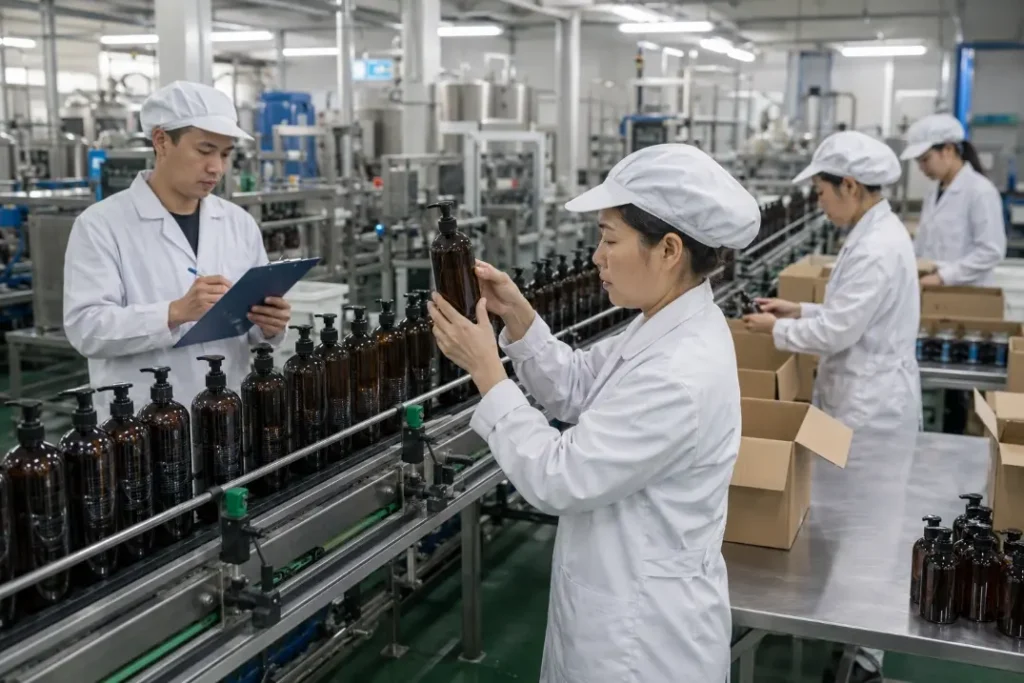
Keronhair is one China-based manufacturer to evaluate if your project needs coordinated formula, packaging, sample, production, and shipment preparation. Buyers should apply the same license, evidence, specification, and payment checks to Keronhair that they use for any other candidate.
Keronhair’s public OEM/ODM hair product manufacturing information describes stock, semi-custom, and fully custom formula routes. It also covers sample feedback, packaging selection, manufacturing records, inspection, and shipment preparation. The exact product scope, MOQ, tests, documents, and timing still need to be confirmed for the specific brief.
For a useful first review, send the team:
- Product category and number of SKUs
- Destination market
- Formula route or benchmark
- Quantity per SKU and fill size
- Packaging reference
- Target landed cost or commercial budget
- Required delivery date
Send Keronhair your product brief to request a project-specific proposal. A detailed inquiry gives the factory something concrete to assess and gives your team a better basis for comparing the response with other qualified suppliers.
Conclusion
Buying hair care products from China is not just about finding the lowest unit price. A successful first order comes from choosing the right sourcing model, comparing suppliers on the same specifications, understanding the true landed cost, and confirming product, packaging, compliance, and payment details before production begins.
For new buyers, it is usually smarter to start with a focused range, test the market, and build the supplier relationship through a manageable first order. As sales grow, you can gradually move from ready-stock or private-label products into more customized OEM/ODM development.
Keronhair supports both ready-stock wholesale and OEM/ODM hair care manufacturing. If you already know the products, quantities, packaging, or target market you need, send us your requirements and we can recommend a suitable sourcing option and provide a quotation.
Frequently Asked Questions About Wholesaling Hair Care Products from China
What is the minimum order to wholesale hair care products from China?
It depends on which of three minimums is binding: the formula batch, the packaging components, or the print run. A stock formula in stock packaging with adhesive labels is the lowest configuration available. Ask the supplier which constraint sets their quoted number, because only that one can be moved.
Is it cheaper to use a stock formula or develop a custom one?
Stock is cheaper per unit at low volume, because custom development spreads a fixed cost across your order. Custom formulation pays back at scale, or where the formula itself justifies a higher retail price. Modifying an existing base is often the practical middle ground on a second order.
How long does a first private label hair care order take end to end?
Budget for a full quarter. Inquiry and quotation, sampling and approval, production, ocean transit and customs clearance each take weeks. Sampling varies most, depending on how custom the formula is, and it is also the stage where buyer response time has the largest effect on the total.
Do I need FDA approval to import hair care products from China?
No. The FDA does not approve cosmetics before sale. Facility registration, product listing, safety substantiation and adverse event reporting obligations apply instead, and most of them sit with the brand named on the label rather than with the factory. Treat “FDA approved” as a warning sign in any supplier conversation.
Can I get samples before placing a wholesale order?
Yes, and you should take two. A lab sample proves the formula works; a production sample proves the line can reproduce it in your packaging at your batch size. Sample fees are commonly credited against the first order, though this varies and is worth confirming in writing.
What certifications should a Chinese hair care manufacturer have?
ISO 22716, the international standard for cosmetics good manufacturing practice, is the practical baseline. Check that it is issued in the manufacturer’s own legal name and that the address matches the facility you are dealing with. Certificates held by a related trading entity are common and easy to miss.
How do I confirm a supplier is a real factory?
Ask for the cosmetics production licence. Chinese manufacturers obtain it from their provincial medical products administration after an on-site inspection, and a trading company cannot hold one. Confirm the entity name, site address, validity dates and permitted scope match the business licence and the GMP certificate.
What payment terms are normal?
A deposit on order confirmation with the balance before shipping is the standard structure. Tying the balance release to a passed pre-shipment inspection is a reasonable request that most established manufacturers accept. Use traceable payment channels and pay the registered company entity, not an individual.
How much does shipping add per unit?
It depends on volumetric weight, shipping mode and Incoterm rather than on unit price. Liquids in glass shift the calculation sharply because weight rather than volume becomes the constraint. On low volumes, air freight can cost more than the goods themselves.