A formula can be stable, the bottles can be printed, and the first batch can be sitting on a pallet — and a Saudi launch can still stall. Usually the cause is upstream: wrong product category, claims beyond the evidence, the manufacturer mapped to the wrong legal entity, or artwork that does not match the formula and its variants.
Most buyers call this process SFDA cosmetic registration. Inside the Ghad system, the relevant service is described as listing a cosmetic product through marketing notification. The distinction matters commercially: notification is not an efficacy approval, not a quality award, and not permission to print “SFDA approved” on a label.
This guide walks through the whole chain — the responsible Saudi entity, account setup, cosmetic classification, formula and label review, manufacturer mapping, variants, ingredients, volumes, barcodes, attachments, submission, import clearance, and what continues after the record exists.
What Is the SFDA Ghad Process for Hair Care Products?
To place a cosmetic hair care product on the Saudi market, the Saudi manufacturer or importer/notifying establishment should first confirm that the product is a cosmetic, maintain the appropriate Ghad account and establishment activity, select or add the manufacturer, open the correct cosmetic product marketing-notification request, enter the product and variant information, add the full ingredient data with concentrations and roles, add each volume and barcode, upload the label artwork and product image, attach the required authorization or contract-manufacturing documents, review the declaration, and submit the application. After submission, the applicant tracks the request and addresses any comments. Imported products also require a separate shipment-clearance process through FASEH.
Two qualifications belong immediately alongside that summary.
The exact fields and attachments depend on the company, the manufacturer, the product, the variation, and whether the goods are locally manufactured or imported. There is no single universal dossier.
And notification does not shift legal responsibility to the SFDA. The authority’s listed cosmetic products page makes clear that importers or manufacturers submit the marketing notification and that the notifiers remain responsible for their products.
Before You Open Ghad: Identify Your Product and Market Route
Most avoidable problems begin before data entry, so the route, the legal party, the formula, the claims, and the SKU architecture should be settled first.
Is the Hair Product a Cosmetic?
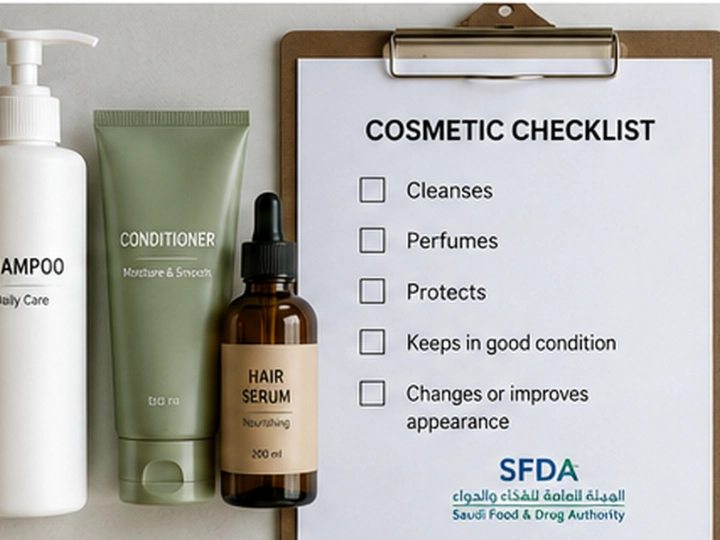
A product used on hair or scalp for cleaning, perfuming, protecting, keeping it in good condition, or changing or improving appearance can fall within cosmetics, as set out in the SFDA cosmetics overview. The boundary is where hair care gets expensive, because the most commercially attractive claims sit closest to the edge.
Usually cosmetic-style positioning
Requires classification review
Cleanses hair and scalp
Treats a scalp disease
Helps hair feel softer or smoother
Regrows hair
Reduces the appearance of frizz
Prevents or cures alopecia
Adds shine or improves manageability
Stops medically defined hair loss
Helps control visible flakes through cosmetic cleansing
Treats dandruff as a disease
Protects hair from styling-related dryness
Repairs a medical scalp condition
Four cautions apply to that table.
Classification depends on the complete formula, the intended use, the label, the website, advertising, imagery, and implied claims — not only the product name. A shampoo called “Scalp Rescue” is judged on everything around it, not the word on the bottle.
The SFDA states that a product marketed with a medical claim may be classified as a drug. Anti-hair-loss, hair-growth, anti-dandruff, therapeutic scalp, and medicated language should all be reviewed before the brand commits to artwork.
And where classification remains uncertain, use the current SFDA classification route or obtain qualified advice. Do not guess inside the application.
Is the Product Locally Manufactured or Imported?
Route
Typical parties
Ghad focus
Additional operational issue
Made in the brand’s own Saudi factory
Saudi manufacturer / notifier
Facility and product information linked to the local site
Verify current factory licence and product scope
Contract manufactured in Saudi Arabia
Brand or Saudi establishment plus contractual local factory
Select the contractual manufacturer and attach relationship documents
Contract must define formula, notification, artwork, and change responsibilities
Manufactured overseas
Saudi importer / notifying establishment plus overseas manufacturer
Add or select the overseas manufacturer and provide authorization or contract evidence
Shipment clearance through FASEH is separate from product notification
One terminology warning. Do not import the EU concept of a “responsible person” and assume Saudi rules work the same way. Use the roles that actually appear in a Saudi project: manufacturer, importer, notifying establishment, distributor, and regulatory consultant.
Discloses formula, material, site, or pack changes
Determines notification impact
Yes
FASEH clearance for imports
Managed by the Saudi import route
Supplies shipment and conformity documents
Supports when contracted
Yes
Complaints and recalls
Maintains the Saudi-market process
Investigates manufacturing issues
Supports reporting
Yes
Documents and Data to Prepare Before Submission
Ghad data entry should be the final assembly of an approved information set — not the moment your team first discovers what is actually in the product.
Company and Account Information
Account and establishment requirements depend on the applicant type. Based on the SFDA’s cosmetic product service information, preparation may include:
a commercial registration carrying the relevant SFDA-related cosmetic activity;
the correct fields and activities selected in Ghad;
a Ministry of Investment licence for foreign or mixed companies where applicable;
an attested authorization for the person submitting and following applications where required;
current manufacturer, warehouse, or other establishment licences relevant to the business model.
One commercial registration does not automatically authorise manufacture, warehousing, import, and product notification. Check which activities your entity actually holds before you plan around them.
Manufacturer Relationship Documents
Manufacturer authorization letter
Contract-manufacturing agreement where the manufacturer is contractual
Correct manufacturer legal name and address
Manufacturing country and site information
Evidence connecting the contracting party with the actual production site
The SFDA’s 2025 notification guidance describes a manufacturer-location choice covering the applicant’s own facilities, a contractual manufacturer, or an overseas manufacturer, with authorization or contract-manufacturing evidence attached through the manufacturer details. Getting this wrong is one of the more common failure points, because the entity that signs your contract is frequently not the entity that owns the production site.
Product Identity and Variant Information
Product name in Arabic and English
Brand name
Product category and intended use
Manufacture details
Answers to the product questions required by the system
Variant structure
Fill volume or weight
A unique barcode for each applicable size, colour, or variation
A clear public product image
Final label artwork
Internal and external labels, and any leaflet where applicable
Formula and Ingredient Information
The complete ingredient list, not only highlighted or active ingredients
Correct ingredient names selected or entered through the current system route
The concentration of every ingredient
The role or function of every ingredient
Accurate answers for any CMR, nanomaterial, colorant, preservative, or other system fields that apply
A formula version linked to the approved sample and the artwork
Formula confidentiality should be resolved contractually before submission. The Saudi notifying party still needs a compliant route to enter or upload the required composition data. A supplier’s refusal to disclose required information can block the project entirely — which is why this belongs in the manufacturing agreement, not in an email three weeks before launch.
Label Artwork and Product Image
These are two different uploads and they are frequently confused.
Artwork is the complete internal and external label information submitted for compliance review. Product image is a clear image suitable for publication on the SFDA website and capable of identifying the product.
Points reflected in the current notification guidance:
accepted file types can include JPEG, JPG, PDF, or PNG;
the label should clearly display product identity and ingredients;
the label must comply with the applicable cosmetics safety and claims regulations;
the label should not state or imply that notification itself is an SFDA endorsement;
each applicable size, colour, or variation should have its own unique barcode.
Pre-Submission Dossier Checklist
Item
Owner
Version control
Ghad use
Verify before upload
Saudi establishment details
Applicant
Yes
Account / entity
Activity, licence, legal name
Manufacturer details
Applicant + manufacturer
Yes
Manufacturer selection
Legal name, address, country, relationship
Authorization letter
Manufacturer / distributor
Yes
Attachment
Parties, authority, signatures, current date
Contract-manufacturing agreement
Brand + factory
Yes
Attachment where relevant
Correct entities and site
Product names
Brand
Yes
Product and variant fields
Arabic/English consistency
Full composition
Manufacturer
Yes
Ingredient management
Concentrations total correctly; roles complete
Artwork
Brand + regulatory reviewer
Yes
Label upload
Formula, claims, warnings, and names match
Public product image
Brand
Yes
Publication image
Clear, current, correct variant
Volumes and barcodes
Brand / packaging team
Yes
Volume management
Unique and matched to each variant
Claim evidence
Brand + manufacturer
Yes
Classification and substantiation
Wording, method, product, and market match
How to Register Hair Care Products in the SFDA Ghad System: Step by Step
The sequence below translates the SFDA’s public Ghad user guide and 2025 cosmetic-notification guidance into a hair care project workflow.
Step 1: Confirm the Applicant and Ghad Account Scope
Identify which Saudi manufacturer or importer/notifying establishment will control the application, and confirm the account includes the cosmetics field and the appropriate company activities. Make sure the authorised user can legally submit and follow the request.
Do not let an employee’s personal access become the only record of the project. Maintain company-controlled records and permissions, or a staff departure becomes a regulatory incident.
Output: Confirmed submitting entity, authorised user, and account route.
Step 2: Complete Any Required Establishment or Facility Setup
Product notification and establishment licensing are related but different processes. A Saudi cosmetics factory, warehouse, or other facility may need the relevant current licence for its activity, and the Ghad cosmetic licensing and products user guide covers factory and warehouse licences separately.
Using an overseas manufacturer does not remove the Saudi importer or establishment requirements. Verify licence holder, site, activity, and expiry before linking any licence to a product.
Output: Eligible establishment record and current activity-specific licences where required.
Step 3: Classify the Product Before Entering It
Confirm the cosmetic intended use, then review the formula and every claim across packaging, ecommerce listings, social media, brochures, and salon instructions. Escalate medical or borderline claims for classification review, and lock the intended-use statement so the label, the Ghad fields, and the marketing copy cannot drift apart.
Hair care products that deserve close review before anything is entered: anti-hair-loss serums, hair-growth oils, anti-dandruff shampoos, anything using scalp psoriasis or eczema language, professional smoothing or straightening systems, and hair dye, bleach, or developer products with their instructions and warnings.
Output: Documented cosmetic classification rationale and an approved claim boundary.
Step 4: Freeze the Product, Variant, and Kit Structure
Three practical decisions have to be made before data entry, not during it.
Is this a single cosmetic product submission?
Does it have variants such as size, colour, shade, fragrance, or another system-recognised difference?
Is it a product kit that should use the separate cosmetic product kit marketing-notification route?
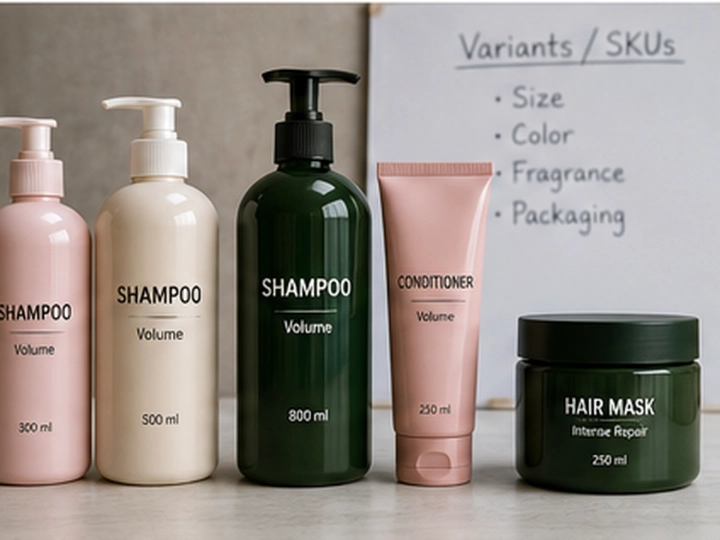
In practice: a 250 ml and a 500 ml shampoo may require separate volume and barcode records within the correct variant structure. Hair colour shades should be mapped deliberately rather than entered as an informal text list. A shampoo-and-conditioner gift set may need the kit pathway rather than being treated as a single formula.
Select the application type that matches the SFDA’s current instructions, or confirm with the SFDA. Do not invent a definition for a system term the interface does not explain.
Output: Approved SKU, variant, size, shade, and kit map.
Step 5: Select the Product Service and Start a New Request
Open Product Services, choose Add New Product, and select the application for listing a cosmetic product through Marketing Notification. For a set, select the cosmetic product kit marketing-notification application instead.
The Ghad user guide allows an unfinished request to be saved and reopened later from My Requests — useful, because the ingredient stage often stalls while you chase data from the factory.
Output: The correct new product or kit application opened.
Step 6: Add or Select the Manufacturer
Choose the manufacturer location — applicant facility, contractual manufacturer, or overseas manufacturer as applicable — then select an existing manufacturer record or add a new one. Review the legal name, address, country, and production relationship, and upload the supporting authorization or contract-manufacturing documents through the manufacturer details where required.
Remove duplicate or incorrect manufacturer records before submitting.
For an overseas OEM project, the brand name on the label, the exporter, the sales company, and the actual manufacturer may all be different legal entities. Map them accurately rather than entering whichever name appears on the invoice.
Output: The correct manufacturer linked to the application with supporting relationship evidence.
Step 7: Enter the Product and Variant Details
Complete the Arabic and English product names, brand, category and product type, intended use, manufacturing details, variant-specific data, the system’s product questions, the label artwork, and the public product image.
The same name, brand, purpose, manufacturer, and variant identity should appear consistently in the formula file, the artwork, the barcode record, the quotation, the production specification, and the Ghad application.
Output: Complete product identity and variant record.
Step 8: Enter the Full Ingredient Composition
Use Manage Ingredients or the current equivalent function, and enter every ingredient with its correct concentration and role. Follow the current ingredient-search or template-upload route shown in Ghad, and check the formula against the current SFDA cosmetic ingredient lists covering prohibited and restricted substances, colorants, preservatives, and UV filters.
Resolve trade-name blends so the underlying composition can be entered as required — a supplier’s marketing name for a conditioning complex is not a composition. Then verify that the formula being submitted is the exact formula approved for manufacture.
Comparison
Must match
Manufacturer master formula
Ghad composition
Ingredient concentrations and roles
Notification data
INCI list
Label artwork
Colorants and shade variants
Variant map
Fragrance and allergens where applicable
Formula and label review
Approved sample
Production formula version
Output: Complete, checked composition tied to the correct formula version.
Step 9: Add Volumes, Sizes, and Barcodes
Use Manage Volume or the current equivalent function. Enter every pack size or volume included in the application, assign the correct unique barcode to each applicable size, colour, or variation, and check that the physical packaging, the artwork, the barcode master, and the system entry all agree.
Hair care projects fail here more often than the step deserves. The recurring causes: using one barcode across multiple fill sizes; reusing a barcode after changing the pack or variant; entering net volume differently on the label and in Ghad; forgetting the salon-size pack entirely; and treating hair-colour shades as identical without reviewing variant rules.
Output: A barcode-to-SKU matrix with no duplicates or mismatches.
Step 10: Upload the Artwork and Publication Image
Upload clear, final files in an accepted current format, including all internal and external label panels and the leaflet where applicable. Use a product image that clearly identifies the product and is suitable for public display, and check that it shows the correct SKU, size, and variant.
Do not place “SFDA approved,” “registered by SFDA,” or any similar endorsement claim on the pack merely because a notification is going to be submitted.
Output: Final artwork pack and the correct public product image.
Step 11: Perform a Cross-Document Quality Check
Before you touch the submission button, confirm every line:
Product names match across the Arabic and English records.
Manufacturer and country information are consistent.
The formula version matches the approved sample.
The label ingredient list matches the submitted composition.
Claims remain cosmetic and are supported.
Warnings and directions suit the actual product.
Volume and barcode match the physical pack.
Authorization and contract documents name the correct parties.
Product, variant, and kit structures are correct.
No draft artwork, placeholder text, or superseded barcode remains anywhere in the pack.
Output: A signed internal submission-readiness checklist.
Step 12: Confirm, Submit, and Record the Application Number
Continue through to the Confirmation and Submission section, review the declaration or commitment before accepting it, and submit. Save the application number and a submission snapshot in the project file, then track status through My Requests and respond to any comments through the current workflow.
A note on timing: a digital service may display an execution time, but that figure describes the electronic service, not your project. A real launch timeline also includes data preparation, corrections, classification questions, manufacturer setup, artwork revisions, and — for imported goods — clearance work. Plan against the chain, not the service label.
Output: A submitted application with a traceable application number.
Step 13: Download and Control the Notification Record
The Ghad user guide describes downloading the cosmetic-product marketing-notification record through the product actions once the request is accepted. Save it in the regulatory file, check the product details against the approved submission, and where practical verify the entry through the SFDA’s public listed-cosmetics search.
Do not use the record as advertising proof of efficacy or superiority. It evidences that a notification action was completed — nothing more.
Output: A controlled notification record and verified product data.
Registration, Notification, and Approval: What Is the Difference?
This is the misunderstanding that generates the most wasted packaging in the category.
Term
What it means here
What it does not mean
Registration
Common search and commercial shorthand
Not the precise name of every SFDA cosmetic service
Marketing notification / listing
Official Ghad language for adding a cosmetic product to the system
Not an efficacy endorsement
Application number
Tracking reference after submission
Not proof that the product is listed
Notification record or certificate
Evidence of the completed Ghad product-notification action
Not permission to claim “SFDA approved”
Claim compliance certificate
A separate claims-related service described in the Ghad guide
Not a substitute for product notification or product safety
Shipment clearance
Import-consignment process through FASEH
Not the same as product notification
The SFDA’s public listed-products page states that importers or manufacturers submit the marketing notification and that the notifiers remain responsible for the products under applicable laws, regulations, and circulars.
For teams working bilingually, these are the terms you will encounter in Arabic-language documentation and correspondence:
English
Arabic
Listing cosmetic products in the Ghad system
إدراج منتجات التجميل في نظام غد
Cosmetic registration in Saudi Arabia
تسجيل مستحضرات التجميل في السعودية
Hair care product registration in Saudi Arabia
تسجيل منتجات العناية بالشعر في السعودية
SFDA cosmetics
هيئة الغذاء والدواء مستحضرات التجميل
Cosmetic marketing notification
إخطار تسويق منتجات التجميل
Cosmetic label requirements
متطلبات ملصق مستحضرات التجميل
Hair Care Label and Claims Checks Before Ghad Submission
Label review is not a final graphic-design task. It is the point where classification, formula, product identity, warnings, claims, variants, and barcodes either agree with each other or quietly do not.
Product Identity and Language
Product and brand names should match the system data, and the Arabic and English information should not contradict each other. The product function should be clear. Manufacturer, importer, or other responsible business information should be reviewed for the specific route you are using, and country of origin and net contents handled according to current requirements.
Ingredient List
Use the applicable cosmetic ingredient nomenclature and match the final formula and its order. Do not omit ingredients because they arrived as part of a supplier blend — a blend is a convenience for the factory, not a category of exemption. And do not market an ingredient as present if it is not in the submitted formula.
Directions, Warnings, and Professional Products
Product-specific instructions and warnings need particular attention for hair colour and developer, bleach, chemical straightening or smoothing systems, any product requiring gloves, patch or strand testing, timed processing or salon expertise, scalp-contact products, and children’s-use or other restricted-use scenarios.
There is no universal warning text worth copying. The manufacturer and a regulatory reviewer should confirm the current wording for your exact formula and intended use.
Claims Review
Claims are governed by SFDA.CO/GSO 2528:2024, available through the SFDA standards store. Build the evidence matrix before the copywriting, not after.
Proposed claim
Cosmetic boundary question
Evidence question
Editorial action
Reduces frizz for up to 48 hours
Is this cosmetic appearance or performance?
What method, sample, and conditions support 48 hours?
Keep only if substantiated
Repairs damaged hair
What does “repairs” mean and how is it measured?
Is the evidence on the finished formula?
Define or soften
Prevents hair loss
Does it imply treatment or prevention?
Is classification review required?
Escalate before use
Regrows hair
Strong medical implication
Cosmetic evidence is unlikely to resolve classification
Do not use without classification advice
Treats dandruff
A disease-treatment implication may arise
Formula and intended-use review needed
Escalate
Halal
Is certification claimed, or only ingredient positioning?
Is there a current certificate covering this product and scope?
Do not imply certification without evidence
Natural or organic
What definition and percentage apply?
Can the claim be documented?
Define precisely
Safety Requirements
Verify the formula against the live SFDA ingredient lists and circulars rather than against any list reproduced in an article — including this one. Prohibited and restricted substances change, and they change with compliance deadlines attached.
Keep two reviews separate in your process: the legal formula review against SFDA.CO/GSO 1943:2024, and the marketing claims review. They ask different questions, and a formula that passes one can still fail the other. Recheck both before publication of any artwork and before every reformulation.
Imported Hair Care Products: Ghad Does Not Replace FASEH Clearance
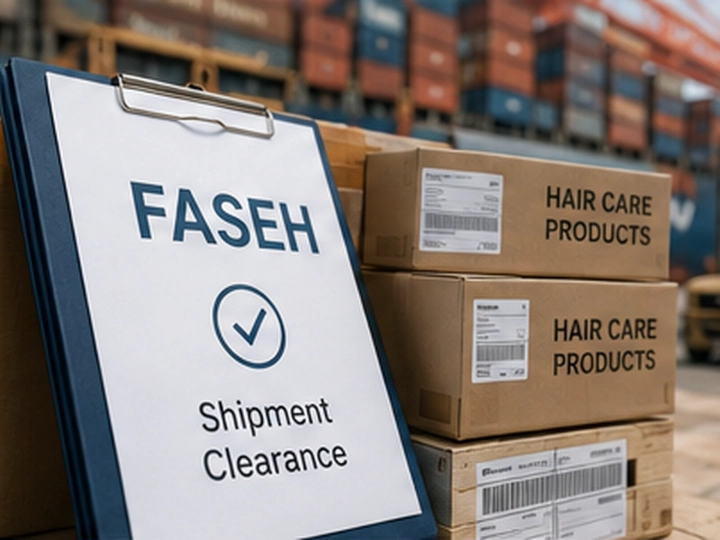
Ghad product notification and FASEH shipment clearance are separate parts of an imported cosmetics project. Completing the product listing does not by itself clear a shipment through the port.
Simplified Imported-Product Workflow
Establish the eligible Saudi company and Ghad account.
Confirm the product is a cosmetic.
Add or select the overseas manufacturer.
Complete the Ghad marketing notification.
Prepare shipment and conformity documents.
Use FASEH for the cosmetic consignment clearance request.
Respond to assessment-body or SFDA queries.
Complete clearance before release into the Saudi market.
Details of the consignment route are published through the SFDA’s FASEH information pages. Treat steps 4 and 6 as two separate milestones in the launch plan, with separate owners and separate lead times.
Responsibility Table for Overseas Private Label
Workstream
Saudi importer / brand
Overseas manufacturer
Ghad account
Controls the eligible Saudi account
Cannot replace the Saudi account role
Manufacturer authorization
Receives and checks
Issues accurate authorization
Full formula
Ensures usable regulatory data
Supplies composition, concentrations, and roles
Artwork
Owns Saudi-market approval
Supplies technical content and production dielines
Tests and specifications
Defines Saudi and import needs
Supplies agreed product evidence
Shipment documents
Coordinates FASEH and importer records
Supplies export and batch documents
Change notification
Assesses and updates local records
Discloses changes before production
Complaints or recall
Controls Saudi-market response
Investigates manufacturing cause and supports traceability
Deciding between the two production routes is a separate question from this one. Our comparison of China and local hair care manufacturers works through the trade-offs.
Common Ghad Submission Problems and How to Prevent Them
These are practical mismatch risks derived from the required data flow. They are not an official SFDA ranking of rejection reasons.
1. Medical claims on a cosmetic application. Hair-growth, disease-treatment, or therapeutic language conflicts with cosmetic classification. Review claims before artwork, website copy, and submission.
2. Formula and label ingredient lists do not match. The Ghad composition, the manufacturer’s formula, and the pack INCI diverge. Reconcile all three against one controlled formula version.
3. Ingredients lack concentrations or roles. The file lists ingredients but not the data the notification process requires. Obtain the complete composition and functions from the manufacturer before opening the request.
4. The wrong manufacturer is linked. The sales company, brand owner, exporter, and actual factory get confused. Map every legal entity and attach the correct authorization or manufacturing agreement.
5. Artwork is blurry, incomplete, or outdated. Uploaded files omit a panel, show placeholder text, or carry an old formula or barcode. Upload the final controlled artwork set and a current product image.
6. One barcode is used across different variations. Size, colour, shade, or other variations are not uniquely mapped. Approve a barcode-to-SKU matrix before data entry.
7. A kit is entered as one ordinary product. A set is mapped through the wrong request type. Decide the kit and variant structure before submission and use the current Ghad kit pathway when it applies.
8. Arabic and English product information conflicts. Names, directions, claims, or warnings change meaning between languages. Use a bilingual regulatory review, not a literal last-minute translation.
9. The brand changes formula or packaging after notification. Production no longer matches the submitted product. Use formal change control and assess whether the Ghad record must be updated before manufacture or import.
10. Ghad notification is mistaken for import clearance. Goods ship before the importer prepares the FASEH route and consignment documents. Build the two as separate milestones.
What Happens After the Product Is Notified?
Compliance continues after the Ghad record exists. Four workstreams stay live.
Control the Approved Product Record
Store the notification record, application data, artwork, formula, barcodes, manufacturer documents, and supporting evidence together. Give each document a version and an approval date, and make sure procurement and the manufacturer are working from the same controlled version. Most post-launch discrepancies trace back to someone using a superseded file in good faith.
Manage Product Updates
The Ghad user guide describes update actions for listed cosmetic products. Any of the following should be assessed before implementation, not after:
formula or ingredient supplier;
fragrance, colour, shade, or active level;
manufacturer or production site;
product name;
pack size or barcode;
artwork, directions, warnings, or claims;
kit composition.
Do not assume that every change requires a fresh notification, and do not assume that none do. Your regulatory team should apply the current Ghad rules to the specific change in front of them. Confirm the validity period attached to your notification record and the correct renewal route, since both determine when the record needs attention independently of any change you make.
Deactivate Products That Are No Longer Marketed
The Ghad guide includes a deactivation process. A discontinued SKU left active is a live record attached to a product you no longer control, which is a poor position if a complaint or a market-surveillance query arrives. Handle dormant products through the appropriate system action rather than ignoring them.
Maintain Post-Market Surveillance
Consumer complaints, undesirable effects, serious undesirable effects, manufacturing errors, out-of-specification batches, corrective actions, and product withdrawal or recall all need an owner before they happen, not after. SFDA publishes guidance on reporting undesirable effects, recalls, and manufacturing errors.
Define in writing who receives reports, who investigates, who contacts the SFDA, and who controls any recall. Splitting that across a brand, an importer, and an overseas factory without a written protocol is how a manageable quality issue becomes an unmanageable one.
How to Work With a Hair Care Manufacturer on an SFDA-Ready Data Pack
The manufacturer does not replace the Saudi notifier. But the quality of its documents and its change control determines whether your submission takes a fortnight or a quarter.
Ask for These Items Before Final Packaging
Correct legal manufacturer name and production-site address
Authorization letter or contract-manufacturing agreement
Full quantitative formula with ingredient roles
Formula specification and version number
Finished-product specification
Stability and packaging-compatibility evidence
Microbiological and other relevant product tests
Claim-support information
INCI list and technical label inputs
Directions and warnings relevant to professional products
Product and packaging specifications
Batch documents and certificate-of-analysis expectations
A written change-control commitment
Ask during sampling, while the factory is still competing for your business. Requesting a full data pack after the first bulk order has shipped changes the dynamic entirely. Our guide to choosing a reliable hair product manufacturer covers how to evaluate the answers.
Manufacturer Readiness Questions
Can you provide every ingredient concentration and role for Ghad?
Which legal entity and site manufacture and fill the product?
Will the formula or raw-material suppliers change without written approval?
Which tests are performed on the finished product in its intended packaging?
Who prepares the INCI list, directions, warnings, and technical artwork inputs?
Can you support separate sizes, shades, and barcode records?
Which documents are issued for every production batch?
How quickly will you investigate a complaint or a possible recall?
Question 1 is the one that eliminates candidates fastest. A factory that will not disclose full quantitative composition cannot support a Saudi notification, regardless of how good the sample is.
For brands producing outside Saudi Arabia, Keronhair can coordinate formula information, approved specifications, packaging details, label inputs, batch records, and export-related documents according to the agreed project scope as part of its private label hair product manufacturing work. The Saudi importer or notifying establishment should still appoint qualified local regulatory support and confirm that the final data pack meets current SFDA and Ghad requirements. Our Saudi salon smoothing system case study shows how that coordination worked on a live project.
Practical SFDA Ghad Checklist for Hair Care Brands
Before Submission
Saudi submitting entity and authorised user confirmed
Correct establishment activity and licences confirmed
Product classified as a cosmetic
Local, contractual, or overseas manufacturer route selected
Manufacturer legal identity and site confirmed
Authorization or contract-manufacturing documents ready
Product names approved in Arabic and English
Product, variant, size, shade, and kit map approved
Complete ingredient list, concentrations, and roles ready
Formula checked against current SFDA ingredient requirements
Claims checked against cosmetic classification and SFDA.CO/GSO 2528:2024
Artwork checked against SFDA.CO/GSO 1943:2024
Public product image ready
Unique barcodes assigned to applicable variations
Formula, artwork, barcode, and manufacturer data reconciled
During Submission
Correct product or kit application selected
Correct manufacturer selected or added
Supporting manufacturer documents uploaded
Product and variant data entered
Ingredients entered with concentrations and roles
Volumes and barcodes entered
Artwork and product image uploaded
Final declaration reviewed by an authorised person
Application number saved
After Submission
Request status monitored
Comments answered with controlled revisions
Notification record downloaded and archived
Public listing checked where applicable
Imported-product FASEH plan completed
Manufacturer and procurement teams issued the approved versions
Change-control process activated
Complaint, adverse-effect, and recall responsibilities assigned
Frequently Asked Questions
1. Is SFDA cosmetic registration the same as product approval?
No. Ghad uses marketing-notification and listing language, and the SFDA’s listed cosmetic products page states that the notifying importer or manufacturer remains responsible for the product. Nothing in the process endorses effectiveness, safety claims, or commercial quality. Treating a notification record as an approval is the most common and most expensive misunderstanding in this category, because it usually surfaces after packaging has been printed with endorsement language that has to be removed.
2. Who can notify a hair care product in Ghad?
The project needs an eligible Saudi-side establishment with an account route appropriate to its business activity. The exact applicant and licence setup depends on whether goods are locally manufactured, contract manufactured in Saudi Arabia, or imported. Decide early whether that entity is your own Saudi company, your distributor, or an appointed party — it determines who controls the listing, so the transfer mechanism belongs in your distribution agreement before you need it.
3. What documents are needed for a Ghad cosmetic notification?
Expect manufacturer authorization or contract evidence, a public product image, label artwork, the full composition with concentrations and ingredient roles, product and variant details, sizes, and barcodes. Account and establishment documents depend on the applicant type and may include the commercial registration with the relevant cosmetic activity, an investment licence, an attested authorization for the submitting person, and current facility licences. Confirm the current requirements before you assemble anything.
4. Does every hair care product qualify as a cosmetic?
No. Shampoo, conditioner, oil, mask, and styling products may be cosmetics based on intended use, but medical claims or therapeutic positioning can change classification. The determining factor is the complete picture — formula, intended use, label, website, advertising, and implied claims — rather than the product type alone. Settle classification before formulation is finalised, because the answer affects the formula, the label, and the regulatory pathway simultaneously.
5. Can I register an imported private-label shampoo in Ghad?
Yes, through the appropriate Saudi importer or notifying establishment and the overseas-manufacturer route, provided the manufacturer details, formula data, artwork, authorization, and product information are available. Note that import clearance through FASEH is a separate process. Completing the Ghad notification does not clear a consignment at the port, and treating them as one milestone is a recurring cause of goods sitting at the border.
6. Do different sizes or hair-colour shades need different barcodes?
The current SFDA notification guidance indicates a separate barcode for each size, colour, or product variation. The exact variant structure should follow the current Ghad interface. In practice this means building a barcode-to-SKU matrix before data entry rather than during it — reusing one barcode across two fill sizes, or across shades in a colour range, is among the easiest errors to make and the most tedious to unpick afterwards.
7. Can I write “SFDA approved” on the product label?
No. The current notification guidance indicates that the label should not state or imply its notification with the Authority, and notification is not an endorsement in any case. This applies beyond the pack: product pages, marketplace listings, and social content carry the same restriction. If your packaging is already printed with endorsement language, treat that as a reprint rather than something to argue about at the port.
8. How long does SFDA hair care product registration take?
There is no reliable single number, and any supplier who promises one is describing their own hopes. Separate the stages: account and establishment setup, classification, dossier preparation, corrections, the notification itself, manufacturing, and — for imports — FASEH clearance. A digital service-time label describes the electronic service, not your launch. The variable is usually how much remediation your existing formula, artwork, and manufacturer documents require.
9. How much does Ghad cosmetic registration cost?
Check the current SFDA marketing-notification service page for the service fee itself, then budget separately for the parts that actually dominate the cost: regulatory review, translation, artwork changes, barcodes, testing, consultant time, obtaining manufacturer documents, and imported-product clearance. Establishment and facility licensing is a separate cost line from product notification, and the two are frequently conflated in early budgets.
10. Do I need to notify a shampoo-and-conditioner set as a kit?
Ghad provides a separate cosmetic product kit marketing-notification route. Confirm whether your retail set qualifies as a kit under the current rules, and make sure the individual product data and the kit data are mapped correctly. This decision should be made before artwork, because a gift set that turns out to need the kit pathway may also need its own outer packaging information and barcode treatment.
11. What happens if the manufacturer changes the formula?
Stop uncontrolled implementation first. Compare the new composition against the notified product, update tests and artwork where needed, and determine the correct Ghad update or new-submission action before manufacture or import proceeds. This is precisely why change control belongs in the manufacturing agreement: a factory that substitutes a raw material quietly has created a regulatory problem that sits with you, not with them.
12. Can an overseas manufacturer submit the Ghad application for my Saudi brand?
The manufacturer can prepare data and authorization documents, and a good one makes the submission substantially easier. But the project still requires the appropriate Saudi-side account, establishment, importer, and submission responsibilities. Do not let a factory’s marketing statement about handling registration replace verification of the actual legal route — ask which Saudi entity will hold the account, and confirm it independently.
Conclusion
Saudi notification is best understood as a controlled information chain: product classification, then the responsible Saudi entity, then manufacturer mapping, then formula and claims review, then variant and barcode planning, then artwork, then the Ghad submission, then imported-product clearance, then change control and post-market monitoring. A break at any link shows up at the last one.
Three points carry most of the risk.
Start regulatory preparation before printing packaging or shipping stock — nearly every expensive failure in this process is a decision made too late. Make the Ghad composition, the label, the manufacturer record, the variant map, the barcodes, and the production formula agree with each other. And treat notification as a compliance responsibility rather than a marketing endorsement.
The Author
Bella Huang
Your Personal Hair Care Advisor
Hey, I’m Bella, the Founder of Keronhair. Backed by 16 years of manufacturing excellence, we help global beauty brands overcome complex R&D challenges to deliver premium hair care products. From bespoke formulations to turnkey packaging, we handle it all. Ready to stand out in the market? Contact us today for a free quote and your customized manufacturing plan.
Build Your Hair Product Line
From hair care to hair color, we turn your ideas into formulas, packaging, samples, and finished products.