HAIR POMADE QUICK GUIDE
Hair Pomade at a Glance
Hair pomade is a leave-in styling product that helps shape, control, and define hair. Depending on the formula, it can create a matte, natural, or shiny finish. Warm a small amount between your hands, apply it evenly to damp or dry hair, and add more only where needed.
What It Does
Shapes hair, controls flyaways, adds definition, and supports polished or textured styles.
Choose Your Finish
Pick matte, natural, or shiny results with the hold level your style needs.
Start Small
Warm a small amount, spread it evenly, then add more only where needed.
Damp or Dry?
Use damp hair for smoother results or dry hair for more texture and separation.
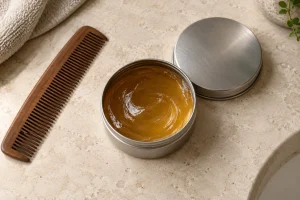
Pomade can give a neat side part more control, keep a slick back in place, add separation to short hair, or smooth a few flyaways. The old image of a heavy, greasy product in a metal tin is only part of the story. Modern pomades can be creamy, gel-like, waxy, matte, or shiny.
The result depends on the product, how much you use, and the condition of your hair when you apply it. A small amount on dry hair may create piece-by-piece texture. The same product on damp hair may spread more easily and look smoother. That is why the label directions matter.

What is hair pomade?
Hair pomade is a leave-in styling product. It helps you arrange your hair and keep it in the shape you want. It does not clean the hair like shampoo, and it is not a treatment product in the way a conditioner or mask is.
The word “pomade” covers many textures and finishes. One jar may contain a soft cream with light hold. Another may contain a dense, waxy product made for a firm pompadour. Some pomades set as they dry, while others stay flexible enough to comb again later.
Hold and shine are separate choices. A pomade can have strong hold without looking glossy, or light hold with noticeable shine. Check both descriptions on the label instead of assuming that every pomade creates the same slick finish.
What is hair pomade used for?
Pomade is mainly used to shape the hair, control loose strands, and add definition. Depending on the product, it can create a polished finish or a loose, natural style.
People commonly use it to:
– create slick backs and clean side parts;
– shape quiffs, pompadours, and other combed styles;
– give short hair separation without making it feel rigid;
– define selected curls or waves;
– smooth flyaways around the hairline or along longer hair;
– add shine when the hair looks dull;
– tidy a style again later in the day.
People with many hair lengths and styles can use pomade. A person with long hair may apply a tiny amount to flyaways, while someone with curls may use a flexible pomade for definition. Pay less attention to who appears in the advertising and more attention to whether the hold, finish, texture, and washout suit your hair.
What are the main types of hair pomade?
Pomades can be grouped by their base, texture, finish, and behavior in the hair. These category names are not perfectly standardized, so two products called “water-based pomade” may still feel quite different.
Water-based pomade
Water-based pomade is generally easier to remove than traditional oil-based pomade. Some formulas feel like a gel and set more firmly as they dry. Others stay creamy and flexible.
You can find water-based options with light, medium, or strong hold. The finish may be matte, natural, or shiny. People often choose this type when they want a simpler washing routine, but the exact washout still depends on the full formula and the amount applied.
Oil-based pomade
Traditional oil-based pomade usually gives the hair a richer coating, visible shine, and lasting flexibility. It can work well for slick backs, pompadours, and other classic styles that need to be combed back into place.
The trade-off is washout. An oil-based product may stay in the hair through more than one wash. It can also make fine hair look flat if you apply too much. Start with less than you think you need.
Hybrid pomade
Hybrid pomade aims to sit between water-based and oil-based products. It may offer easier cleansing than a traditional oil formula while keeping some of its flexible, reworkable feel.
“Hybrid” is a broad label, not a promise of one specific result. Read the hold, shine, washout, and application directions before deciding whether it fits your routine.
Cream, matte, and clay pomades
Cream, matte, and clay are often descriptions of texture or finish rather than completely separate base types. A cream pomade may be soft and easy to spread. A matte pomade reduces visible shine. A clay pomade may add a drier grip and more separation.
These labels can overlap. A water-based product can also be creamy, and a clay pomade can contain oils or water. Judge the product by how it feels and performs, not by one word on the front of the jar.
Pomade type | Typical finish | Hold range | Restylability | Washout | Often chosen for |
Water-based | Natural to shiny | Light to strong | Varies | Usually easier | Everyday styling and simpler cleansing |
Oil-based | Usually shiny | Medium to strong | Often high | Usually takes more cleansing | Classic, polished styles |
Hybrid | Natural to shiny | Medium to strong | Moderate to high | Depends on the formula | A balance of control and washout |
Cream or matte | Matte to natural | Light to medium | Usually flexible | Often easier | Loose, textured, or natural styles |
For salon and beauty-brand readers, these same choices also shape a private label pomade development brief. Personal-use readers can simply compare the hold, finish, application directions, and washout on the label.
How do you choose the right hair pomade?
The strongest product is not automatically the most useful one. A firm pomade can make a loose style difficult to adjust, while a light product may not control thick hair for long. Begin with the result you want.
Choose the hold level
A light hold suits softer styles, flyaway control, and hair that should still move. Medium hold is a practical middle ground for side parts, short textured styles, and everyday control. Strong hold is made for more structured shapes or hair that quickly falls out of place.
If you are new to pomade, a flexible light or medium hold is usually easier to correct while you learn how much to apply.
Choose the finish
Matte pomade keeps shine low and often suits casual or textured styles. A natural finish adds definition without making the product obvious. High-shine pomade gives a slicker, more polished appearance.
Look at your hair before choosing. A very shiny product can make already oily hair look heavier. A dry, matte product may make rough or very dry hair look less smooth.
Consider your hair type and length
Fine hair can lose volume under a heavy coating, so start with a lighter texture and a small amount. Thick or coarse hair may need more control, but even then, even distribution works better than one large scoop.
Curly and wavy hair often responds well to flexible definition. Short hair usually needs less product because there is less area to cover. With medium or long hair, spread a little at a time and focus on the areas that need control.
Consider washout and restyling
Think about your routine as well as the hairstyle. If you shampoo daily and want a clean reset each morning, easy washout may matter most. If you want to comb the style back into place several times, flexibility may be more useful than a hard dry-down.
If you are choosing a formula for a beauty brand rather than personal use, put the same hold, finish, and washout criteria into your supplier brief. This [private label hair pomade manufacturer comparison](https://keronhair.com/top-10-hair-pomade-manufacturers-for-private-label-brands/) examines formula routes, order sizes, packaging support, testing information, and project fit.

Should you put pomade on wet or dry hair?
You can apply pomade to damp or dry hair. The better choice depends on the product and the finish you want. Check the directions first, because formulas do not all respond to water in the same way.
Applying pomade to damp hair
Towel-dried hair often makes pomade easier to spread. It may help you create a smoother shape with fewer dry strands sticking out. Damp application can also make shine more noticeable and combed styles look more polished.
Do not leave the hair dripping wet unless the label tells you to. Too much water can dilute the product across the hair and make it harder to judge the hold.
Applying pomade to dry hair
Dry hair often gives you more separation and lets you see the final texture as you work. This can suit matte looks, short textured hair, and areas that need precise control.
Thicker pomades may tug or spread unevenly on completely dry hair. Warm the product well, use a small amount, and add more only after the first layer is distributed.

How do you use hair pomade step by step?
The basic technique is simple. Most problems come from starting with too much product or placing all of it on one visible area.
Step 1: Prepare your hair
Start with hair that is clean or free from heavy product buildup. Detangle it before applying pomade. Decide whether to leave it slightly damp or dry it fully, based on the label and the style you want.
Step 2: Start with a small amount
Take a small fingertip-sized portion. Very short or fine hair may need less. Long, thick, or dense hair may need more, but do not take the full amount at once.
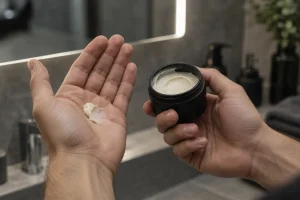
Step 3: Warm the pomade between your hands
Rub the product between your palms and fingers until it forms a thin, even layer. A soft cream may need only a few seconds. A firm, waxy pomade needs more warmth before it will spread without leaving clumps.
Step 4: Distribute it evenly
Begin at the back and sides, then move toward the top and front. This prevents one shiny patch from forming at the hairline. Work the product through the hair instead of wiping it over the surface.
Use your fingers for a looser, separated finish. Use a comb when you want cleaner lines and more even direction.
Step 5: Shape the hairstyle
Move the hair into its final shape with your fingers, comb, or brush. A wide-tooth comb is easier on curls and thicker hair. A fine-tooth comb creates closer lines in a slick back or side part.
If the comb catches, stop and loosen the hair. Pulling harder will not improve the style.
Step 6: Add more only where needed
Look at the hold and finish before taking a second amount. Add a thin layer to sections that still fall out of place. You rarely need the same amount for the second pass.
Step 7: Let it set or restyle it
Some water-based pomades become firmer as they dry, so repeated touching can disturb the finish. Flexible products can usually be combed or shaped again later. If the label allows it, slightly damp hands may help reactivate a water-based formula.
How much pomade should you use?
There is no amount that works for everyone. A small fingertip-sized portion is a sensible starting point. Add more in thin layers instead of using one large scoop.
What affects the amount of pomade you need?
Hair length matters, but density matters too. A short head of very thick hair may take more product than medium-length fine hair. The formula also changes the answer. A dense, strong pomade may need a smaller dose than a light cream.
Application makes a difference as well. Smoothing three flyaways takes very little. Coating a full slick back takes more, although it should still be built gradually.
How can you tell if you used too much pomade?
Too much pomade often shows up as:
- hair that looks wetter or greasier than intended;
- a style that collapses or loses volume;
- thick sections that stick together;
- a coated feeling around the scalp or hairline;
- product that sits visibly on the hair;
- hair that becomes harder, not easier, to shape.
If this happens, try combing the product through a wider area first. If the hair still feels overloaded, washing and starting again will usually give a better result than piling another product on top.
How do you use pomade for different hairstyles?
The same jar can behave differently when you change the amount, starting condition, or styling tool.
Slick back or side part
Spread pomade evenly through slightly damp or dry hair, then comb from the roots toward the final direction. Use a little less at the front so the hairline does not look coated. A shiny finish looks more traditional, while a natural finish feels more relaxed.
Quiff or pompadour
Create the basic lift before adding a heavy layer of pomade. Work the product through the sides and top, then shape the front upward and back. Too much product can pull the height down, especially on fine hair.
Textured short hair
Use a small amount on dry or nearly dry hair. Spread it well, then pinch or separate small sections with your fingertips. A matte or natural finish usually keeps the texture visible without making the hair look wet.
Wavy or curly hair
Choose a flexible product and use it on selected areas. Rub a small amount over the fingers, then scrunch or twist pieces that need more definition. Avoid forcing the whole head into a tight combed shape unless that is the style you want.
Longer hair and flyaways
Use the residue left on your hands to smooth flyaways or tidy the ends. Applying a full scoop from roots to ends can make longer hair look flat. Focus on the places that need control and leave the rest alone.
What pomade mistakes should you avoid?
Three common trouble spots are the amount, distribution, and styling tool. Use the following checks to correct your technique before assuming you need a different product.
1. Start with a smaller scoop than seems necessary. You can add more in seconds, but removing excess usually means washing your hair.
2. Spread the first pass through the back and sides before moving forward. This keeps the most visible part of the hairstyle from receiving a heavy patch.
3. Warm firm pomade between your hands before applying it. Otherwise, it may sit on the hair in uneven spots.
4. Compare the finish, texture, washout, and restylability as well as the hold. Strength alone does not tell you how the product will feel.
5. Read the application directions. One pomade may work best on damp hair while another performs better on dry hair.
6. Wash when old product makes the hair feel coated or stops it from responding normally. Another layer rarely fixes buildup.
7. Match the finish to the style. A glossy product may join strands together and hide the separation you wanted.
8. Do not force a fine comb through resistant hair. If the product allows it, use a little water, switch to a wider comb, or loosen the section with your fingers.
How do you wash pomade out of your hair?
Washout depends on the formula and how much you used. Many water-based pomades come out with regular shampoo. Traditional oil-based products may need a second gentle wash or more than one wash day before the hair feels completely clean.
Wet the hair thoroughly, work shampoo into the areas where product has collected, and rinse well. Decide whether another wash is needed only after rinsing. If repeated cleansing leaves the lengths rough, apply conditioner where the hair needs it.
A clarifying shampoo can help with stubborn buildup, but it does not need to be your daily shampoo. Avoid dish soap and aggressive scrubbing. They may remove grease, but they can also leave the hair and scalp feeling stripped or irritated.
For brand teams, washout is also a product-development target. The [private label pomade manufacturing process](https://keronhair.com/how-is-private-label-hair-pomade-manufactured/) explains how washout targets move from the brand brief through sample evaluation and approval before production.
Can you use hair pomade every day?
Many people can use pomade regularly if the product suits them and they wash out buildup when needed. Pay attention to how your hair and scalp feel instead of following a fixed schedule. For a closer look at the trade-offs, read whether pomade is good or bad for your hair.
Do not keep adding fresh layers when the hair already feels dull, sticky, or difficult to shape. If you are prone to forehead breakouts, try to keep oily product away from the skin. The American Academy of Dermatology notes that oily hair products, including some pomades, can contribute to breakouts along the hairline and forehead.
Stop using a product if you develop persistent itching, redness, or bumps. A dermatologist can help if the symptoms continue after you stop using it.
Pomade vs wax vs gel: What is the difference?
The names overlap, so the label does not tell you everything. Still, these general differences can help you narrow down the choice.
Product | Typical result | Flexibility | Shine | Washout | Common use |
Pomade | Smooth control and definition | Often flexible | Matte to high shine | Depends on the formula | Slick, polished, or controlled styles |
Grip, separation, and texture | Usually flexible | Usually low to natural | Depends on the formula | Short and textured styles | |
Gel | A firmer set and defined shape | Often lower after drying | Natural to shiny | Usually easier | Structured or wet-look styles |
Compare the actual hold, finish, feel, and directions. A matte pomade may behave more like a wax, while a firm water-based pomade may set more like a gel. If you are deciding between a shaping product and a finishing product, this hair spray vs. hair wax comparison explains the difference in hold, movement, and application.
What is the best way to use hair pomade?
Choose a pomade by the hold, finish, washout, and style you want. Then follow the label, warm a small amount between your hands, and distribute it evenly before adding more.
If the result looks greasy or flat, use less next time. If the hair will not stay in place, check your application before reaching for a stronger product. A little practice with the amount and starting condition usually matters more than complicated technique.
For beauty brands: If you are researching production partners, our overview of hair pomade suppliers in China provides a more useful next step than a direct product-page link.
Frequently asked questions about hair pomade
Should I apply pomade to wet or dry hair?
Both can work. Slightly damp hair often makes pomade easier to spread and may create a smoother, shinier finish. Dry hair often gives more separation and lets you judge the final texture immediately. Follow the directions for the product you are using.
How much pomade should I use?
Start with a small fingertip-sized amount. Short or fine hair may need less, while long or dense hair may need more. Add it in thin layers and stop when the hair holds its shape without feeling coated.
Can I use pomade every day?
You can use pomade regularly if your hair and scalp tolerate it. Wash when buildup makes the hair heavy, sticky, or hard to style. Stop using the product if it causes continuing irritation or breakouts.
Does pomade make your hair look greasy?
It can if you choose a high-shine formula or apply too much. Pomades also come in matte, natural-finish, and lighter cream formats. If the result looks greasy, use less next time before changing products.
Is pomade only for short hair?
No. Short hair is easy to shape with pomade, but longer hair can also benefit from a small amount on flyaways, ends, or selected sections. Avoid coating all of long hair unless the style calls for it.
Can you use pomade on curly hair?
Yes. A flexible pomade can define selected curls, smooth frizz, or control the hairline. Start with a small amount and apply with your fingers so you do not pull the curl pattern apart.
Does pomade wash out with water?
Some water-based pomades rinse out easily, but others still need shampoo. Oil-based and more persistent formulas usually require shampoo and may take more than one wash. Check any “water-soluble” or “easy washout” claim against the actual directions and your own results.
Is pomade the same as hair wax?
No, although the categories overlap. Pomade is often associated with smoother control and a wider range of shine. Wax usually focuses more on grip, separation, and short textured styles. The individual formula matters more than the category name.