Dry shampoo is a between-wash product that helps oily hair look fresher without a rinse. But turn the bottle around, and you may find ingredients that seem unrelated to hair care.
What is dry shampoo made of, and why would it need both starch and butane? The useful distinction is between ingredients that absorb oil and ingredients that help the product reach your hair. Understanding their jobs makes the label much easier to read.
What Is Dry Shampoo Made Of? Common Ingredients Explained
Dry shampoo commonly contains oil-absorbing powders, such as starches, alongside ingredients that help with application, fragrance, or feel. Aerosol formulas also need a propellant and may contain a solvent such as denatured alcohol. The exact combination varies: a loose powder and an aerosol spray don’t require identical formulas.
I would read a dry shampoo label by function first. An unfamiliar name becomes less confusing once you know why it’s there.
| Ingredient group | Names you may see | Job in the formula | What the label alone cannot tell you |
|---|---|---|---|
| Absorbent powders | Rice or tapioca starch | Take up excess oil | How the finished product will feel |
| Propellants | Butane, isobutane, propane | Dispense an aerosol | How effectively it reduces oiliness |
| Solvents | Alcohol denat. | Dissolve compatible ingredients | Whether every alcohol-containing product suits you |
| Fragrance | Parfum, fragrance | Add scent | Whether your scalp is clean |
| Supporting ingredients | Formula-dependent | Adjust handling or texture | Whether the product repairs damaged hair |
These are examples, not a checklist that every bottle must satisfy. Church & Dwight’s ingredient-function disclosure for Batiste Texturizing Dry Shampoo provides a useful real-world reference.
Oil-Absorbing Powders: Rice, Tapioca, and Corn Starch
Rice, tapioca, and corn starch appear in commercial dry shampoo formulas. On a label, rice starch may be written as Oryza sativa starch, while corn starch may appear as Zea mays starch.
Recognizing the name tells you which powder is present. You still need the finished product’s directions to judge the dose, and trying it will tell you more about the finish than the starch name alone.
A familiar ingredient isn’t a performance guarantee. Two products mentioning rice starch still deserve to be assessed separately. If one leaves your roots feeling coated, that doesn’t establish that every rice-starch formula will do the same.
Before comparing two formulas, decide what you want: a barely noticeable refresh or a more textured finish. You may dislike the extra grip that someone else bought the product for.
Propellants and Solvents: Different Jobs in the Formula
In the Batiste disclosure, butane and other propellants handle aerosol delivery, while alcohol denat. is identified as a solvent. A solvent helps dissolve compatible ingredients; the powder has a separate job absorbing oil.
This helps explain why an ingredient near the beginning of a spray’s label may relate to delivery rather than the benefit you bought it for. You can’t turn that position into a score for oil absorption.
Nor should you expect the same application from a spray and a shaker bottle. Follow the directions for the format in your hand, including its handling and storage warnings. Instructions from another product aren’t interchangeable just because both bottles say dry shampoo.
Fragrance and Supporting Ingredients
Supporting ingredients deserve some attention too. The same disclosure identifies cetrimonium chloride as an anti-caking ingredient, distearyldimonium chloride as anti-static, and silica as a volumizing agent in that particular formula.
That last qualification matters. An ingredient may have different purposes in different products; finding its name doesn’t reveal everything about the finished formula.
If a botanical extract or protein catches your eye, check what the brand claims for the finished product. Its presence alone doesn’t establish scalp treatment or damage repair. Those claims need their own support.
How Does Dry Shampoo Work Between Washes?
The absorbent material takes up oil, helping reduce the greasy appearance. After the directed waiting time, distributing the product and brushing or combing as instructed can remove some oil and residue. The American Academy of Dermatology’s dry shampoo guidance explains why shampoo and water are still needed for cleansing.
Less oily-looking hair isn’t proof of a freshly washed scalp. That distinction helps you decide what you need today. A cosmetic refresh may be enough for your immediate styling goal, but it doesn’t complete the job of washing.
Suppose your fringe looks ready to style again after application. You can reasonably judge that visible improvement. It doesn’t tell you whether sweat, yesterday’s styling products, or other material on your scalp has been removed.
The word “dry” can also be misleading. It describes a product you use without a conventional wash-and-rinse step; it isn’t a promise that every ingredient list is completely free of water.
What Are the Different Types of Dry Shampoo?
Two common formats are aerosol sprays and loose powders. Comparing them helps explain why dry shampoo ingredients vary, although these aren’t the only formats sold under the name.
| Format | What you handle | What to check before applying |
|---|---|---|
| Aerosol spray | A pressurized dispenser | Shaking instructions, spray distance, dose, and warnings |
| Loose powder | Powder dispensed directly | How the opening controls flow and how to distribute the dose |
Consider two actual labels. Batiste Texturizing lists different propellant combinations for its USA and Rest of World versions. Even within one product family, the market version matters when you compare ingredients.
The Batiste Original Scent Powder ingredient list includes tapioca and corn starch alongside other ingredients, including water. Its instructions call for tapping powder onto the roots rather than squeezing the bottle.
That example is a useful check against assumptions: powder doesn’t automatically mean a single ingredient, and a water entry doesn’t tell you its percentage. Read the actual label instead of constructing a formula from the product name.
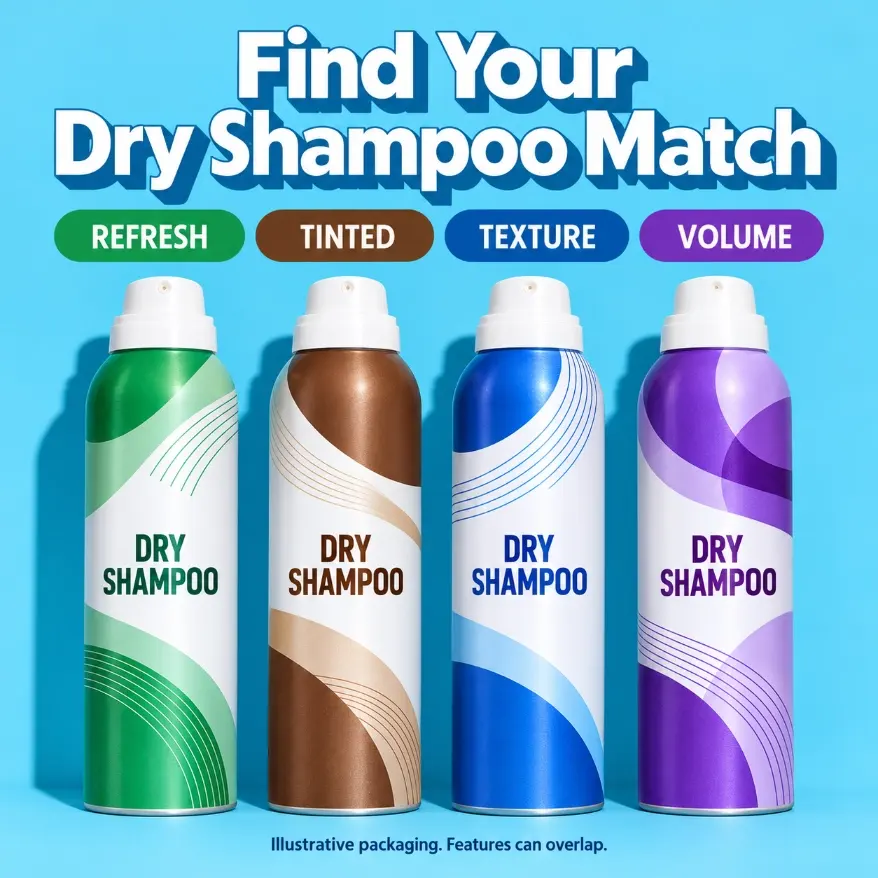
“Non-aerosol” describes a delivery category; don’t assume it always means loose powder. Likewise, tinted and untinted describe a different distinction. A color-specific product can still belong to a particular spray or powder format.
For the broader picture, our guide to different types of shampoo explains where a between-wash refresh fits alongside products intended for regular cleansing.
What Is Dry Shampoo Used For?
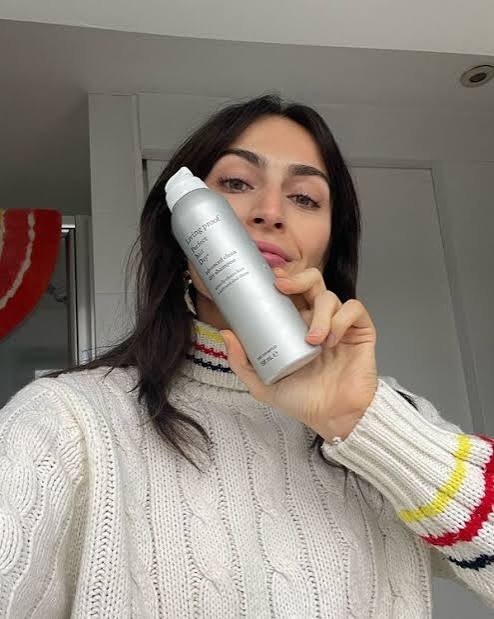
Dry shampoo is useful when you want a limited refresh rather than a complete wash-and-style session. Before applying it, identify the area you want to change.
- On a rushed morning, you might want to tidy an oily-looking fringe while leaving the rest of your style alone.
- During travel, you might need a temporary refresh before your next opportunity to wash.
- Between wash days, you might want to address your parting without adding product throughout your lengths.
These are practical examples, not reasons to keep postponing a needed wash. If you’re managing long lengths as well as your roots, our guide to caring for long hair between washes covers the rest of the routine.
What Are the Benefits and Drawbacks of Dry Shampoo?
Convenience is the main attraction: you can make a targeted adjustment without starting your styling routine again. Some formulas also offer a fuller-looking finish. The trade-off is that the feel and appearance of the applied product may not be what you want.
White Cast and a Gritty Feel
Too much product can leave visible particles or a stiff, gritty feel. Before deciding the entire formula is wrong for you, check the application against the label.
- Did you use the specified dispenser technique and spray distance, if applicable?
- Did you allow the stated waiting time before judging the finish?
- Did you finish distributing or removing excess product as directed before adding another dose?
Change one part of the application at a time if your scalp is comfortable. Otherwise, you won’t know whether a different dose or a different technique made the difference.
A photo can be more useful than a vague memory when comparing visible residue. Use similar lighting and the same parting. This is a personal appearance check, not a controlled test of the product’s performance.
Buildup and Scalp Discomfort
Repeated product layers still need washing away. Stop using a product that causes itching or burning, and seek dermatological advice for persistent or worsening symptoms.
If you find yourself reaching for the bottle because your scalp feels uncomfortable, pause. That’s a different problem from a fringe looking oily, and adding another layer doesn’t identify the cause.
Is Dry Shampoo Spray Suitable for All Hair Types?
Different hair types may have a use for dry shampoo, but one spray and one application method won’t suit everyone. Hair texture, the area you’re treating, and your response to the product all deserve attention.
If you have fine hair, assess whether you still like its movement after application, not just how it looks immediately. If your roots look oily but your ends feel dry, evaluate those areas separately rather than treating “dry hair” as a description of your entire head.
For curls or coils, choose instructions that work with your style. Don’t assume a routine built around brushing straight hair is the right routine for yours.
Hair color is another consideration, but matching a tint isn’t the same as caring for a dye service. Our guide to choosing shampoo for color-treated hair covers the wash-day decision separately.
How Do You Choose the Right Dry Shampoo?
I would start with the change you want to see, then check whether the product’s instructions and claims fit that goal. Buying from an ingredient blacklist alone leaves out most of the practical questions.
Match the Format and Label to Your Needs
A useful first purchase is one you understand how to use. Before choosing, check the following:
- Is it intended for the finish and hair color you want?
- Can you comfortably control the dispenser and follow its directions?
- Does the ingredient list contain anything you’ve already identified as unsuitable for you?
- Do you want fragrance, or would you prefer a fragrance-free option?
When you first try it, keep the rest of your styling routine consistent. Note the amount used and whether you still like the feel later. Changing your spray, conditioner, and styling cream together makes it harder to tell which change helped.
Use those observations when you shop again. “I want less fragrance and an easier-to-control dispenser” is a more useful starting point than ruling out every product with the same starch. Stop if the product irritates you; you don’t need to finish the bottle.
Look Beyond “Natural” and Homemade Claims
A natural-sounding name doesn’t establish how the whole formula will behave. Nor does recognizing a kitchen ingredient make a homemade mixture equivalent to a formulated product. The AAD favors commercial dry shampoo over homemade versions and notes potential clumping problems.
My buying rule would be to ask what a claim helps you decide. “Contains plant-derived starch” identifies something about the ingredient. It doesn’t answer whether you will like the dispenser, scent, finish, or instructions.
If you are interested in making hair products, our guide to what to consider before making natural shampoo addresses a separate formulation topic. It isn’t a recipe for replacing dry shampoo with household powders.
Frequently Asked Questions
These short answers cover common label questions you may want to check while comparing products.
Is Dry Shampoo Just Cornstarch?
No. Some formulas include corn starch, while others use different absorbents. Finished products may also contain ingredients for dispensing, fragrance, texture, or other functions.
Does Every Dry Shampoo Contain Alcohol?
No. Formulas differ. Check the specific product’s ingredient list rather than assuming all sprays contain alcohol or all powders exclude it.
Why Is Butane in Dry Shampoo?
Butane is used as a propellant in some aerosol dry shampoos. It helps dispense the product; it isn’t the oil-absorbing powder.
Can Dry Shampoo Replace Regular Shampoo?
No. It offers a temporary refresh between washes. Regular shampooing with water is still needed to clean your hair and scalp and remove accumulated product.
The Takeaway
Understanding ingredient functions helps you read a dry shampoo label without expecting one familiar powder to explain the entire product. Look at the formula and its directions together, then judge the result on your own hair.
For readers developing a hair-care brand, Keronhair’s custom shampoo development page is a separate starting point for discussing a product brief and confirming the formats available.
References & Sources
These sources support the ingredient examples and use guidance above. Manufacturer disclosures describe specific products, not independent comparisons. Check your current packaging because formulas and market versions can differ.