Choosing between OEM and ODM hair care manufacturing is one of the first serious sourcing decisions a beauty brand will make. The choice affects your formula control, launch speed, product differentiation, packaging flexibility, MOQ, testing process and long-term brand ownership.
For a shampoo, conditioner, hair mask, serum or styling product, OEM and ODM are not just manufacturing labels. They describe how much product development work your brand owns, how much support the manufacturer provides, and how quickly you can move from idea to finished product.
Some brands need a custom formula built around a precise market position. Others need a reliable, ready-to-brand formula so they can test demand before investing heavily in R&D. Both approaches can work. The right model depends on your product strategy, budget, target market and timeline.
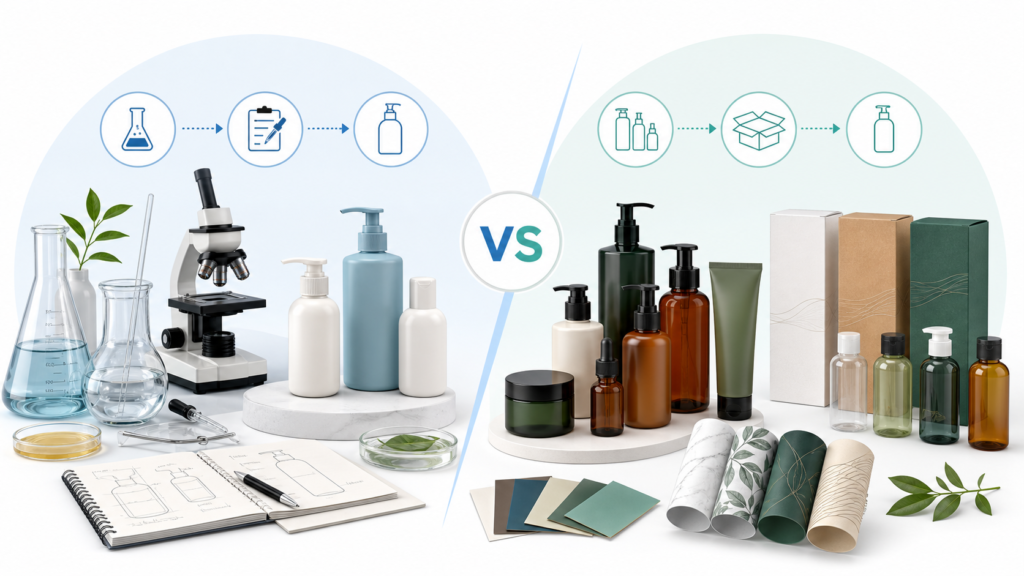
What OEM and ODM Mean in Hair Care Manufacturing
OEM stands for Original Equipment Manufacturer. In hair care, OEM usually means the manufacturer produces a product based on your brand’s specific requirements. You may bring the formula, request custom development, define performance goals or specify packaging requirements.
ODM stands for Original Design Manufacturer. In this model, the manufacturer already has formulas, product concepts or development platforms that your brand can adapt and sell under its own name. ODM is often used for private label hair care, especially when speed and lower development complexity matter.
Keronhair’s OEM/ODM hair product manufacturing page reflects this mixed model: brands can work from existing formula options or develop something more customized depending on the project.
What OEM Means for Hair Care Brands
OEM is usually the better fit when your brand needs a distinctive formula. For example, a salon brand may want a bond-supporting hair mask with a specific texture, fragrance and claims direction. An ecommerce brand may want a scalp serum built around a unique ingredient story.
OEM gives more control, but it also requires more preparation. You need a clearer product brief, more sample evaluation, and stronger documentation around formula ownership, target claims and testing requirements.
What ODM Means for Hair Care Brands
ODM is usually faster. The manufacturer provides an existing formula or product base, then your brand customizes elements such as packaging, label design, fragrance, product name or positioning.
This can be useful for brands launching a shampoo, conditioner or hair mask line quickly. It is also practical for salons and distributors that want reliable products without building formulas from scratch.
Where Private Label and White Label Fit
Private label often overlaps with ODM. A private label project may use an existing formula, then customize branding and packaging. White label is usually even simpler, with fewer customization options.
The main difference is flexibility. A white label product may only allow a label change. A private label or ODM project may allow more control over fragrance, packaging, claims direction or minor formula adjustments.
OEM vs ODM at a Glance
| Factor | OEM Hair Care Manufacturing | ODM Hair Care Manufacturing |
|---|---|---|
| Formula control | Higher | Moderate |
| Launch speed | Slower | Faster |
| R&D involvement | Higher | Lower |
| Product differentiation | Stronger | Depends on customization |
| MOQ | Often higher | Often more flexible |
| Packaging flexibility | Higher | Usually depends on stock options |
| Sample rounds | More likely | Fewer in many cases |
| Best for | Distinctive brands, custom concepts | Market testing, private label launches |
| Main risk | More time and complexity | Less uniqueness |
A simple rule works well: choose OEM when formula differentiation is central to your strategy. Choose ODM when speed, simplicity and lower development burden matter more.
Choose OEM When Your Formula or Brand Positioning Must Be Distinct
OEM is the stronger option when your formula is part of your brand’s competitive edge. This is common for premium salon lines, clean beauty concepts, textured hair products, scalp care collections or ecommerce brands that need a strong reason for repeat purchase.
The model comparison should lead to a service-specific shortlist. Our guide to finding Chinese OEM and ODM hair care manufacturers explains where to look and how to verify what development work each candidate actually performs.
Brands exploring custom hair care formulation should prepare a product brief before contacting a manufacturer. The brief should explain target customer, hair type, product function, texture, fragrance direction, packaging, market region and claims expectations.
After choosing OEM as the route, put the practical requirements into a brief the factory can evaluate. Our OEM hair product buyer guide covers product categories, development responsibilities and the evidence to request before sampling.
Best-Fit OEM Scenarios
OEM may fit when your brand needs:
- A proprietary shampoo or conditioner system
- A salon-grade repair mask with specific performance goals
- A scalp care formula designed for a defined user group
- A custom fragrance or sensory profile
- A unique ingredient story
- Packaging that supports premium positioning
- More control over long-term formula development
OEM can also help when a brand wants product consistency across multiple markets and future line extensions.
Advantages of OEM for Hair Care
The main advantage of OEM is control. Your brand can work more closely with the manufacturer on formula direction, texture, viscosity, fragrance, packaging and claims language.
OEM can also support stronger differentiation. If every competing brand is using a similar stock formula, a custom formula may create a clearer product story.
Risks and Tradeoffs of OEM
OEM usually requires more time. The manufacturer may need to source ingredients, create lab samples, revise the formula, test compatibility with packaging and prepare production specifications.
It may also increase cost and MOQ. Custom ingredients, special packaging, additional testing and smaller production runs can all affect the quote. For this reason, OEM works best when the brand has a clear commercial reason for customization.
Choose ODM When Speed, Lower Complexity and Market Testing Matter More
ODM is a practical path for brands that want to launch quickly without managing full formula development. This does not mean ODM is low quality. It means the product starts from a manufacturer’s existing development base.
For brands interested in faster private label launches, private label hair care products can provide a useful starting point for product categories, formula direction and packaging planning.
Best-Fit ODM Scenarios
ODM may fit when your brand needs:
- A first product launch
- A salon shampoo and conditioner pair
- A seasonal hair care SKU
- A distributor-ready private label line
- A fast ecommerce product test
- A lower-risk way to enter a new category
ODM can help brands learn from the market before investing in deeper custom formulation.
Advantages of ODM for Hair Care
ODM usually shortens the early development process. Because the manufacturer already has formula experience, brands can focus on sample selection, branding, packaging and launch planning.
It can also reduce decision fatigue. Instead of starting with a blank page, the brand chooses from proven product directions, then adjusts what matters most.
Risks and Tradeoffs of ODM
The main risk is limited differentiation. If several brands use similar base formulas, packaging and positioning become more important.
ODM may also limit claims flexibility. A brand should not add performance, scalp, repair or “clean” claims unless the formula, testing and market regulations support them.
How OEM and ODM Affect MOQ, Cost, Lead Time and Packaging
The manufacturing model affects the entire launch plan. A brand should not compare OEM and ODM only by unit price. The real comparison includes R&D cost, sample rounds, packaging options, testing, documentation and reorder strategy.
MOQ Differences
ODM may offer more flexible entry quantities because the formula is already developed and production is easier to plan. OEM may require higher minimums because the manufacturer needs to justify custom development, ingredient sourcing and production setup.
However, MOQ is never only about OEM versus ODM. It can also depend on:
- Formula type
- Packaging components
- Bottle or tube size
- Label decoration method
- Fragrance or shade variants
- Number of SKUs
- Testing requirements
- Reorder expectations
Cost Structure Differences
OEM costs may include formula development, custom samples, ingredient sourcing, compatibility testing and packaging qualification. ODM costs may focus more on finished product production, branding, label design and stock packaging.
A low unit price is not always the lowest-risk option. If a product does not match the market, unsold inventory costs more than careful development.
Lead Time Differences
ODM is usually faster because the formula already exists. OEM takes longer because the product must move through concept review, lab work, sampling, revisions and approval.
For example, a private label shampoo may move faster if the buyer chooses an existing formula. A custom scalp care system may require more development because the brand needs specific texture, ingredient positioning and packaging compatibility.
Packaging Flexibility Differences
Packaging can change the timeline as much as formula development. Stock bottles, jars and tubes usually support faster launches. Custom packaging may require sourcing, decoration trials, color matching or compatibility checks.
A brand should confirm packaging early, especially for high-viscosity products such as masks, conditioners and styling creams.
Product Development Workflow Under Each Model
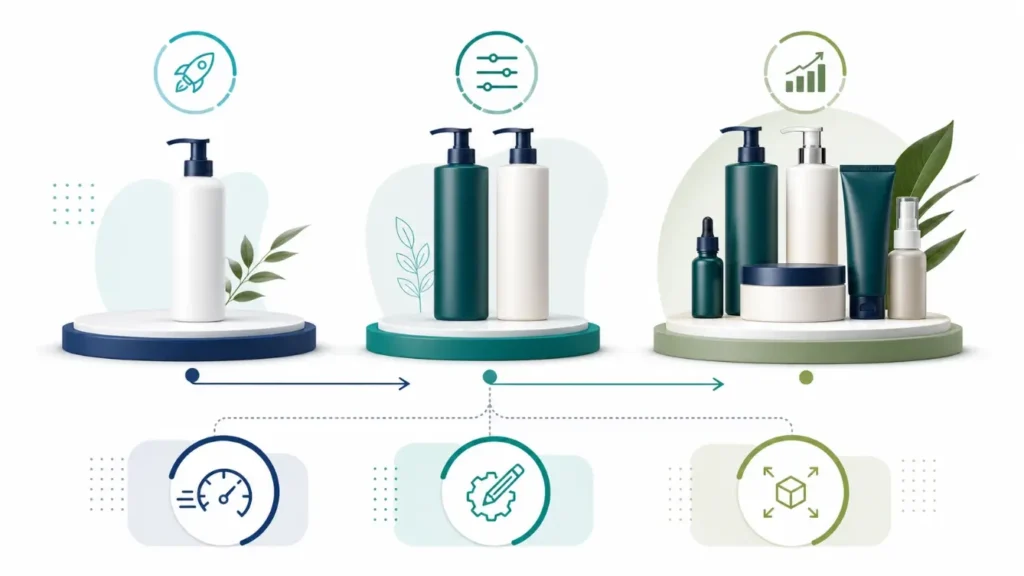
A clear workflow helps buyers understand where time is spent and where decisions are needed.
OEM Workflow
A typical OEM hair care project may include:
- Brand brief and target market review
- Formula feasibility discussion
- Ingredient and claims direction
- Lab sample development
- Sample testing and feedback
- Formula revision
- Packaging compatibility review
- Label and documentation review
- Production setup
- Quality control and shipment
OEM works best when the buyer provides detailed feedback quickly. Vague comments such as “make it more premium” are less useful than specific notes about viscosity, fragrance strength, foam level or after-feel.
ODM Workflow
A typical ODM project may include:
- Product category selection
- Existing formula sample review
- Minor customization, where available
- Packaging selection
- Label and artwork approval
- Production scheduling
- Filling, labeling and packing
- Final inspection and shipment
This model is easier for brands that want to launch a product line without building a lab-led development process from scratch.
Hybrid Workflow
Many real projects are hybrid. A brand may start from an existing shampoo base, then adjust fragrance, viscosity, hero ingredients or packaging. This can offer a balance between speed and differentiation.
Hybrid development is often useful for growing brands that have learned from early ODM launches but are not ready for fully custom OEM work.
Quality, Compliance and IP Questions Before Choosing
OEM and ODM decisions are also quality and compliance decisions. A brand should know who controls the formula, who prepares documentation, who reviews label claims and what testing is needed for the target market.
In the United States, the FDA’s MoCRA overview explains expanded cosmetics requirements, including facility registration, product listing, adverse event reporting and safety substantiation responsibilities. For labels, the FDA Cosmetics Labeling Guide is an important reference for US-market products.
For manufacturing quality, ISO 22716 provides cosmetic Good Manufacturing Practices guidance. For the EU, the EU Cosmetic Products Regulation is a key reference for responsible person, safety assessment and Product Information File requirements.
Cosmetic and hair color requirements vary by market. Brands should confirm applicable safety, labeling, notification, ingredient and claims requirements before launch.
Formula Ownership and IP
Before choosing OEM or ODM, ask:
- Who owns the final formula?
- Is the formula exclusive to my brand?
- Can the formula be transferred to another manufacturer?
- What happens if we stop working together?
- Are custom ingredients or fragrance blends protected?
- Can competitors use the same base formula?
In ODM, the manufacturer often owns the base formula. In OEM, the ownership structure depends on the contract, development fee and technical contribution from each party.
Safety, Testing and Documentation
Ask the manufacturer what documentation can be provided. Depending on product and market, this may include:
- Ingredient list
- Formula specification
- Batch records
- Stability test information
- Compatibility test information
- Microbiological testing
- Safety substantiation support
- Certificate of analysis, where applicable
- Safety data sheets
- Label review support
Documentation should be discussed before production, not after goods are packed.
Labeling and Market Access
A formula that is acceptable in one market may need adjustments for another. Claims, ingredient names, warnings, responsible person details and language requirements can vary.
For international launches, the buyer should tell the manufacturer the target market early. This helps avoid reformulation or relabeling after sampling.
Supplier Quality Signals
A serious manufacturer should be able to explain:
- Quality control steps
- Batch traceability
- Sample retention
- Raw material checks
- Filling and packaging controls
- Complaint handling
- Documentation process
- Third-party testing options
- Audit readiness
These signals matter for both OEM and ODM. A fast ODM launch still needs proper quality control.
Brand-Stage Decision Framework: Which Model Fits Your Brand?
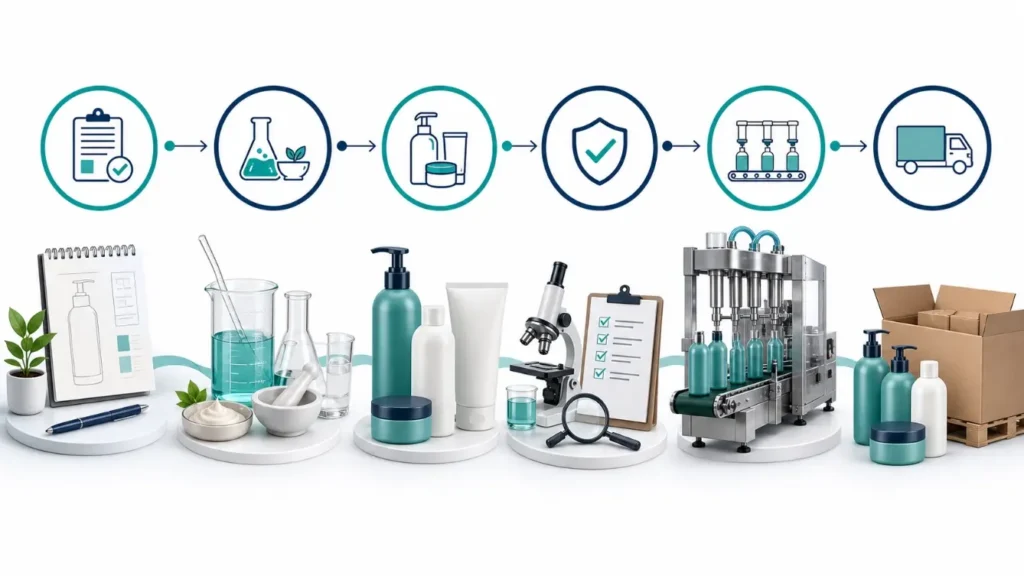
The right model depends on where your brand is today.
| Brand Stage | Better Fit | Why |
|---|---|---|
| Startup testing first product | ODM or private label | Faster, simpler and lower development burden |
| Salon launching retail line | ODM or hybrid | Professional look with manageable complexity |
| Ecommerce brand seeking differentiation | Hybrid or OEM | More control over story and formula |
| Established brand expanding SKUs | OEM, ODM or both | Different products may need different models |
| Distributor building regional line | ODM | Faster assortment building |
| Premium brand with proprietary concept | OEM | Stronger formula and positioning control |
Startup Testing a First Hair Care Product
A startup should avoid overbuilding before market validation. ODM may be the better first step because it allows the brand to test product-market fit, packaging direction and customer feedback.
Once the brand understands demand, it can invest in custom formula development.
Salon Brand Launching a Retail Line
A salon often needs products that feel professional and align with its service menu. A hybrid approach can work well: start with proven formulas, then customize fragrance, packaging and product naming.
This path can support a polished launch without turning the salon team into a formulation department.
Ecommerce Brand Seeking Differentiation
Ecommerce hair care is crowded. If the brand depends on a unique story, such as curl care, scalp care, bond repair, color protection or ingredient-led positioning, OEM or hybrid development may be worth the extra time.
The product must give customers a reason to repurchase beyond packaging.
Established Brand Expanding Internationally
An established brand may use both models. ODM can help launch supporting SKUs quickly, while OEM can protect the core hero products.
For international expansion, documentation and compliance support become more important than speed alone.
FAQs About OEM vs ODM Hair Care Manufacturing
What is the main difference between OEM and ODM hair care manufacturing?
OEM usually means the manufacturer produces a hair care product based on your brand’s custom requirements. ODM means the manufacturer provides an existing or pre-developed product platform that your brand can customize and sell under its own name.
Is ODM the same as private label hair care?
ODM and private label often overlap, but they are not always identical. Private label may involve a stock formula with your branding, while ODM may allow more product adaptation depending on the manufacturer.
Which is better for a startup hair care brand, OEM or ODM?
ODM is often better for a startup because it reduces development complexity and helps test the market faster. OEM may be better if the startup’s core advantage depends on a highly unique formula.
Does OEM hair care manufacturing cost more than ODM?
OEM often involves more development work, so it may require higher investment in R&D, sampling, testing and packaging. ODM may be more efficient because the manufacturer already has formula platforms available.
Who owns the formula in OEM or ODM manufacturing?
Formula ownership depends on the contract. In ODM, the manufacturer usually owns the base formula. In OEM, ownership may depend on who developed the formula, who paid for R&D and what the agreement says.
What should I ask an OEM/ODM hair care manufacturer before choosing?
Ask about MOQ, sample process, formula ownership, packaging options, testing, documentation, lead time, reorder terms, target-market compliance and what happens if you later scale the product.
Conclusion: Choose the Model That Matches Your Brand Strategy
OEM vs ODM hair care manufacturing is not a question of which model is universally better. It is a question of fit.
Choose OEM when your brand needs a distinctive formula, strong product ownership and deeper customization. Choose ODM when speed, simplicity and lower development burden are more important. Choose a hybrid model when you want a practical balance between proven formulas and brand-specific customization.
Before contacting a manufacturer, prepare your product brief. Include the product type, target customer, formula direction, packaging preference, launch market, expected order quantity, claims direction and ideal timeline.
Brands comparing OEM and ODM options can start with a focused consultation rather than a vague quote request. A clear brief helps the manufacturer recommend the right model, realistic MOQ, sample path and production timeline. To discuss a hair care project, brands can contact Keronhair with their product concept and launch requirements.