Whether you’re sitting in a salon chair for the first time or you’ve been coloring hair for years, understanding the types of hair color available is the single most important step before making any decision. The wrong formula can mean the difference between a stunning transformation and weeks of damage control. The right one can open up a world of creative possibility—without compromising the health of your hair.
This guide breaks down every major category of hair dye, explains how each one works, and helps you figure out which option suits your goals, lifestyle, and hair type.
Why Understanding Hair Color Categories Actually Matters
Most people pick a box off a shelf or point to a swatch in a salon without fully understanding what they’re getting into. But the types of hair color aren’t just about shades—they differ fundamentally in how they penetrate the hair shaft, how long they last, and how they interact with your existing color and hair structure.
Knowing the difference between a semi-permanent gloss and a permanent dye isn’t just trivia. It’s the foundation of a good hair color decision. For stylists, this knowledge is non-negotiable. For clients doing it at home, it’s the difference between a great result and an expensive mistake.
If you’re working with a trusted hair dye manufacturer, they’ll often sort their product lines by these exact categories—so understanding the terminology puts you in a much stronger position when sourcing or shopping.
The Four Core Types of Hair Color
1. Permanent Hair Color
Permanent color is the most widely used option in professional settings and at home. It works by opening the hair cuticle with an alkaline agent (usually ammonia), depositing color molecules deep into the cortex, and then oxidizing them in place with a developer containing hydrogen peroxide.
The result is color that doesn’t wash out—it grows out. This makes permanent dye the go-to for full gray coverage, dramatic color changes, and achieving consistent results that last four to six weeks between touch-ups.
Because it involves lifting the hair’s natural pigment before depositing new color, permanent dye offers the broadest range of color possibilities—including lightening, which no other category can achieve on its own.
Best for: Gray coverage, significant color changes, long-lasting results
Trade-off: Can cause dryness or damage over time, especially with frequent application
2. Demi-Permanent Hair Color
Demi-permanent color sits in a middle ground that many people overlook. It uses a low-volume developer and deposits color without fully lifting the hair’s natural pigment. The result is rich, glossy color that gradually fades over 20 to 28 shampoos rather than growing out with a hard line.
This is one of the most underrated hair dyeing types for adding depth, refreshing faded color, or toning highlights without over-processing the hair. It’s also a popular choice for blending gray rather than fully covering it—giving a natural, softer transition.
According to the American Academy of Dermatology, demi-permanent and semi-permanent options tend to be gentler on the scalp compared to permanent formulas, making them worth considering for those with sensitivity.
Best for: Toning, blending gray, refreshing color, low-commitment changes
Trade-off: Cannot lighten hair; limited gray coverage
3. Semi-Permanent Hair Color
Semi-permanent color contains no developer and no ammonia. It coats the outside of the hair shaft rather than penetrating it, which means it’s the gentlest option available—and also the most temporary, typically fading within 4 to 12 shampoos.
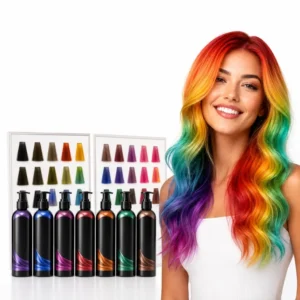
This category includes a wide range of different hair dye colors, from soft natural tones to vivid fashion shades like electric blue or coral pink. Because it doesn’t alter the hair’s internal structure, it’s especially popular for color experimentation, seasonal changes, or anyone who wants to test a look before committing to something permanent.
Semi-permanent formulas are also widely used as conditioning glosses and color refreshers between professional appointments.
Best for: Experimenting with color, adding shine, enhancing natural tones, vivid fashion colors on pre-lightened hair
Trade-off: Fades quickly; cannot cover gray; vivid shades require pre-lightened hair for full effect
4. Temporary Hair Color
Temporary color—found in sprays, gels, mousses, and rinses—sits entirely on the surface of the hair and washes out in a single shampoo. There’s no commitment whatsoever.
While it’s often seen as a novelty product, temporary color has grown considerably more sophisticated. High-quality temporary formulas can now mimic the appearance of bold highlights or full color changes convincingly enough for special events or editorial shoots.
It’s not a replacement for any of the more lasting kinds of hair color, but it fills a clear niche: zero-risk, zero-damage color play.
Best for: Events, costumes, testing a look, children’s hair, gray touch-ups between appointments
Trade-off: No longevity; can transfer onto clothing or pillowcases if not fully dry
Specialized Hair Color Techniques Worth Knowing
Beyond these four core categories, a number of application hair dyeing types have become industry staples. These aren’t separate formulas—they use permanent, demi, or semi-permanent color—but the way they’re applied dramatically changes the result.
Balayage and Ombre
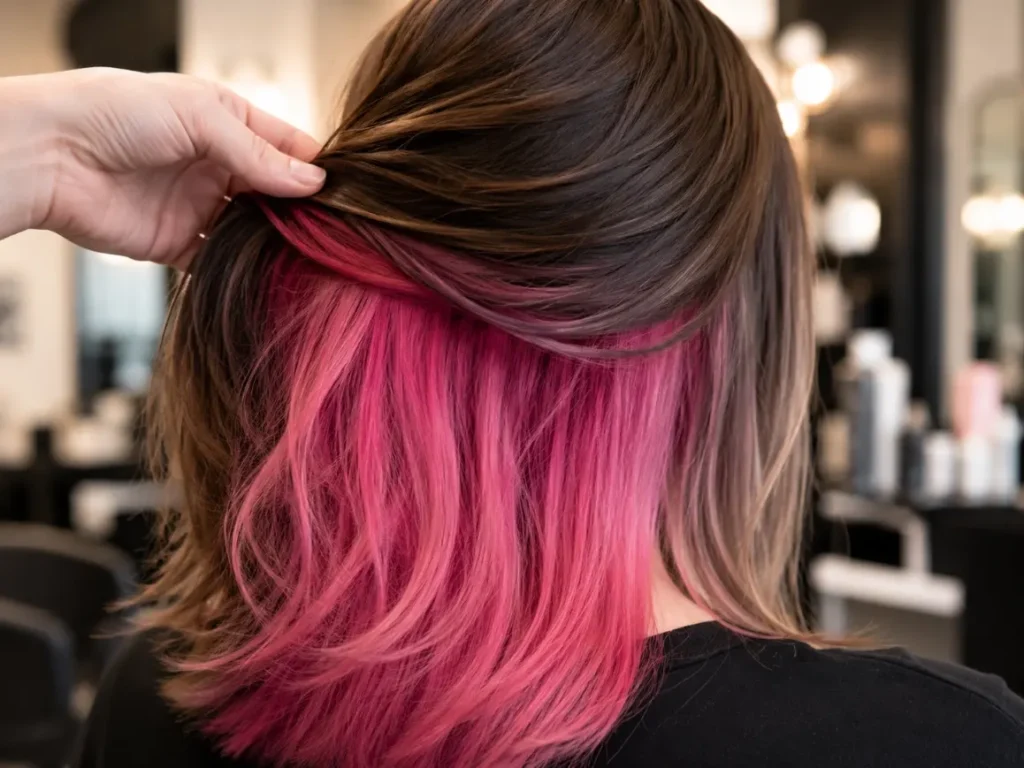
Balayage is a freehand painting technique that creates soft, sun-kissed dimension. Color is swept onto sections of hair without foils, producing a graduated, natural-looking blend. Ombre takes a more defined approach, transitioning from a darker root to a lighter end in a visible gradient.
Both techniques have become cornerstones of modern hair color for professionals, prized for their low-maintenance grow-out and highly personalized results.
Highlights and Lowlights
Highlights add lightness and dimension by lifting select strands lighter than the base. Lowlights do the opposite—adding deeper tones to create contrast and richness. Used together, they create the multi-dimensional color that mimics how natural hair reflects light.
Color Correction
Color correction is a specialized service that addresses unwanted tones, uneven color, or the aftermath of a DIY attempt gone wrong. It often requires multiple sessions and a nuanced understanding of color theory. If you’re dealing with a correction situation, it’s worth reviewing how to dye your hair at home first to avoid compounding the issue.
Choosing the Right Type for Your Hair
The best types of hair color for any individual depend on several intersecting factors:
Your starting point. Very dark hair requires significant pre-lightening before most vivid or light colors will show. If your hair is already damaged or chemically treated, this matters even more.
Your commitment level. How often are you willing to be in the salon—or handling maintenance at home? Permanent color requires consistent upkeep. Balayage and demi-permanent options are generally more forgiving.
Your hair health. Color processing always has some impact on the hair’s structure. If your hair is already compromised, starting with semi-permanent or demi-permanent formulas while you rebuild its health is a smarter approach than jumping straight into a permanent transformation.
It’s also worth understanding that repeated chemical processing can accelerate hair loss or breakage in some cases. Before committing to a major color change, reviewing what the research says about hair dye and hair loss can help you make a more informed decision.
A Note on Professional vs. At-Home Formulas
There’s a real difference between hair color for professionals and consumer retail products—and it’s not just marketing. Professional-grade formulas tend to offer more precise developer volume options, a wider range of intermixable shades, and more predictable lift and deposit behavior.
That said, the gap has narrowed considerably. Quality at-home products now perform impressively well when used correctly. The key variables aren’t always the product itself—they’re the skill of application, an accurate read of your hair’s current condition, and a realistic understanding of what the formula can and can’t do.
Working with reputable products from an established professional hair color source makes a meaningful difference, especially if you’re formulating for clients or handling complex color work.
Quick-Reference Hair Color Guide
| Type | Lasts | Lifts? | Covers Gray? | Best Use Case |
|---|---|---|---|---|
| Permanent | Until grown out | Yes | Fully | Major changes, full gray coverage |
| Demi-Permanent | 20–28 shampoos | No | Partially | Toning, blending, refreshing |
| Semi-Permanent | 4–12 shampoos | No | No | Experimenting, fashion color, gloss |
| Temporary | 1 shampoo | No | No | Events, testing, touch-ups |
Final Thoughts
A solid understanding of the types of hair color is genuinely empowering—whether you’re a stylist building your technical foundation or someone who just wants to make smarter choices about their own hair. Each category exists for a reason, and matching the right formula to the right goal is what separates great color results from disappointing ones.
Use this hair color guide as a reference point, not just a one-time read. The more familiar you become with how these formulas work, the more confidently you’ll be able to navigate the endless world of different hair dye colors—and the better your results will be, every single time.
FAQ
What are the 5 most common hair colors?
The five most common natural hair colors globally are black, brown, blonde, red, and gray/white. Black is the most dominant shade worldwide, while natural red is the rarest. In the salon industry, the most frequently requested dye categories are brunette, blonde, copper/red, black, and vivid fashion shades.
Can I color my hair if I have lupus?
Yes, but caution is required. Because lupus can cause severe scalp sensitivity and hair thinning, you should avoid harsh chemicals. Opt for gentle, ammonia-free, and PPD-free semi-permanent dyes. Always perform a 48-hour patch test and consult your rheumatologist before applying any new chemical treatments to your scalp.
What are different types of hair colors?
There are five primary types of hair color, categorized by how long they last and their chemical formulation: temporary (washes out in 1-2 shampoos), semi-permanent (lasts 4-12 washes), demi-permanent (lasts up to 24 washes), quasi-permanent (a professional hybrid), and permanent (long-lasting, requires root touch-ups).
What hair dye can I use while on chemo?
During chemotherapy, your scalp is highly sensitive and prone to irritation. You should strictly avoid oxidative dyes containing ammonia, peroxide, or PPD. Instead, use 100% organic, plant-based dyes (like pure henna) or chemical-free temporary color-depositing conditioners. Always secure clearance from your oncology team before coloring your hair.