Finding the right organic hair care product manufacturer can make or break your brand — and I say that from experience, not theory. I’ve watched promising hair care lines struggle not because their concept was weak, but because their manufacturing partner couldn’t deliver on consistency, certifications, or clean ingredient standards.
The organic segment requires a different level of scrutiny. Sourcing transparency, third-party certification, and genuine formulation expertise aren’t negotiable. This list reflects manufacturers I’d actually stand behind — evaluated on real production capability, ingredient integrity, and their track record with independent brands navigating a market that’s becoming less forgiving of greenwashing every year.
What “Organic” Actually Means in a Hair Care Formula
“Organic” in hair care refers to ingredients grown without synthetic pesticides, herbicides, or chemical fertilizers — and processed without artificial preservatives or harsh solvents. A genuinely organic formula prioritizes botanically derived actives with verified sourcing, not a few token organic extracts buried at the bottom of an ingredient list.
Why Demand for Organic Hair Care Is Accelerating
Consumers are reading labels more carefully than ever. Concerns about scalp absorption, long-term chemical exposure, and environmental impact are pushing demand toward formulas people can actually trust. According to the Environmental Working Group (EWG), hundreds of personal care ingredients carry potential health concerns — a key reason shoppers are actively seeking cleaner alternatives.
Why Organic Production Faces Stricter Standards
Certified organic production requires documented ingredient sourcing, approved processing methods, and third-party audits. Every raw material must meet compliance thresholds — one non-conforming supplier can invalidate an entire product’s certification. Organizations like COSMOS Organic set the benchmark internationally, and any credible organic hair care product manufacturer should be able to speak fluently about these requirements.
The 10 Best Private Label Organic Hair Care Product Manufacturers
| Manufacturer | Published base or footprint | Potential fit | Priority verification |
|---|---|---|---|
| Made By Nature Labs | Bulgaria | Lower-volume private label and custom projects | MOQ by SKU, finished-product organic claim, and current certification scope |
| HSA Cosmetics | Italy | Professional hair care, color, styling, and broader development | MOQ by formula, project fit, claim evidence, and destination-market documents |
| Keronhair | China | Ready, semi-custom, and custom hair care programs | Project-specific formula, tests, packaging MOQ, and claim documentation |
| COSMAX | South Korea and global network | Established brands seeking large ODM resources | Hair care scope, entry threshold, site, and product-level organic route |
| Intercos Group | Italy and global network | Large beauty and personal care programs | Current hair care capability, commercial threshold, and organic project scope |
| Kolmar Korea | South Korea and global network | Established brands requiring ODM and R&D scale | Product category, MOQ, development route, and certification target |
| Metro Private Label | International-facing; production site to confirm | Founders seeking formula, packaging, and label support | Legal manufacturer, factory address, audit records, and organic evidence |
| SBLC Cosmetics | Europe-facing supply-chain partner | Brands wanting product, packaging, design, and project coordination | Who manufactures each SKU, contracting entity, site, and certification scope |
| CarasaLab | Spain | European and professional hair care or color projects | MOQ, exact service route, current product certificates, and claim wording |
| RainShadow Labs | United States | Stock, semi-custom, and volume-based custom programs | Formula status, current facility documents, packaging, and per-SKU order terms |
1. Made By Nature Labs — Best for Premium Clean Beauty Launches
Official website: madebynaturelabs.com
Country: Europe (Bulgaria)
Made By Nature Labs specializes in turning premium skincare and hair care concepts into high-quality custom formulations. Their private label hair products use innovative natural bases infused with activated oils, botanical extracts, and proteins — all free from silicones and mineral oils, with 99% naturally derived ingredients. They offer both ready-to-label stock options and custom formulation services tailored to current market trends.
Best for: Premium natural brand launches and luxurious botanical formulations.
Pros:
- High percentage of naturally derived ingredients
- Strictly cruelty-free and clean formulations
- Comprehensive private label and custom formulation services
Cons:
- Premium botanical focus may result in higher unit costs for budget-oriented brands
2. HSA Cosmetics — Best for Professional Salon-Grade Solutions
Official website: hsacosmetics.com
Country: Italy
Founded in Italy, HSA Cosmetics is a globally recognized leader in the private label hair care and color sector. With a database of over 1,000 mature formulas, they specialize in customized organic and natural solutions with a dedicated focus on trichological expertise. As a trusted supplier to international beauty companies, they maintain rigorous GMP and ISO standards throughout their manufacturing processes.
Best for: Professional salon-grade organic formulations and complex scalp care treatments.
Pros:
- Extensive formulation database with over 1,000 proven recipes
- Deep expertise in scalp health and trichology
- Certified “Made in Italy” production quality
Cons:
- MOQs typically start at 5,000 pieces for hair care, which may challenge very small startups
3. Keronhair — Best for High-End Formulations and International B2B Sourcing
Official website: keronhair.com
Country: China
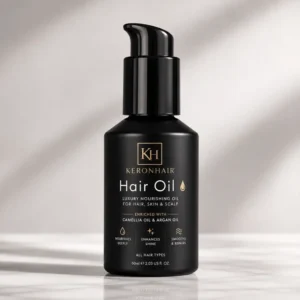
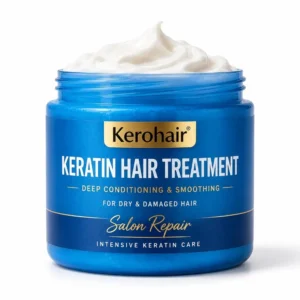
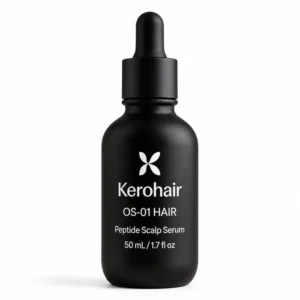
Established in 2010, Keronhair operates a state-of-the-art 8,000-square-meter production facility in Guangzhou, delivering top-tier OEM/ODM services. Drawing on over 16 years of R&D expertise, the company stands out as a best private label hair care manufacturer for high-end formulations — particularly ammonia-free hair dyes, advanced keratin straightening treatments, and plant-based organic care.
With trademark registrations in over 200 countries and nine design patent certificates, Keronhair brings serious global credibility to the table. Their active presence on major B2B platforms and robust export infrastructure make them an especially strong partner for brands targeting international distribution. If you’re researching how to find a reliable hair care factory, Keronhair is a name that consistently comes up.
Best for: High-end organic formulations, keratin treatments, and global B2B private labeling.
Pros:
- Extensive expertise with complex formulas including direct dyes and keratin treatments
- Modernized, large-capacity production plant
- Strong global trademark and patent protections
Cons:
- Large-scale focus may mean higher minimums for highly bespoke micro-batch orders
4. Cosmax — Best for Cutting-Edge K-Beauty Formulations
Official website: cosmax.com
Country: South Korea
Cosmax is a global giant in cosmetic and personal care ODM/OEM manufacturing. They heavily invest in R&D — particularly in integrating innovative natural and organic plant extracts into high-performance hair care formulations. Their rigorous quality control and cutting-edge biotechnology allow them to create trend-setting products that perform well in both Asian and international markets.
Best for: K-beauty-inspired organic formulations and large-scale global distribution.
Pros:
- World-class R&D and biotechnology capabilities
- Massive global production scale
- Adherence to the strictest global quality and safety standards
Cons:
- Primarily geared toward major global brands; MOQs may be inaccessible for smaller emerging labels

5. Intercos Group — Best for Luxury and Prestige Markets
Official website: intercos.com
Country: Italy
Intercos Group is a premier global cosmetic manufacturer renowned for shaping beauty trends and pushing formulation boundaries. Their dedicated hair care divisions focus on sophisticated, high-performance organic and natural products for luxury and prestige markets. Leveraging advanced formulation technologies and sustainable practices, they offer comprehensive end-to-end ODM services through an expansive global research network.
Best for: Prestige and luxury brand formulations requiring avant-garde innovation.
Pros:
- Unmatched global R&D network and innovation capabilities
- Highly trend-setting product development
- Exceptional quality tailored specifically for high-end markets
Cons:
- Top-tier pricing and large production requirements
6. Kolmar Korea — Best for Functional Herbal and Botanical Care
Official website: kolmar.co.kr
Country: South Korea
As a pioneer in the Korean cosmetics manufacturing industry, Kolmar Korea combines pharmaceutical-grade precision with advanced cosmetic science. Their deep expertise in organic, plant-based, and herbal ingredients brings a genuinely holistic approach to modern hair care. Their dual OEM and ODM capabilities make them a versatile partner for brands with specific functional goals — including private label hair mask development with advanced botanical extracts.
Best for: Functional organic hair care leveraging advanced botanical extractions.
Pros:
- Pharmaceutical-level quality control
- Profound expertise in functional herbal and botanical formulations
- Reliable large-scale manufacturing capabilities
Cons:
- Primarily structured for high-volume production, which can limit flexibility for niche launches
7. Metro Private Label — Best for Scalable E-commerce Hair Systems
Official website: metroprivatelabel.com
Country: USA
Metro Private Label is a strategically focused hair treatment manufacturer dedicated to helping brands build scalable, commercially viable product lines. They excel in formulating with premium natural and organic ingredients, emphasizing personalized formulations that target specific market demands — whether color preservation, deep hydration, or scalp repair. Beyond manufacturing, they provide packaging solutions, quality assurance support, and marketing insights.
Best for: Strategically positioned, scalable hair care systems and targeted treatments.
Pros:
- Strong focus on commercial viability and current market trends
- Comprehensive marketing and packaging support
- High-quality personalized formulations
Cons:
- Emphasis on trendy active ingredients may not suit brands seeking a traditional, minimalist herbal approach

8. SBLC Cosmetics — Best for Comprehensive Supplier Network Management
Official website: sblcomp.com
Country: USA
SBLC Cosmetics operates as a comprehensive partner for bringing private label hair products to market. Rather than a single standalone factory, they work through a vast network of specialized suppliers to offer a wide range of custom organic formulation and packaging options. They manage supplier interactions, navigate regulatory complexity, and oversee formulation development — making them an excellent turnkey option for brands that don’t want to manage multiple vendor relationships.
Best for: Brands needing end-to-end project management and regulatory guidance across multiple suppliers.
Pros:
- Highly flexible capabilities through a diverse supplier network
- Crucial regulatory and compliance guidance
- Excellent for turnkey project management
Cons:
- Acting as an intermediary may increase lead times or complicate direct communication with production teams
9. Carsa Lab — Best for Organic Scalp Treatments and European Market Entry
Official website: carasalab.com
Country: Spain
Based in Barcelona, Carsa Lab is a specialized manufacturer with deep roots in natural and organic personal care. Founded in 2012, they’ve built a strong reputation for caffeine-based shampoos and organic scalp treatments. Operating under ISO 22716 and GMP certifications, they strike a practical balance between scientific efficacy and clean ingredient positioning — and serve as a solid gateway into the European market.
Best for: European market entry and specialized organic anti-hair loss treatments.
Pros:
- Strong expertise in caffeine-based and organic scalp treatments
- Key European quality certifications (ISO 22716 & GMP)
- Flexible production models suited for growing brands
Cons:
- Specialized portfolio may limit options for brands seeking unconventional styling products or chemical colorants
10. RainShadow Labs — Best for Clean Beauty Startups and Low MOQs
Official website: rainshadowlabs.com
Country: USA
RainShadow Labs is an FDA-registered, ISO-certified manufacturer with over 40 years of experience in natural and organic personal care. Based in Oregon, they’re deeply committed to clean beauty — offering cruelty-free formulas crafted from naturally derived and organic ingredients, without harsh additives. Their business model is notably flexible: zero-minimum bulk purchasing for stock formulas, with custom formulation available starting at just 25 gallons.
Best for: Clean beauty startups and growing brands needing highly flexible minimum order quantities.
Pros:
- Exceptionally low MOQs (zero minimum for direct stock purchases)
- Transparent clean and organic ingredient standards
- Fast turnaround with proven stock formulas
Cons:
- Fully custom formulations require a higher upfront investment and longer lead times than their stock options
How to Evaluate an Organic Hair Care Product Manufacturer
A credible shortlist is only the beginning. Use the same written scorecard for every candidate, and separate “provided” from “verified.” For more due-diligence detail, see our guide to evaluating reliable hair product manufacturers.
1. Verify the Company, Site, and Service Model
Match the legal company on the quotation, contract, invoice, bank account, certificate, and shipping documents. Ask which site develops, manufactures, fills, stores, and releases the product, and what is subcontracted. A capable sourcing partner can be valuable, but its role should be transparent.
2. Check Certification Scope, Not Just Logos
Request current certificates and confirm the named legal entity, address, scope, certification body, certificate number, and expiry. If a supplier references cosmetic GMP, understand that ISO 22716 covers guidance for cosmetic production, control, storage, and shipment; it does not certify that every finished product is organic or suitable for every market.
3. Match Technical Capability to the Product
A factory experienced in a simple shampoo may not have the same capability in solid formats, high-oil treatments, scalp serums, hair color, aerosols, or professional chemical services. Ask for relevant product examples, available equipment, process limits, scale-up controls, and a sample plan based on your brief.
4. Define Testing and Packaging Compatibility
The test plan should reflect the formula, packaging, intended use, claims, shelf-life target, and destination market. Discuss stability, microbiological quality, preservative-system assessment where applicable, packaging compatibility, specifications, retained samples, and batch-release records. Do not accept a universal test checklist without understanding why each test applies.
5. Separate Formula, Filling, and Packaging MOQs
A supplier may quote one MOQ for bulk formula, another for filling, and a higher quantity for a custom bottle, pump, carton, or decoration. Compare total landed cost and cash commitment, not only the factory’s unit price. Include development, testing, artwork, tooling, packaging, freight, duties, inspection, storage, and potential waste.
6. Put Ownership and Change Control in Writing
Clarify who owns the base formula, custom modifications, test data, artwork, molds, and regulatory files. The agreement should also explain how raw-material substitutions, formula changes, packaging changes, nonconformities, complaints, rework, and recalls are approved and documented.
What to Ask Before Requesting Organic Hair Care Samples
- Which organic or natural standard can the exact finished product support?
- Can you provide the current certificate or ingredient documents before sampling?
- Where will the sample, bulk product, and finished goods be made and filled?
- Is the sample a stock formula, semi-custom base, or new custom development?
- Which claims are supported, and which still require testing or regulatory review?
- What are the separate formula, filling, component, decoration, and carton MOQs?
- What changes may occur between sample approval and production?
- Which documents and retained references will accompany the commercial batch?
If you are still building a shortlist, our practical guide on how to find a hair care factory explains how to compare legal identity, production sites, quotations, samples, tests, and quality records.
Private Label vs. White Label vs. OEM vs. ODM: Choosing the Right Model
Choosing the right manufacturing model depends on your budget, timeline, and how much formulation control you need.
| Feature | White Label | Private Label | OEM | ODM |
|---|---|---|---|---|
| Formulation Control | None; pre-made stock formula | Low to medium; minor tweaks | Complete; you provide the formula | High; factory designs from your brief |
| Customization | Packaging and branding only | Packaging, branding, and minor changes | Full ingredient, scent, and texture control | Semi-custom to fully custom options |
| Speed to Market | Fastest (days to weeks) | Fast (weeks to months) | Slowest (months of R&D and testing) | Moderate to slow |
| Cost / MOQs | Very low | Moderate | High | High |
| Brand Exclusivity | None | Low | Absolute — you own the formula | High |
How to choose:
- Startups testing the market should start with White Label or Private Label to move quickly with proven formulas.
- Brands with proprietary formulas — like a specialized keratin treatment — should pursue OEM for complete production control. For a closer look at how that process works, exploring OEM hair product manufacturing options will clarify what’s involved.
- Brands wanting unique formulations without managing R&D from scratch will find ODM the right balance of customization and professional expertise.
Organic Hair Care Formulation Trends to Discuss With a Manufacturer
Trends are useful for product briefs, but they are not proof of safety, performance, or market success. Ask the laboratory how each concept affects formula stability, preservation, sensory performance, packaging, claims, cost, and certification eligibility.
- Scalp-focused routines: Cleansing, exfoliating, soothing, moisturizing, and lightweight serum formats can expand a hair line beyond basic shampoo and conditioner.
- Gentle cleansing systems: Sulfate-free or lower-irritation positioning may appeal to some audiences, but the surfactant system still needs suitable cleansing, foam, preservation, and compatibility performance.
- Traceable plant oils and botanical extracts: Argan, jojoba, coconut, rosemary, aloe, and other familiar materials can support a product story when origin, specification, allergen, certificate, and claim records are available.
- Fermented or biotechnology-derived ingredients: These may create a differentiated narrative, but natural-origin and organic eligibility must be assessed ingredient by ingredient.
- Concentrated, waterless, or solid formats: Bars, powders, and concentrates can change packaging and transport needs, yet they also introduce different processing, user-experience, stability, and compatibility questions.
- Fragrance-conscious options: Fragrance-free, essential-oil, or reduced-allergen directions require precise definitions and appropriate safety and label review rather than broad “non-toxic” claims.
A strong manufacturer should be able to explain the trade-offs behind a trend. If the only response is a long list of fashionable ingredients, ask how the finished formula will be tested and how each marketing statement will be supported.
Final Thoughts
The organic hair care space has matured well past trend status — it’s now a baseline expectation for a growing segment of buyers who read ingredient lists and research brands before purchasing. Working with the right organic hair care product manufacturer from the start gives your brand a genuine foundation: clean formulas, credible certifications, and a supply chain that can hold up to scrutiny.
Whether you’re launching your first private label hair product line or looking to upgrade an existing one, the manufacturers listed here represent a credible starting point across different regions, price points, and production scales. Take the time to vet your shortlist thoroughly — certifications, communication, and ingredient transparency will tell you more than any sales deck.
Frequently Asked Questions
Does one certified organic ingredient make the whole shampoo organic?
No. The finished product’s eligibility depends on the applicable standard, ingredient percentages, processing, supply-chain documentation, manufacturing controls, and label wording. Review the USDA guidance for cosmetics and personal care products when planning U.S. organic claims.
Does an organic hair care manufacturer need certification?
That depends on the claim, market, and standard. A brand may need evidence covering agricultural ingredients, handling operations, the manufacturing site, and the finished product. Ask for current documents that match the exact project instead of accepting a generic “organic factory” statement.
What is a normal MOQ for private label organic hair care?
There is no universal MOQ. It varies by formula batch size, number of SKUs, filling line, package, decoration, carton, certification route, and supplier. Ask for formula, filling, component, and decoration minimums separately.
How can I verify that a supplier is the actual manufacturer?
Compare its legal registration, contract, payment beneficiary, production address, certificates, audit records, and shipping documents. Request a live or independent facility audit and confirm who performs development, batching, filling, testing, release, and storage.
Should a startup choose private label or custom formulation?
A documented private label or semi-custom route may reduce early development time and cash commitment. Custom formulation can provide more control and differentiation but usually adds laboratory work, testing, minimums, cost, and time. Choose based on the product strategy rather than assuming custom is always better.
Are natural and organic cosmetics automatically safer?
No. Safety depends on the finished formulation, ingredient levels, contaminants, preservation, manufacturing controls, packaging, intended use, and user population. “Natural” and “organic” should not replace appropriate safety substantiation.