Buying hair dye wholesale is not simply a search for the lowest price per tube. A salon may need dependable professional shades and developers, a distributor may need a balanced assortment for several customer groups, and a beauty brand may need a private label range with distinctive packaging. Each buyer therefore needs a different supply route, approval process, and reorder plan.
This guide explains how to define the project before contacting suppliers. It covers wholesale models, assortment planning, minimum order quantities (MOQs), sample approval, continuity, and the information required in a useful request for quotation (RFQ). Buyers exploring private label hair dye manufacturing can use the same framework to turn a broad product idea into a brief a supplier can evaluate.
What “Hair Dye Wholesale” Means for Different B2B Buyers
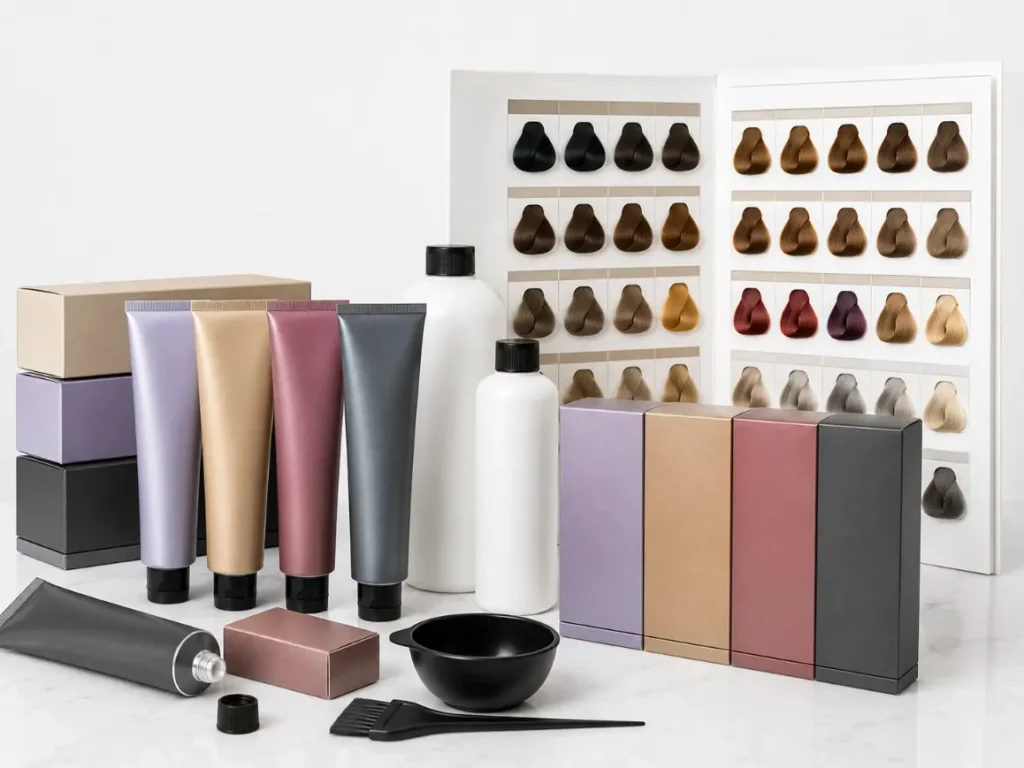
“Wholesale” can mean purchasing finished branded products from an authorized channel, adding a private label to an existing formula, modifying a supplier’s base, or developing a custom hair color system. The right interpretation depends on what the buyer sells, who will use it, and how much control the buyer needs over the product.
| Buyer Type | Typical Buying Goal | Likely Supply Route | Main Questions Before Sourcing |
|---|---|---|---|
| Salons and professional colorists | Reliable service products, predictable results, and convenient replenishment | Authorized distribution, multi-brand wholesale, or a salon-owned private label line | Are the shades, developers, instructions, and professional support suitable for the salon’s services? |
| Distributors, importers, and retailers | A commercially coherent range that fits local demand and channel requirements | Authorized distribution, ready-made private label, ODM, or a mixed portfolio | Is the supplier authorized, can the range be registered or notified where required, and can stock be replenished consistently? |
| Private label and beauty brands | A differentiated product system under the buyer’s own brand | Ready-made private label, ODM, modified formula, or custom OEM | Who controls the formula and artwork, how are shades approved, and what minimums apply to each component? |
Before requesting prices, define five project inputs:
- Intended market and destination country
- Professional or consumer end user
- Salon, retail, ecommerce, or distributor channel
- Required level of product and brand exclusivity
- Target launch date
These inputs narrow the supplier pool and prevent mismatched quotes.
Choose the Right Hair Dye Wholesale Supply Model
The supply model determines what the buyer can customize, how much development work is required, and which minimums or approvals may apply. A practical decision starts with the business goal rather than the terminology on a supplier’s website.
To compare the channels behind these supply models, use our bulk hair dye source comparison. It separates seven buying routes so you can shortlist the appropriate type of partner before assessing an individual quotation.
Authorized Distribution and Multi-Brand Wholesale
Authorized Distributors: Brand Access and Channel Authenticity
An authorized distributor sells an established manufacturer’s products within an agreed channel or territory. This suits buyers that want recognized products without developing a formula or packaging system. Verify authorization, territory limits, resale rules, traceability, expiry information, and access to professional instructions.
Multi-Brand Wholesalers: Assortment Breadth and Consolidated Buying
A multi-brand wholesaler can combine several brands in one purchasing relationship, simplifying assortment building. The buyer has less control over formula, presentation, and availability. Confirm that the seller is an approved source for every brand and ask how discontinued or reformulated items are handled.
Ready-Made or ODM Private Label Supply
With a ready-made or ODM route, the supplier adapts selected elements of an existing product platform, such as shades, fragrance, packaging, or artwork. “Ready-made” does not mean every combination is immediately available. Clarify permitted modifications, shade minimums, packaging compatibility, testing responsibilities, and market documentation.
For an own-label professional range, assortment planning should be tied to the brand’s first launch channel. Our salon-grade hair color launch guide develops that next step from positioning and packaging through the first rollout.
Custom OEM Hair Color Manufacturing
Custom OEM development fits concepts that cannot be achieved through an existing base or require greater control. It may involve a new formula, custom shades, specific application properties, and a coordinated developer or aftercare system. Review OEM and ODM manufacturing options by the work included because suppliers may define the terms differently.
A Decision Matrix by Buyer Type and Business Goal
| Priority | Most Likely Starting Route | Why |
|---|---|---|
| Fast access to known professional products | Authorized distribution | No private formula or packaging development is required |
| Broad assortment from several established brands | Multi-brand wholesale | One source may consolidate several product lines |
| Own-brand launch with controlled development scope | Ready-made or ODM private label | Existing platforms can provide a practical starting point |
| Distinct formula, shade system, or brand experience | Custom OEM | Greater customization can support a differentiated concept |
Use this matrix as a shortlist. The supplier must still confirm feasibility, buyer rights, and post-approval controls.
Build a Wholesale Hair Color Assortment Around Your Sales Channel
A strong first order is a usable system, not a long list of disconnected SKUs. Start with the customer’s coloring occasion, the people applying the product, and the products required to complete the service or at-home routine.
Match Product Format to the Sales Channel
Salon and Professional Service Lines
Professional ranges require clear shade identification, mixing instructions, compatible developers, and practical pack formats. A compact system covering frequent services may outperform a large catalog of slow-moving tones. Usage information and consistent replenishment also matter at the chair.
Retail and Ecommerce Product Lines
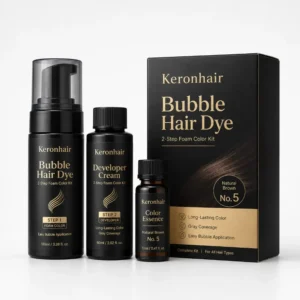
Retail and ecommerce products need a complete consumer-facing experience. Consider whether the offer is a single product or a kit, what the user must supply separately, and how instructions, warnings, shade expectations, and contents will be communicated. Product type matters: oxidative dyes, progressive dyes, and other color formats do not share identical use conditions. The FDA’s overview of hair dyes is a useful starting point for understanding U.S. hair dye categories and safety information.
Distributor and Importer Portfolios
Distributors balance local demand with inventory exposure and may need entry, core, and specialist products. Before adding a format, confirm its user, route to market, documentation, shelf-life information, case configuration, and repeat-order support.
Plan Core Shades Before Expanding the Range
Build the opening shade architecture around credible sales demand. A practical first range may group shades into:
- Natural levels that support frequent, repeatable services
- High-demand warm, cool, or neutral tonal families
- Gray-coverage options where relevant to the target user
- A limited selection of fashion or corrective tones
The exact structure should reflect the format and target user. Do not copy a competitor’s shade count without knowing which shades actually turn.
For each shade, record its code, name, starting level, target result, developer, mixing ratio, processing time, and test substrate. This record supports development, approval, and reorder checks.
Decide Which Developers, Lighteners, and Aftercare Products Belong in the System
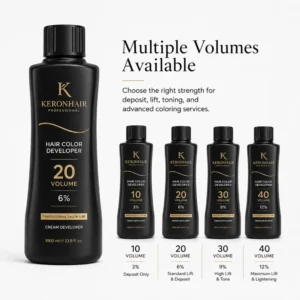
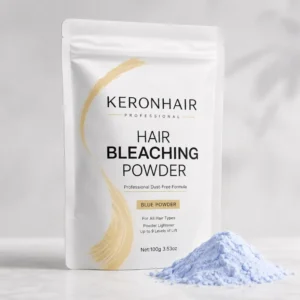
Confirm whether the color requires a specific developer and whether it is included or sold separately. Add a lightener only when it serves the intended journey. Aftercare may strengthen the system, but each product adds another formula, pack, minimum, test plan, and inventory position.
Decide What to Leave Out of the First Order
Exclude products without a clear user, forecast, or role. A smaller launch simplifies forecasting and feedback if it still supports the intended service. Put deferred items in a phase-two list for review after early sell-through.
Use a First-Order Assortment Planner
| Item | Decision to Record |
|---|---|
| Target customer and channel | Professional, retail, ecommerce, distribution, or a defined combination |
| Product format | Cream, shampoo color, kit, lightener, developer, aftercare, or another specified format |
| Core shades | Shade families and number of launch shades |
| Companion products | Required developers, lighteners, or care products |
| Pack system | Primary pack, closure, carton, inserts, applicators, and shipping case |
| Forecast | Expected quantity by SKU, market, and reorder period |
| Phase two | Products intentionally deferred until demand is validated |
Understand What Drives Wholesale Hair Dye MOQ
A headline MOQ rarely shows the full commitment. Minimums may apply to formula, shade, fill, packaging, printing, inserts, kits, and shipping cases. Ask the supplier to map each one to its source.
Map Formula and Shade Minimums
Bulk Formula or Base Minimums
The supplier may make a minimum base-formula batch larger than the required finished quantity. Ask how it is allocated and whether unused bulk can be held. The choice among stock, modified, and custom formula routes can also change the development scope and MOQ.
Per-Shade and Per-SKU Minimums
One formula family may require separate work for each shade or SKU. Ask whether shade minimums apply individually, shades can share a run, and each pack size is a separate SKU. Request a table because “mixed colors are possible” can hide conditions.
Map Packaging, Printing, and Kit Minimums
A fill quantity may be lower than the minimum for tubes, bottles, cartons, labels, foils, or inserts. For every component, ask about the purchase quantity, first-run consumption, overage, ownership, storage, and reuse. For kits, account for every included item.
Ask About Mixed SKUs, Shared Components, and Phased Launches
Shared packs can simplify purchasing when labels or variable artwork create differentiation. A phased launch can separate core shades from extensions. Ask which components can genuinely be shared and how this affects cost, setup charges, inventory, and reorder minimums.
Turn Samples and Shade Approvals into a Production Standard
“Sample approved” is too vague for a product whose result depends on the starting hair, mixing system, application, and processing conditions. Approval should produce a controlled reference that both parties can use during bulk production and future reorders.
Define Controlled Test Conditions
Hair Substrate and Starting Condition
Record whether testing uses standardized hair swatches, salon models, or another agreed substrate. Note the starting level, color history, gray percentage where relevant, porosity, condition, and preparation. Results on bleached swatches cannot be assumed to represent untreated or previously colored hair.
Developer, Mixing Ratio, and Processing Time
Document the exact developer or activator, strength where applicable, mixing ratio, application amount, processing time, temperature, rinse method, and post-color care. If the system supports more than one condition, approve each claimed use case rather than extrapolating from a single test.
Record Formula, Shade, Texture, and Packaging Feedback
Use one feedback sheet per sample round and separate the record into:
- Sample identity: sample code, formula or shade version, test date, and evaluator
- Performance observations: shade result, coverage, uniformity, texture, mixing behavior, application, and rinse
- Required action: packaging or artwork corrections, requested formula changes, and the decision for the next round
Keep photo lighting and camera settings consistent.
The manufacturer and brand should agree on tests that are appropriate for the product, packaging, and intended market. The FDA’s guidance on cosmetic product testing explains that companies are responsible for substantiating product safety and that the law does not prescribe one universal list of tests for every cosmetic.
Freeze the Approved Reference Before Bulk Production
Final approval should identify the sample code, specification version, shade standard, application method, pack components, artwork, and dated approvers. Resolve or explicitly exclude open issues before production. The hair dye manufacturing process shows where the brief, sample, scale-up, quality checks, and documentation fit together.
Keep a Reference for Reorders and Change Control
Agree who retains samples, swatches, specifications, artwork, and component references, and for how long. Reorders should cite the approved version and latest accepted batch. Changes must provide enough information for the buyer to assess review, testing, document updates, or renewed approval.
Plan for Reorders, Batch Consistency, and Supply Continuity
The first shipment proves that a product can be made once. A sustainable wholesale relationship also needs a repeatable way to purchase the same approved system, manage unavoidable variation, and respond to changes.
Preserve the Approved Formula, Shade, and Packaging References
Put specification identifiers on purchase orders and approval records. Ask how the supplier links materials, bulk, filling, components, and finished batches. Define shipment evidence and the response to a shade, pack, or label discrepancy. Agree on appropriate acceptance criteria and review methods.
Ask How Material and Packaging Changes Are Communicated
Materials and packaging can become unavailable or change. Ask what is notifiable, who approves substitutes, what notice is provided, and whether new samples or document review are triggered. The agreement should address rejection of a proposed change.
Define Reorder Forecasts, Minimums, and Escalation Paths
Share a rolling SKU forecast and identify peaks, promotions, or registration-dependent launches. Confirm reorder minimums, planning windows, packaging ownership, and when an order becomes fixed. Name operational and escalation contacts for shortages, delays, quality reviews, and corrective action.
Send a Decision-Ready Hair Dye Wholesale RFQ
A useful RFQ gives suppliers the same defined project. Attach a structured brief and require each quote to state inclusions, exclusions, and dependencies.
Business and Market Information
State the buyer type, location, destination market, channel, intended user, launch timing, and forecast. Identify the required supply route so documentation, ingredient, label, and claims discussions begin early.
Cosmetic and hair color requirements vary by market. Brands should confirm applicable safety, labeling, notification, ingredient, and claims requirements before launch.
For example, a project intended for the European Union should be reviewed against the official EU Cosmetic Products Regulation and any other applicable requirements. A supplier’s documents support the buyer’s review but do not replace market-specific professional advice.
Product, Shade, and Packaging Specifications
Product Format and Formula Route
Define the product type, intended performance, use method, formula route, reference products, prohibited or preferred attributes, fragrance direction, and required companion products. Mark every item as required, preferred, or open to supplier recommendation.
Shade Architecture and Companion Products
Provide the opening shade list and coding logic, target swatches or references, intended starting hair conditions, gray-coverage needs if relevant, developer system, lightener, and aftercare. Ask the supplier to identify technical gaps rather than silently filling them with assumptions.
Packaging and Kit Components
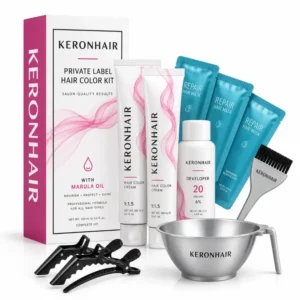
Specify fill size, pack, closure, decoration, carton, instructions, accessories, languages, barcodes, tamper evidence, case pack, and shipping marks. If the supplier sources components or assembles kits, request a component-level scope.
Sample and Approval Requirements
Request the sample sequence, required inputs, fees, revision rounds, quantities, evaluation method, approvers, and final deliverables. Ask how bulk will be compared with the approved reference and which records will be retained.
Commercial Questions and the Required Next Step
Ask for tiered prices, setup, sample and development fees, packaging costs, payment and trade terms, planning windows, quote validity, and reorder conditions. Require separate formula, shade, packaging, and kit minimums. End with one defined next step.
Copyable RFQ Template
Company and buyer type:
Destination market(s):
Sales channel and intended user:
Target launch date:
Supply model requested:

Product format(s):
Formula route: stock / modified / custom / open to recommendation
Reference product or performance brief:
Launch shades and shade references:
Developer, lightener, and aftercare requirements:

Fill size and primary packaging:
Carton, insert, accessories, and kit requirements:
Artwork and language requirements:
Forecast by SKU and first-order quantity:

Sample method and approval criteria:
Required documents for the destination market:

Please provide:
- Feasibility comments and missing information
- MOQ by formula, shade, SKU, component, and kit
- Pricing by quantity tier with inclusions and exclusions
- Sample process, fees, and revision scope
- Packaging and tooling costs
- Payment and trade terms
- Estimated planning windows for samples and production
- Reorder minimums and change-notification process
- Recommended next step
Choose a Wholesale Partner That Fits the Business You Are Building
The best-fit partner is the one whose supply model, technical process, commercial structure, and continuity plan match the buyer’s actual business. A low opening price has limited value if the range cannot be approved, replenished, or supported in the target channel.
Confirm Your Supply Model and First-Order Plan
Before making contact, choose the likely route, identify core products and shades, separate launch items from phase two, and prepare a realistic quantity forecast. Keep non-negotiable requirements distinct from preferences so the supplier can propose workable alternatives.
Send Your Project Brief and Request the Next Step
Keronhair works with B2B buyers exploring private label and manufacturing routes for hair color products. Send the completed brief with your target market, product format, shade plan, packaging concept, quantities, and approval requirements. The next useful step is a project-specific feasibility review—not a generic catalog request.
Frequently Asked Questions About Hair Dye Wholesale
Can a salon buy hair dye directly from a manufacturer?
Potentially, but it depends on the manufacturer’s sales model, location, order requirements, and whether the salon wants finished branded goods or its own line. A salon seeking established products may be better served by an authorized distributor. A salon group developing a private label system should ask manufacturers about formula routes, shade minimums, packaging, professional-use information, and reorder support.
Can different hair dye shades share one wholesale MOQ?
Sometimes, but buyers should not assume that one total quantity can be divided freely. A project may have a base-formula minimum plus separate minimums for shades, filling runs, tubes, labels, cartons, or other SKUs. Ask for a written component-level MOQ table showing which quantities can be combined and which cannot.
Does a wholesale hair dye order include developer?
Not necessarily. Developer may be included in a retail kit, sold as a separate professional product, or excluded from the quoted scope. The RFQ should state the required developer or activator, size, ratio, packaging, and quantity, and the supplier’s quote should identify it as a separate line item where appropriate.
What packaging formats are commonly used for wholesale hair color?
The appropriate format depends on the formula and channel. Projects may use tubes, bottles, sachets, jars, applicator containers, cartons, or multi-component kits. Instead of choosing by appearance alone, confirm formula compatibility, use method, filling feasibility, labeling space, shipping protection, component minimums, and target-market requirements.
How should buyers handle a supplier’s formula or packaging change after approval?
The supply agreement should define advance notification, the information the supplier provides, buyer approval authority, and the conditions that trigger new samples, testing, or document updates. Keep version-controlled specifications and approved references. Do not accept an unreviewed substitute merely because the product name or SKU remains the same.