To verify a hair care manufacturer for your Saudi brand, confirm the legal company and production site, check its experience with your product category, examine its quality system, test the final formula and packaging, and review the Saudi document pack before approving printed packaging or paying for bulk production. Put every approved requirement in writing.
Use this seven-step process:
- Match the supplier’s legal identity to the actual factory.
- Confirm capability in your exact product category.
- Review GMP evidence and quality controls.
- Approve the commercial formula, packaging, and test plan.
- Verify the Saudi document pack before bulk production.
- Put ownership, specifications, and commercial terms in writing.
- Control the first shipment and every reorder.
The fifth step is where many promising projects become expensive. A local supplier or overseas hair care manufacturer serving Saudi Arabia may produce a good sample yet still be unable to provide consistent manufacturer details, ingredient information, artwork support, test records, or batch documents. That gap needs to be found while the product is still editable.
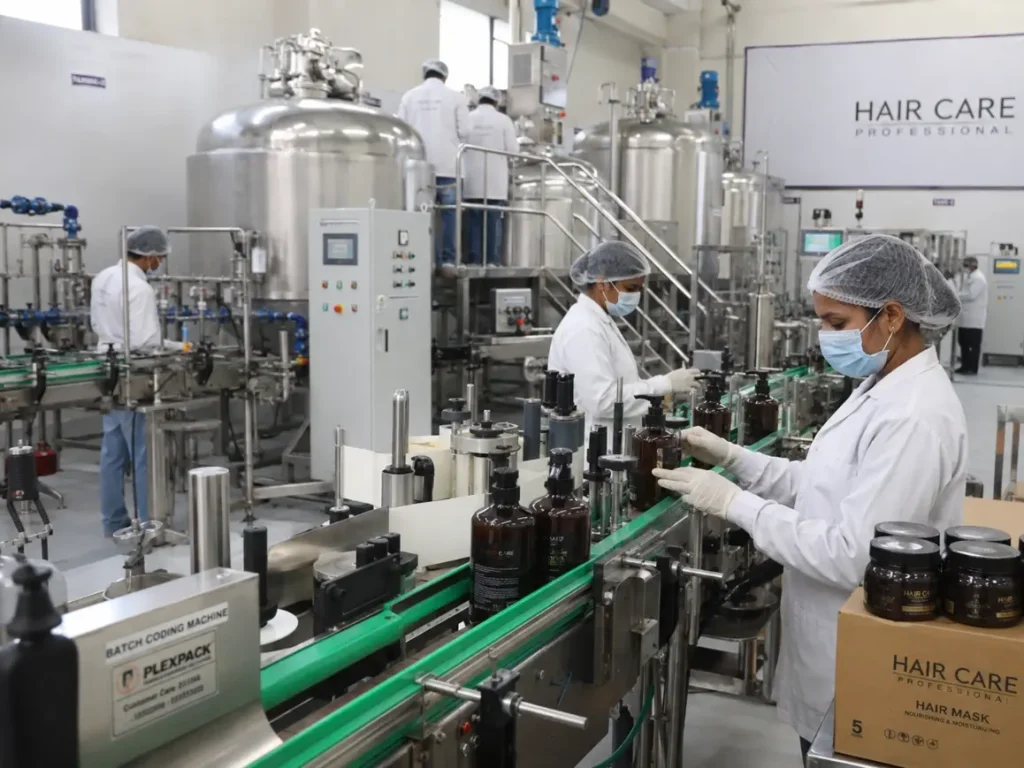
What to Prepare Before Contacting a Manufacturer
A supplier can’t quote accurately from a message that says, “I want a natural shampoo for Saudi Arabia.” Before building a shortlist, prepare a brief with:
- Product type and format
- Target consumer and intended cosmetic benefit
- Desired claims and benchmark products
- Ingredients you want to include or avoid
- Texture, colour, and fragrance direction
- Packaging type and fill size
- Expected quantity for each SKU
- Target cost and target market
The brief doesn’t need to contain a finished formula. It needs enough detail for the manufacturer to identify the correct development route, likely tests, packaging constraints, and documentation needs.
Choose the route before comparing quotations. In a typical OEM project, you bring a formula, specification, or detailed brief and need the factory to reproduce it. In an ODM project, you begin with a supplier-owned formula platform and customize permitted elements. Private label usually involves less change. Our guide to OEM hair products vs. ODM manufacturing explains the differences in more detail.
If you are still planning the wider launch, start with the Saudi hair care brand launch guide so that product development and Saudi regulatory work can run in parallel.
If domestic production is part of your sourcing plan, begin with local leads that still need project-level qualification. Our Saudi hair care manufacturer shortlist gives candidates to compare against the same brief and verification criteria.
How to Verify a Hair Care Manufacturer for Your Saudi Brand: 7-Gate Checklist
Use this Saudi hair care manufacturer verification checklist as a series of approval gates. “Confirmed” means that you have checked the supporting evidence, not that a salesperson has answered yes.
| Verification gate | Evidence to request | Reason to pause |
|---|---|---|
| Legal identity | Registration, manufacturing scope, registered address, contracting and payment entity | The names on the contract, bank account, certificate, and website don’t match |
| Actual production site | Factory address, live walkthrough, recent audit evidence | The supplier won’t show the line or only sends edited promotional footage |
| Category capability | Samples, specifications, equipment, and records for the same product category | A huge catalogue but no proof for your product type |
| Quality system | Current cosmetics GMP or ISO 22716 evidence and quality procedures | Certification logos without the certificate, scope, site, or validity dates |
| Product proof | Version-controlled sample, specification, packaging details, and relevant test reports | A fresh sample is treated as the only quality evidence |
| Saudi document pack | Manufacturer, formula, artwork, testing, origin, and batch information | The supplier says “we can do SFDA” but can’t list the files it will provide |
| Written control | Quote scope, MOQ, ownership, specifications, change control, and defect remedies | Key terms will only be discussed after payment |
Step 1: Verify the OEM/ODM Hair Care Factory and Legal Company
Ask the OEM/ODM hair care factory for its full legal name in its local language and in English, company-registration number, registered office, production address, and registered business scope. Then identify which company will:
- Sign the manufacturing agreement
- Receive payment
- Manufacture and release the product
- Appear on the commercial invoice and export documents
- Be named in product and regulatory records
More than one company may be involved, such as an affiliated export company. The relationship must be disclosed and supported. Do not accept unexplained differences between the company on the GMP certificate and the company producing your order.
Ask whether formulation, testing, filling, or packing will be subcontracted. A trading company isn’t automatically a bad partner either. The risk comes from not knowing who controls the formula, buys the raw materials, holds the quality records, and answers for a failed batch.
See the production site, not just the showroom
For an initial screen, request a live video walkthrough. Ask to see the external signage and address, raw-material quarantine, weighing and mixing areas, the line relevant to your product, the quality-control laboratory, finished-goods storage, and batch-coding process.
For a meaningful order, use an on-site or qualified third-party audit. Confirm that the audited address is the same site that will make your products. A certificate for a sister company or a different facility doesn’t verify the factory behind your quotation.
Marketplaces and supplier lists are useful for discovery, but their verification badges are not a factory audit. Use our hair care factory sourcing checklist to build the shortlist, then use this article to verify it.
Step 2: Confirm Capability in Your Exact Product Category
“We manufacture cosmetics” is too broad. Shampoo, oxidative hair colour, bleach powder, scalp serum, styling wax, and straightening cream create different formulation and production risks.
For shampoo or conditioner, ask how the factory controls viscosity, microbiological quality, fragrance stability, and pump or cap compatibility. For hair colour, ask about shade development, developer compatibility, colour consistency, staining, and controls for regulated ingredients. If colour is your main category, our review of hair dye manufacturers in China shows the category-specific information worth comparing. For scalp products, review whether the intended wording remains a cosmetic claim. For straightening products, request complete ingredient and safety information before discussing marketing claims.
The supplier should be able to discuss the exact format as a technical project. Ask:
- Has this site made the same category and pack format?
- Which steps are performed in-house?
- What changes between the laboratory sample, pilot batch, and bulk batch?
- Which equipment will be used?
- How will the first bulk batch be compared with the approved sample?
- Which tests are standard, and which depend on our formula or claims?
Product photographs alone don’t prove capability. Use our reliable manufacturer checklist for a broader comparison framework.
Step 3: Review GMP Evidence, Not Certification Logos
ISO 22716 gives cosmetics GMP guidance for production, control, storage, and shipment. It is a useful factory-level signal. It does not prove that your formula works, that your packaging is compatible, or that your product is ready for Saudi Arabia.
When a supplier claims ISO 22716 or another cosmetics GMP credential, review the actual certificate. Check:
- Legal company name
- Manufacturing-site address
- Activities and product categories within scope
- Issuing or certification body
- Issue and expiry dates
- Whether the record can be confirmed with the issuer
Then look behind the certificate. Ask how the site approves raw-material suppliers, releases incoming materials, controls formula versions, prevents mix-ups, investigates nonconforming batches, handles complaints, and records corrective action. A recent audit report and a clear explanation from the quality team are more informative than a row of logos.
Be careful with “FDA approved” claims. The US FDA states that cosmetic-facility registration or product listing does not indicate approval of the facility or its cosmetic products. Where an FDA registration is relevant, treat it as a regulatory record, not as a replacement for GMP evidence or product testing.
Step 4: Approve the Commercial Formula, Packaging, and Test Plan
A sample can smell, look, and feel right on the day it arrives and still fail after storage or transport. Approval therefore needs to cover the product version and the evidence behind it.
Create a controlled reference for the approved sample. Record the formula or INCI version, colour, fragrance, texture or viscosity, fill weight, packaging components, artwork version, and approval date. Keep a retained sample. If the formula or packaging changes later, give the revision a new version rather than quietly treating it as the same product.
The test plan should match the formula, package, intended claims, and foreseeable distribution conditions. Depending on the product, it may include:
- Stability testing
- Microbiological limits testing
- Preservative-efficacy testing for susceptible formulas
- Formula-and-packaging compatibility
- Performance or claim-support testing
- Screening for restricted substances or contaminants where relevant
- Shade-development or wash-performance evaluation for hair colour
Ask which laboratory performs each test, which method is used, what the acceptance criteria are, and which formula and package version the report covers. If you modify a tested ODM base with a different fragrance, active ingredient, colour, or package, confirm whether the existing evidence still applies.
Saudi-bound products may experience high temperatures during transport or storage. Heat exposure can reveal leakage, panel deformation, fragrance loss, discolouration, viscosity drift, or separation. Do not assume that packaging used for another formula is automatically suitable for yours.
Step 5: Verify the Manufacturer’s Saudi Document Pack Before Bulk Production
This is the point to stop treating compliance as paperwork for later.
The SFDA’s current cosmetic-product notification service operates through the GHAD system. Its published process calls for manufacturer information, product information, artwork, ingredient concentrations and functions, attachments, and applicant or establishment information. The Saudi applicant, importer, or regulatory adviser should confirm the current requirements for each SKU.
Before you approve final packaging or pay for bulk production, agree on who can prepare and approve:
- The legal manufacturer name and production-site address
- Complete ingredient information in the format needed by the applicant
- Ingredient concentrations and functions where required
- Product name, function, directions, warnings, and claims
- Final label and artwork files
- Country-of-origin and traceability information
- Product-specific test reports
- Batch and shipment documents
- Documents requested for conformity assessment and import clearance
The central question is not, “Can you do SFDA?” Ask, “Which documents will you supply, for which product version, at what stage, and under which legal manufacturer name?”
For a Chinese production partner, review how factory inputs will be handed to the brand and local party before shipment. Our Saudi and UAE overseas-manufacturing guide maps those responsibilities alongside supplier qualification.
Check the artwork while it can still be changed
Artwork errors become expensive after printing. Confirm that the product identity, manufacturer details, country of origin, ingredients, directions, warnings, storage wording, claims, and responsible-party information are consistent across the approved product file and the final label.
Claims deserve separate review. GSO 2528:2024 addresses claims for cosmetic products. A phrase such as “helps hair look fuller” doesn’t create the same classification risk as “treats hair loss.” Review the English and Arabic meaning rather than translating marketing copy after it has already been approved.
Plan clearance before the shipment leaves
The SFDA’s published cosmetic-product clearance conditions explain the Certificate of Conformity route through the Fasah platform and its connection to the applicable cosmetics safety requirements. Your Saudi importer or adviser should confirm the latest process for the shipment.
An overseas manufacturer supplies technical and production evidence. It doesn’t replace the Saudi party responsible for the local notification and import process. For a dedicated walkthrough, read our guide to registering hair care products with the SFDA GHAD system.
How we handle this at Keronhair: Before a customer approves packaging or pays for bulk production, we can clarify which formula, testing, manufacturer, and batch documents are available for the selected product. We also identify the information that still needs confirmation from the customer’s Saudi applicant or regulatory adviser. This doesn’t replace local regulatory review. It prevents both sides from discovering a document gap after production.
Step 6: Put Ownership, Specifications, and Commercial Terms in Writing
Sign an NDA before sharing proprietary formulas, briefs, artwork, customer information, or launch plans. Then make ownership specific.
For an ODM formula, identify what belongs to the manufacturer and whether any agreed exclusivity applies to the formula, fragrance, shade, territory, or channel. For a custom OEM project, state who owns the original formula, project modifications, test data, artwork, and custom tooling. Paying a development fee doesn’t automatically answer those questions.
The manufacturing or quality agreement should also cover:
- The signed product and packaging specification
- Permitted tolerances and acceptance criteria
- No ingredient, supplier, process, or packaging change without approval
- MOQ by formula, shade, fragrance, and packaging component
- Testing and documentation included in the quotation
- Lead-time assumptions
- Handling of unused custom packaging
- Investigation and remedy for an out-of-specification batch
Compare quotations on the same scope. For illustration, a formula might be quoted at 1,000 units while a custom pump requires 5,000. Those figures are not industry standards; they show why “product MOQ” can hide a separate packaging commitment. Ask each supplier to separate formula, filling, packaging, testing, tooling, documentation, inspection, and shipping costs. Use the same cost fields when comparing private label hair care manufacturers for the Middle East.
Step 7: Control the First Shipment and Every Reorder
Before production, sign the master specification and confirm the approved formula, packaging, artwork, and quality plan. During or after the run, collect the batch records agreed for the project. These may include:
- Batch number and manufacturing date
- Raw-material and packaging traceability
- In-process and finished-product results
- Certificate of Analysis
- Fill-weight and packaging checks
- Approved deviations
- Retained samples
For a higher-risk or higher-value order, arrange a pre-shipment inspection. The scope should follow the specification and purchase order, not stop at counting cartons. Check product identity, batch coding, artwork, quantities, visible defects, packaging, and the required document pack.
Repeat the same discipline on reorders. Compare the new batch with the retained reference, previous Certificate of Analysis, and complaint history. A manufacturer’s ability to reproduce the approved product is more valuable than one impressive sample.
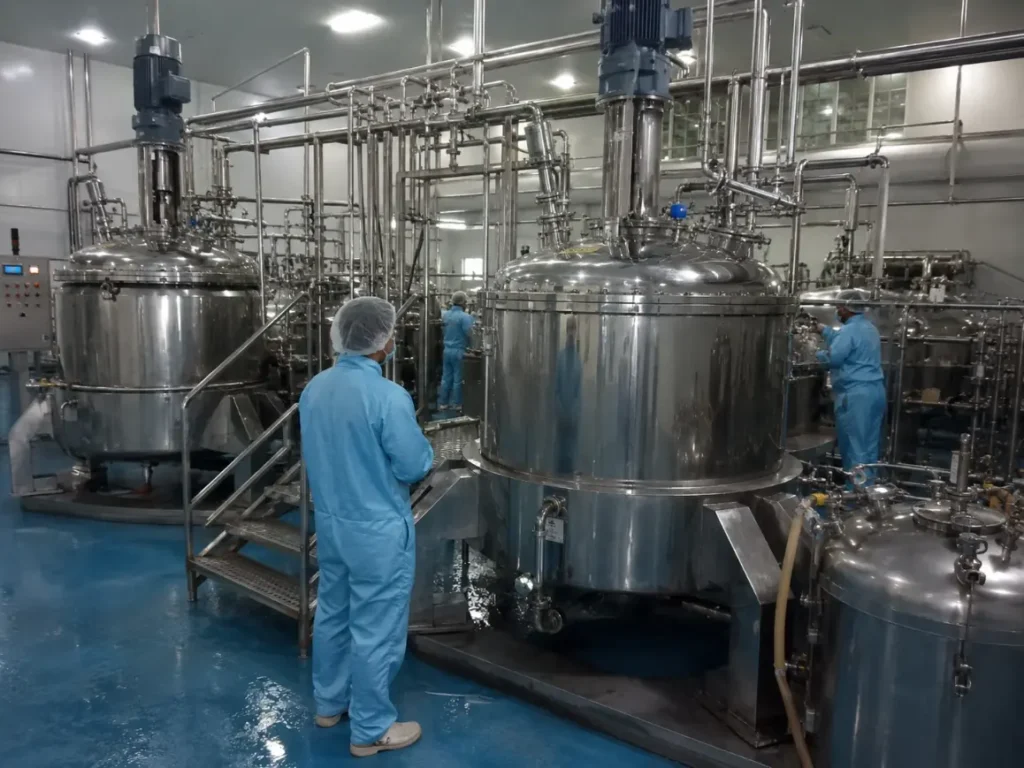
Verify a Hair Care Manufacturer Carefully: 11 Red Flags
Pause the project if a supplier:
- Won’t identify the legal manufacturer or production site
- Uses certificates that belong to another company or address
- Refuses a live walkthrough or credible audit
- Claims expertise in every unrelated product category
- Markets an FDA registration as factory or product approval
- Promises “SFDA approval” but can’t list its document contribution
- Can’t tie test reports to the final formula and package version
- Calls a formula custom but won’t define ownership
- Changes ingredients or packaging without written control
- Requests payment to an unrelated account
- Pushes for bulk payment before specifications and artwork are approved
What We Check at Keronhair Before Production
When a Saudi or Gulf brand contacts us, we first need a usable product brief: category, target consumer, intended claims, ingredient restrictions, package, volume, target cost, and destination market. From that brief, we can discuss whether OEM, ODM, or private label is the appropriate route.
Before bulk production, we work to clarify the selected formula and sample version, packaging assumptions, available test information, manufacturing details, MOQ, and production scope. We can also state which formula, testing, manufacturer, and batch documents can be provided for the project.
There is an important boundary. Keronhair can support the manufacturing file, but the Saudi applicant or its regulatory adviser must confirm the current local submission, claims, artwork, and import requirements. We prefer to identify that boundary early because correcting a brief or label file is easier than correcting a finished shipment.
If you are evaluating an overseas partner, you can also review our guide to finding a hair care manufacturer in the Middle East before comparing local and imported routes.
Frequently Asked Questions
How do I verify that a supplier is the actual manufacturer?
Match the legal company, manufacturing licence, production address, contract, payment account, certificates, and export documents. Request a live factory walkthrough and, for a meaningful order, an independent audit. Ask which formulation, testing, filling, and packing work is subcontracted.
Is ISO 22716 enough to approve a hair care manufacturer?
No. ISO 22716 is useful evidence of a cosmetics GMP system, but it doesn’t approve your formula, claims, packaging, tests, or Saudi documents. Verify the certificate and site, then evaluate product-specific evidence and the written quality controls for your project.
Can an overseas manufacturer register my product with the SFDA?
The manufacturer can provide technical, formula, production, and batch information. The applicable Saudi applicant or responsible local party manages the local GHAD notification and import process. Confirm the current responsibility split with the SFDA and a qualified Saudi regulatory professional.
Should I approve packaging before the GHAD file is prepared?
Avoid approving mass printing until the key product identity, manufacturer details, ingredient information, claims, directions, warnings, and responsible-party requirements have been reviewed. Preparing the essential file first reduces the risk of reprinting packaging.
Is a good sample enough to place a bulk order?
No. A bulk order should also be tied to an approved specification, packaging version, test plan, ownership terms, quality agreement, acceptance criteria, and document list. The sample shows the target; the written controls tell the manufacturer what must be reproduced.
Next Step: Request Evidence Before the Quotation Becomes an Order
To verify a hair care manufacturer for your Saudi brand, prepare your product brief, send the seven-gate checklist, collect a document index, approve the commercial sample and package, and confirm Saudi file responsibilities before signing the bulk order.
If you want Keronhair to review the manufacturing side of a Saudi or Gulf hair care project, contact our team with your product type, formula direction, package, estimated quantity, target cost, and destination market. We will clarify the development route and the manufacturing documents that can be supplied before you commit to production.