The most recognizable hair care brand is not automatically the best match for your scalp, styling habits, or budget. Some brands are strongest in affordable daily conditioning, while others concentrate on dandruff, salon repair, color care, luxury routines, or styling. A logo alone will not tell you which one fits your needs. This guide compares ten established names by product focus, price position, distribution, representative products, and practical limitations, so you can build a shortlist with confidence instead of treating one company as the answer for every head of hair.
How were the top hair care brands selected?
This list is an editorial comparison, not a global sales league table or a laboratory test of every formula. Brand-level revenue is not reported consistently, and parent companies organize their hair portfolios in different ways. The ranking uses five practical criteria that can be applied across mass-market, professional, and luxury brands.
What the ranking measures
We considered each brand’s recognition across major markets, the clarity of its product ranges, the strength of its best-known products, its role in retail or salon channels, and whether its current portfolio remains relevant in 2026. A drugstore brand can rank highly for reach and an understandable everyday range. A professional brand may qualify because it solves narrower problems and works closely with salon services.
Availability is still regional. A product sold under one name in the United States may have a different name, formula, active ingredient, or package elsewhere. Always check the local label rather than assuming that a review from another country describes the bottle in front of you.
What the ranking does not prove
The order does not mean that one brand works for every texture, scalp condition, or styling routine. Nor does it show that every formula from a highly ranked brand is better than every formula below it. The products named here are useful starting points from current official catalogs, not permanent recommendations.
Brand claims are treated as brand claims. Persistent scalp inflammation, sores, pain, sudden shedding, or visible thinning needs assessment by a qualified medical professional, regardless of what a cosmetic product promises.
Top 10 hair care brands in the world in 2026
The order balances portfolio breadth, channel influence, recognizable product lines, and current relevance. Use the “best for” notes as a shortcut, then compare formulas and instructions within the range that suits your actual concern.
| No. | Brand | Market position | Representative products or lines | Main strength | Best for | Main consideration |
|---|---|---|---|---|---|---|
| 1 | L’Oréal Paris | Global mass market | Elvive Hyaluron + Plump, Total Repair 5, Glycolic + Gloss | Broad problem-solution portfolio | Range, access, and budget | Products vary by market |
| 2 | Pantene | Global mass market | Pro-V, Miracle Rescue, Daily Moisture Renewal | Accessible conditioning systems | Everyday softness and manageability | Rich layers may weigh down fine hair |
| 3 | Head & Shoulders | Specialist mass market | Anti-Dandruff collection, Deep Scalp Hydration | Dandruff-focused scalp care | A suitable labeled dandruff concern | Actives vary by country |
| 4 | Dove | Global mass market | Damage Therapy Intensive Repair, Bond Strength | Affordable full routines | Simple wash and condition routines | Large regional differences |
| 5 | TRESemmé | Salon-inspired mass market | Lamellar Gloss, Keratin Smooth, styling products | Styling and polished finishes | Heat styling, shine, and hold | Layering can create buildup |
| 6 | Schwarzkopf | Consumer and salon professional | Gliss, Bonacure Repair Rescue+, Moisture Kick | Wide technical portfolio | Repair, moisture, and color care | Consumer and professional lines differ |
| 7 | Wella Professionals | Salon professional | Ultimate Repair, Ultimate Smooth, ColorMotion+ | Salon and color-care integration | Colored or processed hair | Premium salon pricing |
| 8 | Kérastase | Luxury salon care | Nutritive, Genesis, Première, Gloss Absolu | Targeted luxury routines | Premium experience and salon guidance | Cost and routine complexity |
| 9 | Redken | Salon professional | Acidic Bonding Concentrate, All Soft, Extreme | Condition-based salon care | Damage, dryness, and color care | Match concentrated products to the need |
| 10 | Olaplex | Prestige specialist | Nº.3, Nº.4, Nº.5, Nº.7 | Focused bond-care identity | Bleached or damage-conscious hair | Bond care is not moisture or scalp treatment |
1. L’Oréal Paris: Best for broad product choice
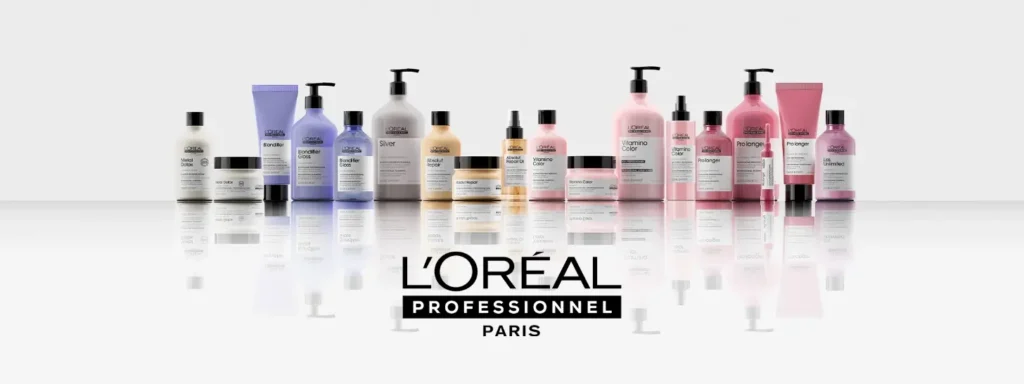
L’Oréal Paris earns the first position because its Elvive portfolio covers a wide set of familiar concerns at mass-market prices. The current US catalog includes Hyaluron + Plump for dry-feeling hair, Total Repair 5 for visible signs of damage, Glycolic + Gloss for shine, and Hyaluron + Pure for oilier roots with dry lengths. It also spans shampoo, conditioner, masks, leave-ins, serums, and styling formats, which makes it easy to assemble a routine without changing brands.
Choice is the brand’s advantage and its main complication. Similar-looking bottles can target very different needs, and buying across several Elvive families may duplicate functions. Start with one concern, then select only the cleanser, conditioner, or treatment that fills a real gap. Current ranges can be checked in the official Elvive catalog.
- Best for: shoppers who want broad retail availability and several affordable options within one brand.
- Product starting point: Hyaluron + Plump for dry feel, Total Repair 5 for damage-focused conditioning, or Glycolic + Gloss for shine.
- Consider before buying: names, formulas, and availability differ by country, so use the local ingredient list and directions.
2. Pantene: Best for accessible conditioning systems
Pantene has built its identity around Pro-V conditioning and coordinated routines. Its current catalog includes Miracle Rescue treatments, Daily Moisture Renewal, Repair & Protect, Smooth & Sleek, Curl Perfection, and several styling or leave-in options. That breadth is narrower and easier to navigate than some mass-market portfolios: most shoppers can identify a shampoo, conditioner, and one optional treatment without studying dozens of unrelated sub-brands.
Pantene is strongest when softness, detangling, and everyday manageability are the goal. Miracle Rescue Deep Repair Conditioner or a basic Daily Moisture Renewal pair can be a sensible entry point, depending on the local range. The Pantene product site lists current collections, while P&G’s portfolio page confirms Pantene as one of its hair care brands.
- Best for: everyday shampoo and conditioner routines that need more slip and softness at a widely available price.
- Product starting point: a matched Pro-V shampoo and conditioner, followed by one Miracle Rescue treatment only if needed.
- Consider before buying: rich conditioner plus mask plus leave-in can flatten fine or low-density hair. More conditioning layers do not always produce a better result.
3. Head & Shoulders: Best for dandruff-focused scalp care
Head & Shoulders has the clearest specialist position in this list. Its core business is labeled anti-dandruff care rather than general beauty shampoo with a vague scalp message. The current portfolio includes shampoos, conditioners, two-in-one products, and selected pre-wash or co-wash formats. Deep Scalp Hydration is one example in the US range, but the approved active ingredient and exact product selection differ across countries.
That local variation matters because dandruff products may be regulated differently from ordinary cosmetics. Choose a product whose label matches your concern, follow its contact and frequency directions, and judge the result over the recommended use period. Do not substitute a scented scalp serum for an appropriately labeled anti-dandruff product. The official anti-dandruff shampoo catalog is the right place to verify the current US range.
- Best for: readers with dandruff symptoms that match the product’s labeled indication.
- Product starting point: a standard anti-dandruff shampoo or Deep Scalp Hydration where that version is locally available and suitable.
- Consider before buying: persistent scaling, inflammation, pain, sores, shedding, or thinning may have another cause and should be assessed by a dermatologist.
4. Dove: Best for accessible damage-care routines
Dove combines wide retail access with a catalog that covers shampoo, conditioner, masks, styling products, and selected scalp needs. In the current US range, Damage Therapy Intensive Repair is a straightforward option for shoppers concerned about rough feel and breakage from daily wear. Bond Strength and Scalp + Hair Therapy offer other entry points, though their availability and exact naming vary by region.
The brand works best when a shopper wants a simple routine without moving into salon pricing. A shampoo and conditioner from one family may be enough; a mask or leave-in should earn its place by improving slip, softness, or styling. Combining three damage ranges at once makes it hard to tell which product is helping. Browse the current Dove hair care catalog before choosing, since it contains far more regional variation than the blue-and-white packaging might suggest.
- Best for: budget-conscious shoppers building a basic cleansing and conditioning routine.
- Product starting point: Damage Therapy Intensive Repair shampoo and conditioner, with one treatment added only when the hair needs it.
- Consider before buying: the large catalog encourages overlap. Pick one main concern and avoid stacking masks, serums, and creams that perform the same job.
5. TRESemmé: Best for affordable styling and polished finishes
TRESemmé sits between everyday drugstore care and salon-inspired styling. Its strongest distinction is the number of products built around the final look: smoothness, shine, heat styling, flexible movement, or firm hold. The current Lamellar Gloss family includes shampoo, conditioner, serum, shine spray, and finishing oil in some markets. Keratin Smooth and the broader mousse, hairspray, and heat-protection portfolio add more styling routes.
This is a practical brand for someone who wants a polished finish without paying professional-brand prices. The risk is product stacking. Shampoo, conditioner, cream serum, shine spray, and oil may all sound complementary, yet together they can overwhelm fine hair or leave residue that shortens style life. The TRESemmé Lamellar Gloss page shows the current US line.
- Best for: heat-styled looks, sleek finishes, shine, volume, and accessible hold products.
- Product starting point: one heat protectant or one styler matched to the finish, rather than the entire line.
- Consider before buying: curl-focused or buildup-prone routines may need lighter layers or a more specialized product range. Cleanse when residue, not dryness, is the problem.
6. Schwarzkopf: Best for consumer and professional range breadth
Schwarzkopf is unusual because the name spans mass-market products and salon-professional care. Consumer ranges such as Gliss address common concerns including dryness, weak-feeling hair, color maintenance, and split-end appearance. Schwarzkopf Professional’s Bonacure catalog divides care more technically into Repair Rescue+, Moisture Kick, Color Freeze, Volume Boost, and scalp-focused ranges. That reach gives shoppers room to move from retail basics to professional systems.
It also creates confusion. A recommendation for Gliss is not the same as one for Bonacure, even though both carry the Schwarzkopf name. Confirm the division, product family, and local market before buying. The Schwarzkopf consumer hair care catalog and Bonacure professional range show the difference clearly.
- Best for: shoppers who want several repair, moisture, volume, color-care, or scalp options across retail and salon channels.
- Product starting point: Gliss for accessible everyday care, or a Bonacure range selected for one defined salon-level concern.
- Consider before buying: professional language can sound more powerful than it is. Check directions and claim conditions, and do not assume that every range is distributed globally.
7. Wella Professionals: Best for salon and color-care integration
Wella Professionals is closely tied to salon services, especially color and chemical processing. Its care portfolio is designed to continue that salon relationship at home. Ultimate Repair includes shampoo, conditioner, mask, leave-ins, and Miracle Hair Rescue, while Ultimate Smooth focuses on smoother feel and shine. ColorMotion+ is another recognizable route for color-maintenance routines where it is available.
The brand makes the most sense when a stylist can connect the home routine to the hair’s processing history. Someone with freshly lightened hair may need a different balance of cleansing and conditioning from a person whose hair is healthy but dry-feeling. Wella’s Ultimate Repair catalog is a current reference for the damage-care system. Readers researching color lines themselves can use Keronhair’s separate professional hair color brand guide.
- Best for: colored, lightened, heat-styled, or otherwise processed hair managed with salon guidance.
- Product starting point: a suitable shampoo and conditioner, then Miracle Hair Rescue or a leave-in if the extra step solves a defined need.
- Consider before buying: premium, system-based care can be unnecessary for healthy hair with a simple routine. Cosmetic products improve feel and manageability but cannot permanently rebuild severely fractured ends.
8. Kérastase: Best for luxury personalized routines
Kérastase organizes its premium salon catalog into targeted families rather than one general-purpose line. Nutritive addresses dry-feeling hair, Genesis focuses on hair prone to breakage from brushing, Première is positioned around damaged hair, and Gloss Absolu centers on shine and smoothness. The official Kérastase catalog also includes many formats, from shampoo and masks to serums and leave-ins.
The brand’s strength is the complete experience: consultation, texture, fragrance, packaging, and a routine that feels specific. That experience is part of the price. It does not guarantee that a Kérastase mask will outperform a cheaper conditioner on every head of hair. Shoppers get better value when they choose one or two products with clear roles instead of buying an entire ritual because the bottles are designed as a set.
- Best for: premium shoppers who value salon guidance, refined textures, fragrance, and condition-specific product families.
- Product starting point: Nutritive for dry feel, Première for a damage-focused routine, or Gloss Absolu when smoothness and shine are the priority.
- Consider before buying: fragrance sensitivity, total system cost, and duplicate conditioning steps. A luxury routine can still cause buildup or weigh down fine hair.
9. Redken: Best for science-led salon repair
Redken has a broad professional portfolio, but its ranges remain easy to associate with particular conditions. Acidic Bonding Concentrate is the best-known current system for processed or damaged hair. All Soft is a common starting point for dry, rough-feeling hair, while Extreme targets strength and damage-related concerns. The brand’s salon education helps users connect a range to chemical history and styling habits rather than choosing by packaging alone.
Its advantage is targeted choice. Its risk is over-treatment. Bond support, protein-related care, rich conditioning, and color maintenance are not interchangeable, and stacking several concentrated systems may produce stiffness, coating, or poor styling results. The Redken Acidic Bonding Concentrate range shows how one system can extend across wash, treatment, and leave-in steps.
- Best for: damaged, color-treated, dry, or processed hair when salon guidance is available.
- Product starting point: Acidic Bonding Concentrate for a suitable damage routine, All Soft for dry feel, or Extreme when strength-focused care is appropriate.
- Consider before buying: select one condition-led system. Do not combine every repair product or follow an intensive schedule after the hair becomes rough or difficult to detangle.
10. Olaplex: Best for focused bond-care positioning
Olaplex built a specialist identity around bond care, first in professional services and later through a numbered home-care range. Nº.3 Hair Perfector is its most recognizable pre-shampoo treatment. The portfolio now includes Nº.4 Bond Maintenance Shampoo, Nº.5 Conditioner, Nº.7 Bonding Oil, curl products, masks, styling options, and other formats listed in the official Olaplex professional FAQ.
The numbered architecture makes the system memorable, but it can encourage people to buy more steps than they need. Bond care has a specific role for damage-conscious routines, especially around bleach, color, and heat. It is not the same as adding water, treating dandruff, removing buildup, or trimming split ends. Someone whose main problem is scalp discomfort or insufficient conditioner slip should address that problem directly.
- Best for: chemically processed or frequently heat-styled hair when bond-support care fills a genuine routine gap.
- Product starting point: Nº.3 as a directed pre-shampoo treatment, or a basic Nº.4 and Nº.5 wash pair if those formulas suit the hair.
- Consider before buying: cosmetic treatments can improve strength, feel, and manageability, but they cannot return dead hair fiber to an untouched biological state.
Which hair care brand is best for your hair needs?
Start with the job you need the product to perform, then compare brands. Formula weight, fragrance, price, availability, and directions matter more than the logo when two products serve the same role. A famous repair range is still a poor buy if the real problem is buildup or an irritated scalp.
| Hair need or buying priority | Brands to compare first | Product direction | Important caution |
|---|---|---|---|
| Affordable everyday care | L’Oréal Paris, Pantene, Dove | Shampoo, conditioner, one optional treatment | Avoid overlapping ranges |
| Dandruff concern | Head & Shoulders | Locally labeled anti-dandruff product | Persistent symptoms need a dermatologist |
| Heat styling and polished finish | TRESemmé, Wella Professionals | Heat protectant, serum, or suitable styler | Protection does not make high heat harmless |
| Bleached or processed hair | Redken, Olaplex, Wella Professionals | Condition-specific repair or bond support | Cosmetics cannot permanently heal hair fiber |
| Dry or rough-feeling hair | Kérastase, Pantene, Dove, Schwarzkopf | Conditioner, mask, or leave-in matched to strand weight | Richer is not always better |
| Color-treated hair | Wella Professionals, Redken, Kérastase, Schwarzkopf | Color-care cleanser and conditioner | Confirm the local formula |
| Luxury salon experience | Kérastase, Redken, Wella Professionals | Targeted salon system | Price alone does not predict fit |
| Broad retail choice | L’Oréal Paris, Pantene, Dove | Start with one range for one need | Regional portfolios differ |
Start with the hair or scalp problem, not the logo
Describe the problem in plain language. Hair may feel coated, rough, tangled, weak, faded, frizzy, or unable to hold a style. The scalp may feel oily, itchy, or flaky. These observations point to different product roles.
For residue, compare routine and clarifying shampoos. For poor slip, start with conditioner rather than oil. For heat styling, choose a labeled heat protectant and use the lowest practical temperature. A locally approved anti-dandruff product is more appropriate for dandruff than a general scalp serum. Follow patch-test and use directions whenever the label requires them.
People building a routine for curly, coily, or Afro-textured hair should also consider density, strand width, porosity, climate, and styling method. Broad “all hair types” wording does not remove the need to check texture and formula weight.
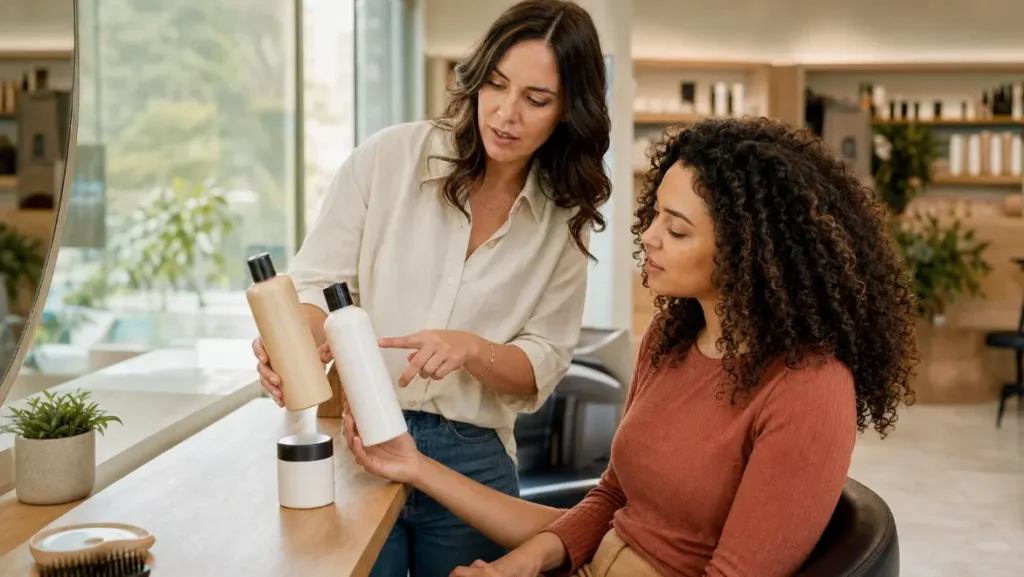
Compare the complete routine and total cost
A reasonably priced shampoo can become an expensive routine when the brand encourages a conditioner, mask, serum, oil, and leave-in at every wash. Calculate the cost of the steps you will actually use. Then ask whether each step has a different job.
Compare shampoo with shampoo and mask with mask. A bond treatment should not be judged as though it were a moisturizing conditioner. Change one product at a time and watch the result over several washes. That makes it easier to identify improvement, irritation, stiffness, coating, or flaking. It also protects your budget from a full-system purchase that solves the wrong problem.
Are professional hair care brands better than drugstore brands?
Professional products are not automatically better for every person. They may offer more specialized systems, salon guidance, formats that complement color services, or concentrated products intended for a narrower use. Drugstore brands can handle routine cleansing, conditioning, dandruff care, and styling at a lower price.
| Factor | Drugstore brands | Professional or luxury brands |
|---|---|---|
| Price | Usually lower | Usually higher |
| Access | Broad retail and online access | Salons, specialty retail, or selected online channels |
| Portfolio | Broad consumer needs | More specialized or salon-linked systems |
| Guidance | Mostly self-selection | May include stylist consultation |
| Best fit | Routine care and budget control | Complex processing history, color maintenance, or premium experience |
The practical difference often appears in selection and use, not a simple ingredient hierarchy. A stylist may help someone choose the correct Redken or Wella range after color processing. A shopper who already knows that a light conditioner works may get everything needed from Dove, Pantene, or L’Oréal Paris.
Price can also pay for fragrance development, packaging, salon distribution, education, and brand position. Those features may improve the buying experience, but they do not prove that a formula will suit your scalp or strands. Compare the finished result: cleansing, slip, softness, residue, style life, color behavior, and cost per use. The better product is the one that solves the problem reliably at a price you can maintain.
What can emerging hair care brands learn from global leaders?
The brands above occupy different price tiers, but their strongest ranges share a useful trait: customers can understand what the product is for. Head & Shoulders owns a dandruff-focused position. Olaplex is associated with bond care. TRESemmé has a clear relationship with styling, while Kérastase organizes premium routines around specific concerns. New brands benefit from that level of focus.
- Own one problem first. A line built around dandruff, shine, color maintenance, curl definition, or accessible daily conditioning is easier to remember than a vague promise for every hair type.
- Build a hero system. Connect cleanser, conditioner, treatment, and styler logically, but allow customers to buy only the steps they need.
- Separate the product roles. Moisture, damage support, hold, scalp care, and heat protection should not blur into one unsupported claim.
- Match the price to the channel. Packaging, texture, fragrance, education, retail margin, and order size need to support the intended mass, professional, or prestige position.
- Test products together. A leave-in and gel can perform well alone yet flake when layered. A rich mask and cream can overwhelm fine hair even when each passes its individual test.
- Support the claims. Define test conditions and avoid promises of hair growth, medical treatment, permanent repair, universal curl compatibility, or complete heat protection without suitable evidence and regulatory review.
- Plan for each destination market. Labels, allowed claims, active ingredients, language, registration, and packaging requirements may change by country.
Founders moving from a brand concept to formulation can review Keronhair’s hair care product manufacturing services. A brand developing its first cleansing system may also need the technical and packaging options of a custom shampoo manufacturer. Once the target user, product role, benchmark, price tier, and destination market are defined, share the product brief with Keronhair to discuss sampling and development.
Conclusion: Choose the brand that solves your hair problem
No company is the best hair care brand for every texture, scalp concern, styling method, and budget. L’Oréal Paris and Pantene make broad everyday ranges easy to find. Head & Shoulders has a specialist dandruff position. TRESemmé focuses on styling, while Wella, Redken, Kérastase, and Olaplex address different professional or prestige needs.
Choose the job before the logo. Start with one cleanser, conditioner, treatment, or styler that fills a clear gap, then assess the result before expanding the routine. Check the local formula and directions because global product names do not guarantee identical contents. If itching, scaling, pain, sores, sudden shedding, or thinning persists, seek advice from a qualified dermatologist rather than continuing to add cosmetic products.
Frequently asked questions about the world’s top hair care brands
What is the number one hair care brand in the world?
The answer depends on the metric. P&G currently describes Pantene as the world’s largest hair care brand and Head & Shoulders as the world’s largest shampoo brand. That is a parent-company statement, not a universal quality test. L’Oréal Paris leads this editorial list because of its broad, accessible, current problem-solution portfolio. Another ranking based only on salon influence, dandruff care, or luxury sales would produce a different order.
Which hair care brand is best for damaged hair?
Redken, Olaplex, and Wella Professionals are useful professional or prestige brands to compare for bleached, colored, heat-stressed, or otherwise processed hair. L’Oréal Paris, Pantene, and Dove offer lower-priced damage-care options. Choose according to the type of damage and the job of the product. No cosmetic formula can biologically heal dead hair fiber, permanently reconnect split ends, or cancel continued damage from excessive heat and rough handling.
Which brand is best for dandruff?
Head & Shoulders is the specialist dandruff brand in this comparison. Select a locally approved product with an active ingredient and directions appropriate to your market, then follow the label. A cosmetic scalp serum is not an equivalent replacement. See a dermatologist when flaking or itching persists, or when the scalp is painful, inflamed, sore, or accompanied by sudden shedding or thinning.
Are salon hair care brands worth the higher price?
They can be when the higher price gives you better problem targeting, stylist guidance, compatibility with a color service, or a concentrated format that you use correctly. They are not automatically better for ordinary cleansing and conditioning. Compare cost per use and the result on your own hair. Packaging, fragrance, salon distribution, and prestige positioning can raise the price without improving individual fit.
What is the best affordable hair care brand?
L’Oréal Paris, Pantene, Dove, and TRESemmé are strong starting points, but each has a different advantage. L’Oréal Paris provides broad product choice, Pantene focuses heavily on conditioning systems, Dove makes basic damage-care routines accessible, and TRESemmé is useful for styling. Prices and product families vary by country, so the most affordable practical choice is the one that solves the need with the fewest necessary steps.
Is Olaplex better than Redken for damaged hair?
Neither brand is universally better. Olaplex has a concentrated bond-care identity and a memorable numbered system. Redken has a broader professional portfolio that separates bond care, softness, strength, color care, and other needs. Choose based on processing history, current hair behavior, routine gaps, and stylist advice. A person needing more conditioner slip may not benefit from simply adding another intensive repair step.
Does expensive hair care work better?
Not by default. Price may reflect ingredients, package design, fragrance, salon education, distribution, advertising, or brand position. None of those factors alone proves superior performance. A useful comparison looks at products that perform the same role and evaluates cleansing, slip, softness, residue, style longevity, irritation, and cost per use. An affordable formula that consistently suits your routine is a better purchase than an impressive bottle that goes unused.
Can one hair care brand work for every hair type?
A broad brand may offer separate products for fine, coarse, curly, colored, dry, or oily hair, but one formula rarely suits every person. Strand width, density, scalp condition, porosity, processing history, climate, and styling method all influence the result. Shop at the range and formula level rather than assuming that success with one bottle guarantees success with the brand’s entire catalog.
How should I compare products from different hair care brands?
Compare products that have the same role. Check directions, formula weight, fragrance, local price, amount per use, and compatibility with the rest of your routine. Try one change at a time and observe several washes unless irritation requires you to stop sooner. This method separates a genuine improvement from the temporary effect of changing shampoo, conditioner, mask, and styler all at once.