HAIR CARE SOURCING GUIDE
Which Manufacturing Region Is the Better Fit for Your Hair Care Brand?
China is usually the stronger starting point for international hair care brands, especially when a project requires multiple product categories, custom formulas, specialist formats, packaging development, and scalable production.
Southeast Asia can still be the better fit for brands focused on a specific ASEAN market, regional replenishment, local coordination, or a country-specific halal strategy. The right choice depends on product capability, total cost, quality evidence, compliance support, and repeat-order reliability.
Product Range
Care, styling, color, treatments & salon formats
R&D
Formula development, testing & ingredient control
Packaging
Bottles, tubes, pumps, decoration & cartons
Brand Fit
MOQ, cost, compliance, market & reorder needs
China vs. Southeast Asia Hair Care Manufacturers
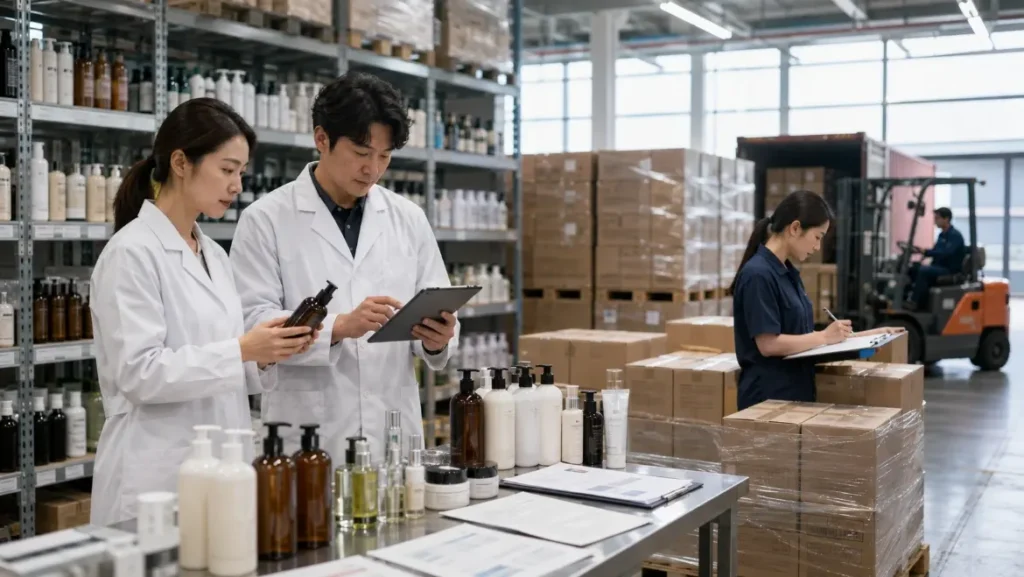
China is usually the stronger choice, but not for every launch.** Chinese manufacturers generally offer a larger discovery pool across shampoo, conditioner, masks, serums, styling products, hair color, bleach, developer, straightening systems, and professional salon formats. China’s established ingredient and packaging networks can also make it easier to coordinate formula development, bottles or tubes, decoration, filling, cartons, and export preparation within one sourcing project.
A Southeast Asian manufacturer may still be the better choice when one ASEAN country is the main sales market, local channel knowledge offers a practical advantage, regional replenishment is important, or a verified country-specific halal pathway is central to the brand. Thailand, Malaysia, Indonesia, Vietnam, and the Philippines should be evaluated separately rather than treated as one manufacturing market.
Stronger starting point for technical complexity, custom packaging, multiple categories, and scale
Worth prioritizing when one ASEAN market, local coordination, or a verified regional pathway drives the brief
Select the factory that proves the exact product, quality, cost, and reorder capability
China vs. Southeast Asia Hair Care Manufacturers at a Glance
The table below summarizes common sourcing patterns. It is a screening tool, not proof that every supplier in a region has the same capability.
Decision factor | Chinese manufacturers | Southeast Asian manufacturers | Likely advantage |
Product breadth | Large supplier pool across care, styling, color, treatments, and professional formats | Varies significantly by country and factory | China |
Specialist formats | More candidates may be available for bleach, developer, wax, aerosol, and smoothing systems | Capable specialists exist, but the search can be narrower | China |
Formula development | Ready, modified, benchmark-led, and full-custom routes are widely available | Similar routes exist, with depth depending on the supplier | China, subject to verification |
Packaging ecosystem | Broad access to bottles, tubes, pumps, jars, cartons, decoration, and tooling | Often combines local stock packs with regional or imported components | China |
MOQ | Determined by formula, line, component, printing, and variant minimums | Also project-specific and not automatically lower | Project-dependent |
Scale and line expansion | Strong options for multi-SKU programs and volume growth | Scale varies by factory and national ecosystem | China |
Local ASEAN knowledge | Export teams may support ASEAN projects but still need market-side coordination | A domestic factory may understand its home channels more closely | Southeast Asia |
Halal strategy | Certified options may exist and require destination recognition checks | Malaysia or Indonesia may be practical for selected strategies | Project-dependent |
Logistics | Mature international export routes | Shorter routes may benefit selected ASEAN destinations | Destination-dependent |
Supplier consolidation | Formula, packaging, filling, and export preparation may be coordinated within one sourcing network | More imported inputs or external partners may be involved | China |
China leads more categories when the brand values technical breadth, packaging choice, customization, and scale. Southeast Asia becomes more competitive when a specific local market is more important than the breadth of the manufacturing ecosystem.
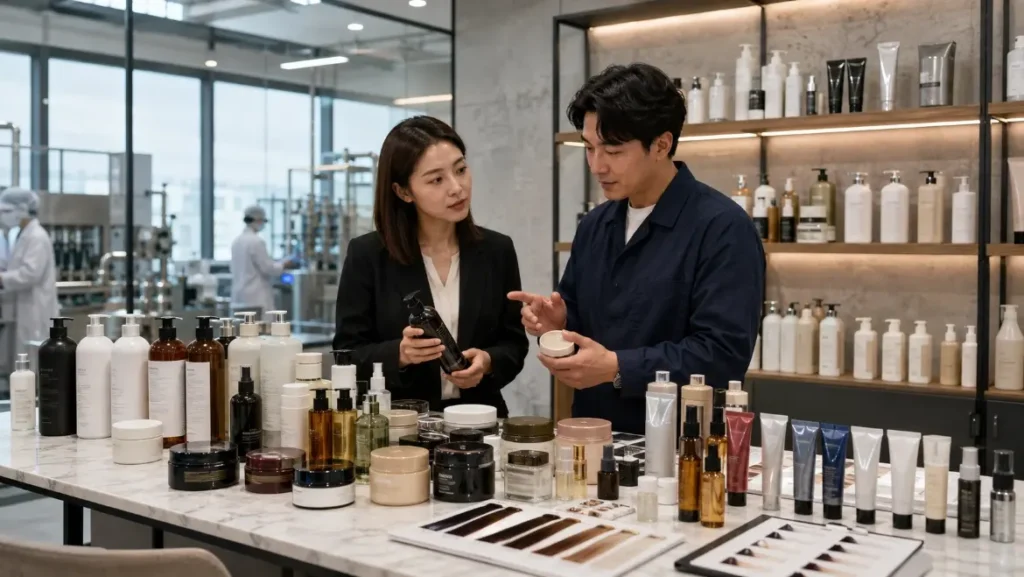
How China and Southeast Asia Hair Care Manufacturers Compare Across Key Factors
The comparison becomes clearer when the brand stops evaluating countries in the abstract and examines the decisions that affect a real product launch.
Product Range and Specialist Manufacturing
Shampoo and conditioner are only the beginning of hair care manufacturing. Leave-in products, oils, serums, wax, pomade, gel, mousse, hair spray, oxidative color, developer, bleach, perm, and smoothing products require different formulation knowledge, equipment, filling processes, warnings, and testing.
China usually provides the stronger discovery environment for a multi-category range. A salon brand, for example, may need color cream, developer, post-color shampoo, mask, serum, and styling products. Finding those categories within one sourcing ecosystem can reduce the number of commercial and quality interfaces the buyer must manage.
Southeast Asian suppliers can be strong in conventional personal care, botanical concepts, or formats designed for a domestic channel. The narrower supplier pool becomes a concern only when the brand needs specialist chemistry or several product forms at once.
Buyer check: Ask for the legal manufacturing site, licensed product scope, relevant equipment, representative batch records, test methods, and samples for the exact format. A liquid-shampoo line is not evidence of aerosol, wax-based, or oxidative-color capability.
Formula Development, R&D, and Ingredient Sourcing
The words OEM, ODM, private label, and custom formula are used inconsistently. Define whether the project will use an existing formula, modify a tested base, develop toward a performance benchmark, or create a full custom formula from a technical brief.
Chinese manufacturers often provide more options across these routes because the R&D team can draw on a broad ingredient and processing network. This is especially useful when a brand wants several textures, fragrances, shades, hold levels, or performance targets. It does not mean that the largest formula catalog represents the best laboratory.
Compare suppliers on the quality of their technical questions, sample version control, ingredient rationale, stability plan, packaging compatibility, microbiological work, performance testing, scale-up procedure, and production tolerances. Ask which raw materials are imported, what grade will be used, and what happens when an approved ingredient becomes unavailable.
Buyer check: Put formula control in the contract. Specify who owns the final composition, whether it is exclusive, who may access it, whether it can be transferred, and which raw-material or supplier changes require written approval and new testing.
Packaging Supply Chain and Customization
Packaging is one of China’s clearest practical advantages. A hair care project may require stock bottles, printed tubes, airless pumps, trigger sprayers, jars, liners, induction seals, color charts, salon kits, inserts, cartons, and several decoration methods. Access to a concentrated component network can make these combinations easier to source and coordinate.
Choice still creates risk. A custom pump may require far more pieces than the finished-product order. A decoration plate or mold creates ownership questions. A component that looks attractive may leak, clog, discolor, distort, or react with the formula during storage and shipping.
Southeast Asian factories can be competitive when suitable stock packaging is available locally. Some also import components from China or elsewhere, so the country of filling and the component supply chain should be evaluated separately.
Buyer check: Compare component origin, material, dimensions, closure performance, decoration, tooling ownership, defect replacement, compatibility testing, transport testing, and second-order availability. Never approve a formula and package as two unrelated items.
MOQ, Landed Cost, and Production Scale
Neither region has one standard MOQ. A product may have separate minimums for the formula batch, filling line, bottle, pump, printed tube, label, carton, fragrance, shade, size, and total order value. A quotation for 1,000 finished units may still require the buyer to fund 10,000 custom pumps.
Calculate the commitment as:
finished units + unused components + prepaid raw materials + tooling + testing + freight + duty + warehousing + failure risk
China may become more cost-effective when the project consolidates several SKUs, custom packaging, and repeat volume. A Southeast Asian supplier may compete well for a local launch using stock components and domestic distribution. The correct answer depends on the complete commercial model rather than the labor-cost reputation of a country.
Buyer check: Send every supplier the same formula route, fill size, package, quantity, tests, Incoterm, delivery point, and destination. Our guide to private label hair care MOQ, sampling, packaging, and lead time explains how these variables change the initial cash requirement.
Quality Systems, Documentation, and Export Support
China applies licensing management to cosmetics production. The NMPA manufacturing provisions require a Cosmetics Manufacturing License and classify licensed items by production form, including general liquid, cream or emulsion, powder, aerosol and organic solvent, and wax-based units. The provisions also address quality management, batch records, sample retention, and traceability. China’s Cosmetics GMP has applied since July 2022.
These rules create a formal manufacturing framework, but they do not prove that a company found online is licensed for your product. Match the Chinese legal entity, production address, licensed items, certificate holder, contract, invoice, bank account, and actual production line.
The ASEAN cosmetics framework harmonizes important principles, but national authorities still handle establishment authorization, product notification, market controls, and enforcement. A notification in one member state should not be presented as one approval for the entire region.
Export-focused Chinese manufacturers may have more experience assembling INCI information, specifications, certificates of analysis, stability and compatibility evidence, artwork inputs, and shipping documents for multiple destinations.
Buyer check: Match the legal entity, site, manufacturing license, licensed scope, certificate holder, contract, invoice, and production line. The manufacturer can support the technical file; the brand, importer, notifier, or responsible party must still verify the final formula, label, claims, and market obligations.
Lead Time, Reorders, and Project Communication
Lead time is not just the number of days on a quotation. It includes feasibility review, formula selection or development, sample revisions, testing, packaging, artwork, material procurement, production scheduling, filling, quality release, freight, and customs.
China’s clustered supply chain can improve coordination when the manufacturer already manages the relevant ingredient and component suppliers. A nearby Southeast Asian factory can still be slow if it imports pumps, waits for outside testing, or lacks specialist line capacity. Distance alone does not determine speed.
The second and third orders are more revealing than the first sample. Confirm whether the approved fragrance, active, tube, pump, and decoration will still be available. Require written notice before changes to the formula, raw-material supplier, packaging, site, or test method.
Buyer check: Confirm that the project manager documents sample versions, buyer feedback, approvals, exclusions, deadlines, and deviations. Ask one difficult question about compatibility, claims, formula ownership, or reorder risk. A thoughtful limitation is more valuable than an immediate promise that everything is possible.
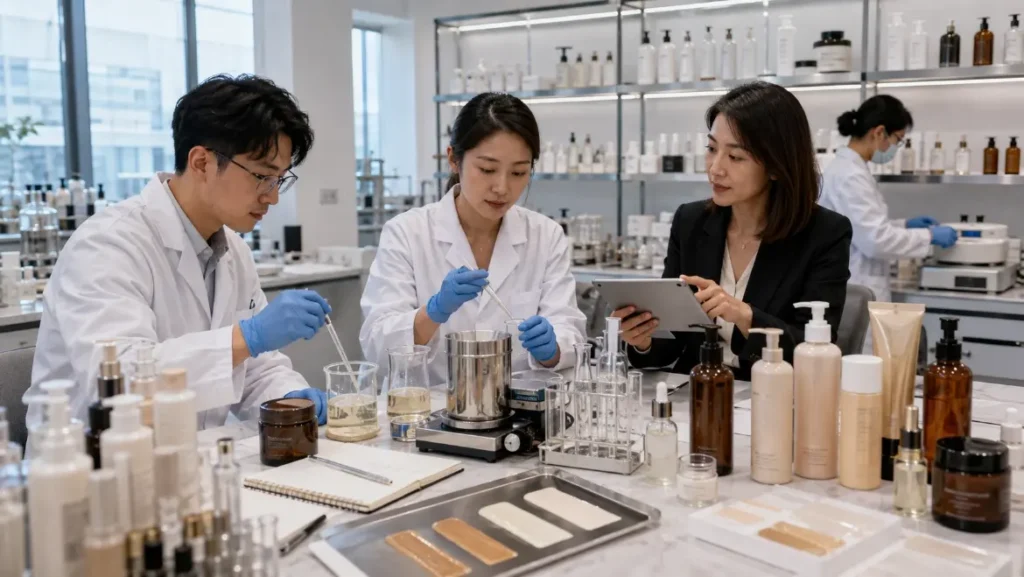
Which Southeast Asian Hair Care Manufacturing Markets Still Deserve Consideration?
China may be the stronger general manufacturing base, but several Southeast Asian markets remain relevant when the brand has a precise local reason for using them.
- Thailand:Consider Thailand for a Thailand-first personal care or salon launch when the supplier can demonstrate hair-specific manufacturing and support the current Thai FDA cosmetics route. Verify the establishment, site, formula data, tests, packaging, and notification responsibilities.
- Malaysia:Consider Malaysia when it is the first sales market or when a recognized halal pathway is commercially important. The NPRA cosmetic requirements address local regulatory responsibilities, GMP, and Product Information File expectations. Product notification and halal certification remain separate evidence.
- Indonesia:Consider Indonesia for a domestic-first brand with qualified BPOM and halal support. BPJPH states that covered product groups, including cosmetics, are subject to mandatory halal certification from 18 October 2026. Verify the latest BPJPH implementation information, product scope, materials, site, labeling, and supply-chain controls for the actual launch.
- Vietnam:Consider Vietnam for a Vietnam-first launch or a deliberate diversification plan. Confirm the legal factory, current authorization, GMP or inspection evidence, Product Information File support, packaging sources, imported-input exposure, capacity, and export readiness. An emerging supplier base is not automatically a lower-cost option.
- Philippines:Consider the Philippines when domestic-market coordination is the main objective. The Philippines FDA’s Cosmetic Product Notification service is available to licensed cosmetic establishments. Verify the current License to Operate, activity, address, hair-specific capability, tests, and documents.
These markets can be strong for specific local strategies, but they do not collectively offer the same manufacturing breadth as China’s larger hair care and packaging ecosystem. For a global, multi-category, or technically demanding line, China should usually remain the first benchmark.
Why We Recommend Choosing a Chinese Hair Care Manufacturer
For most brands seeking an export-oriented, multi-SKU, or highly customized hair care line, a qualified Chinese manufacturer deserves priority on the shortlist. This recommendation comes from manufacturing depth and supply-chain coordination, not from the assumption that every Chinese supplier is stronger.
- Wider product coverage:A brand can investigate care, styling, color, treatments, and professional systems within one manufacturing ecosystem.
- More specialist candidates:China offers a larger search pool for oxidative color, bleach, developer, aerosols, wax-based products, and smoothing systems.
- Integrated formula and packaging work:Manufacturers can coordinate formulas with bottles, tubes, pumps, decoration, cartons, inserts, and kits.
- More development routes:Ready formulas, controlled modifications, benchmark projects, and custom development support brands at different stages.
- Scalable repeat production:China can be practical when the line expands into more SKUs, sizes, fragrances, shades, or markets.
- Export-oriented support:Experienced suppliers may already work with international shipping, technical-document requests, artwork review, and export preparation.
- Fewer supplier handoffs:Coordinating formulation, components, filling, assembly, and export through one project owner can reduce delays and unclear responsibility.
The advantage is strongest when the brand has a clear brief and enough operational discipline to verify the supplier. Do not select a Chinese factory only because its quotation is low or its website displays many products. Check the legal site, manufacturing license, product scope, full certificate details, samples, tests, formula rights, component commitments, production records, audit access, and total landed cost.
Use this hair product manufacturer verification guide to turn China’s large supplier pool into a controlled shortlist rather than a collection of unverified sales contacts.
No Need to Hesitate: Choose Keronhair as Your Hair Care Manufacturing Partner
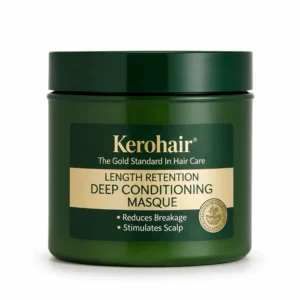
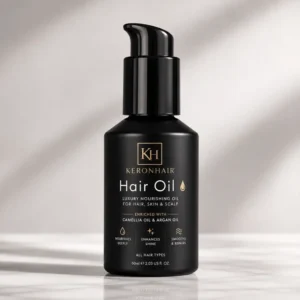
Keronhair is the China-based manufacturer and publisher behind this guide. China provides a strong environment for formula development, packaging coordination, and scalable production; Keronhair offers brands one hair-focused route into that ecosystem.
Keronhair’s public OEM/ODM scope covers hair color, shampoo, conditioning products, oils and serums, wax and styling products, and straightening or smoothing products. That breadth can be useful for a brand launching one hero SKU today but planning a coordinated range later.
What the brand needs | How Keronhair can support the project |
A broader hair care portfolio | Discuss care, styling, color, and treatment products without restarting the factory search for every extension |
A development route that fits the launch stage | Compare existing formulas, controlled modifications, and custom development against the brief |
Coordinated formula and packaging work | Review the formula together with the bottle, tube, pump, label, decoration, carton, and filling process |
A controlled path to production | Connect the brief, samples, tests, artwork, specifications, production approval, quality release, and reorder plan |
Access to China’s packaging ecosystem | Evaluate component and decoration options while keeping MOQ and compatibility visible |
The cooperation process should remain simple:
- Submit the brief.Define the product, user, formula direction, quantity, packaging, sales countries, budget, and timing.
- Confirm formula and packaging.Review samples, component terms, testing, artwork inputs, and ownership before committing to bulk production.
- Approve production controls.Fix the formula version, reference sample, packaging specification, test plan, tolerances, and release criteria.
- Produce, deliver, and plan reorders.Complete production and quality release, then retain the approved standards for the next order.
Choosing Keronhair does not mean skipping due diligence. Ask for current project-specific terms and applicable factory evidence, confirm destination-market responsibilities, and approve the formula and package in writing. That disciplined approach protects both the brand and the manufacturer.
If China is on your shortlist, review Keronhair’s OEM/ODM hair product manufacturing and send the same complete brief you would use to compare any qualified supplier. Keronhair can then prepare a project-specific proposal covering the development route, packaging, MOQ, sampling, testing, production, and delivery basis.
Final Decision: China or Southeast Asia for Hair Care Manufacturing?
China should be the default first shortlist for many international hair care brands because it combines product breadth, specialist capability, packaging access, customization, and scale. Southeast Asia remains valuable for selected local-market strategies, not as one universally cheaper replacement for China.
If your broader decision is China versus manufacturing near your home market, the related guide to China vs. local hair care manufacturers covers proximity, domestic coordination, and overseas sourcing in more detail.
For brands ready to use China’s advantages through one hair-focused partner, Keronhair is a logical company to evaluate. Send a controlled brief, review samples and evidence, confirm the commercial terms, and decide from the actual project rather than a country-level assumption.
FAQs About China vs. Southeast Asia Hair Care Manufacturers
Are Chinese hair care manufacturers stronger than Southeast Asian manufacturers?
China generally provides a larger supplier pool, broader hair-specific manufacturing options, more packaging choices, and stronger opportunities for multi-SKU scale. That makes it the more practical starting point for many international brands. It does not mean every Chinese factory is stronger. Verify the exact site, license, product scope, samples, tests, quality records, and commercial terms before choosing.
Is China cheaper for private label hair care manufacturing?
China can be cost-effective when formula development, packaging, filling, and volume are coordinated, but there is no universal price result. Compare the same formula, component specification, quantity, tests, Incoterm, destination, freight, duty, tooling, and unused inventory. A lower unit price can become the more expensive option if the packaging commitment or failure risk is higher.
Do Chinese hair care factories require higher MOQs?
Not necessarily. MOQ depends on the bulk formula, filling line, bottle or tube, pump, printing, label, carton, fragrance, shade, and minimum order value. Chinese factories may offer practical pilot options using established formulas and stock packaging, while custom formulas and components require higher commitments. Ask for a written breakdown rather than one finished-product number.
Why does China offer more hair care packaging options?
China has concentrated networks of packaging manufacturers, printers, decorators, mold makers, and assembly suppliers. This makes it easier to discover bottles, tubes, pumps, jars, cartons, and salon kits. The buyer must still control tooling ownership, component quality, compatibility, defect replacement, unused stock, and reorder supply. More choice is useful only when the project is managed well.
When is a Southeast Asian manufacturer the better choice?
A Southeast Asian manufacturer may be better when one ASEAN country is the main market, a qualified local team manages the product, domestic distribution improves replenishment, or a verified country-specific halal route is central. The factory must still demonstrate the required product capability, license, quality system, packaging, documents, capacity, and total cost.
Is hair care made in Southeast Asia automatically halal?
No. Country of manufacture does not prove halal status. Check the certification body, recognition in the sales market, certificate holder, manufacturing site, product scope, ingredients, process controls, validity, labeling, and relevant supply-chain requirements. Malaysia and Indonesia also operate under different systems, so a general “halal-ready” statement is not enough.
Why should a brand consider Keronhair?
Keronhair focuses on hair products and publicly presents an OEM/ODM scope covering care, styling, color, and straightening categories, along with formula development and packaging coordination. This can reduce supplier handoffs for brands planning a broader line. Buyers should submit a complete brief and verify the project-specific MOQ, tests, documents, schedule, and factory evidence before ordering.
What should I send Keronhair to request a quotation?
Send the product category, target user, sales channel, destination countries, formula direction, required and excluded ingredients, performance targets, proposed claims, quantity per SKU, fill size, packaging reference, decoration, tests, target cost, delivery point, and launch date. A complete brief allows the team to identify risks and prepare a quotation that can be meaningfully compared.