Manufacturers that make semi-permanent hair dye generally fall into two groups: contract or private-label manufacturers that develop products for other brands, and brand-owning companies that make or commission color products for their own portfolios. That distinction matters. A company may be well known for semi-permanent color yet not accept third-party manufacturing projects.
If you are building a hair color brand, the useful question is not simply “Who makes semi-permanent hair dye?” You also need to know which companies serve outside brands, what development model they use, how they qualify a shade system, and what evidence they can provide before production. This guide keeps the original manufacturer overview while adding the practical checks I would use to turn a name list into a workable shortlist.
Understanding the Semi-Permanent Hair Dye Manufacturing Landscape
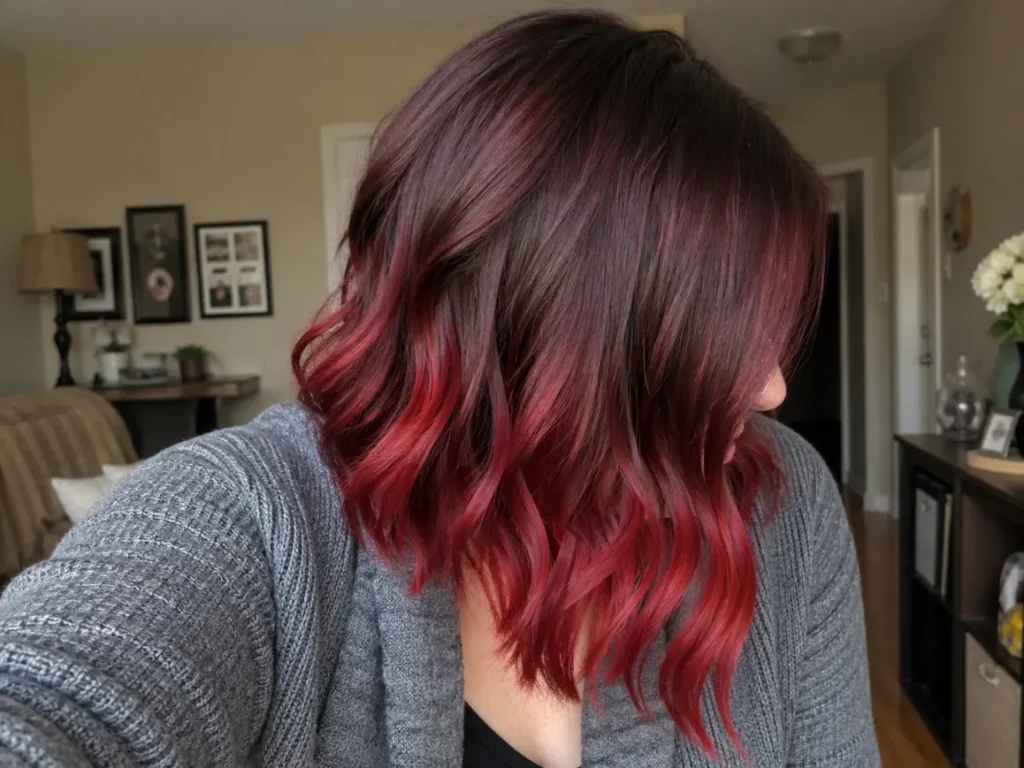
Semi-permanent hair color covers more than one product format. It may be sold as a direct-dye cream, gel, liquid, color-depositing mask, conditioner, or other ready-to-use system. The terminology can also vary by brand and market. Before comparing factories, define the product by its formula system, application method, shade result, intended user, and target market rather than relying on the words “semi-permanent” alone.
The Three Core Manufacturing Models
- Private label: The manufacturer offers an established base formula that a buyer can sell under its own brand. Shade, fragrance, packaging, and claim options may be adjustable, but the degree of customization varies.
- OEM: The supplier manufactures to a buyer’s formula, specification, or product design. In practice, companies use “OEM” differently, so formula ownership, change control, and exclusivity must be stated in the contract.
- ODM: The supplier contributes product design or formulation development based on the buyer’s brief. The manufacturer may begin with its own platform or create a new version. Ownership is negotiable; it should never be assumed from the acronym.
I treat these labels as the start of a conversation, not proof of what is included. Ask each supplier to explain who owns the formula, who pays for testing, whether the same base can be sold to another customer, and what happens if either party ends the relationship.
How to Find a Reputable Semi-Permanent Hair Dye Manufacturer
A broad search can produce hundreds of names, but a useful shortlist should contain companies whose actual manufacturing scope, facility identity, and development model can be verified. Start wide, then narrow the list with evidence.
B2B Sourcing Platforms
Directories and B2B marketplaces can help you discover suppliers by location, product category, and approximate order size. However, a marketplace badge or polished profile is not a substitute for due diligence. Confirm the supplier’s full legal name, factory address, manufacturing role, and whether the company shown online is the factory, a trading company, or an agent.
Professional Beauty Trade Shows
Trade shows such as Cosmoprof and in-cosmetics Global can make early screening more efficient because buyers can compare samples, packaging, technical teams, and capabilities in one place. Before the event, review the exhibitor directory and schedule meetings with suppliers that specifically mention hair color or color-depositing products. After the meeting, request the same documentary evidence you would request from a supplier found online.
Cosmetic Industry Brokers and Consultants
An experienced broker or regulatory consultant can be valuable when a brand lacks local language, audit, formulation, or compliance expertise. Ask how the adviser is paid, which factories they represent, and whether their recommendations are independent. A referral reduces search time; it does not transfer accountability for supplier approval.
Peer Referrals Within Industry Networks
References from founders, salon groups, distributors, or packaging partners can reveal how a manufacturer communicates when sampling is delayed, a batch is out of specification, or a packaging component fails. Request references for projects similar to yours in product type, order scale, and destination market, then verify the claims directly.
What Manufacturers Make Semi-Permanent Hair Dye at a Professional Level?
The companies below are examples, not a ranking. They are grouped by their publicly stated role so buyers do not confuse a contract manufacturer with a branded product company. Product lines, ownership, services, and availability can change, so confirm current details before making a sourcing decision.
1. Keronhair — Contract and Private-Label Manufacturing
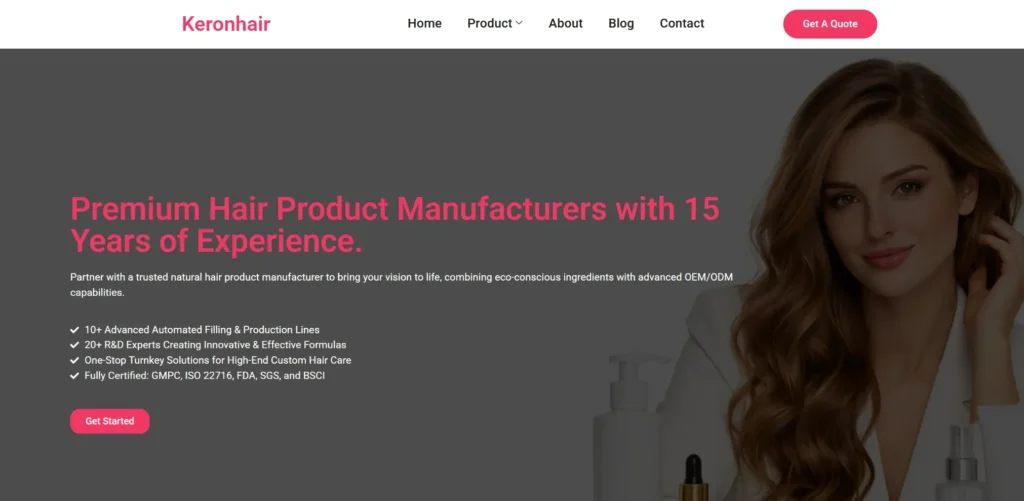
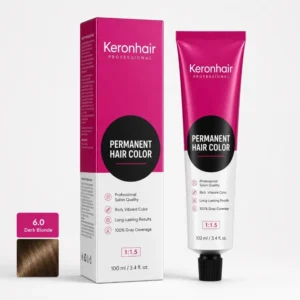
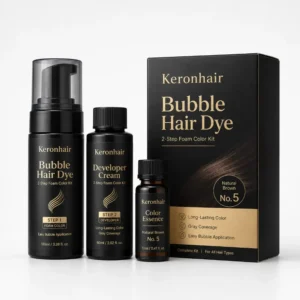
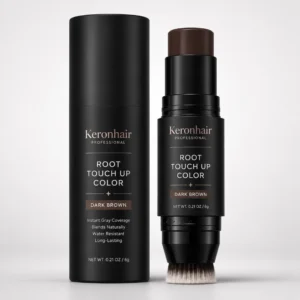
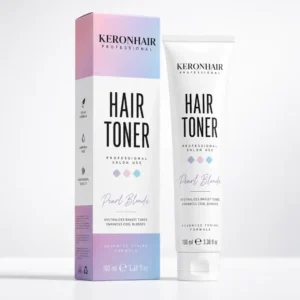
Keronhair publicly presents its Guangzhou operation as an OEM, ODM, and private-label hair product manufacturer, with hair color included in its development portfolio. Its hair dye manufacturing overview describes ready-to-brand, adapted, and custom project routes. For an actual semi-permanent project, buyers should still verify the available direct-dye platforms, target-market documentation, sample scope, current MOQ, packaging compatibility work, and formula ownership terms in writing.
This is an appropriate example for brands seeking a third-party production partner, but the statements above come from Keronhair’s own website. They should be evaluated in the same way as any other manufacturer’s first-party claims.
2. HSA Cosmetics — Private-Label Hair Color Manufacturing
Italy-based HSA Cosmetics states that it develops and manufactures private-label hair products and lists semi-permanent color among its professional color capabilities. Its official hair care manufacturing page also describes formulation, packaging, labeling, and scalability support. Buyers should request a project-specific proposal because available formulas, quantities, development services, and commercial terms may change.
3. Wella Company — Branded Professional and Consumer Color
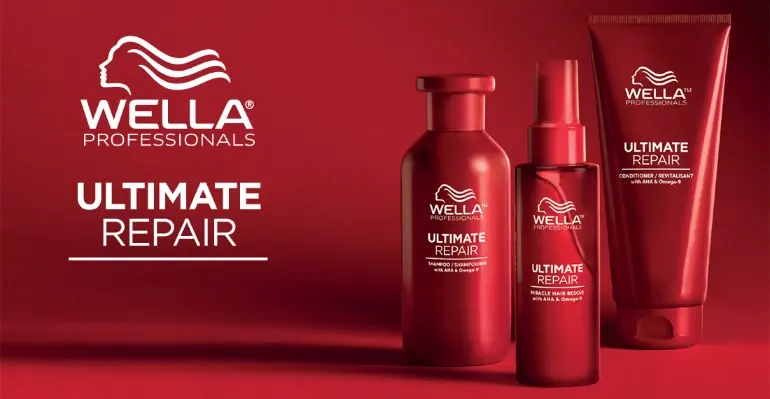
Wella Professionals is part of Wella Company’s brand portfolio. Wella markets several low-commitment color products, including Color Fresh systems and color-depositing masks. This makes Wella useful for understanding established product formats and professional color positioning. It does not mean Wella offers contract manufacturing to independent brands; buyers should not place it on an OEM shortlist without a confirmed B2B manufacturing program.
4. Schwarzkopf Professional — A Henkel Brand
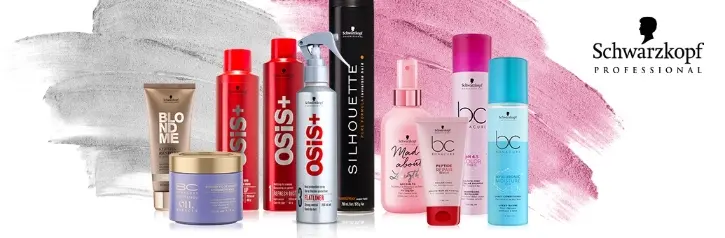
Schwarzkopf Professional, owned by Henkel, markets Chroma ID as a semi-permanent mix-and-tone system. The official Chroma ID product information illustrates how an established professional brand organizes color masks for refresh, neutralization, and creative color. As with Wella, this is primarily a branded-product example rather than evidence that Henkel accepts private-label hair color projects.
5. L’Oréal Professional Products — Including Pulp Riot
Pulp Riot is part of L’Oréal’s Professional Products portfolio, not Wella. L’Oréal’s official Pulp Riot brand page identifies a semi-permanent color range aimed at professional artists. L’Oréal Professionnel also offers multiple salon color systems, but semi-permanent and demi-permanent products should not be treated as interchangeable. These brands can inform competitive benchmarking, while their presence in the market does not establish that L’Oréal provides contract manufacturing for outside brands.
For a wider market view, this hair dye manufacturer overview discusses additional companies. Use any list as a discovery tool, then verify ownership, manufacturing role, and current capabilities from first-party evidence.
How to Choose the Right Manufacturing Partner
The best-known company is not automatically the best production partner. Your decision should reflect the formula, launch market, order economics, testing plan, and level of support your team actually needs.
Formula Development Capability
Ask whether the manufacturer develops direct-dye systems in-house and whether its team has worked with your required format and shade family. A strong response should cover the starting hair bases used for evaluation, expected fade direction, stain management, conditioning target, viscosity, fragrance, and compatibility with the proposed package. If you request “vegan,” “clean,” “natural,” “PPD-free,” or similar positioning, define the claim and target market precisely instead of using it as a general brief.
Product Format and Shade-System Range
A capable supplier may offer creams, gels, liquids, masks, or conditioners, but a longer format list is not always better. Ask to see work that matches your intended use: vivid fashion color, tonal refresh, pastelization, color maintenance, gray blending, salon service, or at-home retail. Evaluate shades on multiple relevant hair swatches because base level, prior lightening, porosity, and processing instructions can change the visible result.
Quality, Safety, and Regulatory Documentation
Request evidence that connects to the proposed product, not just a general factory certificate. Depending on the formula and market, the qualification package may include the finished-product specification, ingredient list, raw-material controls, microbiological testing, stability data, packaging-compatibility work, batch records, retained samples, a certificate of analysis, and a documented change-control process.
Market responsibilities also need to be assigned. In the United States, the FDA explains that covered cosmetic facilities and responsible persons have facility-registration and product-listing duties under MoCRA, subject to exemptions; registration is not FDA approval. In the European Union, a designated Responsible Person must ensure compliance, and product information is submitted through the CPNP. Review the current FDA registration and listing guidance and the European Commission’s CPNP guidance with a qualified regulatory adviser.
MOQ, Sampling, and Lead Times
Compare commercial terms at the SKU and shade level. Clarify minimum order quantity per formula, shade, package, and production run; sample fees and revision rounds; component minimums; production lead time after approval; and reorder conditions. A low bulk MOQ can still become expensive if custom tubes, caps, labels, or cartons have higher minimums.
Packaging and Branding Support
Semi-permanent color can stain the pack, migrate into some materials, or change visually under unsuitable storage conditions, so packaging should be part of product qualification. Ask who sources components, who owns artwork files and tooling, how color is controlled between lots, and what compatibility work is completed before production. Label support should be reviewed for the actual destination market rather than copied from a generic template.
Private Label vs. OEM vs. ODM: Choosing the Right Model
Manufacturers do not use private label, OEM, and ODM terminology consistently. Use the following table as a discussion framework, then make the quotation and contract authoritative.
| Factor | Private Label | OEM | ODM |
|---|---|---|---|
| Typical starting point | Manufacturer’s existing base formula | Buyer’s formula, specification, or product design | Manufacturer-led design or development from the buyer’s brief |
| Customization | Usually limited to selected variables | Potentially high, subject to feasibility | Moderate to high, depending on project scope |
| Development time | Usually shorter | May be longer when validation or transfer work is required | Depends on how far the brief differs from an existing platform |
| Formula ownership | Usually retained by the manufacturer | Often buyer-controlled, but must be documented | Negotiated; never assume exclusivity |
| Useful for | Testing a concept with less development | Brands with a defined formula or technical specification | Brands seeking manufacturer-led product development |
| Critical contract question | Can the same base be sold to other brands? | Who controls formula changes and technical transfer? | Who owns the final formula, data, and approved shade standards? |
Which Model Fits Your Stage?
Private label may suit a brand validating demand, provided the available formula and packaging meet its positioning. OEM may be appropriate when the buyer already controls a formula or detailed technical specification. ODM can work when the brand has a clear product concept but needs the manufacturer’s formulation and commercialization support.
Whichever route you select, compare the total launch requirement, not only the unit price. Testing, shade development, packaging minimums, artwork, freight, duties, regulatory work, and slow-moving inventory can materially change the economics.
What to Include in a Semi-Permanent Hair Dye Product Brief
A precise brief helps manufacturers quote the same project and reduces avoidable sample rounds. I recommend including the following information before asking for a final price:
- Target market and channel: countries, salon or retail use, professional-only or consumer application, and planned sales channels.
- Product format: cream, gel, liquid, mask, conditioner, or another clearly described system.
- Shade architecture: launch shades, mixing expectations, reference swatches, intended starting bases, and acceptable fade direction.
- Performance targets: application time, sensory profile, transfer or staining expectations, conditioning feel, and wash-durability target. These are targets until supported by testing.
- Ingredient and claim boundaries: required or excluded ingredients, fragrance direction, allergen considerations, vegan positioning, and any market-specific claims.
- Packaging: fill size, component type, decoration method, carton or leaflet needs, and whether the buyer or manufacturer will source each item.
- Commercial assumptions: target quantity per shade, target cost, launch date, forecast, and expected reorder pattern.
- Approval criteria: the tests, swatches, documents, and signed samples required before production.
A benchmark product can clarify texture or color direction, but it should not be treated as permission to copy a protected formula, trade dress, or claim. Ask the supplier to develop against measurable objectives.
From Sample to Production: A Practical Manufacturer Qualification Process
- Screen the company. Confirm the legal entity, factory location, ownership, relevant manufacturing scope, export experience, and contact details.
- Share a controlled brief. Use an NDA where appropriate, issue the same brief to shortlisted suppliers, and record assumptions in each quotation.
- Review laboratory samples. Test application, shade, fade, feel, transfer, and packaging behavior against agreed criteria and relevant hair swatches.
- Review the evidence package. Match test reports, specifications, ingredient information, certificates, and regulatory documents to the proposed formula and facility.
- Assess the quality system. Conduct an audit or qualified remote assessment proportionate to product and market risk. Review deviation handling, traceability, change control, complaints, and batch release.
- Approve a production standard. Sign the final formula status, shade standard, packaging, artwork, specification, test plan, and golden sample before the purchase order is released.
- Control the first batch. Agree on in-process checks, release documents, inspection, retained samples, and what happens if the batch differs from the approved standard.
For a deeper supplier-screening framework, see this guide to choosing a reliable hair product manufacturer. The goal is not to eliminate every risk; it is to make responsibilities, evidence, and decision points visible before money and inventory are committed.
How We Develop Semi-Permanent Hair Dye at Keronhair
At Keronhair, we use a coordinated process to connect the product brief, formula, shade standard, packaging, quality checks, and production record. For semi-permanent color, this matters because a visually attractive laboratory sample is only the beginning. The product also needs a defined starting hair base, application method, fade direction, packaging system, and approval standard that can be carried into bulk production.
- Project brief and product route: We begin with the target market, intended user, product format, launch shades, reference products, fill size, packaging direction, order plan, and claims. We then discuss whether an established private-label base, an adapted formula, or a more customized development route is appropriate.
- Formula and shade development: Our R&D team maps the desired color direction to a formula platform and the relevant starting hair substrates. We review texture, fragrance, application, conditioning feel, shade intensity, and expected fade direction against the approved brief.
- Sample review and written approval: We prepare samples for the buyer to evaluate and record requested revisions. Shade decisions should be made on agreed hair swatches and under consistent application conditions. Bulk production does not begin until the relevant formula, shade direction, and project specifications have been approved.
- Packaging and label coordination: We coordinate the selected tube, bottle, jar, closure, decoration, carton, or retail kit with the formula and filling process. Packaging suitability, fill size, component minimums, transport needs, warnings, and destination-market label requirements are reviewed as part of the project rather than treated as an afterthought.
- Controlled manufacturing and quality checks: After approval, we organize materials, bulk production, filling, packing, in-process checks, batch records, and retained production references. The applicable checks are linked to the agreed product specification and approved project sample.
- Final inspection and shipment preparation: Before release, we coordinate finished-product checks, packing verification, project documents, and shipment preparation for the agreed destination. Reorders remain connected to the approved formula, shade direction, packaging specification, and production records.
What we want buyers to see is a controlled path from idea to repeatable finished goods—not a promise based on a single sample. The exact sampling rounds, tests, documents, MOQ, and production schedule depend on the formula, shade count, packaging, destination market, and project scope. Brands can review our OEM and ODM manufacturing process for a broader view of how we coordinate development and production.
Final Thoughts
Some companies make semi-permanent color for their own professional brands, while others manufacture for third-party labels. If you are launching a product, start with confirmed contract or private-label manufacturers—not simply the most recognizable color brands.
A useful shortlist should show relevant formula experience, a clear development model, market-appropriate documentation, realistic commercial terms, and a controlled path from sample to production. Verify every claim against the proposed product and contract, because the name attached to the factory matters less than the evidence behind the batch you will actually sell.
Frequently Asked Questions About Semi-Permanent Hair Dye Manufacturers
Who manufactures semi-permanent hair dye for private-label brands?
Private-label and contract manufacturers with a dedicated hair color capability can produce semi-permanent dye for outside brands. Keronhair and HSA Cosmetics are examples of companies that publicly describe hair color manufacturing services for third-party clients. Well-known groups such as Wella Company, Henkel, and L’Oréal make semi-permanent products for their own brand portfolios, but that does not automatically mean they accept private-label projects.
Can a manufacturer create custom semi-permanent hair dye shades?
Many manufacturers can adjust or develop shades, but the scope varies. Some work from an established direct-dye base and modify color, fragrance, or texture; others can develop a more customized system. Ask how shades are evaluated across relevant starting levels, whether intermixing is supported, how fade direction is assessed, and which signed swatch or sample becomes the production standard.
What is the typical MOQ for private-label semi-permanent hair dye?
There is no universal minimum order quantity. MOQ may be calculated per formula, shade, filling run, component, or finished SKU. Custom packaging can also have a higher minimum than the dye itself. Request a written breakdown covering each shade, packaging component, sample fee, and reorder condition rather than relying on a single headline quantity.
What tests should a semi-permanent hair dye complete before launch?
The appropriate test plan depends on the formula, package, claims, target market, and intended use. A buyer may need to review microbiological quality, stability, packaging compatibility, finished-product specifications, color and fade performance, and support for any marketed claims. Regulatory and safety documentation should be reviewed by a qualified professional for each destination market. A general factory certificate does not replace product-specific evidence.
How can I verify that a supplier is the actual manufacturer?
Confirm the legal entity and factory address, then compare them with quotations, certificates, audit records, product documents, and payment details. Ask for a live facility tour or conduct an on-site or qualified remote audit. Verify which steps are completed at that location, including formulation, bulk manufacture, filling, testing, storage, and batch release. If part of the work is subcontracted, identify the subcontractor and approval controls.
Who owns an OEM or ODM hair dye formula?
Formula ownership depends on the development route and contract. A buyer-supplied OEM formula may remain buyer-owned, while a manufacturer’s existing platform usually remains with the manufacturer. For ODM projects, ownership, exclusivity, data access, formula changes, and transfer rights should be negotiated explicitly. The terms “OEM” and “ODM” alone do not establish intellectual-property ownership.