Private label hair pomade is typically manufactured in nine stages: product briefing, formula selection or development, lab sampling, testing, packaging approval, material procurement, bulk production, filling and packing, and final quality release. The exact process changes with the formula. A water-based pomade, for example, has different preservation and mixing requirements from an oil-based product.
The level of customization also affects cost, testing, minimum order quantity, and lead time.
This guide explains what happens at each stage, what the manufacturer controls, and what your brand must approve before production begins.
Private Label Hair Pomade Manufacturing at a Glance
A commercial pomade project involves more than melting wax and pouring it into jars. The formula must perform consistently, remain stable in its package, survive expected storage and shipping conditions, and meet the requirements of the market where it will be sold.
The process usually follows this path:
| Stage | What the manufacturer does | What the brand approves |
|---|---|---|
| 1. Product brief | Reviews the performance, formula, packaging, market, and quantity requirements | Target customer and product specification |
| 2. Formula route | Recommends a stock, semi-custom, or fully custom approach | Development scope and commercial terms |
| 3. Lab samples | Produces and adjusts prototypes | Hold, shine, texture, fragrance, and washout |
| 4. Testing | Plans stability, microbiological, performance, and package checks | Test scope and acceptance criteria |
| 5. Packaging | Selects suitable jars, closures, labels, and cartons | Final package, artwork, and product information |
| 6. Procurement | Orders and inspects approved materials and components | Final bill of materials and purchase scope |
| 7. Bulk production | Weighs, heats, mixes, emulsifies, and cools the formula | Approved master sample and specification |
| 8. Filling and packing | Fills, cools, caps, codes, labels, and cartons the product | Finished-product presentation |
| 9. Quality release | Inspects the batch and reviews production records | Pre-shipment approval or inspection result |
These stages do not always happen one after another. Packaging sourcing and label review may begin while the formula is being tested. A delay in one area can affect the entire schedule, especially when a custom jar, printed tin, special fragrance, or market-specific safety file is involved.
Step 1: Turn the Product Idea Into a Manufacturing Brief
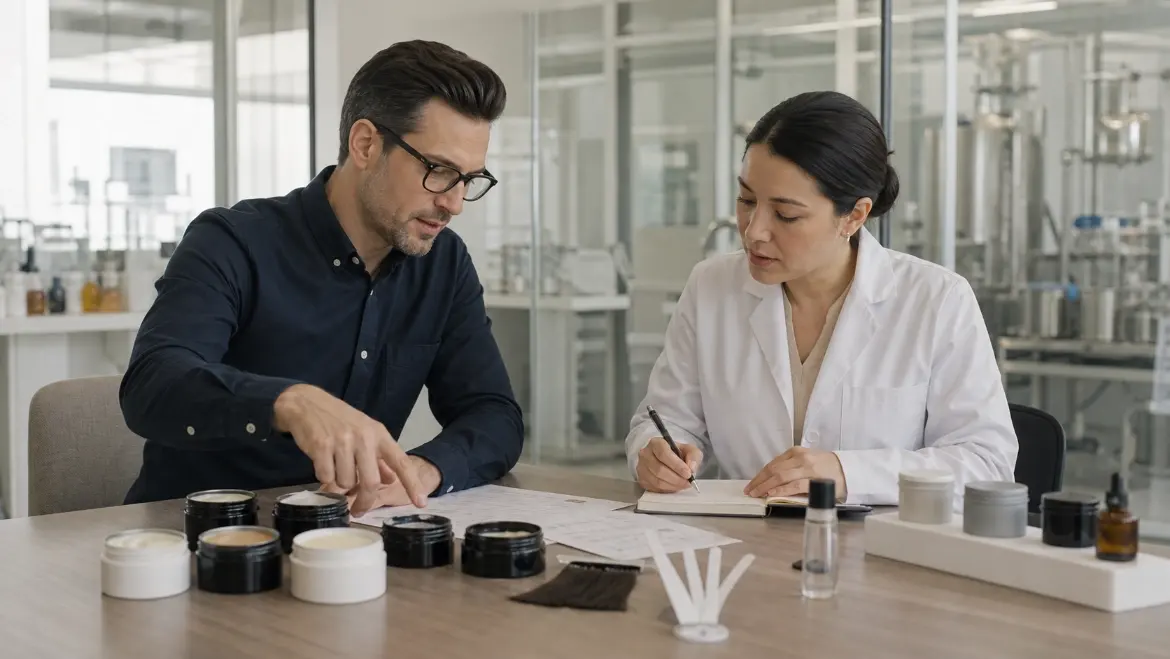
Every successful project starts with a written brief. “We want a strong pomade” leaves too much open to interpretation. Strong hold for a short, straight hairstyle may feel completely different on coarse, curly, or tightly coiled hair.
The brief should first define the intended customer and use case. A manufacturer needs to know:
- the target hair types and styling habits;
- whether the product is for slick styles, texture, edges, braids, curls, or general grooming;
- the required hold level;
- the desired finish, from matte to high shine;
- the preferred scoop, breakdown, spread, tack, and application feel;
- whether the product should remain restylable;
- the acceptable level of buildup and expected washout;
- the fragrance direction and preferred strength.
A benchmark can make the discussion more precise. State what you like and what should change, such as similar shine with less tug or comparable hold with easier washout.
Also include the sales market, fill size, package preference, order quantity, number of SKUs, target cost, launch date, sales channel, ingredient exclusions, and intended claims.
The manufacturer can then translate the brief into a formula route, development plan, packaging proposal, and quotation. The same document later becomes the foundation for evaluating samples and approving the production specification.
Once those basics are settled, Keronhair’s private label pomade development options show what you can take into a sample or quotation request.
Step 2: Choose a Stock, Semi-Custom, or Fully Custom Formula
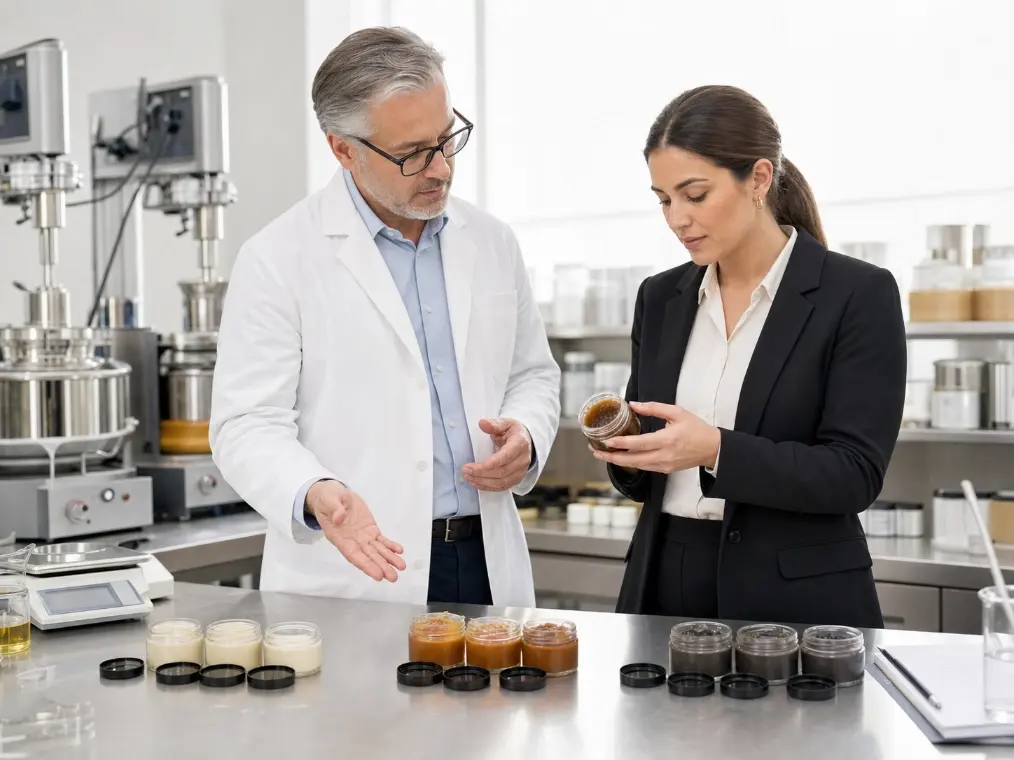
Private label suppliers use terms such as OEM, ODM, private label, white label, and custom manufacturing differently. Instead of relying on the label, compare what is actually included.
Stock private label
A stock project uses an existing formula with your branding and an approved package. It is usually the fastest route and can suit brands testing demand. Customization may be limited, and another customer may use a similar base.
Semi-custom development
Semi-custom development modifies selected characteristics of an existing formula, such as fragrance, color, hold, shine, texture, or limited ingredients. Because small changes can affect stability, preservation, viscosity, cooling, or packaging, the supplier should define what the route allows.
Fully custom development
A fully custom formula offers the greatest differentiation but normally requires more sampling, testing, time, and budget. Put ownership, exclusivity, confidentiality, and change-control terms in writing before paying a development fee.
| Route | Speed | Development cost | Differentiation | Main trade-off |
|---|---|---|---|---|
| Stock | Fastest | Lowest | Limited | Similar bases may be available to other brands |
| Semi-custom | Moderate | Moderate | Medium | Adjustments may trigger additional testing |
| Fully custom | Longest | Highest | Highest | More development and scale-up risk |
Still comparing partners? Our private label hair pomade manufacturer comparison looks at formula routes, quoted MOQs, packaging, testing support, and project fit across several markets.
Step 3: Develop the Formula for the Required Pomade Type
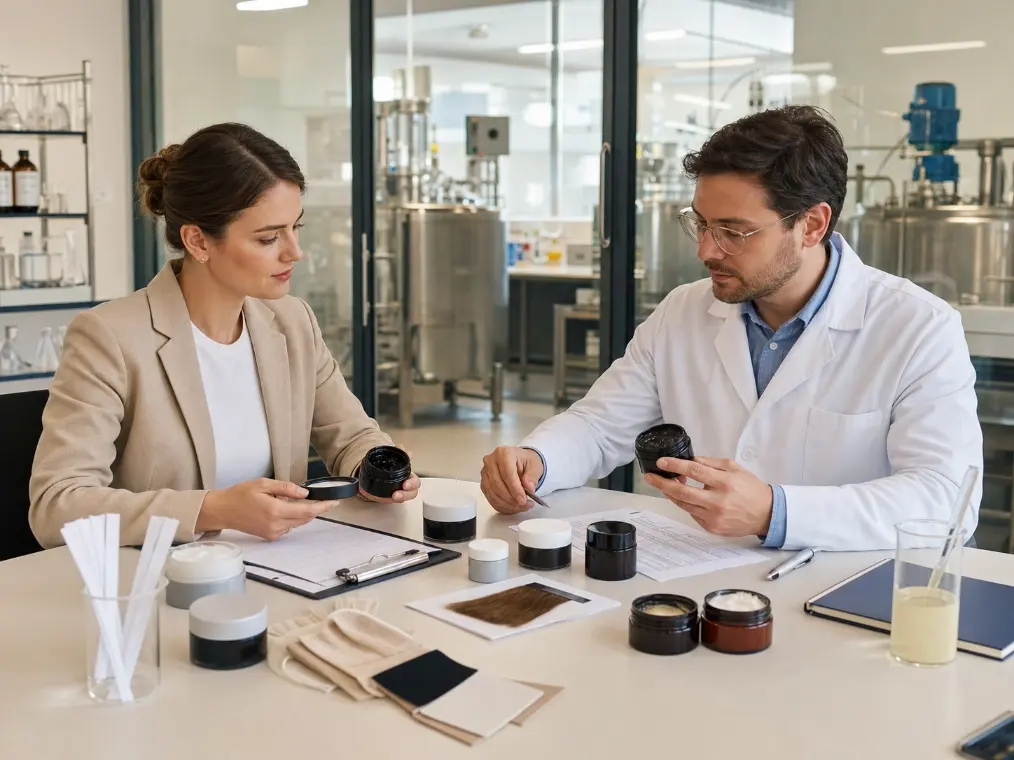
A commercial formula is more than an ingredient list. Raw-material grades, ratios, addition order, heating, mixing, shear, cooling, and filling conditions all affect the final product. Two batches made from the same list can feel different if the process is not controlled.
Water-based pomade
Many water-based pomades contain a water phase and a phase containing waxes, oils, structuring materials, or other oil-soluble ingredients. Depending on the formula, the phases may be prepared separately and combined under controlled temperature and mixing conditions.
The manufacturer must balance hold, shine, flexibility, washout, and jar stability. For applicable formulas, pH, viscosity, emulsion stability, microbiological quality, and preservation are important control points. A product that washes out easily still has to remain stable through storage, use, and distribution.
Oil-based pomade
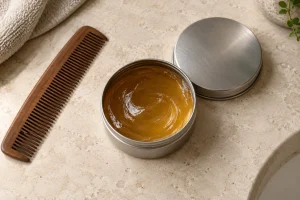
Oil-based pomades commonly rely on oils, waxes, butters, and other oil-compatible materials. The components are weighed, melted, blended, and cooled under controlled conditions. The wax and oil balance affects scoop, drag, shine, endurance, restylability, and buildup.
Temperature behavior is especially important. A formula that feels ideal in the laboratory may sweat, soften, grain, or separate during a hot delivery route. Controlled cooling also matters because it helps establish a consistent structure across the jar.
The absence of added water does not remove the need for raw-material controls, hygienic production, stability evaluation, or packaging compatibility checks.
Hybrid or unorthodox water-based pomade
Hybrid and unorthodox water-based products aim to combine characteristics that customers often want from different categories: strong or flexible hold, easier washout, shine or natural finish, and some degree of restylability.
These are market descriptions rather than one standardized technical formula. The manufacturer must develop and test the specific system instead of assuming that all hybrid pomades behave alike.
For a consumer-facing explanation of water-based, oil-based, hybrid, cream, matte, and clay formats, see our guide to the main types of hair pomade.
Step 4: Produce, Review, and Approve Lab Samples
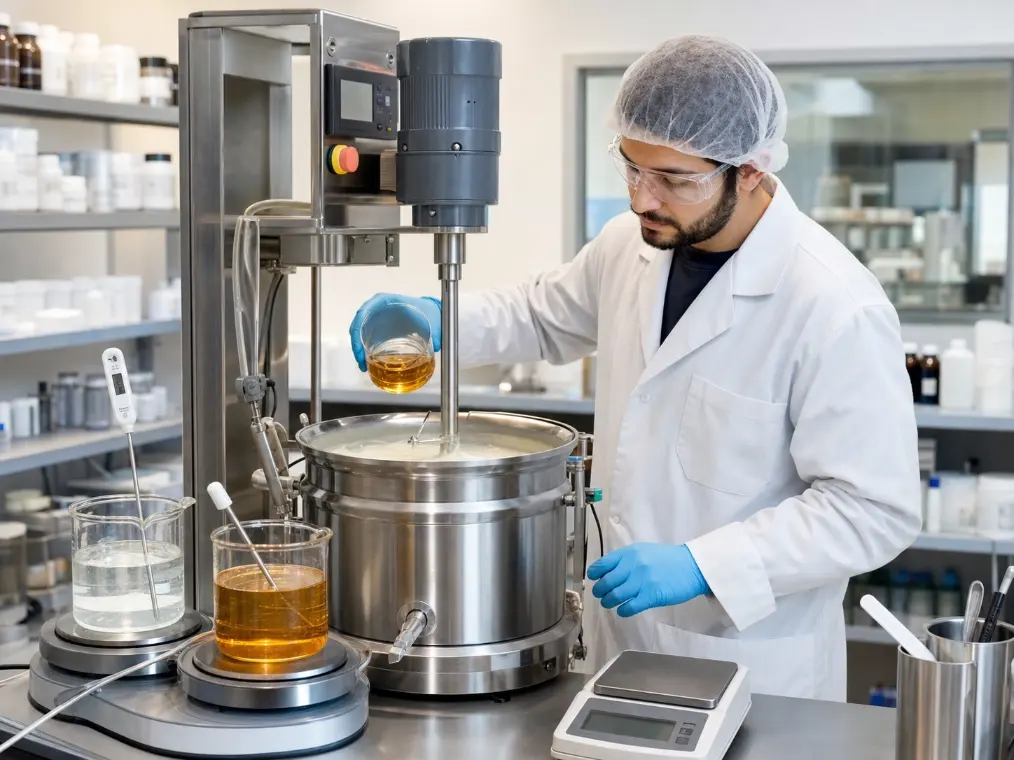
The first sample is a starting point, not necessarily the finished product. Test it against the written brief and a consistent scorecard.
Useful evaluation criteria include:
- appearance and surface finish;
- fragrance character and strength;
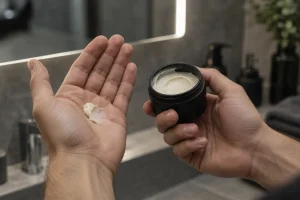
- scoop and breakdown between the hands;
- tug, spread, and application;
- initial and long-term hold;
- shine or matte effect;
- restylability;
- residue, flaking, or buildup;
- washout;
- performance on the defined hair types.
Feedback should be specific. “The style loses shape after four hours in humid conditions” is more useful than “it is not strong enough.”
Each sample needs a code, formula version, date, and recorded feedback. Where practical, change one performance group at a time.
Once approved, the manufacturer should retain a master sample and freeze the specification. The formula version, artwork, package, and written criteria then become production references. Formal approval helps prevent later disputes.
Step 5: Test the Formula and Package as One System
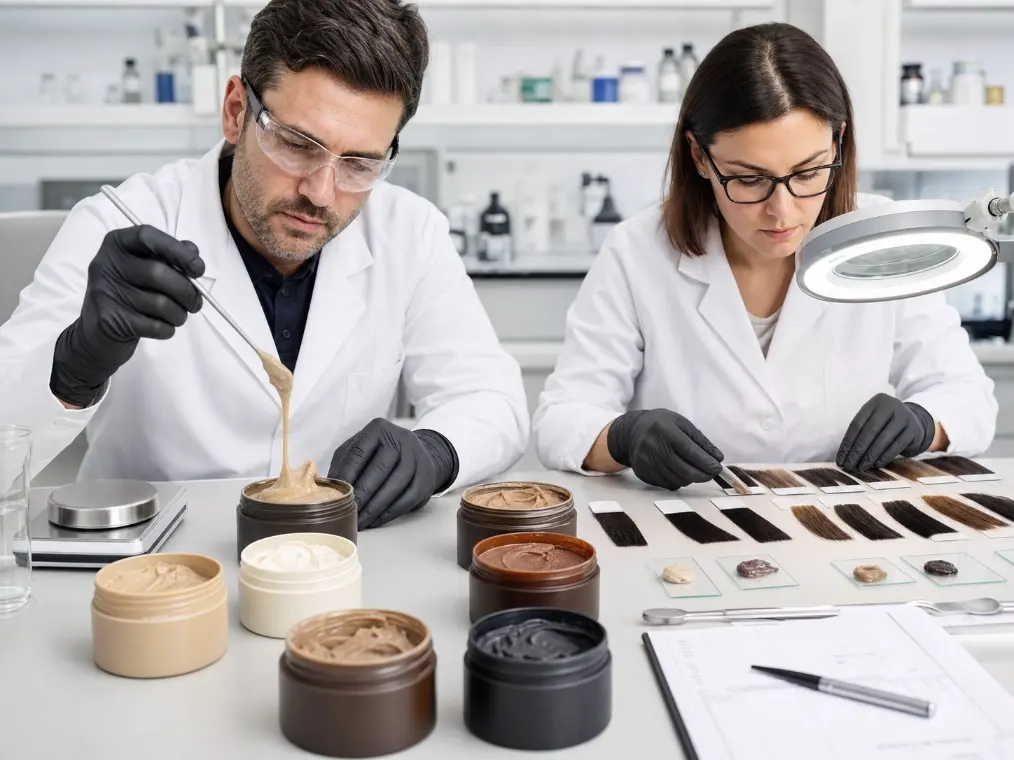
Testing is not a single universal certificate. The plan should reflect the formula, package, expected shelf life, shipping conditions, claims, and target market.
Stability and temperature testing
Stability evaluation can monitor appearance, odor, color, viscosity or hardness, separation, sweating, and performance. Suitable real-time and accelerated conditions may be used, including heat, cold, freeze–thaw, or transport simulations where relevant.
Microbiological and preservation controls
Water-containing formulas need particular attention to microbiological quality and preservation. Depending on the formula and market, the plan may include microbial limits and preservative-efficacy or challenge testing. “Natural” positioning does not remove these risks.
Packaging compatibility
The jar, cap, liner, seal, label, ink, and adhesive are part of the product system. Compatibility work should look for:
- leakage or loose closures;
- corrosion or staining;
- formula migration into a liner;
- oil bleeding through a label;
- label lifting or ink damage;
- warping, cracking, or odor transfer;
- changes in texture near the package surface.
Test the actual decorated package where possible; a different resin or liner may behave differently.
Performance and claim support
Claims such as “strong hold,” “easy washout,” or “long-lasting” should connect to a defined evaluation method. The evidence does not always need to be a large clinical study, but the wording must remain within what the brand can reasonably support.
Foreseeable use belongs in the test plan too. Our guide to whether pomade is good or bad for hair covers buildup, skin contact, irritation, and mechanical stress while recognizing that formulas do not all carry the same risks.
Step 6: Finalize Packaging, Artwork, and Market Documentation
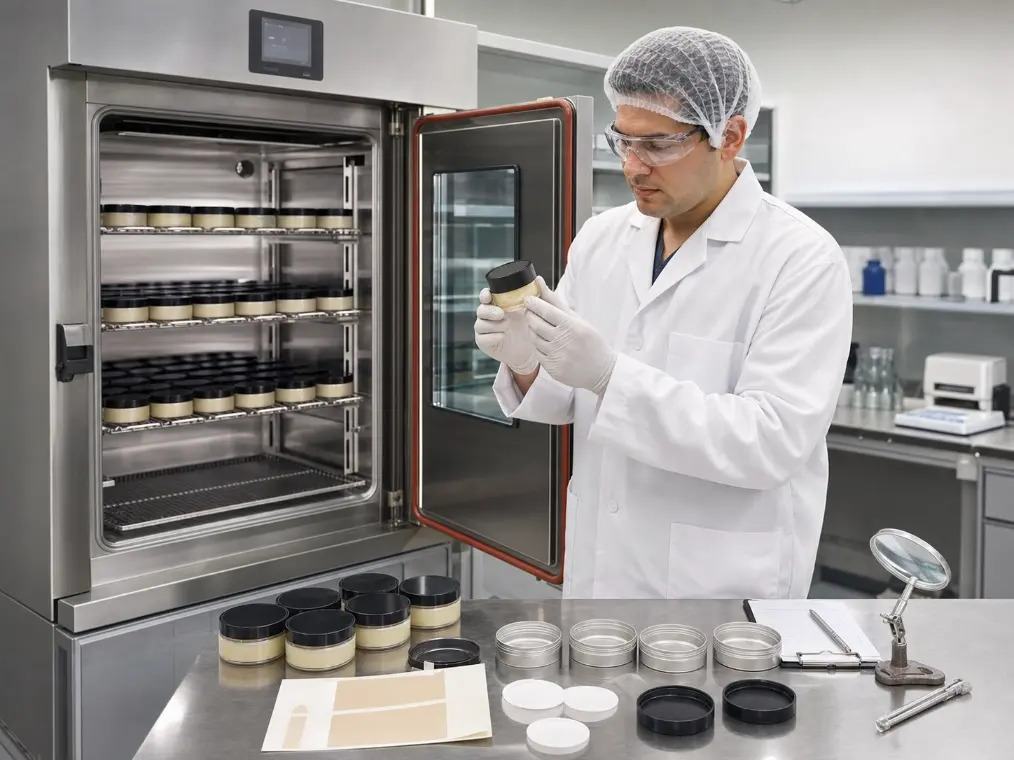
Pomade is commonly packed in plastic or glass jars, aluminum tins, and sometimes tubes or twist-up formats. The formula, fill method, brand positioning, shipping route, and customer use all influence the choice.
Review the opening size, closure, liner, seal, decoration, and secondary packaging. A premium glass jar may support the desired positioning but add freight weight and breakage risk. A metal tin may suit a classic grooming concept but needs compatibility and dent-resistance checks. A stock plastic jar can shorten the launch schedule and lower the component commitment.
Artwork approval should cover more than appearance. Depending on the target market, the label or packaging may need:
- product identity and function;
- net contents;
- ingredient list using the required naming convention;
- directions and precautions;
- responsible company details;
- batch or lot identification;
- durability or period-after-opening information;
- country of origin;
- required languages.
Regulatory responsibilities must be allocated before production. In the United States, applicable duties may include safety substantiation, records, adverse-event handling, facility registration and product listing, subject to applicable exemptions, and labeling. Registration or listing does not mean FDA has approved the pomade.
In the European Union, a cosmetic product needs an EU Responsible Person, a safety assessment and Product Information File, compliant labeling, and notification through the Cosmetic Products Notification Portal before it is placed on the market. Great Britain has its own Responsible Person and notification framework, along with safety and product-information duties.
The manufacturer can provide technical documents, but the brand, importer, or appointed Responsible Person may still hold legal duties. Assign document and submission responsibilities in writing.
Step 7: Procure and Inspect Raw Materials and Components
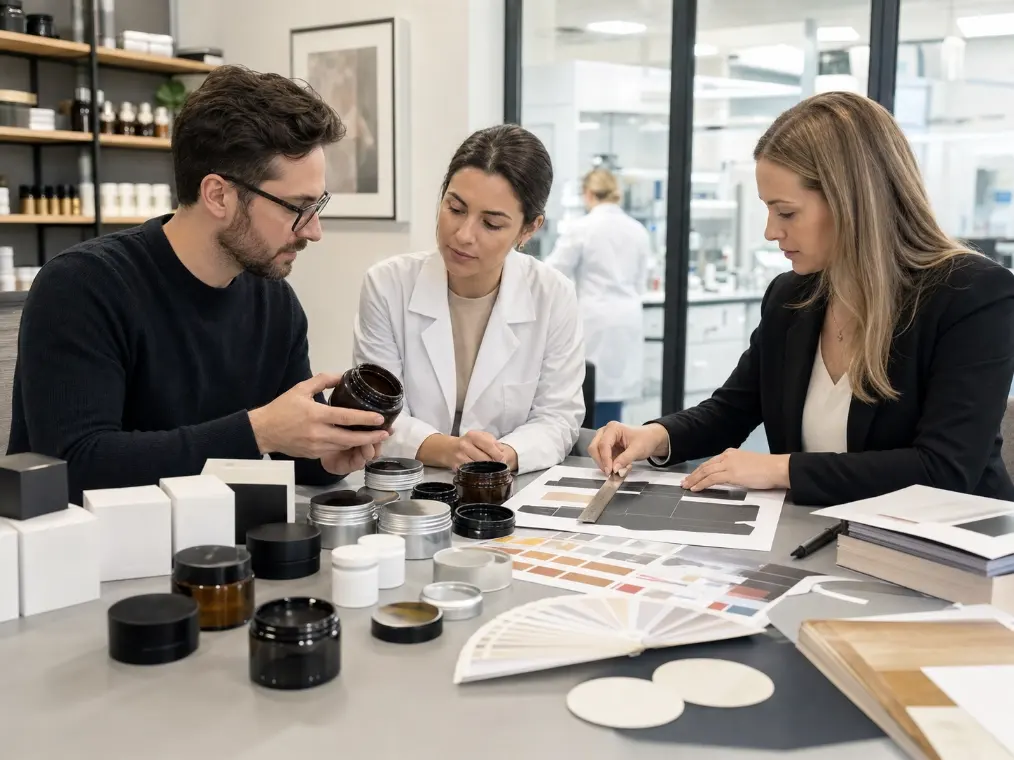
After the formula, package, and artwork are approved, the manufacturer purchases against controlled specifications. Incoming materials should be identified, checked, and held according to the facility’s receiving and release procedures.
The purchasing scope may include waxes, oils, water-phase materials, emulsifiers, fragrance, color, preservatives, jars, caps, liners, labels, cartons, and shipping cases. The supplier and grade of each critical material matter. An unapproved substitution can change the pomade’s appearance, texture, fragrance, stability, or regulatory status.
Packaging often determines the real MOQ. A manufacturer might be able to make a relatively small bulk batch, while a custom-colored jar, printed tin, hot-stamped label, or carton supplier requires a much larger order. Each fragrance, size, formula, and artwork version may also create a separate SKU and minimum.
Late component changes can delay the project and trigger compatibility work. The final bill of materials should therefore be approved before mass production.
Step 8: Manufacture the Bulk Pomade Under Batch Controls
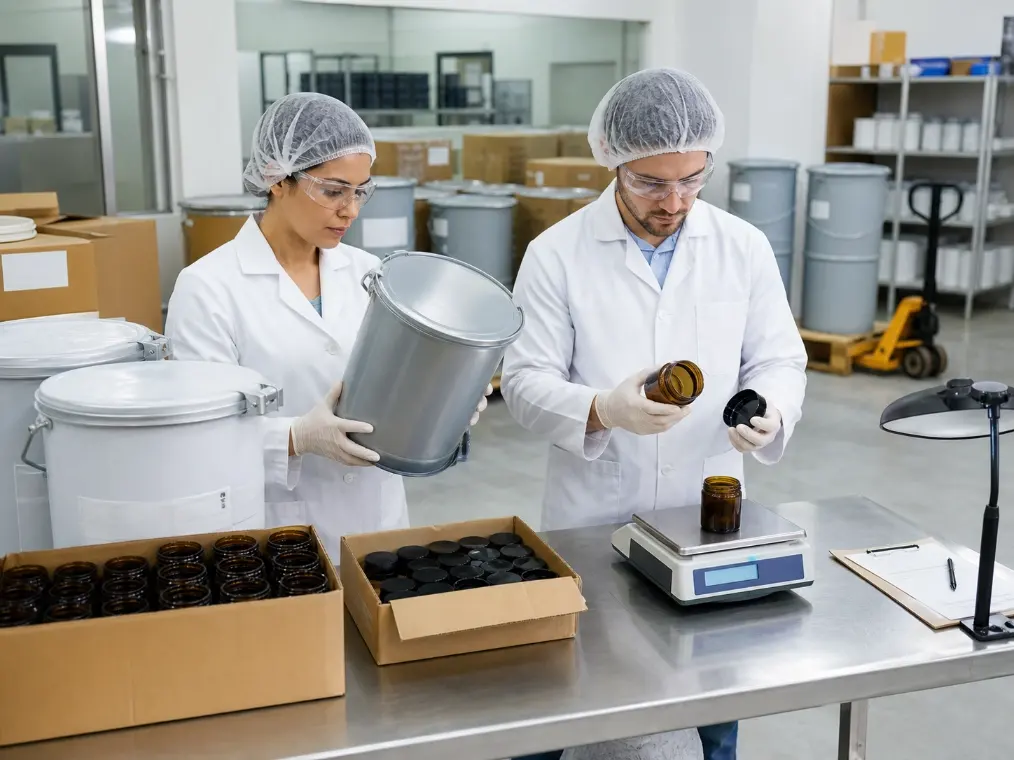
Before production starts, the factory should have an approved master formula, batch size, manufacturing record, released materials, suitable equipment, and clear processing instructions. Scales and measuring equipment must be appropriate for their task, and the production area should be ready for the batch.
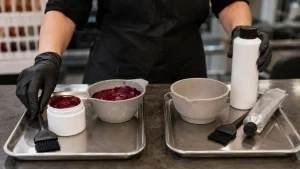
Weighing and phase preparation
Raw materials are weighed according to the controlled formula and recorded by lot. Depending on the pomade type, the manufacturer may prepare water-soluble and oil-soluble components separately.
Waxes and structuring materials are heated only as required by the formula and equipment. Water-based systems may require the phases to be combined under controlled temperature, mixing, and shear. Oil-based products may involve melting and blending followed by carefully managed cooling.
There is no universal processing temperature or mixing time for all pomades. Publishing one number without the formula and equipment context would be misleading.
Cooling and finishing
Cooling is an active part of manufacturing. If it happens too quickly, too slowly, or unevenly, the product may develop graininess, air pockets, sinkholes, separation, or inconsistent hardness.
Heat-sensitive fragrance, color, or other ingredients are added at the validated stage. The batch is mixed enough to achieve uniformity without creating unnecessary aeration.
In-process quality checks
During production, the quality team may check:
- appearance, color, odor, and homogeneity;
- pH for applicable water-based products;
- viscosity, hardness, penetration, or another physical measure;
- bulk temperature before filling;
- conformance with defined microbiological or process requirements.
An ingredient list alone does not guarantee an approved pomade. Processing and cooling also define the product.
Step 9: Fill, Cool, Label, Inspect, and Release the Batch
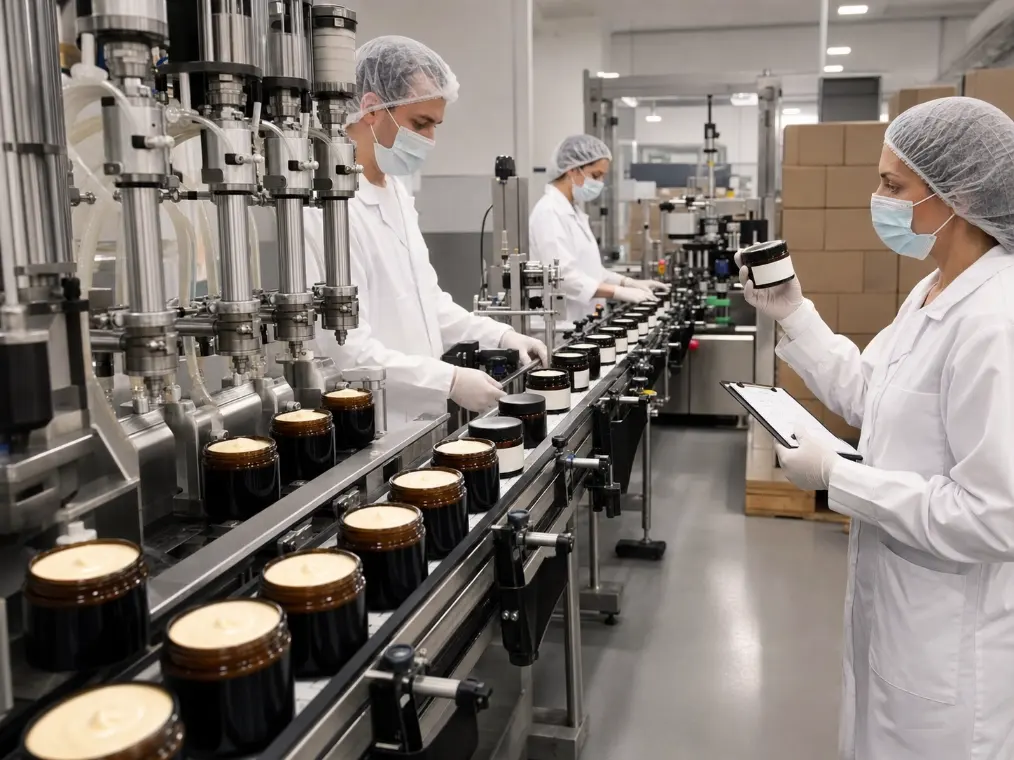
The released bulk product is transferred to suitable filling equipment. Depending on the formula, filling may take place while the pomade is hot, warm, or at another controlled condition.
Operators monitor fill weight, jar cleanliness, headspace, air pockets, and surface appearance. The filled package then cools under conditions designed to minimize cracking, sinkholes, sweating, condensation, or texture differences between the center and edge of the jar.
Caps, liners, seals, and closures are applied according to the approved package specification. Batch or lot coding provides traceability. Labels and cartons must match the approved artwork version, and inspectors check placement, adhesion, print quality, variable data, and overall presentation.
Finished-product release can include:
- appearance, odor, color, texture, and homogeneity;
- fill-weight checks;
- closure and leakage inspection;
- label, lot code, carton, and count verification;
- defined physical and microbiological specifications;
- review of manufacturing and packaging records;
- deviation and corrective-action review;
- retention of batch samples.
Where agreed, the manufacturer may issue documents such as a Certificate of Analysis. The exact document package should be specified in the quotation rather than assumed.
Before shipment, the brand may review samples, photographs, an inspection report, or an independent pre-shipment inspection. A written acceptance standard is more useful than a general “looks good” check.
How Long Does Private Label Pomade Manufacturing Take?
There is no universal timeline. Stock formulas and packaging can move faster than custom formulas, decorated jars, extended testing, and market-specific documentation.
The main timing variables are:
- formula route;
- number of sample revisions;
- stability and compatibility requirements;
- stock or custom packaging;
- artwork approval;
- raw-material and component availability;
- production scheduling;
- documentation and destination-market review.
| Project route | Main stages | Timing implication |
|---|---|---|
| Stock private label | Sample, packaging, artwork, production | Usually the shortest route |
| Semi-custom | Revisions, selected testing, packaging, production | Longer because changes need evaluation |
| Fully custom | R&D, repeated samples, testing, scale-up, packaging | Usually the longest route |
Ask the manufacturer for a milestone schedule rather than one delivery promise. The schedule should identify who is responsible for samples, testing, artwork, component approval, regulatory files, deposit, production, inspection, and shipment.
What Determines Pomade MOQ and Manufacturing Cost?
MOQ and cost are shaped by the entire project, not only the amount of formula in each jar.
Formula choice affects raw-material purchases, development time, testing, processing, and production loss. A fully custom formula normally costs more to develop than an existing base. An uncommon fragrance or specialty ingredient may carry its own supplier minimum.
Packaging can be an even larger driver. Stock jars and pressure-sensitive labels are often easier to source in modest quantities. Custom colors, molds, screen printing, hot stamping, special liners, or folding cartons can increase both cost and minimums.
SKU planning also matters. An order of 3,000 jars in one formula, fragrance, size, and label is operationally simpler than 3,000 jars divided across six combinations. Each version may require separate materials, setup, filling, coding, inspection, and records.
When comparing quotations, ask whether the price includes:
- formula and filling;
- jar, cap, liner, and seal;
- label and decoration;
- carton and shipping case;
- samples and development;
- testing;
- market documentation;
- freight, duties, and inspection.
For a China-specific sourcing comparison, review hair pomade suppliers in China against the formula route, quoted MOQ, packaging scope, testing support, and exact project configuration.
Keronhair’s current pomade page separates its starting minimums: 120 units for in-stock supply and 1,000 units per SKU for custom projects. Formula route, packaging, decoration, fill size, and SKU count can change the practical minimum, so confirm it for your exact brief.
How Keronhair Supports Private Label Pomade Production
Keronhair is a China-based OEM/ODM manufacturer serving hair care and styling brands. We can discuss water-based or oil-based pomade as a standalone product or as part of a wider styling range that includes wax, clay, gel, and complementary hair care products.
Our project conversation can cover the brief, formula route, samples, packaging, filling, labeling, quality control, and export documentation.
Keronhair’s hair pomade MOQ is 1,000 units. To receive a useful recommendation, send us:
- your target customer and market;
- desired hold, finish, washout, and fragrance;
- benchmark product or written performance target;
- fill size and packaging idea;
- expected quantity and number of SKUs;
- target cost and launch date.
Discuss your private label pomade project with Keronhair or review our hair product OEM/ODM capabilities.
Frequently Asked Questions
What is pomade actually made of?
A blend of waxes for hold and oils or butters for shine and slip. Water-based versions also contain film-forming polymers, an emulsifier, and a preservative, while oil-based versions often use petrolatum.
Is water-based or oil-based pomade harder to manufacture?
Water-based is more complex. It’s an emulsion requiring precise temperature control, an emulsifier, film-forming polymers, and a preservative added late in the process. Oil-based is a simpler, anhydrous melt-and-pour.
How long does private label pomade take to produce?
Production commonly takes around four to six weeks after your sample and packaging are approved, though sampling and revisions add time up front. It varies by manufacturer, order size, and season.
What’s the minimum order quantity?
It varies widely by manufacturer. Ready-to-use stock formulas usually carry lower minimums than custom formulas. Confirm current MOQs directly with each factory before planning your budget.
Do I need my own formula, or can I use the manufacturer’s?
Both work. Private label uses the manufacturer’s existing stock formula for speed and lower minimums; custom development creates a unique recipe at a higher cost and a longer timeline.
Is hair pomade manufacturing regulated?
Yes. Cosmetics are regulated by market — for example, MoCRA in the U.S. and CPSR and CPNP obligations in the EU — and reputable manufacturers follow cGMP and ISO 22716. Always verify the requirements for your market.