Finding a hair pomade manufacturer is easy. Finding one that fits your formula, order size, packaging, target market, and launch schedule is much harder.
This guide compares ten manufacturers that publicly offer private label, OEM/ODM, or contract manufacturing for pomade and related styling products. We use the same comparison fields for every company and flag information that still requires direct confirmation.
What Is Driving the Hair Pomade Opportunity?
The opportunity sits inside a growing styling market. Grand View Research estimated the global hairstyling-products market at $27.3 billion in 2023 and projected it to reach $43.05 billion by 2030, a compound annual growth rate of 5.8%. Its report identifies pomade as one of the product segments within that market.
Product format and positioning still determine whether a launch fits its audience:
- Water-based pomades appeal to customers who prioritize easier washout and a lighter feel.
- Oil-based pomades suit classic, high-shine styling and customers who value restylability and longer wear.
- Hybrid or unorthodox water-based formulas aim to combine flexible control with better washability.
- Matte, clay, cream, and wax-pomade formats expand the category beyond the traditional glossy slick-back.
For a consumer-level foundation, review how pomade types differ in hold, finish, washout, and use.
E-commerce has raised the operational standard. Heat, long transit, and repeated opening can expose oil sweating, texture changes, loose lids, dented tins, label damage, or leakage. Formula and packaging therefore need to be tested as one system.
How We Selected and Compared These Manufacturers
This is a list of potential manufacturing partners, not a popularity ranking of consumer pomade brands. A company remained on the shortlist only when its public website showed a relevant private label, OEM/ODM, custom-formulation, or contract-manufacturing service.
We considered eight factors:
- pomade specialization and relevant filling capability;
- availability of stock, semi-custom, or fully custom routes;
- formula-development resources;
- sampling, testing, and quality-control information;
- packaging sourcing and compatibility support;
- MOQ and suitability for different business stages;
- target-market documentation support;
- transparency of public information.
The order reflects fit for different private label buyers, not a universal quality ranking. A pomade specialist may suit an artisan grooming brand, while a broader OEM/ODM factory may fit a multi-product launch.
The section on our China-focused hair pomade supplier shortlist will help you weigh geography for your own situation.
Top 10 Hair Pomade Manufacturers
| Manufacturer | Country or region | Manufacturing route | Public MOQ information | Best suited for | Main consideration |
|---|---|---|---|---|---|
| Keronhair | China | Private label, OEM, ODM | 1,000 units | Integrated hair care and styling lines | Confirm packaging, testing, and lead-time requirements |
| HSA Cosmetics | Italy | Private label and custom development | Quote required | Premium brands seeking Italian formulation support | Development cost, MOQ, and schedule are not public |
| Lockhart’s Authentic Customs | USA | Private label, new formulas, formula recreation | Publicly describes runs from a few hundred units | Pomade-focused grooming brands | Confirm the current MOQ and production window |
| RainShadow Labs | USA | Stock, private label, semi-custom, custom | 10 gallons for private-label stock; 25 gallons for custom | Brands that want to move from a proven base to customization | Compare development fees and filling requirements |
| Stryv Labs | USA | Private label and selected customization | Public pricing starts at 20 units | Barbershops, salons, and small test launches | Clarify the limits of formula customization |
| HODM Cosmetics | China | Private label, OEM, ODM, custom formulation | From 500 units for selected hair styling products | Brands seeking full-service styling development | Confirm the MOQ for the exact pomade and package |
| BO International | India | Private label, contract manufacturing, custom formula | 2,000 units on its pomade page | India-based turnkey projects | Recheck testing, certificate scope, and export documents |
| The Great Herbal | India | Private label, custom formula, turnkey | 3,000 units on its pomade page | Plant-positioned projects at moderate volume | Confirm claims, testing scope, and formula ownership |
| Vasa Cosmetics | India | Private label, OEM, ODM, custom formulation | 5,000 units in its general private label guidance | Export-focused pomade and Afro hair care projects | Confirm the pomade-specific batch and packaging minimums |
| Guangzhou Bioslle | China | Private label, OEM, ODM | 100 units for selected styling gel and wax-stick products | Low-MOQ styling and textured-hair ranges | Confirm availability and MOQ for a conventional jar pomade |
1. Keronhair — Best for Integrated Hair Care and Styling Lines
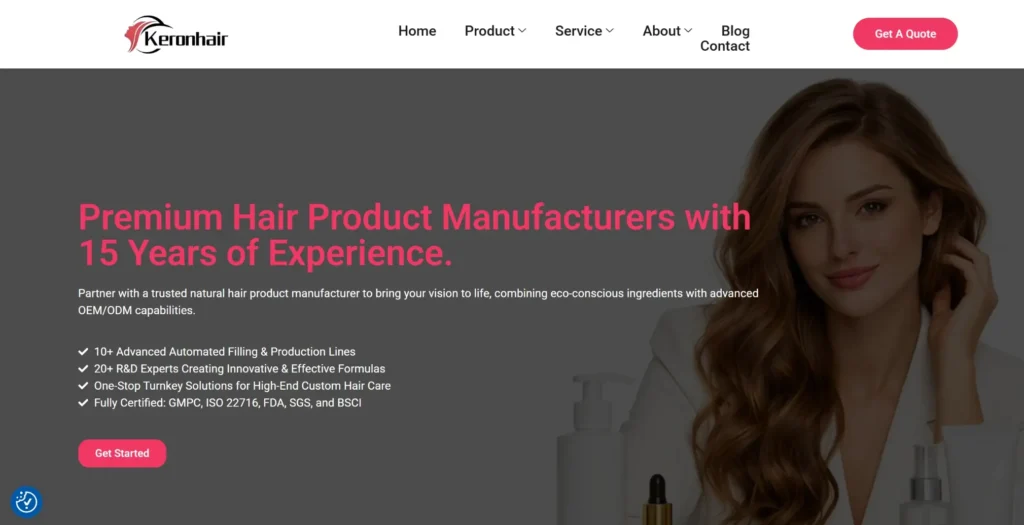
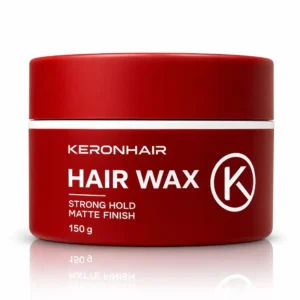
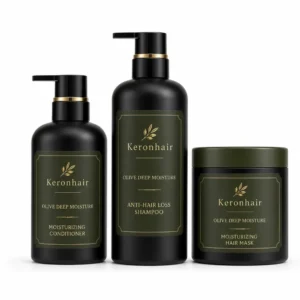
Keronhair is a Guangzhou-based hair care OEM/ODM manufacturer. Its public styling range includes water-based and oil-based waxes, pomades, clays, and gels with adjustable hold and finish. The wider scope supports coordinated styling and hair care ranges.
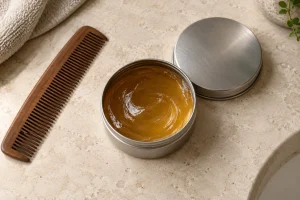
The company’s public pages describe formulation, sampling, packaging sourcing, filling, labeling, quality control, and export-document support. Keronhair’s Hair Wax Manufacturer page lists jars, aluminum tins, glass containers, and twist-up formats. Jar filling and hot filling are relevant to thicker styling products.
- Official website: https://keronhair.com
- Contact email: info@keronhair.com
- MOQ: 1,000 units as publicly listed for the hair pomade wax product.
Pros:
- Offers water-based and oil-based pomades alongside waxes, clays, gels, and complementary hair care products.
- Supports formulation, sampling, packaging sourcing, filling, labeling, quality control, and export documentation.
- Suitable for brands building a coordinated styling and hair care range with one manufacturing partner.
Cons:
- No single public MOQ applies to every pomade project.
- Custom fragrance, proprietary formulas, decorated packaging, or multiple SKUs may increase the minimum.
- Exact pricing, lead time, testing scope, and packaging minimums require a project quotation.
Best for: Growing beauty brands, salon groups, distributors, and retailers that want one manufacturing conversation across formula development, styling products, complementary hair care, packaging, and production.
Before requesting a quotation, specify the formula route, hold, shine, washability, fragrance, fill size, packaging, target country, and quantity per SKU. Keronhair can then confirm the applicable MOQ instead of forcing a generic number onto the project.
2. HSA Cosmetics — Best for Italian Private Label Development
HSA Cosmetics is based in Italy and has a dedicated private label hair-pomade offering. Its public page discusses custom formulas and fragrances as well as cream, wax, and clay pomade formats. That range allows a brand to think beyond a single traditional high-shine product.
Cream pomades can support lighter hold and a softer finish. Wax-pomade formats can provide more structure, while clay formats can create volume and a matte appearance. HSA’s positioning makes it relevant to professional and premium brands that want to connect product texture, fragrance, and presentation.
- Official website: https://www.hsacosmetics.com/
- Contact email: Not publicly listed on the reviewed pages; use the official contact page.
- MOQ: Quote required; no pomade MOQ is publicly listed on the reviewed product page.
Pros:
- Provides a dedicated private label pomade program from an Italian manufacturer.
- Supports custom formulas and fragrances across cream, wax, and clay pomade formats.
- Well aligned with professional, salon, and premium positioning.
Cons:
- MOQ, development fees, and standard lead times are not publicly disclosed.
- Formula ownership, packaging minimums, and customization limits must be confirmed during quotation.
- Performance and compliance statements still require project-specific documents and test evidence.
Best for: Salon, professional, and premium brands that value Italian manufacturing and want to explore several pomade formats.
The company’s page also makes broad statements about performance and regulatory compliance. Those statements should be converted into project-specific evidence: an INCI list, specifications, test plan, manufacturing documents, label responsibilities, and requirements for the destination market.
3. Lockhart’s Authentic Customs — Best for Pomade-Focused Grooming Brands
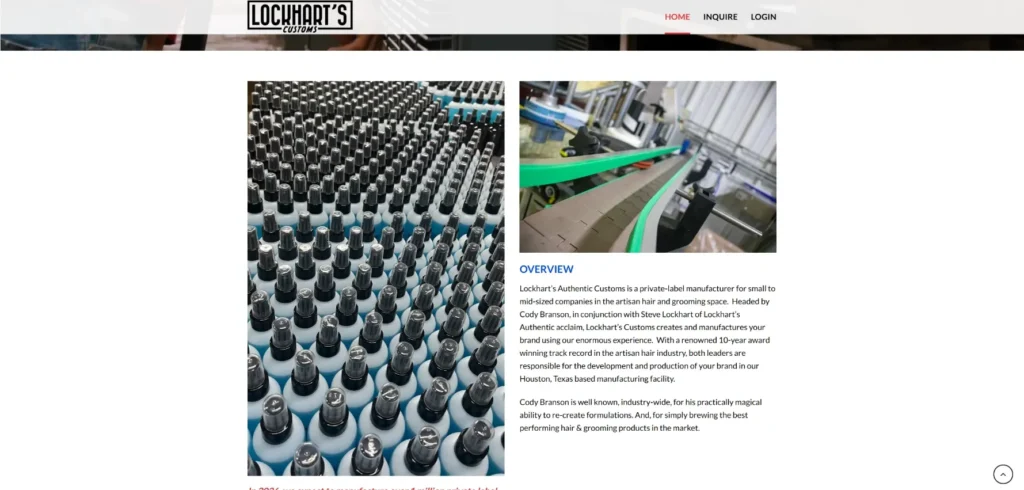
Lockhart’s Authentic Customs is a Houston-based private label manufacturer focused on artisan hair and grooming products. Its public site describes new-product development, formula recreation, and production for small to mid-sized businesses. It also states that customer runs range from a few hundred products to more than 20,000 products monthly.
The main attraction is category focus. Pomade buyers may care about small differences in scoop, breakdown, tug, slickness, endurance, restylability, buildup, and washout.
- Official website: https://lockhartscustoms.com/
- Contact email: Not publicly listed on the reviewed pages; use the official inquiry form.
- MOQ: The company states that production runs can start at a few hundred products, but the exact MOQ is quote-based and depends on the formula and package.
Pros:
- Strong category focus on pomade, barber, and men’s grooming products.
- Offers new-product development and formula-recreation services.
- U.S.-based production can suit brands prioritizing domestic manufacturing.
Cons:
- No exact per-SKU pomade MOQ or public contact email is provided.
- Development fees, formula ownership, testing, and packaging options require direct confirmation.
- Its specialized men’s grooming focus may be less suitable for brands seeking a broad hair care portfolio.
Best for: Men’s grooming brands that want a U.S. partner with concentrated pomade and barber-market experience.
The company also makes public statements about the markets and retailers reached by products it manufactures. A buyer should view those as company claims rather than substitutes for testing its own formula, reviewing batch controls, and agreeing on measurable acceptance criteria.
4. RainShadow Labs — Best for Stock-to-Custom Development Routes
RainShadow Labs offers a particularly clear development ladder. Its styling collection includes pomade, and the company publishes separate stock, private label, semi-custom, and custom options.
At the time of review, RainShadow Labs stated that private-label stock required a 10-gallon minimum, while custom formulations started at 25 gallons. Its semi-custom program started at $3,500 per product and could modify elements such as scent, hold, or selected ingredients. Full custom development was listed at $5,000 per product, with a development period of up to 24 weeks. These figures are time-sensitive and should be reconfirmed.
- Official website: https://www.rainshadowlabs.com
- Contact email:
info@rainshadowlabs.com - MOQ: 10 gallons for stock private label filling; 25 gallons for semi-custom or custom formulation.
Pros:
- Provides a clear progression from stock formulas to semi-custom and fully custom development.
- Publishes useful information about minimums, development routes, and fees.
- Allows a brand to sample and validate a stock formula before investing in greater customization.
Cons:
- Gallon-based minimums do not reveal the final jar count until fill size and process loss are calculated.
- Packaging and components are not supplied directly, so buyers may need to coordinate additional vendors.
- Custom development adds fees and time, and public pages should be checked for the current semi-custom fee.
Best for: U.S. salons, barbershops, and beauty brands that want to sample a proven formula, validate demand, and move into semi-custom or custom development later.
RainShadow’s published structure is valuable because it makes the trade-off visible: customization requires more money, more time, and a larger production commitment.
5. Stryv Labs — Best for Barbershops and Small Test Launches
Stryv Labs offers U.S.-made private label pomades aimed at barbershops and salons. Its public pricing page starts at 20 units and separates unlabeled from labeled pricing. It also lists pomade, classic pomade, matte clay, hair paste, beard products, and shaving products.
That low entry point can help a shop test a branded styling product without committing to thousands of jars. Stylists can use the pomade during service and retail it for home use.
- Official website: https://www.stryvlabs.com/
- Contact email:
stryvlabs@gmail.com - MOQ: 20 units based on the lowest public pricing tier.
Pros:
- One of the lowest published entry quantities in this comparison.
- Displays public pricing for labeled and unlabeled products.
- U.S.-made option suited to barbershops, salons, creators, and small grooming businesses.
Cons:
- The public offer appears to center on ready-made formulas rather than fully proprietary development.
- Customization limits, testing documents, and large-volume capabilities are not fully explained online.
- Public prices may change and should be reconfirmed before budgeting.
Best for: Barbershops, salons, creators, and small grooming businesses testing a ready-made pomade under their own label.
Public prices can change. Use them as evidence that a low-volume route exists, not as a permanent budget for a future launch.
6. HODM Cosmetics — Best for Full-Service Styling Development
HODM Cosmetics is a China-based original design manufacturer specializing in private label hair care. Its public styling range includes pomade, paste, fiber, clay, gel, spray, and cream formats. The company presents formula, fragrance, packaging, label, and branding customization for salons, distributors, startups, and established beauty brands.
HODM’s Finest Pomade is a water-soluble styling product offered in an 80 ml format. Its wider styling service allows buyers to discuss hold strength, texture, matte or glossy finish, fragrance, ingredients, and packaging rather than simply placing a logo on a generic jar.
- Official website: https://www.hairodm.com/
- Contact email:
admin@hairodm.com - MOQ: From 500 units for selected private label hair wax and styling products. Confirm the minimum for the exact pomade formula, fragrance, jar, and decoration method.
Pros:
- Offers a public pomade product alongside wax, paste, fiber, clay, gel, spray, and cream formats.
- Supports formula, fragrance, packaging, label, and brand customization.
- Provides samples and publicly presents a relatively accessible starting MOQ for selected styling projects.
Cons:
- The 500-unit starting point may not apply to every pomade formula or custom package.
- Some public product descriptions contain inconsistent hold or finish wording, so buyers should approve a written specification rather than rely on marketing copy.
- Testing, certificate scope, formula ownership, and destination-market documentation require project-specific verification.
Before ordering, request the exact INCI list, performance specification, sample, stability and compatibility plan, packaging minimum, lead time, and formula-ownership terms. Any clean-beauty or compliance claim should be supported by documents relevant to the final formula and target market.
7. BO International — Best for India-Based Turnkey Customization
BO International is an India-based private label and contract manufacturer. Its Hair Pomade Wax page publicly lists custom formulation, jar packaging, 50 ml and 100 ml sizes, and an MOQ of 2,000 units. It also presents a lead-time example, although that figure should be reconfirmed against the complete project.
The company’s broader service menu includes private label, contract manufacturing, custom formulation, and men’s grooming. This can appeal to brands that want formulation and packaging support from one supplier.
- Official website: https://www.bointernational.net/
- Contact email:
info@bointernational.net - MOQ: 2,000 units as publicly listed for the hair pomade wax product.
Pros:
- Publicly states its MOQ, making initial supplier comparison easier.
- Offers private label, contract manufacturing, and custom-formulation routes.
- Supports jar packaging in publicly listed 50 ml and 100 ml sizes.
Cons:
- The 2,000-unit minimum is higher than micro-launch options.
- Buyers must confirm whether the MOQ applies per formula, fragrance, size, and package.
- Testing scope, current certificates, lead time, and destination-market support require documentary verification.
Best for: Buyers comparing India-based turnkey manufacturing and able to support a mid-range initial quantity.
Testing language should also be made specific. Ask which stability, microbiological, compatibility, and finished-product tests apply to the chosen formula and target market. Company-level certifications do not automatically prove that every product, claim, or label is ready for every country.
8. The Great Herbal — Best for Plant-Positioned Pomade Projects
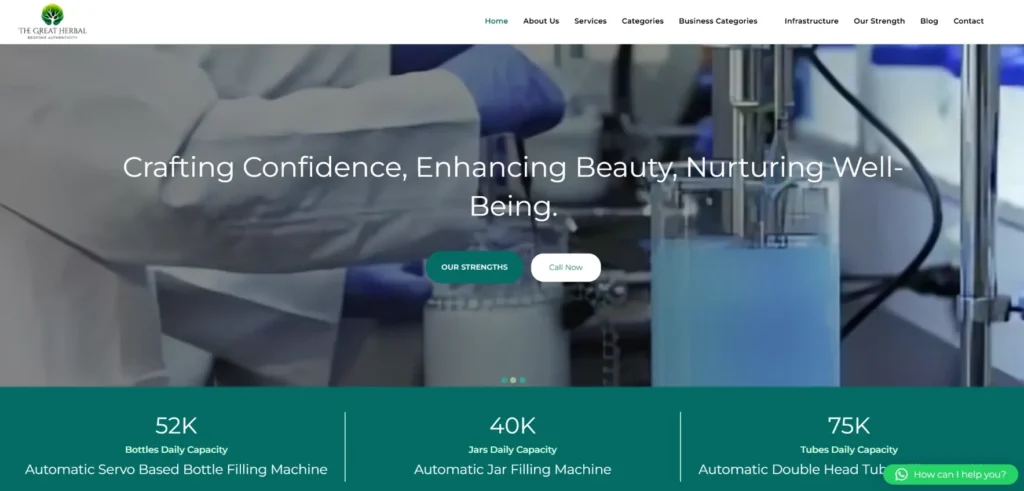
The Great Herbal presents a third-party hair-pomade manufacturing service with a public MOQ of 3,000 units. Its page lists custom formulation, private labeling, turnkey support, and jars, tins, or tubes. It also discusses plant-based waxes, castor oil, coconut oil, kaolin clay, and essential-oil fragrance directions.
That makes the company relevant to brands building a botanical or “clean grooming” concept. The formula can be positioned around different hold, finish, fragrance, and texture directions, subject to development and testing.
- Official website: https://thegreatherbal.com/
- Contact email:
businessdevelopment@thegreatherbal.com - MOQ: 3,000 units as publicly listed on the hair pomade product page.
Pros:
- Offers custom formulation, private labeling, and turnkey support.
- Lists jars, tins, and tubes as packaging directions.
- Relevant to botanical or plant-positioned concepts using waxes, oils, clays, and essential-oil fragrance directions.
Cons:
- The 3,000-unit minimum may be too high for an early market test.
- “Natural,” “clean,” and “plant-based” positioning requires precise definitions and substantiation.
- Formula ownership, exclusivity, included tests, and packaging-related minimums are not fully disclosed online.
Best for: Brands planning a moderate production run and seeking an India-based partner for a plant-positioned pomade.
Confirm who owns the formula, whether exclusivity is available, which tests are included, and whether custom packaging raises the MOQ. Any facility or testing claim should be backed by current documents linked to the actual manufacturing location and product.
9. Vasa Cosmetics — Best for Export-Focused Pomade and Afro Hair Care Projects
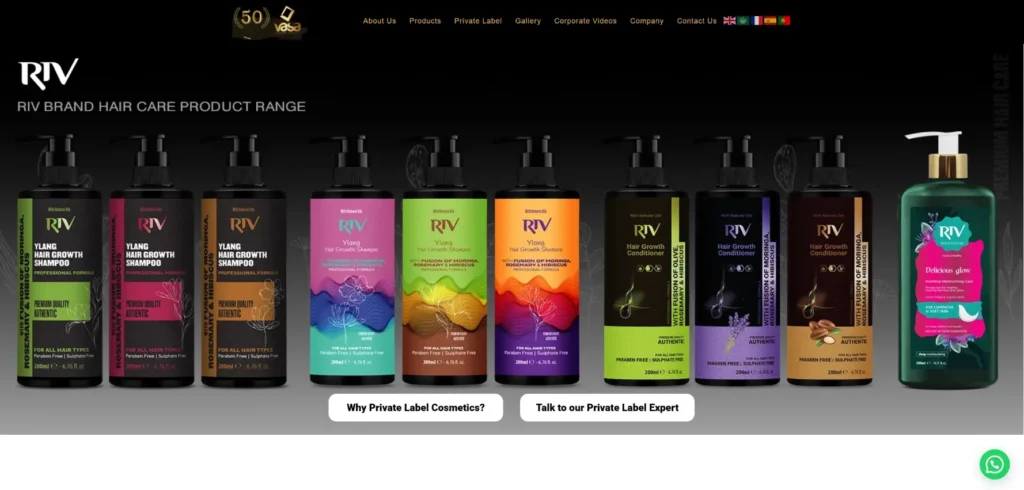
Vasa Cosmetics is an India-based private label and OEM/ODM manufacturer with a dedicated Hair Food, Pomade & Conditioners range. The company highlights products developed for African and Afro-American hair care needs and exports cosmetic and personal-care products to markets across Africa, the Middle East, and Europe.
Its public pomade page lists hair pomade, hair wax conditioner, hair food, scalp conditioners, and relaxer products. Packaging directions include jars and tubes in 125 g, 150 g, and 250 g sizes, with customized options available. The company also presents in-house formulation, packaging development, labeling, design, quality control, and quality assurance.
- Official website: https://www.vasacosmetics.com
- Contact email:
info@vasacosmetics.com - MOQ: Vasa’s public general private label guidance states 5,000 units. Confirm the pomade-specific minimum because formula, jar, size, artwork, and export packaging may affect the required batch.
Pros:
- Has a dedicated private label pomade and hair-food category rather than only adjacent styling products.
- Strong relevance to African and Afro-American hair care markets.
- Supports formulation, customized packaging, labeling, design, production, and export-oriented projects.
Cons:
- The 5,000-unit public figure is general private label guidance, not a pomade-specific quotation.
- The initial commitment is higher than the low-MOQ suppliers in this comparison.
- Buyers still need to verify current certificates, test reports, formula ownership, market-specific documentation, and packaging minimums.
Ask Vasa to quote the complete landed project by formula, fragrance, pack size, jar, label or decoration method, carton, testing, documentation, and destination. Its export experience is useful, but each brand remains responsible for confirming that the finished formula, label, and claims meet the rules of its target market.
10. Guangzhou Bioslle — Best for Low-MOQ Styling and Textured-Hair Products
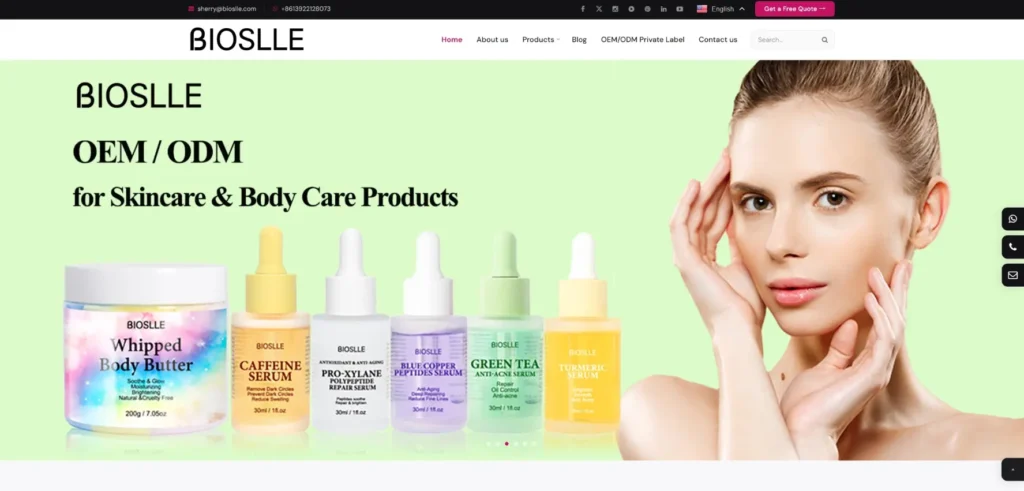
Guangzhou Bioslle Cosmetics is a China-based OEM/ODM supplier whose public range covers hair care, hair styling, beard care, skin care, and body care. Its styling catalog includes gels, edge control, braid and loc products, mousse, sprays, and hair wax sticks, making the company particularly relevant to textured-hair and protective-style brands.
The reviewed website does not show a dedicated conventional jar-pomade page. However, it publicly offers private label styling gels and wax formats, so buyers can ask whether Bioslle has an existing pomade base or can adapt a related styling formula to the required hold, shine, texture, and washout profile.
- Official website: https://www.bioslle.com/
- Contact email:
sherry@bioslle.com - MOQ: 100 units for selected custom-label styling gel and hair wax-stick products. A conventional jar-pomade MOQ is quote required.
Pros:
- Publishes a low 100-unit custom-label MOQ for selected styling products.
- Offers a broad range for textured hair, edges, braids, locs, wigs, and everyday styling.
- Provides OEM/ODM service and custom-logo options across hair, beard, skin, and body care.
Cons:
- No dedicated conventional hair-pomade page was found on the reviewed website.
- The published 100-unit minimum should not be assumed to cover a new formula, custom jar, or fully customized pomade.
- Buyers should verify the actual factory, formula-development capability, testing scope, certificate validity, and export documentation.
Ask Bioslle to identify the closest stock styling base and provide a sample before treating it as a pomade candidate. The final brief should define hold, shine, scoop, breakdown, washout, fragrance, fill size, jar, label, target market, and expected quantity.
How to Choose the Right Hair Pomade Manufacturer
A shortlist works only when every candidate receives the same brief. Otherwise, one quote may cover bulk formula while another includes packaging, tests, or design.
Choose the Manufacturing Route First
Most projects follow one of four routes:
- Stock private label: Use an established formula with your branding. It is usually the fastest route and often carries the lowest development risk.
- Semi-custom: Start with a proven base, then adjust scent, color, hold, shine, or selected ingredients.
- Fully custom: Build a formula around a proprietary texture, performance target, ingredient direction, and positioning.
- Formula transfer or fill-only: Provide a formula you own and engage the factory to scale, fill, and pack it.
Ask who owns the final formula, whether exclusivity is available, and what happens if the relationship ends.
Define Performance Before Asking for Samples
“Strong hold, not greasy” is too vague. A useful brief defines:
- target hair types and hairstyles;
- light, medium, strong, or extra-strong hold;
- matte, natural, low-shine, or high-shine finish;
- scoop, breakdown, spread, and application feel;
- use on dry or damp hair;
- restylability during the day;
- washout expectation;
- flaking, residue, or buildup tolerance;
- temperature and humidity conditions;
- fragrance family and intensity.
Include a benchmark, but state what should be matched and improved. Clear priorities prevent one performance change from undermining another.
Consumer-use issues should also shape the brief and claims. Review pomade’s potential buildup, breakage, and skin-contact trade-offs.
Compare the MOQ Behind the Headline
One “MOQ” may hide several separate minimums:
- bulk formula batch;
- filling run;
- jar, tin, tube, lid, or liner;
- custom color and decoration;
- label and carton print run;
- fragrance or color variant;
- fill size;
- number of SKUs.
A 500-unit formula minimum is not useful if a printed jar requires 5,000 pieces. Request separate costs for development, testing, formula, components, filling, print, freight, duties, and recurring orders.
Test the Formula and Package Together
A pomade should be evaluated for consumer performance and supply-chain resilience. Depending on the formula and market, the plan may include:
- stability and temperature cycling;
- microbiological controls for water-containing formulas;
- hold, shine, restylability, residue, and washout;
- oil sweating, separation, cracking, or graininess;
- jar, tin, liner, closure, and label compatibility;
- leakage, denting, and transport exposure;
- fill-weight checks and batch consistency;
- comparison with the signed approved sample.
Keep a dated “golden sample” and written specification. Do not approve production from memory or informal chat messages.
Verify Destination-Market Responsibilities
The factory can support documentation, but the private label brand cannot outsource all legal responsibility with one purchase order.
For the United States, FDA explains that MoCRA includes facility-registration and cosmetic-product-listing requirements, subject to applicable exemptions. A responsible person is generally the manufacturer, packer, or distributor whose name appears on the label. Registration or listing is not FDA product approval. Review current FDA MoCRA information for the actual project.
For the European Union, the product needs an EU Responsible Person and must meet applicable safety, Product Information File, labeling, and notification requirements. The European Commission explains that the CPNP is the notification portal established under Regulation (EC) No 1223/2009.
For Great Britain, current GOV.UK guidance describes the UK Responsible Person, safety report and PIF, labeling, good manufacturing practice, and notification to OPSS before the product is made available.
Obtain advice for the formula, claims, label, importer structure, and market where the product will actually be sold.
Private Label vs. White Label vs. Custom Formulation — Know What You’re Buying
Before comparing vendors, it helps to know which service you actually need, because the words get used loosely.
Private label and white label both mean branding a formula the manufacturer already owns. You choose from their existing pomades, add your packaging and label, and go to market. This is the cheapest and fastest route, usually with lower minimums — ideal for a first product or a quick line extension. The trade-off is that a competitor could be selling the same base formula under a different name.
Custom formulation (often called OEM or ODM) means developing your own recipe — a signature hold, a specific finish, a hero ingredient, or a scent that becomes part of your identity. It costs more and takes longer, and minimums are higher, but you end up with a product nobody else can copy exactly. Most serious brands graduate to custom once they’ve validated demand.
Full turnkey is the option where a single partner handles everything: formulation, filling, packaging, labeling, and the compliance paperwork. Fewer vendors to manage means fewer things fall through the cracks, which matters more than founders expect.
Fewer vendors to manage can mean fewer things fall through the cracks, although the written scope matters and compliance responsibility is not automatically transferred from the brand, responsible person, or importer.
Once the route is chosen, the private label pomade manufacturing process shows how a brief moves through sampling, testing, packaging, production, and release.
The right choice comes down to your budget, your timeline, and how differentiated your product genuinely needs to be.
What Does a Private Label Hair Pomade Project Cost?
There is no reliable unit price until the formula route, batch size, packaging, testing scope, and destination are defined. Compare the total landed project cost rather than the factory price of one filled jar.
Include these cost layers in every quotation:
- Product development: benchmark matching, samples, revisions, and any custom-formulation fee.
- Formula and filling: bulk batch minimum, fill weight, expected process loss, and setup charges.
- Packaging: jars or tins, liners, closures, labels or printing, cartons, and separate component minimums.
- Verification: stability, microbiological, compatibility, and performance testing, plus any label or dossier review.
- Logistics: inspection, freight, insurance, duties, customs handling, and delivery to your warehouse.
Ask shortlisted manufacturers to quote the same specification and separate one-time development costs from repeat-order costs. A lower unit quote may cost more overall if it requires excess packaging or leaves testing and component coordination to the buyer.
From Shortlist to Approved Supplier in Five Steps
A useful shortlist should lead to comparable evidence, not ten unrelated sales conversations. These five steps help you narrow the options, score samples consistently, and approve written specifications before production.
For broader due diligence, use our guide to choosing a reliable hair product manufacturer.
Step 1. Write One Comparable Product Brief
Define the target customer, formula type, hold, finish, washability, fragrance, fill size, package, target market, quantity, budget, and launch date. Send the same core brief to every supplier.
Step 2. Reduce the List to Two or Three Candidates
Filter out companies that cannot meet the route, MOQ, location, documentation, or timeline. Communication quality matters, but a fast reply is not proof of manufacturing quality.
Step 3. Request Comparable Quotations and Documents
Ask each supplier to separate formula, development, testing, packaging, filling, labels, cartons, tooling, freight, and recurring costs. Request documents tied to the actual legal factory and production address.
Step 4. Order and Score Samples
Test samples with the same application amount, hair types, climate conditions, and scorecard. Record feedback on hold, finish, scent, texture, residue, restylability, washout, and packaging.
Step 5. Approve Written Specifications Before Production
Sign off the formula, fragrance, color, viscosity or texture, fill weight, components, artwork, tolerances, test plan, quality checks, and approved reference sample. Put the remedy for an out-of-specification batch in the contract.
Questions to Ask Before Ordering Pomade Samples
Use these questions to turn a sales conversation into a comparable supplier review:
- Do you offer stock, semi-custom, fully custom, and formula-transfer routes?
- Which water-based, oil-based, hybrid, cream, wax, or clay-pomade formats do you currently make?
- Who owns the finished formula, and is exclusivity available?
- What is the MOQ for the formula, filling, fragrance, size, jar or tin, label, and carton?
- Which hold, shine, texture, fragrance, and washability attributes can be adjusted?
- How many samples and revision rounds are included?
- Which stability, microbiological, compatibility, and performance tests are included?
- Can you source jars, tins, tubes, liners, labels, and cartons?
- What documents can you provide for the destination market?
- Which marketing claims can be supported by the formula and test evidence?
- How do you control batch-to-batch consistency?
- What are the sample, production, packaging, and reorder lead times?
- What happens if production differs from the approved sample?
- Can the buyer or an independent inspector review the factory and finished goods?
Keronhair: Your Private Label Hair Pomade Manufacturing Partner
Hair pomade may be a styling classic, but today’s brands have far more room to make it their own. From flexible everyday control to strong, polished finishes, the right formula can help your product stand out in salon, barber, retail, and e-commerce collections.
At Keronhair, we support private label hair pomade projects around the needs of your brand—not a one-size-fits-all product. Our team can help you explore water-based or oil-based formula directions, different hold levels, shine or matte finishes, fragrance options, textures, colors, and ingredient positioning.
Have a benchmark product, a specific styling experience, or a packaging idea in mind? Share it with us. Keronhair can coordinate formula selection or custom development, prepare samples for your review, and refine the product before you approve it for production.
Once the formula and project specifications are confirmed, our team can help you:
- prepare a formula route suited to your target users
- select jars, tins, labels, cartons, and decoration options
- coordinate sample feedback and written approval
- move the approved product into controlled bulk manufacturing
- organize available quality and export documents for buyer review
In other words, Keronhair does more than fill pomade into a jar. We help connect the formula, packaging, manufacturing, and brand presentation needed to build a complete private label styling product.
Ready to create a pomade that fits your market?
Discuss your pomade project with Keronhair and request a formula, packaging, sample, and MOQ review based on the actual brief.
Final Takeaway
The best hair pomade manufacturer is the one that fits your formula route, quantity, packaging, testing, target market, and growth plan. Use this list to identify two or three realistic candidates, then send each company the same written brief.
Compare the complete quotation, verify the actual factory and documents, score samples consistently, and approve written specifications before production.
If you are developing pomade as a standalone hero product or as part of a broader styling line, review Keronhair’s broader hair product OEM/ODM capabilities before you send Keronhair your project brief for a project-specific discussion about formulas, packaging, samples, and MOQ.
Frequently Asked Questions
What is a private label hair pomade manufacturer?
A private label hair pomade manufacturer produces a pomade that another business sells under its own brand. Some manufacturers offer ready-made formulas; others allow scent, hold, finish, ingredients, and packaging to be adjusted. A contract manufacturer may also develop a proprietary formula or manufacture a formula owned by the brand.
What is the typical MOQ for private label pomade?
There is no universal MOQ. Public examples in this guide range from very small ready-made U.S. programs to thousands of units for custom or turnkey projects. The true minimum depends on formula batch size, fragrance, fill size, packaging, printing, number of SKUs, and customization. Always request the MOQ for the complete configuration.
How much does it cost to manufacture hair pomade?
The unit price is only one part of the budget. Include formula development, samples, testing, bulk product, jars or tins, decoration, labels, cartons, filling, freight, duties, compliance work, and inspection. Stock formulas normally reduce development cost, while custom formulas and custom packaging increase the upfront investment.
Can a manufacturer customize hold, shine, scent, and washability?
Usually, but the degree of control depends on the manufacturing route. Changing one attribute can affect another. More wax may strengthen hold but change scoop or washout. A fragrance change may require compatibility or stability review. Agree on priorities and approve the final sample and specification before production.
Is water-based or oil-based pomade better for a private label brand?
Neither is universally better. Water-based pomade often supports easier washout and broad everyday appeal. Oil-based pomade suits classic shine, flexible restyling, and longer wear. Hybrid formulas seek a middle ground. Choose according to the target customer, positioning, climate, performance brief, and planned retail channel.
Should I choose a U.S., European, Indian, or Chinese manufacturer?
Compare project fit rather than country alone. Consider formula specialization, MOQ, packaging ecosystem, development cost, freight, communication, intellectual-property terms, documentation, and proximity to your market. A local supplier may simplify communication and logistics, while an overseas partner may offer a broader component network or different scale economics.
What tests should be completed before bulk production?
The test plan depends on the formula and market, but it may include stability, microbial risk controls, packaging compatibility, heat and cold exposure, hold and washout performance, fill and closure checks, transport testing, and comparison against the approved sample. The safety assessor or responsible regulatory party may require additional data.
Does FDA registration mean a pomade is FDA approved?
No. Facility registration and cosmetic product listing under applicable U.S. rules do not mean FDA has approved the company or product. The responsible parties must still ensure that the cosmetic is safe, properly labeled, and legally marketed. Avoid using “FDA approved” as a cosmetic marketing claim when approval has not occurred.