Sourcing & Supplier Due Diligence
How to Choose a Custom Hair Care Manufacturer in China
To choose a custom hair care manufacturer in China, define your formula, packaging, target market, quantity and budget first. Then verify the legal entity and the Cosmetics Manufacturing Licence — including whether the licensed production unit covers your product format — review quality and test evidence, develop samples in the intended pack, compare total landed cost per finished SKU, audit the site, and put specifications, ownership, testing and change control into the contract.
Identity
Business licence and Cosmetics Manufacturing Licence, matched to the site that will actually run your batch.
Category fit
Shampoo experience does not transfer to hair colour, wax or relaxer. Process and licensed unit have to match the format.
Evidence
GMP and ISO 22716 scope, a product-specific test plan, batch records and traceable retained samples.
Cost
Landed cost for one defined SKU — not the unit price on the cheapest quotation.
What Should You Define Before Choosing a Custom Hair Care Manufacturer in China?
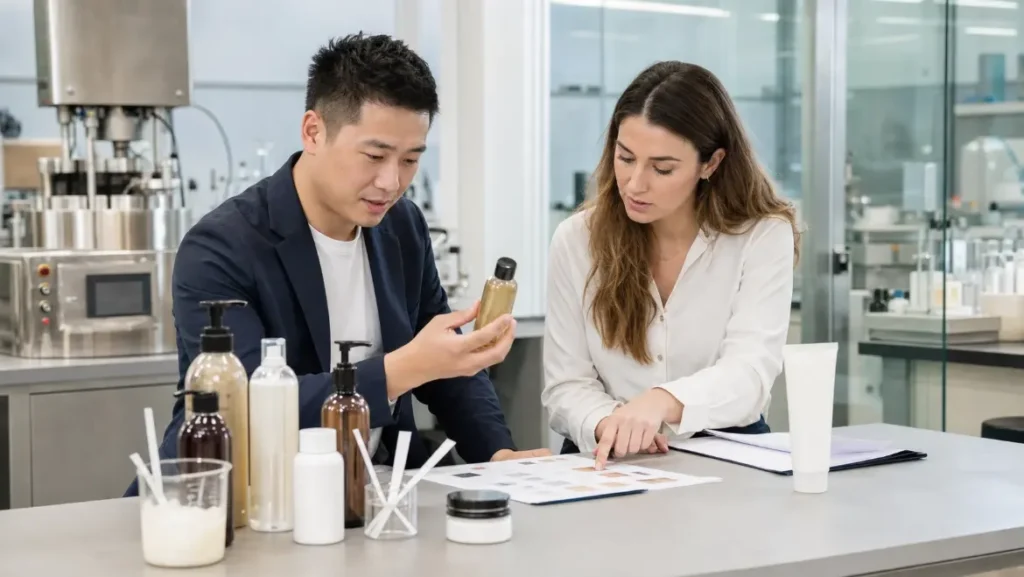
A manufacturer cannot be evaluated until the product is defined. A request such as “natural shampoo at the best price” leaves suppliers to make different assumptions about formula, packaging, testing, order quantity, and market requirements. The resulting samples and quotations will not be comparable.
Before contacting a custom hair care manufacturer in China, define the product, intended user, performance target, formula route, packaging, destination market, quantity per finished SKU, target landed cost, and launch window. Send the same approved brief to every shortlisted supplier.
| Brief field | What to define | Why it changes the project |
|---|---|---|
| Product and user | Format, hair type, concern, use occasion, channel, and pack size | Guides formula, sensory profile, instructions, and positioning |
| Performance | Lather, slip, rinse feel, hold, shine, residue, viscosity, and fragrance | Turns subjective preferences into sample criteria |
| Benchmark | What you like and dislike about reference products | Clarifies the target without asking the lab to copy a formula |
| Formula route | Stock, adapted base, full custom, or buyer-controlled formula | Changes R&D work, ownership questions, testing, timing, and cost |
| Packaging | Fill size, container, closure, decoration, label, and carton | Affects compatibility, filling, MOQ, freight, and lead time |
| Market and claims | Destination, label language, proposed claims, and sales channel | Affects ingredients, evidence, documents, and artwork review |
| Commercial plan | Quantity per SKU, target landed cost, launch date, and forecast | Shows whether the project fits the factory’s scale and supply chain |
Buyer rule: compare one defined finished SKU, not broad price lists. A quotation is only useful when the formula route, pack, quantity, tests, documents, and shipping basis are the same.
If you are planning a commercial order, our guide on how to wholesale hair care products from Chinese manufacturers explains the sourcing process in more detail, including buying models, supplier selection, MOQ, quotations, payment terms, and shipping.
Choose the Manufacturing Model That Fits the Launch
Private label, OEM, ODM, contract manufacturing, and custom formulation are used differently across suppliers. Treat these labels as conversation starters. The written scope of work decides what the factory will actually do.
Stock or Private Label
An existing formula and readily available packaging may suit a brand testing demand. The trade-off is limited differentiation and less control over the underlying formula.
Semi-Custom Development
An established base is adjusted for fragrance, color, viscosity, selected ingredients, or sensory targets. Confirm which changes are technically available and which tests must be repeated.
Full Custom or ODM
The manufacturer develops against a detailed brief. This can create stronger differentiation, but it normally requires more sample rounds, technical decisions, testing, time, and contractual clarity.
OEM or Contract Manufacturing
The buyer supplies a controlled formula, specification, or technical package. Discuss technology transfer, scale-up validation, permitted substitutions, confidentiality, and access to manufacturing instructions.
If the formula route is still unclear, compare custom and stock formula options. If the bigger decision is production location, review the trade-offs between China and local hair care manufacturers before building the shortlist.
How to Verify a Hair Care Manufacturer in China Before Requesting Samples
Discovery and verification are different jobs. Search engines, trade fairs, referrals, marketplaces, and supplier lists can produce names. They do not prove that a seller controls a factory, holds the relevant license, or has experience with your product format.
First, Identify the Supplier’s Actual Role
Direct Manufacturer. Produces at its licensed site and may coordinate formulation, filling, packing, and batch release. Ask which testing, components, decoration, or specialist work is outsourced.
Trading or Sourcing Company. May coordinate several factories and packaging suppliers. This can be useful, but the actual manufacturer, licensed address, quality responsibility, audit access, and complaint route should be disclosed.
Integrated OEM/ODM Partner. Coordinates development, manufacturing, packaging, and export preparation through one project team. “Full service” still requires a written responsibility map for in-house and external work.
Build One Evidence Chain
Ask for the full Chinese legal name and a readable business license. Then request the Cosmetics Manufacturing License for the actual production site and confirm that the relevant product falls within its permitted scope. China’s manufacturing and marketing provisions for cosmetics state that cosmetics manufacturing is subject to licensing and that records should support traceability.
For a more detailed due-diligence process, see our guide on how to verify a hair care product manufacturer, including licenses, certification scope, factory checks, testing records, and supplier identity verification.
| Claim to verify | Evidence to request | What should match |
|---|---|---|
| “We are the factory” | Business license, Cosmetics Manufacturing License, site address, and live or on-site review | Legal name, licensed holder, production address, signage, and relevant rooms |
| “We can make this product” | License scope, relevant equipment, category experience, sample process, and quality records | Your format, process, viscosity, package, and intended production line |
| “Pay this company” | Quotation, contract, commercial invoice, bank beneficiary, and exporter details | The parties align or their legal relationship is documented |
| “We follow GMP” | Current certificates where applicable, audit evidence, and operating records | Correct entity, site, activity, dates, and day-to-day controls |
| “Testing is included” | Named tests, sample identity, method, laboratory, timing, and report deliverables | The test plan applies to the final formula and intended package |
How to Evaluate a Chinese Hair Care Manufacturer’s R&D and Sampling Process

A Chinese hair care manufacturer’s R&D capability should be judged through its technical questions, sample controls, scale-up process, and written specifications—not the size of its product catalog. Strong technical teams ask about the user, benchmark, sensory target, packaging, market, claim direction, cost, and approval method before promising a result.
Check Experience With the Exact Format
Shampoo experience does not automatically transfer to oxidative hair color, concentrated scalp serum, hot-filled styling wax, aerosol products, or professional smoothing systems. Different formats can require different equipment, mixing controls, filling methods, packaging, safety work, and instructions.
Ask for an anonymized development workflow, sample scorecard, specification template, or explanation of a comparable technical problem. You do not need another client’s confidential formula.
Use a Seven-Gate Approval Path
- Approve the brief. Freeze the target product, user, performance, formula route, pack, market, cost, and quantity assumptions.
- Receive coded samples. Every version should have a code, date, formula status, and written purpose.
- Score performance. Evaluate criteria relevant to the product, not a general impression of “premium quality.”
- Test the intended package. Formula and component decisions should be evaluated together.
- Approve a written specification. Define measurable physical, microbiological, sensory, fill, package, and artwork requirements.
- Retain a golden sample. Both parties should keep traceable reference samples where practical.
- Validate through a pilot or first controlled batch. Confirm scale-up, filling, coding, assembly, records, release, and shipment condition before increasing volume.
Sample Criteria for Shampoo
Appearance, odor, pH where relevant, viscosity, foam profile, wet slip, rinse feel, dry feel, residue, fragrance intensity, and dispenser function.
Sample Criteria for Styling Products
Spread, pickup, hold, shine, tack, restylability, flaking, washout, residue, temperature behavior, and dispensing.
Ask How the Formula Will Scale
Laboratory and production vessels do not behave identically. Mixing speed, heating, cooling, addition order, aeration, and hold time can affect texture and performance. Ask how the team moves from laboratory sample to pilot and commercial batch, what data it records, and who approves deviations.
Clarify Formula Ownership Before Paying Development Fees
OEM or ODM terminology does not determine ownership. The supplier may retain a base formula, the buyer may own a fully funded development, or the parties may agree to limited exclusivity. The agreement should cover formula access, manufacturing instructions, confidentiality, permitted use, transfer rights, territory, channel, duration, and termination. A development fee does not automatically transfer intellectual property.
What Quality, Testing, and Compliance Evidence Should a China Hair Care Factory Provide?
A China hair care factory should connect its quality claims to the actual legal entity, production site, final formula, intended package, and batch records. Certificates are useful evidence, but a logo cannot guarantee a batch. Verify the holder, site, scope, issuing body, dates, and status, then review operating records for materials, production, testing, release, retained samples, complaints, recalls, deviations, and change control.
China’s Good Manufacturing Practice for Cosmetics applies to cosmetics registrants, filing applicants, and entrusted manufacturers within its scope. ISO 22716 is another common reference for production, control, storage, and shipment. Buyers should still verify how the factory applies its procedures to the project.
Build a Product-Specific Test Plan
| Risk to control | Possible evidence | Buyer checkpoint |
|---|---|---|
| Formula changes over time | Stability protocol and results under justified conditions | Does the tested sample match the final formula code? |
| Microbiological risk | Microbiological limits and preservative-efficacy work where appropriate | Are methods, limits, sample identity, and laboratory recorded? |
| Formula–package interaction | Compatibility observations using the intended container, closure, liner, and decoration | Were leakage, clogging, swelling, corrosion, discoloration, odor, and label adhesion considered? |
| Distribution stress | Transit, drop, vibration, temperature, or shipment simulation where justified | Does the plan reflect route, carton, pallet, and climate risks? |
| Performance or marketing claims | Appropriate instrumental, consumer, expert, or documentary support | Does the evidence support the exact wording in the destination market? |
Map Destination-Market Responsibilities
China Manufacturer
Should provide relevant formula, ingredient, manufacturing, test, batch, and facility information agreed for the project. Confirm who supplies each document and when.
United States
Map the facility, manufacturer, brand, importer, and Responsible Person roles. The FDA states that cosmetic facility registration and product listing are not an approval program and that it does not issue certificates for them.
European Union
Identify the EU Responsible Person and plan the safety report, Product Information File, label review, and CPNP notification. The European Commission’s cosmetics legislation page explains that an EU Responsible Person is required before placing a cosmetic on the market.
How to Compare MOQ, Packaging, and Landed Cost Between Chinese Hair Care Manufacturers
When comparing Chinese hair care manufacturers, evaluate MOQ, packaging, and total landed cost as one commercial system. The lowest unit quotation is rarely the lowest-risk project. A minimum may apply per formula, fragrance, shade, fill size, bottle color, decoration, closure, or finished SKU. The factory may accept one filling quantity while the pump or printed-tube supplier requires more components.
Ask who owns and stores unused raw materials, bottles, pumps, labels, cartons, molds, and printing plates. Define what happens if the formula, artwork, or packaging changes.
Qualify the Complete Pack
- Primary container: bottle, jar, tube, sachet, can, or pouch in the approved material and fill size.
- Closure and dispensing: pump, cap, trigger, liner, seal, nozzle, dip tube, and torque requirements.
- Decoration: color, label, screen print, hot stamp, coating, embossing, and batch coding.
- Secondary and transit packaging: carton, insert, shipper, dividers, pallet pattern, and export marks.
- Compatibility and line fit: formula interaction, leakage, dispensing, filling speed, sealing, coding, and assembly.
Keronhair’s guide to private label MOQ, sampling, packaging, and lead time explains why these decisions cannot be planned separately.
Normalize Every Quotation
| Cost field | What the quote should state | Common omission |
|---|---|---|
| Formula and filling | Formula route, fill size, quantity, tolerances, and production basis | Different formula assumptions hidden behind one unit price |
| Complete packaging | Every component, material, decoration, label, carton, and assembly step | Pumps, cartons, plates, or printing charged later |
| Development and samples | Included rounds, sample quantity, courier, and extra-round fees | Unlimited revisions implied but not contracted |
| Testing and documents | Named tests, reports, specifications, and delivery timing | “All certificates included” without a list |
| Tooling and setup | Mold, plate, color matching, line setup, ownership, storage, and reuse | One-time and recurring charges mixed together |
| Trade and logistics | Incoterm, named place, export pack, freight basis, insurance, and document scope | Supplier quotes compared under different shipping assumptions |
| Cash exposure | Deposit, balance milestone, inspection timing, and refund or remedy terms | Payment required before approvals are complete |
Landed-cost view: finished-goods price + development + testing + tooling + inspection + freight + insurance + duty/tax + warehousing + payment fees + expected rework or delay exposure. Use the same assumptions for every candidate.
What to Check During a China Hair Care Factory Audit and Contract Review

Before approving a China hair care factory, use the audit and contract review to test whether its documents, people, equipment, records, and daily controls support the sales claims. An on-site visit gives the clearest view, but a structured live video review or qualified independent audit can provide useful evidence when travel is impractical.
Identity and Site
Compare the licensed address, company signage, relevant production rooms, laboratory, warehouses, quarantine areas, and any shared or subcontracted operations.
Materials and Traceability
Follow one example batch from approved raw-material lots through weighing, compounding, filling, packing, testing, release, and retained samples.
Equipment and Capacity
Review the line for the actual format and viscosity. Ask about batch size, changeover, peak-season scheduling, maintenance, material lead times, and backup arrangements.
Problems and Changes
Review anonymized deviation, complaint, corrective-action, and change-control records. Confirm who may approve formula, supplier, site, process, or packaging changes.
Define the Technical and Commercial Agreement
- Final formula or controlled specification, ingredient information, measurable limits, test plan, packaging, artwork, codes, and golden sample.
- Formula ownership, access, exclusivity, transfer, confidentiality, permitted use, and termination rights.
- Ownership and storage of molds, printing plates, artwork, components, and unused custom materials.
- Prior written approval for changes to raw materials, formula, fragrance, packaging, process, site, supplier, or subcontractor.
- Quantity tolerances, milestones, Incoterms, payment stages, inspection rights, release documents, and delivery timing.
- Investigation, sampling, independent testing, rework, replacement, credit, recall cooperation, delay, and nonconforming-goods remedies.
“Same as sample” is not enough. A sample must have an identity, and the contract must connect that sample to a measurable specification, approved package, test plan, and change-control process.
“Same as sample” is not enough. A sample must have an identity, and the contract must connect that sample to a measurable specification, approved package, test plan, and change-control process.
How to Score and Select the Right Custom Hair Care Manufacturer in China
To select the right custom hair care manufacturer in China, combine a weighted scorecard with pass-or-fail requirements. The scorecard keeps an attractive sample or low price from hiding larger risks. Score the evidence supplied for the same project, not the presentation quality of each sales team.
If you are still building your shortlist, our comparison of hair care manufacturers in China can help you identify potential suppliers before applying the evaluation framework below.
| Evaluation area | Weight | Evidence to compare |
|---|---|---|
| Project and category fit | 15 | Format, target, process, equipment, package, market, and launch scale |
| Legal identity and licensing | 15 | Company, licensed site, scope, contract, invoice, beneficiary, and exporter |
| R&D and sample control | 15 | Brief quality, coded versions, feedback, specification, scale-up, and ownership |
| Quality systems and testing | 20 | Operating records, traceability, test plan, deviations, release, and changes |
| Packaging and production fit | 10 | Components, compatibility, line trials, assembly, transit, and reorder control |
| Compliance-document support | 10 | Defined data package, timing, market roles, and claim-support inputs |
| MOQ, landed cost, and terms | 10 | Normalized quote, cash exposure, Incoterm, timing, and remedies |
| Communication and risk response | 5 | Technical questions, action records, escalation, and problem-solving behavior |
| Total | 100 | Use the score only after every hard-stop requirement passes |
Non-Negotiable Pass-or-Fail Gates
Identity Gate
The legal entity, licensed manufacturing site, scope, contracting party, and payment structure are verified or satisfactorily documented.
Product Gate
The formula, package, artwork, specification, golden sample, and required test plan are approved before bulk production.
Change Gate
No material, formula, supplier, site, process, closure, or subcontractor change may occur without the agreed written review.
Remedy Gate
Inspection, nonconformance, investigation, rework, replacement, credit, delay, and recall-cooperation terms are usable in practice.
A Practical 10-Step Selection Workflow
- Write and approve one product brief.
- Build a three-to-five-manufacturer shortlist.
- Verify legal entities, licenses, sites, and commercial parties.
- Send the same RFQ, test request, document list, and shipping basis.
- Review R&D, packaging, quality, and compliance evidence.
- Develop coded samples and score them against written criteria.
- Evaluate the formula in the intended package and audit the factory.
- Approve specifications, ownership, changes, terms, and remedies.
- Run a pilot or controlled first production order.
- Review quality, timing, records, communication, and reorder readiness before scaling.
Red Flags When Choosing a Hair Care Manufacturer in China
Most supplier concerns should trigger a precise question and evidence request rather than an immediate assumption. However, repeated identity mismatches, withheld documents, unsupported compliance claims, or pressure to approve production before the technical package is complete should slow or stop the project.
- The supplier will not provide its Chinese legal name, current business license, or applicable Cosmetics Manufacturing License.
- The licensed site, contract, invoice, payment beneficiary, and exporter do not align, and the differences remain unexplained.
- The sales team shows only a showroom, edited video, or production line unrelated to your format.
- A certificate is cropped, expired, issued to another entity, or outside the relevant site and scope.
- “FDA approved” is used as a factory-quality or product-approval claim for cosmetics.
- A fully custom formula, any performance claim, or an unrealistic deadline is accepted before the team understands the brief.
- Formula ownership or exclusivity is promised verbally but excluded from the agreement.
- The quotation omits the formula route, packaging components, MOQ basis, testing, exclusions, or shipping term.
- The supplier discourages compatibility testing, retained samples, final specifications, inspection, or change control.
- Bulk production is pushed before the formula, package, artwork, test plan, and commercial terms are approved.
Is Keronhair the Right Custom Hair Care Manufacturing Partner for Your Brand?
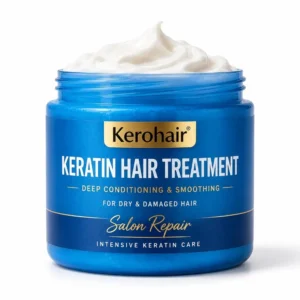
Keronhair is one China-based candidate for brands seeking coordination across product development, packaging, sampling, quality control, and production. Buyers should apply the same evidence standards in this guide to Keronhair and every alternative supplier.
Begin by reviewing Keronhair’s custom hair care manufacturing capabilities, then request project-specific confirmation of the current facility scope, formula route, MOQ, packaging options, sample plan, tests, documents, timing, and commercial terms. Product categories and available services should be confirmed against the exact brief rather than assumed from a general website statement.
Send a Decision-Ready Project Request
To receive a more useful first response, include your target market, product formats, intended users, performance targets, benchmark references, proposed claims, packaging direction, quantity per finished SKU, target landed cost, and launch date.
Share your hair care project with Keronhair and ask the team to answer against the same brief and scorecard used for the rest of your shortlist.
Final Checklist for Choosing the Right Hair Care Manufacturer in China
The right custom hair care manufacturer in China is the factory or manufacturing team whose licensed scope, technical ability, package control, quality system, documentation, commercial model, and communication fit the product you actually intend to sell.
Define the brief before requesting quotes. Verify every party and the production site. Control sample versions, test the intended package, normalize landed cost, audit the operating system, and put ownership and change rules in writing. Then use a pilot order to see whether the approved plan survives production before adding more volume or SKUs.
FAQs About Choosing a Custom Hair Care Manufacturer in China
How can I tell whether a Chinese hair care supplier is a real factory?
Request the business license and Cosmetics Manufacturing License, then compare the Chinese legal name, production address, scope, and validity with official records where possible. A visit or structured live review should show the same site. The quotation, contract, invoice, payment beneficiary, and exporter should also fit the disclosed company structure.
What license should a hair care manufacturer in China hold?
A cosmetics factory should hold a current Cosmetics Manufacturing License for the actual production address and relevant permitted items. A business license identifies the company but does not replace the manufacturing license. If another site or subcontractor will perform part of the work, request the relevant license and quality information for that operation.
Is OEM, ODM, or private label better for a new hair care brand?
Stock or private label products may suit faster market testing. Adapted or custom development can support more differentiation but normally adds technical decisions, sample rounds, tests, time, and cost. Contract manufacturing may suit a buyer-controlled formula. Compare the written scope, ownership, testing, MOQ, and schedule instead of choosing by the acronym.
What is a typical MOQ for custom hair care products in China?
There is no reliable universal MOQ. It can be driven by formula batch size, fragrance, shade, fill size, container, closure, decoration, or finished SKU. Packaging minimums may exceed the factory’s filling minimum. Request the MOQ for the exact configuration and confirm how unused materials and components will be handled.
How many sample rounds should I expect?
A stock formula may need one focused evaluation, while a custom product can require several revisions. The number depends on the brief, technical difficulty, feedback quality, packaging, and whether a change requires more testing. Confirm the included rounds and extra fees. Give every sample a code and approve the final version against a written specification.
Can a Chinese manufacturer make my product compliant for the US or EU?
The manufacturer can supply agreed formula, ingredient, manufacturing, testing, and batch information and may coordinate parts of the process. The brand, importer, US Responsible Person, EU Responsible Person, and other parties retain their applicable duties. Confirm the final formula, claims, label, safety work, notification or listing, and market responsibilities with qualified advisers.
Should I visit the factory before placing an order?
A visit is useful when the order value, formula complexity, or supply risk justifies it. If travel is impractical, use a structured live review or qualified third party. An audit supports—but does not replace—product testing, package qualification, approved specifications, production inspection, and a clear agreement.
When is it reasonable to pay a production deposit?
Pay only after verifying the parties and license, understanding the quotation and beneficiary, and agreeing the approval path. Before bulk production, the contract should address the formula, package, artwork, specification, testing, ownership, changes, delivery, inspection, documents, nonconforming goods, and remedies.
Who should own a custom hair care formula?
There is no automatic answer. The manufacturer may retain a base formula, the buyer may own a funded development, or the parties may agree to limited exclusivity. Put access, manufacturing instructions, confidentiality, transfer rights, permitted use, territory, channel, duration, and termination terms in the agreement.