WHOLESALE HAIR CARE SOURCING GUIDE
Best Places to Buy Hair Care Products Wholesale
You can buy hair care products wholesale through authorized brand distributors, salon wholesalers, stock private label suppliers, contract manufacturers, B2B marketplaces, industry directories and trade shows, or a sourcing agent. The right channel depends on whether you need established brands, your own label, a custom formula, local inventory, or direct factory pricing.
RESELL BRANDS
Use authorized distributors or professional salon wholesalers.
LAUNCH YOUR LABEL
Use a stock private label program when an established formula fits.
CUSTOMIZE PRODUCTS
Use an OEM/ODM or contract manufacturer for a differentiated brief.
ADD LOCAL SUPPORT
Use an agent or importer when overseas coordination needs help.
Which hair care products wholesale channel is the best fit for your business?

No channel is best for every buyer. Start with what you plan to sell, how much control you need, how quickly you must replenish stock, and which technical or import tasks your team can manage. Those four choices usually remove several unsuitable routes before you compare individual suppliers.
Choose an authorized distributor or salon wholesaler if you want to resell established brands. If you plan to launch your own label, compare different hair care manufacturers for private label brands based on MOQ, packaging support, formula options, and production capabilities before building your shortlist.
Distributors offer almost no formula or packaging control. Stock private label gives you branding and a limited menu of formulas or packs. A contract manufacturer can support more distinctive performance, fragrance, texture, packaging, or formula development. That control is real only when the specification, ownership, exclusivity, and change rules appear in the agreement.
Local wholesalers often support smaller case orders and quicker replenishment. Private label and manufacturing programs can have separate minimums for the formula batch, each SKU, bottles, closures, labels, cartons, colors, and decoration. Reorder time depends on what is already in stock, what must be produced, and how the shipment reaches your warehouse.
Domestic wholesale reduces factory coordination and import work. Direct manufacturing requires a clear brief, controlled samples, testing decisions, quality gates, shipping arrangements, and market-specific compliance. A sourcing agent can coordinate parts of the work, but you should still see the supplier, evidence, approvals, and commercial terms.
Hair care products wholesale sourcing channels at a glance
A useful channel can still contain an unsuitable supplier. Use the table to narrow the field, then verify the company and offer.
Channel | Best for | Main advantage | Main limitation | Verify first |
Authorized brand distributors | Established-brand resale | Clearer brand access and local stock | Low product control | Authorization, territory, shelf life, and channel rights |
Professional salon wholesalers | Salons and professional retailers | Professional ranges and faster replenishment | Account restrictions and limited customization | Authenticity, account rules, stock, and returns |
Stock private label suppliers | A simpler own-brand launch | Lower development burden | Limited formula differentiation | Formula identity, MOQ layers, packaging, and label support |
OEM/ODM manufacturers | Semi-custom or custom products | More formula and packaging control | More development and quality work | Capability, documentation, testing, ownership, and capacity |
B2B wholesale marketplaces | Broad discovery and quotation research | Many sellers in one place | Mixed seller types and uneven listings | Legal entity, seller role, factory evidence, and quotation scope |
Directories and trade shows | A broader qualified shortlist | Specialist discovery and direct meetings | A listing or booth is not qualification | Site, category fit, references, and audit evidence |
Sourcing agents and import partners | Local coordination and consolidation | Language, follow-up, and logistics support | Extra cost and possible conflicts | Fee model, disclosure, inspection role, and accountability |
If you are comparing named companies rather than channels, compare global hair care products suppliers by manufacturing model, product focus, and buyer fit.
How the 7 hair care products wholesale channels compare
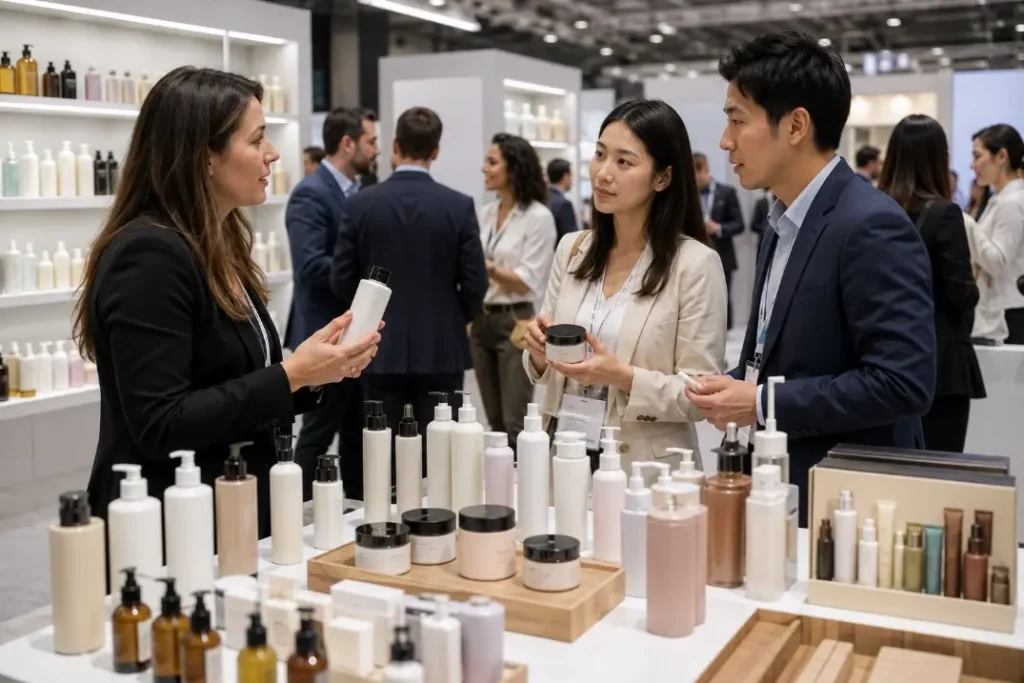
The summary table is a shortlist tool. The sections below explain how each channel works in practice and where buyers commonly misread the offer.
Authorized brand distributors
Best for: Established-brand resale.
Main strength: Brand access and local stock.
Main limitation: Little product or assortment control.
Verify first: Authorization, territory, shelf life, and sales channels.
An authorized distributor buys from the brand or an appointed regional partner and resells to approved businesses. Check the territory, price structure, case quantity, remaining shelf life, storage conditions, returns, and recall process. Sales on your own website, third-party marketplaces, or outside a defined region may require separate permission. A wholesale invoice does not automatically grant every resale right.
Check authorization through the brand’s published contact route if the relationship is unclear. Traceable invoices, batch codes, and consistent company details matter more than a polished catalog. Also plan for decisions you cannot control. The brand can change pricing, redesign packaging, discontinue a product, or change regional distribution.
Professional salon wholesalers
Best for: Salons, barbershops, and specialist retailers.
Main strength: Professional ranges and faster replenishment.
Main limitation: Account restrictions and no formula ownership.
Verify first: Authenticity, stock continuity, account rules, and returns.
Salon wholesalers commonly carry color systems, treatments, styling products, back-bar sizes, and related retail stock. Domestic availability can reduce freight complexity and let a salon replenish in smaller quantities. Some sellers also provide education, shade charts, merchandising material, or account support.
Access rules vary. A supplier may request a business account, resale documentation, or beauty-industry credentials. Those account conditions are separate from tax, import, and resale obligations. Compare shipping thresholds, product freshness, back orders, returns, and whether the seller is an appointed partner or an unaffiliated reseller. The latter can make authenticity and continuity harder to establish.
Stock private label suppliers
Best for: A simpler own-brand launch.
Main strength: Less development work.
Main limitation: Restricted formula differentiation.
Verify first: Formula identity, MOQ layers, packaging, and label support.
A stock private label supplier offers an established formula under your brand. You may be able to select the bottle, closure, label, carton, fragrance, color, or fill size. It suits a first launch when the available formula meets the brief and the brand does not need exclusive performance.
“Stock formula” does not always mean finished inventory is ready to ship. The supplier may still make the batch, order components, print labels, fill, code, and pack. Separate the minimums for bulk formula, finished units, bottles, closures, labels, cartons, fragrance, shade, and decoration. Check samples, setup, artwork, tests, lead times, and ownership of unused packaging too.
The quotation should identify the exact formula and package. A name such as “repair shampoo” is not a controlled specification. For a detailed breakdown, see private label hair care MOQ, sampling, packaging, and lead time.
OEM/ODM and contract manufacturers
Best for: Semi-custom or fully custom products.
Main strength: More formula and packaging control.
Main limitation: More development, quality, and compliance work.
Verify first: Capability, evidence, testing, ownership, and capacity.
Direct manufacturing makes sense when performance, texture, fragrance, packaging, or formula rights support the brand position. One factory may offer stock, semi-custom, and fully custom programs, so ask which route the quote describes. The terms OEM and ODM do not decide formula ownership by themselves. The OEM and ODM comparison explains why the written scope matters.
Screen the legal company, production site, contract party, and payment beneficiary. Establish whether the supplier makes the product format in-house, how development moves into production, which records are available, and whether packaging has been assessed for the formula. Capacity should relate to your product and timing, not a general factory figure.
Ownership, exclusivity, confidentiality, change control, and transfer rights belong in the contract. Treat a website, certificate image, marketplace badge, or export claim as a due-diligence lead. This guide explains how to verify a hair care product manufacturer before a material deposit.
B2B wholesale marketplaces
Best for: Broad supplier discovery and early quotation research.
Main strength: Many sellers and configurations in one place.
Main limitation: Mixed seller types and uneven listings.
Verify first: Legal entity, seller role, sample identity, and quote scope.
Alibaba’s hair care supplier pages include manufacturers and trading companies offering stock, private label, and OEM/ODM products. Results can also include tools, wigs, extensions, or accessories, so check the product category carefully. Faire’s hair care marketplace is more oriented toward retailers buying existing wholesale brands. The platforms serve different business models.
Filters, reviews, response data, and transaction tools can help with initial screening. They do not replace company and product verification. A displayed MOQ may apply to one stock configuration. A manufacturer label may not show who owns or operates the factory. A badge is not regulatory approval, and a review may describe a different order.
Move the shortlisted offer into a controlled RFQ. Confirm the legal company, seller role, factory address where relevant, exact product, included work, exclusions, sample version, and payment beneficiary.
Supplier directories and beauty trade shows
Best for: Building a wider specialist shortlist.
Main strength: Category-specific discovery and direct meetings.
Main limitation: A listing or booth is not qualification.
Verify first: Production site, product scope, references, and audit evidence.
Directories can surface suppliers that do not rank prominently in general search. Thomasnet’s hair care products directory is one option for finding North American manufacturers and service providers. Company profiles are leads, not current proof of capability or project fit.
Beauty events make it easier to compare manufacturers, distributors, packaging companies, and service providers. Official examples include Cosmoprof Asia, Hair Expo at COSME Week, Cosmoprof North America, and the Beautyworld Middle East exhibitor search.
Use the same product brief and question list at every meeting. Record the legal company, what it makes at its own site, current category scope, target-market support, and who will handle follow-up. Event participation shows that a company attended. It does not confirm authorization, quality, compliance, capacity, or financial stability.
Sourcing agents and import partners
Best for: Buyers who need local coordination or consolidation.
Main strength: Language, follow-up, and logistics support.
Main limitation: Added cost and possible conflicts.
Verify first: Fee model, supplier disclosure, inspection independence, and accountability.
A sourcing agent may find suppliers, translate requirements, arrange samples, follow production, book inspections, or consolidate components. An importer or master distributor may buy overseas and resell domestically. A freight forwarder manages transport, while an inspection company checks goods against an agreed scope. These roles should not be treated as interchangeable.
Find out who pays the agent and whether supplier commission or an added margin is involved. You should normally see the original supplier, quotation, and payment path. Map responsibility for samples, deposits, changes, inspection, consolidation, customs, and nonconforming goods.
Local support can improve execution, but it should not become the only source of truth. Retain your own specifications, approvals, agreements, inspection reports, and supplier information.
How to compare hair care products wholesale supplier offers
Compare suppliers using the same product specification, order quantity, customization scope, and delivery basis. Distributor case pricing, private label quotations, and direct manufacturer offers often include very different levels of formulation, packaging, testing, and production work, so the lowest headline price may actually be the least complete offer. This becomes especially important when sourcing overseas; if Chinese factories are part of your shortlist, understanding how to choose the right custom hair care manufacturer in China can help you evaluate R&D capability, MOQ, packaging support, testing, documentation, lead time, and landed cost on the same basis before comparing final quotations.
Field | What the buyer must normalize |
Product identity | Authorized branded stock, named stock formula, semi-custom version, or custom formula |
SKU configuration | Formula, size, fragrance, shade, package, label, carton, and coding |
MOQ basis | Case, formula batch, finished units, SKU, fragrance, shade, or decoration |
Included cost | Filling, closures, labels, cartons, setup, tests, tooling, and packing |
Inventory condition | Batch codes, remaining shelf life, storage history, and discontinued-stock risk |
Quality evidence | Specifications, tests, batch records, traceability, and inspection rights |
Delivery terms | Currency, Incoterm, named place, shipment method, and exclusions |
Reorder conditions | Price, MOQ, lead time, packaging availability, and formula-change rules |
Use this working formula to expose omitted costs:
Landed cost check
Estimated landed cost = goods + development + packaging and tooling + tests + inspection + origin handling + freight + insurance + duty and tax + customs and broker fees + destination handling + unusable inventory
Divide the estimate by realistic saleable units, not simply the ordered quantity. Leakage, transit damage, failed inspection, short shelf life, obsolete labels, and excess components can all reduce saleable stock.
ICC Incoterms rules allocate defined delivery obligations, costs, and risks between seller and buyer. They do not settle formula quality, ownership, payment protection, inspection rights, compliance responsibility, or remedies. Put those issues into separate commercial and quality terms. Confirm destination-specific customs, classification, duty, and tax assumptions with qualified professionals.
Which hair care products wholesale channel fits different business types?
The shortest supply chain is not always the best one. A salon or professional beauty retailer may value recognized brands, reliable local stock, and fast replenishment more than factory-direct pricing. In that case, understanding which professional hair color brands fit your customers and service positioning can help narrow the distributor or salon-wholesaler options worth approaching. A growing own-label brand, by contrast, may accept longer development and higher minimums because formula differentiation, packaging control, and brand ownership matter more than immediate availability.
Buyer situation | Usually start with | Why |
Independent salon needing professional brands | Authorized distributor or salon wholesaler | Local stock and replenishment matter most |
Retailer adding recognized brands | Authorized distributor or branded B2B marketplace | Build an assortment without formula development |
New own-label brand testing demand | Stock private label supplier | Reduce early development complexity and limit SKU count |
Growing brand seeking differentiation | Semi-custom or contract manufacturer | Gain more formula, performance, fragrance, and packaging control |
Established brand transferring or developing formulas | Qualified contract manufacturer | Support specification, scale-up, and production-control needs |
Buyer unfamiliar with an overseas market | Transparent sourcing agent or import partner | Add local coordination while keeping evidence visible |
Choose the channel your team can understand, verify, approve, finance, and replenish. If a model only works when you ignore hidden MOQ layers, import duties, slow reorders, or compliance work, it does not fit the business yet.
Hair care products wholesale process: from product brief to receiving

Once the channel is clear, keep the order under one controlled process. A branded stock purchase needs less technical work than a custom formula, but both need an identifiable seller, product, price, approval, and receiving record.
- Define the buying model, market, and sales channel.Decide whether you are reselling a brand, launching stock private label, or developing a custom product. Identify the destination country and intended claims.
- Prepare one product and commercial brief.State the product type, formula route, size, variants, packaging, quantity, target cost, delivery point, and required timing.
- Build a relevant shortlist.Identify each seller’s role, legal company, product scope, and production site or authorization before asking for a detailed offer.
- Send the same RFQ structure.Normalize inclusions, exclusions, MOQ layers, lead time, payment stages, delivery terms, and evidence across candidates.
- Order and approve identifiable samples.Link each sample to a formula, package, version, and date. Record written feedback and the approved reference.
- Verify the supplier.Check the company, factory or brand authorization, documents, references, payment beneficiary, and order-specific capability.
- Align the order in writing.Match the purchase order, specification, artwork, tests, payment, inspection, change control, and shipment-release conditions.
- Inspect, receive, and record.Check agreed evidence before shipment, then record quantity, coding, leakage, damage, deviations, and corrective actions after arrival.
If you select a direct China route, use the complete process for how to wholesale hair care products from Chinese manufacturers. It covers the brief, RFQ, samples, agreement, inspection, shipping, customs, receiving, and reorder sequence in more depth.
Why international brands choose Keronhair for hair care products wholesale
At Keronhair, we work with international brands that need more than a competitive unit price. Our role is to keep the product brief, formula route, samples, packaging, production, inspection, and shipment preparation in one coordinated project. Brands have fewer handoffs to manage, and we can check later decisions against what they approved at the start.
We manage the product route as one connected project
We begin by reviewing your target market, product type, performance direction, order quantity, packaging, budget, and launch schedule. From there, our team coordinates formula planning, sample approval, packaging review, manufacturing, inspection, and shipment preparation. Because the same project brief follows the order, we can trace changes more clearly and reduce the risk of different suppliers working from different assumptions.
We offer three formula development routes
We do not force every brand into the same development program. You can start with one of our existing formulas, adapt selected features through a semi-custom route, or develop a fully custom formula. We help you compare the effect on timing, cost, differentiation, and ownership. Before approval, we document what is standard, what can change, and what rights are included.
We review the formula and packaging together
We review the chosen pump, closure, label, decoration, and filling method alongside the formula. A sample that looks right in the lab can still behave differently in its final package. Once the combination is approved, we carry that reference into production checks, packing inspection, batch records, and retained production references. This gives both teams a clearer trail from approval to the finished order.
We discuss export and reorder needs early
We ask about the destination market, label inputs, required documents, shipment preparation, and likely reorder conditions while the project is still being planned. We do not wait until the goods are ready to ship. Responsibilities vary by product and market, so we confirm the agreed scope with you, including MOQ layers, testing, documentation, ownership, lead time, and contract terms.
Choose the channel you can control
Choose distributors for established brands, stock private label suppliers for a simpler own-brand launch, and contract manufacturers when the product needs meaningful differentiation. Marketplaces, directories, trade shows, and agents can improve discovery or coordination, but they do not qualify a supplier for you.
Judge the company and the offer after choosing the channel. Confirm authorization or manufacturing capability, define the product, normalize commercial terms, plan the required compliance work, and keep approvals in writing. The workable source is the one your team can verify, fund, receive, and reorder without relying on assumptions.
Frequently asked questions about hair care products wholesale
Where can I buy hair care products wholesale online? You can source through authorized distributor websites, professional salon wholesalers, branded wholesale marketplaces such as Faire, and international B2B marketplaces such as Alibaba. Each serves a different model. Confirm whether the seller offers authorized branded stock, private label products, or factory production before comparing price, MOQ, and delivery. |
Can I buy wholesale hair products without a business license? It depends on the supplier and jurisdiction. Some sellers accept small orders through a business account, while professional distributors may require registration, resale documentation, or beauty-industry credentials. Supplier account rules are separate from your legal responsibilities for tax, import, product compliance, and resale. |
What is the usual MOQ for wholesale hair care products? There is no universal MOQ. Branded wholesalers may use case quantities or order-value thresholds. Private label and custom manufacturers may have separate minimums for formula batches, SKUs, bottles, closures, labels, cartons, fragrance, color, or decoration. Request every MOQ layer and ask what happens to unused components. |
Is Alibaba a safe place to buy wholesale hair care products? Alibaba can support discovery, RFQs, communication, and transaction tools. A platform presence does not prove that a seller is the correct manufacturer or that a product is suitable for your market. Verify the legal company, factory role, product scope, sample identity, quotation, evidence, and payment beneficiary before a material order. |
Where can I buy private label hair care products? Look for stock private label suppliers, contract manufacturers, specialist directories, and OEM or private label sections at established beauty trade shows. Use a stock program when an existing formula meets the brief. Use a custom manufacturer when performance, packaging, or formula control justifies additional development and testing. |
What is the difference between a wholesaler and a private label manufacturer? A wholesaler normally resells finished goods, often under an existing brand. A private label manufacturer produces an established or customized product under the buyer’s brand. The private label buyer usually takes more responsibility for artwork, positioning, market compliance, inventory, and the commercial result. |
How do I know whether a distributor is authorized? Ask for written authorization that identifies the brand, distributor, territory, and relevant sales channels. Check it with the brand through a published contact method. Review invoices, product codes, batch traceability, remaining shelf life, and return or recall procedures before ordering. |